
Opinion

Japan, Oil and the Fragility of Globalization

'Energy and Equity' starts today -- Andrew Nikiforuk's new weekly Tyee column about oil, energy and civilization.

By Andrew Nikiforuk, 14 Apr 2011, TheTyee.ca

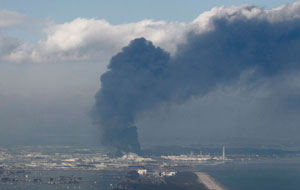
Explosion of Fukushima nuclear facility

Explosion at Fukishima nuclear plant in March. Addiction to oil paved way for reliance on nuclear energy.

Related

[Editor's note: Andrew Nikiforuk's term as Tyee Writer in Residence is finished, but his incisive writing stays home right here, as today begins his new weekly column. Read more about "Energy and Equity" in the sidebar that accompanies this story.]

"No society can have a population that is hooked on progressively larger numbers of energy slaves and whose members are also autonomously active." -- Ivan Illich

Sometimes it takes an earthquake followed by tsunami accompanied by a nuclear meltdown to catch people's attention.

Improbable events not only make the world go around but expose what is rotten.

And I suspect the Great Sendai Earthquake will go down in the annals of human history as just one of a series of unfortunate events that helped to illuminate the world's downward energy spiral.

Or as the Japanese writer Kenzaburo Oe wisely put it: "Japanese history has entered a new phase."

Although much media interest has now focused on the proverbial risks of nuclear power (a subject I'll atomize later), the quake really laid bare the fragilities of an oil-fueled economy that has peaked.

Japan's familiar energy path

The Catholic theologian Ivan Illich once noted (and yes, he is the inspiration for this eclectic column) that societies that consume large amounts of energy (and especially imported energy) ultimately lose their flexibility and robustness to a web of authoritarian complexity such as the Tokyo Electricity Corporation. It is, afterall, the world's fourth largest utility and a consortium of liars to boot.

After the quake, Japan's big energy dilemma remains the same: how can a nation unsustainably fashioned by a flood of cheap oil (less than $20) 40 years ago, reboot or rebuild now that oil exceeds a $100 a barrel?

This arresting drama has a science fiction-like quality because Japan reflects both our petroleum pasts and our energy futures. It is the world's petroleum everyman. In many ways Japan's fate is our collective fate.

By any measure oil, probably the island's longest Kabuki performance, has transformed Japan more than any of Mother Nature's regular energizers including typhoons, fires, volcanoes and yes, rousing earthquakes.

Yet the magnitude of the Japanese quake was a reminder that the Green Gal not only bats last and hardest but whenever she damn well pleases.

In real terms the Sendai earthly adjustment generated about 476 megatons of energy. (The Russians exploded the world's biggest hydrogen bomb, "Big Ivan," in 1961 and it contained 50 megatons of power.) So the Sendai shake-up was equivalent to a man-made underwater nuclear storm created by 10 of the world's largest hydrogen bombs.

The megatons released by the quake, of course, impressed YouTube watchers. It shifted the entire island of Japan by 2.4 metres and lowered the coastline by a meter. It also moved the earth's axis several centimeters and shortened the length of the day.

The tectonic rattling created giant waves that swept more than 10,000 people and homes out to sea and destroyed most of the energy infrastructure of northeastern Japan including harbors, airports and refineries. Even Tokyo's iconic electronic blackboards have stopped flickering.

But this sudden devastation is almost modest compared to the slow-moving Godzilla of petroleum. For nearly 50 years Japan has gobbled oil in order to build a highly complex consumer culture where Mecha-toilets wash, dry and even perfume your privates like Roman slaves.

'ENERGY AND EQUITY': WHY THIS COLUMN?

Oil guzzling societies have become unglued due to rising oil and energy prices. The globe's power elite says don't worry: it's all "sustainable." They also swear that technology will save the day. Yet history, math, geology and physics all tell another radical and fascinating story. And that's what this contrary column is all about: joules, paradoxes, transitions and how energy politics are changing the lives of ordinary people.

When civilization first got hooked on oil more than 100 years ago, the resource unsettled agriculture, changed urban planning and even perverted economic thinking. And we still take the whole damn show for granted even though a tank of cheap gasoline has become an antique notion.

So this column will explore the ABC's of oil, extreme oil, solar, nukes and the heresy of consuming less power. It will graze widely. One week it might explain why the whaling industry died in the 19th century, or what the full costs of industrial wind farms are. Or it might dig up the economic truth about carbon capture and storage. No form of energy is sacred. Feedback from readers will also drive the column down unfamiliar highways.

The column has but one goal: to create greater literacy about how we now waste oil (a magical commodity), and what we actually sacrifice for those barrels or joules. And it will try to be everything the traditional media refuses to be: precise, economic, historical, referenced, unpredictable and even interesting.

Kjell Aleklett, a Swedish energy expert, has called the new global tune: "Energy is running the world. Money is not running the world. Money is used to buy energy." Enjoy.

— A.N.

Japan, third biggest oil user

Even today the oil-less country remains the world's third largest importer of petroleum at 4 million barrels a day. (That's double Canada's tar sands production.) All in all it gets nearly 50 per cent of its primary energy needs from oil, which account for nearly a third of all exports in value. About 90 per cent of these barrels hail from the Mideast, where petro states are experiencing a series of democratic tremors.

Japan's extreme dependence on crude explains why an astute and clever nation built 55 nuclear facilities on the Ring of Fire during the oil shocks of the 1970s. This highly subsidized form of atomic gambling used to provide 30 per cent of the nation's power and dominated the politics of the nation's 10 regional electrical monopolies. The investment also explains why the country has the largest national debt of almost any major economic superpower other than the United States.

But Japan's oil addiction and nuclear woes has also shown the world what the energy status quo doesn't want ordinary people to see: the social limits of growing energy consumption.

A petro-fueled boom

Japan's oil story, which economists once dubbed "the Japanese miracle," reads a lot like the modern Chinese boom. Before the petroleum age, Japan ran on rice, peasants and human labor. The majority of the people lived in country villages. Most importantly, the island's population never climbed above 25 million.

But fossil fuels broke all previous chains and taboos. Although the population boom started in the 1900s with coal, it really accelerated with cheap oil in the 1950s. Just two decades later Japan became the 10th most populated place on earth with 125 million people. Rural migrants arrived in booming cities where they traded in their traditions, oxen and family ties for "the three C's": a car, a cooler and a colour television.

Incredibly, Japan's oil miracle concentrated 79 million Japanese or 70 per cent of the population in 209 complex urban centers. The world now knows what an earthquake and tsunami can make of such oil-drenched hubris.

But cheap oil did more than concentrate power and people. Oil allowed Japan, a nation with few resources, to import oodles of raw goods and turn them into electronic gadgets and cars for global export. The more oil that Japan consumed, the higher its GDP rose. At one point it boasted the second highest GDP in the world proving, once again, that economic growth is all about oil consumption.

Thanks to surplus profits generated by its oil miracle, Japan built speed trains, factories and bridges, and hosted the Olympics in the 1960s. Whenever the pollution got unbearable, people just wore gas masks to work.

The island also got addicted to "buy" recommendations and automobiles. The famous economist Hirofumi Uzawa outlined the social costs by noting that between 1966 and 1975 careless drivers killed more than 10,000 people a year.

Oil, too, changed the Japanese diet. Out went locally grown rice, vegetables and fish and in came imported meat, fat and grains. Today Japan is the least self-sufficient of any industrial nation. Without oil-drenched imports from China, Australia, Canada and the United States, the Japanese would starve. Or be forced to live like 19th century Irishmen on potatoes.

In 2008 the Japanese Ministry of Agriculture, Forestry and Fisheries produced a lively animated feature about Japan's food insecurity. It portrays the corrosive power of oil with child-like clarity. The film noted that Japanese consumers, the world's largest net importers of food, still threw out more edible stuff each year than what "the entire world" contributed to food aide.

By the 1980s Japan Inc. looked like it was going to take over the world, empty the oceans of fish, and monopolize many of the world's resources. Tokyo even set itself up as world's third largest financial centre.

The tectonic shift in oil prices

But oil's miraculous powers peaked about 15 years ago. One of the world's most energy efficient nations found it couldn't squeeze much more out of a barrel. As the population aged (a fifth of the Japanese are boomers over the age of 65) and the cost of oil imports grew dearer, the economy stagnated. In 2009 Japan GDP's shrank 15 per cent and oil consumption declined by nearly a million barrels a day.

James Howard Kunstler, the social critic, has described the phenomenon nicely: "a decline in the primary energy resource used by an industrial society portends a decline in living standards, which can be expressed in an economy, for instance, by people having less money, or by people having lots of money that is increasingly worthless."

The New York Times calls this process "Japanification." The middle class no longer flies to Hawaii to buy Gucci bags. They've also traded in their German cars for cheaper Japanese models. The national government now spends a quarter of all taxes on paying interest on the national energy debt. The young, known as herbivores (soushoku danshi or "grass eating men"), live modestly in micro houses, take long walks, shun sex, chat on the Internet and don't spend much.

Economists, a professional class shaped by the illusion of endless cheap oil, disparage this generation as "consumption haters" and estimate their frugality has cost the economy $420 billion.

Meanwhile the Japanese government banked on nuclear power as the country's best replacement for increasingly expensive fossil fuels.

Waking up to nuclear nightmare

Despite a string of scandals the atomic behemoth sucked money away from renewables (Japan used to be a solar leader) and cemented a sort of energy inertia. Even the country's 2010 Basic Energy Plan called for the construction of nine new nuclear plants and promised a new economic miracle: a global nuclear export industry. But the earthquake and Fukushima meltdown probably ended that crazy dream.

So Japan is now running on empty. Imported oil not only grows more costly by the day but also buys diminishing economic returns. To pay for imported oil or fund its anointed substitute, nuclear energy, Japan now cultivates a hellish debt load that analysts call a ticking time bomb.

With the world's oldest population, Japan no longer has the workforce to rebuild. In fact Japan's oil-fueled miracle probably ended before the earthquake.

In a 2009 lecture the economist Uzawa painted the true picture without mentioning oil by name: "The culture of original human society prevented the depletion of natural resources by means of a dialogue with nature and accumulated knowledge about the natural environment within social norms designed for the survival of the society, and the culture (social system) also included transmission to the next generation."

Unlike many oil-driven cultures the Japanese will now fall back on traditions of resilience. The Zen masters knew about the impermanence of all earthly things and the inexhaustible beauty of nature. The 12th century philosopher Kamo no Chomei once advised that "If you have to go anywhere, go on your own feet. It may be trying, but not so much so as the bother of horses and carriages. Everyone with a body has two servants, his hands and feet, and they will serve his will exactly.”

Japan's power elite is now staggering. Perhaps a few of its oil and nuclear members will take up walking and clear their thinking.  [Tyee]

41  Comments:

Login or register to post comments

  • Fiat lux

    2 years ago

    It is quite obvious that the

    It is quite obvious that the main purpose of globalization is the Soviet style collectivization of the world's economy into the hands of the, formerly communist, now their brother capitalist, ruling class, at any price, which is paid out in blood, starvation and suffering by billions of people.

    The communists have done it with bayonets, the capitalist with the perceived power of non existing, imaginary, monetary capital, with the former communist cadre eagerly jumping for the opportunity to fulfill the Great Dream of the Internationale.

    Now comes the question from the faithful "conservatives": "Do you want to go back to the cave?" as there's nothing else in their little, narrow minds. Including of their "leaders".

    It is obvious that oil is a needed resource, but there's absolutely no need for the present incredible waste of oil and other resources for the purpose of the self destruction of humanity, taught in our universities as "neoclassical market economics"

    Imports and exports are needed for the exchange of resources people don't have in certain localities, but the most efficient form of production of goods is local, without the need for the vast majority of transports and commuting wasting resources and lives for nothing.

    This is why so called economists and bought "conservative" politicians, are having a fit when the words "self sufficiency" are mentioned, as it doesn't raise their idiotic and criminal, monetary, GDP figures.

    Of course, I've only been writing about this for almost 30 years, but glad to see more and more people waking up to the fact staring in their faces:

    "Wealth can not be created, only taken from other sectors, the environment and future generations"

    And Japan, now, is the best example of the cold hard facts and realities that repeated themselves through human history, because people believed the garbage sold to them by "prophets".

    In other words, imported goods from Asia, the fraudulent "free trade agreements" and globalization are not making products "cheaper", but more expensive, by transferring the real costs on others, the environment and the future.

    I know, this is extremely difficult to understand, but hopefully, one day humanity may just wake up to the facts of life, or can kiss their asses goodbye.

    Ed Deak.

  • Lawrence

    2 years ago

    Good article

    Nicely researched.

    Well written.

  • Jeffrey J.

    2 years ago

    Nikiforuk Exceeds Expectations

    Ever since reading Nikiforuk's stunning book Tar Sands, I have enjoyed his bold writing and clear thinking. Each article was equally inspiring. Yet today he has surpassed himself.

    This essay is the best I've ever read. Compared with the tepid prose of Mainstream Media, Nikiforuk weaves oil, nuclear energy, Japanese culture and historic wisdom together into a single truth.

    He concludes with 12th century philosopher Kamo no Chomei: "If you have to go anywhere, go on your own feet. It may be trying, but not so much so as the bother of horses and carriages. Everyone with a body has two servants, his hands and feet, and they will serve his will exactly.”

    Amen.

    Fantastic work!

  • warbler

    2 years ago

    Energy/oil addiction

    This is one of the best post-tsunami articles on the wider energy implications made more visible by the disaster. Well done, Andrew.

    This one line in the article truly encapsulates the peak oil nightmare that we are now getting glimpses of:

    "The more oil that Japan consumed, the higher its GDP rose."

    This is consumer culture and commodity fetishism in a nutshell. The question then becomes: Is it too late to reverse the social psychology attached to this GDP/oil equation? I'm not optimistic.

    The corruption within Tokyo Electric is, unfortunately, the tip of the iceberg in Japan's bureaucratic culture. One of more erudite ex-pat observers of Japan is Alex Kerr, and if you want a glimpse into that culture, I highly recommend his classic, "Dogs & Demons: Tales from the Dark Side of Japan". http://www.alex-kerr.com/html/dogs___demons__english_.html

  • pwlg

    2 years ago

    excellent article

    Thanks to The Tyee for continuing to publish Andrew's work. We will all benefit from his insights and investigations.

    Just a small quibble. In refering to Japan's population, in 1950 Japan had the 5th largest population in the world and Nikiforuk is correct in stating that by the 1970's Japan's population was the 10th largest in the world. I don't think Nikiforuk is making the case that only Japan has seen incredible population growth due to oil but it appears that other nations have also seen exponential population growth since the Second World War.

    Despite having an economy reliant on oil, Japan saw a decrease in population for the first time in 2005 after peaking in 2004 to almost 128 million (as Nikiforuk states). Japan's population has been decreasing ever since and its government statisticians estimate Japan's population by 2050 to range between 90-100 million which wouldn't even rank it in the top 15 populist nations.

    This population drop by one of the largest modern industrial nation is not unique. Population is dropping in western European nations and this may have more to do with nations repopulating after the Second World War and that population aging and progressively dying off than the wonders of oil economies.

    Or, are we currently in an evolutionary state, moving so slow, that we are unable to know where we are headed as a species.

    One thing is for sure, we cannot continue to rely on cheap resources or resources that provide not only positive but significantly negative outcomes. What remains of the hydrocarbon legacy should be carefully extracted and dedicated to the most beneficial aspects of the planet's economy.

    Can we build successful economies where everyone benefits, including the planet, without relying on oil exclusively?

  • Talon

    2 years ago

    Andrew Nikiforuk - a favorite teacher

    Thank you for this introduction to the problems of Japan. I learn so much from you. I do check your work (i am a scientist) and have found you hit the bullseye everytime. Thank you for another fine piece of reporting.

  • dave0ferg

    2 years ago

    Media Cartel

    This is a wonderful example of what the Conservative Corporate Media Coalition Cartel doesn’t want us to hear. Thank you, Andrew.

  • jwstewart

    2 years ago

    Anti-consumption Herbivores...

    ...are found to be a cause of economic loss???

    Holy crap, if one defy's the religious training in profligate consumption, thou shall be cast out!

  • ElizabethP

    2 years ago

    Gratitude

    Fantastic article that I have passed on and will keep for future reference. Thank you Andrew.

  • Francis

    2 years ago

    Just one thing

    As well researched and as witty as the article is presented, nowhere does Nikiforuk mention a shift to LNG.

    I'm betting where Japan's near term future energy needs grow.

  • Ian Laval

    2 years ago

    The matter with us

    This is a stimulating piece. I do hope Andrew Nikiforuk will widen the focus to consider not just the causes of fatal over-consumption fuelled by energy but why those of us who are very well off need inexorably to be even better off.
    I'm not sure we can always be blaming politicians -- somebody else -- for what is happening to our consumptive world.
    We can vote for less as well as more, if it's important enough.
    World Bank figures show Luxemburg's per capita income last year was $108,000. Burundi's was less than $200. Not much chance of your average Burundian ever catching up -- unless a few of us luckier souls agree to take a pay cut.
    We don't have to restrict ourselves to the Irishmen's potato diet -- but a touch of moderation might help head off the calamity.
    Sadly, human populations seem to prefer learning our lessons the hard way.
    I'm reminded, in the context of the Japanese earthquake and tsunami and the economic and cultural effects Andrew Nikiforuk talks about, that Vancouver Island is neatly perched on similar potential.

  • Cool Hand

    2 years ago

    Francis

    Quote:
    nowhere does Nikiforuk mention a shift to LNG. I'm betting where Japan's near term future energy needs grow.

    Interesting point. Politically, nuclear power in Japan will likely be a hot potato moving forward and I suspect that alternative energy plants will be constructed.

    Most likely, natural gas generation will become more dominant - cheaper to build ($2 billion v. $10 billion nuclear) and shorter lead-up times (2 years v. 8 years).

    And I'm also willing to bet that the vast Horn River and Montney basins in NE BC will source those potential future Japanese NG generating stations. One LNG plant in Kitimat is all but a done deal and 2 more are on the drawing board.

    Korea Gas, Mitsubishi, and China NPC have all committed to long-term contracts from the Kitimat LNG port.

  • KWD

    2 years ago

    to nuke or not to nuke

    Japan is not alone. Abundant, cheap crude has not only transformed every nation on the planet, it has aligned all oil-lubricated economies on a convergent path toward non-sustainability.

    Although the differences in scale are huge, Vancouver Island faces a similar dilemma: Its economic and cultural survival depends on continuous imports of oil, natural gas, electricity and food. As the price of oil continues to climb, driving its hubs of commerce closer to implosion, will Islanders listen to the ‘nuclear’ voice?

    With or without great earthquakes, tsunamis and nuclear meltdowns the message is the same: The voices in the field of dreams weren’t referring to nuclear reactors when they said, “build it and they will come”. In Japan’s case perhaps something was lost in translation. In Vancouver Island’s case the message is clear: Taking care of the needs of 750,000 may not be a whole lot easier than looking after 125 million.

  • YCSTS

    2 years ago

    Nuclear & Coal remain the sole viable replacements for Oil.

    Nikiforuk is correct about how Oil transformed Western Civilization, and Japan is the quintessential example of that phenomenon. Nikiforuk is expressing the fact that very few people realize - that Cheap Energy is Life or Death. Even thinly populated Canada, needs an avg of 15 kw of energy per person continuously, vs the few hundred watts a subsistence society provides.

    However bad the dilemma is for Western Industrialized civilization, it is even worse for the developing World. Without, cheap energy their will be billions of dead. So they will choose Coal, not Clean Coal, but the cheapest, dirtiest crap that can be burned - if they are not provided with cheap, clean energy. NUCLEAR ENERGY IS THE ONLY OPTION!

    Wake up people, you are living in a Fossil Fuel financed media delusion. Not a hell of a lot happened at Fukushima Daiichi, compared to the regional impact of the 1000 yr tsunami and earthquake. 800 workers lives were saved from the tsunami by being in Nuclear Power plants. NOT ONE PERSON was killed by the Nuclear Incident. NOT ONE PERSON will be killed. Learn the truth, not Oil-financed-media hype:

    http://www.theregister.co.uk/2011/04/12/fukushima_ffs/

    "...The total non-story of the Fukushima nuclear powerplant "disaster" – which has seen and will see no deaths or measurable health consequences for anyone anywhere ..."

    "...Almost all other infrastructure hit by the natural disaster failed catastrophically. Housing, transport and industry across the region collapsed with deadly consequences, killing people by the tens of thousands. Oil plants, chemical factories, storage facilities and tankers of every type ruptured and burned, spilling megatonnes of pollution and carcinogens into the environment. But almost nothing is heard of all this, except as a footnote to the supposed radiological hazards resulting from the Fukushima Daiichi reactors 1 to 4..."

    "...Residual heating in the cores at reactors 1 to 3 has now decayed down to less than 0.37 per cent of normal output power. It is this heating which has previously driven emissions of core material from the cores..."

    "...Most media have chosen to report Japanese government calculations indicating (three-page PDF/56.7 KB) that perhaps 10,000 terabecquerels per hour of iodine-131 may have been emitted from the Daiichi cores in the hours following the initial decision to vent them. This is assessed as around 10 per cent of the emission levels seen at Chernobyl…”

    ”…That's largely meaningless, however. If all the iodine emitted in one hour had been sitting still at a single point (no) and that had been the only radio-isotope present (no again) you could have stood 100 metres from that point for three hours and suffered zero health consequences..."

  • YCSTS

    2 years ago

    For survival, we must let go of Nuclear & Radiation Paranoia

    Mummy, mummy, there's a nuclear monster!
    Go back to BED! No more stories from Auntie Fear for you!

    http://www.theregister.co.uk/2011/04/12/fukushima_ffs/page2.html

    "...In reality, the rise to Level 7 is a result of the constant badgering both from inside and outside Japan to the effect that the Japanese government is not taking this seriously. By calling it Level 7, the authorities are saying that yes, they assess the Daiichi situation as extremely serious. They really do care..."

    "...If nuclear were allowed to be as dangerous as gas – that is, perhaps somewhere in the region of 400 times as dangerous in terms of deaths per terawatt-hour – there can be little doubt that electricity would become extremely cheap, maybe indeed too cheap to bother metering it for most users. Waste could be dealt with and supplies extended by many times by simply reprocessing fuel, something which the fearmongers have already managed to ban in many countries..."

    "...That would not only mean realistic prospects of low-to-zero carbon emissions: it would also mean no need to much care about the opinions of various unsavoury regimes around the world, or to funnel revenue to them to spend on weapons. Cheap nuclear energy would hugely boost economic performance. It would also offer effectively unlimited fresh water supplies, and realistic options for space travel beyond low Earth orbit..."

    "...Some of us at least are getting a bit sick of the idea that you simply aren't allowed to tell frightened people quite bluntly to act their age – and we're getting more than just a bit sick of irrational or unscrupulous fairytale-spinners making them frightened in the first place..."

  • doggone

    2 years ago

    It's good to be back here

    Where the article and most comments are generally written correctly in the language I understand: English.
    I do not wish to be pessimistic - I'd much rather have some message of hope but the short term future does not look great for "business as usual".
    Oil, even at today's price, is cheap.
    It is also beyond priceless.
    Though I drive to work in a (reasonably) efficient pickup truck I have been wondering lately how much longer I'll be doing this.
    There is a lot of company on the roads I drive and I often wonder: "Where is that car going today?"
    Is the destination like mine - hauling tools and materials and myself to a work project?
    Or is it simply for the "pleasure" of driving ?
    And when this particular window closes: people like me stop running vehicles about in a futile attempt to "make a living"
    What then?
    Guess all I really wanted to say was:
    I read you and it made me do some thinkin'

  • Driftwood

    2 years ago

    I'm still waiting

    for news of the travesty of horseshit which Fukushima has permanently endowed on this coast. Otherwise, a great article. Where are the links to 'how to survive the Fukushima radiation'? Where are the links to Canadian radiation sites which monitor the levels of radiation in foods we eat every day? Oh, sorry there aren't any. Personally, I'm seriously thinking of moving to Peru or Chile, but that would be beyond the bounds of tyee good behavior, so we won't discuss it further.

    As an aside, I can hear the children in my town playing outside; and wonder what levels of radiation they are being exposed to by the 'Great Silence' of our current leaders and their complacent press. It's not as though we don't know we are being irradiated in the interests of whoever, it's that our government has failed us big time in failing to report what is irradiated and what is not.
    THIS isn't like a few hundred dying from pulp mills which 'augment our economical progress'. This isn't like future generations being denied access to their traditional fishing grounds. This is about all the people here being irradiated by rays they can't even comprehend! Sure, it is known that there are 55 nuclear reactors in Japan situated on the 'fault line' but let's deal with this one before it kills us. Let's have government testing of the sea, and government testing of all the food brought in from California and beyond. This is about letting us make our own decisions in the irradiated world we live in. Sure, I'm stunned by quotes from the thirteenth century and my heart really does go out to those poor Japanese who caught it in the neck from the lies of Japanese nuclear cheerleaders, but what about us? This is refined horseshit, but it is still horeshit.

  • SharingIsGood

    2 years ago

    beyond oil and gas

    Some of the latest research: this is the potential game-changer. CO2 to methanol:

    http://www.gizmag.com/research-carbon-dioxide-methanol/11483/

    Here's a good book at amazon.
    http://www.amazon.com/Beyond-Oil-Gas-Methanol-Economy/dp/3527312757

  • Driftwood

    2 years ago

    @ytsca

    The nucleotides now arriving from Japan will be with us for the next 250 thousand years. I don't know where you sleep, but the people who actually live here [OFFENSIVE COMMENT REMOVED. -MODERATOR.]; one of those people who are paid to propagate nuclear energy to the misinformed. FYI The people who actually live on this coast often live at the beneficence of the sea, and they would happily hand your arse out to dry if they thought it would help them preserve their way of life.
    [AND HERE. -MODERATOR.]

  • Driftwood

    2 years ago

    Wouldn't it be grand

    If we could actually line up the 'pro nuclear' shit tossers against all the the people they have lied to and destroyed with their cunning propaganda? Can you imagine some suit in a radiation suit standing before the millions of people who have been destroyed by cancer from Chernobyl or even three mile island proclaiming, "radiation is not all that bad for you, and the nuclear energy asswipes know what is best for the future of mankind! Radiaton is so safe they I would swim in the pools of contaminated water which are the result of our latest misadventure at Fukushima!" Well, I remember those pricks telling me that ddt was so safe that they would drink it. But where are they now?

  • Francis

    2 years ago

    Test Seawater?

    Canada doesn't test anything, but if your found to have contaminated listeria contaminated product heaven help you for the fines that will be levied.

    Now about that cow ...

  • pwlg

    2 years ago

    increase in population, increase in oil consumption

    Globally speaking...In 1955, women of child bearing age on average had 5 babies, in 1995 it was 2.9 and projected to be 2.3 in 2025, according to the World Health Organization.

    In 1955 only 3 countries were below the population replacement level and WHO projects that 102 countries in 2025 will be below the population replacement level.

    Will the determining factor in averting a dismal future be a reduction in human population rather than technology?

    Have other species been known to reduce population levels to avert catastrophe? Is this something inherent in our survival make-up?

    When the boomer bubble bursts, when they pass away, will consumption levels decrease?

  • Ricky

    2 years ago

    Nice Article

    Thanks for sticking around, Andrew. I just finished reading Saboteurs and I am most certainly a fan. My brother-in-law lived up there working as a journalist during the troubles and he had some cool stories to tell once I knew the background.

  • Jeffrey J.

    2 years ago

    Latest Youtube News clip on radiation fallout

    This video says it all. So far.

    Not good.

    http://www.youtube.com/watch?v=xaup0qywTto

  • Lawrence

    2 years ago

    ycsts, wake up yourself

    It's fairly clear that people will die because of the radiation from Fukushima as they did from Chernobyl.

    You are just parroting the lies coming from the nuclear industry.

    Liquid Natural Gas is a problem for several reasons.

    I remember they were going to put a LNG storage tank up at McNabb creek. The locals fought it to a standstill.

    The gas company told everyone the tanks were safe; four have blown up since.

    The gas company said they would be safe from terrorist attack; clearly not true.

    The gas company said they wouldn't be shipping the gas up through Howe Sound; clearly not true.

    As well burning natural gas produces CO2
    That would be a greenhouse gas last I looked

  • Francis

    2 years ago

    LNG, Coal Nukes, Dams, OIL

    Ok, time to really get it together. When are we going to have an honest discussion about energy?

    I think we need to do some disclosure too. What is our personal carbon footprint. What do I consume, where do I live, vacation, do my business. What are my kids up to, do I condone their activities, what do I want for them. What are our aspirations.

    And from the enviro movement, organizationally they ought to start making some proposals for sustainable futures. Unless their view is we just walk into the sea in mass suicide? What are the aims of the envirio's? What are their solutions. Should we just shut down society? Close hospitals and schools and shut down transit.

    As far as I'm concerned we are not having a real discussion and the folks who claim to speak for mother earth are not really proposing anything to reach an accord.

    If you want to see what structural unemployment does take a look at Newfoundland until they struck oil.

  • YCSTS

    2 years ago

    Paranoid, Delusional, Radiation Hysteria, corrected

    More radiation paranoia, unbelievable. Driftwood doesn’t even have the remotest idea what radiation is or its health effects. The problem is the short lived nuclides mostly Iodine-131 and Cesium-137. They won’t be around for “250 thousand years”, unlike Driftwoods chemical carcinogens, released by the ton during the many Oil & Gas fires that occurred. Iodine-131 dissipates in 3 weeks. Cesium-137 in 150 yrs. The highest radiation levels, almost entirely short-lived Iodine-131, found in Milk outside Japan, were in Hawaii at 18 pCi per liter. A banana contains 520 pCi of radiation. You would have to drink 29 liters of milk to equal one banana (high in radioactive potassium 40). Except the milk radiation will dissipate in a week or two vs the banana which will last for your lifetime. The HIGHEST radiation levels found in milk in Fukushima prefecture was 41,000 pCi per liter. Not being sold, but if you did drink a liter a day for the 3 weeks before the I-131 dissipates, you would get 270 uSv of radiation. A full body CT scan gets you 12,000 uSv of radiation. According to Driftwood, I guess the CT scan must be nice, happy radiation whereas the I-131 is bad, nasty radiation.

    The authorities in Fukushima are being careful that the population do not exceed an annual dose of 20 mSv. One of the World’s foremost authorities on Radiation states that 100 mSv of radiation per month or 1,200 mSv per year is a very safe level, that incurs no risk to an exposed individual. Workers at the Fukushima Nuclear plant are allowed a maximum of 250 mSv of radiation. There was no discernable increase in Cancer Rate from Chernobyl workers who received < 2,000 mSv dose, zero deaths out of 140 of the some of the most exposed Chernobyl workers, 1 death out of 55 exposed to 4,000 mSv of radiation. Learn the truth about Radiation – it’s all around us – not Big Oil’s Media Hype:

    http://www.physics.ox.ac.uk/nuclearsafety/webpptMay07.pdf

    http://depletedcranium.com/putting-radiation-exposure-in-context/

    The latest UN report on Chernobyl, in 2008, by the United Nations Scientific Committee on the Effects of Atomic Radiation, concluded that 15 cancer deaths were caused by the Chernobyl event as well as 28 fatalities amongst emergency workers.

    http://www.bbc.co.uk/news/world-12860842

    http://www.unscear.org/docs/reports/2008/Advance_copy_Annex_D_Chernobyl_Report.pdf

  • YCSTS

    2 years ago

    Fukushima Nuclear Incident in Perspective - NOT ONE DEATH!

    Not a word in the press about the giant Chiba Oil refinery fire near Tokyo which burned uncontrolled for 10 days, after the earthquake. Not one word as to why an Oil refinery far from the epicenter, with no tsunami, could not withstand a minor earthquake effect. Not one word in the press about the 12 workers roasted to death. Not one word on the hundreds of tons of deadly carcinogens, teratogens, mutagens, embryotoxins, cytotoxins and endocrine disruptors including dioxins, asbestos, mercury, cadmium, PAH's, vinyl chloride, beryllium, benzene, ethylene chloride and dozens more, released into the air adjacent to Tokyo, by the giant inferno. Most of these deadly toxins last forever. They don’t even try to measure the thousands of times normal levels of those toxins created. Big Oil is once again exempt from environmental responsibility. The Double Standard against Nuclear by George Monbiot – super greenie – who was angered by the outrageous, neglect by the press of the death of 26,000 Japanese citizens, total focus on Big Oil’s anti-Nuclear agenda: Formerly anti-Nuclear, Monbiot’s outrage turned to a pro-Nuclear stance, after Fukushima:

    http://www.guardian.co.uk/environment/georgemonbiot/2011/mar/31/double-standards-nuclear?CMP=twt_fd

    Read these articles, that gives the ACTUAL TRUTH, not a bunch of "let's help our Oil & Gas benefactors maintain Energy Hegemony" propaganda:

    http://www.thepunch.com.au/articles/cancer-deaths-in-japan-will-be-from-alcohol-and-ciggies

    http://www.marklynas.org/2011/03/the-dangers-of-nuclear-power-in-light-of-fukushima/

    Hydro power is Vastly more Dangerous than Nuclear:

    http://opinion.financialpost.com/2011/04/01/lawrence-solomon-dams-are-worse/

    Deaths per TWh of energy:

    Coal: 161
    Oil: 36
    Biomass: 12
    NG: 4
    Hydro: 1.4
    Wind: 0.15
    Nuclear: 0.04

    http://nextbigfuture.com/2011/03/lowering-deaths-per-terawatt-hour-for.html

  • zalm

    2 years ago

    Not to put too fine a point upon it...

    But any radionuclide that hung around for "250 thousand years" (by which I presume is meant "has a half-life of 250 thousand years" because no other expression makes any sense) would be of extremely slowly-decaying processes producing far less than the 1 mSv per year some think is too big a risk.

    Put it in perspective, driftwood. If you bought an old house in Vancouver, one with an average basement with a concrete floor, no vapour barrier, and lived in it for a year, you'd have been exposed to 10-50 Bq/m3 of radioactive radon gas and its daughter radionuclides (up to 2.5 mSv). You'd already be over your personal limit, and at half the natural limit by European authorities. If your basement was in Iowa, those levels would be 8 to 15,000 times higher!

    You also need to identify your concern about the radiation byproducts. Decay products producing alpha particles have less effect than the toxic soup you wend your way to work each mirning in. Those producing neutrons are far more damaging, but are also far heavier and tend to fall out of the cloud quickly.

    Air quality on the road exposes you to far more daughter radionuclides than you'll get from Fukushima. And most of you spend more than 500 hours a year in it - enough to go way over your personal limit.

    No, if you want to be worried, worry about the heavy metal poisoning you'll get from the cloud, assuming it lasts long enough. The chemical reactivity of some of the products, such as polonium and thorium are more harmful than the radioactivity, which is not to be ignored, but definitely to be put in perspective.

    Any smokers out there? With a single cigarette containing up to 13 mSv/hr in radioactive lead and polonium, a pack-a-day smoker gets the equivalent of 9 mSv/yr in radiation byproducts from the various minor contaminants that make up your daily fix. All directly injected into the lungs. Chances are it's not the radiation that's killing you - it's the tar.

    Sigh...a good science education is [b]so[/b[] hard to come by, these days....

  • Lawrence

    2 years ago

    Zalm, your back

    I figured you changed your name to ycsts.

    This'' radiation is good for you''crap is all over the net,
    'cept down across the border there calling environmentalists, communists.

    Radiation kills; Greenpeace says hundreds of thousands were killed off by Chernobyl, and well,Greenpeace has credibility the nuclear industry, well has none.

    The Japanese built those reactors over a fault with a long history of earthquakes in the 9 plus range, and yes they were told about it.

    They were told the reactors would not be able to handle a Tsunami from such a quake, but did nothing.

    So ycsts and Zalm your going to tell me this won't happen again?

    How do you know that?

    And three reactors are still out of control including number 3.

    There were 150 tons of fissionable material at Chernobyl.
    there was 1700 tones at Fukushima including 500 pounds of plutonium in number 3.

    The total plutonium in all those reactors must measure over a ton.

    So where's the Plutonium guys?

    Oh but don't you worry about it; radiation is good for you.

  • Name

    2 years ago

    Living on borrowed time...

    Good article. The lesson of Japan is that globalization has meant not having to live within our own means -- or at least not until we've used up everyone else's means.

  • YCSTS

    2 years ago

    Lawrence & Greenpeace and more Big Oil Propaganda.

    "greenpeace has credibility"

    Yep, the same Greenpeace that claims the Greenland Ice sheet will be gone by 2030 - something even the most extreme climate scientists say is utter nonsense. The 200,000 liquidators who were most exposed to Chernobyl have had no higher rate of cancer than the average population. A recent documentary on Chernobyl was interviewing people who were inside the plant and right on the outside during the explosion. 25 yrs later they sure look healthy. According to Greenpeace – that’s impossible. Every scientific study on Chernobyl, was NOT NUCLEAR INDUSTRY, but UN & WHO sponsored, using the best & brightest Radiation Scientists & Epidemiologists – who DO NOT work in the Nuclear Industry. Unlike Greenpeace whose chairman works for the Rockefeller Oil Dynasty, and Greenpeace receives huge donations from Oil Family Foundations.

    And the 3 reactors ARE NOT OUT OF CONTROL – like you suggest. They are being cooled, while they put out < 0.3% of rated output.

    The plutonium is still in the core, most of the emissions were volatiles from the spent fuel in pools outside of containment, the rest was released with vented steam from the reactor cooling water which contained small amounts of the more volatile fission products, mostly iodine, cesium and xenon. Negligible amounts of the actinides were released and the primary containment is intact. So where is the plutonium? – yep, it is trivial to measure it – so show us actual measurements of any significant plutonium anywhere.

    Yep, don’t worry about it, low levels of radiation are good for you. A proven fact. And quite understandable, since our immune systems evolved in a low level radiation environment. Take all radiation away and you would likely die. Unlike a large number of YOUR OIL CARCINOGENS, which have not been present in nature, and our immune systems have never evolved to cope with. You still haven’t explained why you figure your MASSIVE release of Oil & Gas carcinogens was Ok.

    An actual scientific study that proves radiation hormesis. Greenpeace & Oil Lackey Lawrence despise any study that uses the scientific method.

    http://www.ecolo.org/documents/documents_in_english/low-dose-Cobalt-taiw-06.pdf

    Radiation Hormesis:

    http://biomedx.com/files/radrock.pdf

  • Countrytype

    2 years ago

    herbivory

    As a gen X, I notice many of my friends are also 'grass eating men'. Trying to save alone for a downpayment while your parents spend like there's no tomorrow on tourism will do that to you. Speaking of energy use and oil pricing, you can be warm in a house with the thermostat set at 16C if you keep moving periodically. Metabolizing bodyfat is a great energy and heat source, and long walks get the furnace going and save on gym fees. Gardening is also much like yoga, with the double win of providing very tasty veggies.
    Classical economists will throw up their hands at this, but if the going's going to get tough, I might as well be in shape for the long walks of the future without a car, hopefully to transit. If someone has to care for aging parents and kids at once, they might as well be fit, ready to garden, and able to get by on what's available. I'd rather spend my dollars on durable things that will benefit me long-term than on high gas prices and subsidies to reactors and oil companies. We need more engineering muscle put to our energy problems. There are many sources of mercury-free biomass energy going to waste.

  • Countrytype

    2 years ago

    Resignation, pollution, and petrostates

    Interesting idea that nuclear may be less dangerous than coalburning plants, oilsands impacts, gas fracking and the rest of the industrial energy projects that fund Canada.

    As to the cost arguments, I haven't yet seen any articles discussing the relative costs of the subsidies, ongoing plant cement refurbishment (with associated carbon impacts) and safety practices that need to be in place to prevent nuclear leaks and meltdowns and such were there to be quakes or political instability and lack of management.
    What about the costs to extraction communities and workers? Coal is expensive that way, but Uranium is dangerous too for mining and processing workers.

    Coal's radioactive exhausts are too little discussed, thanks for mentioning them YCSTS. Still, I wouldn't just let the nuclear boosters run whatever they liked on a comparitive virtue without strict and transparent oversight. Cancer's not very nice no matter where it comes from. Maybe we'll have to be more like Europeans and start keeping the heat low, the walls more insulated, the dryer for special occasions, and so on. I've never heard any major complaints from the middle class population of Europe who mostly do without the larger electricity-draws that we take for granted here, and their climate is cold and or damp too.

  • Lawrence

    2 years ago

    Coal

    I would think that coal has a large number of deaths attributed to it would has something to do with the large number of men killed in the mines every year.
    It is heavily polluting, as well.

    ycsts,you are just reciting a bunch of baffle-poop the energy industry has come up with for various reasons.
    Some of it is to keep the world's governments from doing what they should do, and put some serious money toward clean energy.

    The problem is, the world is headed to a place where our species is going to take a massive hit.
    You talked of billions dieing, and I, and many of my friends think you're right.

    Unlike you, most of those friends have degrees,gasp,in science.

    And all those guys think guys like you are really a problem.

    If you want to know what's actually going on, go to The Agonist.org for high quality world news.
    Al Jazeera is good for the same reason and they have been doing great job of covering Fukushima.

    For a good overview of what's happening in science go to Science Daily.

    Read these sites daily for a few years and get back to us.

  • zalm

    2 years ago

    Lawrence

    I'm not saying I like nukes. I don't. I think the waste issue hasn't even been seriously thought about, and it's another one of those things we're going to leave for our children's children for which they'll thank us bitterly by pissing on our collective graves, just like we piss on those who left the Sydney Tar Ponds for us to clean up.

    No, I'm just saying stop panicking. It's useless, wrong-headed, and unbecoming. There's lots of things to panic about, but Fukushima's plume's not one of them.

  • winslow17

    2 years ago

    Illich on energy, pt 2

    It's good to see Illich's prescient essay referenced - and inspiring a new column, as well. Anyone interested in this on-going mess can do much worse than to read this 1974 essay, which is available for download, gratis, in many places across the Web.
    May I offer one minor quibble and a suggestion for further reading:

    Illich was not a theologian per se. A priest, yes, and a monsignor, even, but he always refrained from speaking as a theologian, especially one formulating Church doctrine. Rather, he considered himself an historian.

    In 1983, Illich wrote a follow-on to "Energy & Equity," a paper about "The Social Construction of Energy." (It was published only in late 2009 by a Harvard journal called New Geographies.) Here, Illich shows how the word energy has taken on many different meanings over time, how physicists and social theorists such as Marx unknowingly influenced each other in creating a mysterious, invisible and abstract stuff that was measured in terms of human "work." (Think "labor force," "horsepower," and "workforce.") But in the end, Einstein's energy is not at all the same stuff that oil ministers, Green Party officials, and windmill designers worry about:

    “[T]he word energy functions as a collage of meanings,” Illich writes. “[It is] charged with hidden implications: it refers to a subtle something that has the ability to make nature do work. … It is a symbol that fits our age, the symbol of that which is both abundant and scarce.”
    Energy is the ultimate resource, in other words, and it is surrounded by what Illich sees as a fog of “superstitious religiosity.”
    One of Illich's major concerns was to write a "history of scarcity," scarcity being an assumption that underpins all economic thinking, including even schooling and its production of a commodity called education. This 1983 paper is one product of that effort.
    Alas, it is not available online. But typical of its Illichian mix of sarcasm and sharp insight is this comment, one of my favorites: "The modern state could be interpreted as an employment agency with a gun to protect the fuel pump."
    Illich also takes himself to task for misunderstanding "energy" in his earlier essay. His mistake, he realizes, was in favoring walking and biking over the automobile because the former used fewer watts per mile of transport. People moving themselves, under their own power, move through a different kind of space than those sitting in bucket seats. Pedestrian space is not scarce, and it's wrong to see bikers as consuming passenger miles as cars do. And by equating these two, Illich helped to open the door to "ecocrats" who "tear down the hedge that separates society from the wild" in their quest to understand and, with the computer, manage nature - the globe, or "biosphere," that is - as a huge system in which everything that is valuable - water, space, energy, knowledge, health, etc. - is scarce.

  • HawkEyes

    2 years ago

    Energy and Equity

    I was surprised Tyee standards didn't require a more incisive thank you to Ivan Illich for the title of this column.
    http://www.ranprieur.com/readings/illichcars.html
    http://www.feralscholar.org/blog/index.php/2009/01/30/energy-and-equity-written-1974-illich/
    I was surprised there isn't a single reference to 'peak oil', even if only referring to Japan. This omission excludes a large and excellent body of writing, long dedicated to "global fragility" and "oil, energy and civilization".
    "Japan's extreme dependence on crude explains why an astute and clever nation built 55 nuclear facilities on the Ring of Fire during the oil shocks of the 1970s."
    Before the quake:
    http://www.greenconduct.com/articles/2011/02/03/can-nuclear-power-save-japan-from-peak-oil/
    After:
    http://transitionvoice.com/2011/03/peak-oil-experts-assess-japan-crisis/
    Consider Japan's suicide rate and some might not consider Japan astute and clever.
    I was surprised Mother Nature was referred to as the 'Green Gal', when Mother Earth is on her knees. It might be original but would you use this silly term just after an earthquake hit BC?
    I'm surprised the Tyee is attempting to do justice to this critical subject on the fly.
    Stand Up for 2013.

  • edoherty

    2 years ago

    Cars and Oil Addiction

    This is a great analysis of the situation the whole world faces. And there are great opportunities too - who really wants to cook the planet with the expensive and dangerous remaining fossil fuels like low-grade coal, shale gas extracted by fracking, and tar sands oil.

    It is time to make the big shift, starting on Earth Day with an end to freeway expansion - see www.StopThePave.org

  • YCSTS

    2 years ago

    A Question for Zalm

    Zalm says: "...I think the waste issue hasn't even been seriously thought about, and it's another one of those things we're going to leave for our children's children for which they'll thank us bitterly by pissing..."

    Please explain to me all the incessant protests and claims about "terrible" Nuclear Waste storage, when the Canadian gov't is going to happily freeze in place 237,000 tonnes of Arsenic Trioxide, right on the shores of Great Slave Lake. No protests. Not one word from Greenpeace or the Sierra Club. Will require maintenance and monitoring FOREVER! If it leaks out it will poison the entire Arctic Watershed from Great Slave Lake to the Arctic Ocean. And nobody is even the least bit sure the plan will even work, and no protests about that either. That's 7X the total Spent Nuclear Fuel in Canada, Spent Nuclear fuel that replaced 2.4 billion tonnes of CO2 emissions, not some product of a minor Gold Mine. CANDU nuclear waste has the same radiation level as natural Uranium after 500 yrs.

    And this group has come up with a wonderful plan to reprocess all Spent Nuclear Fuel with no proliferation risk. See:

    http://energyfromthorium.com/2009/08/06/utkornl-proposal-to-arpa-e/

    http://www.energyfromthorium.com/pdf/ARPAE-25A4106.pdf

  • zalm

    2 years ago

    YCSTS

    Yes, our children will thank us bitterly for our arsenic lakes as well. And our garbage dumps and our strip-mined mountains, our polluted waterways, our plastic Sargasso Sea, and on and on.

    Why on earth you would want to compare and minimize one form of pollution over another is beyond me. It's all bad. Don't do any of it. I'm working on my parts of it cleaning up - you do yours.

    And while that's a very interesting proposal you pointed to, and one that makes the Candu much more saleable, the fact of the matter is the vast majority of reactors around the world produce more volatile transuranics than can be accommodated in that process without a lot more consideration. As well, the proposal's still on a 1000-year timeline. What were we doing a thousand years ago? Poisoning each others' water supplies as we laid waste to our enemies' kingdoms with disasters of every stripe, raiding the countryside and stripping it bare, seizing women and booty and sowing toxic minerals on the fields.

    If there weren't any other humans on earth, the glowing waste would simply sit there until the end of time. But there will be, or at least that's the general idea...

    And shouldn't we at least try the process first before we go off all half-cocked like they did at the Hanford cleanup, imagining it would be done in five years for just a few hundred million, and now nearly 30 years and $13 billion later haven't even cleaned up 5% of it?

    • The discussion for this story is closed. No more comments can be added.