

 SHARE:
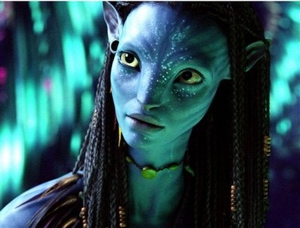
Since shattering box office records and baptizing millions into the cult of 3D, Avatar has sparked new pop psychology phenomena like, "Post-Avatar Depression" and the "Avatar blues." Audiences are so engrossed by the 3D beauty of Pandora (the planet on which the story takes place) that they experience feelings of depression when faced with the stark realities of real life outside the theatre.
Unless our provincial government can write a new ending for B.C.'s own real life Avatar story, we feel that British Columbians may be susceptible to the Avatar blues. Especially when they realize that our province is in danger of losing its own natural wealth because of one dimensional policy thinking.
A magical place of biodiversity
Pandora is incredibly rich with plants and animals and so is British Columbia. We are home to 76 per cent of our nation's bird species, 70 per cent of its freshwater fish, 60 per cent of its evergreen trees, and thousands of other animals and plants that rival the weird and wonderful wildlife of Avatar: wolves that fish for salmon, white bears that inhabit ancient rainforest valleys, and even a slug -- the dromedary jumping slug -- that can twist its body off the ground to escape predators.
On Pandora, nature is under threat -- the same is true in B.C. Government scientists believe that at least 1,600 species, including grizzlies, caribou and orca whales, are currently at risk in the province. But here's the twist: On Pandora, the threat of climate change is non-existent, while in British Columbia, it threatens to exacerbate the precipitous decline in wildlife and ecosystems that is already underway.
A new report by a former senior scientist with the provincial government, finds that when it comes to fighting climate change, nature conservation is not part of the provincial climate change strategy.
One dimensional? Yes.
Short-sighted? Unfortunately.
3D? Definitely not.
More depth is required if British Columbians are going to avoid the Avatar blues.
Tame the policy dragon
To achieve this new depth, we're not proposing that Gordon Campbell tame any flying dragons (like they do on Pandora), but we are proposing an act of policy making that requires just as much bravery:
We need to conserve at least 50 per cent of our province's land base if we're going to give our plants and animals a fighting chance to cope and adapt to climate change.
The 50 per cent figure emphasizes expansion and connection of existing protected areas as well as new buffer zones and restoration areas, allowing sustainable resource development while providing refuge for species across a landscape that is changing due to climate change.
And while this figure might sound audacious, our vision for large-scale conservation in B.C. isn't just fiction or film making.
Ontario and Quebec have already made commitments to protect more than 50 per cent of their Northern Boreal regions, and B.C. has its own successful examples to build on, including Haida Gwaii and the Great Bear Rainforest. Benefits of large-scale conservation include greater clarity for where and how resource development occurs, as well as economic and social benefits like maintaining clean air and water and new markets for carbon and conservation trading.
We need a '3D' strategy
Even at a time when the B.C. forest industry is undergoing deep structural changes and job losses, large scale conservation still makes sense, offering new opportunities for light-touch forestry and sustainable resource development.
In a recent letter to the Premier, nine of the world's top climate scientists and environmental thinkers, including Dr. James Hansen, Dr. Michael Soulé and Bill McKibben, warn that, "The continued and potentially dire impacts of climate change can only be avoided or forestalled if we act now to dramatically reduce greenhouse gas emissions and to slow the rate of ecosystem degradation."
Only when we've added the dimension of nature conservation to provincial efforts to fight climate change will be have a truly "3D" strategy with the depth to tackle the real life challenges facing our province today.
Maybe then British Columbians can steer clear of the Avatar blues, secure in the knowledge that their own real life Pandora is safe and sound. ![[Tyee]](/design-article.thetyee.ca/ui/img/yellowblob.png)
Read more: Politics, Environment





Tyee Commenting Guidelines
Comments that violate guidelines risk being deleted, and violations may result in a temporary or permanent user ban. Maintain the spirit of good conversation to stay in the discussion.
*Please note The Tyee is not a forum for spreading misinformation about COVID-19, denying its existence or minimizing its risk to public health.
Do:
Do not: