
News

BC Launches Hyper-local Poverty Strategies

Minister says plan avoids cookie cutter approach, advocates say it avoids making real change.

By Katie Hyslop, 30 Apr 2012, TheTyee.ca

Inner city dwellers

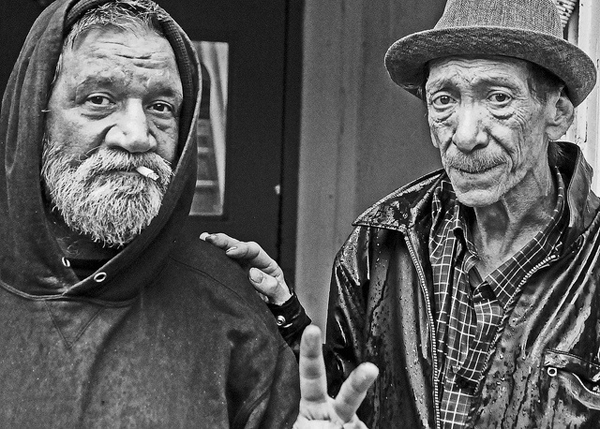
Vancouver-inner city dwellers. Not all poverty is alike. Photo by popeyelogic via Your BC: The Tyee's Photo Pool.

Related

Close to a decade of demanding a provincial poverty reduction strategy seems to have finally paid off for British Columbia's poverty reduction activists. The province recently announced the launch of a community-based poverty reduction strategy beginning as a pilot project in seven communities this summer, expanding to all 47 communities by 2014/15.

Unlike every other province and territory with the exception of Saskatchewan, British Columbia has yet to commit to provincial strategies for poverty reduction. But B.C.'s Liberal government says their local strategies will improve on the provincial model by looking at the unique needs of communities and avoiding a cookie-cutter, one-size fits all method.

But poverty reduction activists say this new plan, which comes with no new money or policies, misses the point. They argue the main steps needed for poverty reduction are sweeping, province- and Canada-wide changes and they fear government's new plan won't bring poor British Columbians any further ahead.

Local is better: McNeil

In partnership with the Union of BC Municipalities' (UBCM) Healthy Communities Committee, the Ministry of Child and Family Development (MCFD) will work with the seven municipalities to develop unique poverty reduction plans by September. Selected by the UBCM, the communities involved are Surrey, New Westminster, Port Hardy, Cranbrook, Prince George, Kamloops, and Stewart.

Unlike a provincial poverty reduction strategy, MCFD Minister Mary McNeil says this plan will focus on each community's particular experience of poverty. Each community will have a committee comprised of MCFD staff, municipal staff, poverty reduction organizations, and low-income residents to determine their particular strategy.

McNeil told The Tyee the plan came from the realization that government was providing poverty-reduction programs without consulting with communities first about their needs.

"Last June we were talking with a really small community of 500 people. The province had four to five programs for kids zero to six within that community. They loved each of the programs, but no one had the conversation with them of what do your (age) zero to six kids need in this community?" she says.

McNeil says the government has studied other provincial strategies and B.C. is already ahead of the game: by May 1 they will have raised the minimum wage from $8 per hour to $10.25 in one year, and they have built 21,000 new affordable housing units since 2001.

Instead, this strategy is about ensuring duplicate services aren't being provided between MCFD and the other ministries. It's about making sure communities, and families, receive services tailored to their individual needs, while keeping the budget low.

"The beauty of what we're doing is we’re going in with open minds. Let's take a look, see what it is that we're all doing, see what the community needs, does it mesh," says McNeil.

"It is a real tough fiscal climate right now, and first off that means there isn't a lot of money that we can throw into anything. But also there isn't a lot of money we can waste."

Once the seven strategies are completed, McNeil plans to have 20 community plans in place by the end of 2013. The ultimate goal is a plan for each of the province's 47 municipalities, based on the success of the first seven.

Government not doing their job: Garner

The B.C. Poverty Reduction Coalition is glad the province has recognized poverty is an issue, and that they are seeking community input, working across ministries and have set clear timelines and goals to complete each strategy. But that those are the only positives of this poverty reduction method.

"Fundamentally it's pretty lacking. It doesn't have any new policies, any new priorities, and any new money, so it's not really getting at any of the systemic causes of poverty," says Trish Garner, organizer of the B.C. Poverty Reduction Coalition.

"The truth is that there are one-size-fits-all measures that do need to be in place that would make a huge difference, like raising the minimum wage even more than it has been, raising welfare rates, building more social housing -- something that we were good at in the past -- (and a) universal child care system.

"These are things that can't happen at the community level, they need the provincial government to take the responsibility for that."

Garner says what government has achieved so far is paltry, particularly regarding housing. She says a partnership between the provincial and federal governments saw 1,500 new units of social housing built per year from the 1970s to the 1990s. But from 2005 to 2010 the B.C. Liberal government has built just 280 new units.

The Coalition did meet with MCFD in March to express their concerns. But Garner says few of their suggestions were utilized in the end, including advocating to the federal government for national housing and childcare strategies.

"It doesn't do what the provincial government is supposed to do, which is actually introduce bold new policies that would make a huge difference to people," she told The Tyee.

Local plans could lead to provincial strategy

There are currently services for the homeless and unemployed in Cranbrook, but Mayor Wayne Stetski is optimistic a community poverty plan could help break the cycle of poverty. He's glad the province is starting out small, however, and sees these first seven plans as a test-run of an eventual provincial strategy.

"The risk with a province-wide initiative is you're not really sure what kind of success rate you're going to have. I think that starting small and learning from that can actually, in the end, be very cost-effective and effective in terms of implementation on a province-wide basis. Personally I think it's a good way to go," he says.

"What is learned in Cranbrook potentially may help other communities and other parts of the province. I'm excited about that."

The city of Surrey was already developing a poverty reduction strategy when this announcement was made. A city where approximately one-third of the population is children, city council estimates 16 per cent of Surrey's residents live under the poverty line.

Surrey's strategy should be complete by July, a full two months before the provincial government's. But Councillor Judy Villeneuve is eager to see government help make a difference, hopefully by adopting some of Surrey's strategies.

"We certainly can't accept the downloading for all the responsibility because we only get eight cents out of every tax dollar. So our financial resources are limited, and our mandate as city council is not to be providing social services, but developing infrastructure and services for a healthy community," she says.

"We want to take peak care of people on our streets, and so we play a strong advocacy role, but we're also willing to work hand in hand if there's resources from other levels of government."

Villeneuve wants a provincial strategy, too, however. Her argument is poverty is costing the province too much money, particularly to our health and judicial services, and needs to be a top priority for the province.

McNeil hasn't ruled out introducing new policies or funds for reducing poverty once the community plans are done. She says she expects common themes and issues to show up between communities in terms of their poverty reduction needs.

Garner says she believes McNeil sees the value in a provincial plan, but her government doesn't.

"They're still pushing their jobs plan as an approach to reducing poverty, and we know that that's really not getting at the key problems. We know that two-thirds of people living in poverty have a job already," she says.

At least seven community plans should be completed by the May 2013 provincial election. But that doesn't give government much time to prove local plans are the way to go before British Columbians make the ultimate decision at the ballot box.

[Tags: Politics, Rights and Justice.]  [Tyee]

9  Comments:

Login or register to post comments

  • rantnic

    1 year ago

    DOWNLOADING

    It's called downloading. The Pervinicial Grubberment gives the municipalities the job of dealing with the poverty issues. Does anyone really think they will give the municipalities the money and resources to properly do that job?

    We no Chrispy and or her lot ultimately, won't give anything except a headache to the local governments.

  • Cynic

    1 year ago

    "It is a real tough fiscal

    "It is a real tough fiscal climate right now, and first off that means there isn't a lot of money that we can throw into anything. But also there isn't a lot of money we can waste."

    But there is no shortage of money. Society must understand that money should be a public utility, and not the mechanism for power and control that it is now. Our general ignorance about where money comes from perpetuates the existence of poverty. The truth is that the banking system manufactures poverty, and it does so with mechanical reliability. There's no escaping it as long as we remain ignorant of it.

    I encourage everyone to avail themselves of the many online resources that are dedicated to eradicating poverty by revealing the subterfuge that is money and banking. Here's a good one: http://www.monetaryreform.com/MR/videoPage.htm

  • morechatter

    1 year ago

    The Minister is out of her mind

    And runs the Ministry like it was a war zone where the fight is against the poor who are armed with nothing but their rights. The think tank has come up with a plan that ignores human rights to help eliminate the poor. I predict the Minister will find herself with out a job and there will be a class action filed on the behalf of British Colombians disabled who have had to live with the abuse because the Minister's policies demand it. What the Minister has allowed to go on is a sad state of affairs as 5 workers on a mountain help come up with new ways to get at the disableds resources as silivitate at the thought of abusing the already hurt. It is how the workers get their kicks. Physicians question the practices of the Minister and if the Ministry is run by nuts while the game is on killing off the poor.

  • Fritz

    1 year ago

    Persons v. Persons

    As long as the likes of Gwyn Morgan who admires the "journalism" of former tobacco lobbyist Ezra Levant and sits on the right-wing Fraser Institute's Foundation board has a say in Lieberal policy there will never ever be anything meaningful done by Crusty and/or her successors pretense about "families first" or poverty reduction.

    The Best Politicians Money can Buy
    Real life is "families first" is of the utmost importance for the corporate crime families and it will remain that way while the "law" continues to define a corporation as a "person" and upholds their right to fund elections. Welfare is for the corporate "person" not the individual.

    A Golden Parachute for Silence
    Look at SNC Laval which gave a golden handshake to two of its executives AFTER they stole millions from them AND ONLY after Cindy Vanier was arrested by the Mexican Police. Then and only then they self righteously told the RCMP they had been stolen from.
    [UNSUPPORTED ALLEGATION REMOVED. -MODERATOR.]

    Only after enough citizens have had all their tangibles and apathy taken from them will there be a chance of change to this corrupt undemocratic greedy system.

    “We can have democracy in this country, or we can have great wealth concentrated in the hands of a few, but we can’t have both.”
    -US Supreme Court Justice Louis Brandeis

  • rantnic

    1 year ago

    TAX THE BANKS

    Tax the banks if we need money. Not only do they have more than enough of the stuff. They don't really need it.

    When the bank tax first came in the banks all closed up and went back to Ontario. Didn't they?

    As long as there are profits to be made the banks and any other business will stay here, no matter how much they are taxed.

    Who says there is no money?

  • Fritz

    1 year ago

    Corporate Welfare & Tattered Social Safety Net

    Canadians have been subjected to a constant refrain: Canada has the “most sound banking sys­tem in the world”

    Yet Canada’s largest banks dipped into programs provided by the U.S. Federal Reserve, the Bank of Canada and the Canada Mortgage and Housing Corporation (CMHC) — all at the same time.

    The only difference in the Canadian context is how the Canadian government and banks have got away with it without the wave of popular indignation that unfolded in the U.S. (which, ultimately, was to no avail).

    A Handout to the Banksters
    Think about this the next time the banks nick you for a "service" charge but pay you zilch interest: The banks got at least a $114 billion at its peak. That works out to $3,400 for every man, woman and child in Canada.

    Raped at Both Ends
    For decades, Canadians have been told that there is simply no money available for their tattered social safety net and public services. And so for decades, Canadians have had their public assets put on the chopping block for criminally low prices just so that the process of capital accumulation could continue to benefit the few at the top of society. Honesty is the best policy when there is no other motive is alive and well.

    Over the same period, real wages have stagnated and the gap between the richest and the poorest has widened significantly.

    In a bitter irony, the banks lend money to the federal government to finance the bailout, and with the money raised through the sale of government bonds and T-Bills, the government finances, via the CHMC, the banksters' bailout.
    It is a circular process. The banks are the recipients of the bailout as well as the creditors of the State. The federal government is in a sense financing its (you & me) own indebtedness and even pays INTEREST to those very same banksters for the money they gave them.
    Alas, parasitism is the social logic of a class-based economy.

    Media coverage was minimal. There was no parliamentary debate. No discussion, no debate as one would have expected from the opposition parties.
    This is not a democracy, our male relatives as it turns out fought in WW11 against facsism in vain.
    http://www.cbc.ca/news/business/story/2012/04/30/bank-bailout-ccpa.html
    http://www.policyalternatives.ca/sites/default/files/uploads/publications/National%20Office/2012/04/Big%20Banks%20Big%20Secret.pdf

    ps: Going back to last March I see the Tyee moderator is kept pretty busy deleting our commentaries about scary dude Gwyn Morgan ~_~

  • rantnic

    1 year ago

    OUR FATHERS FOUGHT FOR US

    Now is when we should be fighting for our children. Our fathers fought in a war, they knew how to use guns and most importantly they would, and could take matters into their own hands to overcome the greedy fascists.

    That is the only reason we had such prosperity for the common man in the 50's 60's and 70's.

    if only those politicians were as afraid of us as they were of our fathers we might still have some democracy in this country.

    Occupy the ballot box before it's too late.

  • Chris J

    1 year ago

    They Think We're Stupid

    There is no funding for this initiative. Ministry consultants already on the payroll are being assigned to work with communities (local government, business, NGOs, etc) to come up with an ‘action plan’, targeted at families with children,
    that ‘uses existing resources in each community’.

    Basically, the Liberals are sending some bean-counters out into 7 communities (with 20 more to be chosen in the next two years) to help communities make service delivery more efficient.

    It sort of makes sense. The government is on a tight budget and are looking at ways of cutting costs. They hear us clambering for more help to reduce poverty, and so, seeing as they don’t want to spend money on poverty, they want to help us make sure we are making the most of what we have. Pretty slick. Good way of not spending a dime on the problem, and yet appearing as if they’ve set out to do something innovative and comprehensive.

    NDP Social Development Critic Carol James had this to say: “I worry we’re going to be downloading responsibility to communities,” James said. “It says to communities, ‘you have to talk more, you have to reduce redundancies.’ The community organizations I know have been doing that incredibly well. They’ve had to stretch dollar, they’ve had to find efficiencies to survive.”

  • jiksaw213

    51 weeks ago

    so complicated

    well, it seems the politicians are trying to confuse us.
    mahjong games

    • The discussion for this story is closed. No more comments can be added.