


 SHARE:
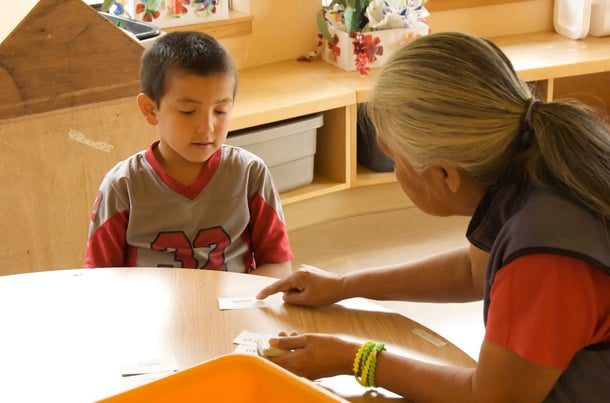
A new agreement for funding of First Nations schools in B.C. puts them "roughly" on par with public schools, but doesn't settle a six-year funding debate that would finally allow First Nations in the province to exercise jurisdiction over their own education.
The Tripartite Education Framework Agreement signed in Ottawa today includes a promise of $15 million annually in extra education funding for First Nations schools and secondary services offered by the First Nations Education Steering Committee (FNESC), a non-profit organization that provides administrative, advocacy, and information support to First Nations schools in the province. Where First Nations schools currently receive approximately 25 per cent less funding than the public schools, FNESC says this money should bring them up to par starting this September.
"It formalizes the relationship between First Nations, Canada, and the province, and it sets out rules and responsibilities for each of us," says Debbie Jeffrey, executive director of FNESC. "(The) $15 million makes First Nations schools funding roughly comparable to similarly situated schools in our province. So it's huge in a number of ways."
The agreement formally recognizes FNESC as a body capable of administering educational programs and second level services for First Nations schools in the province, and the role they have served in bringing First Nations schools together. It's this level of cooperation that prompted the federal government to choose British Columbia in 2010 for its first tripartite agreement with the province's First Nations schools.
It will also allow students to transfer back and forth between the reserve and public school systems without academic penalty -- something often not possible for students from reserve schools that received inadequate funding, says Jeffrey. This includes an agreement from the province to work with FNESC to issue graduation certificates to students who graduate from reserve high schools.
Minister John Duncan of Aboriginal Affairs and Northern Development was unavailable for an interview with The Tyee, but said at a press conference held earlier this morning in Ottawa that he was "pleased that (in) working in partnership with First Nations and the province of British Columbia, First Nation students will have the necessary tools to succeed. Together, we will continue to put students first so they become confident, educated and skilled individuals who will create a strong economic future for First Nations communities and Canada."
Jurisdiction is 'end goal': FNESC
Part of the promise to fund First Nations education on par with the provincial system means the negotiation of a new funding formula for technology in schools, one that will mean any increase in technology funding for public schools will result in a similar increase for reserve schools. It's a big step for reserve schools, which have never received funding for technology, and had their Internet funding cut last year by the Ministry of Aboriginal Affairs.
The agreement also opens the door for negotiations between the parties over education policies and legislation, something Jeffrey says is unprecedented in Canada.
"They've committed to develop B.C.-specific education policy and guidelines required to implement the agreement. That's huge for us. We've never been able to have a formal commitment like that from Canada, so we're hugely pleased with that one," she says.
What the agreement does not cover, however, is a funding formula that allows for First Nations complete jurisdiction over education, something B.C. First Nations gained through legislation published by the federal government in 2006. But negotiations over the jurisdictional funding formula stalled in December 2010 -- the same month the $15 million in extra funding was first announced -- when government came to the table with three new options: a funding cut; a formula that took own-source revenue into account; or losing some control over education jurisdiction.
"If a First Nation is generating any amount of revenue, that amount of revenue would be clawed back from the education transfer payments from the department," Christa Williams, jurisdiction negotiator with FNESC, told The Tyee last June.
FNESC says continuing negotiations rests entirely on the federal government removing those options from the table. However, Jeffrey says complete jurisdiction over education is their end goal, and as great as the tripartite agreement is, they still need more, including much desired funding for language and culture.
"We're always optimistic, and we want to achieve (jurisdiction), and now that we have a more predictable funding for First Nations schools and second level services, that certainly sets the stage for advancing those discussions," she says.
[Tags: Education.] ![[Tyee]](/design-article.thetyee.ca/ui/img/yellowblob.png)
Read more: Indigenous, Education









Tyee Commenting Guidelines
Comments that violate guidelines risk being deleted, and violations may result in a temporary or permanent user ban. Maintain the spirit of good conversation to stay in the discussion.
*Please note The Tyee is not a forum for spreading misinformation about COVID-19, denying its existence or minimizing its risk to public health.
Do:
Do not: