News

A Tyee Series

Why the Pacific Carbon Trust Draws Political Heat

Making hospitals and schools transfer tight dollars to corporations is no easy climate policy to sell.

By Tom Barrett, 5 Dec 2011, TheTyee.ca

SchoolCarbon

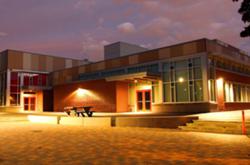
Penticton High School: Public educators across BC wonder why they must pay energy giants to cut emissions. Photo courtesy of bulliver from Your BC: The Tyee's Photo Pool.

Related

B.C.'s carbon neutral government strategy uses a carrot-and-stick approach to fighting climate change.

The private sector gets the carrot. The public sector gets the stick.

This has caused plenty of criticism, especially from public sector bodies. School boards have been angrily vocal about having to send tax dollars to a Crown corporation called the Pacific Carbon Trust (PCT), which uses the money to pay profitable corporations like Encana to cut their greenhouse gas emissions.

Politically, it's a tough sell as well. New Democratic Party environment critic Rob Fleming complained recently in the legislature that "public dollars that should go to alleviate wait-lists, improve learning outcomes, replace inefficient boilers or install heat pumps and solar walls at schools are instead being given over to profitable cement, gas, spa and resort companies with revenues and assets worth hundreds of billions of dollars.

"We're still in the process of giving scarce education and health care dollars to massive GHG emitters like Encana," Fleming said. "Our public sector entities are being unnecessarily constrained in their own ability to plan, save and invest in projects that will green our schools and hospitals and actually lower the energy costs borne by the taxpayer."

Even some Liberals are unhappy with the policy. When B.C. School Trustees president Michael McEvoy complained about the strategy to the legislature's finance committee recently, Liberal backbencher Jane Thornthwaite told him: "I get what you're saying about the [Pacific] Carbon Trust. I tend to agree with what you're saying."

Admittedly, the money spent on carbon offsets, as a percentage of public sector budgets, is tiny. But in times when money's tight all over, such complaints are not going to stop.

Good idea at the time?

So why does the government give health and education dollars to big corporations? To understand the policy, we have to go back to February 2007, when then-premier Gordon Campbell decided to fight climate change. His government outlined a sweeping package of emissions-fighting policies, including a plan to make the B.C. government carbon neutral.

Over the next year, civil servants put together a plan that promised all sorts of spinoffs. The government would cut its emissions. Emissions that weren't cut would be offset, tonne for tonne, by carbon eliminated elsewhere in the economy, making B.C.'s public sector a net-zero greenhouse emitter.

If you accept that offsets represent genuine cuts in emissions -- a debatable conclusion -- the idea made sense from a policy point of view. The atmosphere doesn't care where greenhouse gases come from; a reduction in the private sector is as good as a reduction in the public sector.

At the same time, the strategy would show that the B.C. government was leading the way in the fight against climate change. (And, some cynics speculate, wouldn't hurt the government's image if people got confused and thought the entire province was carbon neutral.)

Meanwhile, the government's commitment to carbon neutrality would, through the offset strategy, also give the private sector some cash to help cut its carbon.

But that wasn't the end of the anticipated benefits.

"A new Pacific Carbon Trust will foster economic growth from new opportunities in carbon credit trading and carbon offsets," said the 2008 Throne Speech.

Not only would government help to reduce BC emissions, it would create jobs, "in new fields of employment like carbon accounting, carbon brokerage, carbon auditing and carbon trading."

By offsetting government emissions, the folks at PCT would become experts in the arcane world of carbon offsets, poised to profit from that expertise in a new, low-carbon economy.

At the time, carbon offsets looked like they were going to be a lucrative global commodity. Climate change was a growing policy concern and offsets promised to be an important and profitable tool in the battle to keep the planet from broiling.

Then the global economy tanked.

A new climate

Climate change was no longer such a policy priority. B.C.'s provincial budget went into the red, putting a squeeze on budgets throughout the public sector. There was less money for capital projects that would cut emissions and less money to buy offsets.

Globally, slower economic activity has meant less demand for carbon offsets. Prices have slumped to the point where offsets are now the world's worst performing commodity.

In B.C., the private sector has become less interested in selling offsets. In a gloomy economy, corporations are not so keen to undertake capital projects of any kind, including those that reduce emissions. The result is that the Pacific Carbon Trust is having "challenges" buying enough offsets to sell to the public sector.

"A risk for PCT," says the trust's latest annual report, "is not being able to source enough quality offsets because of a delay in starting projects, due to policy and slow economic recovery in North America." (The trust says it has enough offsets for the first three years of carbon-neutral government. Carbon markets, a spokesperson said in an email, "continue to mature.")

Amid all this uncertainty and belt-tightening, this was the first year that public sector organizations were required by law to buy offsets, at $25 per tonne, for carbon spewed in 2010.

Catch $25

School districts, which have elected representatives who are used to taking on Victoria, have been the loudest to complain. They see themselves caught in what a report from the Columbia Institute calls a "Catch $25." Says the report:

  • "School districts are legislated to reach carbon neutrality, but the province hasn't given sufficient funds to make the necessary infrastructure changes;
  • "Districts are then forced to buy large numbers of carbon offsets from a government supplier at inflated prices, further reducing their capacity;
  • "The bigger the emissions gap, the more offsets districts have to buy; the more offsets they have to buy, the less they can shrink emissions."

"The way that the system's been set up, it actually gets in the way of school districts doing real emissions [reductions] within their own operations," said Charley Beresford, the executive director of the Columbia Institute and one of the report's authors. "They're put in a box where they're forced to spend money buying offsets and then they don't have enough money to apply to those things that would actually end up in reductions."

School districts spent less than one per cent of their operating budgets last year buying offsets. But school budgets are "very, very tight in the first place," as Beresford puts it. "There aren't enough operational dollars to run the programs already and clearly there aren't enough capital dollars to make the fixes that are required."

Hit twice

Over the years, the carbon neutral government policy has also developed some uneven features, thanks to a political fix that the Campbell government made to the carbon tax in the fall of 2008.

Individuals and corporations get income tax breaks that roughly balance what they pay in carbon tax, making the tax nominally "revenue neutral." Because they don't pay income tax, school districts and local governments argued that the carbon tax wasn't revenue neutral for them.

So the Campbell government promised them a rebate on their carbon tax. To collect the rebate, a local government or school board had to promise to go carbon neutral – even though school districts were already required to do so by law.

The same deal wasn't offered to other public sector organizations like hospitals and universities, however. As a result, some public sector organizations pay $25 a tonne for their emissions – the price of offsets – while others pay a total of $50 a tonne -- $25 for offsets and $25 for the carbon tax.

Independent MLA Bob Simpson notes that the rules for going carbon neutral for local governments are much less onerous than for the rest of the public sector. Instead of buying offsets, municipalities can invest in local projects that reduce emissions. And if they do choose to buy offsets, municipalities don't have to go to the PCT; they can buy them at cheaper prices from other offset sellers.

Why did local governments get a better deal? "They have a better political lobby," said Simpson.

And that's led to an odd situation: if a local government needs more cash to purchase offsets, it can always raise taxes. A private corporation can raise prices. But other public sector organizations like schools and hospitals can do neither of those things.

"The only sector that does not have revenue-generating capacity is the only one that's capped and taxed at $25 a tonne," say Simpson. "It's bizarre."

Next, on Wednesday: Some possible solutions.  [Tyee]

17  Comments:

Login or register to post comments

  • igbymac

    24 weeks ago

    The environmental problems are the fallout

    ...of capitalist dogma unleashed. Trying to fix these symptoms by administering capitalism with a 'kinder, gentler, machine-gun hand', particularly at this late date, is a fool's paradise. It might slow the inevitable crash, but it won't turn the car around.

    The only thing we can assuredly change is our own thinking. Remaining capitalist bound for a fix is laughable, like a dark comedy.

  • snert

    24 weeks ago

    igbymac

    Quote:
    The environmental problems are the fallout

    ...of capitalist dogma unleashed.

    I guess this doesn't apply to "environmental problems" in Russia and China, historically that is?

  • ron wilton

    24 weeks ago

    gut feeling

    I'm still confused. I never quite understood this 'carbon swap' chicanery, and this article didn't clarify much for me.

    My gut feeling is that we've been had, again, by a sneaky, conniving sociopathic, corporation butt kissing premier and government and that ain't gonna change 'til their all behind bars. Steel bars that is.

  • alive

    24 weeks ago

    spell

    transfer tight dollars to corporations duh?

    Please use sense as well as a spell checker

  • raging senior

    24 weeks ago

    GOVERNMENT RUNNING AMOKE

    This Government needs to stop and look and listen, which would be hard for them. They are elected by the people to GOVERN but instead they do unbelievable things to the population and reward THE CORPORATIONS AND THE RICH WITH TAX BREAKS. The population has to pick up for the mistakes of Government and there are many - legal fees for court cases involving , HEU workers which the Government lost and paid $84 million in damages, did not include reinstated layed off workers, legal fees for stripping the BCTF contract in 2002, taking $284 million from the Education Budget. This fiasco is not settled yet,$6 million for Basi & Virk BC RAIL corruption trial, $7 million to fight the ANTI-HST citizn's initiative, $7 million for cancelling a uranium mine exploration, untold millions of dollars on the OWELYMPICS, these are not all of the Government's screw ups. The Carbon Offsets and Carbon tax is just throwing money to the wind, like many other things the Government does is introduce a programme with no investigation or forethough then make up the rules as they go along.
    People write about the decade of distruction under the NDP have got their heads shoved up their collective asses when it comes to the SLIMY LIBERALS. We need the elected Governments to govern for the people and not their own screwed up agenda.

  • Urban Sprawl

    24 weeks ago

    The Carbon Trust is a Greenwashing Scam

    The net impact of this policy is that money is bled from education and health, so the provincial government can pretend to do something useful about climate change (while accelerating the exploitation of shale gas, and looking at lowball Hydro industrial rates to subsidize liquefying natural gas at Kitimat for export).

    It's really a hidden tax on health and education.

    And the mechanism that they chose for this "greenwashing government" exercise is telling: so-called carbon offsets are a mechanism for speculators and hedge funds to profit from climate catastrophe. The entire scheme is as phoney as a two-dollar bill, but it harmonizes with the Libs' values because it transfers money from children's needs to business.

    So instead of adopting measures to reduce fossil fuel extraction, for example, the Clark government is forcing school districts to pay a landowner in the interior NOT to log his land. The notion that this reduces GHG emissions is totally fallacious. It contributes nothing to the fight against climate change: the amount of annual logging in BC is driven by the market and government regulation.

    If trees are left standing on one mountainside, all that means is that more will be logged on another to meet the market demand and the government quota. And meanwhile the government is accelerating the total logging and combustion of timber by forcing Hydro to sign onto long-term contracts with biomass IPPs.

  • Artemesia

    24 weeks ago

    Schooldaze indeed!

    Why is anyone surprised that the scheme to grab more money from the public based on what is now exposed as a massive international scientific boondoggle, should penalize children? Wolves always pick on the weakest in the herd.

    Everyone is outraged at the way the system has been gamed, but few point out the scheme was based on a false premise to begin with.
    Those of you who still think production of CO2 is problematic should spend some time taking this test. You may be amazed at how little you know and by how many lies have been told.
    http://www.geocraft.com/WVFossils/GlobWarmTest/start.html

  • LeftSeater

    24 weeks ago

    Shell game....

    I am of the opinion the carbon neutral/carbon trust/carbon offset/carbon boogieman shtick is an elaborate government shell game along with a convoluted money laundering/transfer scheme based on fraudulent science....

    It is couched within eco-friendly language in an attempt to gain some credibility with the rubes who insist we all jump on the “paying something for nothing” flim flam bandwagon....

    And speaking of boogiemen....

    http://www.wherewillsantalive.ca/

    Run children, run!--- run to your piggy banks....

  • dave49

    24 weeks ago

    The HST referendum and an election call

    Lots of pundits said that the Liberals said no to a fall election because of the loss of the HST referendum. It would also have meant running an election campaign during a province-wide labour dispute with BC's teachers. At least that might have had the benefit of raising the profile of this disgusting, pick-pocketing policy.

    Enough is enough, give the money back to the schools and hospitals so they can improve their energy efficiency.

  • gsarahs

    24 weeks ago

    What a SCAM!

    Centennial, the school I graduated from, was built in 1966. It will be demolished in the near future and replaced with a school built for 1100 students. The current student population is over 1500 and has been as high as 2500 students. It has never been lower than 1500 students, but that is not going to stop this government from building a replacement school which will be too small even when built.

    Look around our district and you will see newer schools that have always had portables since new. Not only are they replacing the building, the amount of space for each area is only a fraction of what the current building is, and class sizes were smaller when the school was built in 1966. This carbon scam is just another way that this government is screwing the public school system.

  • igbymac

    24 weeks ago

    snert

    ,,, the argument isn't the pollution, per se, it is the mindset that capitalism brings which has everyone thinking they are entitled to an ever expanding, constantly consuming, forever wasting lifestyle which is being perpetuated by the establishment.

  • firefox007

    24 weeks ago

    Carbon-Trading Scams.

    A poster:

    "It's really a hidden tax on health and education."

    Exactly; the schools can't afford this crazy hit on their tight budgets, why are we wrecking education for this Freak Show?

    "And the mechanism that they chose for this "greenwashing government" exercise is telling: so-called carbon offsets are a mechanism for speculators and hedge funds to profit from climate catastrophe."

    Absolutely true; and one can prove it; in Europe were this scheme was tried and failed, the Mafias got right into it! At least half of the European carbon-swaps were deemed to be in the hands of illegal business.

    Also the US states like California, who we were supposed to be trading with, have pulled out of this deal totally!

  • the real ODB

    24 weeks ago

    it's a scam

    Carbon trading is just another capitalist, free market derived scam. And calling emissions a "commodity" just shows how ludicrous the whole shell game is. If government buildings are to go carbon neutral, measure their carbon footprint and invest in whatever is required to reduce it. Period. It's a no brainer. And we don't have to give public tax dollars to the private sector who will use "creative accounting" to make it all just sort of disappear. This whole exercise was designed to make Gordo "I've never met a rich person or martini I didn't like" Campbell look like he gave a shit about the environment while filling his buddies coffers. And Chrusty will no doubt keep this exercise in futility chugging along.

  • Granville

    24 weeks ago

    Carbon cap-and-trade etc. just a scam

    I don't see how forcing schools and hospitals to pay a carbon tax for their fuel use helps anyone. It is just a transfer of money with no purpose.

    The objective is to reduce fuel use, and this could actually cost money in itself in the form of investment in new technology.

    Paying a third party to 'fix' the problem is no solution.

  • Argulion

    24 weeks ago

    Money talks louder and governments listen

    This carbon trading scheme would have some sense if the money flowed in the direction of schools and hospitals. A benefit to all.

    In my opinion, politics has been perverted. The 'public good' has become last and least important in economic policy decisions.

  • Vox.Pop

    24 weeks ago

    The real puppet Master

    "Carbon credits" are just another Campbell scam for secretly subsidizing friends of the BC Liberals in Big Business on the backs of the public. The BC government has not only forced all our school districts to buy "offsets" from the government's own secretive 'carbon broker' (Pacific Carbon Trust or PCT) for nearly $5 million in 2010 but also that PCT paid Encana, one of Canada's gigantic private energy companies, millions of dollars for their so-called "carbon efficiencies".

    People need to realize that Encana's CEO from 1994 to 2006 was Gwyn Morgan, who has been a major financial backer of both Gordon Campbell and the BC Liberals for many years and is still the chief puppet master pulling the strings of Premier Christie Clark. This is probably a direct conflict of interest as Mr. Morgan most likely still owns a significant amount of Encana stock (as CEO he would have received very many 'bonus' shares) and from which he would still receive generous dividends.

    PCT is just the type of ideological operation that neo-conservatives have been using round the world to transfer wealth from public to private hands.

  • pwlg

    24 weeks ago

    great article and some great comments

    Citizens through property taxes pay the bills for our schools. To divert these taxes to corporations through a shell company disguised as a crown corporation is a sin!

    These companies already enjoy a 42% decrease in their taxes since the Socred-Liberal coalition took power in 2001.

    • The discussion for this story is closed. No more comments can be added.