


 SHARE:
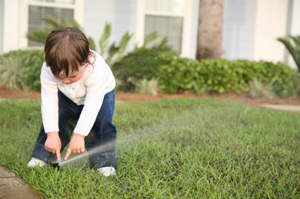
The British Columbia legislative committee on cosmetic pesticide use has finished public hearings and is moving towards making recommendations. So far, it is unclear whether that will lead to a change in the law governing how toxic chemicals are used in the province.
The committee will receive submissions on the issue up until Dec. 16, but has asked staff members to begin organizing what's been said so far.
"We want staff to have enough direction that they can make use of the time they'll have during December and early January to sort through all the information and organize it in the way that will be most useful to the committee when we come back to that job in early January," said Bill Bennett, the committee chair.
The committee will deliberate, may invite back some witnesses to clarify points they made, and come up with a report. Said Bennett, "We'll make some recommendations I'm sure to do something, I'm just not sure what."
Since Oct. 6, the committee has heard divergent views, citing conflicting studies and research, on the use and safety of pesticides and what the committee should do.
Presenters differed on safety, need for ban
Here is a sample of what presenters told the committee:
Lindsay Hanson, Health Canada, Oct. 6: "The chemicals themselves have a potential to be hazardous, that's why we have a strong regulatory system in Canada."
Blair Veitch, B.C. Landscape and Nursery Association, Oct. 26: "While we support the ban of cosmetic pesticides, we also as a profession understand that at some point we need to take care of our green space."
Jerry Rousseau, National Allied Golf Association, B.C., Oct. 26: "Frankly, the golf industry in B.C. is opposed to further restrictive legislation dealing with pesticides. We do not distinguish between cosmetic pesticides and non-cosmetic."
Andrew Gage, West Coast Environmental Law, Nov. 7: "I just can't emphasize strongly enough that I don't think anyone reading a pesticide label, whether it be for agricultural or domestic use -- these ones are all for domestic use because of the nature of topic you're looking at -- would read these labels and say: 'Well, these are safe products that we don't need to be concerned about at all.' They are clearly very powerful chemicals that have consequences."
Pierre Petelle, CropLife Canada, Nov. 7: "We're the trade association that represents the manufacturers, developers and distributors of the products we're talking about here... The products they provide are valuable tools that contribute to improved human health and a better environment."
Catherine Vakil, family doctor teaching at Queens University, Nov. 7: "I'd... like to congratulate the B.C. government for considering this extremely health-protective action which will help to ensure that B.C.'s children have the same health benefits as children in Quebec, Ontario and other provinces that have passed legislation ensuring that their children are not exposed to these toxins unnecessarily.
"I hope you'll realize that this is a huge step forward in public health to help reduce the rate of many illnesses caused by pesticides, including childhood cancer, which has increased dramatically in past years, partly due to pesticide use."
Bruce Lanphear, Child and Family Research Institute and Simon Fraser University health sciences professor, Nov. 7: "Thalidomide and pesticides represent our willingness to rush ahead and use something new without knowing what the results are going to be. We are paying dearly, as a society, for our decisions to rush ahead.
"Many [new epidemics] -- including learning problems, ADHD, asthma, pre-term birth and even, in some unpublished work, autism -- have been associated with different types of pesticides, not necessarily the kind we're talking about today, but in some cases they have, such as ADHD and learning problems."
Greg D'Avignon, Business Council of B.C., Nov. 7: "The Business Council understands the motivation, certainly, for this review, and our members support public policies that are grounded in science and that are aimed at protecting the environment and human health. "However, we also believe it's essential to have a balanced review process that acknowledges, in this case, two things. One is that pesticides and herbicides are already a heavily regulated entity in Canada and British Columbia; and two, that pesticides have many valid and important applications, especially in the industrial realm in operating in British Columbia."
Lisa Gue, David Suzuki Foundation, Nov. 8: "Let me state for the record that the David Suzuki Foundation strongly supports a comprehensive ban on cosmetic pesticides in B.C. Chemicals used to improve the appearance of lawns and gardens pose unnecessary health and environmental hazards. We live in a world of multiple exposures to toxic chemicals, and it only makes sense to eliminate unnecessary sources like cosmetic pesticides. Safer alternatives are increasingly available."
Keith Solomon, University of Guelph toxicologist, Nov. 8: "They obviously cause effects in the target organism. Otherwise, you wouldn't use them. It would be a waste of money. Some are fairly toxic to non-target organisms, and some are, basically, essentially innocuous, so there's a range here, and that's the important point. Not every pesticide is highly toxic. Not every pesticide is highly dangerous."
Barbara Kaminsky, Canadian Cancer Society, B.C. and Yukon, Nov. 8: "You have the power at the B.C. level to be able to not only ban the sale but the use in all jurisdictions and then end the patchwork that we currently have throughout the province. I actually think you're in a wonderful place in time to be able to make a positive difference, and I hope that you take advantage of that."
Kathryn Seely, Canadian Cancer Society, B.C. and Yukon, Nov. 8: "The Canadian Cancer Society has weighed the growing body of evidence that's suggestive and links various chemicals and pesticides to various cancers that Barb mentioned. We have weighed the pros and cons, and we say that when it comes to the cosmetic use of pesticides -- those pesticides on lawns and gardens and non-agricultural landscaping -- there's no health benefit to their use. They're unnecessary. Children are more vulnerable."
Jacquie Doherty, Integrated Environmental Plant Management Association of Western Canada, Nov. 8: "Pesticides are not cosmetic. They are applied to help protect our landscapes from the damage caused by insects, weeds and disease. Insecticides, herbicides and fungicides are used very selectively and only when necessary to protect the health of our lawns, trees and ornamentals in our urban landscapes."
Judy Wigmore, Pesticide Free B.C., Nov. 17: "I became aware of the limitation of the municipal bylaws when advocating for a pesticide-free Kamloops in 2005 and realized that a provincial ban is the only way to protect our vulnerable children, our pets and the environment from exposure to harmful cosmetic pesticides."
Bennett weighing perspectives
"I'm personally organizing the information along the lines of perspectives," said Bennett. "There is a perspective out there that pesticides are harmful to human health. There's a perspective that pesticides may be harmful to the natural environment and that the risk is too high on both counts, natural environment and even health, to allow the continued use of pesticides."
Others believe the current approach is working well, he said. "There's another perspective out there, one that I guess would be founded in the work Health Canada does, and which is supported by the provincial ministry of environment and toxicologists like Dr. Ritter and Dr. Solomon from the University of Guelph, that in fact the pesticides available, cosmetic pesticides available for purchase by consumers, is in fact safe for use."
Then there's the question of what the public would like to see happen, Bennett said. "There is the general public, which may or may not be fully informed on the topic. They still have a right to an opinion. That's another perspective, it's a show of hands kind of, it's like a referendum, 'Do you want to ban it or not ban it?' That's another perspective the committee's going to have to look at."
Within that, there are those who argue that if there's doubt about pesticide's safety, we should take a cautious approach. "There I think will be an issue around the application or not application of the precautionary principle," said Bennett. "I think that's something the committee is going to have to wrestle with."
And then there are the arguments the committee heard from people whose businesses use the chemicals. "Finally, there's a perspective from the point of view of the economy and business. What impact to the economy, to jobs, will there be from any level of restriction on the use and sale of cosmetic pesticides?"
Bennett summed up, indicating where the committee will have to go: "Those are all I think valid perspectives that we are somehow going to have to use in fashioning a decision-making matrix and make some recommendations from that."
Better to be safe, says Fleming
"There's a lot of information that we're going to have to get through," said Rob Fleming, the NDP environment critic and vice-chair of the committee. "All the committee members are learning new things from hearing new perspectives."
There's been excellent testimony, thousands of survey responses and hundreds of written submissions, he said. "I think we clearly heard from everyone there are risks, serious risks, associated with pesticide use."
There were industry groups that argued that their use of pesticides are not for cosmetic purposes, but even they acknowledged there are risks, Fleming said. "Most industry groups, the main point they've tried to make, is how dramatically they're reducing their pesticide use, so there's an acknowledgement that getting pesticides out of the environment is good for everyone."
Asked about the conflicting views of different witnesses citing scientific evidence, Fleming said, "The science is obviously important, but it's not the only consideration for the committee as lawmakers to consider."
There is evidence emerging, particularly from Europe, that pesticides harm both human health and the natural environment, he said. "We've heard concerns about risks, and the risks are real," he said. "And we've heard a variety of perspectives about the need to take precautions. In the absence of knowing for certain, it's really better to be safe than sorry."
While some argue Health Canada is sufficiently rigorous, Fleming noted others have raised questions about the federal agency's capacity. "They have pulled a lot of products off the shelves in recent decades that were previously assured to be safe," he said.
He also pointed out that just this week, the Federal Court of Canada ordered Health Canada to conduct a formal review of Glyphosate, the key ingredient in Vision, Roundup and other herbicides.
Asked whether the committee's work will likely lead to a legislated ban on cosmetic pesticide use, Fleming said, "I think that's one option that's certainly a strong one."
NDP leader Adrian Dix introduced just such a private member's bill in the spring, which did not pass but led to the formation of the committee after Premier Christy Clark said she also favours a ban. Liberals hold the majority on the committee.
"If it is something that's on her agenda, I would expect we would come out with some very clear recommendations that are specific," said Fleming.
The prevalance of toxins in the environment is a larger problem, but starting with a ban on cosmetic pesticides is a reasonable place to start, he said. "This is an area where there's an opportunity where they're clearly unnecessary." Different members of the committee will likely give differing weights to the testimonies they heard from the presenters, said Bennett.
"Each member is going to approach this differently and we're going to have to find some way of applying this decision making matrix and rating things the way we think makes the most sense," he said. "Hopefully it can be something the committee agrees on and arrives at consensus on, but I can't guarantee that will happen."
He said it's too soon to speculate on whether or not the committee will recommend cosmetic pesticide legislation. ![[Tyee]](/design-article.thetyee.ca/ui/img/yellowblob.png)
Read more: Politics, Environment




Tyee Commenting Guidelines
Comments that violate guidelines risk being deleted, and violations may result in a temporary or permanent user ban. Maintain the spirit of good conversation to stay in the discussion.
*Please note The Tyee is not a forum for spreading misinformation about COVID-19, denying its existence or minimizing its risk to public health.
Do:
Do not: