


 SHARE:
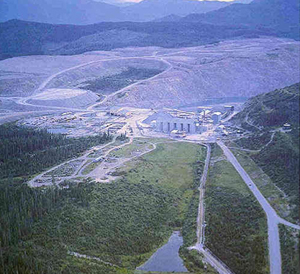
A spokesperson for Health Canada said the federal government body will inspect a camp at a British Columbia mine where workers say illness has been widespread.
Meanwhile the owners of the camp say anybody who wants to take a look is welcome and they'll find it well run. Stories of sickness are exaggerated and the camp is a good example of a First Nation participating in the economy, they say.
"Health Canada's responsibility is to conduct facility inspections, and food and water safety inspections, upon request," said Olivia Caron, a spokesperson for the federal agency. "Health Canada has followed up with the camp coordinator and will be visiting the site to conduct a general inspection of the facility."
The Tyee reported last week that people who worked on the Endako Mines expansion project near Fraser Lake said they believed something at the Lejac camp where they were staying was making them and their co-workers sick. Complaints included coughing up blood, breathing problems and flu-like symptoms.
The camp is located on a reserve belonging to the Nadleh Whut'en First Nation, making it a responsibility of First Nations and Inuit Health, a branch of Health Canada.
"Health Canada has not received notifications from the company, miners or other authorities about potential illnesses on the campsite," said Caron. "Local and provincial public health organizations, including the Northern Health Authority, have not received any notification from the company, miners or health care workers either. Employees who are or may have been ill are encouraged to contact a physician."
Nadleh Whut'en proud of camp
Health Canada provided advice and recommendations at the conceptual, design, construction and opening phases on "pertinent public health related areas" like potable water supply, sewage disposal, solid waste disposal and food facilities, Caron said.
"I don't know what to say to you, I'm so frustrated with the article," said Larry Nooski, chief of the Nadleh Whut'en. "I'm sure you have some sources here that may have been sick, but not to the extent you've reported."
Writing about workers who say they've gotten sick at the camp is a blow against a First Nation that's doing something positive, he said. "As First Nations people, we have a difficult enough time getting companies to take us seriously," he said.
About 250 people live on the reserve and 20 of them work at the camp, he said. It's helped the local unemployment rate drop from 50 per cent to 45 per cent, he added. "They're feeling good about themselves," he said. "We're actually very proud of it."
The camp has space for 400, but has never housed more than 250 people, he said. "You should have been here when we were working towards putting the camp in place," he said. Health Canada had all kinds of requirements, including the need to treat water twice, with both chlorination and ultraviolet light, he said.
Lands manager Beverly Ketlo said the trailers are brand new and everyone who works preparing food has FoodSafe training. "That kitchen is clean and spotless," she said. "Those trailers are clean and spotless."
She summed up, "The trailers are huge. The living conditions are great. The food's great."
It's not caused by drinking, says worker
How then do they explain workers getting sick at the camp?
"If you're working outside in the cold, you're going to get sick," said Ketlo. "Everybody gets sick. We all get the flu."
Nooski added, "They're away from home. Because of their work, they don't eat properly. We all know there's an issue with people drinking." The camp is supposed to be dry, but there are always empties, he said. "That could also contribute to people being sick," he said. "Those are flu like symptoms."
Or in Ketlo's words, "We can't stop these workers going to Fraser Lake, getting drunk or hammered and going back to the camp."
Graham Gardner, a welder from Kamloops who got sick on each of his three stays at the camp, the third time seriously, said he doesn't accept the explanations.
"The answers you're getting from them, I'm not surprised you got them," he said. "What else are they going to say?"
There is drinking at the camp, but even people who don't drink have gotten sick there, he said. "I don't drink. I haven't drank in 28 years," he said. "The greater majority of the fellows, it's not from drinking. That's my impression... I don't think it has anything to do with it."
Gardner, 63 years old, said he'd been mostly healthy through 44 years doing the same kind of work. On his third stay at the Endako camp he got so ill he could hardly breathe and left the site in an ambulance, he said. His doctor has said his lungs and heart look fine now, and he has a July appointment booked with an internist looking for a cause.
During a meeting with union officials, a show of hands demonstrated that everyone staying at the camp had been sick more than once, he said.
"I think they're just trying to pass the buck," he said. "It's not my living. It's definitely not my living."
Gardner said he does not believe that the trailers are new and that he'd rather pass up work than return to the camp. "The bottom line is I ain't going back in there," he said.
Camp inspected regularly: company
A spokesperson for Thompson Creek Metals Company, Jocelyn Fraser, said that illness spreads at industrial camps the same way it does at schools. "If there's a bug, it tends to go around," she said.
The workers' health and safety is of "utmost importance" to the company, so it takes steps to provide a healthy environment, she said. Thompson Creek has a 75 per cent interest in the mine, according to its website, while Sojitz Corporation from Japan has a 25 percent interest.
Health Canada regularly inspects the camp, she said. "These unscheduled visits allow inspectors to see day-to-day camp conditions," she said. "We have had four separate inspections prior to the posting of your article. Each of those inspections verified that the camp fully meets all requirements for a healthy workplace."
The company requires all kitchen staff to have FoodSafe certification and there is regular water testing, she said. There have not been a significant number of people missing work on the project and there's no reason to think an unusual number of people are getting sick at the camp, she said.
Gardner, by the way, said he's surprised the company would mention the water. When people arrive at the camp, they are told not to drink the water from the tap and are instead encouraged to fill up thermoses and water bottles from a cooler, he said.
Running the camp has been good for the Nadleh Whut'en, said Chief Nooski. "All too often the First Nations are on the outside looking in," he said. "We're trying to close that gap by securing this kind of opportunity... We saw an opportunity and we grabbed it, plain and simple."
The mine expansion is scheduled to be completed by November and the camp will be dismantled after that, he said.
The Endako operation mines molybdenum oxide, and its production is expected to rise from 10 million pounds to 16 million pounds annually. ![[Tyee]](/design-article.thetyee.ca/ui/img/yellowblob.png)
Read more: Health, Rights + Justice, Labour + Industry




Tyee Commenting Guidelines
Comments that violate guidelines risk being deleted, and violations may result in a temporary or permanent user ban. Maintain the spirit of good conversation to stay in the discussion.
*Please note The Tyee is not a forum for spreading misinformation about COVID-19, denying its existence or minimizing its risk to public health.
Do:
Do not: