


 SHARE:
Two years ago, Alberta's Transportation Minister Luke Ouellette described Joe Anglin, a former U.S. Marine and telephone transmission engineer, as "dangerous individual and a trouble maker."
At a conference of the Alberta Urban Municipalities Association, Ouellette also wondered aloud "why someone hadn't dealt with [Anglin]."
It was a remarkable declaration and one for which neither Ouellette nor the Progressive Conservative Party has ever apologized.
But it's not hard to understand why a government ruled by one party for 40 years and now beset by political scandal deeply fears the political crusader.
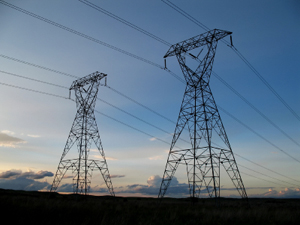
Over the last six years the 55-year-old father of two has arguably become the most persistent and informed critic of the government's controversial plans to build $16.5 billion worth of transmission lines and all largely for U.S. export.
"It's all driven by the oil sands and the failure of electricity deregulation," adds Anglin. "I don't think Alberta's politicians are bad or evil but they are incompetent and dumber than your average monkey. I can't tell you how many times I've caught them lying."
Three bills got blood boiling
Anglin first made a name for himself by exposing systematic regulatory corruption on transmission approvals with a series of legal challenges that dramatically forced the break-up of the province's energy regulator in 2007.
Then the businessman and his 1,000 member Lavesta Area Group focused their attention on the political fallout: three unprecedented pieces of legislation (Bill 19, 36 and 50) that squarely limited public dissent on transmission issues and concentrated all decision making power in the provincial cabinet.
In some government circles one of the bills (Bill 50), designed to end any landowner legal challenges to transmission lines, is even known as "the Anglin Bill."
Both detractors and admirers alike call Anglin a determined pit bull if not a scrapper who also enjoys nothing more than a good fight.
"The only reason that Anglin is dangerous," explains prominent St. Albert lawyer Keith Wilson, "is because he has so much information. He's exposed how corrupt the government's transmission line really is."
Wilson, who has shared the stage with the popular advocate for transmission line accountability and transparency, says the government should indeed fear the man.
"As every Marine knows, there is no such thing as a former Marine. Joe has ordered himself to complete a mission and he's not stopping until it's done. And it's scared the government that he isn't giving up."
Unique in North America
Toronto lawyer Donald Bur confirms that assessment. Bur, who has represented landowners against Alberta's electrical regulators, calls the whole situation unique in North American politics. The $16-billion plan has no precedent or parallel on the continent, adds Bur.
In fact no other jurisdiction has proposed to build eight times its existing transmission infrastructure at taxpayers' expense with no public needs assessment, explains Bur. Nor has any other jurisdiction then proposed to give away the infrastructure to two private transmission companies (Atco and AltaLink) along with a promised rate of return of nine per cent. And mostly to enhance power exports to the United States.
"Anglin's a smart guy," adds Bur. "He finds himself in this battle because he understands the electrical system and he knows he's on the winning side. I can't believe how hard he works."
Anglin, now a councillor for the town of Rimbey just southwest of Edmonton, also knows what he's talking about. After leaving the U.S. Marines, he worked as a transmission lineman and then as a senior technology manager for U.S. power and telephone companies for 17 years.
But he never expected to use that expertise in Canada. After starting an energy hedge fund in Rimbey, Alberta, the square-jawed New Englander (he has a thick New Hampshire accent) heard about expropriation notices being served on his neighbours by AltaLink, a Calgary firm that wanted to build a 500 kV line from Edmonton to the outskirts of Calgary.
After promising his wife, a United Church minister, that he wouldn't get involved, Anglin attended a public meeting on the proposal. Outraged by the way his neighbours had been treated by the company, he returned that night as spokesman for the Lavesta Area Group. That was 2005. "And then things got a really crazy," says Anglin.
Under the government's skin
After reviewing Alberta's experience with electricity deregulation (it started in 1996), Anglin quickly realized that the province's system exhibited all the symptoms of outright failure with widespread consumer opposition: lack of competition, higher prices, gaming of the system by a few players that resulted in multi-billion dollar losses, and a chronic lack of policy direction.
As part of the process, the majority of the province's transmission lines were sold off in 2004 to AltaLink, which is largely owned by Montreal-based SNC Lavalin. (The company has close ties to the government: AltaLink's senior vice president, Leigh Clarke, for example, serves as vice president of the Tories for the Calgary Region.)
Anglin also discovered that another AltaLink executive was married to Kellan Fluckiger, the senior civil servant in charge of transmission policy for the provincial government. (Fluckiger left government after a conflict-of-interest investigation in 2007.)
During the two-year-long AltaLink battle, Anglin really got under the government's skin. He proved that AtlaLink had filed its 500 kV line improperly and that Alberta's Energy Utility Board did not act in an impartial manner as required by law. The regulator also actively thwarted every legal attempt to review the need for the 500 kV line.
Anglin, also a former cop, also caught the energy regulator hiring private investigators, many of them armed with weapons, to actively spy on landowners opposed to the line. He spotted the ex-RCMP types sitting among six to seven grandmothers at one meeting. "They were the guys eating all the cookies," recalls Anglin. "In the end we got the name of six investigators and we know there were more."
The resulting spying scandal created a sensation in the province in 2007. Even the Royal Society of Canada, the nation's oldest science association, referred to the case in its 2010 critical report on the oil sands development as "a serious incident damaging" the public credibility of "an independent quasi-judicial board."
$16.5 billion for what?
As a consequence the government appointed an interim chair, Dr, William Tilleman, to clean up the mess exposed by Anglin's rabble-rousing. Tilleman disbanded the security unit that spied on landowners, fired a senior executive and revoked all decisions on the 500 kV transmission line. He also split up the discredited Energy Utility Board into the Alberta Utilities Commission and the Energy Resources Conservation Board.
But none of those changes forced the government to conduct a proper needs assessment. So Anglin and his group filed a lawsuit requesting that the government uphold its electricity regulations.
Energy Minister Mel Knight replied with Bill 46, which basically struck down a section of law that forced the government to demonstrate the need for transmission projects now and in the future. It also made it retroactive to 2003 in order to exclude all new lines. Despite widespread opposition from industry consumer groups, the government passed the law at 3 a.m. in December 2007.
Shortly afterwards the government tabled a 10-year plan to spend $16.5 billion on transmission line upgrades throughout the province. Although AltaLink and the government told Albertans it was all about keeping the lights on, Anglin knew that was a lie.
Related Document
In fact the deregulation of Alberta's electrical markets in 1996 have largely favoured the oil sands, the world's largest energy project. For starters it primarily boosted the ability of oil companies to construct their own power stations to supply both heat and electricity (called co-generation) for mining and upgrading in Fort McMurray.
"Every time you build another upgrader or in situ plant in Fort McMurray, the companies create more electricity than they can use with co-generation," explains Anglin.
A way to move excess power
According to U.S. energy analysts, some firms actually produce 10 times more power than needed for messy bitumen extraction. (Some firms also want to use nuclear power to exploit Peace River bitumen in the northwestern corner of the province and to export the surplus too.)
Anglin even found a 2006 study (Canada-Northwest-California Transmission Options Study) for the U.S. Northwest Power Pool (a forum for reliable electricity) that clearly identified co-generation power from the oil sands as well as wind farms as "potential generation sources" for California markets.
As a consequence, TransCanada, a big energy infrastructure firm, proposed to build a private multi-billion High Voltage Direct Current (HVDC) Transmission Line to export 3,000 MW of surplus power from Fort McMurray to the Pacific Northwest. According to one pitch by TransCanada, "Electricity from Ft McMurray, co-produced with oil for U.S. needs would strengthen and diversity the region’s energy supply portfolio."
When that costly project floundered due to escalating costs and logistical issues, it soon became apparent to the Oil Sands Developer's Group, a lobby group representing bitumen producers, "that the transmission capacity to export surplus power from the Fort McMurray region was limited" without some form of intervention.
'Like two 32-lane highways'
But in 2009 the Alberta government then passed three controversial and interconnected bills that concentrated all decision making power on power lines into the provincial cabinet. In particular Bill 50, the Electric Statues Amendment Act, eliminated the requirement for public needs assessments in the province by declaring the construction of five major transmission projects as "critical infrastructure" for Alberta.
All five lines are necessary to move excess power generated in Fort McMurray (or from nuclear plants in Peace River bitumen deposits) to U.S. markets using existing public infrastructure, notes Anglin. They include two new 500 kV HVDC lines between Edmonton and Calgary.
"Just one 500 kV line is like a 32-lane highway between Edmonton and Calgary. And we are going to put in two. It's insane from a logistical and security point of view to generate power 4,000 miles away from the nearest market and then to put it on transmission lines."
The scenario also makes little economic sense for taxpayers. "Someone in the government came up with the idea that we'll force the public to pay the bill for these lines. They hoped that nobody would figure it out and that it would be too complicated for taxpayers to follow."
When Anglin raised his concerns with government MLAs and ministers, they repeatedly denied the bills had anything to do with subsidizing power exports from the oil sands to U.S. markets.
On May 28, 2009 Energy Minister Mel Knight, for example, declared in the legislature that Bill 50 "has nothing to do with us as a province or the ratepayers in the province being asked to or being involved in the export of electricity."
But a 2010 report by the Oil Sands Developer's Group directly contradicts the government's position. It even cites Bill 50 as a critical savior for power exports from the region.
"In the past year the Alberta government has passed the Electric Statutes Amendment Act that provides greater certainty that Alberta's transmission infrastructure will be upgraded over the forecast horizon, including new 500 kV lines from the Edmonton area to Fort McMurray (currently planned for 2014 and 2015)... While concerns over inadequate transmission capacity may have been addressed in the past year, concerns including the high capital costs of installing new co-generation capacity and greenhouse gas emissions remain."
Given that AltaLink and Atco will now build the lines with money from Alberta taxpayers, TransCanada has shelved its Northern Lights project.
Taking the fight on the road
Alarmed by the government's growing abuse of power as well as the uneconomic cost of the transmission upgrades (it will triple electricity prices in the province), Anglin gave scores of talks to thousands of citizens in 2009 and 2010.
Some of the talks resembled Monty Python skits. At one talk on the contents of Bill 19 (the Land Assembly Project Area Act which gives the provincial cabinet the power to freeze land for transmission projects for extended periods of time [30 years] with no legal recourse for landowners) three Tory MLAs (Diana McQueen, Ray Prins and Evan Berger) showed up to challenge Anglin.
"I gave my presentation and then allowed them to contribute. That's when I realized they hadn't even read the bill. Diana McQueen started to read it right then in the audience. I give her credit for that."
Adds Anglin: "Bill 19 is about locating utility corridors. It's goofy to say it's not about transmission lines."
Having now spent most of his savings on the transmission fight ("I live in poverty"), Anglin shows no signs of tiring or quitting.
He believes that Albertans must press for two critical political changes. In addition to repealing Bills 19, 36 and 50, the government also needs to reinstate accountability into the electrical system. "If Albertans are paying for the lines they should see the value today and in the future. We have to reinstate a system that mandates needs assessments."
Alberta could also create a distributive generation system. Rather than upgrading a 19th century infrastructure prone to massive failure, "the province could construct a highly resilient system based on electrical stand-alone nodes."
Dangerous, and effective
Meanwhile the man's supporters keep increasing day by day.
Noted one political commentator: "Despite all efforts to discredit Anglin as being a troublemaker and a crank, he has proven himself an insightful, informed and courageous spokesperson for the ordinary Albertan. He is the most principled and knowledgeable authority on power line expansion in Alberta and if this is not the case, why does the government run from public debate or withhold the issue from a public inquiry?"
Anglin, who has worked with almost every political party on the transmission issue, realizes that he's also battling a political legacy of 40-year one party rule in the province.
"The brains left the Tories a long time ago. They left and aren't there. When a government is willing to hire private investigators to spy on its citizens, that should be a warning that the government is unfit to govern."
Alberta's political culture, he adds, is also infuriating.
"In France the government is afraid of the people. But in Alberta the people are afraid of the government. The province's one party state has successfully intimidated people and that's wrong."
But it hasn't yet intimidated "Dangerous" Joe Anglin.
(Full Disclosure: Andrew Nikiforuk is a rural landowner and member of the Livingstone Landowner's Group. As a taxpayer and long-time landowner's advocate, he is also opposing power line proposals in southern Alberta based on the absence of any public needs assessment and government legislation that attacks property rights.) ![[Tyee]](/design-article.thetyee.ca/ui/img/yellowblob.png)
Read more: Energy, Politics, Environment











Tyee Commenting Guidelines
Comments that violate guidelines risk being deleted, and violations may result in a temporary or permanent user ban. Maintain the spirit of good conversation to stay in the discussion.
*Please note The Tyee is not a forum for spreading misinformation about COVID-19, denying its existence or minimizing its risk to public health.
Do:
Do not: