
News

Oil Sands Pollute with Fish-Killing Toxins, New Study Shows

Detection of high heavy metals levels in Athabasca River contradicts government claims.

By Andrew Nikiforuk, 30 Aug 2010, TheTyee.ca

Alberta tar sands

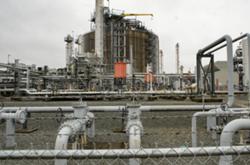
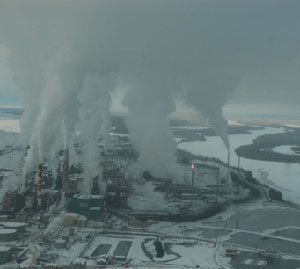
Oil sands processing on Alberta's Athabasca River.

Related

Despite repeated government claims that the world's largest energy project doesn't contaminate the Athabasca River, a new scientific study released today shows that air pollution from the oil sands industry combined with extensive watershed destruction has released a highly toxic brew of heavy metals into northern waterways.

The study, published in the prestigious Proceedings of the National Academy of Sciences (PNAS), also found that the levels of heavy metals detected from snow runoff or downstream of industrial development exceeded Canadian and Alberta guidelines for protecting fish and aquatic life for seven out of 13 pollutants studied. In some cases metal contamination exceeded guidelines by 30-fold.

The heavy metals, rated as priority pollutants by the U.S. Environmental Protection Agency, include mercury, arsenic, beryllium, copper, cadmium, thallium, lead, nickel, zinc and silver. All are toxic. Arsenic is a known human carcinogen; cadmium can severely destroy the kidneys and other organs; and thallium is so poisonous that it pops up in Agatha Christie mysteries as a murder weapon.

The study found that the heavy metals are primarily leaching out of bulldozed or deforested mine sites that cover a 600 square kilometre area or are raining down on the landscape in the form of particulate air pollution from oil sands upgraders that transform bitumen into marketable oil. Under the Fisheries Act, it is against the law to discharge deleterious substances such as heavy metals into fish bearing waterways.

The study directly contradicts claims by the Alberta government and an industry-run monitoring program that pollution in the river basically comes from the erosion of natural outcrops of metal-rich bitumen along the region's river banks. In particular, Preston McEachern, head of science and innovation with Alberta Environment, has repeatedly alleged that "contamination in area soils and rivers is natural and poses no serious health risk."

But the chemical analysis of water and snow samples taken from a total of 47 sites shows that industry "substantially increases loadings of toxic priority pollutants to the Athabasca River."

Air pollution poisons water

Compared to samples taken from non-developed areas, the study identified the highest concentrations of toxic metals either directly downstream from oil sand developments or within a 50 km radius of the region's upgraders, which produce more than six millions tonnes of petroleum coke and fly ash a year. Oil sands air pollution transports metals in particulate matter that deposits the toxins on snow or vegetation all year round. The project has been doing so for 30 years.

"Whenever you strip a watershed, every chemical in the newly exposed geological substrate increases in the run-off," explained David Schindler, one of the world's foremost water ecologists and one of the study's six authors. "It's not surprising. And no one has reported air deposition since 1981."

Jerome Nriagu, an international expert on hazards of heavy metals at the University of Michigan, calls the study's findings of serious environmental pollution in the oil sands a significant issue. "More disconcerting is the fact we know little about the effects of exposing aquatic life to the cocktail of metals; the guidelines were based on one metal at a time exposure scenarios. All these metals are bioaccumulated and some are biomagnified in the aquatic food and hence can become a human health risk."

Nriagu, a former Environment Canada researcher and a member of the Royal Society of Canada, also called for a "detailed and systematic assessment of the risks" associated with metal releases from the project.

Many of the contaminants getting into the Athabasca River are also commonly stored in the industry's massive tailing ponds. Just last month Environment Canada's National Pollutant Release Inventory reported that oil sand mining companies released 50,000 tons of harmful substances into lakes of mining waste covering 170 square kilometers. The data show the amount of arsenic surged by 26 per cent while the amount of cadmium increased 36 per cent.

The PNAS study also found concentrations of chromium, mercury, nickel and arsenic levels up to eight-fold greater under river ice just downstream from industry's nearly two dozen tailing ponds, dykes and industry infrastructure. "These findings suggest tailings pond leakage or discharge" may be additional sources of pollution to the river.

'Ramp should be scrapped'

Heavy metals have also showed up in the million-gallon Enbridge pipeline spill of diluted bitumen on Michigan's Kalamazoo River. The U.S. Environmental Protection Agency reported trace samples of mercury and nickel in the river after the spill.

The PNAS study seriously challenges the credibility of Regional Aquatic Monitoring Program (RAMP), an industry stakeholder group that has been supposedly monitoring water quality and fish health on the river since 1997. Yet every year the industry-funded group gives the oil sands industry a clean bill of health: "no effects."

"Any monitoring program that can't detect these kinds of contaminants is an incompetent program," charged Schindler. "RAMP should be scrapped." In fact a damning 2004 federal review of RAMP reported "serious concerns" about the validity of program due chronic lack of scientific leadership, effective design and consistent monitoring. RAMP has yet to publish the peer-reviewed critique on its website.

Schindler told The Tyee that Environment Canada should replace RAMP and conduct robust peer-reviewed monitoring on the river to measure exposure and health of fish, wildlife and humans. "And it should be funded by industry."

Previous study found carcinogens

In the absence of transparent environmental monitoring, industry pollution has become the subject of contentious debate and government denials.

After two environmental scientists, Kevin Timoney and Peter Lee, found evidence of increased toxins in sediment and fish downstream of the project, Alberta Environment's Preston McEachern publicly accused the well-known scientists of lying. The Canadian Association of Petroleum Producers then posted McEachern's allegations. The civil servant later apologized for making defamatory and "false" statements about their work and CAPP removed McEachern's statements.

The unequivocal detection of heavy metal pollution in the river caused by industry follows on the heels of 2009 PNAS study showing oil sands mining also contaminates both air and water with polycylic aromatic hydrocarbons, a carcinogenic by product of bitumen production. The study documented that air pollution within a 50 km radius of the air project deposited enough bitumen and polycyclic aromatic hydrocarbons on the snowpack over a four month period to be equal to a 5,000 barrel oil spill on the Athabasca River watershed every year.

When initially queried about scientific evidence documenting serious pollution injurious to fish in the tar sands in the House of Commons, Environment Minister Jim Prentice called the findings "allegations." But his department later spent $1.6 million on equipment to take chemical fingerprint of industrial pollutants on the river this year.

"I'm hoping Prentice will be coached by scientists this time to recognize that the data in peer-reviewed studies in a high quality journal are something more than an allegation. It's evidence of a problem," added Schindler.

High cancer rates downstream

The new study will likely re-ignite debate about elevated cancer rates among First Nations living downstream of the mega-project in Fort Chipewyan. A 2009 Alberta Cancer Board study, sparked by concerns raised by Dr. John O'Connor and aboriginal elders, confirmed that cancer rates are 30 per cent higher than what they should be.

After Dr. O'Connor started to raise questions about elevated cancer rates, three Health Canada physicians and three Alberta government employees accused the highly respected physician of causing "undue alarm" in the community and lodged an unprecedented complaint before Alberta's College of Physicians and Surgeon (CPSA). Although First Nations rejected the charge as ridiculous, the college didn't close the case until last year. Health Canada then released a confidential and error-ridden CPSA report to the National Post and Globe and Mail containing unsubstantiated allegations.

Earlier this month, a dissenting report by the Liberal MPs on a public parliamentary inquiry into the effects of oil sands industry on freshwater concluded that the federal government had acted irresponsibly and failed to protect either the environment or fish downstream of the oil sands.

But the report also noted that the project provided Ottawa with "an opportunity to transform the tired old narrative of environmental shame and blame surrounding the oil sands into a proud and inspiring story of the renaissance of federal water science."

The report also called for comprehensive surface and groundwater monitoring programs as well as a longitudinal cancer study for Fort Chip.  [Tyee]

29  Comments:

Login or register to post comments

  • BC Mary

    2 years ago

    We all knew this, didn't we?

    But a good thing that finally ...

    Well-paid bureaucrats are caught right out in the open, with their pants down.

    Now what?

  • freebear

    2 years ago

    Just describing the

    'Alberta Advantage'!

  • alive

    2 years ago

    Business as usual

    Yes, we all knew this, but nice to have it confirmed.
    Next we may see a whitewash in the press, or maybe not?

  • poetician

    2 years ago

    Just a matter of time...

    It took 100 million years (Lower Cretaceous epoch) to grow the Athabaska and one industry in cahoots with government to destroy it in a mere 43 years. Now there is a legacy we Canadians can be proud of!

  • hakaakah

    2 years ago

    GO NUCLEAR! GO LFTR!

    GO NUCLEAR! GO LFTR!

  • RMPS

    2 years ago

    Alberta Tar Sands

    We shouldn't be glorifying one of the filthiest energy projects on the planet by referring to it as the "Oil Sands". The correct term is "Tar Pits" - it is bitumen - "Oil Sands is a phrase being pushed by Alberta to mitigate the images that "Tar Sands" conjures. As an Albertan I am ashamed and disgusted with the Premier, Suncor, the whole horrifying mess. And Harper woos the Stelmach right wing, too, dragging all of Canada into the pits with Alberta. Nothing will ever improve - regardless of the right-wing lies - until the Conservative parties are defeated for good.

  • hakaakah

    2 years ago

    http://www.edmontonjournal.co

    http://www.edmontonjournal.com/Video+Oilsands+pollution+study/3461606/story.html
    View and then paste along in an email to enviroment Canada asking how much longer they are going to break their own laws. At our cost of health.

  • realisticman

    2 years ago

    Talk about being caught with your pants down

    http://www.bbc.co.uk/news/science-environment-11126597

    It will take a while before the majority believes anything again from the enviro-shock-squad, after their error of Himalayan proportions. Pachauri's calling for more mass-debating.

  • realisticman

    2 years ago

    RMPS

    You'd better get on to Wikipedia, et al and tell them they're wrong.

    "Bitumen is sometimes incorrectly called "tar". Technically, tar is a black viscous material obtained from the destructive distillation of coal and is chemically distinct from bitumen."

  • RickW

    2 years ago

    R/M old man....

    Quote:
    The IPCC has admitted it made a mistake in its 2007 climate assessment in asserting that Himalayan glaciers could disappear by 2035

    Who knows if it is a "mistake"? We could well be on the verge of a runaway greenhouse effect - considering that no one really wants to actively cut carbon emissions.

  • RickW

    2 years ago

    After all.....

    ....it's just guesswork on everyone's part.

  • realisticman

    2 years ago

    Rickie

    ..."actively cut carbon emissions. "

    You are so right. And, to think that there was that whole crazy movement to Axe the Tax when Gordon Campbell bought in his Carbon Tax. Good job that anti-tax gang didn't get their way, eh? Wasn't the NDP in on that? No thoughts for our children!

  • matty

    2 years ago

    "Help make great journalism happen"

    A nearly 50-word lede is what people are making financial contributions to? Like, c'mon. That said, the Agatha Christie reference is pretty rad.

  • hakaakah

    2 years ago

    Or better yet. Get the

    Or better yet. Get the report into the hands of the EPA for presentation on why the risk of higher CO2 emissions and this kind of pollution arent worth investing in the Keystone pipeline. :)

  • D. B. Scott

    2 years ago

    Brace yourselves

    Andrew Nikiforuk knows that there will be a short pause while the tar sands industry regroups, then one or all of three things will happen: the methodology will be attacked; the data will be attacked; the scientists will be attached. They will need friends now that there is proof of what many of us have believe all along. I hope the aboriginals downstream have a lawyer on speed dial.

  • Jen

    2 years ago

    Tar Sands, not Oil Sands

    I agree with RMPS- "oil sands" is an industry-pushed term that is really effective at lessening the image of filth and making it seem that much easier to extract the "gold". Anyone who is in the know about these things should be referring to them as Tar Sands, which is much more accurate. Journalists for the Tyee should know better.

  • RickOshea

    2 years ago

    Paid Shills

    CBC ran this story - it appears that if you slam the Tar Sands in their comments section and reference articles on this site (thetyee.ca) to back up your opinion -- you get an expert rebuttal by a paid responder from the tar sands industry.

    basically saying the problems matt simmons talked about only existed in the bad-old days but now technology has improved and the projects no longer use/waste huge volumes of natural gas and clean water..

    that has to be complete BS and wishful thinking on the part of alberTAR's government and their Big Oil cronies.

    many commenters are saying - watch out, Suncor and company will not take this criticism lying down, a storm is gathering.

  • G West

    2 years ago

    TAR SANDS

    Karl A Clark, Research Engineer, Letter to Ottawa, 1947:
    "I do not think there is any use trying to make out that the TAR SANDS are other than a 'second line of defense' against dwindling oil supplies"

    "Industry executives and many Canadian politicians get upset when they hear the term tar sands. They think it is "greenie speak," a tasteless pejorative for the largest deposit of oil outside of Saudi Arabia...Marketers and CEOs prefer the word oil in relation to the sands because it sounds abundant, accessible, and clean. Oil raises investment cash faster than tar does, and it reassures consumers nervous about the ever-rising price of fossil fuels. An emerging energy superpower doesn't mine and upgrade nasty bitumen; it produces oil. The Alberta government says it makes sense to describe the resource as oil sands "because oil is what is finally derived from bitumen." If that lazy reasoning made sense, Canadians would call every tomato ketchup and every tree lumber. Passing off tarlike bitumen as oil is about as accurate as calling an aspen tree a Douglas fir, or a donkey a horse
    - Andrew Nikiforik - Tar Sands p.12.

    THEY ARE TAR SANDS – they produce, in the words of Dr Steven Kuznicki, of the Imperial Oil-Alberta Ingenuity Centre for Oil Sands Innovation, some of the “…ugliest stuff you ever saw….contaminated, non-homogenous and ill-defined…Bitumen is five per cent sulphur, half a per cent nitrogen and 1,000 parts per million heavy metals. Its viscosity is like tar on a cold day. That’s ugly.”

  • Ramona777

    2 years ago

    Lots of Talk

    Nothing will change until there's a concerted effort to use less gas and petroleum-based products.
    Tomorrow, what will we do? Get in our vehicles and drive somewhere? Buy something made of plastic? Buy something imported from overseas.
    We're addicts and it doesn't matter what you call them, tar sands, oil sands, death sands, we'll keep injecting.

  • G West

    2 years ago

    Interesting article in tomorrow's NYTimes

    http://www.nytimes.com/2010/08/31/business/energy-environment/31coal.html?_r=3&hp

    from the article:

    Quote:
    Now, the rise of murkier issues like global warming, along with increasing scrutiny by environmental groups of banks’ investments in many other industries — like oil and gas development, nuclear power, coal-fired electricity generation, oil sands, fuel pipeline construction, dam building, forestry and even certain types of agriculture — are nudging lenders into new territory.

    Quote:
    “We’re taking a much closer look at a much broader variety of issues, not all of which are captured under state and local laws,” said Stephanie Rico, a spokeswoman for the environmental affairs group at Wells Fargo.

    Quote:
    Ms. Litvack, of F&C Investments, pointed to large protests last week by many climate activists outside the Royal Bank of Scotland in Edinburgh. At least a dozen protesters have been arrested in demonstrations against the bank’s financing of oil sands development in Canada

    No doubt the paid shills from the Alberta Government will be losing sleep over these developments.

  • doggone

    2 years ago

    We have options

    Fract gas. Or Nuclear
    Now I'm compforted
    I'm going to bed.
    Sleep well

  • buzygramma

    2 years ago

    Petition the Agency responsible

    What about petition the Agency responsible to intervene on the tribal Communities behalf? Does Canada have an EPA with responsibility to protect and promote Clean Air and Clean Water for fish ... it is a major food resource relied on....both for the Communities and MANY Nations...

  • hakaakah

    2 years ago

    Yeah...Its called

    Yeah...Its called Environment Canada. They handed the water testing over to the Alberta gov. Who then turned the monitoring job over to the oil companies. Kinda like giving a baby a machine gun!

  • jhudgina

    2 years ago

    Drilling = Contamination

    Didn't we know this? Didn't we know that Harper speaks for himself, never for Canadians, not even his party, just himself? He really believes that he alone makes the rules for the rest of us--at any cost. The Alberta Oil Sands are known world wide as filthy with poison, yet it is condoned and denied by the Canadian Prime Minister. We knew that and we discourage using the product.

  • morechatter

    2 years ago

    D.B. Scott

    Regroup would that be like Syn crude selling its tar sands interests to China knowing there would be an outcry amongst environmental groups and Obama regulations. What to do? Build a Gateway through BC so 900,000 barrels of oil can travel to Chinese Market as China owns other interests in tar sands. Only problem is what is in it for BC as oil pipeline assists in getting oil to Chinese market. China dosen't want our stuff wants our resources and that is fact so what is in it for BC?Is the oil subsidized you know like the limited lumber that is being sent to China at basement floor prices subsidized up the ying yang as bettle takes it bite out of industry. One has to wonder what was in it for the premier of BC or residents for that matter to take such enormous risks as none if adds up as even the largest sell of tar sands netted a couple extra billion. And Scott with the recent appeal in Alberta's courts where everything is ducky one day and then the duck is tarred and featherd the next. China dosen't have a good environmential record as no respect for people or land as profit driven all regulations have been displaced.

  • morechatter

    2 years ago

    An accident waiting to happen

    Zijin Mining Group Co., China’s largest producer of gold, which is saddled with regulatory probes and a plunging share price after the worst accident in the environment in many years. “The company should focus on cleaning up, and their expansion plans in and out of China should be on the back burner” for the next year or two, Said Helen Lau, a Hong Kong-based analyst.
    Zijin fell 17 percent in Hong Kong trading after 2.4 million 12.7 gallons (9.1 million liters) of acid-laced waste spilled from the largest mines, pollution of the river and poisoning Ting enough fish to 72,000 inhabitants feed a year. It was the worst accident in China since July 2008 of gold mining, where the removal of a Zhongjin Gold Corp. site in Dandong poisoned the water supply of 210,000.

    The decline of the stock market wiped out $ 1,700,000,000 in value of Zijin, which since its inception 17 years ago, Chen was transformed into a company with projects in seven countries and gold output accounted for 9 percent of the nation. Chen planned two foreign acquisitions this year to make, after a stay of 200 million U.S. dollars in convertible bonds in Glencore International AG, the Swiss-based commodity trader which is the largest in the world to buy.
    China has the largest major interests in Canada's tar sands and given countries record there is no doubt there is a great deal more environmental damage yet to be done as what is stopping China Oil company as courts in Alberta have judges who sell out for a lot less along with the politicians who just can't wait until someone big comes along for the payout no less.

  • SCI

    2 years ago

    Health of Fort Chipewyans

    We have information about the increase of cancer rates in Fort Chipewyan. But I would argue we tend not to focus on the myriad of effects of the tar sands on the health of this community. What about other chronic illnesses that disproportionately affect aboriginal people, like diabetes and lupus, among others?

    Not only are their diabetes rates higher, but Canadian aboriginals have double the incidence of lupus, which can be a disabling, potentially fatal illness. I bet the rate of this duo of serious illnesses is even more frequent in Fort Chip than in other aboriginal communities, and with worse outcomes.

    And what of other illnesses besides cancer, diabetes and lupus in this community?

  • RickW

    2 years ago

    We Have a Petrodollar

    And thanks to Mulroney, Chretien, and augmented by Harper, Canada has little else to pull out of the hat at this point.

    And like any "monoculture", we have to virtually poison it (and us) to ensure a viable crop. Where's the diversification?

  • doggone

    2 years ago

    This is so dirty I did not want to comment

    Though I work with sewers and ground water quite often my stomach turns when I think of this chemical assault on the rivers and underground reservoirs.
    "They know not what they do"
    No forgiveness here

    • The discussion for this story is closed. No more comments can be added.