


 SHARE:
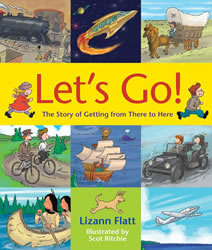
Two maritime provinces declined to distribute a book to students saying it was racist and promotes stereotypes of First Nations people. British Columbia schools are giving the same book for free to students in Grade One.
The Canadian Children's Book Centre and the TD Bank Financial Group announced on Nov. 13 they are providing more than 500,000 copies of Let's Go! The Story of Getting from There to Here to school kids in Canada.
Within a week the provincial governments in New Brunswick and Nova Scotia said no thanks.
New Brunswick refused to distribute the book, written by former ChickaDEE magazine editor Lizann Flatt and illustrated by Scot Ritchie, after curriculum consultants and an Alberta university professor advised against it, the St. John Telegraph-Journal reported.
"The representations of aboriginal people are stereotypes -- everyone looks the same -- and they are all depicted in the past, with feathers on their heads," the paper quoted the province's Department of Education saying. "The aboriginal peoples are represented in passive roles, waiting for 'progress' to come and 'better' them."
A ministry official was also quoted saying Europe is depicted as "heavenly" with a castle and a sunburst behind it while the First Nations people look generic.
Stereotypes to be avoided: NDP's Simpson
Let's Go! tells the story of transportation, beginning with people who walked: "With soft footfalls they followed food, hunted herds, wandering through the wilderness."
On page six the Europeans arrived. "One day, blown on strong ocean winds from the lands of the kings and the queens, sailing ships slid swiftly to shore," the book says. "The men who explored found riches in fishes, riches in furs, and riches in timber from trees."
The Greater Victoria School District's administrator for Aboriginal Education, Nella Nelson, said she had not seen the book but would look into it. The description of "generic" First Nations people was concerning, she said. "That would get my reaction to begin with. Not all people in Newfoundland and Nova Scotia wear feathers."
Thumbing through a copy of the book, the B.C. New Democratic Party's critic for Aboriginal relations and reconciliation, Bob Simpson, said it reminds him of the debate over removing the murals in the legislative buildings that depicted First Nations people in a way many found offensive.
"That's my first gut reaction to this," he said. "You have that fixing of a stereotype." The First Nations people are portrayed as technologically behind the Europeans, then they disappear from the story.
If the book's going to be distributed through public schools, the government should be careful of what messages it is sending, he said.
Deciding on books not up to province: minister
It is up to each school district whether or not they want to distribute the book, said Moira Stilwell, who on top of her job as advanced education minister is acting as education minister while Margaret MacDiarmid is recovering from being sick.
"I'm not familiar with the book," Stilwell said. "I haven't read it. The bottom line is school districts are responsible for resourcing what goes into the schools in their districts including books, so really it's their decision."
Any further questions should be put to the TD Bank, she said. Asked why provincial governments in Nova Scotia and New Brunswick would have a say in what books are distributed to students she declined to answer.
A media contact for TD and the Children's Book Centre did not answer questions by publishing time.
Nor did author Flatt respond to an email message.
'There's got to be a process': Simpson
It's unbelievable that the B.C. Education Ministry would have no say on the distribution of the book, said the NDP's Simpson. "In order to get access to the public school system a decision had to be made in the Ministry of Education," he said.
One can imagine a situation where a white supremacist group might want to distribute a book with their own subtle take on "progress" to students, he said. "That's up to the individual school boards to decide that? I don't think so. There's got to be a process where those decisions are made."
Distributing the book is inconsistent with what the government has said about the need to build better relationships with First Nations in the province, he said.
"This government has touted the New Relationship and part of the New Relationship is the refining not only of our relationship with First Nations but our historic relationship with First Nations," he said.
In recent months the proposed Rights and Reconciliation Act fell apart, two First Nations have pulled out of the treaty process and First Nation leaders have blasted the HST, he said. The relationship is a sensitive issue for the government right now, he said. "In that context you don't need any more pokes in the eye."
Related Tyee stories:
- Follow First Nations issues daily on The Hook by clicking on the Aboriginal Affairs category.
- Follow education issues daily on The Hook by clicking on the Education category.
- Or you can catch up on all education feature stories on The Tyee by clicking on the Education topic category in the Topics window, upper right corner of the home page.
![[Tyee]](/design-article.thetyee.ca/ui/img/yellowblob.png)









Tyee Commenting Guidelines
Comments that violate guidelines risk being deleted, and violations may result in a temporary or permanent user ban. Maintain the spirit of good conversation to stay in the discussion.
*Please note The Tyee is not a forum for spreading misinformation about COVID-19, denying its existence or minimizing its risk to public health.
Do:
Do not: