

 SHARE:
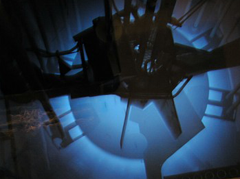
On May 15, workers inspecting a 52-year-old machine in a small Ontario town discovered a slight water leak caused by corroded metal. The machine's owner announced it would be out of service until the problem could be identified and repairs made.
That would not be national news except that the machine in question is the NRU nuclear reactor in Chalk River, owned by federal Crown corporation Atomic Energy of Canada Limited (AECL).
And that reactor is the largest source in the world of a radioactive isotope important to medical imaging and diagnosis.
In the wake of the shutdown of the NRU reactor, the medical world is adapting as best it can by switching to tests that use other isotopes where possible, and by better coordinating to make the most of what isotope is available.
But those measures cannot change the fact that doctors will be making decisions without a tool they regularly use for more than 20,000 Canadian patients each week.
In the midst of the crisis, Federal Minister of Natural Resources Lisa Raitt announced an as-yet unnamed group of experts will advise the government on a plan for the long term supply of medical isotopes.
Ten years ago, Canada had a plan for a long term isotope supply. It went by a name resonant with national pride, borrowing -- for better or worse -- Canada's own brand identity. It was a nuclear reactor technology called MAPLE.
As recently as last spring, AECL was planning to replace the problematic NRU reactor with twin MAPLE reactors already built at Chalk River. That was supposed to ensure an uninterruptible supply of isotopes to Canada and the world at large.
But one year ago, AECL gave up hope of that ever happening. And though today the private company that was supposed to own the MAPLE reactors wants the project restarted, there is no reliable estimate of when such a project could be operational.
What happened? Why is Canada, for so long the world's top supplier of medical isotopes, now scrambling for new ideas at the same time as doctors worldwide are scrambling for isotopes?
The troubled story of the MAPLE reactors is a case study in what can go wrong when government funding, private business interests, and new nuclear technology mix.
What could go wrong, for example, was a project resulting in three lawsuits against the federal government by its private partner, the latest of which is still not resolved.
And no one has ever precisely tallied the hundreds of millions of dollars of taxpayer's money poured into pursuing the MAPLE solution that hasn't solved anything.
Seeds of MAPLE
The MAPLE project originated at AECL in the 1980s. In 1991, when the Mulroney government sold AECL's isotope processing division -- Nordion -- to health products company MDS Inc., the plan was to build a single, small reactor dedicated to the production of medical isotopes.
In 1993, with the federal government slashing budgets across the board, MAPLE was cancelled.
Even before the announcement was made, MDS had launched a lawsuit, seeking $300 million in compensation for the loss in value of Nordion. Without a guaranteed source of isotopes from a reactor, what good is an isotope processing company?
The lawsuit was resolved out of court in 1996, and resulted in a much grander plan for MAPLE.
MDS Nordion would hire AECL to build and operate not one, but two MAPLE reactors, plus a new processing facility, which would all be owned by MDS. The federal government kicked in some up-front funding and a $100-million interest-free loan to MDS Nordion.
Either one of the MAPLE reactors would be able to fill the entire global demand of the most commonly used isotope, Molybdenum-99 (the one at the centre of the recent shortages).
The second reactor would operate as a back up -- when one was shut down for maintenance or repairs, the other would be running, ensuring a continuous supply.
The first MAPLE reactor was supposed to be operational in 2000, but problems with quality control caused delays while parts were replaced. It wasn't until 2003 that the reactor was tested at high power. And that's when the real problems began.
To operate a nuclear reactor in Canada (or any other Western country), the people in charge must convince the nuclear regulator that the reactor will safely shut down if anything goes wrong. To do this, physicists and engineers develop complicated models of how the reactor will behave under any condition.
The MAPLE reactors were not behaving the way the model predicted, and no one knew why.
In 2005, with the project grossly over budget and no solution in sight, MDS Nordion launched another lawsuit. The result was another out-of-court agreement, settled in 2006.
Under the 2006 agreement, AECL bought the MAPLE reactors and associated facilities from MDS for $25 million and the liability for all future costs. In return, the companies signed a 40-year isotope supply contract, with an increase in price scheduled for whenever the MAPLEs started producing.
In May 2008, after a few more disappointing tests on the MAPLE -- and with the entire Crown corporation under review by the government -- AECL announced the project was (once again) cancelled.
Shortly thereafter, MDS Nordion announced they would (once again) sue.
Still chasing the dream
In 2007, just six months before the cancellation of the MAPLE project, the NRU reactor was shut down for a month when regulators realized that promised safety upgrades had never been implemented.
AECL argued that the missing equipment was not required by their operating licence. But they still did not turn the reactor back on until Parliament passed emergency legislation suspending the licensing requirement.
The incident caused a global shortage of isotopes, and political uproar here in Canada. In the aftermath, health professionals in Canada and internationally emphasized the importance of getting new isotope supplies as soon as possible.
So when the project that was closest to being able to do that was cancelled, it raised serious concerns among many in the nuclear medicine community.
A United States National Academy of Sciences report on medical isotope supplies (published in January 2009) described the decision to end MAPLE as "a blow to worldwide supply reliability."
A year after that decision, with another -- likely much more serious -- isotope shortage starting, MDS Nordion decided to remind Canadians of the reactors that should have prevented the problem.
"MDS Nordion urges Government of Canada to complete MAPLE project to address current medical isotope supply shortage" was the headline on their press release.
To support their argument, the company distributed an article written by a former member of the MAPLE testing team. In it, Harold J. Smith argued that "The MAPLE reactor operated like a dream, and was fully capable of meeting all objectives" if testing and modifications had been continued.
MDS Nordion also pointed to the American report on isotope supply, which argued that the cost of fixing the MAPLE reactors -- even if it meant completely replacing the reactor core with a different design -- would still be less than building a new reactor somewhere else.
Executives at MDS Nordion clearly have strong financial reasons for wanting the MAPLE project revived -- but that does not mean they are wrong.
The President of AECL, Hugh MacDiarmid, recently told federal MPs that it would take "many years and many millions of dollars" to get the reactors operational, dismissing the suggestion that the MAPLEs could be a short term solution.
MDS Nordion spokesperson Jill Chitra disagrees.
"If you look at some of the international experts' opinions, they believe there are ways to solve the problem so the reactors can operate intrinsically safely," she said, suggesting this could happen in a matter of months.
Given the long history of technical problems with MAPLE, the most difficult part of that plan might be convincing the independent members of the regulatory board that safety could be guaranteed without fully understanding why the reactor was not responding as it had been designed to do.
In the longer term, technical solutions could surely be found. The real question is who would be willing to accept the financial risk to invest in the reactors?
MDS Nordion would "look at all angles" and "would be open to those kinds of discussions," said Chitra when asked by The Tyee if the company would be willing to pay for a revived MAPLE project.
But Chitra also pointed to the large sums of money that AECL (and therefore taxpayers) will be paying to fix up the NRU reactor.
"Maybe it's a better idea to make modifications to the MAPLEs -- invest money in a brand new reactor, to have it operate safely -- than to invest money in a 50 year old reactor... that has an inherently short life."
Others might argue that it makes more sense to invest in a proven technology than in something that has never worked quite as it should.
Looking to the future
The government has not completely dismissed the possibility of reviving MAPLE. Natural Resources Minister Lisa Raitt has said the MDS proposal would be considered by the expert panel that will advise the government on long-term isotope supply.
The government has so far made no commitments about what it will do with the panel's advice -- only that it will "provide a solid factual basis to support sound decision making". But there are at least three other projects that would happily receive federal funding to develop new sources of isotopes.
As the current isotope shortage was getting underway, the federal and Ontario governments announced funding support for upgrades to a research reactor at McMaster University in Hamilton. One of the intended uses is isotope production, although the reactor would have limited capacity.
Here in British Columbia, TRIUMF laboratories, which operate particle accelerators, are investigating a new approach to making Molybdenum-99 which would not require a nuclear reactor or enriched uranium. In April, they finalized a partnership agreement with MDS Nordion.
Then there's the Canadian Neutron Centre, the long delayed proposal for a research reactor to replace the NRU's experimental functions. After MAPLE was cancelled, scientists advocating for the project revised the design to include isotope production.
And that's only in Canada. Internationally, there are a number of options for new isotope sources that could start producing in the next five to ten years.
In the United States, the University of Missouri is pushing for funding to upgrade its research reactor to manufacture isotopes. Other American companies are pursuing an accelerator-based technique and a novel design for an isotopes-only reactor.
In Australia, the recently built OPAL reactor is scheduled to start producing medical isotopes later this year. The agency that operates OPAL has said they may be able to ramp up production sooner than planned to assist with an extended global shortage.
In France, a research reactor currently under construction should supplement supplies starting in 2016. European partners are also planning to replace the Dutch reactor that currently matches the NRU in isotope production.
Regardless of whether the MAPLEs are replanted, or the NRU reactor refurbished, or whether TRIUMF succeeds with its made-in-B.C. accelerator isotopes, Canada's dominance of the medical isotope industry is going to fade.
For over a decade, the MAPLE reactors were promoted as a way to create a reliable isotope supply. Instead, their back-and-forth saga demonstrated the risks of relying on any one solution.
It's a lesson the international medical community is embracing. The more sources of isotopes, the less likely there will be shortages. The world is no longer expecting Canada to supply medical isotopes in the long term. Any new project here will be competing against the projects being planned internationally.
But if the Canadian government is going to partner in any of these projects, citizens need to know what the economic prospects are. We also need to know who will foot the bill if we end up part-owners of another over-budget, under-performing technology.
Related Tyee stories:
- Nuclear reactor shutdown shows problems with isotope supply
- Nuclear Arms Ban Is Hot Again
Interest grows among world leaders, 'Global Zero' campaign builds steam. - The Lure of Nuclear Power
It grows with opposition to other options.
![[Tyee]](/design-article.thetyee.ca/ui/img/yellowblob.png)
Read more: Politics, Science + Tech








Tyee Commenting Guidelines
Comments that violate guidelines risk being deleted, and violations may result in a temporary or permanent user ban. Maintain the spirit of good conversation to stay in the discussion.
*Please note The Tyee is not a forum for spreading misinformation about COVID-19, denying its existence or minimizing its risk to public health.
Do:
Do not: