
News

Oppal's Murky Method for Changing BC's Election Laws

AG ignored many suggestions by electoral officer, plucked others from thin air.

By Andrew MacLeod, 19 May 2008, TheTyee.ca

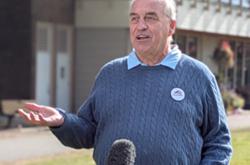
Wally Oppal

Attorney General Wally Oppal.

The inspiration to tinker with how British Columbians elect MLAs came from a report by chief electoral officer Harry Neufeld, Attorney General Wally Oppal said earlier this week. But while some of the most controversial measures are not in Neufeld's report, the government ignored other recommendations meant to increase voter participation.

The changes are included in Bill 42, the Election Amendment Act. Introduced on April 30, it is among a group of bills that will be deemed passed at 5 p.m. on May 29, even if it fails to pass through all the normal stages of debate.

"What's happened now is the chief electoral officer came to us in 2006 and said the Elections Act has to be reformed and that amendments should take place," Oppal said. That report included 60 recommendations, he said. "We thought it was an appropriate time to re-examine the Elections Act."

Neufeld is an independent officer of the legislature, like the ombudsman or auditor general, responsible for running the province's elections in a fair and impartial way. Comparing his report, Chief Electoral Officer: Recommendations for Legislative Change, to Bill 42 reveals that while the government adopted about 35 of Neufeld's suggestions, they ignored another 14 or so.

Plus, the government added in changes to at least 28 sections that Neufeld did not suggest changing. Those 28 changes include the ones that are drawing criticism from groups across the political spectrum.

Ideas ignored

While the government agreed with many of Neufeld's suggestions and included them in the amendments to the Election Act, they failed to act on several others:

  • Neufeld wanted Elections B.C. to be allowed to provisionally register people as young as 16 to vote, similar to how things are done in Australia. "The most effective means of registering youth may be to approach them in high school," he said. "Using the age of 16 would permit Elections B.C. to work with schools and the driver licensing program to ensure maximum exposure to the registration process for young voters." The registrations would not become active until the individual turned 18.
  • The law requires a notice of election to be published in newspapers within 11 days of an election being called. The CEO said, "Newspaper publication is not always an efficient or effective means of communicating information to the public." He asked for discretion to use other means, such as householder brochures, direct mail or other media.
  • Caregivers should be allowed to help all the people they are looking after mark their ballots if they need assistance, instead of just the one they are now allowed. "Residents of extended care facilities and group homes often have a unique relationship with their caregivers, who may be in the best position to communicate with the voters and assist them in marking their ballots," he argued.
  • Election advertising on general voting day is illegal, but it is unlikely to be prosecuted, Neufeld said. He asked that he be allowed to apply an "administrative penalty" against such advertisers.
  • Neufeld suggested that voter identification requirements be eased for people in medical or correctional facilities, "to only require one document with the voter's name, and permit the voter to make a solemn declaration as to their residential address.
  • Ideas added

    In short, the Campbell government ignored provisions that would have made it easier to register young people to vote, help people in group homes and care facilities cast ballots and reach the many people who do not regularly read newspapers. At the same time they added in some ideas of their own that are generating controversy.

    Those ideas include a move to limit third party advertising. The bill would limit groups to spending $3,000 in any one constituency, and not more than $150,000 across the province, in the five months before an election. Another section would require voters to have identification showing their name, photograph and address.

    Other changes the Liberals made without Neufeld's advice include:

    • Tripling the number of voters needed to nominate a candidate from the current 25 to 75
    • Raising the nomination deposit made by candidates from $100 to $250
    • Allowing political parties to spend up to $2.2 million in the 120 days before a 28-day campaign period, and another $4.4 million during the campaign
    • Excusing money spent on fundraising during a campaign from being counted as an election expense, even if that fundraising fails to raise any money
    • Prohibiting candidates from accepting contributions from federal political parties and electoral district associations
    • Allowing any voter in a constituency, election officials or representatives of candidates to challenge a person's right to vote.

    Fury building

    On May 15 a coalition of eight unions and labour groups bought full page ads in B.C. newspapers and launched a website to fight the restriction on third-party advertsing. The ads included a picture of a woman with tape over her mouth and the words, "Gordon Campbell wants you to just shut up."

    The Trial Lawyers Association of B.C., the B.C. Civil Liberties Association and business groups including the Independent Contractors and Businesses Association are also opposed to the change.

    Various groups had earlier criticized the tightening of identification requirements. They include the BCCLA, the B.C. Public Interest Advocacy Centre and other poverty advocates. The requirement will make it more difficult to vote for the homeless, students and anyone who has recently moved, they said.

    Attorney General Oppal was unavailable on May 16 to explain how it was decided which amendments to include.

    "He must be ashamed of himself," said David Schreck, a former NDP strategist. Unlike other members of the government, Oppal would know the courts have already struck down similar laws against third-party advertising.

    The changes the Liberals are making stack the election in the party's favour, Schreck said. "It's all partisan, isn't it?"

    The advertising laws will likely be challenged in court, as will the identification requirements, but it will almost certainly take until well after the May 12, 2009 election for the issues to be resolved.

    'Limit will skew elections further'

    Democracy Watch coordinator Duff Connacher said some limits on third party advertising are reasonable, especially with a fixed election date. "It just makes sense because everyone knows the election is coming."

    However, the limits should be set based on what advertising actually costs. The federal limits are the same as the proposed B.C. limits. That might or might not be appropriate, he said. On one hand, the B.C. law will cover a much longer period, five months instead of 35 days. However, ads are likely cheaper in the province than they are in national media.

    It's not fair to call the limits "gag" laws, he said. Groups can still get their messages out through news releases, letters to the editor, e-mails, newsletters, events, rallies and websites. "None of that is limited," he said. "It's just a limit on paid advertising."

    Also, he said, the limits should not be put in place without also limiting donations to political parties. While many unions have bylaws that restrict donating to parties, corporations often have a few directors making decisions about how to donate shareholders' money. The corporations will likely respond to advertising limits by giving even more money to the Liberal party, he said, allowing them to buy influence with the government.

    "The limit will skew B.C. elections even further in favour of wealthy individuals and corporations," he said. "B.C. has the best government money can buy, mostly corporate money right now."

    Related Tyee stories:

     [Tyee]

37  Comments:

  • NicS

    19-05-2008

    Serious Behavior !

    These changes to the elections act are tantamount to a "declaration of war" or an "act of war". They will bring us back to the days when people were regularly beat up at polling stations.

    Campbell knows he has to pull out all stops to be assured a victory next May 9th. We will also have to pull out all stops. It is beginning to look like we are in for a punch-em up and knock-em down election. The 6th item on the list below pretty much guarantees that each side will have to have some muscle of sorts to referee fair play at the polling stations if the NDP are to have a chance at winning.

    Quote:
    Other changes the Liberals made without Neufeld's advice include:

    * Tripling the number of voters needed to nominate a candidate from the current 25 to 75
    * Raising the nomination deposit made by candidates from $100 to $250
    * Allowing political parties to spend up to $2.2 million in the 120 days before a 28-day campaign period, and another $4.4 million during the campaign
    * Excusing money spent on fundraising during a campaign from being counted as an election expense, even if that fundraising fails to raise any money
    * Prohibiting candidates from accepting contributions from federal political parties and electoral district associations
    * Allowing any voter in a constituency, election officials or representatives of candidates to challenge a person's right to vote.

  • Luke Skywalker

    19-05-2008

    At Least Someone Knows the SCC Decision!

    Quote:
    Democracy Watch coordinator Duff Connacher said some limits on third party advertising are reasonable, especially with a fixed election date. "It just makes sense because everyone knows the election is coming."

    However, the limits should be set based on what advertising actually costs.

    The federal limits are the same as the proposed B.C. limits. That might or might not be appropriate, he said. On one hand, the B.C. law will cover a much longer period, five months instead of 35 days.

    However, ads are likely cheaper in the province than they are in national media.

    It's not fair to call the limits "gag" laws, he said.

    Well at least Democracy Watch understood the SCC decision upholding the third party federal spending limits. DW was also an SCC intervenor in support of those same $150,000 third party federal spending limits (under Section 350 of the Canada Election Act), the same proposed for BC.

    And that covered 10 provinces, not one!

    Surely Alberta NDP leader Brian Mason can't be wrong when he stated that the Alberta unions et al multi-million dollar third party spending campaign was also unfair.

  • Fiat lux

    19-05-2008

    Of course, Oppal didn't go

    Of course, Oppal didn't go far enough to ensure that only the "right people" are allowed to vote.

    I remember going to vote with my grandparents in the mid 30s in Hungary, who were among the people permitted to vote. My mother wasn't.

    They went to the desk, where a clerk looked their names up in a big book and asked them, "Who are you voting for?". They told him and he put the name down behind their names in the book.

    In the communist days, it was compulsory to vote, but only for somebody in the same Communist party.

    Now, that was real freedom and democracy, as it freed people from having to make choices and we're heading in the same democratic direction.

    Now it is called the "wealth creating free movement of capital", enforced by stacks of laws, passed and signed in secret. Like the NAFTA and now the SPP.

    Ed Deak.

  • monty

    19-05-2008

    BCGEU, BCTF, HEU or ?

    Who please please provide me with a SHUT UP T-shirt? Actually, I'd like several.
    I promise to wear one often.

  • Bailey

    19-05-2008

    Let's make a little list!

    What changes would YOU make to election laws? Let's each contribute our own best ideas for fair democratic election rules

    I'll start.

    -No more political contributions allowed by anyone, under penalty of law. Such donations to be considered bribery. This must include the candidate's own money.

    -All media and printers required as part of their licence to contribute access to all candidates equally. For free. This would be a public duty, like paying taxes or jury duty. No exceptions.

    -All polling places to be monitored by independent observers, like the UN does in disputed post-war situations. Detailed reports to be published.

    -The province to provide transportation, at taxpayers expense, by ground only, for all candidates and their aides to campaign in their ridings. Rented buses and drivers.

    Anybody else have any suggestions?

  • Frank

    19-05-2008

    Bailey

    Quote:
    -No more political contributions allowed by anyone, under penalty of law. Such donations to be considered bribery. This must include the candidate's own money.

    -All media and printers required as part of their licence to contribute access to all candidates equally. For free. This would be a public duty, like paying taxes or jury duty. No exceptions.

    Works for me.

  • Skywalker

    19-05-2008

    Bailey and Frank

    It works for me as well. I don't know how a democracy tolerates people giving money for specific election campaigns without ever considering that "he who pays the piper must call the tune". Imagine the disparity in political influence between sectors of our society. Who in this corrupt system has the biggest influence on the government? How is this ever considered "democracy"?

    I could go so far as to pay candidates a certain amount for every vote they get up to a set maximum that would be allowed to be spent, something like the Feds. have. But that is all. The amounts set to get them out meeting the voters and not hiding behind glitzy ads and big money.

    Currently Campbell never meets with any average folk. He swings into town, meets with the Council and the Chamber of Commerce and his party functionaries and that is all. The good old RCMP are assigned duty to protect his sorry butt from any ordinary citizen that might be inclined to tell him they are unhappy.

    It was never like this in the 90's.

  • brian gough

    19-05-2008

    I sense the tide is turning!

    Maybe canwest global is pretending to be a news reporting outfit again but I really do sense a shift in their reporting.

    Could it be that canwest global is ticked off about the ADVERTISING BAN five months before the election!

    Considering that canwest global is the only game in town,if 10 million less dollars get spent advertising that could be 7 8 million dollars out of canwest globals bottom line?

    Just a thought,after all advertising is where news outfits make all their money.

  • zalm

    19-05-2008

    Change?

    Quote:
    What changes would YOU make to election laws? Let's each contribute our own best ideas for fair democratic election rules

    I hear you Bailey, but I don't agree. Those with the money will always find a way to spin the rules to their own advantage. Guaranteed access for every candidate will permit those with spurious platforms to lie with impunity, as there will be no valid response. As brian gough might say "Won't the gargler like that!"

    An engaged citzenry is always the only way to affect a political process. Some argue that we have a 'dégagé' citzenry because the process is corrupt. I say we have a corrupt process because we have a dégagé citizenry.

    (Dégagé was a distinct French word used by Camus in his book "L'Etranger" to signify a depth of disconnectedness with society that led the utter personal destruction of a man. It's a word that ought to become part of our lexicon. It's much, much more than just "I don't care" or "They're all liars" because it signifies awareness of the consequences of that stance.)

    Yes, we don't have a fourth estate any more. Yes, we have ordinary people befuddled by the "bread and circuses" approach of most representational governments. Yes, promises are made to be broken, not kept.

    But wholesale alterations to the election law either the way Oppal does it or the way Bailey has suggested are only a recipe for further disaster. The poor and disenfranchised are always the last to benefit from rule changes. And as other commenters on other threads have pointed out, "who is being disenfranchised under the current regime?".

    Neufeld gives us a pretty accurate recipe for correcting that. I'd say let's follow his recipe.

  • JIm

    20-05-2008

    This issue really just

    This issue really just exposes the hypocrisy in here. A business donating a small amount ($10,000 - which is around half of what the unions paid to put in just one of their full page shock ads) to a party makes the government corrupt. Yet a union embarking on a multi million dollar advertising campaign, all the while holding positions of power within the NDP organization, is perfectly fine.

    "-No more political contributions allowed by anyone, under penalty of law. Such donations to be considered bribery. This must include the candidate's own money."

    Something like that would be good as long and it incorporates third party advertising. There must be a complete across the board ban on everything or it should be left the way it is.

    "While many unions have bylaws that restrict donating to parties, corporations often have a few directors making decisions about how to donate shareholders' money."

    And union executives deciding to spend millions of their members money on third party advertising is different in which way?

    That explains why unions like third party advertising so much. That way the executive can skirt the bylaws set out by their members.

  • slim

    20-05-2008

    Vladimir Campbell Mugabe

    Several months ago when I watched on YouTube Mr. Ezra Levant and his "interrogation" at the Alberta Human Rights Commission, he mentioned that he did not need to justify the reasons why he published the Danish cartoons that depicted the Muslim Prophet Muhammad.

    If free speech and democracy is important for us Canadians, we just need to exercise our rights without the need to justify to any government our criticisms against any political party or individual. We don't need to justify the costs of advertising our thoughts.

    How would it look if the government and the courts decided to jail Canadian citizens for speaking freely.

    Don't wait for the courts to tell you that you have the right to speak freely during an election. Just do it. Speak freely! Don't taser your own thoughts. Don't let any government taser your thoughts.

    We Canadians can only exercise their right to speak freely if we choose to demonstrate this right without having to wait for permission from any government or court.

  • Skywalker

    20-05-2008

    Hold on Jim.

    You missed one big difference in all this. If corporations donate to the liberals and the liberals pass corporate friendly laws, who's profit margin is enhanced? Then if unions protest some government action by third party advertising, who derives the increased profit? Right, there is none, but the union members individually might actually hang on to a job they need or be able to have fair labour legislation. The third party advertising is a debate about government policy and how it effects people. Corporate donations are "bribes" if we cut the euphemisms.

    By the way are you suggesting that just as many corporate CEO's or business owners do not "hold positions of power in the" liberal organization?

    If you want to ban all advertising how do you get around the fact that we live in a country where free speech is one of the basic freedoms. We are to "shut up" about the liberals?

    I go back to my earlier proposal. Free all politics from the people who would offer $ incentives. The taxpayer pays for the costs of a campaign. How much you get is based on your vote count on election day up to a maximum and only to cover expenses. Why not? We are paying in spades for the flawed system we have now. So much so that it is about buying a government. If you got the money, you can buy your friendly laws.

  • ursus

    20-05-2008

    Wonder what Mr Levant would

    Wonder what Mr Levant would be saying if someone who published a cartoon against his religion said they need not justify their reasons.

    Cheers.

  • Stump

    21-05-2008

    promises, promises

    I think the money will always end up finding a way to parties, no matter what rules are in place, simply because whoever is in gov't (no matter what their political stripe) will jimmy the rules to make sure they have the mean$ to $tay in power.

    I'd sooner see legislation that forced parties to treat election promises as contractual obligations.

    Voters cast their ballot in good faith. Gov'ts clearly need to be forced to do the same, since they show little regard for the claims and promises they make to garner those votes.

    Elections are now a competition in which the best liar wins.

    If we are serious about re-engaging the public into the democratic process, only clear demonstrations of accountability and consequences will suffice. It's hard to believe that we need to treat our leaders like recalcitrant teenagers (they're pretty much giving us the finger and laughing at us IMO) but so it goes.

  • DJT

    22-05-2008

    Third party "laundering"?

    While the NDP get a relatively small percentage of their monies from unions, the Liberals get the majority of their money from corporate donors. If the Liberals air commercials patting themselves on the back or promoting "the best place on earth" and those are paid in full or in part by corporate donations, is that not indirect, "laundered" third party advertising? Maybe the Liberals should not be allowed to produce any advertising paid for with corporate monies? Better yet, corporate and union donations should be disallowed altogether or at least be anonymous and no longer tax deductible.

    While they are at it, the Libs should ban any "glowing" editorials/ articles in CanWest publications that are partisan/ biased (as most of them are) leading up to the election because is that not in a sense third party advertising as well?

  • G West

    22-05-2008

    By the way

    I understand that Joe Arvay, Q.C., has been tasked with messing up Gordon Campbell's little plan to finesse the electorate with Bill 42.

    Readers will be pleased to note that it was Mr. Arvay, Q.C., who took the Bill 29 case to the Supreme Court and handed the CEO premier his lunch on that one.

    Perhaps the caucus may have some second thoughts...of course, if they remember the Premier's reaction the last time someone questioned him they might decide to continue sitting on their hands.
    You can read about it here:
    http://thetyee.ca/Views/2005/04/04/CaroleTaylorsHeavyLoad/

    I welcome respectful comments on my posts here at Tyee.

    G West

  • Luke Skywalker

    22-05-2008

    Joe Arvay, QC

    The same guy who defended the government against the 1995 $5,000 third party spending limits and lost?

    Still can't believe that Arvay would write a written opinion of his own view of the defects of the proposed legislative amendments and allow Oppal receive a copy of same from the NDP.

    Apparently the flaw has something to do with the definition of "candidate" prior to the writ period.

    If anyone wanted to challenge the legislation in court, why would the NDP give Oppal a copy of Arvay's critique when the government can simply amend the alleged loophole so it can't be challenged?

  • The discussion for this story is closed. No more comments can be added.