
News

BC's Homeless Death Toll: 56 or More in Two Years

Tally of homeless deaths released to Tyee by chief coroner.

By Monte Paulsen and Tom Sandborn, 17 Apr 2008, TheTyee.ca

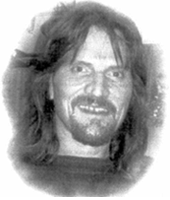
Darrell Mickasko

Darrell Mickasko burned to death in a Vancouver alley.

At least 56 homeless British Columbians died during 2006 and 2007, according to provincial statistics obtained by The Tyee.

B.C.'s homeless died at a rate that's at least 19 per cent higher than the general population, according to the office of the chief coroner.

Read the Coroner's report

The original three-page document tallying homeless deaths, done at the request of The Tyee, can be found here.

"These deaths were preventable," said MLA David Chudnovsky, a New Democrat who serves as the opposition critic for homelessness. "These are people who would still be alive if they'd had someplace to live."

The report tallies 31 homeless deaths in 2006 and another 25 in 2007. But housing advocates criticized the coroner for excluding the deaths of some formerly homeless people who died in hospital.

"Our governments are culpable for these preventable deaths," said David Eby, an attorney at Pivot Legal Society. "People are literally dying in the streets."

Overdoses, blunt injuries, hangings

The office of the chief coroner prepared this report in response to requests from The Tyee. Among its findings:

The death rates among homeless persons in 2007 was 21.3 per 10,000 people, while the rate among the general population in 2006 was 17.9 per 10,000. So using the coroner's indirect comparison, B.C.'s homeless population is dying at a rate 19 per cent higher than the general population.

Two thirds of the homeless dead were living on the street, while the remaining third lived in a homeless shelter. Thus the (uncalculated) rate of death among street homeless is higher than 19 per cent above average.

Poisoning by drugs or alcohol was the leading cause of death, followed by blunt injuries (e.g., hit by a car), hangings and stabbings. One drowned and one died of smoke inhalation. Another nine deaths are either undetermined or still under investigation.

All of those counted were found in B.C.'s cities: 13 in Vancouver, 11 in Victoria, four in New Westminster, three each in North Vancouver and Surrey, and two each in Chilliwack, Kelowna and Nanaimo.

Young and Aboriginal

Aboriginals represented 14.3 per cent of the deaths in the coroner's report, while comprising just 4.4 per cent of B.C.'s population.

The largest group died in their 40s, making up 34 per cent of the total. Another 28 per cent died in their 50s.

Fully 16 per cent died in their 30s, and 14 per cent in their 20s.

Only three of the homeless individuals counted by this report (5 per cent) made it into their 60s. And only one died in his 70s.

"These are pretty shocking statistics," said Judy Graves, who co-ordinates the City of Vancouver's street outreach program. "People are dying far too early because they are living outside."

"People who live outside rarely if ever are able to obtain basic needs such as proper nutrition, adequate sleep or medical follow-up," Graves explained.

"Certainly the people I see on the street are aging far more quickly than the people I see inside. Those living rough are more ill even than those who live in SROs," Graves said.

"I find it quite horrifying that the majority of these deaths occurred well before the age of 59," she added. "I'm turning 59 right now, and I expect to have a great deal more life ahead of me."

'Expected' deaths excluded

"This looks like a very good beginning," Graves said. "But it raises an awful lot of questions."

First question: why did the coroner exclude "natural/expected" deaths from these figures?

"Many homeless people have hepatitis C, or AIDS, or both," Eby noted. "Are we to understand that if one of these people died in hospital as a result of one of these diseases, their death is not included in these statistics?"

"We know that 86 per cent of the people living on the street are hepatitis C positive," confirmed Graves.

Second question: were the deaths of previously homeless individuals also excluded?

The report explains its methodology this way: "Cases were retrieved from the B.C. coroners service database if 'no fixed address' was given as the home address, or if the word 'homeless' appeared in the case circumstance notes. Each case was reviewed and only those found to meet this definition of homeless were included in this report."

"I suspect this report doesn't include people who had spent a significant portion of their lives living rough, but happened to be housed at the time of death," Graves said.

"People move in and out of homelessness," she explained. "When talking to someone on the street, it's not unusual for them to tell me they've been homeless '13 years, on and off.' We usually manage to have them moved inside during the last year of their lives. So they would not be recorded as 'no fixed address' even though they'd spent the last 10 to 15 years of their life living rough."

'This is an undercount'

"I think it's really significant that the province has begun to collect these statistics. But this report relies on a degree of accuracy in reporting that simply does not exist," Eby said.

"I have no doubt but that this is an undercount," he said.

Eby suggested the coroner's office add a check box to its forms that would identify whether the deceased was without a home or previously had been homeless. He noted that the creation of an Aboriginal's check box had significantly improved reporting.

The report also appears to minimize its own findings. For example, the 2007 homeless death rate was compared to the 2006 average death rate. The coroner's office said this odd comparison was made because figures for the 2007 average rate were not yet available. But a spokesperson for the office was unable to explain why the coroner did not simply compare the 2006 average to the 2006 homeless rate -- which happens to be 24 per cent higher than the 2007 rate.

Also curious was the coroner's conclusion that there are 11,750 homeless people in British Columbia. The coroner cited as its source a credible report by the Centre for Applied Research in Mental Health and Addiction. But that report conflicts with B.C.'s "official" position, oft-repeated by Housing Minister Rich Coleman, that B.C. is home to only 4,500 to 5,500 homeless residents.

Had the coroner used Minister Coleman's figure as its baseline, the rate of homeless deaths would have more than doubled.

Neither Housing Minister Rich Coleman nor the coroner's office responded to The Tyee's requests for interviews on Wednesday.

Media complicit in underreporting?

"I find it interesting to read that there were eight homeless deaths in Vancouver in 2007," Eby added.

"I can only recall media coverage of one homeless death that entire year," he said, referring to the passing of Chris Giroux, who suffocated in a downtown dumpster.

"I think the coroner's office -- which has apparently held back this data for at least two years -- has played a role is causing these deaths to be overlooked. But I also think these deaths have been ignored by Vancouver's news media, and as a result, overlooked by our society."

Eby has called on the coroner's office to investigate the January death of Darrell Mickasko, who had been turned away from an overflowing shelter. He and his companion wound up camping just three blocks away, where they huddled for warmth over a tiny stove. They were engulfed in flames when the stove exploded. Mickasko's companion, Pamela Erickson, is still in a Vancouver burn unit.

"Darrell was a real fighter. He knew when people had done him wrong, and he wanted to set things right. That's why I knew him, " Eby said. "He was a big guy -- six-foot-three and heavy set -- so when he came to the office, you knew he was here."

Eby added, "I can't imagine a more disrespectful way for a person to die than because they are homeless."

Related Tyee stories:

 [Tyee]

43  Comments:

Login or register to post comments

  • Gary

    3 years ago

    Hiding the Homeless

    This article comes on the heals of a small report I did at my blog How Bad is the Record.

    While walking from the Sea-Bus to the BC supreme court building at 800 Smythe St. To attend the Basi-Virk hearings, I counted no less than 18 homeless people sleeping in doorways. These sightings were on Seymour and Granville Streets. But on Howe Street, the bigwig and money street, there were none. A second observation was the cleanliness of Howe and how Filthy were Granville and Seymour. My impression was that the City of Vancouver in particular and the Provincial Government were sweeping this problem under the carpet so to speak. Out of sight, out of mind.

  • Van Isle

    3 years ago

    My son has walked around the

    My son has walked around the streets of Victoria just before day-break and is amazed on how many people are sleeping in doorways and nooks-and-crannys in the downtown core. I guess there is one thing better in Victoria than in Vancouver; they don't have a "downtown eastside", YET.

  • simonfraser

    3 years ago

    chudnovsky so ballsy in

    [OFFENSIVE COMMENT THAT ADDS NOTHING TO THE CONVERSATION REMOVED. PLEASE TRY AGAIN IF YOU HAVE SOMETHING OF SUBSTANCE TO SAY. PLEASE DO NOT TRY AGAIN IF YOU'RE JUST HERE TO FLING INFLAMMATORY COMMENTS AROUND. -MODERATOR.]

  • Yammer

    3 years ago

    Just thinking out loud here...

    Canadians enjoy mobility rights under the Charter, so can move around freely. Most of us choose where to live based on our opportunities for work, education, relationships, etc. You're not going to move to, or stay in, a place where you can't afford basic shelter and food, because rational people don't want to live on the street.

    Nonetheless you have these many people who are here, who are on the street and not getting food. That's not a rational decision.

    If it is by choice, it's a dumb choice.

    If it is not by choice - if it is (as I suspect) a result of compulsion, addiction, hopelessness and despair - that is evidence of insanity; being driven into this slow (or not slow) suicide by exposure.

    Policymakers, what do you do? I don't think you build cheap housing specifically to accomodate people who make dumb choices.

    I think you do build some kind of accomodation for people who are irrational. But I think that accomodation is in the form of treatment centres where people can become stronger and healthier, more equipped to find work, more aware of alternatives to self-medication. I don't know if that means having more cheap housing or not. It seems like a bad idea just to preserve SRO hotels or build social housing and leave it at that. I think it means more residential hospital/counselling centres, and/or cheap housing plus a massive increase of one-to-one workers, counsellers, and other people to offer the same help on an outpatient basis.

    Warm rooms alone are not the solution, is my laboriously drawn out conclusion.

  • DPL

    3 years ago

    When the subject was brought

    When the subject was brought up in the house today it got the usual government comments.

    Those folks had families somewhere and friends mostly in the past. To this government they are disposable to the folks in authority. This province has surpluses that are stored away for things the government wants but nothing much for the street people. A 400 million overrun in costs for another convention center in Vancouver seems OK but spend that sort of cash and the sreet folks would all have a place to live. Shame on you Gordon Campbell and your bunch of stooges in the back row getting big bucks simply to pound the desks (as required to reduce the number of questions that can be asked) we provide for you. Have you no shame?

  • greengreen

    3 years ago

    Agree with you yammer. I

    Agree with you yammer.
    I also wonder..."poisoning by drugs and alcohol was the leading cause of death." Was the drug/alcohol addiction the cause or result of homelessness? I am sure that the drug/alcohol addicted die both inside and out although exposure to the elements may prove fatal on any certain night.
    Of course, housing is of utmost importance but if that is all we provide we may well just be postponing deaths to a future date.

  • G West

    3 years ago

    Aren't we all?

    Aren't we all just 'postponing death till a future date?'

  • Crass

    3 years ago

    Militancy needed

    I think it is clear that all three levels of government (municipal, provincial and federal) don't give a rats ass about halting, let alone reversing, the growing gap between the rich and the poor in this city, province or country. In fact there policies enable poverty and homelessness, and they get rewarded by the Business community for cutting social programs.

    The sooner people wake up and realize that endless pleading, begging and shaming our politicians into doing the right thing will never have any lasting impact. Our current crop of criminal politicians are at war with the citizenry and we must take up arms, so to speak, to defend ourselves. Otherwise, we are f*#ked!

  • Stump

    3 years ago

    irrational conclusions

    Quote:
    Nonetheless you have these many people who are here, who are on the street and not getting food. That's not a rational decision.

    If one can't afford food and shelter... how do you suppose one is going to afford to be able to move somewhere else and start a new life?

  • morechatter

    3 years ago

    greengreen what do you mean

    Don't help anyone who is dying from a disease because they will only die anyway? And its the diseases caught when homeless that will do them in and even finding a home after won't help those who have the various killers plaguing the homeless. So if you want to stay healthy and well stay off the streets and those nasty deadly diseases will have a good chance of escaping you unless perhaps you find yourself in a shelter or in a hospital. The numbers have to be in the thousands if not even more, deaths thats is especially those related to diseases caught on the streets and homelessness. Anyone who is compromised will find themselves more susceptible so drug addicts, aids victims, infirm, elderly, children, disabled ,etc. are some who have been forced to the streets or to the shelters as I hear ones no better than they the other when it comes to spreading infectious diseases. I'm thinking how do you survive the streetsor shelters as it does not seem an ordinary task for ordinary citizens who find themselves homeless because Vancouver's housing crunch as over filled shelters turn away women and children because they are full. I've pasted some of the corners where many of them hurdle for safety and all you can smell is urine, filth and dispare.

  • Bobby Peru

    3 years ago

    The problem behind the problem

    The feature itself arrives at the crux of the homeless problem: 'Poisoning by drugs or alcohol was the leading cause of death, followed by blunt injuries (e.g., hit by a car), hangings and stabbings. ' This infers that the homeless are homeless because they are drug addicts. Drug addiction is why they cannot find work and stabilize their economic situations.

    Instead, the Vancouver's homeless activists argue that homelessness is a problem unto itself. That the solution is giving them free housing in the middle of the most expensive city in Canada. Really, how many housing units/beds can you realistically add downtown? Alot, if you don't care about the cost. But, the people who run our govt have other priorities so we have to be smart on how we use our resources.

    The homeless need drug treatment, therapy for mental illnesses and this is best done in facilities in cheaper places like Northern BC. They need to be taken off the street, cared for until they are well enough to restart their lives. Or they may need permanent hospitalization. Either way this is expensive to do in Vancouver.

    Railing against the supposed injustices of this govt is unproductive as the next govt will not give the homeless activists what they want. Attacking the rich won't work because the rich just put up walls and ignore you. You want everyone to be part of this solution and calling them heartless won't encourage them to help.

  • Stump

    3 years ago

    two extremes

    Bob:

    Maybe there's a middle ground between putting everyone in the DTES and everyone in the North... like oh, I don't know, rehab facilities throughout the province.

    Building all those facilities in the North is free I guess? (referencing your belief it will be cheaper to offer these services where people aren't.) Not to mention the moving allowances staff will want to make the move, the higher costs for heating and lighting in colder, darker climes, the increased costs to ship food up there.... I could go on and on, but you just don't seem to get the point and you've offered no realistic method for making your idea feasible... so why bother shooting it down yet again?

  • G West

    3 years ago

    Bobby

    Has it completely escaped you - after repeated articles and references noting and underlining the fact - that it is MORE EXPENSIVE to continue the current nightmare than it is to feed, clothe and house these people?

    Bring the services, the food, the health care and decent housing to them where they live; give them a chance to recover and regain their health and it'll cost you less in emergency services, police resources and lost business - not to mention self-respect than it does now.

    Why can't you understand this - study after study has shown it to be the case. The safe injection site, for example, has significantly reduced the number of overdose deaths on Vancouver's streets. Can't you see that raising desperate people to the point where they can begin to start helping themselves is both the right thing, morally and economically, for a civilized culture to react.

    These people are not just some social problem, some embarrassment to be sent to a ghetto in the north so that 'work can make them free' - they are your neighbours and your countrymen and women. Your concept of helping isn't helping - it's just another form of forced incarceration.

    It didn't work during expo and it won't work during the Olympics - it's a worn-out idea from the first half of the last century.

  • NoLeftNutter

    3 years ago

    The root problems

    The worst problems are drug addictions and mental illness. All the free housing and food won’t address the root issues. The best way to solve the root problems is in secure facilities away from the DTES. Everything else is another half-baked failure in waiting...

  • City Person

    3 years ago

    Nineteen Percent, eh?

    Quote:
    B.C.'s homeless died at a rate that's at least 19 per cent higher than the general population, according to the office of the chief coroner.

    Nineteen percent higher than the general population, eh?

    Poisoning by drugs or alcohol was the leading cause of death, followed by blunt injuries (e.g., hit by a car), hangings and stabbings.

    Given this kind of conduct, I am surprised that the death rate of homeless is only 19% higher than the general population.

    Quote:
    Our current crop of criminal politicians are at war with the citizenry and we must take up arms, so to speak, to defend ourselves. Otherwise, we are f*#ked!

    The Government of Canada doesn't like militancy very much. Just ask the FLQ and the Oka protesters. They really didn't benefit much from it and their causes are all but lost now.

    The real problem in this issue is nobody wants to be the bad guy. The solution lies in between GWest and Bobby Peru. Both make valid points. The present situation is very costly to society in numerous ways and has to be addressed. However, simply building treatment centres and asking the homeless to attend them won't work, either. The won't go. There has to be some stick and carrot in the equation. That is human nature.

  • lynn

    3 years ago

    Camping Up North

    Bobby Peru:

    Quote:
    Either way this is expensive to do in Vancouver.

    And 800 million dollars (and rising) for a Vancouver Cost-Over-Run Convention Centre isn't?

    No Nutleft wrote:

    Quote:
    The worst problems are drug addictions and mental illness.

    And what has caused the rampant drug addiction and mental illness-related problems? Do they just occur spontaneously out of thin air like visions of the Virgin Mary?

    Quote:
    The best way to solve the root problems is in secure facilities away from the DTES. Everything else is another half-baked failure in waiting...

    I see....so load them onto trains, (out of sight of Convention Centres spouting "BC is the Best Place on Earth") and put them in rehabilitation "camps" up north....

    hmmmm......and what year is this? 'Cause it sure looks like 1939 to me.

    Have you ever thought, NLN, that the stupid.... not to mention arrogant.... not to mention ruthless... not to mention short-sighted choices being made by governments that value Convention Centres over the lives of human beings may be at "the root of the problem"?

    I know who should be put on a train and sent up north for rehab and it ain't the residents of the DTE...it's the guys and gals currently passing regressive and cruel social policy in Victoria.

    But geez, damn it, catch-22 - they sold our train, too.

  • NoLeftNutter

    3 years ago

    Lynn

    Your comments might be a lot more relevant if you could get by your narrow-minded ideological biases. Governments at all levels of all political stripes, for decades, have mismanaged the challenges of addiction and mental illness. BTW, under which Provincial government was the most rapid decline in population at Riverview?

    I’ve never suggested the things you infer and considering how far apart we are from a rational and meaningful discussion, I’m grateful that I don’t share your perspective.

    EDITED TO REMOVE PERSONAL INSULTS. KEEP IT SUBSTANTIVE AND NOT PERSONAL PLEASE. -- TYEE MODERATOR

  • lynn

    3 years ago

    Walking the High Wire with No Net

    Quote:
    Governments at all levels of all political stripes, for decades, have mismanaged the challenges of addiction and mental illness.

    That's not an answer, that's an excuse.

    The BCLiberals are in power Now and have been for some time. So they are accountable right Now for things they are doing right Now. They and they alone are responsible for the actions of their government, their policies and their legislation. They should be big enough, man and woman enough, to assume responsibility for the consequences of their own legislation.

    The growing number of homeless on our streets is a direct result of the loss of our social safety net due to the regressive legislation brought in by the present government.

    Along with the Charter of Rights should come a Charter of Accountability.

    And NoNutLeft, you have no ideological biases of your own? None that you express here on The Tyee? Give me a break.

    The intentional ripping apart of the social infra-structure of this province by the present government is coming home to roost - on our streets, in our hospital emergency rooms, in the unrest felt in rural areas across this province....and soon right to the hallowed gates of 2010.

  • NoLeftNutter

    3 years ago

    Lynn

    Quote:
    The growing number of homeless on our streets is a direct result of the loss of our social safety net due to the regressive legislation brought in by the present government.

    My my, what a lot of sucking and blowing in one post…government spending is at all time high, yet you claim social programs are being “ripped apart."

    Of course I have ideological biases – how about - not spending money so stupidly. It’s a much better suggestion than another group hug…….

  • Stump

    3 years ago

    It’s a much better suggestion than another group hug…….

    Cue the neo-con call for tough love as the answer.

    Group hugs are free. I'd think that would have some appeal to the cost-conscious.

    Considering how many people turn to drugs and alcohol to fill a void in their hearts, some genuine care and affection for them (instead of treating them like problems to be solved cost-effectively) might have some utility in fixing what's broke inside.

  • NoLeftNutter

    3 years ago

    Stump

    Ahhh, you're making me feel all warm and fuzzy. Now, how about a real suggestion as to how to solve the problems of the DTES?

  • lynn

    3 years ago

    A government that runs with scissors

    Quote:
    My my, what a lot of sucking and blowing in one post…government spending is at all time high, yet you claim social programs are being “ripped apart."

    My, My, NoNutLeft, and yes, yes the social safety net has been ripped apart. Too busy golfing to notice?

    Most of our social programs are now non-existent. It's about how and where the money is spent....and where the deep cuts are made.

    A cut here. A cut there.

    A CEO hired here. A director put on a board there.

    Hundreds of media monitors hired over there. Cuts to the disabled made here.

    Big severence pay here to the guy over there. Social workers workers cut here.

    Convention Center full throttle ahead. Womens' shelters just throttled.

    Big boards, big pay. Little children. Little to eat. (BC has the highest child poverty rate in Canada. Wonder why with all that increased spending you keep talking about?)

    You get the picture, yet?

    Increased government spending means nothing unless the government is willing to reveal the actual details of exactly where and exactly how that government spending is being applied?

    I'll make it easier for you, in other words who and what is actually benefiting from increased government spending? Because the dangerous fractures that are showing up in health care, in children at risk, and on our streets suggests the people of this province are not benefiting from the so-called increased spending of this government. So who is benefiting from the increased spending this government likes to boost about? Who is really reaping the benefits?

    I'll even give you the last word, NoNut Left...this is an important thread. I've said enough.

  • Stump

    3 years ago

    real solution

    Quote:
    Ahhh, you're making me feel all warm and fuzzy. Now, how about a real suggestion as to how to solve the problems of the DTES?

    Treat people as humans instead of numbers. Kindness, compassion, some real $$$ for programs so that entry into detox is timely, adequate housing is available, and ongoing care is given to make the solutions stick. How hard is that?

    Your turn.

  • ME2

    3 years ago

    The old way ain't working.

    To date I haven't seen any admission by NLN or other neocons that shutting down Essondale, for example, without a workable plan to assist these people to manage on their own, has greatly added to the problems associated with homelessnes.

    One of the arguments against institutional "wharehousing" of these people was that the then management method of choice was keeping them "tranquilised" with drugs, the cheapest way of doing it.

    Today they're still drugged, but now they're on the street, and costing us more than ever.

    Another neocon stupidity is the Canadian compliance with the "War on Drugs" at the behest of the Americans. I don't know of anyone who claims this War is being won, or that it can be won.

    The continuing recruitment of our young people into addiction is just one of its failures, but a far more insidious result is the gradual turning of our societies into Police States, a situation even Lefties seem blissfully aware of, e.g. with their concurrence of things like The "War on Tobacco."

    Even the Fraser Institute, whom we love to hate, was able to see that, although now political arm-twisting seems to be changing their mind.

    The idea of resettlement areas is a good one, although I fully agree with those who feel that if it is forcible, it is bad. Much better would be VOLUNTARY work camps up North - or anywhere - where breaking of the rules would result only in a return to the DTES.

    Most everything I've read about addiction asserts that recovery is near impossible in a milieu where drug-taking is the norm, and the DTES sure fits that description.

    If such an opportunity existed, I'm sure there would be many wanting to give it a try.

  • Bobby Peru

    3 years ago

    A Pause

    Gwest- After all of our sparring, I read your posting several times to let it sink in as I know you mean well and actually have good ideas. I guess the other poster said it best when he thought the solution lies between our two viewpoints. Of course, the DTES couldn't be closed overnight and yes, we would still need to deliver services in that area.

    Frankly, I wasn't enthusiastic about the safe injection site, but it seems to be working. I just don't know if it could work on a large scale. Or whether that's a real, long term solution. After all, giving them clean needles and heroin only manages them into a grave at some point in time. Is it really rehab?

    The DTES and Vancouver are being overwhelmed by the homeless and something has to be done. There's one group on this site that wants the govt to spend whatever it takes to solve this problem within the context of housing in Vancouver. This argument is a waste of time and counterproductive. Govts (whatever their leanings) have to choose among spending and investing demands. We need to spend $800 mio on a new convention centre- it's not a simple choice between that and spending it on the homeless. If it were so then we should stop spending on education, policing and a whole list of govt programmes.

    SImply increasing the number of hotels in DTES and housing them there is not a solution. As unpleasant as my solution sounds, it's just a step towards dealing with a big problem. It's cheaper to operate facilities in the north than Vancouver. We need more facilities that we can afford. Some of the homeless need permanent hospitalization- does it matter where we hospitalize them? Addicts need rehab in an environment where drug dealers and rampant drug dealing are not so conveniently accessed.

    Of course, no facility is perfect and even in the best correctional facilities you can obtain drugs. But, it would be harder in a northern facility and a controlled environment.

  • G West

    3 years ago

    Bobby Peru

    That's a civil response and it deserves a civil answer; and thanks for taking the time to read what I wrote.

    If I thought that transporting the 5 - 10,000 homeless people in the lower mainland and putting them into quasi-voluntary camps for (I'd normally write re-training here - but I'll resist) a period of rehabilitation and work training would work I'd be inclined to accept your solution merely because it's neat and efficient.

    I don't believe that kind of thing works – the historical parallels tend to be odious and even if it did work, I'd submit that you can't treat people that way, it demeans both the object of the program - the homeless - and the people who are running it. I can't escape the vision I have of a town in Czechoslovakia - a bit north and west of Prague - called Terezin or Teresienstadt.

    What works, in my view, is dealing with homeless people on a one on one basis - exactly as has been done with the Safe Injection centre. You have to save people's lives first before you can give them a chance to start to put themselves back together again.

    That's why government leadership is so important - because what's necessary will cost money - not as much as continuing the current system over time - but lots of money - and it's not going to be popular with everyone and it will take time and persistence - there are no easy answers.

    The organizing has to begin locally at the community level and it has got to include empathetic professionals (psychiatrists, health professionals, nutritionists and community social workers) as well as bureaucrats with a big stack of money who are willing and able to spend it on ad hoc needs to respond quickly when the time is right.

    More SRO hotels are NOT the answer, but, it takes time to build the kind of housing necessary to address the current crisis – I don’t see any alternative in the short run. But that’s another question.

    Anyway, I'm too busy at the moment to be more specific - the Paperny film was, to me at least, very convincing. Over the 10 months while the film was shot the amount of time and effort required to move three out of five of the individuals being mentored (I actually hate the word ‘mentor’ but that’s the term they used) out of their homeless situation and into a better one was incredible. But what was pathetic - to me at least - was the inability of the current structure of assistance to actually respond - with a clean room, a warm meal, some new clothes, a wheelchair (just some examples) as needed and when, given the other circumstances, such small things might have provided the impetus to start positive change more quickly and more effectively.

    Try and see it if you can.

    And thanks for being civil - I appreciate it a great deal and it's not something I'm often treated with around here by those who tend to disagree with me.

    Cheers.

  • NoLeftNutter

    3 years ago

    Lynn and Stump

    Quote:
    Increased government spending means nothing unless the government is willing to reveal the actual details of exactly where and exactly how that government spending is being applied? - Lynn

    It’s not too hard to find how the money is being spent and spending is rising consistently in the areas of Health Care, Education, Community Services and Child and Family Development. It really is your dislike of the current government that suggests that only bureaucrats and directors are benefiting from the increased spending. See here for details -

    http://www.bcbudget.gov.bc.ca/2006/bfp/Part1ThreeYearFiscalPlan3.htm

    Quote:
    Treat people as humans instead of numbers. Kindness, compassion, some real $$$ for programs so that entry into detox is timely, adequate housing is available, and ongoing care is given to make the solutions stick. How hard is that? - Stump

    If the Canucks had a stick handler like you they’d still be in the Playoffs. Nice what, how about a how?

  • Yammer

    3 years ago

    The assistance/incarceration paradox

    What I was getting at in my exploratory thought, above, and what is evident in the debate, is that those of us who are not dying of exposure in Vancouver have to decide whether those who are dying of exposure have a right to do so. Everything flows from that.

    On one hand, suicide is not a crime. Making poor life decisions is not a crime. It's folly to, for example, burn all of your money (remember the KLF?), but the state does not intervene.

    You could therefore conclude that people have every right to spend their welfare money on drugs in Vancouver rather than shelter in an affordable community, and that they bear the predictable consequences themselves.

    On the other hand, the state DOES step in to prevent harm to those with diminished responsibility. It is not a crime to kill yourself, but it is a crime to counsel or abet suicide.

    I think the community/state has a right to abrogate the life choices of an adult, only if it has first determined that this adult has got diminished responsibility, e.g. are so addicted to drugs that he's not capable of self-preservation.

    Dying on the street of exposure is prima facie evidence of incapacity, it seems to me.

    The humane thing to do, I'd argue, is not only to provide detox and counselling for people at this level of extreme addiction, but to impose it involuntarily (via the Mental Health Act).

    Conversely, if addicts are still eating and being clean and warm, then they are managing their highs and I don't think the state should interfere. But there are not the people who get into the "Homeless Death Toll" -- at least, not yet.

  • ME2

    3 years ago

    Yammer

    There are many people who fare quite well with their heroin addiction. If one has a good income, a safe, secure supply and can regulate his/her dose, life can be relatively normal. Outside of being highly addictive, heroin is a fairly harmless drug. Just don't get caught.

    This is the reason necons hate the idea of harm reduction so much, since it's basic premise is that it isn't the drugs that's killing addicts, it's the associated ills that the illegality brings about.

    The threat to society posed by this system of illegality is not the drugs themselves, but the erosion of personal freedoms that enforcement entrains as in its frustration over repeated failures, the "system" seeks and imposes ever harsher methods of control.

    As these methods become acceptable within a society, they are easily transferred to other areas of concern, as best seen in the US with their progression from drug control to the Patriot Act, from there to Border control, and now in the spread of the War Against Tobacco.

    Those who fail to see how this affects the sense of what personal freedom means within a society has only to look at the general acceptance by the American public of the abuse of law and basic human rights at Guantanamo.

    It is well known that in those Nations in which the police are given sweeping powers over the citizen, corruption at all levels of government is rampant, and interactions with the police usually involves bribery - Campbell watchers take note, for authoritarian gov'ts are ALWAYS corrupt.

    Sorry Yammer, we cannot cherry-pick who we will and who we won't bestow personal freedoms upon, based upon whether we do or don't like them.

    We live in a time today when any imposition against another person is justifiable, providing it suits the "moral" outlook of the holder, without inconvenient reference to the maintenance of the personal freedoms the common man has only recently gained.

    Drug addiction is a clear case in which our attitudes need re-examination, for obviously our present attitudes and the results of them represent only our failure to do so.

  • Yammer

    3 years ago

    ME2

    "There are many people who fare quite well with their heroin addiction. If one has a good income, a safe, secure supply and can regulate his/her dose, life can be relatively normal."

    I guess. I don't care how one kills oneself as ong as you're not insane. If you're still regulating your dose, you're sane.

    "The threat to society posed by this system of illegality is not the drugs themselves, but the erosion of personal freedoms that enforcement entrains as in its frustration over repeated failures, the "system" seeks and imposes ever harsher methods of control."

    For pot, mushrooms, and opium -- maybe.
    I don't know that there is any safe dose for crystal meth or PCP. We don't regulate Drano because it has another function, but I can't see any more social value in allowing people to sell PCP. Idealistic libertarianism is all well and good in theory, but in the real world we don't allow people to sell sell polonium, hand grenades, or sarin. There's freedom and liberty, and then there's irresponsibility. Surely some drugs can be described as wholly toxic and without redeeming social value.

    "Those who fail to see how this affects the sense of what personal freedom means within a society has only to look at the general acceptance by the American public of the abuse of law and basic human rights at Guantanamo."

    Really? I think that most people who know about it, oppose it. A record low number of Americans support the torturecratic White House.

    "Sorry Yammer, we cannot cherry-pick who we will and who we won't bestow personal freedoms upon, based upon whether we do or don't like them."

    I'd like to live on your planet. But on this planet, there are many absolutely ridiculous and asinine people. Personal freedoms should be as free as possible, not free period. You disagree? How about the freedom to punch you in the face? To build a nuclear weapon purely for my own entertainment? To dam the river that flows through my yard? Chomsky himself describes anarchism as a tendency rather than an ideology.

    "We live in a time today when any imposition against another person is justifiable, providing it suits the "moral" outlook of the holder, without inconvenient reference to the maintenance of the personal freedoms the common man has only recently gained."

    Did you read my post? I posited that it is moral to rescue the insane. I also posited that it is moral to allow others to commit suicide. I never said it was immoral to take drugs.

    "Drug addiction is a clear case in which our attitudes need re-examination, for obviously our present attitudes and the results of them represent only our failure to do so."

    Really? Perhaps society's indifference to the addicted vagabonds filling up our morgues is actually consistent with a desire to allow everyone to have personal freedom. The freedom to die slowly in filth and indignity.

  • Bobby Peru

    3 years ago

    Takin' it to the streets

    Gwest- It was good that we slowed things down, put away the rhetoric and political name calling that infects this site and BC culture and must precede any discourse.

    It's clear that you and I would agree that drug addiction is a disease (the HBO series 'Addiction' is a great primer) not a sign of moral weakness and a source of shame. As a disease it requires ongoing treatment. Indeed, many addicts usually suffer relapses so any publicly funded rehab system needs sustainability over the long term. It's a disease without an easy or permanent cure.

    The basis of my Northern BC superfacility was economic- to deliver as much rehab capacity as possible. It sounds 'gulag' like, but can't we Canadians possess enough confidence to make sure it runs properly and doesn't become a death camp? Innovative solutions require courage.

    Gwest- of course, I'd love to deliver rehab and care in the DTES. But let's face some brutal realities. Rehab on diehard addicts can't work when the streets are crowded with dealers. Unless we mount a huge law enforcement effort, the dealers own the streets.

  • ME2

    3 years ago

    Theories

    Very interesting theories, Bobby and Yammer. So now please tell us just where your approach has worked?

  • ME2

    3 years ago

    practice makes perfect, y'know

    Oh, and I forgot to congratulate you both on your improving use of crocodile tears. A little more work on it and it might sound credible.

  • G West

    3 years ago

    Bobby

    I've always tried to invite respectful comments and responses to what I post here and I'd assert the rhetoric and the nastiness was never mine – at least from first principles: On the other hand, if someone chooses to walk down that road, I’ll respond - I'm no pacifist.

    It isn't a question of confidence, in my view: it's a question of compassion for one's fellow man, respect for ALL people (not just the ones with a lot of jingle in their jeans and fancy suits on their backs) and a desire to create conditions that will work without sacrificing the humanity of either party.

    It we want to talk about drug 'dealers' that is an entirely different question and police 'enforcement' or wars on drugs have never worked. Furthermore, I've said very little, if anything, about drug addiction. Just as I don't criticize my fellow citizens who are addicted to sex; alcohol; cigarettes; shopping or making money.

    There are many better management models for drug and drug users in Europe. Not perfect, but preferable to any kind of incarceration (which is what you’re talking about) medical or otherwise.

    You're still avoiding what I perceive to be the central flaw in your argument - that dealing with homelessness in your model is more costly and less effective than spending the time working at the community level right here in the lower mainland. The only thing that works is hard, slogging, compassionate care and an ability to respond helpfully at the proper moment - and right now many of my fellow citizens only 'care' about getting the 'problem' off the streets and out of sight. Healthy, decent, well housed communities work and there is no substitute for making the necessary efforts to create them – from the ground up. All government can do is create the conditions where they will grow – people have to do the work themselves.

    You might pick up a copy of Dr Gabor Maté's latest book: In the Realm of the Hungry Ghosts: Encounters with Addiction.

    He is the staff physician at the Portland Hotel, a residence and resource centre for the people of Vancouver's Downtown Eastside. Many of his patients suffer from mental illness, drug addiction and HIV, or all three.

    Respectfully, the ends, in almost every case will not justify the means.

  • Yammer

    3 years ago

    ME2

    Theory: if by theory you mean my statement that the law has to fetter certain kinds of behavior, I don't think that is particularly controversial.

    The question is, when? You and I agree that "immorality" is too vague and political to be a useful measure of when to curtain liberties. The test is harm.

    With me so far?

    Then you ask, harm to whom. Well, to others -- that's the easy one.

    The hard question, and the core of this article and the resultant discussion, is when, if ever, to impose treatment for self-harm.

    Bobby Peru appears to be saying that for their own good, you have to scoop people who are obviously so far gone that they are at risk of croaking in the gutter.

    I think this is actually a humanely motivated concept, and the optics of where and how you house these involuntarily committed addicts is a minor side issue.

    But because liberty is so fundamental in our society, we have to ask whether or not these addicts have the right to choose to die like this, or if Bobby Peru is right and we should scoop them.

  • ME2

    3 years ago

    Bobby and Yammer

    I don't want to get into "But you said and then I said" so I'll leave it all with saying I find nothing to dispute in either of your last posts.

    In fact, I would agree with you both that there is a humane necessity for "scooping" people in danger of terminal or near-terminal self-harm. Where we probably differ is defining when that situation would arise.

    In the US - and the danger is that Harper and Campbell would dearly love to copy them - kids are regularly "scooped" for pot possession, based upon the false premise that such use inevitably leads to hard drugs.

    That notion, along with other similarly popularised false notions about drugs, has led to the situation today where law enforcement has created more harm than the drugs themselves.

    In order to counter that obvious fact, the response is always to recite a horrendous litany (mostly true) of the ills that can befall the drug user. This then becomes an endless "chicken and egg" argument from which there is no escape.

    Somehow, we have to expand the "morality" discussion re drugs to beyond just the "morality" of using them.

    How, for example, are we supposed to teach our inexperienced youth of the deadly dangers of crack, while at the same time telling them if they use marijuana they will become raving lunatics? Don't they have around them endless examples of peers and adults who use Pot, but who have not then progressed on to harder drugs and who lead perfectly normal lives? How many of them think that we don't want them using crack just because we don't want them to have drug "fun"? And can't we give them credit for being able to see what happens to peers and others when drugs begin to rule one's life?

    Since prohibition doesn't and can't prevent distribution - or use - the sensible remedy becomes education.

    If we can agree to think about using only correct data about the use and abuse of drugs, and shift away from the stupidity of thinking "all drugs have the same end result", then perhaps we can get out of this blind alley we're presently travelling.

  • Yammer

    3 years ago

    Sensible remedies

    "Since prohibition doesn't and can't prevent distribution - or use - the sensible remedy becomes education."

    I agree with your comments about not all drugs being equal.

    However, I suggest to you that sensible people already respect the power of heroin, for example. Every teen knows it is the death drug.

    The problem is that many people are not sensible, and will gravitate towards heroin and so on precisely because it is more "hardcore" to do it.

    Darwinian selection is obviously at play here, but that's not very nice, and so we are left with building some kind of a safety net. Or, perhaps, not.

  • ME2

    3 years ago

    Yammer

    Sorry, Yammer, Heroin is not, in itself, a "death drug" as you state.

    There are thousands of people in BC who function quite well when drugged with Heroin. I knew a faller (now dead of an unrelated heart attack), and others in the Forest Industry who performed dangerous jobs without accident. Many "hard" drug users are in the medical professions.

    Besides the daily user, there are the "chippers" who use it only on weekends. And there are others who use it only for pain relief.

    The trick is having the money to buy Heroin, to have a secure and trustworthy supplier, and to know how to regulate your dose. But by far the most important is DON'T GET CAUGHT. Then the drug-related problems begin - big time.

    These include job-loss, homelessness, malnutrition, etc, all the result of being caught. In the little town in which I live there are known Heroin addicts. Since they are productive members of society, the RCMP leaves them alone unless they get involved in crime or sell to others.

    Beyond question, most users of hard drugs would advise strongly against taking that first hit. But many do, for one reason or another, and instead of punishing them for that, we should be expending more effort in ameliorating the damage our laws have done to them, and looking for more logical ways to prevent those problems - and the drug use - from arising.

    Clearly, you've fully bought into anti-drug BS, as did I and most everyone else who's been exposed to the propaganda.

    It's tough to recognise that one's been fed years of rhetoric, lies, and alarmism re drugs, I know, but without people seeking accurate information, the problems will continue to remain unsolved, and will likely get worse.

  • Bobby Peru

    3 years ago

    The Sorrow and the Pity

    ME2- part of the problem is reflected in your attitude and sense of self-righteousness. That no one else in govt or who is remotely rich cares about the homeless or should be barred from contributing ideas only hurts the homeless. Your attitude of either being with you or against you is like GW's doctrinaire. Can't you imagine that most BC citizens are conservative and liberal in a variety of beliefs?

    G West- I will address the central flaw of my argument. Of course, I cannot definitely say that my Northern BC super rehab camp is definitely cheaper than improving the current treatment delivery at DTES. The reason is that there are cost examples currently being set in DTES and my proposal is radical in its simplicity, but without comparables. I am making some reasonable presumptions- that land is cheaper in the North and it removes them from the drug supermarket of DTES which makes rehab difficult, if not impossible. I don't disagree with your remark about the primacy of healthy communities- at any level or socioeconomic strata; unfortunately, DTES is a highly flawed and dysfunctional community that can only be helped by moving the homeless/addicts to proper treatment facilities. Many of them need continuous treatment not a house with white picket fences.

    No, I'm not seeking a quick fix where they are out of sight and out of mind. Addiction requires medical treatment and the DTES is the wrong place to give it. The only community aspect that exists down there is the drug dealing community; many of the homeless are from elsewhere.

    I'm not supporting a 'war on drugs'. In fact, I would easily agree to no war on drugs or minimizing law enforcement on drug violations. But, don't forget that by doing so drugs will be freely available at lower prices. And the consequences of that is more drug use. You can educate everyone about the difference between weed and heroin, but if it's easy and cheap to get you'll get casualties. As long as we're willing to pay the social price - drug addiction, to me it's just a shift in resources from jail to rehab. There's no free lunch. Which leads me back to my Northern BC rehab camp idea- you might as well deliver rehab in the most high volume, cost effective way.

  • G West

    3 years ago

    Communities

    That's why you need to read Gabor's book; watch the Paperny film and remember that the DTES is as much a community as any other.

    In fact, it is a more long-standing community than the Johnny-come-lately folks who are trying their hardest to push the current residents of the real-estate rich/quality and services poor SRO hotels out of the area.

    We may not be able to 'rehabilitate', (which, if you think about it is a pretty judgmental term) the members of the DTES community in accordance with your definition of normal. That’s the lesson that I think we all have to acknowledge: In fact, I think it's quite possible that the whole idea of remaking many of these folks is a bad one.

    We differ on too many fundamentals. I have a real problem with the efficiency side of your argument and even, in the end, if you could show me it would be cheaper to involuntarily move the homeless population of the DTES to a ‘facility’ in Prince George and turn the real estate around Hastings and Main into more high-rise condos and chic boutiques I think it would be the wrong thing to do. And I think we’d suffer as a society if we ever tried it.

    The ends do not justify the means.

    Anyway, pick up the book, call the CBC and see when they’re going to re-broadcast ‘Devil Plays Hardball’ and then we’ll talk.

    My email is

    I’ve written enough about this here – if you want to contact me privately go ahead.

    I’m not posting anything further on the subject here.

    G West – I always appreciate respectful comments to my posts.

  • Yammer

    3 years ago

    Junkies and communities

    I live in a community that has a lot of junkies in it. I mean, visible junkies, with the cross-footed slapping gait bobbing along -- not ME2's example of the genteel, high-functioning social heroin aficionado who delicately sniffs only a prudent pinch from a silver spoon, pinkie finger held well out.

    These junkies add nothing to my community except urine-soaked abandoned bedding.

    Community to me means thriving local business, good schools, etc. You know, being productive. I realize that good neighbourliness requires everyone to accept that there are different ways of living, but surely these hardcore junkies fall outside any notion of diversity. I can't imagine the thinking being wildly different in the DTES.

  • ME2

    3 years ago

    You win, Yammer

    For a bit there, you had me and probably others like GWest believing that you were trying to be open-minded.

    Any ideas that you deserved that benefit of the doubt were permanently dispelled by your last post.

    But then, returning to the comfortable old rhetoric is so much easier than thinking things through, isn't it?

  • Yammer

    3 years ago

    ME2

    Comfortable old rhetoric? About what?

    Speaking of which, why don't you again tell us how the war on drugs is bad because it's bad to have a war on drugs. We might not have gotten the point the first two times.

    • The discussion for this story is closed. No more comments can be added.