Jaccard Rebuts Carbon Tax Critics
Advisor to premier claims it's world-class policy.
Bye Bye Hummer?
[Editor's note: Yesterday The Tyee readers learned Mark Jaccard's reasons for backing "compulsory" approaches to cutting emissions. Today he defends, as an ideal example, B.C's controversial carbon tax.]
The B.C. government's carbon tax is about as good as you're going to get in a democracy, says environmental economist Mark Jaccard.
Yet the response to the carbon tax has been a lot like Goldilocks, argues Jaccard, an adviser to a number of governments, including B.C.'s.
It's true that a lot of contradictory things have been said about the carbon tax since it was unveiled in last month's budget.
There's been a criticism to suit every taste:
It's too low to do any good.
It's too high -- and that's going to cause runaway inflation.
It's revenue neutral -- and that means people won't have any incentive to change their habits.
It's not really revenue neutral -- and that means it's a tax grab.
It punishes business at the expense of consumers.
It punishes consumers at the expense of business.
Jaccard, on the other hand, thinks the tax is pretty darn good. Maybe the best of its kind in the world, in fact -- although he won't have a definitive statement on that one until he's done a lot more analysis.
Unreliable volunteers
Jaccard is a Simon Fraser University professor and the Canadian most associated in the public mind with carbon taxes, even though he insists he's not a carbon tax advocate.
He's been an adviser to the Chinese government and he currently advises the federal and B.C. governments, although he had little input into the carbon-tax budget. He's a research fellow with the C.D. Howe Institute and lead author for the policy sections of something called the Global Energy Assessment, an international project aimed at finding ways to get to a sustainable global energy system.
His research has convinced him that only compulsory measures, such as a carbon tax, will work to lower greenhouse gas emissions. Canadian governments have tried voluntary measures -- information campaigns and subsidies -- and they didn't work.
That leaves two broad options: regulations and taxes.
There are plenty of different ways to regulate emissions, from command-and-control type limits to market-based systems such as cap-and-trade. In a cap-and-trade system, the government sets a cap on emissions and either gives or sells permits to emitters. Emitters who reduce their GHG output below the level stated on their permit can sell credits to other emitters who can't get below their permit levels. Over the years, the government reduces the total level of permitted emissions.
Jaccard says he doesn't much care which option governments use, as long as it's compulsory. Carbon taxes, however, can be designed so that the revenues raised can be given back to lower-income people through tax breaks, making them more equitable.
'If our children are dumb...'
The thing about the carbon tax, Jaccard says, is that it "really has its bite 20 years down the road."
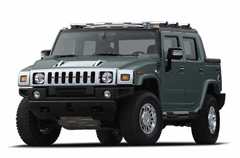
"So if our children are dumb enough to still be buying gasoline Hummers and driving them a lot when there are all these other options that are emerging right now...they'll pay for it."
B.C.'s carbon tax starts at $10 per tonne of GHG emissions, which works out to about 2.4 cents on a litre of gas. That will increase to $30 per tonne by 2012.
Down the road, it's going to have to get a lot higher if it's going to seriously cut emissions. Jaccard's economic models show that the tax will eventually have to reach $75 to $125 per tonne to create the kind of decisions that will lead to zero emissions technologies.
"There are a lot of things that will happen between $10 and $75, a lot of really good things," Jaccard said earlier this week in a talk sponsored by Voters Taking Action on Climate Change.
The models show that changes will start to happen even in the $10 to $30 range; a tax in the $10 to $75 range will cause emissions to start to level off. However, Jaccard says, levelling off isn't good enough -- we need to get our emissions way down.
"For decisions to be consistently zero or near-zero emissions...you need to be in the $75 to $125 range," he says. "Now, you don't need to be there right away. You need people to feel that's where it's headed."
That's when "early adopters" will start to pick up on low-emissions technologies, he says.
That brings us to the first of the many criticisms that have been levelled against the carbon tax:
The tax is too low to have any effect. The cost of gas has been going up steadily in recent years, but people still keep driving; a few more cents a litre won't have any effect.
"There is no alternative to a modest but gradually rising carbon tax," Jaccard said in an e-mail. "You cannot start high. That would be very unfair. You start low and schedule it to climb."
It's the government's signal that it intends to keep increasing the tax that will affect long-lived investment decisions, he says.
"Ask those people who want a really high tax right away what they feel about the people who would be hit hard, and how they would make that work politically. I don't know of any politicians who want to commit suicide.
"In fact, this is why they have not even ventured a tax yet in North America -- or any other meaningful policies. Now we have a government that is brave enough to start the real policies we need and people who could never win an election in their life are bitching about them.
"I find it quite astounding. Some people seem to need to criticize no matter what. I think this is a time to compliment people and recognize that they did something that they did not need to do from a political self-interest perspective.
"As for the cost of gas and people still driving, this is a complete misunderstanding. The goal is not to make people drive less. It is to make them pollute less.
"They might travel less. They might switch to transit sometimes. They might car pool. They might get a lower or zero-emission vehicle. Social science research indicates that the most likely outcome is people switching to lower-emission vehicles.
"This is just a reality of what we know about people. It does not mean I want this outcome."
Because the tax is revenue neutral, people won't have an incentive to change their carbon-emitting habits. If the government uses tax breaks to give them back the extra money they'll spend on fuel, why should they drive less or turn down the thermostat?
If you really cut your emissions, Jaccard says, you will pay less carbon tax but you will still receive the government's offsetting tax credits.
"Those who cut emissions more will be better off than those who cut less.
"There is your incentive. First year economics."
The tax punishes business, because business pays two-thirds of the tax, but gets only one third of the tax breaks. As one Globe and Mail columnist said, "For every dollar business as a whole pays in the carbon tax, it gets back 50 cents. The carbon tax is only revenue neutral from the government's point of view."
"We are not yet totally sure how it will play out," Jaccard says. "I think it will end up pretty equal. Business will be able to pass on some of the costs, which is as it should be. Consumers have no one to pass costs on to. But things are still being refined."
It's unfair to rural people.
Jaccard told the Voters Taking Action on Climate Change meeting that this may not be the problem that some commentators are making it out to be. People outside urban centres may not be able to ride transit, but they don't have to sit in traffic jams, either. And they tend to insulate their homes better than folks in the Lower Mainland and southern Vancouver Island.
It's going to cause runaway inflation.
"Nope," Jaccard said via e-mail. "That is why it's a gradual tax. Which is the answer to your earlier question. You can't have it both ways. How can a 7.5 cent per litre increase over five years cause runaway inflation when a 30 cent per litre jump in three years did not?
It's social engineering.
"Nope. That is why it does not have an objective of people driving less.
"What we all care about is less emissions. So the policy focuses on emissions -- not on behaviour -- and lets people decide how to get the emissions down....
"The policy is not intended to change behaviour, and anyone who wanted a policy to do that would not be in power -- not here in Canada, not even in Europe, where there are Green parties that share power in some cases."
As William Rees has argued on The Tyee: "As matters stand, B.C.'s seemingly 'aggressive' move is politically designed to have minimal impacts. The province is still dedicated to outmoded notions of economic growth at any cost -- and if the costs exceed the benefits (as many suspect is the case at the global level), we are actually encouraging uneconomic growth that will ultimately impoverish us all."
"My goodness. Bill, please tell me what better policy you could have achieved in a democracy -- as opposed to an eco-dictatorship.
"This looks to be one of the best climate policies in the world thus far. I would like Bill to point out a better one.
"Let's remember that all policies are flawed. There are social engineering policies that will not make it in a democracy. There are let's-crash-the-economy-today policies that will not make it in a democracy.
"There are let's-regulate-and-create-a-big-bureaucracy policies, that will eventually be discredited and dismantled in a democracy. There are let's-appear-to-be-doing-something-by-giving-away-subsidies-and-information-programs, which decades have shown to be completely ineffective.
"The policy package that B.C. is putting together -- which soon will include some regulations on vehicle emissions, building efficiency, equipment efficiency, and which already includes a requirement for clean electricity -- is definitely the best in North America and perhaps in the world.
"I am in the process of comparing it to policies in the U.K. and Scandinavia, and it looks like it is superior to all of these in terms of (1) environmental effectiveness, (2) equity for low income groups, and (3) economic efficiency.
"This is what matters to most people, except for a few who think that all economic activity must stop to save the planet -- which is definitely not true, and will never gain political acceptance anyway.
"I am interested in saving the planet. Not bitching about how good policies are not perfect."
Related Tyee stories:
- Don't Call Him Mr. Carbon Tax
Hot shot eco-wonk Mark Jaccard, on what really works. - How Fair Is BC's New Carbon Tax?
And will it make rich people greener? - 'Chump Factor' Holding Us Back
People ready to sacrifice if they don't feel alone.


Stump
07-03-2008
low emission - blows less, but still sucks.
The most likely outcome in other words, having little or no affect on all the other problems caused by cars.
Laughable to see people so brainwashed that they can't recognize the vehicle (pun intended) of their own demise.
G West
07-03-2008
And that's the problem Mark
The science says 20 years down the road is too damn late.
The demand for fuels tends to be inelastic - this kind of tinkering won't work - any more than years of raising prices on tobacco did.
The change in smoking behaviore was because the folks who smoked and kept smoking died off. Your economics counts on a good portion of the human race doing the equivalent of the same thing to counteract global warming.
I'm with Stump - too little, too late and too damn bad.
I'm also tired of guys like Jaccard playing both sides of the game and pretending to be honest brokers - he fits right into this policy and its creator(s).
City Person
07-03-2008
That Pesky Democracy Thing
Democracy is indeed pesky. It means one group, no matter how high minded and zealous, cannot put its views on another without a vote. This is why government has such a difficult time making policy, because it knows it cannot please everyone
The gas tax is only a start. There will be many more steps taken, most probably a CO2 tax. However, most depends on what happens in the USA with their new president.
The USA is a slave to foreign oil. The logical thing to do would be to reduce consumption. This, however, would reduce Exxon-Mobil's obscene profits.
The market will also have a big impact. At $1.50 a litre, you are not going to see so many mini-vans and SUVs anymore. Gasoline at these prices will also accelerate the demise of the US "big three" auto industry. The Asians and Europeans have the models available right now that would make gasoline at that price no sacrifice.
Times, they are a changin' and that is one thing we can all count on.
mopled
07-03-2008
World Class, Eh!
The phrase itself is one that usually makes me gag, with it's connotation of pretention.
Combined with the unproven hypothesis that CO2 can change climate and that a gas tax is "saving the planet", it is hard to separate nausea from anger at the scam we are being subjected to.
Research of Hundreds More Scientists Shows the Natural 1,500-Year Climate Cycle
http://www.heartland.org/Article.cfm?artId=22892
"The Singer-Avery book assembled the historic and physical evidence of the long, moderate climate cycle--including the Medieval Warming, the Roman Warming, and six previous global warmings since the last Ice Age. For example, Suzanne Carbotte of New York’s Lamont-Doherty Earth Observatory used side-scanning sonar to locate long-dead fossil oyster beds--which were active in a warmer Hudson River 1,000 years ago, 2,000 years ago, and 6,000 years ago. (Carbotte, S., 2004, Geo-Marine Letters, Vol. 24.)
“Most of our modern warming occurred before 1940,” said Avery, “before much human-emitted CO2. The net warming since 1940 is a minuscule 0.2 degree C--with no warming at all in the last nine years. The Greenhouse Theory can’t explain these realities, but the 1,500-year cycle does.”
“The warmings have been the good times, for both humans and wild species,” said Singer, professor emeritus of environmental studies at the University of Virginia. “The world today has more vegetation and a richer diversity of birds, bears, butterflies, and lichens than the planet had during the 550 years of the Little Ice Age. The cold times gave humanity famine, bubonic plague, fiercer storms, and clouded skies. People today don’t understand their climate blessings.”
The 1,500-year climate cycle was initially found in the first long ice cores scientists brought up in Greenland and Antarctica in the 1980s. Avery notes the original discoverers won the Tyler Prize (“the environmental Nobel”) in 1996 “but now nobody mentions them.” The cycle’s evidence has also been found in such sources as seabed sediments, cave stalagmites, fossil pollen, and ancient Chinese court records.
Dozens of other researchers have also found links between the 1,500-year cycle and solar variations recorded in the sunspot index.
“We’ve known for 400 years about the strong correlation between sunspots and the Earth’s temperatures,” said Singer. “There is no correlation between our temperatures and CO2.”"
How about saving us from phony science instead, Mr. Jaccard?
City Person
07-03-2008
Warming
Mopled, as a history major, I also have major reservations about the immediacy of "global warming" in a 1000 year context.
That said, there is no way we should be wasting a non-renewable resource at the rate we do.
Frank
07-03-2008
More hot air
So when gasoline climbed from 22 cents a litre 25 years ago to $1.13 a litre today why didn't emissions go down?
Does anyone recall every 2nd vehicle on the road back in 1982 being a big SUV? Because I don't.
So why did the size and number of vehicles on the road increase as the price of gas went up 5x?
According to Jaccard's model "over 20 years" none of that should have happened.
Van Isle
07-03-2008
Did anyone notice one of the
Did anyone notice one of the other articles in this mornings Tyee articles? Howe Sound Pulp and Paper in going to convert to coal. Why coal, may one ask? Cuz it's exempt from the carbon tax that's why. Silly us, to think that Gordo's carbon tax is going to solve our problems.
Stump
07-03-2008
oh mopled
Do you understand the difference between 1500 years ago and today?
A lot more people. Billions more. Do you understand what carrying capacity means?
Please, You may find your skepticism to be the mark of a rigourous mind, but your tendency to cherry-pick the arguments of a few scientists that back up your argument (and disregard the wealth of data that refutes it) puts paid to that idea.
But let's suppose you're right and we're in the middle of natural warming cycle. Do you understand how our actions are exacerbating it? I don't think so.
You have no solutions except to quibble while the planet burns. Tiresome.
redunk
07-03-2008
A REAL CRITICISM
All good questions based on criticisms in the popular media. But a questions not discussed is:
What about the costs associated with completing all the necessary regional science, assessments and cross-discipline analysis of the multitude of necessary steps needed to prepare for the redevelopment of a variable climate friendly city? Who is going to pay for that? Either we prepare now or clean up after it's broke!
Stump
07-03-2008
criticism
The flip side of that coin is that all those costs represent economic opportunities. Road removal creates jobs too, to quote a friend.
skeptikool
07-03-2008
To those naysayers
Please don't tell me that a mass swap of gas-guzzlers for these cars or something similar, would not bring about huge improvement to air quality.
http://www.canada.com/theprovince/news/driving/story.html?id=161af0e7-ba97-4f8d-a25c-97acc503de5b
skeptikool
07-03-2008
Vigilance is needed, always
Van Isle:
Brings to mind a situation that Rafe Mair was continuously bleating about - an aluminum company that appeared more interested in producing and selling electricity than aluminum.
Think something similar might be planned here? Rather than coal, I would think there would be enough bark and other wood waste and garbage to fuel the operation.
Then there is the transportation of the coal. We need to look closer at who cooks up these deals, in my opinion.
JOBS should not trump the environment.
redunk
07-03-2008
road removal creates jobs
Road removal does create jobs but so does building bombs and blowing them up, because something boosts GDP doesn't mean it is a viable justification.
Also cleaning up after a mess may have economic opportunity associated with it, but tell that to victims of a preventable landslide or flood.
KWD
07-03-2008
democracy?
Forget about whether CTs will be too high or too low, unfair or social engineering or revenue neutral. They simply won’t register in a time scale that is meaningful.
Throughout this rebuttal Jaccard makes continued reference to the fact that in a democracy none of the suggestions, by the opponents of a carbon tax, would be tolerated.
And he’s right; except for one tiny flaw … we don’t live in a democracy and haven’t done since corporations were given the legal status of “personhood”. Since that time we have been forced to endure the rule of corporatism: the new fascism.
Carbon taxes, under the existing Liberal design are directed at individuals not corporations. And that’s part of the reason why we’ve heard little in the way of serious complaints from the corporate world.
Corporations, the largest polluters, are to have their carbon output controlled by a market based cap-and-trade system (yet to be designed). The trouble with market-based systems is that they only work when there is no fixed baseline. The big players in the TSE and the DOW would have collapsed long ago if they were held to a fixed production level. Market based carbon control through cap-and-trade is a fraud.
If climate change is indeed a response to human activity we need to put the brakes on our carbon emission production now not 20 years down the road and we need to put it on every carbon producer ... no exceptions.
lynn
07-03-2008
KWD
And he’s right; except for one tiny flaw … we don’t live in a democracy and haven’t done since corporations were given the legal status of “personhood”. Since that time we have been forced to endure the rule of corporatism: the new fascism.
Well said, KWD. I'm really glad you mentioned that. It's core to the argument.
Mr. Jaccards argument began from the get go with that false assumption....that we live in a democracy.... in his very first sentence:
And not living in democracy but under dictatorial corporatism, changes the whole argument. Just one example - the extra penalty and hardship rural dwellers are given by this tax, added to the already increased long distances they have to travel because vital essential services and infra-structure have often been removed or moved a greater travelling distance away for the benefit/profits of corporations not people. All of this accomplished through legislation ( like The Special Projects Streamlining Act etc. ) that now allows the government to trump the will and common good of the people in communities and municipalities through out this province.
Jaccard goes on to say this:
And that is the crux of the matter - because even though Jaccard would like us to believe he is referring to the behaviorof people here, in reality it is the behavior of corporations that is at issue here - a lethally destructive behavior that is being protected and indeed promoted ....and that has no intention of changing....especially while there are profits to be made. In fact the laws have been re-written in favour of corporations and the elite few behind them to do just that. To not have to change.
City Person
07-03-2008
Still Pesky
Well, Lynn, you will have to vote to change that.
skeptikool
07-03-2008
An idea whose time is long past
From Tom Barrett's article:
One thing government hasn't tried, or given support to, is transferable vehicle insurance.
Since one can drive only one vehicle at a time, certain "approved" vehicles should be permitted to be covered by the "family" vehicle while the Smart vehicle, or whatever gas-sipper, is used for the commute.
LeftSeater
07-03-2008
BC Liberal Carbon Tax
Who can really blame Finance Minister Carole Taylor and the BC Liberals for implementing a Carbon Tax?
That was their “Get out of Jail Free” card to escape the clutches of the braying environmentalists who are suggesting politicians should be tossed into the bucket for ignoring science........
Stump
07-03-2008
car insurance
Different drivers pay different rates Skepti, so I don't think that would work.
Pools of various vehicles a la the Cooperative Auto Network is an idea with much more promise IMO. Most cars sit idle most of the time.
G West
07-03-2008
NLN
Wha daya think is going on here nutter?
You're the one who throws his hands up and says nothing will ever change so enjoy the bucks while they're coming in and don't worry about tomorrow. And above all don’t do anything that might show you give a shit for either the environment or your fellow man.
The idea that people wouldn't respond to a real workable plan to address climate change and our dependence upon fossil fuels is utter nonsense.
As others have pointed out - have none of you skeptics ever been to Europe?
The levels of taxation are far higher, so is the cost of fuel and they HAVE a decent public transit system and a much better ratio of earnings (lowest 10th to highest 10th) than we do.
People like to be challenged by political leaders with some credibility who will actually reflect and consult with their constituents and not just pander to the corporate jerks who paid to get them elected.
skeptikool
07-03-2008
Stumped by my brevity
Yes, I realize that the ICBC premium on the Hummer would be somewhat higher than on the Pontiac Firefly or the Honda scooter, but it would be the highest premium that would be paid, while the others would be covered.
As you suggest, insured vehicles sit idle for much of the time - more today, fuel prices being what they are.
Suggest as offensive | Recommend as a best comment | Help
Stump
07-03-2008
not-stumped actually
My point is that individual drivers pay more or less depending on their age and driving record. I also think people would abuse the system and drive uninsured in a pinch.
Private vehicle ownership is the problem not the solution. We need to discourage people from buying cars at all, since they are so wasteful and polluting at every stage of their construction, use, and destruction.
Co-ops and better transit is a far better alternative IMO, economically, socially, and environmentally.
RickW
07-03-2008
This statement just about says it all!
It really means something like: "Well, I won't be here (in an influental position) to take the fallout from yet another failed 'plan'"..............
skeptikool
07-03-2008
It seemed to produce a yawn, but...
Here's an excerpt from that link provided this morning:
OK, at $75,000, forget the vehicle, but why cannot the technology be applied to other vehicle engines - even existing engines be modified?
Here is that link again:
www.canada.com/theprovince/news/driving/story
KWD
08-03-2008
how green is green?
Lynn, although understanding the significance of “corporate personhood” is important, and would make for an interesting article, I think the structure of Jaccard’s “rebuttal” requires a closer look.
The problem with Jaccard’s carbon-tax-critic-rebuttal is the fact that it isn’t a rebuttal at all. Because it’s framed in a way that wants us to believe that the present system ... rife with runaway-consumerism, endless-growth economics and bottomless-pit technologies … is the only system, and it’s going to continue whether we like it or not, there can be no really meaningful dialogue examining carbon’s relationship to climate change.
So, as long as the argument is contained and prevents participants from looking at new ways of thinking (about human activity on this planet) the argument simply hides the carbon tax proponent’s motives: Talk Green while making sure the system is allowed to carry on as usual, and the interests of those that have the most to lose are protected.
For example, a “status quo” framing ignores looking at the legitimacy of Orwellian institutions like “environmental economics”. We can be sure that when we use the terms environment and economics in the same sentence that statements with a Green appearance are simply veneered to look that way.
Since were on the Green topic, it is important to note that Green has many layers. We can start with governmental green, which has basically co-opted the term to make it appear like there’s a legitimate environmental interest. And then there’s the Deep Ecology green, which has slowly evolved into Left Biocentrism.
Although Left Biocentrism is probably were we really want to be, there appears to be little desire to incorporate that philosophy in our thinking.
skeptikool
08-03-2008
We can't wait for government to lead
There is much that the individual can do, as evidenced here. Just click on each image to get a brief narrative:
http://www.msnbc.msn.com/id/21595501/
Anyone have a favorite?
skeptikool
08-03-2008
Ford faltered but GE saw the light
This is really encouraging:
http://www.msnbc.msn.com/id/23485900/
excerpt:
Think Ox electric vehicle
Think is no stranger to multinational corporations. It was actually owned by Ford Motor from 1999 until 2003, when the automaker sold its stake, saying the market for electric cars was too small and that it wanted to focus on other technologies for cleaner vehicles, including hydrogen fuel cells and the gas-electric hybrid vehicles.
City Person
08-03-2008
Products
Frank, other companies indeed build SUV and trucks. However, the "Big Three" have a product like that is based on them. The "imports" make their bread and butter, in our tiny market anyway, on small, fuel efficient cars. Here are the figures for 2006:
# 1- Honda Civic (70,028)
# 2- Mazda3 (47,933)
# 3- Toyota Corolla (44,182)
# 4- Toyota Yaris (34,202)
# 5- Chevrolet Cobalt (31,729)
What is more, the "imports" have models in their international inventory that they can quickly bring into Canada or the US on short notice. An example was Honda rapidly getting its Fit into the North American market.
What is really ironic is that top sellers #1 and #3 are not "imports." They are actually considered "domestics" under the present rules.
NicS
08-03-2008
Thomas Homer-Dixon's View
The BCNDP had him as their keynote speaker this past November. In this article in the Globe and Mail he discusses the politics surrounding carbon capture in Canada.
lynn
08-03-2008
Breaking the faith
I couldn't agree more, KWD. A really thoughtful piece of commentary.
RE; framing. Under the sly mask of "green" and "change" we are getting a condescending and paternalistic corporate wag of the finger in our faces that is really saying: End of story.... Our Way or the Highway. Image not substance. Know your place.
Problem is I find growing numbers of people falling for it, to criticize the false prophets of change , the new messiahs of corporate green, image rather than substance, to call it out as status quo politics has become an almost heretical act.
Arundhati Roy once said that for there to be real hope one must break the faith. I wholeheartedly agree. I've learned lately what a dangerous statement that is to make though ...how it threatens the false hope and change message being sold to the masses of late....to true believers on both the left and the right ....really the same side of the coin as Fiat Lux often remarks.
leem
08-03-2008
the real warming issues
im surprised that during all of these comments, no one has mentioned the tonnes of chemicals (aluminum and barium, to start with) released into our breathable atmosphere, by planes every day. this is happening all over the planet, and is directly responsible for decreasing light emissions hitting the planet and plant life; increasing respiratory issues for young and old; and trapping warmer air close to the planet, thus increasing surface temperature. who is doing this to us? our governments, in secrecy. look up at the sky on a clear day, and watch the planes covering the blue with their grey chemical plumes. watch as the plumes expand, filling the sky and blocking out the sun. you can leave your cars at home, but who's going to stop the poisoning of our planet?
woody
08-03-2008
leem
leem said, look up at the sky on a clear day, and watch the planes covering the blue with their grey chemical plumes. watch as the plumes expand, filling the sky and blocking out the sun. you can leave your cars at home, but who's going to stop the poisoning of our planet?
Your correct leem, Planes!! you don't hear Jaccard or his alter ego Campbell say squat of their most favorite mode of travel do you? Their are more than a few of us here, who have written about these gluttonous waste and users of fuel. The jet setters are scared sh!tless to open there yaps, out of fear for having to spend their holidays up here in the frozen earth. With all the planes flying about, new runways and expanded airports, it speaks volumes about how much this flying segment of society gives a fiddlers fig of the environment, doesn't it?