News

Don't Call Him Mr. Carbon Tax

Hotshot eco-wonk Mark Jaccard, on what really works.

By Tom Barrett, 6 Mar 2008, TheTyee.ca

Mark Jaccard

SFU's Jaccard: Just say no

[Editor's note: This is the first of a two-day series on Mark Jaccard, the SFU energy economics wonk who has Premier Campbell's ear.]

To the public he's Mr. Carbon Tax, but Mark Jaccard says the label's wrong.

"Although in the media lately I'm portrayed as the carbon tax advocate, if you read any of my work, I'm not," he says. "I'm not a carbon tax advocate."

He is, he says, an advocate of forcing people to do various things in order to lower greenhouse gas emissions.

"I am a compulsory policy advocate because the research has shown me that the other stuff didn't work," he says.

The "other stuff" -- subsidies and information campaigns -- made up Canadian climate change policy for the last 20 years. The failure of these policies to reduce emissions highlights a "second inconvenient truth" about climate change, says Jaccard.

The only way governments will lower emissions is through taxes or some form of regulatory scheme, he says -- and he adds that he doesn't care which they choose.

Carbon taxes, like the one the B.C. government brought in two weeks ago, do have some advantages, however. Carbon taxes, Jaccard says, have the potential to be more equitable than other measures because the revenue raised can be given back through tax breaks, protecting those with low incomes.

Jaccard, the Simon Fraser University resource and environmental management professor who has become a key member of Premier Gordon Campbell's inner circle of climate change policy advisors, made these comments in Vancouver this week during a speech sponsored by Voters Taking Action on Climate Change.

During the speech, he said:

  • He's not sure if Premier Gordon Campbell will hit the emissions reductions targets he's set -- nor does he care. "I stopped paying attention to targets and [am] really paying attention to the compulsoriness and the likely success of the policies."
  • He's "appalled" at the provincial New Democratic Party's criticisms of the carbon tax.
  • He believes energy use satisfies fundamental human desires and, rather than trying to get people to use less energy, governments need to adopt mechanisms that will ensure the energy we use is carbon free.

Strategic calculator

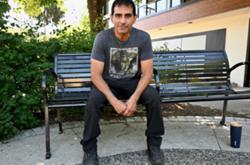
With his goatee, blue jeans and backpack, Jaccard looks more like a grad student than the former head of the B.C. Utilities Commission. An internationally known environmental economist, he's advised the governments of Canada, China and B.C.

As the special advisor to B.C.'s Climate Action Team and the Cabinet Committee on Climate Action, he's been identified as the inspiration for the carbon tax, even though he says his contribution to the budget was minimal.

He has a reputation as an independent thinker: in fact, Jaccard's take on reducing the emissions that cause climate change have placed him on opposing sides from just about everybody at one time or another.

He's a strategic voter, he tells the Voters Taking Action on Climate Change meeting. Over the years, that's meant he's voted for the Green party, the NDP and the federal Liberals.

Broken light bulb lesson

He tells the story of how he was once an "energy efficiency aficionado," going out and replacing all the light bulbs in his house with compact fluorescents. He worked up a spreadsheet that showed that the bulbs would pay for themselves over their expected 10-year life.

Then he dropped one. It broke.

He went back to the computer and figured out that, even if all the other bulbs he'd bought lasted 10 years, he still wouldn't get his investment back.

Technologies that offer savings far down the road are riskier technologies, says Jaccard. "People know that intuitively. They don't shell out a lot of money for stuff that's going to pay off later on."

The same goes for things like hybrid cars, he says.

Focused on motivations

"That doesn't mean that I am against energy efficiency," says Jaccard, who says his house is still filled with compact fluorescent bulbs. "Don't get me wrong. I am as adamant about energy efficiency as I ever was.

"But if energy efficiency is going to happen, we need to be honest about the economics. We need to be honest about policy. Otherwise we're just deluding ourselves."

Policy makers need to understand that people burn energy to satisfy fundamental human needs, he says.

His researchers, for example, now refer to cars as PMSESICDs – Personal Mobility, Status Enhancing and Sexual Insecurity Compensatory Devices.

"I'm a great advocate of behavioural change," he says. "But let's be realistic here. Christianity has been trying to get us to love thy neighbour for 2,000 years and to give away all our wealth, not acquire things anymore.

"It's made some progress, but at the same time it's pretty hard to change people's behaviours.

"And what are the behaviours that cause the desire for more energy use? It's the desire for mobility, it's a desire for things, even to give as gifts to others. It's a desire for comfort, for entertainment, for leisure. Those are some pretty fundamental desires that human beings have."

One-Tonne bust

That's part of the reason information campaigns like the federal government's One-Tonne Challenge -- remember those ads with Rick Mercer? -- didn't work, Jaccard says.

Take the example of people speeding in school zones. Everyone knows that it's wrong to speed in a school zone, right?

"So why in the heck do we have compulsory policies for speeding in school zones?"

Because we need them: both financial policies (fines) and regulatory policies (licence suspensions).

In addition to information campaigns, the main non-compulsory tool is subsidies, which Jaccard says don't work either. The problem is that there are too many "free riders" -- people who receive a subsidy for doing something they would have done anyway.

Giving subsidies to people who are already riding the bus, for example, doesn't do anything to lower emissions, he says. And he estimates that 98 per cent of those receiving the federal government's Transit Pass Tax Credit are free riders.

(Not that they don't deserve a break on their transit fares, says Jaccard, who thinks transit is too expensive.)

Just say no

As an example of a policy that did work to reduce emissions, Jaccard points to acid rain. The Canadian and U.S. governments made substantial reductions in sulphur dioxide levels during the 1980s and 1990s through compulsory mechanisms.

"Please tell me what changes you made in your lifestyle for acid emissions to go down," he asks. "Lead doesn't come out of the tailpipe of your car anymore. What are you doing differently?"

Tomorrow: Mark Jaccard responds to carbon tax critics.

Related Tyee stories:

 [Tyee]

37  Comments:

Login or register to post comments

  • G West

    4 years ago

    Welll

    If Jaccard is in favour of plans that put the costs of complying on the people who need to change their behavior while distributing the pain in such a way that those least likely to be able to bear the costs why the hell would he support a plan based on s $100/citizen payback with no ties to the behavior that is actually being addressed.

    I think his attitude is confused and discursive.

    The simple point is that the carbon tax is going to be a complete failure - as the government's own three year projections of energy use show.

    If you want to make omelettes, you have to break some eggs, not just an energy saving light bulb.

    The program is dishonest, ineffective, wasteful and administratively expensive - furthermore, it will harm the economy at a time that we are moving into a period of recession and stagflation.

    Then I suppose some people think that high taxes on tobacco changed smoking behavior overnight...dream on! It took decades for time and lung cancer to do that….sheesh!

  • Fiat lux

    4 years ago

    The problem with the carbon

    The problem with the carbon tax is that the largest, business users can write them off as tax deductible business expenses and transfer them on the public.

    As they do with the huge energy and resource inputs required to replace workers and divert their wages into the pockets of shareholders and executives with multimillion dollar salaries.

    If Mr. Jaccard is really interested in solving any problems, the first thing he, and his fellow, so called "economists", should do is examine the damage caused by the present fraudulent definition of economic efficiency as "the biggest profits with the least monetary inputs"; the damage caused by the deregulated money creation powers of the banks licencing destruction in the name of "competition" with imaginary money created from the air; the fraudulent accounting systems forced on the world by the GDP, Growth, and Production figures, etc. etc. etc.

    These are only the tip of the iceberg, no economist, or politician would dare to touch. They'd rather see the world, and humanity, go to hell before daring to question the increasing multinational, corporate dictatorship now preparing a huge depression so that desperate people will beg for their rule.

    Ideologies, and this everlasting nonsense about "left and right" are dead, and if not , they all should be killed if humanity wants to survive.

    Unless we turn to physical laws based economic systems, there's no hope.

    Which means that the ultimate lowest cost of a product and service will always be the lowest resource and energy inputs, and not imaginary, fraudulent, monetary figures.

    Now tell this to "Professor Emeritus" Herb Grubel of the SFU and fellow "economists" of the advertising agency called the Fraser Institute.

    Ed Deak, Big Lake.

  • Frank

    4 years ago

    Oh please

    Quote:
    # He's "appalled" at the provincial New Democratic Party's criticisms of the carbon tax.

    # He believes energy use satisfies fundamental human desires and, rather than trying to get people to use less energy, governments need to adopt mechanisms that will ensure the energy we use is carbon free.

    Do these two points not contradict each other? Here's a thought, perhaps the NDP believe in the second one too.

    A 2 cent tax on gasoline when its already gone up 40 cents is obviously not going to get people out of their cars. And as much as I like people like Paul Willcocks who think it will, they have to ask themselves why we're using more gas now than we did when it was cheaper?

    If using less gas is the way to defeat climate change then why don't we shut down the tar sands and put a $10 a litre tax on gas? Wouldn't that price shock stop people using it?

    2 cents is nothing but a tax grab as even honest environmentalists know it won't reduce the use of gas by even 1% here in BC.

  • City Person

    4 years ago

    C02 Tax

    The correct way to do this is to tax CO2 emissions. This is what is being done in Europe and it is successful. All CO2 sources, be they factories to furnaces to cars pay an tax based on their CO2 emissions.

    And it works. CO2 emissions in Europe are at least stabilised. They only went up 0.6% in 2006 and are only 4.4% above 1990 levels. Canada is nowhere near these levels. Canada, per capita, is the worst in the world.

    There is a political agenda at play on this board. The NDP is opposed to a real carbon tax because it will cause job losses at the American auto maker plants in Ontario because the NDP agenda is set by the unions, the CAW being one of the biggest. This is because the American makers make gas guzzling CO2 belchers but I have some news for the NDP: these companies are doomed unless they make some concrete changes to their product lines to introduce more fuel (and CO2) efficient products.

    There is no reason for three people to live in a 3000 square foot house and drive a 6 litre SUV to Safeway. If they do, they should pay for the privilege and the proceeds can be used for rebates for energy retrofits to homes, fuel efficient vehicles and better public transit.

    North America and Australia are the only places in the world where such profligate wastes of energy and space are allowed and it simply has to stop. In a way, it is stopping, because average people cannot afford to heat monster houses and put gas in a Chevy Tahoe.

  • Frank

    4 years ago

    City Person

    Quote:
    There is a political agenda at play on this board. The NDP is opposed to a real carbon tax because it will cause job losses at the American auto maker plants in Ontario because the NDP agenda is set by the unions

    If people actually believe the NDP is run by unions then the Libs and Cons are absolutely bought and controlled by big business. Probably why labour has no input into government decisions whereas the Libs and Cons don't so much as sneeze without consulting the council of chief executives.

    That's why the tax is 2 cents a litre, because its a tax grab that will have little to no effect on business. After all, Mr Campbell knows who pays the bills of his party and who'll be paying his salary when he leaves office.

  • KWD

    4 years ago

    needs or wants???

    Jaccard may be a “compulsory policy advocate” but his message is lost on Campbell and company.

    If I read the Liberal carbon tax proposal correctly, individual taxpayers are the only folks who will feel the pain, particularly those close the bottom of the wealth scale. The biggest carbon producers … the already-too-wealthy corporate world … will be subject to a yet-to-be-designed cap and trade system that is supposed to cuts emissions.

    Financial experts who have studied existing cap and trade systems are unanimous in their views … cap and trade is a fraud.

    The Liberal’s proposed carbon tax on fuel is a joke. At the moment it is suggested that this tax will increase the price of gas by 2.4 cents per litre. What hasn’t been mentioned is the fact that that those increase will be negligible when compared to the increases driven by liquid fuel shortages being felt around the globe.

    The planet is running out of cheap crude. We are getting down to the bottom of the barrel. Getting at that last drop is going to be costly and dangerous. The Alberta tar sands are a Chernobyl in the making. And we won’t be able to cover them with concrete with the hope that we’ve solved the pollution problem. Folks will pay dearly if bitumen extraction continues along the path chosen by the province and the feds, just ask the natives living downstream of the settling ponds.

    At the moment the per barrel price of crude is around $100 US. Energy experts are telling us that we can expect $ 130 to $150 this summer. Those increases will drive fuel sky high and they will not be subsidized by the oil industry. And they won’t stop there. Guess who pays? It won’t be industry.

    Once again government has done exactly what the corporate world wants … socialize the costs while keeping profits private.

    Also, if this story reports Jaccard correctly, he’s a bit confused. There is a huge difference between “human desires” and “fundamental human needs”, yet this article reads as if the terms are interchangeable. They aren’t.

    Although we need energy for mobility; energy for things, gifts to other, comfort, for entertainment and for leisure are not needs; they are desires (wants). We can live healthy, happy lives without them.

  • Van Isle

    4 years ago

    There is a big difference

    There is a big difference between the tax system that is here in BC and the tax system in Europe. For example, the high taxes on gasoline in Europe goes directly into their transit systems and NOT into general revenue as it does here. Of course we know what our government does with some of the general revenue; gives huge subsidies, grants, and etc. to the large corporations. Just look at the huge tax cuts to the big boys that has happened in the last Provincal and Federal budget speeches; no wonder they're not hollering blue murder. If our governments had the gonads they could take away all forms subsides to the big boys and with that money, could start up programs for people to retrofit their homes with cost efficent alernate forms of energy. This is not rocket science, it's been done in other jurisdictions around the world.

  • Grumpy

    4 years ago

    Could he be wrong?

    I find it disturbing that the 'Carbon Tax' grab by the Liberals is not being given the honest debate it should.

    Mr. Jaccard, the seemingly architect of BC Carbon Tax, is just an academic who has it the public trough of gold. Has his views been vetted.

    I also find it very coincidental that the Liberal's Carbon Tax comes on the heels of the Liberals $14 billion SkyTrain expansion plans. If Jaccard was really serious about 'carbon' he would publicly call for the abandoning of Trans Link's & the Liberals SkyTrain metro plans and instead build much more LRT for a whole lot cheaper cost. More LRT = more ridership.

    In BC, we are spending about $14 billion to build 70 km. of SkyTrain; in Denver, they are spending $6 million for 195 km. of LRT. Almost 3 times the route mileage of LRT for less than one half the cost of SkyTrain expansion.

    Until Jaccard and the rest of the 'pie in the sky' academics, which call for more and more taxes, yet seem OK with the province building obsolete SkyTrain, which according tot the TTC, may cost up to 10 times more to install than light rail!

    Until we really start to provide good transit alternatives, affordable, the Carbon Tax is just another tax grab, supported by myopic environmentalists, cash hungry government, and 'what me worry, I'm all right Jack' university professors.

  • Van Isle

    4 years ago

    Other technology is vehicles

    Other technology is vehicles that run on compressed air. This technology was developed in France by an engineer, who use to work in Formula 1 racing, and his son. These vehicles run up to 300 km and up to 100km/hr. Cost per "fill up", €1.50 or about C$2.50. It needs a special compressor that runs at 4300 psi. And only takes a couple of minutes to "fill'er up" into special compressed air bottles. This vehicle is made and works. Tata motors in India bought the rights to this technology, just wonder if and when they are going to produce these vehicles.

  • Ruben

    4 years ago

    Slightly smarter than your average economist

    I agree that regulation can get broader results than education campaigns, though even with school speed zones many people still drive too fast. This quote really concerns me, however:

    He believes energy use satisfies fundamental human desires and, rather than trying to get people to use less energy, governments need to adopt mechanisms that will ensure the energy we use is carbon free.

    There is no known carbon-free energy source, collection system and transmission system. Everything requires carbon, in some cases large amounts--even the manufacture of solar panels. So, to keep supplying energy to a growing population with a growing collection of "fundamental human desires" is guaranteed to destroy the ecosystem that sustains us. The infinite growth model is a crack dream thought up by economists.

    In order to break out of the drugged haze of infinite growth, we need to change social norms. Part of that comes through regulation, part of that comes through education, and part of it comes through new programs designed to attack and change existing norms that are holding us back.

    So let's start now. I heard that all SUV drivers are pedophiles that kick puppies. For Shame.

  • City Person

    4 years ago

    Other Technologies

    Van Isle, there are many other technologies. For example, in England, the best selling vehicle is the Vauxhall Corsa. It has a 1.3 litre common rain direct injection turbo diesel. It gets 3.8 litres per 100 km on the highway and it emits 119 CO2g per km. It produces 170 lb/ft of torque at 1700 rpm. They would sell like crazy in Canada at $15,000 and can meet our emissions standards.

    Why don't we have them? Because people are conditioned to buy the biggest thing they can afford. That is more often than not an SUV, truck or van. The reason people buy these monsters if they can. Tax them the way they should and double the price of fuel and they would be gone.

    Gasoline sells for an average of C$2.07 a litre, basically double what we pay. That is one reason you do not see Ford Explorers dropping the kids at school. Another reason is taxes; said Corsa is taxed at $70 a year, the Explorer $600.

    Finally, in real terms.

    To fill Corsa in Canada, @ $1.15 per litre, is going to cost $51.75. At 5.7 litres per 100 km, you are going to get at least 700 km on that tank. To fill it in the UK will cost $93.15. That is 7 cents a km in Canada and 13 cents in the UK.

    To fill the Explorer in Canada will cost $92 in Canada and $165.60 in the UK and you will get about 400 km on that tank. That is 23 cents a km in Canada and 41.5 cent in UK.

    It is all about economics. Let people drive land yachts and they will.

  • HawkEyes

    4 years ago

    Hot shot

    Here is one information campaign you shouldn't have missed:
    http://www.wnd.com/news/article.asp?ARTICLE_ID=55213

  • G West

    4 years ago

    You're absolutely right KWD

    Jaccard IS confused. But I bet he managed to get his consulting invoices to the government on time each month....

    Let me quote Michael Smyth for you from the Province (Jan 22, 2008):

    One of the biggest backers of the carbon tax is university Prof. Mark Jaccard, named last year as special adviser to Campbell's climate action team.

    Jaccard's own consulting company was hired by the government to produce an analysis of climate-change policy. It's not hard to imagine what he recommended: Ka-ching!

    Oh, and from that same Smyth column:

    On Friday, the Business Council of B.C. reported growth in the final quarter of 2007 was an anemic 0.3-per-cent -- the second below-average quarter in a row and weakest six-month period for the economy in seven years.

    Just hang on for a while, things are going to get very interesting.

  • Grumpy

    4 years ago

    G ~ Gee whizz I think you are on to something

    If BC's economy begins to tank, what then? The USA is in a lot worse shape than many think and Canada is going to see some economic reckoning around the corner.

    B.C.'s economy is not on 'life support' but it is dodgy, as the our stats are based on northern energy and grossly inflated house prices. We have no real tourist industry, as most of it is hype and hoopla. Our vast size and high gas prices will deter even more US tourists.

    The 'Vancouver is a world class city' series recently on one of the major TV stations is a harbinger of the elites trying to sell us the big 'all is just peachy' lie. If Vancouver was world class, there would be no one shilling the fact.

    Yes indeed, we are living in interesting times.

  • NicS

    4 years ago

    Proof is in Campbell's Pudding!

    Why do we distrust the Campbell gov'ts greenwashing spin cycle ? Mr. Campbell has shown his adeptness at putting positive spins on issues he and his gov't faces. My sense is that he is a bit like the magician who distracts our eyes while hiding what he is really doing.

    Greenwashing is the fashion of the day , and Mr. Campbell is no fool. He has dressed himself head to toe for the coming fashion season.

    With his Hydrogen Hwy, his green summit with other regional leaders, and now his carbon tax & $100 carbon tax rebate(and he drives a hybrid). He is now considered one of the most, if not the most [i]environmentally astute politicians [b]in North America today! One could say he keeps outdoing himself, now with the news that Professor Mark Jaccard is on board with him. Mr. Jaccard has the affront to accuse the NDP of not taking Mr. Campbell's Greenwashing seriously. Is Mr. Jaccard not aware of the Liberals record in this province?

    Mr.Jaccard, the Provincial NDP is way ahead of you and Mr. Campbell. They have just recently brought in their document and soon to be policy "Sustainable BC". This document includes "The Precautionary Principle", which is considered around the world as one of the most forward thinking

  • NicS

    4 years ago

    Precautionary Principle -continued:

    philosophies of our age. But more importantly the NDP here in BC have committed to using it to govern our province. The Liberals would never commit to any such line of thought.

    For Mr. Jaccard not to know this puts his credibility at risk!

  • Stump

    4 years ago

    Just buy a bike

    Just buy a bike already.

    Can our entire country be populated by the stupid, lame, old, or incapacitated? I don't think so.

    Hybrids are a joke. Man, I'm tired of that technology being offered up as if it's some kind of solution.

    Gordon Campbell is considered a green politician? Not by anybody with a brain.

    Man it's going to be embarrassing trying to explain the 20th c. to our grandchildren.

  • gates

    4 years ago

    mark jaccard

    To portray Mark Jaccard as Mr. Carbon Tax and a great advocate of the public interest is most misleading. Mark Jaccard is the person most responsible for the break-up of BC Hydro and the sell-off of many of our rivers to independent power producers. Where, in the recent pass the control and production of electricity was in the public hands, it is now slowly but methodically transferring to the free-market, corporate players. Mark Jaccard has written many reports calling for the deregulating of the electricity industry in BC. And if one were to read his many reports he states for argument sake that because every other country were going down that road BC Hydro should follow. His ideas could be helpful if one was starting from scratch but BC (had) one of the finest electricity providing systems in the world.

  • Moonbug

    4 years ago

    gas tax is not novel

    Funny how the tables turn. If a gas tax is some sort of revolutionary environmental solution why haven't the NDP been applauded for the gas taxes they introduced in the 1990s?

    Well, those were gas taxes, not carbon taxes. Yeah. Stupid. Stupid. Stupid.

    Personally, I'm all for a carbon tax, a real carbon tax, one that applies to coal being shipped to China to be burned, as much as gasoline being burned by cars in British Columbia. This tax doesn't apply to our very dirtiest fuel... coal... and this government, which is supposedly so carbon friendly, in this very budget gave more than 300 million in subsidies to the oil and gas industry-- that doesn't even make sense to me.

    Before this tax has even been implemented the government has already admitted it will not make any demonstrable change in people's behaviors.

    Well, of course, that is a big 'duh'. What difference does 2 or 3 cents make when the cost of fuel is going up by 5 or 10 cents every month or two? People are addicted to their cars. The high price of cocaine doesn't stop addicts from snorting it, and the high price of gas won't stop drivers from burning it, not unless they simply cannot afford it at all.

    If the Liberals were serious about a carbon tax they would slap a buck on top of gasoline bought by luxury consumers, and to insulate people in more remote areas they would have a second price for fuel used to transport groceries-- sort of an expansion of "farm gas."

    Then they would use the revenue from the carbon tax to invest in small communities in the north to become more self-sufficient around food, gradually increasing the price of gas used for food transport as they did so to make local food more competitive.

    I also object to Jaccard's characterization of "free riders." So the people who, like me, are already making carbon friendly choices don't deserve a break because we would do it anyway?

    That's absurd and unfair. Yes. I will ride my bike, walk, and take transit regardless of government incentives or a lack of them. That doesn't mean I don't deserve to be rewarded by any program put in place to encourage people to live like me...

    *angry northerner*

  • Stump

    4 years ago

    Tax the vehicle not the gas

    Quote:
    If the Liberals were serious about a carbon tax they would slap a buck on top of gasoline bought by luxury consumers, and to insulate people in more remote areas they would have a second price for fuel used to transport groceries-- sort of an expansion of "farm gas."

    Excellent idea. But, I'd tie it to GVW (with a commercial plate exemption or discount).

    There's no room for jackasses with SUVs on this little blue marble.

  • Stump

    4 years ago

    Fools

    Quote:
    Mr. Campbell is no fool

    I disagree. He's the biggest kind of fool around. The kind that are convinced of their own infallibility despite lots of evidence to the contrary. He's a wee little fellow with a big ego... that always means big trouble.

  • City Person

    4 years ago

    Commercial Vehicles

    Stump, in most places in the world commercial vehicles are exempt from road/C02 taxes but not fuel taxes and nor should they be.

    All over the world, work vehicles are typically 2.5 litre diesels with fold down boxes. The idea of having a 7 litre rolling living room complete with leather sofa and DVD player and calling it a "work truck" is unique to North America.

  • Stump

    4 years ago

    I agree completely, except

    I agree completely, except that I think adding a few thousand to the sticker price of a vehicle is a better (immediate) deterrent to purchase, than a gas tax which is more affordable on a day to day basis.

    Then again, I haven't bought a vehicle in over 15 years, so what do I know? :-)

    Sweet, sweet freedom from the cage. Never looked back, well except to flip the bird at the drivers who can't wait to get to the next stop sign and feel my life is a fair trade-off for a few seconds of time.

  • PacificGatePost

    4 years ago

    GREAT TIMING. Someone's not listening in Victoria

    This action evidences the great dearth of common sense in Victoria. . . .

    http://pacificgatepost.blogspot.com/2008/02/carbon-tax-in-bc.html

    The rationalizations left to Carole Taylor for presentation were bordering on idiotic.

    Belief that FORCING people into action shows neither wisdom nor enlightened state of being.

    Finding talent for elected office seems an impossible dream and when those in office surround themselves with sycophants, the result is the likes of a carbon tax.

  • realisticman

    4 years ago

    Gonna blame Big Oil?

    Yummy fuel alternatives.

    Quote:
    March 6, 2008
    The head of the UN World Food Programme has warned that the rise in basic food costs could continue until 2010.

    Josette Sheeran blamed soaring energy and grain prices, the effects of climate change and demand for biofuels.

    Miss Sheeran has already warned that the WFP is considering plans to ration food aid due to a shortage of funds.

    Some food prices rose 40% last year, and the WFP fears the world's poorest will buy less food, less nutritious food or be forced to rely on aid.

    Biofuel prices

    Among the contributing factors to high food prices is biofuel production.

    Miss Sheeran says demand for crops to produce biofuels is increasing prices for food stuffs such as palm oil.

    Miss Sheeran said governments needed "to look more carefully at the link between the acceleration in biofuels and food supply and give more thought to it".

    The WFP says countries where price rises are expected to have a most direct impact include Zimbabwe, Eritrea, Haiti, Djibouti, the Gambia, Tajikistan, Togo, Chad, Benin, Burma, Cameroon, Niger, Senegal, Yemen and Cuba.

    Areas where the WFP is already seeing an impact include:

    # Afghanistan: 2.5 million people in Afghanistan cannot afford the price of wheat, which rose more than 60% in 2007

    # Bangladesh: The price of rice has risen 25% to 30% over the last three months. In 2007, the price rose about 70%.

    # El Salvador: Rural communities are buying 50% less food than they did 18 months ago with the same amount of money. This means their nutritional intake, on an already poor diet, is cut by half.

    # Anger over rising food prices have already led to riots in Burkina Faso, Cameroon, Senegal and Morocco.

  • woody

    4 years ago

    Mark Jaccard

    Mark Jaccard, the SFU energy economics wonk who has Premier Campbell's ear,

    [OFFENSIVE COMMENT REMOVED. -MODERATOR.]

  • G West

    4 years ago

    R/man

    Nice to see you've changed your tune.

    A couple of months ago I posted a ream of information about growing world food shortages and you did nothing but pooh - pooh. Lots of others around here will have noticed that as well. Have you traded in the rose coloured glasses yet?

    Everything in your globalized world was coming up roses then.

    I do appreciate the apology by the way - very big of you.

    Time to shift the chairs on the promenade deck.

  • woody

    4 years ago

    Mark Jaccard says

    Mark Jaccard says ,The only way governments will lower emissions is through taxes or some form of regulatory scheme, he says -- and he adds that he doesn't care which they choose

    I was going to bite my tongue until the second half of this series was posted but,
    this is supposedly an intelligent person speaking, and this is what he comes up "with", sh!t no wonder people are heading in the wrong direction, this wonk thus far, shows all the necessary qualifications of being a follower, rather than any kind of a leader, no wonder he's in the Campbell camp.

  • skeptikool

    4 years ago

    On that compressed air thingie...

    Van Isle,

    A link to the compressed air vehicle info would have been nice. The details you gave here, seem a little too good to be true.

    High oil prices have meant such a cash cow to governments that, though all talk environment, I doubt there's too much keenness in seeing the internal combustion engine replaced, as would happen with significant adoption of the compressed air you spoke of or plug-in electric vehicles.

    I think GM's plug-in Volt shows great promise, as long as the price can be kept within reason. I've been following development and receive emails on it. Here's my latest update:

    http://www.gm-volt.com/2007/11/17/your-questions-answered-by-top-chevy-volt-executives-part-i/#comments

  • ME2

    4 years ago

    NicS

    You say the NDP's adopted the Precautionary Principle for its new "Sustainable BC" policy? Yikes !!

    They'll sure be sorry for that one. If past actions are any indication of future performance, it'll be like throwing the Christians to the lions when the envirocrazy elements in the Party get fired up.

    All of a sudden "Action Plans" will become "Stop Plans". Or better, "Throw 'er in Reverse Plans"

  • Stump

    4 years ago

    The Electric Car Promise

    Skeptikool:

    There's no technology that can make personal vehicle ownership and use sustainable. I know no one wants to hear that, but it's patently obvious.

    We need to stop propping up a flawed premise and get to work on real solutions.

  • KWD

    4 years ago

    trade off

    There’s a very perverse irony to the development of “yummy fuel alternatives”. Since energy availability (in any form) is the reason we continue to survive on this planet, it’s not hard to see what happens when we start making trade-offs, like food production for fuel production.

    Over the centuries ecologists who have focused on population dynamics have recognized that extrinsic factors, like food scarcities (or temperatures outside survival ranges), are limiting factors. No prey (energy), no predators. It’s not rocket science.

    Most folks looking at human populations have long given up on the idea of human population size being limited intrinsically. The Pope and Walmart and Ford and GM and Microsoft would never hear of it …

    As the developed world with its growth-at-all-costs economic imperative (corporatism) demands more energy, those that are unable to get to their prey first will lose.

    Don’t kid yourself about the third world’s location. There are millions of folks in developed countries living in third world conditions.

    And since it’s obvious that governments in developed countries around the globe are doing their best to employ whatever means they deem necessary to control their future access to energy, many folks will starve to death.

  • skeptikool

    4 years ago

    But in the meantime, Stump

    Something to strive for, but tell that to the millions of Asia and India aspiring to the same vehicle ownership that Westerners have enjoyed.

    Many here who drive, also walk, cycle and use public transit. We should not reduce our efforts, such as they are, to design automobiles powered by means less damaging to the environment.

  • Stump

    4 years ago

    Too many people in too many

    Too many people in too many countries manage just fine without cars for me to buy the 'we need cars no matter what' argument.

    On this continent we managed just fine without ubiqutious car use up until less than an hundred years ago. There are plenty of us now who still manage to survive and thrive w/out a cage to burn up our income.

    We've been brainswashed into thinking cars equal freedom. That was never true.

    I don't understand why Asia gets a free pass on car emissions. Two wrongs don't make a right.

  • ME2

    4 years ago

    Stump

    Sez Stump:

    "We've been brainswashed into thinking cars equal freedom. That was never true."

    Sounds like you've forgotten how it felt when you got your first bike, and your first car.

  • Stump

    4 years ago

    Umm, no

    I remember very well what it felt like. My bike earned me money... my car cost me money (almost my life too, but that's another story).

  • Mink

    4 years ago

    • The discussion for this story is closed. No more comments can be added.