News

Vancouver's Library Strike: Women's Pay on the Line

Men get nearly $6 more hourly for similar work, says union.

By Tom Sandborn, 20 Aug 2007, TheTyee.ca

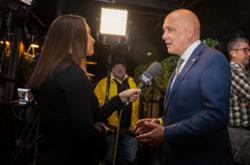
Picketing Librarians at VPL

Picketing librarians at VPL.

Vancouver city librarians say a key reason they're still on the picket line is a sexist divide in pay rates. Hourly pay for library jobs filled mostly by women start at nearly $6 less than jobs of equal value that happen to be filled by a majority of men, a study shows.

The 17.5 per cent raise over five years the city is now offering is only part of what the union is fighting for, they said.

Spokespeople for CUPE 391, the local that represents city librarians, told The Tyee on Thursday night that they were encouraged that their employer had agreed to meet for negotiations on Friday, Aug. 17, but were cautious about how much progress they could make. They said that although the city's press release announcing the new negotiations indicated a willingness "to negotiate wage adjustments as a means of addressing wage issues raised by library staff," to date the city negotiators have refused to discuss any of the local's four key bargaining demands: pay equity, improvements for part-time workers, job security and general benefit improvements.

Three weeks into the strike, they say the city's latest offer falls short of others already settled in the Lower Mainland, and includes a proposal to add a new, low-wage job classification that would hire workers at reduced wages to do work currently done by library assistants.

"Pay equity is a human rights issue," said Laura Safarian, a librarian at VPL's downtown main branch, and a member of her local's bargaining committee.

"Canada has signed on to international agreements that recognize the human rights implications of gender bias in wages. This statement from the city, awkward as it is, represents the first time we've seen any recognition at all of the issue from the employer. We have made significant compromises in our negotiations already, including a reduction in the special wage adjustment we're asking for, for all professional librarians," Safarian added.

Gender pay gap persists

Research available on the Local 391 website shows that gender-based pay differentials put library workers far behind male city workers doing work of equal value. Titled "Overdue: Pay Equity for Library Workers," the paper compares hourly wages for an entry-level library assistant (usually a woman, as the VPL workforce is 65 per cent female) with entry-level labourers (a job category that has traditionally been filled by men). The library assistant starts at $15.31 and hour, while the labourer starts at $21.08 an hour.

Entry-level wages for library workers, the research shows, can leave them well below the Stats Canada low-income cut-off line if they are trying to raise a family as single moms, as many are. An applicant for the library assistant position must have completed Grade 12, while to apply successfully for the city labourer position, you only need to have completed Grade 10.

A further difference that costs women workers money is that the male labourer is at the top of his pay grade the day he begins work, while the library assistant has to wait through three years of staged increments before she tops out in her grade, at which point she is still making more than two dollars an hour less than the labourer. One of CUPE 391's bargaining demands would see the number of such staged increments in wages within each pay grade reduced from five to three for library workers, thus bringing them to the top wage within a pay grade sooner.

"If you compare average wages for Canadians working full time all year, women only make 71 per cent of what men make," says SFU prof and pay-equity expert Marjorie Griffin-Cohen. "Pay equity issues are particularly important for unions in B.C., which is one of the only remaining Canadian jurisdictions that does not have legislation in place to enforce pay equity. What we need in B.C. is legislation like that in Ontario, which covers both the public and private sectors, but for now, it depends on unions. The women's movement and trade unions have been crucial in making advances on this issue for women. They have lobbied for appropriate legislation and negotiated wages that reduce gender imbalances. We are, unfortunately, far behind on this in B.C."

Chief librarian: issue 'notoriously difficult'

"In Toronto," says CUPE's Safarian, "an entry-level librarian makes $7 an hour more than someone doing the same work in Vancouver. That just shows the impact of pay equity legislation. For now, we need some real movement on pay equity in our new contract, and a gender-neutral, point-weighted job evaluation mechanism is absolutely crucial."

"One of the members of the classification committee called me tonight," Local 391 president Alex Youngberg told the Tyee by phone on Thursday night. "He told me that everyone on the picket line is 100 per cent behind our pay-equity demands. Members tell me that getting the job evaluation plan in place is our number one priority."

Paul Whitney, the VPL's chief librarian, told The Tyee on Friday morning that the library was reluctant to agree to the union's proposed job evaluation mechanism. He pointed out what he sees as progress made on wage disputes under the library's existing classification committee system, and calls job evaluation "notoriously difficult."

"The classification committee works just fine, for the employer," said Local 391 Vice President Ed Dickson, "but we're not happy with it. Mr. Whitney is dead wrong. Even if the classification system was working properly, and it isn't, it wouldn't address the long-established gender-related salary disparities. Other libraries in the region are getting a job evaluation system. This is clearly not a revolutionary demand.

"Our proposals represent a very low-level starting point," Dickson added. "Just an attempt to actually establish how bad the inequality is and set aside a modest two per cent of payroll in the first year and then one per cent annually in the last four years of the contract to begin fixing the problem. The employer seems to be unwilling to address 30 years of inequality."

Regina's effort

Even if the union wins a job evaluation mechanism in this contract, actual changes to address pay equity may still be years away. The Regina Public Library, for example, has been working on pay equity issues now for over four years, Human Relations Manager Al Kozachuk told The Tyee, and only now has a committee developed an agreement on a gender-neutral job evaluation process. To date, the multi-year process has not resulted in a single change of pay for any Regina library worker, but Kozachuck says that concrete changes may be coming this fall.

Union negotiators told The Tyee at the end of the day Friday that the afternoon's discussions with their employer had not been enormously productive.

"We know that compromise is part of bargaining," said Safarian, whose 900 fellow library workers are on strike for the first time in 77 years. "It's high time the city started making some compromises too. I really wonder how those men bargaining for the employer can go home and explain to their daughters the things they are doing to block pay equity."

Related Tyee stories:

 [Tyee]

149  Comments:

  • nightbloom

    20-08-2007

    Quote:...the paper compares

    Quote:
    ...the paper compares hourly wages for an entry-level library assistant (usually a woman, as the VPL workforce is 65 per cent female) with entry-level labourers (a job category that has traditionally been filled by men). The library assistant starts at $15.31 and hour, while the labourer starts at $21.08 an hour.

    I want to preface my comments by saying I support the library employees in their demand for higher wages. They are undeniably underpaid relative to comparable positions, and relative to the cost of living in the Lower Mainland. The entire public sector is, as a matter of fact.

    The "equity" pitch is a little more nuanced, however. Is the problem unequal pay or unequal hiring practices among both library staff and entry-level labourers? One can reasonably argue that manual labour, which almost always entails exposure to the elements, higher risk of physical injury, less comfortable working conditions, and less job security, should be remunerated appropriately relative to the risk, exertions, and lack of security the positions usually entail. The debate can be easily rephrased in terms of "equal pay for equal risk". Just consider the possibility that maybe what we really need is pay raises all around, more women labourers, and more men admitted to non-traditional occupations.

    So while I support the library workers in their demand, I think we're being fed an ideologically perverse definition of "equity".

  • zalm

    20-08-2007

    I can't seem to locate it now...

    ...but the nuanced definition of pay equity was approved by the Supreme Court which listened to all the arguments you made and more.

    You make good points (except for lack of security - in the public sector, to which this ruling referred, security was not discussed as it was part of union agreements for all parties) but they were all answered by the Supreme Court ruling. Risk of injury I recall was deemed not valid as all work was supposed to fall under Compensation Acts and their requirements to prevent injury. It seemed to come down to "that men have bigger muscles should not endow them with a bigger paycheque."

    Seemed odd at the time, but I've gotten used to it now. Call me whipped, but I don't think it's ideologically perverse at all.

  • reality_check

    20-08-2007

    71% of what men makes?

    Quote:
    If you compare average wages for Canadians working full time all year, women only make 71 per cent of what men make," says SFU prof and pay-equity expert Marjorie Griffin-Cohen.

    While this statistics might be true, single women make about the same wage as single men nowadays, according to Mismatch. What the 71% indicates is the the kind of wages married women and single women of all ages make compare to what men make. But, the important question is why the difference. Some of it is due to the capitalist expoiting a situation, but there aother explanations. Women are usually not asking for competitive wages in professions traditionally held by women (teachers, nurses,...). Why? A woman usually choose a mate who earns more than she does (or did). A woman usually does not make many sacrifices to reach top positions or top professions (or did not). Therefore, many women earn less than men. Also, many professions or jobs that men do are much more dangerous or lethal than occupations taken by women (soldier, skyscrapper worker,...). Men also work in jobs that are much more physically demanding (miners, loggers, sailors,...). Men have more stress as they need to climb the ladder or keep their jobs while their wife is having kids. And let's not forget that stress kills. All in all, men (in general) have been encouraged by women to take more risks and to earn more (as a consequence). There is also the issue of maternity leaves. This should be addressed and is a legitimate issue. Women should not be penalized if they bear children in terms of years of experience or potential earned wage gains. So, yes, some women have a legitimate complain (as do the librarians, it would appear), but many women earn the just portion of what men earn. Others who work just as hard should make the same anmount as men. However, most single women today can feel some comfort in thinking that they will be remunerated in the same manner than men are. The 71% is a bit of a hyperbole and sensationalism, but I am sure that the professor did not have a chance to colour her statement.

  • G West

    20-08-2007

    what equity?

    Instead of addressing just the discrepancy between male and female entry level wages, about which I'd only say that if physical risk and exposure to the elements were at all germane to the argument then it logically follows that executive level compensation is wayyyyyyyy out of line, I'd prefer to quote from this study: http://policyalternatives.ca/MonitorIssues/2007/03/MonitorIssue1599/index.cfm?pa=0284E013

    Quote:
    Another generally overlooked aspect of the apparent success of the labour market in 2006 concerns the inequitable distribution of wealth. It is ironic that, amid the parade of shining labour market reports, Statistics Canada released a study entitled Revisiting Wealth Inequity, which concluded that the distribution of wealth within the country is at its most inequitable level in decades. The report noted that the Gini coefficient, a measure of wealth distribution, has risen from 0.691 in 1984 to an abysmal 0.746 in 2005. A standardized internationally recognized measure, the Gini coefficient equals zero when all families within a nation receive an equal share of wealth, and equals 1.0 when one family receives all the wealth. Perhaps more dramatic, the report shows an increasing trajectory of this important margin. If we further consider the fact that participation rates within the labour market are at all-time highs (outside of the war-time periods), we could assume that more people are working than ever, yet the rewards for working are being distributed more unfairly than ever, with disturbing and potentially disruptive social implications.

    This increasingly dystopian polarization in wealth has various causes and dimensions, and we briefly examine two of them. The first is that compensation is being concentrated ever more massively at the upper end of the income scale, and the second is that a large and growing component of the workforce is comprised of precarious low-quality, low-paying jobs.

    We are in a sorry mess and the plight of female library workers, among others, is just another indication of how sorry that situation actually is.

  • Yammer

    20-08-2007

    Equal value? define

    I clicked on the CUPE link and there's nothing there (or in the associated link) resembling a reasonable case for the allegation that "labourer" is equivalent in value (or difficulty, or supply) to "library assistant." There's merely an assertion that these jobs are of equal value.

    I'm not saying it isn't true. It may well be. The authors of these notes, which Tom Sandborn has repeated without adding any analysis, may well be so immersed in these facts that it seems obvious to them.

    But if you're calling people sexists then, maybe you should be required to justify that.

  • Canis Latrans

    20-08-2007

    Systemic Inequity

    Within a social and economic system built upon a foundation of systemic class inequity. such as is capitalism of course, in all its manifestations (such as that found in "Red" China, and what was the former USSR, for example): where there is the huge differentials in wealth and power between ruling, especially economic elites, and the ruled, there will as well, of course, as there is, be found many other incipient forms of inequality, even within all classes. (It is the consequence of the way the ruling class and their flunkies play parts of the working class off against each other, especially men against women, but also races, such as latinos.) And this is especially true within the working and untermenschen underclasses, where it also assumes a "class-sexual" dimension-, between men and women.

    And in a social situation (within current capitalism), where the old social contract order has been rendered asunder by ruling class arbitrariness, where the old postwar power and economic equity gains are being systematically "clawed back" from the lower social classes and their various strata, it is only the exercise of raw "power", in the context of a clash of power between the classes, that in the end is and will be the real arbiter that decides what "proper equity" is.

    And in this clash of class power, my sentiment and support, unquestionably, goes to these women of CUPE who work for the library system, for example. Let the apologists for the status quo class/sexual "power" system weep and wail. We of the underling class should have no doubts about whose interests they serve, and whose boots they spit and polish. ;-)

    They will look after their interests, and we should look after ours.

    A good day, brothers and sisters. Rain, here in the heartland.

  • bpither1

    20-08-2007

    Two Questions

    1) If we compare the entry level wage of a labourer 10 years ago with that of a library assistant would there be a similar discrepancy? I think the scarcity of labour may have something to do with the more attractive wage.
    2) What are the non wage benefits of a labourer versus that of a librarian? I think the former are offered little, hence the higher wage.

  • Canis Latrans

    20-08-2007

    Error correction

    Whilst "incipient" isn't entirely incorrect in the context I use it above, it might well have better been left out altogether. So while "the system" constantly calls up many new or "incipient" forms of inequity, most forms have been rooted there within it and evolving from the very Industrial Revolution beginnings of capitalism, as it "nosed out" the old "landed gentry" feudal class arrangement of society.

    My apology.

  • rikia

    20-08-2007

    pay equity

    If female library clerks were earning less than male library clerks there would be a story here.

    Entry-level female library clerks are welcome to become general labourers instead, for an immediate $6 per hour raise. Which they could then use to purchase steel toe boots, wet weather gear, etc.

    There are many important feminist issues in the labour force, which are belittled when we create a false sense of victimhood from what is actually personal choice.

  • dave49

    20-08-2007

    Labourer's starting wage

    From what I've seen over the last number of years, higher wages for unionized labourer jobs exist because those contracts go back to the family wage era of the 1950s, 60s and to a degree the 70s. The family wage era is long gone, but artifacts such as unionized janitors who make as much as physiotherapists show the influence persists.

  • Canis Latrans

    20-08-2007

    Quote:There are many

    Quote:
    There are many important feminist issues in the labour force, which are belittled when we create a false sense of victimhood from what is actually personal choice.

    Which is little more than a clumsy, tongue dragging verbal dance that says absolutely nada, let along contribute to this discussion. It is, again, but a clumsy attempt to sound sympathetic to women workers while attempting in fact to disembowel their actual, real and concrete struggles. (Which I suspect is no less the treatment you mete out to all workers, especially those on strike, including men.)

    This fellow, to my read, but supports "feminist/worker issues in the labour force" in the abstract. If even this is genuine.

    "Personal choice" actually has very little to do with it. The jobs we all take, certainly in the lower working class stratas, are more often than not mere circumstance and complex reality driven situations we fall or are forced into in order to put food on the table for our families and a roof over the head. And very often capitalist market place jobs don't allow folks, especially women, to do even that adequately.

    Yeah, I know. I hear ya. More status quo, anti-social, Darwinist "survival of the fittest" crap.

    Refer to my post above to understand where this guy/gal is coming from.

    Quote:
    Let the apologists for the status quo class/sexual "power" system weep and wail. We of the underling class should have no doubts about whose interests they serve, and whose boots they spit and polish. ;-)

    They will look after their interests, and we should look after ours.

    Victory to workers, men and women, who dare to struggle against The System everywhere!

    Only those who dare not deserve whatever it is that capitalism metes out to them.

  • IAMC

    20-08-2007

    Trevor Linden

    Apparently Trevor hasn't been able to make a deal with the Vancouver Canucks, to get a contract to play for 2007.
    Last year Trevor made $500,000.00.
    This compares with over 5 million to a few of the other players on the Canucks.
    Now they are all members of the NHL Players Association.
    I have an idea.
    Why don't we pay all NHL hockey players the same salary?
    Maybe 1 million dollars a year.
    This seems fair, after all, how much money does someone need?
    Trevor shouldn't be punished because he is old and weak. He has put in many years with the Canucks, and he is entitled to his seniority.
    I implore that the Canucks should lead a new wave of how to compensate players.
    This should result in a stronger team.
    Shouldn't it?

  • Martin

    20-08-2007

    This is historical

    It's a historical fact that since time began, experienced librarians have had fairly miserable wages for the training they receive. The ones that are truly underpaid are the ones who get degrees in library science, then are not financially rewarded. But I don't think that $16/hour as an opening wage for an unskilled library assistant who stacks books is unreasonable (remember -- we're talking about public money here --the taxes of everyone else).

    The City could probably afford to give the well-trained staff at the library a decent wage increase if they laid off 25-50% of the rest of them. The VPL seems to be hugely overstaffed whenever I go there. The clerical staff don't appear to be slaving away, that's for sure.

  • rikia

    20-08-2007

    Quote:There are many

    Quote:
    There are many important feminist issues in the labour force, which are belittled when we create a false sense of victimhood from what is actually personal choice.
    Quote:

    Which is little more than a clumsy, tongue dragging verbal dance that says absolutely nada, let along contribute to this discussion. It is, again, but a clumsy attempt to sound sympathetic to women workers while attempting in fact to disembowel their actual, real and concrete struggles. (Which I suspect is no less the treatment you mete out to all workers, especially those on strike, including men.)

    Would you like it more direct?

    1. The title of this article is bull.

    Women aren't being paid $6 less than men for "similar work". . Women and men library clerks are making $15 an hour. Women and men labourers are making $21 per hour.

    2. There ARE serious gender issues in the workforce. The lack of a quality child care. The lack of flex-time and job sharing. The penalties women pay for leaving the work force to have children. A male dominated style among senior managment which often values face time over contribution, leaving women who must get home to their families not looking like "team players" no matter how hard they work. Only 21% women represented in all levels of government, thanks to an archaic nomination and political system.

    Instead of that discussion, we get spin on a job category where men and women are being paid exactly the same amount.

    Anyone who tries to call that gender inequality has one crazy political agenda.

  • G West

    20-08-2007

    Um!

    You might not like the title, but in paragraph one, the last sentence says this:

    Quote:
    Hourly pay for library jobs filled mostly by women start at nearly $6 less than jobs of equal value that happen to be filled by a majority of men, a study shows.

    So, who's zooming who?

    Or can you not read rikia?

  • IAMC

    20-08-2007

    woman around the world at work

    Some women aren't waiting for a legislated advantage.
    They are going out and getting into the workforce, where they didn't generally get involved with before.
    That's because they are finally realizing that they are welcome and respected.
    We should do all we can do to support this.
    Some women don't need the social support.
    They just want to get on with it.

  • rikia

    20-08-2007

    G. West, you may be able to

    G. West, you may be able to read, but lets see you think.

    The article says that the split of library clerks is 35% male to 65% female. Hardly a pink ghetto.

    Yet the writer says "Research available on the Local 391 website shows that gender-based pay differentials put library workers far behind male city workers doing work of equal value."

    This is pure Fox News maniupulation of the facts.

    It could as "honestly" read:

    "Research available on the Local 391 website shows that gender-based pay differentials put male library workers far behind female city workers doing work of equal value."

    The point is that all library clerks, who are both male and female, earn less than all general labourers, who are both male and female. But there's no story in that, and I am disappointed to see a Tyee writer deliberately bend the truth to create one.

    Are women being denied positions as labourers? That would be a story. But if women are just choosing a lower paying job category, knowing full well what the pay levels are when they apply, I don't see the victimhood. Bear in mind that more than a third of library clerks are men who are making the same choice.

    The only honest headline for this article is "Some women and men are choosing lower pay to work indoors in a library rather than be general labourers outdoors." Scandal!

    I thought the whole point of The Tyee is to expose the misleading tactics of the mainstream media, not to adopt them.

  • G West

    21-08-2007

    No it's not rikia

    No RIKIA: There is nothing whatever misleading about the journalism. The majority of outside workers are men; the majority of library workers are women.

    Library workers are paid less than outside labourers and the writer (and the union) argues that is unfair. PERIOD. Nothing deceptive about it at all. Moreover, certainly nothing misleading: It's all there - upfront, spelled out and in the open.

    The point of the article is that there should be equal pay for work of equal value and that isn't the case in the opinion of the writer. The fact that there is a gender disequilibrium in the two job categories is a valid aspect of the debate.

    I'd suggest that Sandborn claims, and I agree with him, that if the gender balance were different, the pay disequilibrium would disappear and the union is taking that position in their bargaining. Good for them. Why should Libraries be a ghetto of employees who can’t afford to live decently and comfortably?

    In similar circumstances, I'd suggest you'd argue exactly the same thing.

    The fact of the matter is that the jobs are both valuable and important components of a civilized culture and the incumbents of each job buy their food and pay their mortgages in the same market. Their kids go to the same schools and they walk on the same sidewalks and breathe the same air. As long as they don't have any CHOICE about that, and they don't, then I think you're the one who's trying hard to be manipulative.

    Now you can disagree with that all you like – it’s a matter of opinion – but it is not a matter of trying to be manipulative.

    I think your attitude toward certain ‘classes’ of people is archaic and uncivilized and not much better than meretricious claptrap but I’ll defend your right to hold those attitudes as long as I have the freedom and I believe the obligation to point them out every single time you spout them.

  • jwstewart

    21-08-2007

    No men ?

    Is it reasonable to conclude there is not a single male librarian in Vancouver ?

    Because from the article, I could not determine if men and women are working at the same job with different wages.

    Supposed "equivalent" jobs were mentioned, which leads to a debate of equivalency.

    But men and women are working at the same job with different wages would be direct evidence of inequality.

  • G West

    21-08-2007

    Where does it end?

    I’ll tell you where it ends: It ends when every child has a more or less equal chance to live her life in a stable home; where all people and especially all children and workers are valued for what they are and what they have the potential to be and not what they do or how much money they make or what their address is. It ends when the discrepancy between what the top income earners in this society make a factor of 10 times what the lowest worker earns and not a factor of 100. It ends when we have a fair tax structure and not one where some people’s incomes land practically tax free in their pockets while others pay through the nose. It ends when governments start to recognize the needs of all Canadians and not just the few in the supergroup who support them through corporate donations and who can afford professional lobbyists to make their case. It ends when we have an electoral system that actually reflects the wishes of the electorate and not the inconsistencies of first past the post votes. It ends when we once again have a medical care structure that allow every ill person as nearly equal access to care as can possibly be delivered. It ends when our universities are again places that are more concerned with the mind than the market. It ends when our banks care more about investments in Canada and Canadians than their status as international ‘players’. It ends when we realize we all have a responsibility to others that doesn’t stop at our own front stoop.

    It ends when we recognize that different people bring different skills to the table - when it is universally acknowledged that pounding nails in the rain is not more noble than teaching young minds. It ends when people recognize the facts in this report, which I hope you'll take the time to read, and start to do something about the mess we're in because we've allowed a lot of selfish people to divide us as communities and set us against one another while a tiny percentage of people led by such a s Gordon Campbell and Sam Sullivan and Stephen Harper and their friends have been filling themselves to overflowing at 'our' cookie jar and on our backs.

    Here's the link to an account of what's really been going on in Canada for the last three decades, I hope you’ll take the time to read it carefully:
    http://policyalternatives.ca/documents/National_Office_Pubs/2007/The_Rich_and_the_Rest_of_Us.pdf

  • switek

    21-08-2007

    important work; yes. equal; no.

    I am all for pay equity; however suggesting that the workload of an entry level librarian is an any way related to the work of an entry level laborer at the civic level is extremely misleading and lacking of any credibility. From experience I can tell you that being an entry level or seasonal worker at any municipality means that you are the low person on the pole and end up with all of the most nasty work that needs to be done.

    Being a civic laborer is anything but easy. I don’t mean to suggest that an entry level librarian is not important work as well, however the physical demands of the job are in entirely different leagues all together.

  • Canis Latrans

    21-08-2007

    Quote:2. There ARE serious

    Quote:
    2. There ARE serious gender issues in the workforce. The lack of a quality child care. The lack of flex-time and job sharing. The penalties women pay for leaving the work force to have children. A male dominated style among senior managment which often values face time over contribution, leaving women who must get home to their families not looking like "team players" no matter how hard they work. Only 21% women represented in all levels of government, thanks to an archaic nomination and political system.

    While doubtless legitimate issues all that you list above, especially that concerning child care and flex-time, also revealing that your viewpoint, in my view, is more that of the upwardly mobile/ambitious "career" woman. (Nope, nothing wrong with that-, in the context of capitalism.) For many more, lower strata working class women however, those with whom at least I live alongside, such as waitresses and lower rank office workers, the dominant concerns are even more basic: "Show me the goddamn cash!". Such as will put food on their tables, pay the rent and utility bills, and buy school books and shoes for their kids.

    Cash may not be of great concern to yourself, judging from your relatively more privileged list of irritant issues, but it is to a great body of women-, especially if they also have to fight and pay for scarce and expensive day care spots, in the absence of such as day care. (Come to think of it, most of the women I know are having to hold down two jobs to secure one decent income that will hold their lives together.)

    The glass ceiling of concern to relatively better off women, which you seem to speak for, even if unintentionally, with their eye on the CEO prize, to me, like their male variants with their lists of unfair impediments to the fulfillment of their ambitions, are of secondary importance to most of us, and of more elitist preoccupation, I find. Shag that viewpoint, says I-, all working people should be able to afford both the basic necessities and at least some of the luxuries of life. (Poverty is created at the bottom, when the top skims off a larger part of what should be their share in the Sacred Cow marketplace, structured to favour "the owning class".)

    Though they do have to be prepared to fight the ruling class and "their hired gun, male and female managers of capitalism" for it, and along a broader front than you attempt to reduce it to, in your market player's careerists' interest. It's in the class/sexual bias nature of The System.

    And your viewpoint is one of the victim viewpoints itself, as arises out of the particular way capitalism plays individuals and groups of working people, both men and women, off against each other, as I also indicated above.

    You need to sharpen your analysis, sister/brother-, if you are going to make it a useful weapon in the class/sexual struggle.

    In my view. :-)

  • nightbloom

    21-08-2007

    Marx said: "Differences of

    Marx said: "Differences of age and sex have no longer any distinctive social validity. All are instruments of labor."

    It's interesting how Communism and Western bourgeois capitalism have somehow reached the same dehumanizing conclusion via different paths...

    But here's an interesting bit of women's social history from the blogosphere that describes a lost era of institutionalized vocational equality that developed among the working classes well before either Communism or bourgeois liberal capitalism arose...

    Quote:
    ...In eighty-five Guilds in England during the Middle Ages, seventy-two had women members on an equal basis with men in such professions as barbers and sailors. They were probably just as outspoken as men because one of the rules of the Guilds was that "the sister as well as the brethren" may not engage in disorderly or contumacious debates. In Paris there were fifteen guilds reserved exclusively for women, while eighty of the Parisian guilds were mixed. Nothing is more erroneous historically than the belief that it was our modern age which recognized women in the professions....

    The European guild system is another interesting example of spontaneous institutions arising "from below". Unfortunately, its influence within the Anglosphere didn't last as long as it did in continental Europe (France, Germany), where respect for the skilled use of hands has remained a cultural hallmark in a manner that is lacking in the English-speaking cultures.

    (Source of quote: http://teaattrianon.blogspot.com/2007/08/communism-and-woman.html )

  • poindexter

    21-08-2007

    Maybe it's not that the

    Maybe it's not that the librarians are underpaid, but that the base labourers are.....overpaid?? $21 an hour sounds pretty decent for unskilled labour. Not too mention the full benefits, vacation etc etc etc that come with that position.

    I wonder what that adds per hour?

  • Canis Latrans

    21-08-2007

    Marx said...

    Actually, quite good nightbloom, at least in terms of what came to pass for Communism, under the competing influences of Lenin, Trotsky and Stalin.

    Though Marx, it has to be remembered, drew his observations from his study of 18th century capitalism in particular, which still corrupts everything it touches and influences, including labour. It reduces everything, in the end, to a commodity to be purchased or sold in the bourgeois marketplace. (Which includes the labour of women in producing and raising the next generation, which it has always undervalued or placed a near zero value on, like it does the wild natural world, which it exploits shamelessly without ever considering the cost or consequences.

    Quite good observations on the guild system and European sensibilities too, which nonetheless had and have their shortcomings as we in the New World do. Just some skewed differently.

    Your reputation as passed on to me by others, is perhaps undeserved. :-D

  • RickW

    21-08-2007

    Has Anyone Thought to Ask.....

    ....just why we work in the first place?

    Is it good enough just to get through life and die? Or should there be a little aestheticism thrown into the mix? I mean, we have brains, capable of complex reasoning and great discoveries. Yet, we relegate these to a select few "ivory tower types", while the rest of us strive for the (what is it now?) 1.78 kids, house with lawn, and beer with the boys (not sexist - I like the alliteration). Is that it? Are we indeed all just "instruments of labor"(Marx - thanks, NB), with no more expectations from life than that?

    What is the raison d'être? Under our present adversarial way of doing things, there is none.

  • RickW

    22-08-2007

    It's the Econmy Stupid? (D. Suzuki)

    http://www.gbgm-umc.org/ncnyenvironmentaljustice/articles.htm#The%20Challenge%20for%20the%20New%20Millennium

    Quote:
    If we were dying of old age and reflecting back on the joys of our lifetime, would we think about all of the stuff we owned like big houses, cars and TV sets?

  • RickW

    22-08-2007

    JD

    Quote:
    The only inequality left then is the fact that other 90% of us cannot get one of these government positions.

    Would you want one? I wouldn't........and I don't give a fig what other people make. There wasn't as big a fuss made over Home Depot Chief Executive Robert Nardelli
    http://www.businessweek.com/investor/content/may2006/pi20060523_284791.htm
    as he walked off with $200 million plus, and no one hardly said "boo". And his example is not the exception, as CEO remunerations are at some 450 times the average shop floor wage. Yet many people argue that this ilk is "worth it". Few however, even know how librarians fit into the "worth it" category.

    And now, the inside workers in the current Vancouver strike want job security on the table, while the City wants it off the table. Very well, sweep it off the table to settle the strike. But, because one could be laid off anytime, make the wage settlement reflect this insecurity, and come up with a handsome parting package (just like Nardelli did) I would suggest $50/hr with no perks, and two years salary as a parting "gift".

    Fair is fair...........

  • Jane Doe

    22-08-2007

    Fair is fair

    Why should there be job security for government workers when the rest of the population do not get it.
    Why should inside workers in government get $50/hr when inside workers in comparable private sector jobs make $25.

    I don't understand why unionized government workers should be treated so differently from the rest of the non-union world.
    And why the union should have any say in hiring, firing or decisins about job roles and relative pay rates is beyond me.

    Take a hypothetical small busness owner, that has say 6 employees, making and selling bagles and competing with much bigger companies. Could this business owner afford to offer his employes such wages and working conditions. Could this owner let his staff have final say regarding who should be promoted or demoted. Of course not - s/he would go broke.

    So why should different rules apply to large organizations -particularly government.

  • G West

    22-08-2007

    Are you familiar with the terms of the employment standards act?

    Even people without a collective agreement have a right to specified notice and prescribed severance unless dismissed for cause. The amount of severance varies with service years. Perhaps you should acquire a copy of the act – your employer may well be taking advantage of your sweat and talent.

    In fact, these protections should be increased and enhanced for all workers. Instead of selfishly bringing others down - why not work for better benefits yourself jane doe?

    And why shouldn't the people who do the actual work have a role in hiring, firing and grieving procedures, not to mention human rights claims - they're the ones who DO THE ACTUAL WORK, remember. Perhaps you're not familiar with industrial democracy and the way it works to everyone's benefit in countries that are a lot more productive than Canada.

    Maybe it is time to learn a little and drop a few of your prejudices. Most of the people who think public service is a sinecure don’t actually know a single thing about it.

  • Jane Doe

    23-08-2007

    G west

    Thank you for sharing a little of your background - it helps in trying to understand where you are coming from. I feel I should share a bit too. I also have a business and I am pleased to say with very happy employees.

    We poll input from all levels on many decisions we make in the company.

    However when it comes down to the final decision on many items, which is what I said in my post yesterday, it has to be taken by the person who is risking his or her investment.

    And this is the base I was trying to extrapolate from, to say that the same thinking has to apply to large organizations.

    Once unions get big enough and powerful enough they become a self serving entity that can be as corrupt as any large corrupt company.

    Once you take that further and put it into a government context - then you have a recipe for mediocrity, abuse of the system by employees, and very serious ennui.

    I have worked in and around government and the private sector for many years and though there are many fine people in government, there are many people that are just sitting out their time to retirement. I don't know about you but I wouldn't want them on my payroll.

    This is particularly offensive to me when I see government staff that are supposed to provide services to people in need giving it half their attention or effort.

    Unions have a role but lets not pretend that that role should extend to far into the capital/expenditure field. They become more than the sum of their parts and start to get their own agendas.

    You're a business person - do you really want a third party telling you who you should hire or fire.

  • vicki

    23-08-2007

    Let's see what happens now....

    Latest city press release. At least there's hope.

    City offers CUPE 15 two settlement options:

    hopes for labour peace by Labour Day

    Today, in a move to end the protracted CUPE strike, the City of Vancouver has provided two alternative offers for settlement to CUPE 15. Both offers include the regionally mandated 17.5 percent wage increase over five year terms.

    The first of the two offers is the settlement which successfully ended the CUPE strike in the District of North Vancouver.

    The second of the two offers, also based on the District of North Vancouver settlement, includes a number of new improvements, and addresses local issues which the City and CUPE 15 have discussed through the previous year of bargaining.

    Both offers include an Olympic Partnership Agreement (OPA). The OPA describes how the City will work with CUPE employees during the period of the 2010 Winter Games.

    The City has set a time limit of Wednesday August 29 at noon, for CUPE to respond. This time limit reflects the City’s desire to end this strike quickly, yet provides CUPE 15 with enough time to review the options, and consult with their membership, if they choose.

    “Everybody wants this strike to end as soon as possible,” states Tom Timm, General Manager of Engineering Services and City spokesperson. “If CUPE 15 is willing to accept either of the City’s offers, our inside employees could be back at work, our community centres open, and children’s and senior’s programs available by Labour Day.”

  • Ed Seedhouse

    24-08-2007

    "I am all for pay

    "I am all for pay equity;"

    No you aren't.

    "however suggesting that the workload of an entry level librarian is an any way related to the work of an entry level laborer at the civic level is extremely misleading and lacking of any credibility. From experience I can tell you that being an entry level or seasonal worker at any municipality means that you are the low person on the pole and end up with all of the most nasty work that needs to be done."

    Librarian is a professional position with a Masters level degree plus two more years of training.

    Clerical Library workers are required to have a high school education and good typing skills, unlike your average labourer.

    The idea that their jobs are sedentary, as I showed above, is utter nonsense as well. In fact on the job injuries from physical labour are quite common among library workers.

    Here in Victoria, the parkade attendant who takes your ticket in the parkade under the Library gets $20.30 per hour. The Library clerk who checks out your book for you on the floor above makes $17.58 per hour, #2.50 per hour less.

    The Clerk Receptionist at City hall, which is the real comparable job, makes $3.47 an hour more than the Library worker.

    This in spite of a written legal contract requiring Library workers to be paid the same rates as Victoria City Hall workers signed in 1992.

    Full details may be found at www.overduepromise.ca

  • The discussion for this story is closed. No more comments can be added.