

 SHARE:
As early as July, a provincially appointed panel will decide whether Barnston Island, a 567-hectare alluvial island set in the Fraser River near Surrey, will be removed from the Agricultural Land Reserve (ALR).
The Barnston decision will be a watershed moment for the Agricultural Land Commission (ALC). At just over 441 hectares, it would be among the largest agricultural land removals in the Commission's history. Its removal would fuel the speculative real estate market currently driving land values beyond the reach of many farmers in southwestern B.C. Many see the issue as a test of the commission's commitment to its core mission to protect agricultural land and encourage farming.
"If Barnston Island comes out, then any farmland in the Fraser Valley can come out," says John Russell, a 35-year island resident who raises sheep on 4.4 hectares. "Farmland cannot compete with other land uses, like industrial. And that's why we have the ALR. We need this land because we need to eat."
Many Barnston landowners -- in fact, a majority of them -- disagree with Russell's belief in the island's importance as farmland. In 2003, the Barnston Island Majority Landowners was formed, consisting of resident and absentee landowners who hold 85 per cent of the island (outside of the Katzie reserve). Under the leadership of Richmond's Bill Tsakumis (the biggest landowner on the island), they applied to exclude their land from the ALR so that it could be developed and sold.
"Barnston Island is going to be developed, and if the commission does not decide now, they will decide later," says Tsakumis. "The land is strategically located, and there will be huge pressures to take more productive agricultural lands elsewhere, to alleviate the shortage of industrial land, if it is not taken now."
A public meeting in Surrey on Tuesday, June 20, to hear representations from the public on Barnston's fate, is the culmination of nearly two years of waiting, as a result of Tsakumis's decision to delay his application to build his case.
GVRD holds trump card
As the Islanders wait for the decision, the emerging question is not whether the land will be removed from the ALR, but whether the developer's plan -- which promises to convert a soggy, isolated floodplain into an industrial park employing 30,000 people -- really holds much water.
"The GVRD has the absolute power to block this [Barnston development]. There's no doubt about that," says Surrey City Councillor and ex-mayor Bob Bose, pointing to the island's inclusion in the GVRD's Liveable Region Strategic Plan's Green Zone. "I think there are enough people on the GVRD Board who are sensitive to the abuse of the land commission, that they would not support it."
Barnston is not only preserved by the Agricultural Land Reserve, a form of provincial zoning that protects farmland for current and future use, but by its anomalous governance and its isolation from the surrounding world by the Fraser River. Barnston doesn't fall within the boundaries of any individual municipality; it's a creature of the GVRD that Surrey would incorporate under certain conditions. As well, it is accessible only by a modest free ferry running from Port Kells every day starting at 6:30 a.m.
"We take 500 to 600 bikes over here on a good summer day," says Rob Petrunia, who has worked as skipper on the Barnston ferry for 14 years. "You've got this incredible rural setting right in the middle of the Fraser, a stone's throw from Guildford. What more could you want?"
The island is home to Avalon Dairy's 49-hectare organic farming operation and the Opus Cranberry Farm, an herb farm, and a handful of hobby farmers. It is also the site of the 55-hectare Katzie Reserve No. 3, home to over 60 people and an historical base for their Fraser River salmon fishery.
Industry currently operates on the island foreshore, but even that feels like a throwback to a simpler time. Tugs launch from Barnston shores, and beyond the island fringe of mature cottonwoods and dense blackberry thickets, log booms await processing at nearby Surrey sawmills. On Barnston Island, even the industrial activity is scenic.
Value as farmland disputed
Barnston is an alluvial island set in the main stem of the Fraser, meaning the land is wet, cool and, like all floodplains, susceptible to seasonal flooding. Depending on which farmer you talk to, Barnston Island is either a blessing or a curse.
"When we found our dairy farm on Barnston in 2002, we were looking to grow, and it was a gift to find a place so natural, and so close to our processing and market," says Avalon Dairy CEO Gay Hahn, whose operation has about 120 hectares of Barnston under cultivation. "The land is perfect for organic dairy -- it is natural as can be, there are no pesticides or chemicals on the ground, and there's no industry."
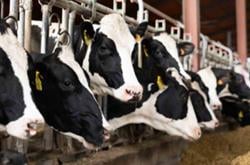
Today Barnston is the primary source for the company's Avalon Dairy and Valley Pride certified organic brands, which are produced in partnership with Bradner Farms; Avalon owns the farm and milk quota, and Bradner's Rob Donaldson owns the cows that roam Barnston producing certified organic milk.
Numerous parcels on the island are leased to Avalon, and island farmers in turn grow organic hay for the dairy, including Doug Devitt, whose family has farmed Barnston since 1910. The land is so good for dairy production, says Hahn, that Avalon has invested thousands to clear sections of Barnston Island to grow hay.
Long-time Barnston farmer Ralph Gilmore, who bought his land in 1966 and has joined up with Tsakumis, says he is fed up with farming on the island.
"The problem is the soil here, it's very limited in capability," he says. "The only crop we can grow is hay and it's not a high-return crop. When the river reaches 18 feet at Mission, it seeps under the dike into the land, and if you're growing root crops, they're done."
Unlike root crops like onions, cranberries are well suited to the wet Barnston floodplain; in fact, Bill Tsakumis owns a 40 per cent stake in the island's Opus Cranberries operation.
"I am a farmer first, not a speculator, and I've owned that land for 17 years," says Tsakumis. "We've banded together for this exclusion, including those who have spent 40 years trying to farm here, because it has caused nothing but misery."
Development proposed before
An industrial park wasn't the first vision Bill Tsakumis had for his Barnston land. Between January and March 1990 -- less than a year after buying it -- Tsakumis made two separate applications to the ALC, seeking to exclude 72 hectares for an 18-hole golf course.
After the Mike Harcourt NDP government took power and eliminated golf courses as a legitimate use of agricultural land, permission to develop the site was rescinded. A similar exclusion application made by farmer Ralph Gilmore in December of 1991 -- to build a golf course and clubhouse on 62 hectares -- ultimately failed for the same reason.
Soon after the formation of the Barnston Majority Landowners in 2003, the group approached the city of Surrey with a proposal to amalgamate Barnston Island with Surrey. This was done because the GVRD -- which functions as the municipal government for this unincorporated island -- was openly against developing it.
In response to the proposal, an internal October 2003 Corporate Report from Surrey City Manager Umendra Mital (obtained through the Access to Information Act), recommended that Surrey annex Barnston Island, provided that the landowners could satisfy a number of conditions. The conditions included successfully removing the Barnston Lands from the ALR and replacing the Barnston ferry with a four-lane bridge at no cost to Surrey. The responsibility for other expenses -- such as pumping millions of cubic metres of sand onto the island to elevate the surface above the 200-year flood-control elevation of 5.7 metres -- would also be the responsibility of the landowners.
The report estimates that Surrey could generate $130 million from the industrial development of Barnston Island (based on a development cost charge of $110,000 per acre) without assuming any development risk. "The advantage of this option is that...Surrey would not be placed in a liability position should the conditions that would make it economically viable not be achieved."
Tsakumis says he has developed a business plan to account for the expenses required by the City of Surrey. He estimates the four-lane bridge will cost $18 million, and the necessary funds for raising the land would be made available.
"We have committed X number of dollars per acre, and all the farmers have committed to it," he says. "We'll have money to use for part of the bridge, sewers, water, streets, everything."
Industrial needs not immediate
Excluding Barnston Island from the ALR is the question at hand, but getting the GVRD to change its zoning and regional growth strategy so the land can be developed is the bigger issue. "Because it is good agricultural land, Barnston was included in our Liveable Region Strategic Plan Green Zone," says Hugh Kellas, Manager of Policy and Planning for the GVRD. "In October 2005 the [GVRD] Board also passed a zoning bylaw for Barnston that includes only agricultural uses."
This means a potential developer would have to convince the GVRD Board to change its regional growth strategy and zoning to permit industrial development on Barnston Island, even if the land was successfully removed from the ALR.
"The GVRD has a secret agenda on Barnston Island," says Tsakumis, bristling at the mention of the GVRD. "They don't care a bit about agriculture, they just want to preserve Barnston as a park, and it's an agenda that goes back quite a few years."
The GVRD denies this accusation, but is emphatic that agricultural land like Barnston should not be the solution to a potential industrial land shortage in the region. "The policy response has to be, How can we make better use of our existing industrial land? and there's certainly some opportunities there, and it may involve [developing] new industrial land in the region," says Kellas. "But looking at agricultural land is not what we should do in the first instance."
The GVRD's Industrial Lands Inventory for Greater Vancouver 2005 showed that the region's existing supply could support another 10 to 15 years of industrial development. It also revealed that 46 per cent of all vacant GVRD industrial land was in Surrey, and that 80 per cent of the region's undeveloped industrial land is located south of the Fraser River. (Donna Jones, Manager of Surrey's Economic Development Office, didn't return calls and emails from The Tyee to address Surrey's future need for industrial lands.)
Kellas adds there are much more logistically feasible industrial lands than Barnston, especially if the Gateway Project moves forward.
"The South Fraser Perimeter Road will emerge as an accessible site for intensive industrial development, as will industrial lands on the north side of the Fraser, which will benefit from the Golden Ears Bridge expansion," he says. ""Our tendency as a society is just to spread out, but we need to think a little harder about how we use the resources we have."
Christopher Pollon is a Vancouver freelance writer.
Related links and Tyee stories:
- Is BC Down on the Farm?
- Farmland Forever: Reshaping the Agricultural Land Reserve for the 21st Century
- Can't Slaughter Like You Used To
- The 100-Mile Diet
- Salmon Kills and the Politics of Mining the Fraser
![[Tyee]](/design-article.thetyee.ca/ui/img/yellowblob.png)

Tyee Commenting Guidelines
Comments that violate guidelines risk being deleted, and violations may result in a temporary or permanent user ban. Maintain the spirit of good conversation to stay in the discussion.
*Please note The Tyee is not a forum for spreading misinformation about COVID-19, denying its existence or minimizing its risk to public health.
Do:
Do not: