
- Ms Kaye is a Tyee Builder. You can be, too.
- Mary Carlisle is a Tyee Builder. You can be, too.
- Prem Gill is a Tyee Builder. You can be, too.
- Nancy Flight is a Tyee Builder. You can be, too.
- Justin Everett is a Tyee Builder. You can be, too.
- John Westover is a Tyee Builder. You can be, too.
- Nora Etches is a Tyee Builder. You can be, too.
- Edward Henderson is a Tyee Builder. You can be, too.
- Bharadwaj Chandramouli is a Tyee Builder. You can be, too.
- Dean Chatterson is a Tyee Builder. You can be, too.
- Marius Scurtescu is a Tyee Builder. You can be, too.
- Robert Parkes is a Tyee Builder. You can be, too.
- James Murton is a Tyee Builder. You can be, too.
- Susan Doyle is a Tyee Builder. You can be, too.
- Vincent Strgar is a Tyee Builder. You can be, too.
- Helen Spiegelman is a Tyee Builder. You can be, too.
- Subir Guin is a Tyee Builder. You can be, too.
- Kimball Finigan is a Tyee Builder. You can be, too.
- Joanne Manley is a Tyee Builder. You can be, too.
- David Leach is a Tyee Builder. You can be, too.
Canada's Most Secret Treaty
Why don't they want us to know about the Anti-Counterfeiting Trade Agreement?
ACTA negotiations are quietly underway.
Last week, Canadian officials travelled to Seoul for the latest round of closed-door negotiations on an international treaty called the Anti-Counterfeiting Trade Agreement (ACTA). While battling commercial counterfeiting would seem like a good idea, the ACTA process has been marked by unprecedented secrecy as well as leaks revealing that the treaty is really about copyright rather than counterfeiting.
From the moment the talks began last year, observers noted the approach was far different from virtually any other international treaty negotiation. Rather than negotiating in an international venue such as the United Nations and opening the door to any interested countries, ACTA partners consisted of a small group of countries (Canada, United States, European Union, Japan, Korea, Australia, New Zealand, Mexico, Morocco, and Singapore) meeting in secret and opposed broadening the process.
The substance of the treaty was also accorded the highest level of secrecy. Draft documents were not released to the public and even the locations of negotiations were often kept under wraps. In fact, the U.S. government refused to disclose information about the treaty on national security grounds.
The leaky truth
Despite the efforts to keep the public in the dark, there has been a steady stream of leaks. Earlier this year, it was revealed criminal provisions would target both commercial and non-commercial infringement, creating the prospect of jail time even in cases where there was no intent to profit. Further, border guards would be given new powers to search people and seize products as they enter a country.
Just as negotiators were sitting down to discuss ACTA's Internet-related provisions last Wednesday, information on those proposals also leaked. The disclosures were the most disturbing to date, since they conclusively demonstrated that ACTA is fundamentally not a counterfeiting treaty, but rather one focused on copyright.
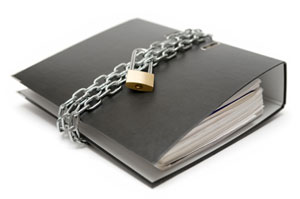
The Internet provisions feature specific requirements on the legal protection for digital locks that extend far beyond those required under international law. Moreover, they would move Canada toward a three strikes and you're out approach that requires Internet providers to cut off subscriber access on three allegations of infringement. Canada's successful "notice and notice" approach to addressing infringing content hosted by Internet providers -- adopted by both Conservative and Liberal copyright bills -- would be rejected in favour of a U.S. model that requires removal of content without evidence of infringement.
Sovereignty in the balance
The combined effect of these provisions would dramatically reshape Canadian copyright law and eliminate sovereign choice on domestic copyright policy. These issues were at the heart of thousands of submissions as part of this summer's national copyright consultation. However, if Canada agrees to ACTA, flexibility would be lost and the government would be forced to implement a host of new reforms.
Such an approach contradicts recent comments from Industry Minister Tony Clement. In an interview earlier this month, he stated, "Canada and its international trading partners each have distinct copyright policies, laws and approaches for addressing the challenges and opportunities of the Internet. Canada's current framework provides strong intellectual property protections and our copyright laws apply in the digital context, including on the Internet. Moreover, Canada's regime for the protection and enforcement of intellectual property rights is fully consistent with its international obligations."
Yet the ACTA provisions seek to remove those distinctions. If adopted, the robust copyright debate that occurred over the summer would be rendered moot. Instead, it would appear that a made-in-Canada approach would give way to decisions made last week at secret meetings in Seoul. ![]()


12
Login or register to post comments
driftwolf
2 years ago
wikileaks
Also see Wikileaks for ACTA information:
https://secure.wikileaks.org/wiki/Category:ACTA
The 2007 version of the document, US and EU refusing freedom of information access to current version, and other democracy-busting actions from our governments.
What they also don't mention is the fact that this treaty basically destroys everything the 1710 Statute of Anne, the original copyRIGHT law, managed to do. It created a public domain, allowed authors to own copyRIGHT, and destroyed the totalitarian hold on information held by the London Company of Stationers.
With this treaty, we go back to perpetual copyright through DRM. The public domain doesn't get updated with anything after 1923 thanks to the Mickey Mouse protection extensions. Authors start losing rights to their own works through pernicious "works for hire" legislation the US has already passed, which gives copyright ownership not to the author, but to the big-media company that paid the author. We effectively re-create the London Company of Stationers in the form of the current "Big Media" corporations. Hell, they even get to take things OUT of the public domain just by repackaging it.
This was the obvious next step in Big Media's attack on copyRIGHT. Unfortunately, they seem to be winning.
doggone
2 years ago
strange
Attempting to read this article (by clicking on the title) I have been told at least 5 times that I am not allowed to view the article on this server.
Of course I can read the article above but just now when I signed in to comment I got the same warning.
Boy! They really do not want me to know anything about "anti counterfeiting" and up to now all I would possibly know is in the above.
What is going on here? Has anyone else been locked out?
ME2
2 years ago
Well, it ain't the NYT, but....
Wiki has a good article on the topic.
http://en.wikipedia.org/wiki/Anti-Counterfeiting_Trade_Agreement
make_up_another...
2 years ago
Property Rights Uber Alles!
Remember when the latest album of your favourite band would come out and you would borrow it from a friend, on cassette tape? Perhaps you didn't have it but you would pop it into your dual cassette stereo and make a copy for your own pleasure before returning it. Then perhaps next time, when you had the original, you might return the favour. That is how music was traded among me and my friends. Before CD burners, you would still make cassette copies of CDs.
This reminds me of one of the disingenuous arguments put forward by media corporations on copying. Which is that copying (downloading) hurts artists. With some exceptions, most artists can expect to make 1-4% on each sale. The bulk of artist income comes from touring. Before downloading, in the time of the cassette copy, the industry didn't really take much action. So let's dispense with myth that this is a moral dilemma. The record giants only cared when their profits suffered, not as a matter of principle.
Perhaps part of the reason people stopped paying $20 plus for a CD is because of the industry's tendancy toward the lowest common denominator. You would get a new CD with a few good songs. Notice to industry, your product sucks. iTunes has fixed this and proves that people are willing to pay a reasonable fee when they aren't forced to pay for filler.
Now that the internet has come of age, people expect free content. This harkens back to a time when the original comp-sci people believed that hardware was the thing and software should be free. Linux proves that a community effort can produce a viable result. Bill Gates had other plans. Apple has done some good things but are obsessed with managing their brand and tend to restrict choice.
In the age of YouTube and an unrestricted internet, the stage is set for independant artists to get their music out there, free and can leverage the power of technology to supplant the role traditionally held in monopoly by record companies. The only drawback is that it might just start to be about the music.
OilbertaRedTory
2 years ago
Know Your Rights
When property rights go wrong:
http://www.project-syndicate.org/commentary/stiglitz61
When property rights do wrong:
http://www.youtube.com/watch?v=0NlD_mw9xaI
There may be a clash:
http://www.youtube.com/watch?v=nPeWSpB_7w4
divadab
2 years ago
Government of by and for Corporate interests
This is an Amerikan initiative. What can you expect from this utterly corrupt junta of corporate and military interests?
And why oh why are Canadians supporting Harper (he of the plasticised hair) as he works for these same interests? They view you and me as a herd of cattle to be exploited.
In the US, these same corrupt greedy traitors are also working to extend patent protection for longer periods, and in more and broader areas. Watch the Supreme Court of the US - they have taken up a patent case: the issue? Patenting a "business method". What a great way to eliminate competition! It would not surprise me at all that the Supremes rule for the patent - the court has been stacked for years with fascist fucks like Scalia, the execrable Alito, and Roberts of the plasticised hair (this is a pretty good marker of fascist tendencies).
fjf
2 years ago
Article Lockout
Just wanted to confirm that I too was "locked out" of this article yesterday.
As to the question of why Canadians are supporting Harper, I suspect that is due to the fact that we are now a "television nations," composed of passive non-thinkers who seek out tribal affiliations to mitigate their sense of anomie. Would be great to see a poll on this question and inspect the results.
dorothy
2 years ago
I don't agree
that these craven efforts should serve to shut down human striving and attempts at innovation. In the face of this anal set of efforts to scrape up up to the meager marginal profits from the one good idea these dopes had in their miserable life, the rest of us might discover that all sorts of people can do all sorts of things. Instead of buying music, let us make music. Instead of vying for the ownership of someone else's intellect at inflated prices, let us try to mobilize our own intellects. Let us DO rather than consume. This is the way it works. Buckminster Fuller said:
“You never change things by fighting the existing reality. To change something, build a new model that makes the existing model obsolete.”
So, instead of trying to hack down the 'patent jungle', what we need to do is simply develop a new parallel realm of creativity and innovation, where patents do not rule, and fill it up with good stuff these losers would never had thought of, focused as they are on holding on to their pot of gold. Whining about how difficult it will be isn't going to help. In fact, it is a bonus that the rules are specified by the old set of people, so we are not wading into uncharted territory, but can know exactly how these people's minds and practices are fenced and cross-fenced. I love the one about 'method of business'. Should indeed be fascinating to see how that one plays out. In fact, has anyone thought about all the existing business methods that are tapped into by multiple users? They are going to spend years and years falling over each other to patent each one first, and then shoot down all the others who are still using 'their' method...Tickets in first row are free...!
Sally Bowles
2 years ago
Was anyone else locked out?
Yeah, doggone. I was.
lynn
2 years ago
Me, too
I was also locked out just now....with a "forbidden" notice.
My second try got me in.
dave49
2 years ago
The secrecy
If nothing else, all the secrecy is an indication that something very radical and potentially very unpopular is being considered.
dorothy
2 years ago
To those who got 'locked out',
maybe this will help:
I was locked out once, and the remedy was to make this particular file a 'safe site'. This should not have been necessary, for I had previously done so with the main site 'Thetyee', and have never had to do so with an individual file since. However, in this case it seemed to be needed. I do not know if, as a sop to the secrecy of the issue, there is something peculiar about the configuration of this particular file, or this could even be a consequence of hacking, maybe in an attempt to track people surreptitiously, but the trick seemed to work. I have not been locked out since.