Mediacheck

'Citizen Journalism' Grows Up

How to earn trust? asks new wave of news hounds.

By Rory O'Connor, 9 Aug 2007, AlterNet.org

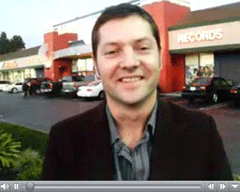
Michael Tippet (in front of a store)

Michael Tippit of BC-based 'Now Public.'

Can ordinary citizens actually function as journalists? Or, as many in the mainstream media would have it, is journalism some sort of priesthood of professionals who venture, Moses-like, to mountaintops and then return to deliver the news as divinely revealed truth to the rest of us earthbound mortals?

In the wake of such recent citizen-mediated news events as the Asian tsunami, Hurricane Katrina, the London train bombings, U.S. Senator George Allen's political suicide, the Virginia Tech massacre, et al, the real question is why anyone would still wonder about the possibility, much less the efficacy, of so-called "citizen journalism."

Last month I travelled to Seoul, Korea, to take part in an international gathering of "citizen reporters" sponsored by an intriguing, cutting edge media firm called OhmyNews.com. OhmyNews is one of the most successful projects in the world in the burgeoning field of citizen journalism -- wherein "amateur" reporters participate in the creation and dissemination of news and information. The brainchild of Oh Yeon-ho, a professionally-trained Korean journalist, OhmyNews was launched in February 2000 and has grown rapidly since. Today it boasts nearly 60,000 "citizen reporters" worldwide, who work closely with dozens of professional staff members, creating content for websites in Korean, Japanese and English. Its corporate motto is: "Every Citizen is a Reporter."

Having already revolutionized the media environment in the Republic of Korea, Oh Yeon-ho is equally passionate about spreading the concepts and practices of citizen journalism worldwide. The OhmyNews "pro-am" concept of combining citizen reporters with trained professional journalists and editors is rapidly becoming a model for other efforts around the world, and its annual forums on the topic are a key way of networking among the field's leading theorists and practitioners.

'Host of pressing issues'

Featured speakers this year included Dan Gillmor of the Center for Citizen Media, Michael Tippit of NowPublic.com, McJoan of Daily Kos, and dozens of other presenters and panellists representing literally every continent, from Australia and Europe to Africa, Asia and the Americas. This year's focus was "cross-cultural exchanges" and how they can contribute to the vision of the global village envisioned decades ago by Marshall McLuhan.

Oh Yeon-ho set the stage with his welcoming message, which accurately noted, "The question looming large is increasingly less about 'digital opportunity' and more about how we can best manage the abundance of content, Web platforms and user participation" now pouring forth. Oh also laid out "a host of pressing issues" including the need to balance user-created content with editorial accountability, as well as to identify business models to sustain citizen journalism during an age of ever-more rapid commercial and technical transitions and unclear revenue models.

Dan Gillmor -- author of "We the Media" and long one of the movement's leading theorists -- noted in his keynote speech that, despite the many successes of citizen media thus far, "It is still early in the development and we still have far to go." Like Oh, Gillmor believes that sustainable business models and issues of trust and accountability are highest on the agenda. He also urged all attending to "keep experimenting." With the cost of doing so at an historic low, "There are very few institutional barriers to trying," Gillmor concluded. And even in failure, he added, "We still learn. In fact, we usually learn more from failure than success!"

Panels on citizen journalism in Eastern Europe, South Africa and Australia, South Asia, and North America followed. Four new sites have appeared in the "emerging hotspots" of Russia, Ukraine, Poland, and Estonia and start-ups loom in South Africa and Australia as well.

Breakthrough Canadian deal

Meanwhile, Canada was well-represented by Michael Tippit of NowPublic.com, whose breakthrough deal to supply the Associated Press with citizen reports obtained through "crowdsourcing" is a potential landmark in the struggle to gain both legitimacy and sustainability for citizen media efforts, and Joan ("McJoan" to Daily Kossacks) McCarter of the incredibly popular Daily Kos blog, read daily by about half a million people, spoke smartly on issues of transparency, credibility and accountability.

Of particular note was the announcement at the conference of the formation of a new South Asian Citizen Reporters Network. "Citizen journalism across borders is a vital question for Pakistan and India," said one of SACRN's founders, Pakistan's Muhammad Aslam Khan. Fellow Punjabi Munish Naga of India echoed Aslam Khan's analysis, saying, "It was because of citizen journalism that Aslam and I became close. And then the idea to form a network of South Asian citizen reporters emerged in our minds. Since then, SACRN has been growing day by day!"

We were also treated to a first-hand account of how Han Na-young, an OhmyNews citizen reporter living in Harrisonburg, Virginia, reported on the Virginia Tech massacre, working in close collaboration with the head of the OhmyNews international department for sixteen hours to bring written and photographic reports of the event to readers all over the world. The first day's final session was devoted to an account of the recent expansion of OhmyNews into Japan with backing investment from SoftBank, a leading Japanese telecommunications and media corporation.

The conference's closing sessions were devoted to a close examination of the related issues of ensuring editorial accountability and the search for a sustainable business model. First Oh Yeon-ho set forth what he called the "ten preconditions of valuable user-created content," centering around issues of credibility, responsibility, influence and sustainability.

The big 'ifs'

Next he asked and answered the question "Why Citizen Journalism?" (Answers: to change traditional journalism; to find and create a new type of journalism; and "to change the world.") Finally Oh posed a larger, more philosophical question -- one never asked in any corporate media suite: "Will more participation and better information make us happier and more fulfilled?"

The answer, Oh Yeon-ho posits, could be yes -- provided that "participation is responsible, trustworthy, influential, solution-seeking, and sustainable."

So can citizen journalism really change the world? Many skeptics still doubt it can even change the news industry, and still question, despite much evidence, whether ordinary citizens can really function as journalists. But why not? After all, I've been a professional journalist for decades -- yet I never took a course in it, received a license for it, or even got anointed on high. So here's my advice: if you don't like the news, report some of your own!

Here's a video version of this story from Rory O'Connor's blog:

Related Tyee stories:

 [Tyee]

62  Comments:

  • G West

    09-08-2007

    Other ways and means

    I think there are numerous other valid and effective ways to 'do' journalism. I.F.Stone never really did much other than troll the pages of the NEW YORK TIMES and BCMary, at http://bctrialofbasi-virk.blogspot.com/
    aka The Legislature Raids has never, so far as I can recall, set foot inside Courtroom 54.

    At the same time, she's created THE RESOURCE for anyone who wants to be well informed about the actions of the Campbell Government in its haste to transfer public assets to the private sector, by hook or by crook.

    If the MSM had spent even one-tenth of the effort on this that she has I can't help but think the people of British Columbia would be calling for the resignations and perhaps indictment of several members of the Provincial Legislature and at least a couple of individuals in the British Columbia justice system.

    A couple of other individuals and outlets also deserve credit but for the most part, they are paid (one way or the other) for their work.

    Mary hasn't billed out a penny of her time and the list of folks (and their IP addresses) who've spent time at the TLR for at least a whistle-stop in the almost 18 months the site has been up is a good indication that her work IS being noticed. She hasn’t done it alone by any means but without her…nada!

    A huge tip of the hat.

  • anarcho

    09-08-2007

    Any intelligent person could do better...

    Considering the lousy quality of most so-called professional journalism these days, I think any intelligent person could do a better job. (And I too tip my hat to BC Mary, who has done the real job of journalism in this province in regards to the BC Campbell Regime.)

  • Working Memory

    09-08-2007

    Adopt-A Journalist

    If you're interested in more details regarding how Michael Tippett's NowPublic operates, check out the interview I did with him. It will give you a better understanding of how his version of crowdsourcing and citizen journalism work. The interview was set up through a crowdsource experiment called Assignment Zero, and picked up by Wired.com

    Many times over the last year in The Tyee I've recommended that participants here not simply whine about issues, but that they do something about it. NowPublic is a good model to give you an effective voice, and Michael and his crew seem to be very accommodating in helping anyone get started. BTW, it's free, which means you no longer have an excuse.

    I know from experience through my blog, (www.OlyBLOG.com) that one person can have an effect on mainstream news media. For example, there is a process called adopt-a-journalist that entails shadowing a specific journalist and reporting on their reporting.

    Do this responsibly for a few months and I guarantee you'll soon get a phone call from your target journalist who more than likely during the course of a probably very heated conversation will tell you that it's not his or her fault. They claim they're simply following orders laid out by their publisher. It's cop out, but it's nice to know you're having an affect.

    One senior (so-called) investigative reporter at a very large news media company in Vancouver told me that regardless of what I wrote in my blog about him, he would never change how he did his job. In less than 3 months his style had changed dramatically.

    Michael Tippet Interview scroll down the page after clicking this link.

    I also did an interview with Debbie Kornmiller from the Arizona Star that you will find informative. Her newspaper was one of the first publications (1995) to institute a COMMENTS section.

    Adopt-A-Journalist piece about a Vancouver journalist

    Cheers,
    Maurice Cardinal

    Editor: www.OlyBLOG.com
    Author: www.LeverageOlympicMomentum.com

  • GJW

    09-08-2007

    Libel

    I can't wait until the first "citizen journalist" gets his ass handed to him for publishing libelous statements.
    It's going to happen. As soon as the courts figure out that blogs are, for all intents and purposes, published works the same as magazines and newspapers, and subject to the same libel laws, we're going to see a lot more lawsuits. Bloggers without any training in libel law, and without financial resources to hire lawyers, are going to get eaten alive.
    I'm still skeptical about this whole movement. Yes, there are some amateur journalists who have done a good job of uncovering and revealing important information. But for every one of those there's 100 anonymous loudmouths who think that their breathless opinion about something coupled with a grainy picture from a cell phone camera constitutes cutting-edge "journalism."

  • Step easy

    09-08-2007

    interesting site

    I scanned through the OhMyNews site and read two fairly interesting articles. There appears to be a lot of content here for interested readers. It also does appear as if the site may have to keep its eyes and mind open with regards to editorializing, however, the MSM could also be advised to do as such.
    One thing i am unsure about with this site is do the citizen reporters actually get paid? If so, how much?
    Also, I really did like the fact that this site posts poetry as well! The truest journalism of all! Super!

  • David Beers

    09-08-2007

    Administrator

    Does OhMyNews pay writers?

    The answer to step easy's question is: yes. $22 per story. I'm told $22 can buy four people a decent lunch in Korea.

  • skeptikool

    09-08-2007

    Boards over blogs

    I doubt that many using the Web, today, are unaware that anonymity is illusory.

    GJW:

    Quote:
    But for every one of those there's 100 anonymous loudmouths who think that their breathless opinion about something coupled with a grainy picture from a cell phone camera constitutes cutting-edge "journalism."

    I doubt that proportion, but in cases where a whistle is being blown, I'll accept bad writing, a grainy picture or no picture at all.

    I think the strength of the medium (probably moreso with message boards than blogs) is the airing of topics that much of the "conventional" media shies from.

    One need look only at the puff pieces, or self-censorship, we get on gambling. Look, also, at the superficial discussion of the automobile, carried in most major papers supplements. Finally, there's little serious consumer advocacy, in my opinion,

  • G West

    09-08-2007

    skeptikool

    Nice point about Boards vs Blogs although there are exceptions. As to libel chill - I don't think so, this is North America, not Britain.

  • BC Dude

    09-08-2007

    GJW is that the best you can

    GJW is that the best you can come up with?
    If anyone gets their ass handed to them it should be the msm and as CanWest has the monopoly on their non-news let's start with them!
    Then bring in SCC to see where the BCSC is heading because of the extremely long delays at getting to the bottom of the biggest scandal to ever hit BC and maybe Canada?
    CanWest has mentioned very little about the BC Legislature raids of 12/28/03 almost four years ago and also OUR BC Rail giveaway to CN!
    I wonder if CN can't handle the extra burden of BC Rail = accidents

  • GJW

    09-08-2007

    Abbreviations?

    BCDude, your post is very difficult to understand because I don't have a clue what your abbreviations stand for.
    Plus you missed my point entirely on libel laws. I don't care if you love or hate Canwest, they're a big company with the financial ability to protect themselves if they get into troubled legal waters. Joe Blogger has no such resources, and does not have any training to even know when he might be treading into dangerous legal territory.
    In B.C. libel laws are a lot more murky than what we see on (mostly American) TV. If someone accuses you of libel here, the burden is on you to prove your innocence, not on them to prove your guilt. And seemingly innocent little things can result in big problems.

    Skeptikool -- beware the anonymous whistle-blowers. They almost always have an axe to grind. As for my completely factual, not pulled out of the air at all statistic (sarcasm mode off) do a Google search for basi virk blog. Out of the 656 results, BC Mary's notable blog makes number one, and there are maybe one or two others I would consider as good amateur journalism (actually breaking news, not just regurgitating and respewing someone else's opinions).
    So I change my statistic to one out of every 200 8-)

  • GJW

    09-08-2007

    Wages

    Forgot something:

    Quote:
    David Beers said: $22 per story. I'm told $22 can by four people a decent lunch in Korea.

    Shoot man, that's a day's wages for a reporter at an Alberta weekly! What a deal!

  • Working Memory

    09-08-2007

    $$$$$$$

    Citizen journalists generate revenue by licensing their work to companies like AP.

    Read the interview in my post above titled Michael Tippett Interview.

    Here's what he says about $$$$$ in the interview . . .

    "We had this guy send in all these amazing tornadoes [early May ‘07] two days ahead of CNN and fifty yards away from a tornado. He does this for a living and watermarks the videos for his site. It’s good for him because we’re like a distribution network and if AP [Associated Press] picks it up they pay him. We’ve got CNN looking at our site daily to see what’s bubbling up. So if you want to make money on the site you can do that."

  • BC Mary

    09-08-2007

    Do any Citizen Journalists get paid? I bet not.

    Step easy ... that's a good question for any web-site. I've often wondered about it myself.

    Maybe the essence of Citizen Journalism is the fact that it's done freely, from the heart.

    For the record: I don't get paid for the 10 to 12 hours I work each day, most days in the week, on The Legislature Raids. And by gosh, nobody could pay me enough to work this hard unless I believed that the subject is so important, it demands our attention.

    None of my wonderful contributors has suggested that they'd like to be paid, either. For them, too, their passion for British Columbia and its future is enough.

    Those kind words (above) are pretty nice rewards though. And I really liked the suggestions from Maurice Cardinal about "Adopt a Reporter".

  • Working Memory

    09-08-2007

    Give it away give it away give it away now

    I agree 100% with BC Mary about having heart.

    Musicians feel the same way. In fact so much that struggling musicians in the late 90's threw their support behind MP3 in an effort to undermine major labels. Today, Terry McBride (CEO Nettwerk Music Group - Avril, Sarah, Barenaked) promote that musicians should give the music away and generate revenue from live performance and tertiary licensing. McBride puts his money where his mouth is and has even given financial support to cover legal costs to a girl in the US who was/is being sued by major labels. I suspect he did it partially as a PR stunt, but at the "heart" of the matter he believes a company should not sue its customers.

    In some respects the exact same thing is happening and will continue to happen regarding news media.

    Sooner than you think, so many people will be reporting the news that the local news scene as we know it will wither away. Mainstream news is corrupt, and if you simply tell your version of the story people can make up their own minds.

    The only people left consuming traditional mainstream news will be the less sophisticated who are intellectually incapable of differentiating between advertorial and investigative journalism. The news market is becoming fractured at an exponential rate.

    The best thing we can do is educate the public. Keep patiently explaining why drinking and driving, or why smoking, or racism, or misinformation are bad for your health.

    Most people do not really know how mainstream news media generates revenue. They suspect something is corrupt, but most still believe that journalists have autonomous power over what they report. The average person rarely considers that a journalist has to answer to their publisher just like you have to answer to your boss. How many times have you done something for your company that didn't feel right?

    cont'd in next post . . .

  • Working Memory

    09-08-2007

    Give it away continued . . .

    I often criticize journalists, but I usually give them an opportunity to admit that they don't have the power they thought they would have when they first got into the game.

    It's up to journalists to also help educate the public. I've been interviewed a number of times by local reporters regarding 2010, but only BC Business Magazine, CityTV, The Globe & Mail, and Business Edge had the courage to air my views. The rest agree with what I'm saying, but they never work hard enough to get it past their editors. Some almost swallow their tongues when I tell them they are partially responsible for the outrageous costs 2010 is generating. I always save this tidbit for the end. One journo called me an idiot and argued that his news company would never consider partnering with VANOC.

    Vancouver has an opportunity to use the Olympics to educate Vancouver and the world regarding how local news media and the IOC work in partnership. The Vancouver Sun recently announced in July 2007 that they are now officially on the VANOC payroll.

    Consider the China Tibet Great Wall event for a moment. Attracting international media attention is relatively easy compared to convincing China to release political activists. If it weren't for Lhadon Tethong making it known that she had videotaped all over Beijing, and that she was preparing to blog about every detail, the Tibetan protest would be little more than a blip on the radar.

    China's quick action represents very clearly the power of citizen journalism. The threat alone was enough to convince China to release the Canadian activists. Unlike Vancouver's violent protests regarding our homeless, Beijing was peaceful, effective and it cost taxpayers nothing.

  • ov

    09-08-2007

    Systemic Context Is Imperative

    quote by Skeptikool

    I think the strength of the medium (probably moreso with message boards than blogs) is the airing of topics that much of the "conventional" media shies from.

    One need look only at the puff pieces, or self-censorship, we get on gambling. Look, also, at the superficial discussion of the automobile, carried in most major papers supplements. Finally, there's little serious consumer advocacy, in my opinion,

    I added the emphasis in the above quote to highlight what I think is the major failing of the main stream media (msm), and to which citizen journalism is a reaction to. I would like to see the items on Project Censored's list of most underreported issues be on page one, and the most overreported issues moved to the entertainment section where they belong. More specifically I would like to see a hyperlocal version of this policy, and I think that The Tyee comes closer to achieving this than anybody else, (with the exception of a few single issue blogs).

    I'll admit upfront that my bias is in believing that there is a conflict of interest, a power struggle so to speak, between corporations and the average citizen; and that at one time the press performed a watchdog function to prevent abuse of the public, or at least to a much greater extent than it currently does. Since the press has abrogated that duty it is the citizen journalists that have attempted to bridge the gap.

    When I looked at the NEWS sites listed in this article, such as NowPublic.com, I was perplexed that most of the articles were simply cut and paste from msm, or reflected a perspective that was msm. Also, that IndyMedia was noticeably absent from the discussion.

    While IndyMedia was much more activist then the others it too was limited by being a collection of individual efforts. I very much appreciate Maurice bringing to my attention crowdsource as a means to achieve team effort without having a corporate budget. The Wired links on Assignment Zero were also very interesting.

    I think that if citizen journalism is to be effective it not only needs to be able to function as a team effort in order that it can deal with the complexity and follow up that is associated with any item of significance, but that it also must represent the interests of citizens.

  • GJW

    10-08-2007

    Bold statements

    Wow, I just have to respond to this.

    Working Memory said:

    Quote:
    Sooner than you think, so many people will be reporting the news that the local news scene as we know it will wither away.

    Are you suggesting that there's no longer a place for community -- local -- newspapers? The ones that report on what's going on in your town? Are you suggesting that with so many people capturing "news" with cell phone cameras and writing about it in their blogs and Facebook and Myspace etc. that the long-established news sources will fade away?

    When everyone is a "citizen journalist" then no one is. But everyone is a gossip.

    One thing that sets traditional news sources apart from bloggers is accountability. I agree that "mainstream media" has screwed up in this area, but the struggle for accountability is as old as the printing press.

    But what happens when a blogger reports something that's inaccurate or damaging and wrecks someone's reputation, or gives people wrong information? Oh well, who cares, it's just a blog. The blogger carries on. But if a traditional news source does the same thing, there's huge repercussions. People get fired, or fined. Newspapers print apologies or retractions.

    We still don't know what will happen when a blogger finds himself or herself in a similar situation, but we will soon find out, I guarantee.

    Quote:
    Mainstream news is corrupt, and if you simply tell your version of the story people can make up their own minds.

    That's a pretty bold statement, and dubious. Just because you hate Canwest in B.C. (and I also find the Sun-Province monopoly troubling) doesn't mean this statement is true everywhere else.

    And people do make up their own minds about what they read, but while mainstream news may be slanted or opinionated, there are checks and balances within the organization to make sure that the information being presented is accurate. They don't always work, but they are there. What accountability does a blogger have that's similar, other than a personal sense of justice or what's right and wrong? Even that can get corrupted, and there's no accountability other than to self.

    Quote:
    The only people left consuming traditional mainstream news will be the less sophisticated who are intellectually incapable of differentiating between advertorial and investigative journalism.

    Now you're just being offensive and elitist. I could respond by saying that the people who consume the new citizen journalism are intellectually incapable of differentiating between someone's opinion disguised as investigative journalism and painstakingly researched stories which present facts.

  • village

    10-08-2007

    Territorial communications imperatives*... An idea whose time

    has arrived.

    quote: FROM OV... above.

    I think that if citizen journalism is to be effective it not only needs to be able to function as a team effort in order that it can deal with the complexity and follow up that is associated with any item of significance, but that it also must represent the interests of citizens.

    And from that observation OV..,I can only re-itterate the '' root sense '' of Human Settlements and how Citizenry itself came into being as a social construct*..

    What I believe we need to reclaim as our birthright - or rather as our inheritance - is this very innovative COMMUNICATIONS transition of Homo Sapiens to have gone from the TERRITORIAL IMPERATIVE tendencies of most other species on this planet. To then innovate this nature given tendency to a COMMUNICATIONS '' higher ground ''approach of an idea of SETTLEMENT itself.. from which flowed the very SOCIAL CONSTRUCTS .., such as society itself.., and CITIZENS
    identity in particular*.
    .

    And since we are entering an age of the IDENTITY ECONOMY.., we are clearly headed and returning to the roots of community existence..

    If only we could return from a GROUND UP perspective.., in the '' sense of place'' '' sense of belonging'' and ''sense of identity '' itself.., from which we clearly could chart our future course. Needing a meeting of the MINDS really .. such as these dialog series offer.

    ( continued .... )

  • village

    10-08-2007

    Bursting the perception making VIRTUAL BUBBLE of MSN *..

    We need to burst the virtual reality that is being superimposed on our individual and collective minds.., by the MSM.., and by that act - rediscover our humanity..,and our IMAGINATIVE ODYSSEY.. of simply interacting as travelers.. on SPACE SHIP EARTH..

    Our natural communications environments and opportunities that come with these settings.., , PER SE.., ( though clearly POLLUTED WITH WAY TOO MUCH '' NOISE'' AND BLURRED REALITIES..'' ) need now to be simply refound and re-discovered..,

    THESE NEW EMERGING TOOLS , IN SO MANY WAY POINT TO A RE-DISCOVERY OF '' NEIGHBOURHOODS., CITIES AND VILLAGES OF OLD.. AND OVERALL..,REDISCOVERY OF THE HUMAN QUALITIES .. we once had ..and losing.., ( out of mind , out of sight , clearly our landscape and mindscape .. blight. )

    '' inconvenient truth'' ? .., take the skill taking and making question of your very own COMMUNITIES..,( the COMMUNITY OF GEOGRAPHY in particular..,) and ask yourself when was it that you last opened your eyes to your immediate environment !

    The tools we now have available to us.., point to a rediscovery of GROUND.., should we direct their potential in that very direction.. however if we continue on a more abstract and virtual odessey.., we will have lost contact with not only our nature. but NATURE itself.

    ''Pied nu sur la Terre sacré '' was an interesting concept and observation mode from First Nations lore.., and needs to be rediscovered..

    EARTH and MIND CONTACT*.. let us GROUND and GRIND our way out of this blind spot... within our mental state*..

    TERRITORIAL COMMUNICATIONS IMPERATIVE, by any other name.

    Village,

  • village

    10-08-2007

    The local papers .. , are quickly growing into REGIONAL ...

    identity makers..*.. ( in that the small town papers have all been purchased by organisations that have rationalised the NEWSPAPERS industry - simply study the case of Conrad Black and David Radler - to fully understand how .. local CITY and VILLAGE newspapers were transformed into REGIONAL IDENTITY makers..)

    Hence.. magazine's such as the TYEE , for instance ,provide for a possibility, eventually , to turn the concept of REGIONALISM .. on it's head.., by taking and chartering a course that will bring it in for a landing*... on the very regional landscapes and mindscapes created by the MSN's tendency to regionalise identities *..

    The phenomena of '' CROWDSOURCING '' and all other tendencies of getting around the '' perception bubble '' served up on a daily or weekly basis by the MEDIATING forces of today.. brings about the emergence of the CITIZENS JOURNALIST .. apprentices.., that will eventually , replace , or at least , seriously challenge the purveyors of reality.. that now blur our MINDSCAPES..*

    Village.

  • GJW

    10-08-2007

    Community papers, checks and balances

    Village said:

    Quote:
    get busy and dig up the historical facts of that particular REGION they inhabit.., and YES..,the local papers that exist today can become a resource at some level.. but the real work , will come from talking to PEOPLE.. in your respective neighbourhoods.., and will come from your interaction with the PEOPLE that make up your individual communities of geography.., ON THE GROUND. In your NEIGHBORHOODS.

    That's exactly what good community papers do.

    And everyone wants to tell their story, but not everyone wants to hear their story. Part of the newspaper's job is to decide which stories have the broadest appeal and significance and tell them, and to sometimes tell the stories people don't want to be told because it's important that people hear them anyway.

    G West -- sure I'll elaborate.
    There are editors and fact-checkers and proof-readers and lawyers who get paid to make sure that the information published is correct and presented fairly. If something is wrong and slips past their eyes, you can bet a reader will notice it and point it out and depending on the severity of the error, the reporter can get called into the editor's office, the publisher's office or even get sued or fired. In smaller news organizations, the reporter is his own fact-checker, and the incentive for getting the facts straight is not getting fired and not misrepresenting people in the community where he lives and works.

  • ov

    10-08-2007

    need teams

    There are editors and fact-checkers and proof-readers and lawyers who get paid to make sure that the information published is correct and presented fairly.

    Which is just one of many reasons that the individualistic blog doesn't have what it takes for NEWS.

    Lots of good points Village, and I think the storytelling aspect of creating culture is very important, but I don't think it is the function of NEWS.

  • village

    10-08-2007

    re: THAT'S EXACTLY WHAT GOOD COMMUNITY PAPERS DO.

    QUOTE :

    That's exactly what good community papers do.[i]

    [i]And everyone wants to tell their story, but not everyone wants to hear their story. Part of the newspaper's job is to decide which stories have the broadest appeal and significance and tell them, and to sometimes tell the stories people don't want to be told because it's important that people hear them anyway.

    REGIONAL IDENTITY reporting from most of the lower mainland so called '' COMMUNITY '' papers , unfortunately , makes the description above.. obsolete*

    Both the economic rationalisation - That's for the BEAN COUNTERS of the world - and the subsequent lack of resources to do the job.. are becoming abundant evidence of the breakdown..,OF WHAT , I AGREE, WAS THE ROLE OF NEWSPAPERS , ONCE UPON A TIME*..

    As a case in point , the region I now live in , offers up an almost daily assertion of covering the COMMUNITY.. all the while somehow managing to put on the table.. a smorgasbord of '' food for thought '' that at times hits the nail on the proverbial IDENTITY head of the 5 incorporated municipalities that make up my region.., but more often then not.. simply creates but an illusion , that the JOB IS GETTING DONE.. of REPORTING THE NEWS..,

    Of course , the stated reasons of budgetary limitations is how they.. * ( for example ) TRI-CITY NEWS , justifies their limited numbers of staffing available ( reporters ) to cover EFFECTIVELY and ACCURATELY this region which they gave themselves as a TERRITORY to report on...

    As journalist/reporters are given more and more a MISSION IMPOSSIBLE task of reporting the NEWS..,what falls through the REGIONAL STYLE REPORTING OF THE NEWS that we have now.. is the communities themselves., their IDENTITY* ( all five of them.. somehow within the regional window offerings of this paper.. simply falling through the proverbial crack of that most important '' sense of place'' , ''sense of belonging'' and SENSE OF IDENTITY/COMMUNITY that was always the '' RAISON D'ÊTRE '' of any self respecting paper of the past.

    ( continued.... )

  • village

    10-08-2007

    ( part 2)re: THAT'S EXACTLY WHAT GOOD COMMUNITY PAPERS DO.

    Yes , I know , things change..but as THE PHENOMENA OF '' story tellers' CITIZEN JOURNALIST that is emerging right before our eyes clearly demonstrate .., there is clearly a vacuum of related news for the still very valid COMMUNITIES OF GEOGRAPHY that are out here and everywhere..

    Having a valid past,and present with a time honoured history and legacy to pass on to all ''settlers '' that will follow in the previous pioneers footsteps.* and yet finding themselves..- or in this case -losing themselves with this out of sign /out of mind resulting consequence of regional identity news gathering*. , minus the focus that would be so important on a continuing basis ..on the real communities, that are still ON THE GROUND. and being neglected.., for lack of resources.. ( and for profit motives from these same newspapers , I might add ).

    We are these new settlers , these new 21st Century pioneers , I would contend.and we will eventually find a way around this impediment. This dearth of news - all the while - abundance of unrelated ''news''*..

    No wonder the '' story tellers '' are finding more and more a role to play.. in this BRAVE NEW WORLD* of ours.

    Village,

  • alvin54

    10-08-2007

    I urge you all to not

    I urge you all to not confuse honest professional working journalists with their agenda-driven, sycophantic (not to mention incompetent and mean-spiritied) managers and their weasly corporate overlords. Even those of us who work in the main-stream media frequently find we loath what we are asked/forced to do. Despite the heavy burden of ethics that most of us strive for and manage to maintain, in the end, it's a job....

  • Working Memory

    10-08-2007

    Necessary Illusion

    I am as concerned about what mainstream news media is NOT telling us, and how news information is juxtaposed relative to a process Noam Chomsky coined as "necessary illusion," as I am about what they do report.

    Half-truths are the same as lying.

    One of citizen journalism's greatest values today is how it fills in the holes.

    If you don't hold a publisher's feet to the fire you end up consuming news from someone like Conrad Black.

    I don't have a problem with most journalists. Most are simply stuck in the middle. My focus is on the owners of news companies, not the foot soldiers. Unfortunately, foot soldiers take the first volley.

    I want journalists to know that if they can't negotiate a more equitable position with their boss, I'm going to put pressure directly on them, the journo, and if it means they eventually quit or don't even start because they can't stand the heat, then their employer has a problem filling the seat. When that happens I have the publisher's attention.

    I have a problem with journalists when they insist that they "didn't know." If you're a journalist reading this don't even think of complaining that you’re overworked, because thanks to you not being able to stand up to your boss, we all suffer. I refuse to subsidize your lack of integrity or will, and you'll get no sympathy from me, because throughout my career, I've resigned on principle from two absolutely incredible positions.

    I didn't plan to assume this current role. I was forced into it because news media refuses tell the whole story. I don't even want to do this, but no one else picked up the torch.

    I recently caught one big local news company misrepresenting the same story twice. The second time, I emailed everyone at the news company, including bosses, the circulation dept, colleagues, etc, and laid it out. I also blogged it and sent it to every media outlet across Canada. The journo got on the phone in a huff and threatened to use the resources of the entire news company to attack me personally. It was a little intimidating because it was the first time something like this happened, but I was kind of flattered and really surprised that I caused this pro to lose it. (Can't identify the journalist or company because it was the only way the person would open up. All the details though are in my blog, sans ID)

    This person is a senior investigative journalist. All I could think was, bring it. The absolute worst dirt they could dig up on me wouldn't even register on the shock meter compared to what we already know about our civic leaders. How could anything in my background even remotely compete with Campbell's Hawaii, or Clinton's Lewinski, or the sinking of a ferry due to alleged screwing on the bridge. Running someone over with a car doesn't even get foreigners deported anymore. I can't imagine what I would have had to have done to negatively impact my reputation or credibility. Thank you Paris Hilton and Martha Stewart.

    cont'd . . .

  • Working Memory

    10-08-2007

    Necessary Illusion continuation ...

    When a journalist gets caught telling half-truths I expect them to fix their mistake ASAP. They never do, so we keep meticulous notes. And in 2011 if citizens decide they want to hold someone financially accountable for 2010, we have the details.

    If VANOC claims that we, as Canadian investors in the Olympics, have a responsibility to make the 2010 Games a success, then we, as investors have rights. And if anyone misrepresents the outcome, then someone should be held accountable. The players we've tracked who spread misinformation through half-truths are local news media. They have access to all the info Canadians need in order to make responsible decisions because my company supplied it, but they refuse to report or expand upon it.

    If you want to hold a company's attention, impact their revenue stream. The easiest way to do it at a news media company is to create dissension in the ranks. I was part of the music industry MP3 wars in the late 90's, and I'm on the front lines today doing almost the same thing to the news business - because telling the truth, the whole truth, and nothing but the truth - works, so help me blog.

    One of he reasons news companies get away with half the stuff they do is because they point fingers at each other and claim, "it was my editor's fault, or it is company policy." One journalist even claimed it was not a news company's responsibility to protect the community respective of 2010, yet this same company benefits immensely and directly. It is conflict of interest and it would not be tolerated in any other forum.

    Contrary to what most people think, finding the truth is not as hard as most journos lead us to believe. Rules regarding libel and slander are relatively easy to understand. Matt Drudge seems to have done just fine over the years. Anyone can contact a CEO. If they refuse to respond, report that they refused.

    Before you call the CEO though, call the shipping clerk. You won't believe what a disgruntled employee will reveal. Find a second employee willing to corroborate and you're in the game. It only becomes difficult when journos have to serve two masters - the truth, and their bosses.

    George Orwell wrote, "Real journalism consists of what someone doesn't want published, all the rest is public relations."

    GJW, as for being an elitist, it's out of my control, but I welcome the era of an even more finely fractured market. I'm tired of politicians and mainstream news media manipulating and herding lazy, or less-sophisticated people, who are used as pawns to create policy that serves the wealthy and makes an average person's life hell.

    You might roast me alive over the following, but in order to vote, you should be forced to take a test to see if you understand the consequences of your actions, and that you understand the basic premise of the platforms of the major parties. Political voting should not be a popularity contest based on image. That's why we have Canadian Idol.

    cont'd

  • Working Memory

    10-08-2007

    Necessary Illusion continuation

    The average person is at the mercy of the intelligent who manipulate the less sophisticated into voting their way. How else could someone like Dubya or Campbell get nominated twice?

    If BC citizens knew upfront the detrimental impact the 2010 Olympics would have on our community they would have never voted for it so readily.

    Where was mainstream news media when we needed them? Unfortunately, they were selling double page full color spreads to condo developers and inciting a feeding frenzy that artificially inflated land values and taxes. It's called an oligopoly.

    I don't object at all to selling advertising to anyone, but the responsible thing for a newspaper to do is to devote the same amount of space to inform readers that there will be long-term consequences for lining up all night to be the first sucker in line to buy a 550 sq footer for the obscene price of $550K.

    It happens exactly like this in all Olympic regions in the free world, but did you know taxes and land values would rise so obscenely? I doubt it, because it took my company well over a year of full time research just to start to understand how the Olympics impact a community.

    We assembled documented information and alerted local media, and they ignored us. One editor claimed that our stats weren't verifiable, but since that time we've predicted everything from the BC Place roof causing a flap, to the Vancouver Sun becoming a paid Olympic booster. We emailed news media, wrote letters to the editors, published a book, managed a blog, and yet, mainstream news media panned us. Why? Because local news companies make a fortune off the back of the community promoting and creating controversy about the Olympics, and we undermine their agenda.

    We predicted and published years ago that the Vancouver Sun would become an official Olympic booster, and here we are in 2007, and they finally announce it is official, they are out of the closet and are now bought and paid for by VANOC. I don't hate CanWest and I especially don't appreciate you putting words in my mouth GJW, but I do feel that their actions, or lack thereof are based solely on self-interest and harmful to our community.

    In Olympic regions where a partnership between Olympic organizations and local news media occurs it always harms the community. It was so corrupt in Sydney Australia that the government had to launch an inquiry, not once, but twice to ensure that news media reported fairly and completely. Yet here we are, making exactly the same mistake.

    The Olympic business model is flawed. How is it possible that mainstream news media are not at least discussing it regularly? They should be giving local business owners a heads up. I don't recall the exact number, but something like 98% of our region is made up of small and midsize businesses. If they are healthy, the community is healthy.

  • Working Memory

    11-08-2007

    alvin54

    I feel for you alvin54, but somewhere along the line you have to work from the inside to make this a better system. If not, you're going to work yourself out of a career you probably really used to love.

    You can start by making sure your colleagues and bosses see this article. Start a serious discussion and then come back here and tell us how we can work together to make the transition easier.

    Record company executives fought change tooth and nail, still do, and yet today 80% of music is traded illegally online.

    Who won? Who cares?

    Time marches on.

    In the 70's my father complained of robots displacing workers in the manufacturing sector.

    In the 80's my stock photography catalog went from being worth a half million clams to a handful of peanuts over the course of ten years thanks to digitization.

    In the 90's musicians suffered through having their work sampled and MP3'd to death.

    Today news is feeling the effects of a similar evolution.

    Some of the above industries did better than others throughout the transition, but one thread of continuity winds throughout - if you don't change you will get left behind.

    One of my favorite quotes is from Charles Darwin. He said, "It's not the strongest species that survive, nor the most intelligent, but the one most responsive to change."

    You have to embrace this.

    Michael Tippett told me that he thinks there will be a major shift in your industry in about 18 months. I think it's a pretty accurate prediction based on what happened in the music industry.

    You might want to check out my 3 posts above re Necessary Illusion. You might not like it, but the more you know about what people like me are doing, the better you will be able to manage the changes.

    Rest assured that most of us know journalists are caught in the middle. No one wants to see you go down, but if stand directly in the line of fire you're going to eventually take a hit.

    Just the fact that you're able to make a comment like you did above indicates that you're going to be fine. The people who will suffer will be the diehards who refuse to acknowledge the reality of the situation, and refuse to change.

    I don't want your job. But I feel like I have no choice because your bosses refuse to play ball. Someone has to tell the story they refuse to cover. If it has to be me, so be it.

  • Working Memory

    11-08-2007

    Why we need citizen journalists

    In the Vancouver Sun today (08/11/07 - Weekend Review), Harvey Enchin tries to convince readers that "concentration of media ownership" is a good thing.

    Unfortunately many gullible people will believe him because, wait for it, ... he uses statistics and twisted logic to prove it.

    I want to thank Harvey for "proving my point" about mainstream news media in general.

    Harvey claims that the stats indicate that "owners" of news media companies do not influence what is written in their publications. He leads readers to believe that journalists, and I'm assuming he also means Sun journalists, tell readers what they want to hear. He explains that this is how they remain competitive and generate revenue, and he has numbers to back it up.

    Harvey's translation and a direct quote, "Owners find it more profitable for their newspapers to mirror the views of the readers than their own."

    My translation: The Sun tell us what we want to hear and not what we need to hear.

    I wrote about his dangerous media strategy in my book and blog. It's one of the reasons locals are confused about the Olympics. When I first moved to Vancouver it was one of the first things I noticed about The Sun, they coddle readers.

    Oh how I wish The Sun had a comment section. Harvey also feels that newspapers like his serve the community adequately by offering a "letters to the editor" section.

    Man-o-man, what era are in? Do you still use an Underwood? (For anyone born after 1985, an Underwood is a typewriter that was the workhorse of many newsrooms.)

    Now you know why we need citizen journalists.

    Thankfully we have community tools like The Tyee and NowPublic.

    Care to comment here Harvey?

    I'm also curious what alvin54 thinks about this.

    BC Mary, if you're looking to adopt, Harvey could be a good candidate. LOL

  • ov

    11-08-2007

    I went, I read, I left

    I've read your last four posts and don't think they require any more of a response from myself than this here sentence informing you that unless your blog shows up as a reference from somewhere else I probably won't be checking it out again.

    Back to the citizen journalist topic, there are some interesting events coming up in Vancouver. Media Democracy Day, started here in Vancouver five years ago, is on Oct 18th down at the main library. The link is to a resource page for citizen journalists, and the sidebar has explanations for what this movement is all about. It's free.

    This year in conjunction with MDD there is an international conference by Union For Democratic Communications. This conference is reasonably priced, especially if you are low income and apply for the early bird special rate before Sept 24th, ranging from $75 to $250. You also have to apply for membership in their society, $25 to $50 annual dues. I feel so blessed living in Vancouver that so many world class events of interest to me are held here.

  • BC Mary

    11-08-2007

    Adopt Harvey Enchin ... it'd be bad for his health. And mine.

    Working Memory, I have already bounced off the walls several times today over Harvey Enchin's indigestible editorial.

    What stuck in my throat so badly was his blase use of U.S. models to "prove" that rightwing newspapers are only serving subscribers that way because their subscribers are Republican subscribers. Like, duhhh.

    Plus: I'm having a different, less visible disagreement with CanWest news services over the way the CN train crash in Prince George was reported. Talk about half-truths!

    The best one was their insistence that the crash happened in the CN railyard which is a flat, treeless acreage on 1st Avenue and alongside the Nechako River, right in Prince George City Limits.

    Then Citizen Journalists produced eyewitness accounts and YouTube videos showing the flaming trains sprawled down the bank of the Fraser River, a steeply treed hillside behind it. That witness, Antoine Prince, should have been interviewed. He clearly described the frantic engineer hooting, hooting, hooting to clear the track -- as he tried desperately to stop his 11,000-foot train within the bare 1/2 km, to no avail. The other train appeared to be stuck. And so, the smash-up.

    There was apparently no communication between that engineer and whoever was manipulating the controls of the other train.

    "The collision occured in the CN yard at a very low speed," said the CN spokeslady.

    More Citizen Journalists said that they thought CN had "re-designated" the 4 miles of old BC Rail trackage (connecting the CN yard to the BCRail yard south of Prince George) as "the CN yard". Which prompts the question: if an unsafe practice occurs in a railyard is it less dangerous than when it occurs on a public track??

    Yet another Citizen Journalist came up with the next-best zinger: that one of the trains had no driver! It was "belt-driven" (remote, robotic control).

    And on that note, the Vancouver Sun didn't exactly admit the error. What they said was: "One of the engines may have been staffed; but nobody was injured."

    Meantime, I'd like to find out if anyone knows how CN "re-designated" the old BCRail track, since the Campbell government assured us that we still owned the road-bed. Didn't he?

    Was this trackage "re-designated" as part of the Agreement for Sale (which few people have ever seen)? Or did CN do this unilaterally? Anybody know?

    But as for Harvey Enchin's crowing about the absolute lack of bias, omg, you could see the CN, Campbell govt, and CanWest joining forces the way trains come together - kathunk - done!

    Maurice, you've given us all a lot to think about today ... many thanks.

  • Working Memory

    13-08-2007

    Free Offer

    The Vancouver Sun published a 2010 advertorial today by investigative reporter Jeff Lee (although I'm sure he would insist it is simply a news story.) His work has been addressed in my book and blog a number of times. (Google "OlyBLOG.com Jeff Lee Vancouver Sun Olympics")

    I mentioned in an earlier post that citizen journalists use a process called "adopt-a-reporter." It seems I've been inadvertently adopting reporters since 2004. In Mr. Lee's case, I didn't even remember I had reported about him until a reporter (protected identity) called and wanted to know why I was focusing on Mr. Lee. I immediately responded to say that I was NOT consciously directing my energy towards Mr. Lee at all. The person responded, “but you keep reporting about him,” to which I replied, "Yes, but I'm really overwhelmed correcting misinformation propagated by local news media and can't keep up. Now that you mentioned it though, it seems I have addressed a couple of his stories. Thanks for pointing it out, and then I thought, maybe I should keep a closer eye on Mr. Lee, especially considering that, according to this person, he is the official 2010 reporter for The Sun. Who knew?

    As an exercise in Citizen Journalism and Crowdsourcing, if anyone here wants to take a crack at why Lee's most recent article falls under Chomsky's "necessary illusion" umbrella, or you want to fill us in on what he didn’t tell us, I would be interested to hear what you think.

    I'm going to reverse engineer the article and place it on my blog, but in the interim if you want to comment, read Lee's entire article, and please share. I know some of you are loath to buy a copy of The Sun, so go to your local coffee shop for it. I'm actually hoping you might be able to spot things I miss. If you come up with something, I'll include it in my overview later as long as it isn't libelous and it is appropriate.

    I don't know if The Tyee will allow us to run an impromptu citizen journalism workshop like this, so I'd like to ask permission before anyone comments in this respect. I placed a FULL VERSION of this message on my site partially because the Tyee only allows 3,000 characters (grrr) here. More importantly though, I also feel a guilty about pirating The Tyee's momentum re this topic, so thought it would be more appropriate to post my full message on my site instead of just jumping in here and commandeering the space (probably too late I suspect). Ideally, I'd like to see the full post back on the Tyee to maintain continuity, but of course first there also has to be interest and permission.

    I extended the same offer to NowPublic.

    If you want to see what I have in mind you can read more about it here.

  • Working Memory

    15-08-2007

    Manufactured Consent

    If you are interested in how mainstream news media "manufactures consent," following along as news media does so respective of 2010 will reveal in real time the machinations, as well as reveal why it is such an effective process.

    Citizen journalism can bust this dangerous practice wide open, and local CJ's can use the Olympics as a springboard that resonates very directly and deeply, not only here, but around the world.

    You cannot ask for a better example.

    2010 will give many aspiring CJ's a reason for being, as opposed to simply wandering around with a camera phone waiting for the next shootout on Granville. Plans for 2010 are completely predictable and of great interest to the public.

    Average people have a vested interest.

    If you want to protect the environment, make it personal. If you can't find incentive to save the earth, save yourself.

    Manufacturing consent respective of the 2010 Olympics happens every day in our Vancouver region and you can see the results almost immediately as long as you have a basic understanding of the fundamentals and know where to look.

    They key is to be able to predict what VANOC will do. Once you can do this, and they meet your expectations, which they will because it is a carved-in-stone process designed by the IOC, you will go into epiphanactic shock. (as in epiphany)

    Don't let VANOC use media to convince you that you are special. You're not, at least not in the big picture.

  • The discussion for this story is closed. No more comments can be added.