Life

A Tyee Series

Our Future Remade by 'Maker Culture'

Do-it-yourself robots, weapons, even human organs. Open source tech makes it possible, but do we want this? Last in a series.

By Savithri Sastri, Colin Schultz, Mark Melnychuk and Julianne Hazlewood, 26 Mar 2010, TheTyee.ca

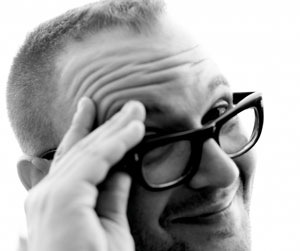
Cory Doctorow

Cory Doctorow: "Open source speeds up capitalism."

Related

[Editor's note: The Tyee is proud to co-publish with Rabble.ca a multi-part investigation of Maker Culture -- the do-it-yourself movement fast evolving in North America and beyond. This is the last of 11 installments. Find accompanying podcasts, photos, videos and blog here.]

If in the near future individuals or small teams of people, rather than highly organized corporations, can make everything: including children's toys, weapons, cars, or our own organs, then what?

And what are the legal, corporate, cultural and psychological roadblocks Maker Culture needs to break through to become mainstream?

And what makes a maker make, anyway? 

Those are some questions raised in articles running here over the past 11 weeks. As we bring this series to a close today, let's take a curious tour of a future re-made by Maker Culture.

Maker motivation

When you look at maker culture from the outside, you might ask, "Why would anyone want to build something when they could just buy it?"

"The answer is, 'I want it to exist in the world,' that's it," said Alexander Honkala.

At his day job, Honkala works in biotechnology research but he's also the head of All Hands Active. Currently the lab is building a robot that gives hugs and random advice. It's also making a suit that plays electronic drum beats. And like others involved with the Maker Culture, they're not going to make any money doing it.

But the lab isn't just about building machines, it's also about building a culture. Honkala wants to get past the barrier of the techno geek and reach out to people from all walks of life. This includes people who might not be tech enthusiasts, including artists, musicians and anyone else who isn't necessarily a white male. Honkala wants people to experience the same kind of satisfaction he gets from building something from scratch.

"To me it's a natural extension of a creative impulse and I'm happiest when I'm making something," said Honkala.

But the need to create may go even deeper. Dr. Laura Freberg, a professor at California Polytechnic, sees the culture as a way for people to get back to their roots. She believes the fulfillment a person gets out of doing something for themselves can be traced back to the theory of evolutionary psychology. Freberg explains that people once had to produce for themselves and the urge still exists today. Whether it's building a computer or something as simple as fishing, the extra effort carries a sense of fulfillment that could reside in many others. 

"You're tapping into a sort of primeval source of satisfaction people have... and I do think some of those ideas are very contagious."

But the concept of open source labour sounds pretty strange in today's society. Since people are raised within the cult of consumption, getting them to realize the reward that comes from open source creation can be a challenge. Honkala admits there's skepticism towards the movement when people learn there's no attention paid to a bottom line, but thinks naysayers could get pumped for maker culture if they could experience the results. He feels if people took control again they would want to know more about how the world around them works. If people had to make like their ancestors, they also might know more about themselves.

Making a drum suit might still be complicated, but Honkala says the benefit to making rather than consuming is simple: "If people are so far removed from their curiosity, from their imagination... it's like they've lost everything that made childhood special."

Mind your business

What Clive Thompson imagines for the future of business would give most MBAs cold sweats. Thompson's all about giving stuff -- code, goods, ideas -- away for free. For Thompson, a New York-based writer for Wired and the New York Times magazine, it's all about the open source. "Open source will make it easier for people to make lots and lots of money," said Thompson.

In the past, businesses had to spend a lot of money on licensing software.  Now they can use free open source programs like Linux. The cost of starting a company has decreased so more people are doing it, Thompson said. 

"Open source catalyses the free market and speeds up capitalism."

People making things and sharing ideas is the heart of maker culture so if you want to run a successful business, make some friends. In the maker world, social capital can be more valuable than investment capital. Cory Doctorow buys that. He's an activist, a sci-fi author and a maker who's most recent work is called Makers.

"Sharing has a direct benefit to people who are making," said Doctorow. "Other people will help you make stuff better." His book explores what the future might look like if maker culture goes mainstream.

The Maker Culture movement is changing the way traditional businesses operate. The book publishing industry is being revolutionized by print-on-demand from sites like Lulu.com. Forget capital and bulk production orders. All you need to publish a book is an idea and a computer, said Thompson. 

Technology is also enabling people to access a global marketplace.  Online communities like Etsy connect people from around the world to buy, sell and share things made by hand. "We are a platform for people to start and grow their own businesses," said Adam Brown, a spokesperson from Etsy.

Etsy reports it has 3.2 million users worldwide and has grossed over US $133 million by Oct. 2009, which shows the large demand for handcrafted products. This is a long way from their modest earnings of US $166,000 four years ago.

Etsy's popularity exploded with the growing interest in maker culture. People are beginning to appreciate quality handmade goods. "I think it's a reaction against big box culture that was prevalent in the '80s and '90s," said Brown. People want to express their identity and style with unique, customized goods, he said. 

"Our goal is always to make the best, most vibrant, innovative marketplace... and make it a fun place for people to shop and look at art and design," said Brown. The future isn't going to be more entrepreneurial, said Doctorow. "I think the right word is creative."

Judge me

Devin McPherson got something that costs $20,000 for $400. It wasn't stolen or fake. He just made it himself. He fitted aluminum pipes and cut plexi-glass to create a machine that prints out 3D objects instead of paper. It wasn't his invention. He got the design from someone who shared it for free through open source.

"You have all the power with open source," says McPherson. "I can make a 3D printer... and then use my printer to make parts for other printers."

Although open source isn't a legislated movement, it doesn't violate any laws, says Margaret Ann Wilkinson. She's the director of Intellectual Property, Information and Technology Law at the University of Western Ontario. "It's basically philanthropy by international copyright owners, giving up certain rights, in order to allow the public to do whatever they want with the material."

Cory Doctorow gave up his traditional copyright when he made his book Makers available online for free. He shared his content under the Creative Commons license which allows artists, musicians and educators to share their work. But there are certain conditions that can be attached to this -- like users may have to attribute the work and use it only for noncommercial purposes. Doctorow gets to choose which of these conditions will apply to his material. But he doesn't think open source and Creative Commons prevents all legal barriers within Maker Culture. "In many forms of media, the more expansive copyright is, the harder it is to make new media, because you often take pieces of old media."

He says music sampling, an art form that uses sound recordings from different songs to make a new song, is an example of this. If a sampling artist isn't represented by a major record label, it's nearly impossible to get the licensing they need to make their music, Doctorow said. And if they can get the licensing, it's often unrealistic to pay the millions of dollars required for the rights. If the music falls under the Creative Commons license, a sampling artist would be able to use this music, perhaps with some restrictions.

But, major record labels own the copyright for the majority of musical works. Creative Commons may open the doors for some sampling artists, but the reality is that many artists can't make their music because of copyright barriers.

It's like a "tollbooth between your idea and the world," said Doctorow.

Wilkinson doesn't see the law changing anytime soon to eliminate that toll booth. "When a government tries to get in front of a social change like Maker Culture and legislate advanced solutions, it just doesn't work." 

The heart of the matter

Bad news, you need a kidney transplant from St. Michael's Hospital in Toronto. Worse still, the waiting list is over five years. As we learned from Matt Lundy in the Fabricators episode of this series, the solution might be available soon, but the costs might be a little high to do-it-yourself.

Matt explained researchers are working on a 3D organ printer, a nifty little gadget that may soon let us print out fully functional organs. He introduced us to Dr. Vladimir Mironov, a propelling force behind the 3D organ printer, and an assistant professor at the Medical University of South Carolina, who said that reality isn't so far off.

The simple things, like blood and skin are already on the market, said Mirinov. They took ten years to develop, and $200 million to get cleared by the FDA, he said. This is a paltry sum compared to printing a complex organ like a kidney, he said.

"It'll probably be a nightmare to get FDA permission if you are really talking about creating human organs. FDA approval will cost close to $1 billion and one kidney will cost $250,000 at least," he said.

Printing organs is a realistic, but lofty goal. It's one Mironov doesn't think will happen without a lot of help. Financial help.

"My feeling is that in an academic environment it's just not realistic. You must have a very well-funded start-up company which can raise enough money to bring this to market," said Mironov.

Mironov points out strong benefits to this sort of tech -- replacing a kidney could replace years of costly dialysis treatment, or worse. Quality of life for people would improve. But, which people?

"With regular organ transplants, you don't pay for them, but access is always a huge issue," said Lawrence Burns, a specialist in bioethics with the department of philosophy at the University of Western Ontario.

"I think the only really genuine moral issue that springs around access is -- people on waiting lists who can afford it would then go purchase these [printed organs], and that creates a kind of two-tier system," said Burns.

Sure, we could skirt the legalities. But is the production of human organs really something we want to be unregulated? The development of this technology would probably need heavy industry or government backing, said Mironov. But, if that is ever going to happen, backers will need to convince a squeamish government. The debate around stem cell research and cloning is pretty fierce, and it's easy to see how 3D organ printers could tread the same path. Burns doesn't think the public will be so hard to convince.

"You get so many prosthetic parts, people are happy to have metal and plastics and things in their bodies," he said.

"If you make a heart and they don't see process, but if you can point to the box and say, 'There's a heart in there that can work, and all we have to do is put it in your body,'" said Burns, "I think people wouldn't necessarily see that as different from having a donor."

Before maker culture can take on the world it will have to break down barriers and capture the hearts of people, literally in some cases. It's not going to be easy. But then again, nothing worth making ever is.  [Tyee]

21  Comments:

Login or register to post comments

  • RickW

    2 years ago

    Author Postulates:

    Quote:
    If in the near future individuals or small teams of people, rather than highly organized corporations, can make everything: including children's toys, weapons, cars, or our own organs

    Reminds me of the joke where American tourist wonders why Mexican fisher only works a couple of hours a day and spends the rest of the time with friends and family, when he could be working longer, making more maney, eventually becoming rich enough to be able to retire so he can spend more time with his friends and family.

    Technology notwithstanding, weren't cottage industries the norm only a few hundred years ago?

  • Takuan

    2 years ago

    has to be an anti-Maker

    has to be an anti-Maker backlash sooner or later. We still need a large economy to imbed all the little Makers stuff in, the owners of the large economy are going to get scared sooner or later. Wonder how they'll set about to discredit Makerism and how big it has to get before the dinosaur brains perceive it as a threat?

  • VivianLea Doubt

    2 years ago

    enjoyed the series...

    Very much enjoyed the articles, but found myself wishing for more conversation as I explored the concepts and ramifications for myself. I "make" a lot of thngs for myself - and this often puzzles people, I believe. I think the funniest reaction I got was when someone complimented my potato salad, and I remarked that the mayonnaise was made from walnut oil - someone else remarked that they thought mayonnaise came in a jar.This is a prosaic example, I guess...but even 'cooking from scratch' is rarely cooking from scratch anymore.

    I make my own clothes, and remake from purchased, often second-hand articles, and refinish furniture, and paint pictures and will re-shingle a roof this summer (for the first time) and learned how to drywall...etcetera, etcetera, etcetera. There are a number of reasons why this is terribly important to me, though I confess that self-sufficiency is at the end of the list. Mainly, I just find it really interesting to create, or have some hand in creating, the things I surround myself with. This is as much to do with asthetics as practicality...I love beautiful things and refuse to settle for the ordinary, mass-produced. And yes, it is deeply satisfying to survey the space where one lives and to realize that one 'created' it in the most meaningful sense of the word...
    In the broadest sense, Takuan, maker culture is already a threat, since small business creates the majority of jobs in Canada. The "owners of the large economy" - control the access to (financial) capital that is rarely extended to small business - most small businesses are financed largely by owners & family & friends. It is precisely because they do not understand the idea of 'social capital'...and social capital is at the heart of making/remaking our world.
    People who are 'makers' contribute to the world in so many ways beyond the mere exchange of dollars, and they seriously threaten the status quo. I see it as the most radical of acts, as well as the most human.

  • barney

    2 years ago

    Much ado about nothing

    I've followed this entire series, and have arrived at the conclusion that maker culture is much ado about nothing. More an ideal than an actual movement. It's a new twist on a subculture that's existed in human society since we wormed our way out of the primordial soup. In recent history, we've always had people making stuff, bartering, sharing, swapping, auctioning. The difference now, we are told, is that much of it is being done online, which is somehow, in itself, enough to define maker-culture as a significant, burgeoning social movement capable of radical change.

    I don't buy it. What I see here is that all the people that used to barter, hang out at swap meets and Sunday markets and Grateful Dead parking lot sales have grown up a bit and purchased computers and started blogs. This doesn't make them any less a fringe subculture, even if they are better connected. Don't get me wrong, I love the idea of making stuff, thumbing my nose at Wal-Mart and Chinese toy factories; I love the idea of subverting our capitalist consumer addictions, I'm just not naive enough to believe that making bead necklaces and selling them via my blog to Bob in Saskatchewan is the answer to our consumerist nightmare. This seems more a self-medicating, escapist remedy than it is recipe for social change, to which I say - keep going! Do what you want, and do it with passion. Hobbies are great and we should all have a few. But for real political change to the ways of commerce, trade and labour, a more sophisticated political-economic solution is required.

    As much as it pains me agree with Takuan, if this maker culture ever did become an actual movement, there would be a backlash from the corporate elite, and it would come in the form of buying-out, co-opting, undermining any threat to market share. There would also be a consumer backlish because an online maker-flee-market is the perfect terrain for fraud, scams, organized crime and the like, and consumers stung even once will return to the safer confines of a marketplace regulated by consumer protection laws. I was watching that kid featured via YouTube in the previous article - with his homemade alcohol still - and seeing nothing but lawsuit and/or tragedy written all over it. Headline reads: Parents lose son and house in explosion, blame maker culture!

    You want to change consumerism, just stop buying (and making) crap that you don't need. If you have buy stuff, including stuff you don't need, ensure its sourced as locally as possible. And vote for politicians and parties that are committed to changing trade laws to encourage more local manufacturing, secondary resource industry and co-operatives.

  • Takuan

    2 years ago

    I feel for you Barney, I

    I feel for you Barney, I feel for you. Even I don't like to agree with me.

  • barney

    2 years ago

    Lack of conversation

    Just saw ViveanLea's entry on my way out, and want to highlight her initial point: "Very much enjoyed the articles, but found myself wishing for more conversation."

    While I may not reach the same conclusions about this series as ViveanLea, I do agree that the ideas presented in the series required more conversation, or critical analysis. Surely, there is some sociologist somewhere in the world that thinks this maker-culture stuff is a bunch of idealistic pie-in-sky fluff. I wished to see a more balanced presentation, rather than commenters compelled to step in and provide that balance. Much of the series was presented in very matter-of-fact tones devoid of any hard questions or criticism. This alone is enough to tell me it's not much of a movement, because the bigger a movement gets, the more diversity of opinions seem to emerge. Reading this series, one is left with the impression that we are on the brink of this secret society maker utopia, that is about to take over the marketplace any minute.

  • Takuan

    2 years ago

    oh, worth noting biohackers

    oh, worth noting biohackers are makers too. And there was FBI presence at the last convention of theirs I read about.

  • Adam M

    2 years ago

    One comment

    Quote:
    But, major record labels own the copyright for the majority of musical works. Creative Commons may open the doors for some sampling artists, but the reality is that many artists can't make their music because of copyright barriers.

    Translation: many "artists" can't make original music.

    Enough with the sampling already! Of the relatively few pure benefits of copyright, restriction of sampling in commercial music is probably at or near the top.

    And this in an article about "makers." How about make some original music?

    /endcrankrant

  • Takuan

    2 years ago

  • bluerev

    2 years ago

    The corporations are noticing and thus maker culture is growing.

    In the open source software camp, the corporation are doing all they can to not let the general population know and use the free software. Have you noticed that the 'get a Mac' commercials only have two types of computers PC and Mac... they don't want you to know that there is a good third way to be. Apple would rather you buy a Microsoft computer than figure out Linux, they would rather you buy Microsoft office then realise Open Office works fine. Microsoft changed to .docx not because it's somehow better, but because it's incompatible with the current open office. There are many more examples that if you look for them you will find.

    Car companies too are scared people might realise they can fix sell cars, why do you think they lobbied our government to increase the tax private auto sales....I have seen examples of people making 90mpg out of old honda civics in their backyards for very little money.

    Don't be fooled, corporation are already doing things to get rid of this threat. And when old ladies make too many baked goods and sell them, taking away from the big business profits I can assure you the health inspector will shut them down.

  • Adam M

    2 years ago

    bluerev

    To be fair, if you're not comfortable with the nitty gritty of computing, let alone programming, even Ubuntu Linux can be a hassle.

    I don't mind at all, I prefer working from terminal and playing with config files. But I also enjoy programming as a hobby.

    I don't think there could be a Microsoft or Mac that could hold Linux back if the nerds in charge dropped their superior attitude and took the time to focus on a flawless GUI and a pervasive, unified GUI standard. At this point, Linux requires all users to use a command line at some point, and for people like my mother, my sister, half my friends, etc, that is a skill no one wants to learn to support some lofty open standard.

  • RickW

    2 years ago

    barney

    Quote:
    if this maker culture ever did become an actual movement, there would be a backlash from the corporate elite

    There is a backlash, but it is a low-level backlash, and consists mainly of the implied threat that governments can bring to bear in the form of unpaid taxes on sales. Governments are after all, in the pockets by-and-large of the "corporate elite", and often can be relied upon to do the latter's 'dirty work' for them.

    I am reminded on an instance years ago when I lived in Winnipeg, when the city wanted to actually tax home gardens - citing as their excuse, revenues lost when people DID NOT shop at grocery stores. It did not go through - but the threat still very much exists.

  • Takuan

    2 years ago

    hmmm, imagine taxing all the

    hmmm, imagine taxing all the grow-ops.

  • RickW

    2 years ago

    Takuan

    It would just give Campbell more money to pi$$ away.....

  • Takuan

    2 years ago

    once thought of changing my

    once thought of changing my name legally to "Receiver General", just to see what would come in the mail.

  • RickW

    2 years ago

  • Takuan

    2 years ago

    http://www.youtube.com/watch?

    http://www.youtube.com/watch?v=dlPjxz4LGak

  • dave49

    2 years ago

    Maker Culture is fine, but...

    Maker Culture is fine as a cultural movement, but don't expect it to go much beyond a DIY focus. Having the Internet and social media will not likely means it becomes any force that will really challenge the status quo?

    Etsy is an eBay-like site where people sell crafts, I stumbled on the following article which attacked the notion that Etsy was going to contribute to economic independence for women.

    Etsy.com Peddles a False Feminist Fantasy
    http://www.doublex.com/section/work/etsycom-peddles-false-feminist-fantasy

  • BrianWhite

    2 years ago

    I think it is changing.

    Transition towns is the real maker culture. It is about rebuilding and redesigning skills for use by ordinary people. A 3-d organ printer? Thats not maker culture! Just a more expensive alternative to viagra.
    I made and shared the design for a 2 storey compost bin. Thats maker culture. I made and shared the pulser pump, thats maker culture. And i too bemoan the lack of conversation. but how CAN you talk about an organ printer?
    It is so out of our league!
    In a related thread, someone mocks ubuntu for being nerdy. My gf with 2 years of computer experience upgraded from xp to the latest ubuntu on her laptop. She absolutely loves it. Not a command line or terminal in site and it is freaking fast on a crappy laptop with vista like window movement when you maximise or minimise.
    Sweet!

  • Peter Evanchuck

    2 years ago

    don't worry about culture, Harper will end it

    At the rate Harper is erasing our culture, science and all things Canadian we'll soon be some non-descript 'north place' filled with all the stuff that the USA wants and needs and Harper will give it to 'em almost as fast as the USA gives free money and weapons to Israel to destroy the Palestinians and all their semetic, middle eastern brothers and sisters- all rather pathetic and sad.

  • RickW

    2 years ago

    Brian White

    Quote:
    but how CAN you talk about an organ printer?{/quote]

    Have you seen Blade Runner?

    • The discussion for this story is closed. No more comments can be added.