


Life

A Tyee Series

Meet Your Makers

From EduPunks to food jewelers, people are using new tools to take learning, art, entertainment, technology, politics, and even science into their own hands. Behold the growing Maker Movement.

By Pia Bahile, Curtis File and Kevin Young, 15 Jan 2010, TheTyee.ca

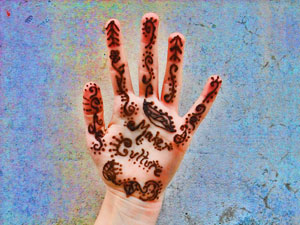
maker-culture-hand.jpg

Hands-on approach: Maker Culture.

Related

[Editor's note: The Tyee is proud to co-publish with Rabble.ca a multi-part, multi-media investigation of Maker Culture -- the do-it-yourself movement fast evolving in North America and beyond. In this first episode, the authors, who are Canadian student journalists, explain what Maker Culture is and look back on their journey as writers and unwitting makers. And they give you a small taste of what you can expect here on The Tyee on Fridays to come.]

What is a Maker?    

In Austin, Texas Cathy Wu is making jewelry out of dried fruit. In London, Ontario Brian Frank is educating himself in digital media. John Hammel, in St. Jacob's, Ontario, owns the last handmade corn broom plant in Canada. In the U.S. Rustbelt ordinary citizens are dropping by a community college to use laser cutters and 3D printers. And in homes all over the world, people are connecting to the Internet to discover galaxies or unfold the secrets of Alzheimer's and Parkison's Disease. What do they all have in common? They're all part of the same movement: Maker Culture.

Maker Culture? It's people taking things -- food, entertainment, technology, politics, and even science -- into their own hands. That's a simple definition and it's exactly where 45 Canadian journalism students began their journey in early September. That's when Wayne MacPhail, the instructor of the online journalism courses at both Ryerson University in Toronto and the University of Western Ontario in London, introduced us, his students, to the idea of Maker Culture. We discovered that a lot lies beneath that simple definition.  

This series is a first for The Tyee and Rabble.ca. They've never collaborated on editorial before. And it's a first for Ryerson and Western, too. The universities have never worked together on a journalistic project before. And for us? It was one first after another.

Some of the things we came across in the first few classes were jawdropping. Like the video MacPhail showed us of a three-dimensional printer that's able to replicate itself (you'll learn read about 3D printers in the Fabricator episode). Even so, we were not quite sure what Maker Culture was and what it had to do with us. "I guess I kind of thought that, you know, people had always been making things," said Geoff Turner, a UWO student in the Masters of Journalism program. He wasn't wrong. There have always been makers: web-hackers, hobbyists and ancient ancestors who created tools of survival. But the modern Maker Culture movement is more involved than that. It's about sharing what you've made, how you've made it, and why. Often, for free.

"Another word for it is the Enlightenment," said Cory Doctorow, a Canadian science fiction writer, activist and the author of the book Makers. "The advent of... public sharing of information and knowledge was the Enlightenment. It was the great leap in human progress that ended the dark ages." It is this sense of sharing and community that binds the self-educator to the broom-smith, and the broom-smith to a food artist who makes necklaces made of dried kiwi. What MacPhail noticed, and challenged us to document, was an over-arching cultural shift -- Maker Culture.

Our journey

It wasn't until four weeks in that we students began to notice, not only were we documenting the movement, we were engaging in it and were helping makers worldwide discover each other. That's because we published an ongoing blog about the project and posted hundreds of Twitter messages (#mcry) about our progress.

The collaboration between the two universities led to an exploration of Maker Culture that went beyond what we expected. Some groups immersed themselves to the point that they furthered the movement.

The food group hosted a latte art party to see what traditional artists would do when they could play with their food. The event was an evening of sticky chocolate drizzles, cinnamon sugar and amazing latte art. There was even a latte dedicated to climate change, which had swirling white cream that looked like a satellite image of a hurricane burrowing through the Atlantic.  

The education group organized an entire conference dedicated to the EduPunk movement. It drew participants and viewers from all over the world and was streamed live on the Web. And the fabricators group took a road trip into the Rustbelt of America looking for the next wave of industrialization, where the means of production is a laser and a printer that can make its own parts.

Maker Oddities

One of the things we really loved about this project was finding the bizarre projects that people devoted their time to. Here are some favorites, hope you enjoy!

1. In this video, a man scales a building with DIY vacuum gloves!

2. This is about as cool as Maker Culture can get: a DIY Bat-mobile!

3. Maker McFly

4. The most advanced DIY prison weaponry one can get: a battery shotgun!

5. Here's something we never even thought of: DIY economies.

6. Feeling old? Have crows feet? Are you constantly tired? DIY facelift.

7. Some pretty incredible Maker Music

8. Feeling bored? Why not build a jet engine in your backyard?

9. Some one is punking the EduPunks... it's the Earth-Punks.

10. Hold the phone... Maker Culture Kills!

11. Hacking your car... er... watch the break lines. 

12. Maker Sports Cars.

13. 3D Mineral Printer.

14. Open Source Non-Lethals.

15. Something for the ice-cream lovers.

16. Pop Tarts the way they should be!

17. Had to include a top 100 list.

18. DIY Sports

19. DIY Halloween

20. DIY X-Men Powers

(Video: James Arlen, a noted proponent of maker culture, on when kids make real stuff in a virtual world.)

What you can expect

The Maker Culture project took us to places far outside of the mainstream to a breadth and depth we never imagined when most of us walked into class on the first day of school. What we once conceived of as background noise has become a series of stories, podcasts and videos that tell the tale of Maker Culture at the micro and macro levels of society. At the heart of all these stories are individuals who are committed to the assertion of self in the face of globalization, commercialization and centralization.

Let's start with food. The food group at Ryerson University encountered individuals who view food as more than a relationship between agribusiness and the consumer.  

To these makers, food is a means to create art, to share ideas, to protect the environment and even a way to stick it to the man. If the thought of using your chewing gum to make art has never crossed your mind, be prepared to meet 39-year-old gum artist Jamie Marraccini.

If you've ever thought about ditching the LCBO and brewing your own alcohol, make sure you read the food group's piece about a New Zealander who makes his own "kiwi" still. 

These stories about gum art and home-brewed alcohol are two of several that will take you to a place far removed from last night's takeout.      

Along with food, shelter and clothing are vital to our survival, and more often than not, just consumer items we buy, use and leave behind.

The culture group interviewed men and women who work with kangaroo leather lace, seal skin, bowhead whales bones, strawbales and other materials to create extraordinary garments and dwellings with their own hands.

Activist/knitter/academic Betsy Greer reflects the sentiments of many makers the Culture group met on her website. "[Making is] a way of looking at life where voicing opinions through creativity makes your voice stronger, your compassion deeper and your quest for justice more infinite," Greer states.

Greer reflects the sentiments of many makers the culture group met on her website. "[Making is] a way of looking at life where voicing opinions through creativity makes your voice stronger, your compassion deeper and your quest for justice more infinite," Greer states. 

Fruit of the geeks

One of the defining characteristics of the burgeoning Maker Culture movement is the use the technology at hand for unintended purposes. Some of the first people to do this were hackers, who appeared 150 years ago. These pioneers were teenaged boys who acted as the first telephone switchboard operators before they got replaced by young women for causing mischief by hacking the system.  From the Mozilla Foundation to Drumbeat to the creation of Apple Inc, the Hackers group looked beyond the stereotype of the geek behind the computer screen committing cybercrimes to unearth stories about groups of individuals cooperating to reinterpret available software to make it better, faster and more interesting. 

Science has long been a realm that has belonged to, well, scientists. The Science group discovered that today, citizen scientists are making personal advancements while advancing the field of science. The gamut runs from a Dutch teacher discovering galaxies in her spare time to the husband of an ailing wife doing genetic research on his personal computer. The significance of citizen science is likely to be enormous. "The more access more scientists can have to analyzing data, the closer to truth we’re likely to get," said Dr. Micheal Shermer, the publisher of Skeptic magazine.

(Video: Meet the maker of her own kite-cam, filmed at Makerfest in Hamilton, Ontario.)

Makers across the globe are affecting change in institutions like education, media and politics, institutions that are sometimes synonymous with groupthink, conformity and stagnancy. An EduPunk is someone who keenly understands that the Information Age in which we live combined with Web 2.0 is causing a profound shift in how the mind can be cultivated. These contemporary Renaissance men and women are learning to learn outside of the staid and circumscribed traditional educational system through the use of wikis, open-source textbooks and the like.

The Education group at UWO spoke to some of the leading proponents of the EduPunk movement who expressed their thoughts on how the movement started, why the movement is necessary and the challenges of being an Edupunk. Follow the Education group's journey to find out why they boldly declare that, "We may be the last generation to attend traditional schools."

Personal, political mash-ups

In a 1969 essay, feminist Carol Hasnisch coined the now famous phrase, "The personal is political." The politics group at UWO went on a quest to see whether this phrase is true, examining grassroots political action at the local level as well as the international level. From the Toronto Cyclists Union to the ChangeCamp political movement to the Toronto Bolivia Solidarity activist group, makers all over the world are using technology to rattle the status quo, redefine what it means to be a citizen and change the world.

One particularly interesting story covered by the politics group is the tale of Bolivia, where in 2005, Evo Morales became the first indigineous Bolivian to rule the country in almot five centuries. The group found out that the Western media doesn't cover Bolivia because they cannot villanize Morales. This episode is not to be missed. 

The media group investigated the ways in which makers are taking literature, music, zines and brainpower and creating quirky, interesting and collaborative media, with wide-ranging effects. "Having a generation that knows how the media sells them things, attracts their votes, changes their minds is going to be a vital part of 21st century democracy," said Brett Gaylor, who directed a documentary on music mash-ups titled RiP! A Remix Manifesto.

A transforming moment

There is no doubt that the Maker Culture movement will have effects and ramifications beyond our political system. In fact, Maker Culture will do much to change and form human existence in the near and distant future. When Alexander Honkala, the head of All Hands Now, was asked by Mark Melnychuk why he is a maker, he responded, "The answer is I want it to exist in the world, that's it."

Melnychuk is a member of the What's Next group, who will be exploring the implications of being a maker in a world where we will be able to bypass the corporation, circumvent laws and prolong life. How will we navigate and understand our world when we are able to print vital organs from a 3D printer? 

Join us in the coming weeks as we delve into the past, present, and future exploits of those who choose to exist in the world as makers of change and makers of community. As you learn more and more about Maker Culture, we ask you to ponder one question: It's your world, what are you going to make of it?

Are you a member of Maker Culture? Please post a comment below sharing what you do, how you do it, and perhaps even why.  [Tyee]

21  Comments:

  • ME2

    15-01-2010

    The old becomes new again.

    The Makers? Not so novel, kids. 50 years ago we called it "Do it Yourself" (DIY)

    Back then, we looked for quality in a product, expecting to be able to get parts for it, and then fix it when it broke down.

    Can you believe that we also did most of our own car repairs, that we could replace a headlight for a couple of dollars and not need specialised tools to do so?

    Back then, planned obsolescence was still a conspiracy theory, and that new car didn't become economically unrepairable just as we made the last payment.

    Back then, "consumer resistance" was not just a price-sensitive term, but also included quality. Styling was important, but but I'm willing to bet that once those people realised that items like today's phony molded headlights represent a month's disposable income for the average family, and how they kite insurance costs, they would have been much less willing than us to pay for them.

    Though I've focussed in on automobiles, the list of other products is endless.

    Being a "Maker" is definitely a step in the right direction, but unless it goes forward and teaches us the mindless stupidity of today's unquestioning consumerism, the effort becomes just another fad.

  • Jeffrey J.

    15-01-2010

    A Great Series

    This looks like a great series. Can't wait for more. Love to see rabble.ca hooking up with the Tyee (no pun intended!).

  • wmacphail

    15-01-2010

    Old, new, yes, but with benefits

    ME2, I agree that makers have always been. What's diff erent now is that the Web allows for the creation of niche communities and communication about the making and the made things. What we discovered, in all the maker communities we explored, was a remarkable desire to share the knowledge and the passion for making. So, that bodes well for you desire to teach about the "mindless stupidity of today's unquestioning consumerism". Thanks for reading.

  • jackiea

    15-01-2010

    Kudos!

    I've been following this project from the beginning with great interest. I am so pleased to see it all come together and eagerly await more articles.

    Great job to you Wayne, and your students for bringing this to life.

    ~Jackie

  • artipatel

    15-01-2010

    after one semester...

    This is so exciting!
    Go us!

  • dorothy

    15-01-2010

    The fine distinctions...

    "unless it goes forward and teaches us the mindless stupidity of today's unquestioning consumerism, the effort becomes just another fad."

    I think the important point is whether the claim to being a 'culture' can hold water. Some of the endeavors mentioned in the article, taken in isolation, would simply describe people being hobbyists rather than bearers of a new or distinct culture.

    As long as we have had the 'stupid consumerism' going on, we have equally had an undercurrent of stalwart people who never gave in to it, but kept reusing, reducing, recycling, often in extremely ingenious ways.When I was a child, the demand for 'a new one in a box' was considered a spoilt-brat attitude, and expressive of lack of imagination. Kids were given tools of trades and materials to work with, not 'kits'. At most, we would get modular building toys such as Meccano and Lego, stuff where one's own creativity was the main ingredient. Today, when a new widget is needed, it is never a given for my family, that you have to buy one made in neither China nor Switzerland. When LED headlights first came on the market, the price was prohibitive for us, but undaunted, my kids figured how to build their own for a lot less, and learned in the process. We will always question whether we can 'just make one', before we simply go out and 'consumerize'. I work in a place where all and sundry bits of interesting materials are discarded, as they do not suit any purpose there, but arrive as packaging etc. It is almost trivial, that I will rescue some piece from a bin, and my colleagues will query 'WHAT are you going to use THAT for??' I always know, and when I tell them, they will get this faraway 'wow, but NOT for me' kind of look on their face.

    ...more

  • dorothy

    15-01-2010

    more

    I know there are others like us. A friend of mine goes with her hubby on a grand tour of thrift shops regularly, hunting for just the kind of..., but it is characteristic that, often, the piece is not used for its original purpose, but incorporated into some unique and brand new functionality. I would certainly consider these people 'makers'. It is also characteristic for both them and us, that we generally cook from scratch, even out of the garden when we can, that we think of our needs in terms of basic elements, not from inside a set of highly developed conventions that depend on consumption of pre-made products. Like, we could spend a fortune on a four-season tent, right, but my family has been winter-camping in Manning Park in an old single-layered canvas tent with self-made embellishments involving encased fiberglass-layers and reflection blankets, as well as of course utilizing the available snow. We were SNUG, quite aside from gaining the satisfaction of engineering our own comfort. When our children were little, we took them camping each summer, where the rule was no batteries, no propane tanks, no ice chest. They had a grand time and learned lots, but coming back to school, they were jeered at over the perpetual lack of the obligatory trip to Disneyland, after everybody wrote their piece of 'my summer vacation'. Yes, schools are highly complicit in pushing 'dumb consumerism'!

    I could not think to live in any other way. If that makes me a bearer of a subculture, so be it, but I really think of the whole consumerism flip as the deviant thing, and the resourcefulness of old as the normal way.

    For instance, I am upset that people in Haiti helping themselves to food from supermarkets in the present chaotic and desperate situation, that this is called 'looting' by our media. I think that this comes out of a tunnel-visioned complete lack of ability to understand their situation. To me, looting is grabbing big in order to make oneself wealthy at the expense of others, a criminal act. I don't think people who refuse to see their children starve, while food rots behind a glass wall right next to them, are criminals. But I believe the 'looting' terminology arises out of thinking like a virtous little consumer, 'one must pay for the goods'(pay to whom?) CONTEXT, people! They're just trying to survive. My point is, I don't think a MAKER would have trouble seeing the difference.

  • barney

    16-01-2010

    agreed, nothing new, but...

    Sometime in the last few decades, humans, especially North American humans, lost their way, or rather, were turned into consumers by a system that increasingly sought new sources of cheap labour, leaving us nothing left to make!

    I'm old enough to identify with the points Dorothy and ME2 make. There was a time in my young life where there was a clear distinction between a want and a need. Often, the toys we got combined the two, challenging us to manufacture, build and create things. The big toys I got as a kid included a chemistry set, a tool box, model airplanes, puzzles and that sort of thing. These were great because it afforded me the opportunity to use take the needs and create wants - if that makes any sense.

    I watch the toddlers nowadays, and they get showered with pure consumer crap, the novelty of which lasts a few minutes, then it gets tossed into the closet. I think this consumerist mindset we've developed has made it so that the thrill is in purely the wanting, the buying, the shopping, not the needing, creating or making.

    My reaction to this so-called makers movement: I'm encouraged that youth are using the Internet to do more than watch porn or play video games. Is it a statistically significant trend? Damn, I sure hope so, but I doubt it. I fear that it's too little too late in the grand scheme of things. The real makers movement needs to be in our manufacturing sectors (a return to making consumer things, not just consuming them on a mass scale) and in our schools. The Web is being constantly touted as the miracle elixir of our current troubled times, and I can't help but wonder if this makers movement via online social life is just another false promise. But I do admire the signs of hope. I also fear that if it does grow into the success story, corporations will find a way to package it, market it, and sell it like just another late night infomercial.

  • wmacphail

    16-01-2010

    Signs of Hope

    Thanks Barney and dorothy. I do see "signs of hope", Barney. Social media is connecting previously isolated niches of makers. Now, Dorothy, your homemade all-weather tent can become a guide on http://www.instructables.com/ (and I hope it does).

    Stories of inventiveness and resourcefulness have legs and carry powerful lessons. Those are hopeful lessons, hopeful signs.

    I think, underneath the silly surface of facebook apps and banal status updates, there is a group of wired folks interested in DIY, local and self-sufficiency. This discussion helps spread the word that they exist. Loving it.

  • KWD

    16-01-2010

    nostalgia?

    While reading the "Makers" article it was hard to avoid recalling Marshall McLuhan’s “Understanding Media”.

    “The electric media are the telegraph, radio, films, telephone, computer and television, all of which have not only extended a single sense or function as the old mechanical media did — i.e., the wheel as an extension of the foot, clothing as an extension of the skin, the phonetic alphabet as an extension of the eye — but have enhanced and externalized our entire central nervous systems, thus transforming all aspects of our social and psychic existence. The use of the electronic media constitutes a break boundary between fragmented Gutenberg man and integral man, just as phonetic literacy was a break boundary between oral-tribal man and visual man.”

    http://www.nextnature.net/2009/12/the-playboy-interview-marshall-mcluhan/

    Today’s techno-revolution takes us beyond McLuhan. It takes us beyond phonetic literacy into the literacy provided by instant communication. “[T]he tightly structured “linear” modes of traditional thought and discourse are obsolescent in the new “’postliterate’” age of the electric media.”.

    It’s 2010 but it seems we’re just stepping out of the 1960s.

  • Rusty at The No...

    16-01-2010

    I'm Thrilled With This Series of Makers

    I thoroughly enjoyed this and I'll be both following it in The Northstar Journal http://nstar312.blogspot.com/ and recommending it to my readers. This is topnotch journalism and I am also proud that it is the work of two countrymen. Raising the Maple Leaf cup. Nice going, guys, and finest kind. Rusty

  • wmacphail

    16-01-2010

    Thanks Rusty

    Glad you're hooked Rusty. We'll try not to disappoint you.

  • bthomson

    17-01-2010

    DIY currencies

    I followed some links here to an article about DIY currencies. I was in Cameroon in October 2006 and on every street corner in every town people were selling mobile phone time transfered from their account to yours via a phone call. I was able to buy my lunch at a small restaurant with the phone time I had left on my local SIM card. Another type of LETS with some potential, although dependent on technologies that aren't exactly self-reliant.

  • onthebay

    17-01-2010

    the larger picture

    Two important things our consumer society can do to be more gentle with our poor, beleaguered planet are to simply consume much less, and to live less complex material lives that are more in tune with the environment.

    The thing is, our current lifestyle habits and choices are part of a much larger picture. Start by asking yourself some questions about your lifestyle choices - bearing in mind what it’s made of, how it’s made, where it’s made, who makes it, is it planet friendly, etc. For example, for those who can afford these things - do you really need that latest electronic gadget? Do you really need to buy that latte, especially in that disposable cup? Do you really need to eat strawberries or tomatoes in the middle of winter, or use that dishwasher, or have that manicured lawn, or leave that computer on 24/7, or drive hundreds of kms to go skiing?

    As these questions show, there are many “lifestyle” habits and choices we can and should be more conscientious about. The unfortunate repercussion is that even a small fraction of folks changing or reducing their habits and choices means the fabric of other peoples’ lives unwinds. We operate within a global economic structure and a global society, and until we take responsibility for and address the concerns of those who are or will be vulnerable, whether we continue on the same social or economic path or change directions and assert “self in the face of globalization, commercialization and centralization,” we may not achieve much to be proud of.

    While I admire anyone’s efforts to be more gentle with this planet, for many the “change and form human (of) human existence” may only come about through some environmental or social event that forces or necessitates change. The emerging “maker” society sounds interesting, and I look forward to more information. I just hope “makers” put much conscious thought into what is being made or done so that their endeavours don’t end up being equal to or even more frivolous or detrimental than those of current structures.

  • barney

    17-01-2010

    onthebay - good points

    I think I share your thoughts on this.

    You can't make cosmetic changes to capitalism and expect radical change. But then, maybe I've makers aren't expecting radical change. I suspect this is not a homogeneous lot. In any case, you need to get at the roots to really make fundamental changes to the way we consume. In the 1960's hippies thought they were quite revolutionary in making their own things, sharing cookie recipes, living on communes, but it was just escapism - a lifestyle which eventually got co-opted by corporations and advertising moguls and resold back to us as something progressive and hip.

    Does this new maker movement overlook the real root, structural, systemic problems of consumer capitalism? Are they doing little more than their own version of tune in, opt out? I do agree the medium of communication is unique, but is this enough to produce the kind of desired change more optimistic proponents speak of? I am hopeful but doubtful. I am definitely a maker, and I routinely use sites like Craigslist to buy, sell and give away stuff; I use other sites to learn how to cook a recipe or how to fix an appliance or what have you... but I see nothing new in this behavoir. Capitalism and global destruction of the environment march on.

  • wmacphail

    17-01-2010

    Open Source as the Bellwether

    Barney, I look to the open source software movement as the bellwether of what Maker Culture could engender. It's already being successfully translated into the creation of 3D real world goods by folks who use 3D printers to create complex objects - and share the designs for those objects on sites like http://thingiverse.com. And, the first things folks who build a 3D printer called the RepRap are encouraged to do is to use it to print out parts so their friends can make another one. Will these ideas scale? That's a question we address in the last part of this series.

  • Intention Pure

    18-01-2010

    Excellent!

    Ancient Indigenous people's knowledge, quashed for milennia by the corporation/oligarchs, is now supported by new quantum physics (particle and wave action of photons and neutrons). The experiments prove that DNA from a person (saliva sample) responds to that person's emotions instantly (measured at a 350 mile distance in the actual experiment). Maker culture sounds like the perfect place for integration and application of this new knowledge into our daily lives. I especially like the "being a maker in a world where we will be able to bypass the corporation, circumvent laws and prolong life".

  • wmacphail

    18-01-2010

    Sentient Spit

    Thanks Miss aware-beware. Not sure I want spit with commpassion, but I welcome the kind words.

  • BrianWhite

    18-01-2010

    What about me?

    I invented the pulser pump. (100 000 views on youtube) AND it is in all about pumps too.
    Thats more than Mcguyver ever did by the way.
    I invented the dripper trackers for solar.
    (They actually made the tracking catagory on solarcooking.org to put them in)
    And I did the solar design t-square and clam shaped solar cookers too. And the mechanical mathematician for making parabolic dishes without any math.
    AND I am a member of babble.
    Seriously though, there needs to be more collaboration between the scientific makers.
    Scientists submit proposals to funding committees and the funding committees decide which proposals go ahead. Thats the weakness of science right there. The funding committees decide the entire direction of science. Nothing in appropriate technology ever gets funded.
    Brian

  • Intention Pure

    19-01-2010

    Brian, I note the cone shaped solar cooker

    used by Clooney in the movie "Men Who Stare at Goats" was a flop! And yes, nothing gets past the funding and grant framework that the powers that be have etched into our society. Maker culture here I come!

  • Countrytype

    19-01-2010

    Radical change and making

    If making is indeed a reuse movement, and if it indeed is one that explains "how-to" well enough to make DIY attractive, fun, practical and doable, it will take off and cause cultural change. If it remains "mad-max"-styled and punky, many won't be attracted to it, regardless of marketers' attempts to co-opt it.

    Speaking of co-optation, when did the marketing of hippie culture as hip ever make home cooking and off-the-grid communal living less revolutionary? You can't fault marketers for noticing a social phenomenon, and the dirty fingers of capitalism can spin all the gold by association that they like out of a revolutionary trend without tainting the core idea and practice. Anyone with even a little ability for critical thought can figure that out. It doesn't matter if chem sets and knitting needles are sold more because of the trend being noticed. DIY is still revolutionary. Now if we only DIY with extra-toxic substances in 3D printers, it may be less revolutionary. More things need to be repairable. Things might become more expensive as a result of departure from the high commercial churn of planned obsolescence, but repair ethics keep $ local so there is a gain to be had.

  • The discussion for this story is closed. No more comments can be added.