
Life

Raising a Brand-Free Kid

From day one, you've got to fight Winnie the Pooh.

By Colleen Kimmett, 30 Oct 2007, TheTyee.ca

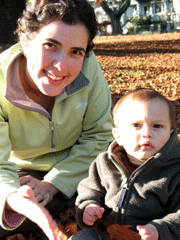
Kyla Epstein and son Max Suy-Epstein

Kyla Epstein and son Max Suy-Epstein. Photo C. Kimmett

Parents, be warned: It takes only a single visit to McDonald's for your child to get hooked on the greasy stuff for life.

Okay, so that's an exaggeration. But the three-year-old son of Angela Verbrugge still remembers his one and only meal under the golden arches. Which has Verbrugge worried.

And Kyla Epstein swears if her young son Max ever wants to eat there, he'll be doing it on his own dime.

These parents aren't raging against the health detriments of fast food. Instead, they are making a conscious effort to limit the amount of branding and advertising their kids are exposed to in all aspects of their lives; what they eat, wear, watch and play with.

It's not easy. Brands are everywhere -- literally.

Disney 24/7

Genevieve McMahon says she experienced an "eye-opening" moment the first time she bought disposable diapers for her newborn daughter Imogen, who was then too small for the cloth variety her parents preferred.

"We were unpacking them to put them in her drawer and realized there were Walt Disney Winnie the Pooh characters all over them," she says.

"It was at that point when we were like, oh wow ... it's everywhere. I mean, she's not even conscious and yet here they are advertising. I'm staring at it everyday. And eventually...she's going to recognize them."

Exactly. In her book Buy Buy Baby: How Consumer Culture Manipulates Parents and Harms Young Minds, Susan Gregory Thomas explores the widespread and controversial phenomenon of using spokes-characters in advertising to young children.

She describes one study in which toddlers are shown a made-up commercial with a mouse character. The researcher's hypothesis? If the mouse was seen eating a certain kind of cracker, when given a choice later, the child would choose those same crackers.

The study didn't support that hypothesis, but what it did demonstrate is the amazing capacity of young children for character recognition. What surprised the researchers is that many children were able to recognize the mouse later, even if they didn't appear to be paying much attention to the TV screen.

Plethora of Dora

"The chief piece of learning that very young children mastered from watching characters on television was the ability to recognize them," Gregory Thomas writes.

Epstein, for one, is clearly frustrated with this kind of character prevalence. She remembers trying to find a Spanish-language picture book for Max, 11 months.

"Everything was Dora!" she exclaims, referring to the popular Dora the Explorer animated kid's show about a 7-year-old latina girl and her friends.

"I don't want all his books to all be TV characters."

Licensed characters are huge moneymakers for companies. In 2005, Winnie the Pooh earned Disney $6.2 billion in retail sales, according to Gregory Thomas, second only to the mouse.

Verbrugge believes all of this merchandising is the real problem, not necessarily the characters themselves.

"They're trying to sell kids other products, from clothing to bedding...there always needs to be something else that they're striving to buy," she says.

"It scares me when I see advertisements that showcase all these different products that show the child being engaged with a toy," she says.

"They're saying all the right things in the voiceover about baby learning and interactivity...yet you just want to take that baby and turn him around to face the mom and have her play a simple game of patty-cake."

Parents as sitting ducks

All the parents interviewed said they feel targeted by advertisers, and indeed, the desire to make one's child happy is a powerful marketing tool.

Verbrugge, who used to work as a consultant on projects related to children's online activities, says she attended many marketing conferences as part of her job.

"It taught me how sophisticated marketers are in reaching people, and more and more how integrated marketing is in everything we see and do," she says.

"I think we're seen as consumers...how much wallet share do kids have, and how much can they influence our spending."

Yet the push to buy doesn't jive with the values these parents want to instill in their own kids -- values like critical thinking, individuality and sustainable living.

Finding the balance between what their kids want, what they need and what's available is difficult, say these parents. And they are the first to admit they are by no means perfect.

Off the wagon

"The only thing we can really do is in our home environments, in the environments we choose for our children," says Verbrugge. She and her husband request that friends and family buying for their three children steer clear of plastic. But when Verbrugge's father insisted on a plastic wagon for his grandkids, she figured the item wasn't worth a fight.

Epstein and McMahon both say they make these requests as well -- and they are usually heeded.

"For his first birthday, we said gifts are not necessary, no plastic and preferably previously-owned and wearable or readable," says Epstein.

At the same time, she says Max has toys she and husband Melvin would never buy, "but he loves them and a friend passed them on."

"It's not that I want to hide him in a bubble, away from all things Disney...it's just that I want to be there to have a dialogue with him, like my parents did," Epstein says.

Gabe Epstein, Kyla's father, says he and her mother "didn't buy brand-name stuff in those days."

The retired Grade 1 teacher says he regularly saw different trends and fads sweep through the school, but in his own class and home he tried to encourage individuality.

"While it lines the pockets of large corporations, branding undermines creativity and choices, in a sense," he says.

"[Diversity] encourages the capacity to create something different."

Hemp clothes, natural blocks?

This kind of dialogue is critically important for children, says Michelle Stack, an assistant professor in educational studies at UBC.

"I'm really concerned about the fact that rarely can children engage in play or interaction that don't involve commercial or don't involve getting their parents to buy something," she says.

"It's impossible for a kid not to be exposed to massive amounts of advertising even if the TV's off all the time -- it still requires a conversation."

Stack says children need help understanding that, although they may find pleasure in TV and other media, they are designed with a purpose and often that purpose is to sell products or ideas.

Resisting the urge to spend for the sake of convenience or pleasure is difficult for parents as well (especially when toting around a baby or toddler). And, as all the parents pointed out, often the "best" choices -- natural wooden blocks or organic hemp clothing -- are also the most expensive.

"The most challenging thing about making an effort to not brand your child in what they wear, or play with...is the fact that sometimes there aren't choices and sometimes the choices are economically out of reach," says Epstein.

'Not easy'

But, as McMahon says, the best parents can hope to do is try and live the values they want their children to learn -- for their sake and for the sake of the environment.

"I think it's really important to show the down side to it too ... in the sense that it's not always easy," she says.

"It's not always easy to be a one-car family, it's not easy to limit processed foods, to try to buy locally. But I think at the end of the day, you have to live the values that you want, that ultimately you want your children to have."

Tomorrow: Cough up the Halloween candy! A mom's first person account.

Related Tyee stories:

 [Tyee]

16  Comments:

  • anarcho

    29-10-2007

    Corporate tyranny...

    That parents have to work so hard to prevent their children becoming reflections of a bunch of commodities shows the totalitarian nature of the corporate system. When I was a child there was a bit of this but 90% of your life was free of it and you were able to actually be a child and invent your own pleasures and games.

  • Fii

    29-10-2007

    Long live Pooh bear

    Wow, Disney is doing well. I wore a Winnie the Pooh dress to my first day of grade one- in the mid 70s :)
    Good news is, I am in no way a brand-shopper. So that one indulgence of my mum's didn't turn me into a robot-thinker. As a matter of fact, we ate a lot of processed (ie convenient) foods when I was growing up, and my dad adored THE CAR (he still does). Nowadays I barely touch packaged foods with a ten foot pole and think of as many ways NOT to use my car as my dad does TO USE his. So in the end I think when children grow up and take stock of the world around them they come to their own decisions about how to live~ though it's true, in this day and age a little help early on can only be a good thing.

  • Jeffrey J.

    29-10-2007

    Beware logical fallacies

    While Fii makes a point (not all children are indoctrinated to the same level), it's the converse we're worried about. Far too many children are deeply indoctrinated, with little choice. Freedom means more than one choice, and with mass, commercialized consumerism, there is less and less. In particular, the world in the mid seventies was a very long way from today, and there is much less choice and much more branding than you might think. In the US, media concentration and ownership from the seventies until now has dropped from 50 major companies to four.
    Great article!

  • Working Memory

    30-10-2007

    Can't run, can't hide

    Parents can try their hardest to shield their children, but the the best defense is to raise them right and give them the intellectual tools to make good decisions.

    Because you can't be with your children every moment of the day you have to talk to them when they get home from school and find out what teachers have exposed them to.

    Olympics organizations figured out a long time ago that early imprinting is critically important and that the best place to do it is away from parents who would have a negative effect on their corporate branding campaigns.

    When you allow school boards to partner with Mcdonalds to sell the 2010 Olympics the task becomes much harder, if not impossible for parents to manage.

    A Big Mac is not the food of champions, but that is exactly what VANOC, your school board, our governments and McDonalds would like our children to believe.

    Any parent that volunteers or allows their children to volunteer respective of anything 2010 Olympics related deserves what they get.

    Click the links below if you're interested in what I wrote long ago in my blog about how insidious Olympics organizations are in schools . . .

    VANOC gives McDonalds access to school kids
    http://www.olyblog.com/f/06/McDonaldsF06052006.shtml

    Kids forced to volunteer for 2010
    http://www.olyblog.com/f/06/SchoolsCloseF10192006.shtml#SCHOOLS

  • Andrea from Bec...

    30-10-2007

    Avoiding branding

    As a parent, I find it an ongoing challenge to avoid character branding. I actually have to pay more money so that I can purchase gumboots, toothbrushes, diapers, toys, clothing and other items that don't have logos. Anything mass marketed has these blasted characters! Despite my best intentions, my preschooler knows Dora, even though we've never seen the TV show or purchased any Dora items. Character branding is pervasive. I'm a marketer, so I can see just how strategic character branding is. And that's why I avoid it.

    Andrea
    http://www.consultantjournal.com

  • ME2

    31-10-2007

    branding

    Well, I don't think prohibiting one's offspring from wearing branded clothing is the proper thing to do, since learning how to dress properly (and inexpensively) is such a big part of growing up, and thus choice should be voluntary.

    IMO, if one has failed to inform a child about how peer pressure influences various choices, and how fear of not conforming reduces one's freedoms, then the child has missed a valuable lesson.

  • oona7

    01-11-2007

    branding and our children

    I could not agree more with the content of this article. As the mother of 2 small girls, I am faced with these dilemas every day, especially as I personally find the prevalence of Disney "princesses" that are EVERYWHERE offensive. But I must say, the one thing I value most, is choice. More importantly, informed choice. And individuality means letting my children be the individuals THEY want to be, not the individuals I want them to be. I choose to limit what I can, but I engage them often in conversation about what the corporations that use "princessess" as marketing tools are doing. They have known from the time they were 2 that "people were just trying to make money off of them." I hope that by talking to them and discussing motives, both theirs and others, that they will grow up to be the free thinkers I am trying to raise.

  • funniously

    01-11-2007

    Real solutions exist! (And they're not in lifestyle choices).

    "The only thing we can really do is in our home environments, in the environments we choose for our children," says Verbrugge.

    Sorry, buy this is false. Here's a great quote from a book everyone in this forum should read:

    "One simple change in the tax code would do more to curb advertising than all of the culture jamming in the world. Yet these small, workable proposals are consistently ignored in favour of cultural politics, world revolution and other more glamourous pursuits."

    - The Rebel Sell: why the culture can't be jammed" (Potter and Health), p 220.

    All we have to do is lobby governments to tax (or even ban) advertising of this sort and the problem would greatly diminish. Eating no-name granola and buying wooden blocks may make you feel like a good person, but it won't change f--- all for society. Who's with me?

  • dorothy

    01-11-2007

    brand nothing, it's about DOING something

    It’s all about having something real to do with your life and not be so bored and aimless that you even pay any damn attention to the adverscreamers. Quality and the sense of it and the understanding of keeping your assets in your pockets for a REALLY rainy day come as natural consequences of having a life, and I don’t mean 'lifestyle' either.

    Children who are engaged in real pursuits have no time for stupidifying brand-name characters and their ‘merchandise’. So, it’s your time and caring, Moms and Dads, it’s your deep, unfailing interest and serious pursuits together with your children, that will save their souls and make then able to stand on their own feet.

    My own are now young adults, and they have been through the peer-pressure grinder, have had to stand up in class and elsewhere and have the courage of their convictions, sometimes ending up being hurt by the stupidified mobs, thereby learning the hard way, what kind of a whip these people are really under. At least two of them are firmly determined to never send their own kids into public school. How is that for failure to sell the goods?

    Nothing worth having comes for free, including the understanding and attainment of choice. It is not about 'feeling like a better person’, but about living that way because living any other way is no life at all.

    Amen

  • funniously

    01-11-2007

    Missed my point, dorothy

    Which was that, at the overall societal level, the most effective and rapid means of curbing, reducing or eliminating excessive advertising is to address it through tax legislation and regulatory limits.

    Lifestyle choices and good parenting alone are not sufficient enough to hold back the deluge of marketing most kids are subjected too. It's just too all-pervasive.

    To elaborate, excessive advertising is what philosophers and economists refer to as a form of "collective action problem". Specifically, once one advertiser starts putting Winnie the Pooh on diapers, then every other advertiser has an incentive to do so as well in order to maintain its own share of the available ad space, in this case diapers. Sadly, it's a bit like an arms race. Thus, the most effective solution is to eliminate the ability to put poor Winnie on the nappy in the first place. Yes, this reduces the freedom of consumers to choose between nappies with characters versus those without, but if that's the trade off for less advertising, then it may be worth it if we conclude that such ads are harmful enough. This is the policy choice to make or not make. (And we've done this before with other products, such as cigarette ads, so there's already a proven precedent.) So my point is, if this is an issue that matters to you and you want to see a reduction in advertising for ALL kids, not just your own, then your time would be best used in lobbying lawmakers to make the legislative changes needed to bring it about.

  • dorothy

    01-11-2007

    Its far worse than you think

    "...once one advertiser starts putting Winnie the Pooh on diapers, then every other advertiser has an incentive to do so as well in order to maintain its own share of the available ad space, in this case diapers."

    I did not not understand what you said. But it is a question of having been there firstest with the mostest. Kids who are used to look at quality pictorial expression will dismiss diapers with the poohbear and other such junk on them, not only because it is a scribbly little ugly set of pictures, but because healthy children are not childish enough to think the pictures look anything other than stupid and tasteless on diapers. Would it surprise you to learn, that children are born with a natural eye for harmony and good taste, which lasts until we warp it? There is far more here than what restrictive measures could take care of. You cannot swat flies in something this serious! We must question our whole culture, which gets away with feeding us tasteless garbage, because we are 'too busy' to stop and reset our cognitive faculties. Go into any shopping mall, close your eyes and pretend you just arrived from a faraway place, say, the unsullied west coast of Vancouver Island, wandering along the shore. Then open your eyes and really SEE what surrounds you, and how much of it is just plain UGLY, not to mention completely pointless. Why is it ugly? because those who made it or commissioned it can get the same amount of return on this as on something beautiful. Because not enough pople care enough. Lobbying politicians? They are themselves in need of a cultural detox and will understand nothing. Build a new model that will make the old one obsolete. Do it right around their ears. They won't see you. This is the borg collective. Only if they think you're a threat will they harm you. Learn to appear as not a threat. The main thing is, that this requires, as I said, a dedicated and sustained effort in supporting the good stuff in your children, which is their inborn gift from the norns, and help them reject the junk that surrounds them. It is only 'all-pervasive', if you sleep on your watch, or don't care enough. I do not have to care about other people's children, but their parents do. May they rot in Hel, if they don't. It is the whole idea of parenthood, that we must be the shield that allows our children to grow up straight, and in peace, =and become the best they can become. No matter what that takes. Once you're a parent, it is not about you any more, and it never will be again.

  • G West

    01-11-2007

    Amen

    Once you're a parent, it is not about you any more, and it never will be again.

    And it makes ALL the difference.

  • The discussion for this story is closed. No more comments can be added.