
- Mary Carlisle is a Tyee Builder. You can be, too.
- Prem Gill is a Tyee Builder. You can be, too.
- Nancy Flight is a Tyee Builder. You can be, too.
- Justin Everett is a Tyee Builder. You can be, too.
- John Westover is a Tyee Builder. You can be, too.
- Nora Etches is a Tyee Builder. You can be, too.
- Edward Henderson is a Tyee Builder. You can be, too.
- Bharadwaj Chandramouli is a Tyee Builder. You can be, too.
- Dean Chatterson is a Tyee Builder. You can be, too.
- Marius Scurtescu is a Tyee Builder. You can be, too.
- Robert Parkes is a Tyee Builder. You can be, too.
- James Murton is a Tyee Builder. You can be, too.
- Susan Doyle is a Tyee Builder. You can be, too.
- Vincent Strgar is a Tyee Builder. You can be, too.
- Helen Spiegelman is a Tyee Builder. You can be, too.
- Subir Guin is a Tyee Builder. You can be, too.
- Kimball Finigan is a Tyee Builder. You can be, too.
- Joanne Manley is a Tyee Builder. You can be, too.
- David Leach is a Tyee Builder. You can be, too.
- Joel Berger is a Tyee Builder. You can be, too.
Local Eating's Unlikely Capital
Devoted Powell River shrinks the 100-Mile Diet to fit its isolation.
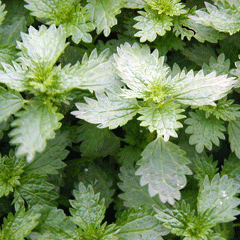
Stinging nettles: surprisingly edible.
100-Mile Diet
- Living on the 100-Mile Diet
- Wanted: A Perfectly Local Chicken
- A Local Eating Rhapsody
- Why We Pay Too Little for Well Travelled Food
- The 100-Mile Diet Goes North
- In Praise of the Lowly Pink Salmon
- Getting Canned
- Thanksgiving on the 100-Mile Diet
- With the Grain on the 100-Mile Diet
- The Incredible Expanding 100-Mile Diet
- End of Road for 100-Mile Diet?
- Local Eating's Unlikely Capital
- 100-Mile Diet's Winter Menu
- 100-Mile Chef Doesn't Have Cold Feet
- 100-Mile Diet: Hand Picked from the Blog
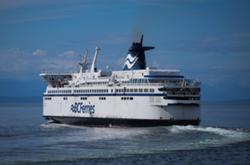
The 100-Mile Diet wasn't good enough for the good people of Powell River, B.C. No, living on a peninsula that connects to the outside world only by boat begs a different definition of local. A few quick measurements on the map and...the "50 Mile Local Food for Change Challenge" was born.
"As of this minute, there are more than 250 people signed up," said Lyn Adamson as I pulled up to the Powell River farmers' market for July's inaugural 50-mile potluck lunch in this town of 13,000.
Adamson, a key organizer for the challenge, had originally hoped to get 50 people eating food grown or raised within 50 miles for five weeks. Instead, Powell River has become the local-eating capital of North America. Participants sign a pledge to eat locally at levels ranging from 25 to 95 per cent (leaving enough wiggle room for a cup of coffee). The concept has taken off, involving local grocers, butchers and fish shops; four different restaurants now serve at least one 50-mile meal each week. In Powell River, there is suddenly a huge demand for food that has travelled barely three per cent of the typical distance conventional produce moves from farm to plate.
"The local farmers are scared," says Adamson with a chuckle. Can they even supply all the food suddenly required?
Farmers like Helena Bird of Hatch a Bird Farm, whose organic produce flies out of her stall at every farmers' market, are facing the challenge with gusto. According to Bird, there is already enough demand for at least five more farms like hers. With a local-eating movement, she says, that number could be even higher. And Hatch a Bird is no hobby garden -- the farm is home to five acres of vegetables; walnut and hazelnut trees; harvests of apples, pears, plums, cherries and berries; plus cattle, goats and laying hens. Helena's husband is a commercial fisherman of halibut and black cod. "We have to buy the feed for the animals, and that's it," she says.
The abundance that a single farm can produce never ceases to amaze me. For the 50-mile potluck, Bird has brought cream cheese and three litres of raspberry lassi. When I ask how many milkings it took to produce all that, Bird answers by telling me about the morning's work. From three cows, she took 13 litres of milk--and two of those cows were also nursing calves.
How hard is it to make cream cheese?" I ask, savouring the slight tang of her version.
"Well, first you have to milk the cow..." she says.
Damn. I knew it would be too complicated.
Slaughter rules impose industrialization
As well as possessing accomplished farmers, Powell River has no shortage of people willing to take a stand on food issues in general. It was the first community in Canada to declare itself free of genetically engineered crops, in 2004.
As well, the province's move to limit animal slaughter to centralized abattoirs by this coming September is controversial here. Residents strongly feel the pinch of B.C.'s hyper-regulation of small farms, which increases their operating costs in an already marginal area. Powell River's nearest slaughterhouse would be in Comox, a ferry trip away. Many small farmers are upset by this enforced industrialization for more personal reasons, too. As Adamson explained, there are farmers on the peninsula so concerned about animal handling that they hold sweetgrass ceremonies for their lambs and talk gently to calm each chicken before it is killed.
These gentle individualists are also challenging the argument that a town is too small or too isolated to make a go of local eating. No, it's not easy. But they are consistently turning up pleasant surprises: apple cider vinegar from the Comox Valley, bok choy, stinging nettle tea, fresh walnuts and hazelnuts, cherries as good as any from the Okanagan, "pastured poultry" raised according to the Label Rouge program in France, Muscovy duck, and such wild foods as fireweed, seaweed and mushrooms.
There were also rumours of locally grown wheat in Comox (we're waiting with bated breath for another source of local flour), while one participant has fallen in love with "noodles" made from long strips of zucchini. Sadly, we have yet to learn of anyone announcing the discovery of local wine.
Eat well and be studied
The 50-mile challenge will likely prove, too, to be much more than an isolated flash in the pan. Participants are having those "ah-ha" moments that will carry over a lifetime: one mentioned, in their e-newsletter, the shock of realizing supermarket strawberries came from the U.S. at the height of the local strawberry season.
As well, Adamson is studying the experiment as a part of a masters program at Royal Roads University, with 12 people intimately logging their 50-mile experiences and others joining in potluck focus groups. Meanwhile, the Courtenay Food Security Coalition is considering its own local-eating challenge modelled on Powell River's.
It just makes sense. At the heart of the 50-mile challenge is the big question faced by so many towns across B.C. (and indeed North America) that have been largely abandoned by the boom-and-bust industrial juggernaut of the 20th century: could there be a future in a community-based economy?
"Hardly any of our local farmers make a living off their farms," says Adamson. "What we're hoping is that if they feel enough consumer confidence they'll grow more -- or that people will feel confident enough to start a new farm." We, certainly, would never doubt that 250 people in a small town could change that place forever. Today Powell River, tomorrow the world.
Find out more about the 100-Mile Diet movement at James and Alisa's web site, here. Read the entire 100-Mile Diet series on The Tyee here. And look for more stories related to the 100-Mile Diet on The Tyee in the future. ![]()


14
Login or register to post comments
freebear
5 years ago
Comments on "Local Eating's Unlikely Capital "
Did anyone see the Nature of Things program on Cuba?
Urban gardens, pollution cleanup all combined. If you grow food locally also means have to have a healthy local environment.
Jroots
5 years ago
That was an enlightening program freebear. The part that resonates in my mind is that farmers in cuba make more $ than doctors.
All over the world and in our backyards are examples of better ways to do things yet were confined within the walls of the "BOX"...the election ballot box.
anarcho
5 years ago
Congratulations to the folks in Powell River. If this sort of thing catches on, small farming and local production will return and we will be much better prepared for when the Big Crunch comes as the oil runs out.
nvarner
5 years ago
The need for this sort of thinking is astounding. I am currently visiting my parents in Halifax, where, for the most part, getting locally produced produce at the height of the local growing season is frustratingly difficult. On a weekend trip out to the Annapolis Valley I was dismayed to find the majority of the produce in the grocery stores there, in the heart of Nova Scotia's agriculture belt, to be imported from all over the globe. When asked, the manager of one store seemed surprised that I was concerned, saying it would cost the customers too much to stock local produce, but they could purchase it from the vegetable stands near the farms.
One of the first obstacles we need to overcome is the belief that food purchased inexpensively does not have costs attached to it elsewhere. Some model of true cost economics applied to food production and distribution would benefit us all enormously.
Right to Bear
5 years ago
Escellent for the people of Powell River... Far sighted of you all...!!
When I was visiting a small fishing community on the coast of B.C., their grocery store was selling Thailand prawns. A friend of mine is a prawn fisherman from that community, and yet, unbelievably, lacked their support. I vocalized my disapointment to the store in hopes to make a dent in this issue. They said it was a little cheaper to buy the Thailand prawns... It should be noted, the Thailand prawns are raised in horrible conditions and live on humans waste, my friends prawns were wild...
We need more people working towards doing the 100 mile or 50 mile plan. It simply is right on so many levels...
Peace...
RTB
Right to Bear
5 years ago
Spelling, sorry..."Excellent", for the first word above...
RTB
Cycling Commuter
5 years ago
Huge factory farms cause a lot of harm besides the environmental damage from burning fuel to transport food over long distances. They also cause loss of essential nutrients during transportation and loss of nutrients due to selecting crops for their ability to physically withstand long-distance transport instead of selecting them for their nutrative content.
The Walkerton, Ontario drinking water contamination deaths were caused by animal manure from factory farms getting into the water supply. On small, mixed family farms, safely processed manure can be used as fertilizer for crops, reducing the need for petroleum-based fertilizers. Overly-focused factory farms produce massive amounts of manure and there's often no suitable nearby use for the stuff. A potential resource turns into a dangerous liability when it accidentally seeps into the water supply or is intentially dumped into the water after some level of processing. It's a scam when taxpayers in small towns are expected to ante-up huge amounts of money to build complex water filtration systems to deal with problems created by nearby factory farms. If the factory farms were required to pay for these water filtration systems instead of externalizing costs to others, mega farms would be less competitive and small family farms would be more competitive.
Rental payments from wind turbines located on family farms could also make small, mixed farms more viable. Ranchers in some U.S. states are already bringing-in more per acre from renting land to wind generation companies than they were making from farming. The rental income is a lot more stable than farm income. And farmering activities can continue beneath the turbines.
Cellulose-based ethanol could also help boost small farm viability through the conversion of corn stalks and other biowastes into fuel alcohol for farm tractors, local transportation, and for sale to oil refineries to be mixed with gasoline. Iogen of Ottawa recently received $27 million in investment capital from Goldman Sachs (world's largest investment bank) to commercialize cellulose ethanol using their direct process. Vancouver-based Syntec Biofuel turns organic matter into gas then moves the gas over a metal catalyst, which turns the gas into liquid fuel. Syntec hopes to have a full-scale plant up and running in three years. They plan to get 10 units of energy out of every one unit they put in. See: http://money.cnn.com/2006/06/22/news/economy/cellulose_ethanol/index.htm
The movers and shakers are taking ethanol very seriously. Even Bill Gates is investing big money. See http://money.cnn.com/2006/06/23/technology/futureboy0623.biz2/index.htm
Making ethanol out of cellulose farm waste and dead trees is brilliant. It's insane to make the stuff out of corn or other food crops. Either way, I hope the ethanol plants are built on a small enough scale so that once energy is extracted from waste material, remaining residues can be easily returned to the nearby fields they came from as natural fertilizer. The old moonshiners built small alcohol stills in their basements and they didn't even have low-cost microprocessor-based systems to constantly monitor and optimize temperatures, pH levels and so forth. With modern technology, small-scale distillation systems are even more feasible now.
Vancouverite
5 years ago
I'm all for local eating. I recently read Michael Pollan's "The Omnivore's Dilemma" and kept thinking "Yes, right on." But isn't there an argument for global responsibility? As in responsibility to poor farmers in the developing world whose livelihoods would be so much improved if they had access to our markets? What an irony it would be if finally all the trade barriers that keep them in misery were to come down, only for them to find out that North Americans have gone "local" and don't want their produce anymore.
adamw
5 years ago
Vancouverite:
Re: Global Responsibility
Not really. The key reason being twofold: one, the farmers are forced to prodcuce costly, inefficient products for western consumption, which results in two — a lack of affordable food in those developing — as in: dirt poor —nations where the food is produced.
Vancouverite
5 years ago
adamw:
Re: Global responsibility
Not exactly. They are poor because they don't have enough access to Western markets, not because they are too connected to them. Nothing would do as much to curb world poverty (e.g. in Africa) as the removal of trade barriers (in e.g. the E.U.). Currently, rich French farmers depend for their livelihood on the misery of destitute African peasants.
Vancouverite
5 years ago
Also: The Europeans have a much better and more established "local" food system than we do in North America. The result is much healthier, tastier, food. But it needs to be protected by trade barriers that keep the rest of the world (especially African peasants) in misery.
Frank
5 years ago
"They are poor because they don't have enough access to Western markets"
You know, I've heard that too from various sources, its (trade barriers) almost become a de rigueur explanation for world poverty.
But I no longer believe this to be the case. The farmers of the 3rd world are, more often than not, renters, not owners of the land. I doubt very much the average guy in Ghana wants to sell his crops to France so that he can buy some new furniture from IKEA. Would he not prefer to grow his own food from his own seed and feed his own family in the traditional manner? And any excess crops he has could be sold within his own country.
What is the case is that the elites, whether they be domestic or foreign, that control the land would prefer that that farmer produce food for western consumption. A trade relationship that they themselves would control and profit from. There is no room for the financial class to make a buck from subsistence agriculture. The money is in driving western farmers off the land by flooding them with cheap food imports from the 3rd world. The money that flows back to the 3rd world will not go into the hands of the farmers, it will go to those that control the land and the trade infrastructure.
I doubt the 3rd world peasant would be any better off if Cargill sold the food he produced from Cargill seed transported on somebody else's road with somebody else's truck to somebody else's ship. Especially after he paid his rent on that land.
Meanwhile how is it better for us for our farmers to be foprced off the land and into a life of welfare or competing for jobs in urban areas while their land gets bought by a developer, taken out of the ALR and condos put on it?
Yammer
5 years ago
Nice to see PR getting some coverage. My mother in law is signed up for this program. I asked about wheat -- remembering Mackinnon and Smith's forced weight-loss low-carb regimen -- and was advised that there is in fact a local wheat field and a miller who grinds the berries to order.
peefer
5 years ago
Vancouverite, there is no way for a third world subsistence level farmer to access supermarkets in BC. Plus, North Americans still pay the smallest portion of our income on food compared to the rest of the world.
However if the true cost were known we would gladly pay much more for local food. Do you ever wonder how food from Chile or Africa can be sold cheaper here than what's grown locally?
Cheap fuel is one reason. Exploitation of farmers by international corps. is another. There are many examples of farmers forced to grow different crops for export while suffering malnutrition because they cannot grow for themselves.