
- Mary Carlisle is a Tyee Builder. You can be, too.
- Prem Gill is a Tyee Builder. You can be, too.
- Nancy Flight is a Tyee Builder. You can be, too.
- Justin Everett is a Tyee Builder. You can be, too.
- John Westover is a Tyee Builder. You can be, too.
- Nora Etches is a Tyee Builder. You can be, too.
- Edward Henderson is a Tyee Builder. You can be, too.
- Bharadwaj Chandramouli is a Tyee Builder. You can be, too.
- Dean Chatterson is a Tyee Builder. You can be, too.
- Marius Scurtescu is a Tyee Builder. You can be, too.
- Robert Parkes is a Tyee Builder. You can be, too.
- James Murton is a Tyee Builder. You can be, too.
- Susan Doyle is a Tyee Builder. You can be, too.
- Vincent Strgar is a Tyee Builder. You can be, too.
- Helen Spiegelman is a Tyee Builder. You can be, too.
- Subir Guin is a Tyee Builder. You can be, too.
- Kimball Finigan is a Tyee Builder. You can be, too.
- Joanne Manley is a Tyee Builder. You can be, too.
- David Leach is a Tyee Builder. You can be, too.
- Joel Berger is a Tyee Builder. You can be, too.
China's Great Leap into Disaster
Inside the archival records of Mao's push to industrialize, and the catastrophic toll.
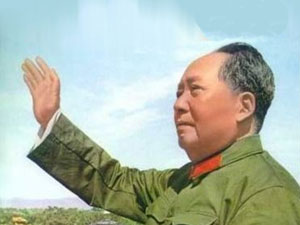
Mao Zedong: forward into disaster.
- Mao's Great Famine: The History of China's Most Devastating Catastrophe, 1958-1962
- Walker & Co. (2010)
Today we're comfortable with China. Communists in name only, its rulers pump consumer goods into our malls and lend Washington the money to run its wars. It seems to have at least a little influence over its lunatic client North Korea, and Canadians rejoiced when we became an acceptable destination for Chinese tourists.
Fifty years ago, however, what little we knew about "Red China" was disturbing. The Communists had been in power since 1949. They'd fought the West to a standstill in Korea, and they seemed to be more Stalinist than the late Stalin himself. Only the reddest of western fellow-travellers got even a glimpse of life behind the Bamboo Curtain.
We did know that in 1958 Mao Zedong had launched the "Great Leap Forward," an attempt to industrialize a huge and backward nation of peasants. But we had no reliable information on how it was working out, as I learned when I wrote an undergraduate essay about it in 1960. All we knew was what appeared in the English-language version of Renmin Ribao, the official newspaper. And it was clearly lying.
Plunging into a nightmare
Mao's government kept the rest of the world in the dark, but it kept careful records of what was going on. Some of those records were even accurate. Now the archives have begun to open, and Dikötter has explored them.
Reading Frank Dikötter's book now is a chilling experience. While we enjoyed the golden age of the young baby boomers, Mao was plunging 600 million Chinese into a nightmare of starvation, brutalization, and environmental catastrophe -- to make China more like us.
His specific goal was to match Britain's industrial production within a couple of years. To achieve this, he adopted some crank ideas about improving agricultural production to feed the new urban proletariat. They in turn would build factories cranking out enormous quantities of... something. The peasants, meanwhile, were called in from the fields to run backyard steel mills that recycled their own pots and pans. Every tree in sight would fuel those mills.
While rice rotted in the paddies, local party bosses reported bumper crops. Then they confiscated the "surplus" grain to feed the urban workers, leaving the peasants with nothing. Everyone now belonged to communes that decided who would be fed and who left to starve. Children were beaten to death for digging up a single potato.
A tyrannical anarchy
Within months, China became a kind of tyrannical anarchy. The government imposed impossible demands on its people, who survived by ignoring them. Racketeers flourished. Food was stolen or contaminated. New industrial machinery, bought from the Soviets and other nations, was neglected into uselessness.
Women were routinely raped, or prostituted themselves, for a handful of rice. Starvation caused many to suffer prolapsed uteruses: their wombs fell out of their vaginas. Parents sold their children for a couple of buns. In many regions, freshly buried corpses were dug up and eaten.
Meanwhile, the Communist elite was either silent or in denial about what it had done. But Liu Shaoqi, the number two man in the Party, visited his home town and was appalled at what he saw. Back in Beijing he publicly protested Mao's Great Leap Forward. That sealed his fate: Mao began to plan the Cultural Revolution that in the late 1960s tore apart the Communist Party itself, and that put Liu in prison where he died.
All told, Dikötter, estimates, the Great Leap Forward cost China somewhere between 30 million and 65 million lives in the space of four years. It depopulated and deforested huge regions, poisoned lakes and rivers, and impoverished the workers and peasants it was supposed to help.
As Adam Smith once observed, "There is a great deal of ruin in a nation," and Mao showed how much ruin he could extract from China. Despite this self-imposed catastrophe, China in 1964 exploded its first nuclear weapon. Two years later, Mao smashed his own party's political infrastructure through the Cultural Revolution, remaining supreme when Nixon and Kissinger came calling in 1972.
'To get rich is glorious'
China began to recover only after Mao's death in 1976 and the brief interregnum of the Gang of Four. Deng Xiaoping, who had supported the Great Leap Forward, became a casualty of the Cultural Revolution but eventually returned to power; he set China on its present course with the slogan: "To get rich is glorious."
China since the late 1970s has truly leaped forward. We've seen 30 years of astounding growth, 10 per cent a year or more. This time the numbers are usually real. China's population has doubled, and hundreds of millions have actually risen out of poverty into ownership of cars and condos.
But no person and no country could have survived the Great Leap Forward unscarred. Top-down communism and top-down capitalism get similar social results. In the pursuit of wealth, as in the pursuit of backyard steel, the same abuses appear: shoddy construction, lethal pollution of air and water, racketeering, exploitation of peasants and workers, contamination of food and consumer goods with everything from melamine to lead.
Whatever goal China's leaders set, the Chinese will achieve even if it kills them. In 2011 as in 1958, the end justifies the means -- and the deaths. ![]()


9
Login or register to post comments
anarcho
1 year ago
Be careful With this...
As an anarchist, I am certainly no friend of Maoism, but I would like to warn people about too readily accepting what this book proposes. I first read the 45,000,000 deaths in US propaganda 40 years ago. It is strange how his figures coincide with this. While the Nazis were meticulous bureaucrats and hence we have a good idea of the number who died in the Holocaust, this is not quite the same with generalizations about Maoist or Stalinist politically created famines. Furthermore, a Chinese American researcher who has spent time in the supposed famine areas claims that he can find no one with a memory of such an event. See http://www.monthlyreview.org/0906ball.htm
Now I am not claiming that theses famines didn't happen, but due to Cold War propaganda, it is sometimes difficult to separate truth from fiction. Furthermore, A Maoist famine of such magnitude is a good cover up of capitalism's own politically induced deaths, ie the 30,000,000 children who die annually lacking potable water and from malnutrition - easily rectified by spending 1% of the global war budget.
snert
1 year ago
China is a special case.
"Whatever goal China's leaders set, the Chinese will achieve even if it kills them. In 2011 as in 1958, the end justifies the means -- and the deaths."
Quite simply, it can't be judged using the same yardstick that's used for everyone else.
Mr. Kilian seems to have fallen into that trap.
fred-gherkin
1 year ago
Trying hard or hardly trying?
I don't know whether this is the result of a bad book review or a bad book reviewer, but for all of the inaccuracies in this single article one or the other must be the culprit.
It was Peng Dehaui, not Liu Shaoqi, that spoke out after having visited his home town. He did this at the 8th plenum in Lushan, not Beijing. He faced almost immediate retribution for this.
Mao will always be a controversial figure, but to simply write him off as a monster is simplistic and unfair. Mao had unfortunately already cultivated an atmosphere where dissent was not tolerated, which is part of the reason why local officials lied so thoroughly and readily about harvests. When Peng Dehaui did speak out, it was going against practically everything he'd read from the provinces and heard from underlings. What we can see is that, when Mao finally did get reliable information on the starvation, chaos, and deprivation that the policies of the GLF caused, that he was quick to change them (and by many accounts, terrible shaken by the horrors that he, largely unknowingly, caused). This is not meant to excuse Mao, who bears final responsibility, but is meant to inform people like the author of this review who are more than willing to simply call Mao a beast and be done with it.
Liu Shaoqi would be brutalized and murdered during the Cultural Revolution, but speaking of great leaps, the greatest would be to imagine that Mao was planning the Cultural Revolution from the Great Leap Forward, or that it was somehow a conspiracy to remove Liu Shaoqi. I could go on to argue about how even Mao was shocked by the severity and scale of the CR, and how no one, not even he, had control over it after a certain point.
The broad strokes we love to paint over the history of our 'enemies' is to the detriment of all of our understanding.
prairespark
1 year ago
rubbish scholarship
Be very careful with Dikotter. He is funded by the Chiang Chingkuo foundation, sort of about as neutral as a biography on Lenin funded by Glen Beck.
To start off with his book cover (the paperback edition) contains a academic deception. Dikotter uses a starving boy - but from a Life magazine article on a famine in 1946, well before the events described in his book are alleged to have happened.
Adam Jones, the renown genocide scholar has taken him to task for this:
http://jonestream.blogspot.com/2010/10/did-dikotter-misrepresent-famine-image.html
Secondly, the so called 30 million or 45 million deaths gives the impression that what happened during the Great Leap Forward was the worst thing to ever befall China, or any part of the world at the time.
This is clearly rubbish, even from the figures Dikotter, and other researchers like Judith Banister herself produce.
The trick is they calculate EXCESS deaths. That is the lower the 'normal' death rate one assumes, the higher the number of EXCESS deaths that one can calculate - and then call Mao a murderer.
Dikotter and others like Yang Jisheng cunningly assume a 'normal' death rate in China as 1/1000. Anything above this in the years 1958 to 1961, they assume as having being 'murdered by Mao'.
But 10/1000 is a figure that was normal for countries like the US, Sweden, and the United Kingdom at the time. Clearly it is completely dishonest to assume that in China, one of the poorest, most wretched lands on earth, a perpetual land of famine, where 90% of the population at the time were farmers had a 'normal' mortality of 10/1000.
Especially when urban Hong Kong of the 1930s had rates like 30/1000, India in 1960, rates like 22/1000, and Indonesia 23/1000. And Banister has confirmed figures of 38/1000 just 10 years ago for China in 1949.
So straight away if you applied what should be a normal death rate for a developing country at the time to China - ie about 22/1000,
prairespark
1 year ago
rubbish scholarship
Be very careful with Dikotter. He is funded by the Chiang Chingkuo foundation, sort of about as neutral as a biography on Lenin funded by Glen Beck.
To start off with his book cover (the paperback edition) contains a academic deception. Dikotter uses a starving boy - but from a Life magazine article on a famine in 1946, well before the events described are alleged to have happened.
Adam Jones, the renown genocide scholar has taken him to task for this:
http://tinyurl.com/2666ulz
Secondly, the so called 30 million or 45 million deaths gives the impression that what happened during the Great Leap Forward was the worst thing to ever befall China, or any part of the world at the time.
This is clearly rubbish, even from the figures Dikotter, and other researchers like Judith Banister herself produce.
The trick is they calculate EXCESS deaths. That is the lower the 'normal' death rate one assumes, the higher the number of EXCESS deaths that one can calculate - and then call Mao a murderer.
Dikotter and others like Yang Jisheng cunningly assume a 'normal' death rate in China as 10/1000. Anything above this in the years 1958 to 1962, they assume as having being 'murdered by Mao'.
But 10/1000 is a figure that was normal for countries like the US, Sweden, and the United Kingdom at the time. Clearly it is completely dishonest to assume that in China, one of the poorest, most wretched lands on earth, a perpetual land of famine, where 90% of the population at the time were farmers had a 'normal' mortality of 10/1000 (even accounting for different age distributions in population).
Especially when urban Hong Kong of the 1930s had rates like 30/1000, India in 1960, rates like 23.52/1000, and Indonesia 22.57/1000.
http://tinyurl.com/2crqsxx
Banister has estimated figures of 38/1000 just 10 years ago for China in 1949. Other researchers put KMT China at an average of 30/1000 per year.
Dikotter claims his actual number of deaths are gleaned from archival sources. OK lets take him at his word (which I am actually loath to do)
Dikotter claims 45 million 'excess' deaths over four years.
On average that is 15 million 'excess' deaths per year.
Very roughly China's population averaged at about 650 million over those years.
This calculates to about 17 / 1000 deaths per year, giving an overall crude mortality of 27 / 1000.
But straight away if you applied what should be a normal death rate for a developing country at the time to China - ie about 23/1000, you get only 4 excess deaths per year over what was normal for India and Indonesia.
This gives China, on average an excess mortality of 10.4 million over what would have been 'normal' for a developing country over the four year period of the Great Leap Forward.
Only if one believes that the communists phenomenally reduced the mortality rate in 1949 of 38/1000 to 10/1000 by 1957 can one get the type of outlandish figures that Dikotter comes up with.
prairespark
1 year ago
apologies
Hi, sorry I inadvertently posted twice. Much appreciated if you delete the first post.
Many thanks.
prairespark
1 year ago
GLF experienced conditions TYPICAL of prerevolutionary China
When people say tens of millions of people starved to death in a famine, that is not quite true.
What happened was there was a dramatic economic setback - which temporarily arrested the progress socialist China had been making in lowering mortality, in improving life expectancy, and for about 3 years conditions returned to what were typical of China before the revolution. Mortality thus rose, and some of these deaths no doubt happened due to starvation.
Let us look at the figures for mortality accepted by most researchers. Judtih Banister is widely regarded as the doyen of Chinese population studies. Here are her crude mortality rates (per 1000 per year) from 1949 onwards (adjusted for underreporting):
1949__________38
1950__________35
1951__________32
1952__________29
1953__________25.77
1954__________24.20
1955__________22.33
1956__________20.11
1957__________18.12
1958__________20.65
1959__________22.06
1960__________44.60
1961__________23.01
1962__________14.02
1963__________13.81
Note that the rates for Russia just before the WWI were on average about 32/1000.
A study on crude death rates in urban Hong Kong also showed crude death rates of about 32/ 1000 during the 1930s. http://tinyurl.com/2cn4uk4
So at a very rough guess we can assume that in the absence of war crude death rates in pre-revolutionary China would have about say 35/1000 - the rate of death in 1950, just after communists had taken power. At the time China was 90% rural, and mortality statistics would likely have been worse than those of urban Hong Kong.
Now look at the mortality figures for revolutionary China. In the whole history of revolutionary China, the assumed typical mortality of old China was exceeded only once. This was in 1960, when Banister from her computer model, 44/1000 (compared to 35/1000 for prerevolutionary China)/
Even during the years 1958, 59, & 61, also considered 'famine' years, death rates were in fact far lower than the rates of China before the revolution, and were, as per my previous post, were about the same as developing Asian countries like India and Indonesia.
Only 1960 is an outlier. Using Banisters figure one calculate a rough excess death number of ((44-35)/1000) * 650 = 5.85 million (relative to pre-revolutionary China).
This is actually the type of famine that occured frequently in pre-revolutionary China, and is the size of a famine in 1936 (about 5 million).
Note that in 1960, Roderick MacFarquhar describes China as being hit with the "worst natural calamities in a century."
China was also struck by more typhoons in 1960 than in any other year in a half century.'
http://tinyurl.com/3xg5t64
prairespark
1 year ago
GLF most definitely NOT China's greatest catastrophe
Dikotter says the GLF was the 'worst catastrophe' in China's history. Clearly this is ridiculous, and is just hyperbole to advance his agenda.
The average mortality over the GLF period was 27.58 / 1000. In the days of pre-revolutionary China, the average mortality was 30 to 35 / 1000.
That is on average old China had 3 to 8 more excess deaths per year than during the GLF.
This means proportionally less people died during the four year GLF period, than any other single four year period in pre-revolutionary China. And this was revolutionary China's very worst period.
Far from using the GLF period, tragic as it was, to condemn China's socialist transformation under Mao, the communist should be praised for making the conditions of the GLF atypcial of New China, not typical as they were before the revolution.
anarcho
1 year ago
Dikotter is doubly suspect
I just found that he had also written a book on the Opium Wars exonerating the British. Seems the Chinese are to blame for opium addiction and actually opium isn't so bad, anyway!