Europe as Private Health Care Model? Not Again!
Strap in for another wish-fulfilling 'fact-finding' tour.
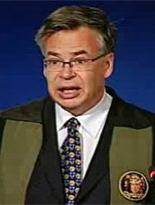
Frequent flyer: Dr. Robert Ouellet, president of Canadian Medical Association.
It's déjà-vu all over again: Dr. Robert Ouellet, president of the Canadian Medical Association, is setting out on a "fact-finding mission" to learn about European health-care systems, specifically their private insurance and their for-profit delivery systems. All of this to fulfil his wish for the private sector to provide "complementary support" to Canada's universal health-care system.
But if he really looks at European health-care systems, what is Dr. Ouellet going to find?
He will find that with few exceptions, European nations spend more on publicly funded care than Canada. In Canada, governments pay for 70.2 per cent of all health services compared to 83.6 per cent in Denmark, 79.9 per cent in France and 87.1 per cent in the United Kingdom. This is because many European systems cover more services, including medications, dental services, eye care and home care.
He will find systems with less emphasis on unproven high-tech diagnostics and specialty care and more emphasis on robust primary care networks and ensuring community-based access to family doctors, nurses and nurse practitioners. He will find that few countries in the world pay their physicians as much as Canada, which is why they can afford to have more doctors.
Are these the lessons the CMA is setting out to learn? Or are our medical leaders simply looking for another way to promote more commercialization in health care, by twisting the ways in which private insurance and corporate for-profit delivery would meet their own agendas?
Canada needs its own model
And where do the European models fall short in terms of helping Canadians with the problems we face?
Europe has little to teach us about improving access for geographically dispersed Canadians in a huge land, and even less about providing health care to First Nations people, who have among the worst health outcomes in the country for complex reasons, none of which would respond to health-care commercialization.
Furthermore, greater involvement of the private sector would do nothing for Canada's rural communities, nor for the 4 million Canadians, many of who are lower income, who do not have a family doctor.
Access to primary care is among the best means to promote healthy living and prevent diseases such as Type 2 diabetes and certain cancers. Community-based care can also reduce emergency-room queues and hospital wait times considerably. Last year, the Health Council of Canada reported that 41 per cent of people with chronic illness seen in Canadian emergency rooms had a problem that could have been addressed by a family physician, had one been available.
Introducing alternative networks of private for-profit care would further jeopardize those who do not have access to a family doctor. With roughly one family doctor for every 1,000 Canadians, how can any approach that encourages doctors to spend precious time providing boutique services to the wealthy possibly improve access for the vulnerable or even the middle class?
What's more, for-profit delivery costs more than non-profit delivery. Can we really expect Canadians or provincial health authorities to swallow higher billing costs from the private sector in the midst of an economic downturn?
Making our system better
What is needed instead is a made-in-Canada approach to training health professionals for communities in need. Our medical education system is beginning to re-orient itself towards social accountability rather than simply continuing to train more specialists for urban centres. Canadian medical schools are working to increase their enrolment, with UBC doubling its numbers in the past five years, and enormous work is being done to recognize the credentials of internationally trained physicians.
Initiatives at the Northern Ontario School of Medicine and elsewhere are designed to train doctors for rural communities, and to work in interprofessional teams. Changes to admissions policies that select students more likely to choose generalist careers can also help.
But the impact of commercialization on medical education can be extremely detrimental. Private corporations are interested in making profits, and learners slow down throughput. The Canadian Federation of Medical Students has stated that with increased privatization, "practices may face disincentives to provide the time and resources necessary to deliver quality training for future health-care practitioners. This would come at a cost not only to the quality of education achieved by Canadian health-care graduates, but would impact the quality of health care delivered in the future to Canadians."
We hope that the president of the CMA can appreciate that Canadians want solutions to problems like wait times and doctor shortages -- solutions that are consistent with Canadian values. Perhaps he will focus on the lessons he can learn from Europe that reinforce medicare rather than finding ways to advocate for more private-sector involvement, an option Canadians keep rejecting but that is offered to them over and over by those who have something to gain.
Related Tyee stories:
- Europe's Health Reforms: Hard Lessons (series)
An investigation into health care reform issues in European countries Premier Campbell visited in 2006. - Gordo's 'Conversation' Takes Surprising Twist
Public health care endorsed at Vancouver Board of Trade event. - BC Health Spending Exploding? Don't Believe It
The real story is a provincial budget skewed by deep cuts to welfare, local government and transportation.


24
Login or register to post comments
Van Isle
3 years ago
Back a number of months ago
Back a number of months ago PBS had a program on health care in Great Britian, Germany, Switzerland, Japan, on Taiwan. The whole theme of the program was about how those countries changed from a system that was failing and on how they fixed it. Taiwan was the one that got my attention; they sent out their wise and learned people to the world and were told to come back with a medical system that would work for them. Just guess what country was the model that those wise and learned people wanted to adopt, of course with some variations? Why Canada, of course. Taiwan implemented the new system and is working alot better than what they had before. Now the thing that stuns me is that we had a very expensive study and report done a number of years ago on how to fix our system for Canada and it's being ignored; Why?
morechatter
3 years ago
Will Obama's Plans for Health Care Have an Impact
On Canada's Health Care System especially since it is an American the Feds are using to get feedback and recommendations. And of course many Doctors living in the USA are taking a wait and see attitude as to Canada's antiscipated change over to private. Obama talks of universal health care and I know it will take some talking and doing before that is ever realized but would it not impact Canada greatly as doctors will not be so quick to leave the country for profits. Although they certainly all don't but they often do live in the USA also.
BC Mary
3 years ago
Canadians do it better so stay home Dr Ouellet
One of my rels, with a Canadian Ph.D. in Public Health Policy, is constantly on speaking assignments to every corner of the world on the subject of Public Health policy.
Why do you suppose that is ... because Canada is so bad at what it does? Nope, I don't think so.
Dr Ouellet is fooling nobody with his European junket. He should be embarrassed, to be taking money from the Health Care system and throwing it away on his ill-considered voyage of discovery. What a negative message for the doctors and nurses working here.
I would think better of the silly man if he changes his mind and decides to tour within Canada , determined to build up confidence, teamwork and efficiencies within the system we have.
SharingIsGood
3 years ago
Romanov report
Van Isle, you asked why the expensive [Royally Commissioned] report is being ignorred.
For those who cannot remember its name, it is: "Building on Values: The Future of Health Care in Canada – Final Report"
Published in 20002, it can be found by cutting and pasting the above title into your search engine or by going to:
www.cbc.ca/healthcare/final_report.pdf
Personally, I think Romanov was such a popular guy that this was a way to keep him occupied thus giving the public the impression the government wanted to improve health care. It is my hunch that those involved in Federal politics did not want Romanov to throw his hat into the Federal ring - they could kill two birds with one stone! I have never heard a government comment upon it since it was published. The report (like Romanov) has been left to wither by both, the Liberals and the Conservatives!
canuck
3 years ago
shuffling off into expensive
shuffling off into expensive institutional care.
What's needed for Canadian seniors to stay healthy is be in their homes with community care access centres (CCACs) attending to their needs. However, the problem currently with CCACs is they're top heavy with administration and don't pay caregivers a reasonable wage. Nor are the same caregivers sent to the same home. Caregivers aren't trained and often don't speak English. CCAC cheats seniors from quality care just as the system understaffs long-term care facilities that are dirty. Hire fewer administrators and more attendants!
Most seniors want to stay in their homes, if possible, cook their own meals or at a minimum have access to Meals On Wheels. Seniors with higher needs do need attendants to come to bathe them and tidy up their living quarters. It's much cheaper for governments to provide services that allow them to stay in their homes than have seniors wasting away in long-term care facilities. Why is the most expensive solution always sought?
canuck
3 years ago
Oops ...
beginning paragraph should read, "And Canadian seniors don't want shuffling off into expensive institutional care."
margot
3 years ago
unproven high-tech diagnostics
Martin and Huish mention my pet misgiving about health care in Canada: far too much use of woowoo machinery, often when an educated glance would suffice.
Their claim, that Robert Ouillet "will find systems with less emphasis on unproven high-tech diagnostics", is worth a piece on its own. I think we over-use gamma cameras, we have far too many, and I have yet to read anything credible about what happens when Tc-99m's six hours are up and it is Tc-99 with a half life of hundreds of thousands of years. It does not go away. It can lodge, emitting beta-particles, in patients' bodies for far longer than six hours, and then it's in sewage, where treatment does nothing to alter it all. And then? How long can this process be used before certain lakes etc. are in trouble.
Luke Skywalker
3 years ago
Social Democratic Europe....
Many (most?) European countries have a "parallel" health system as an adjunct to the "government" system.
Germany, Austria, Switzerland, France, the Benelux/Scandinavian countries, etc.
The moderate social democratic movements within Europe approve and engage in this dual system, which provides patients with much better results than the Canadian system, esp. in terms of wait times.
OTOH, here in Canada we have a system comparable to Cuba and North Korea. Too much idealogy and dogmatism prohibits Canada from moving toward the social democratic "parallel" system of Europe.
OilbertaRedTory
3 years ago
Santé !!
If only we had the European coverage :
http://www.oecd.org/dataoecd/52/33/38976604.pdf
but the demand for private clinics is almost exclusively a function of Europe's class structure.
The strategic trap being set by privateers for Medicare advocates to avoid is defending a stressed system. Demonstrating better public solutions rather than arguing principles (such as 'choice' or 'freedom')
A closer comparison is between Canada and Australia ; small population, highly urbanised, large geography, federal structure, mixed public-private systems. We can learn from their mistakes :
http://www.canadiandoctorsformedicare.ca/English/AustraliaHurleyParallelPrivateHealthInsuranceinAustralia.pdf
realisticman
3 years ago
van isle...
You sure about Taiwan? Looks like it's mixed, just like the rest of the world; excepting, of course, Cuba, North Korea and Canada.
At least here in Canada we don't make our pets suffer with socialized medicine.
"ACCESS TO MEDICAL CARE January 2008
For both short-term visitors to Taiwan, and long-term residents, urgent or elective medical care is readily available in four different settings: priority care clinics that cater to foreign visitors, emergency rooms, hospital outpatient clinics, and private doctor's clinics. Without question the most convenient place for privately insured Americans who don't speak Mandarin is in one of several western style clinics. Hospital based outpatient clinics, while frequently boasting very good doctors, will differ dramatically from Western notions of privacy and the doctor-patient relationship. Health care is generally much less expensive than in the United States. However, priority care centers for Westerners are more expensive - though generally cheaper than similar care in the U.S. Wherever you seek care, it is always pay as you go. If you are privately insured you must submit your own receipts for reimbursement."
margot
3 years ago
system comparable to Cuba
It's a long time since I was in Cuba, but I see no reason for drastic changes to have taken place in Cuba's system.
First, there was triage. If you presented a mild problem, or an unexplored problem, or just an uneasiness, you went to someone trained,in your own neighbourhood. This person decided if you needed a cup of tea and lots of listening, or more highly trained listening. And so on, several steps up the scale.
We don't have this in Canada. If you sneezed funny, had trouble sleeping last night, if you are talking about your health details but really need listening to about something else, hey, whoosh, you go straight to doctor, top of the scale.
It does not take a doctor to perform a PAP smear, for example. Good listeners with a few months' intensive training could be doing a lot of routine tasks. When are Canadian doctors going to admit they are stressed and overworked because they insist upon being the only people who can perform procedures that are the medical equivalent of singing Happy Birthday.
We are also overtreating people because we revere routine screening, the wrong kind of stats on early diagnosis, and "awareness" weeks that drive people to seek treatment they seem to have qualified for.
And because doctors don't have time to persuade Mrs. or Mr. Smith that a good walk, even in the rain, might fix everything, the overprescription of pharma in Canada is phenominal.
margot
3 years ago
ok phenomenal
I am forgetting how to spell. No I don't need Alzheimer meds, it's just normal.
realisticman
3 years ago
margot
"And because doctors don't have time to persuade Mrs. or Mr. Smith that a good walk, even in the rain, might fix everything, the overprescribing of pharma in Canada is phenomenal."
Very true but how do you get people to stop running to their doctor so frequently when it's completely free? Shouldn't there be a nominal charge to encourage more recreational walks outside, instead of drives to the doc?
OilbertaRedTory
3 years ago
Realistic Taiwan
Universal single payer system in Taiwan:
http://www.nhi.gov.tw/webdata/AttachFiles/Attach_8819_1_77-88.pdf
Public/Private mix in medical service systems:
see OECD link in prior post.
User fee experiments always fail
... or we can take our 'realists' to the vet.
"He was distinguished for ignorance; for he had only one idea, and that was wrong. "
Benjamin Disraeli
realisticman
3 years ago
France is always cited as No.1
No wats but not completely free.
"In France all medical treatments from a routine visit to a GP to major surgical procedures have a tarif (cost). Medical practitioners and hospitals/clinics that adhere to this official tarif de convention are defined as conventioné. Those that do not are defined as non-conventioné and can charge what they like, although they do have to display their prices. If you go to a non-conventioné you will have to cover the extra cost yourself. "
http://www.frenchentree.com/fe-health/DisplayArticle.asp?ID=197
"Constant development is the law of life, and a man who always tries to maintain his dogmas in order to appear consistent drives himself into a false position."
Mohandas Gandhi
Frank
3 years ago
Luke and R'man
Admit it, you guys didn't bother reading the article again did you?
I'll quote the relevant passage
"He will find that with few exceptions, European nations spend more on publicly funded care than Canada. In Canada, governments pay for 70.2 per cent of all health services compared to 83.6 per cent in Denmark, 79.9 per cent in France and 87.1 per cent in the United Kingdom. This is because many European systems cover more services, including medications, dental services, eye care and home care."
Sounds like Denmark, the UK and France are the new "Cuba and North Korea".
OilbertaRedTory
3 years ago
Reality ; evidence-based
The recent development of user fees for medical access in France will fail. (like Saskatchewan's seven year user fee experiment 1968)
Interestingly, France has moved since 1990 away from employee contributions through social security toward the Canadian tax-based model in order to reduce its deficits.
Even so, the private medical sector in France is smaller than in Canada's (... identical to Cuba? North Korea ?)
http://www.pubmedcentral.nih.gov/articlerender.fcgi?artid=2244666
... and here (esp pgs 76/77) :
http://www.euro.who.int/document/e83126.pdf
Waiting lists are a function of human resources and management - not delivery model :
http://www.policyalternatives.ca/documents/BC_Office_Pubs/bc_2007/why_wait_surgical_waitlists.pdf
Nothing is so unbelievable that oratory cannot make it acceptable.
Cicero
Birch
3 years ago
Doctor's salaries
One hesitates to criticize a value that has been elevated to the sacred by the Right Wing press over the past few decades: making lots and lots of money!
Once there was a time when people worked because not only did it provide a living, it was also satisfying for the worker, who perceived that he or she had done something useful and beneficial to society.
This purportedly naive view has gradually been eroded and replaced by a "smartest guys in the room" philosophy. Under this ideological regime, you're smart if you work very little and manage to screw the rest of society out of vast sums, allowing you to enjoy a proportionally opulent lifestyle at others' expense.
Doctors have not been immune to this altered creed; after all, most of them grew up with the same ideological forces at play that the rest of us face.
Of course, doctors should be well-paid, better than an average worker with less training and perhaps less important work to do. But the notion that doctors somehow need to improve their financial living standards beggars belief. When the yearly return on their stock portfolios is greater than their salaries, which in turn are vastly higher than average, isn't that enough?
Further privatization is simply pandering to greed. Because it's in medicare, we're rather more coerced into agreeing to such demands, but it's hard to find much sympathy for them.
G West
3 years ago
Well put Birch
Maybe a factor of 10:1 - on the salary ratio...be much better for everyone.
And you're right, privatization won't solve anything.
realisticman
3 years ago
User Fees...
...are not so bad. Who hasn't been in pain in an emergency room and seen people go through there with an ailment that should have been treated in a simple clinic?
Why shouldn't those with the means go to a faster-service clinic and thereby relieve and speed up the free system for those who need it?
The added costs of waiting for simple surgery by even those that can afford otherwise, in the free system costs everyone in pain and loss of productivity.
OilbertaRedTory
3 years ago
the UserFee Zombies will die ...
... with repeated blunt trauma to the cranium.
For those who have moved beyond the geo-centric universe and the regular use of leeches to re-balance the humours, quality improvements in Medicare have been demonstrated all across Canada resulting in lower costs within the public system :
http://www.michaelrachlis.com/pubs/Prescription%20for%20Excellence%20pb%200412.pdf
Private market 'solutions' repeatedly fail because medical services are not a free market - they are a compulsory market.
zalm
3 years ago
The Real Rx
Nice one, OilbertaRedTory. Send 'em back to their Strauss textbooks.
But your header is actually a prescription frequently administered to families who interfere inappropriately with care to their loved ones in a variety of ways. The Rx actually reads "Cerebro-cranial application of dimensional lumber p.r.n. until attitude changes."
It's a Rx that needs to be more often administered to Asian families with loved elders dying painfully of every disease under the sun, who think it's respectful to demand that every last lifesaving measure be given to their elders without regard to how much pain it might cause or how little quality of life they will have left in a morphine fog, never mind how much money it costs.
The wife's cared for a patient with terminal lung cancer who was given one additional painful day of life with a "heroic measures" order by the family that resulted in broken bones, a single dose of very expensive medication, and another day in an ICU bed with the ministrations of the team at a cost of perhaps $12,000. This resulted in a "blocked bed" (prevented admission) for a needy patient that had to be transported to another ICU in another region for treatment. Nobody could talk the family out of it, and they threatened lawsuits if it didn't happen.
This was before on-call ethicists, of course, but I venture to say that this one case would cost more than 30 days of Class 4 admissions (hangnails, etc.) in the ER, which aren't as common as you might think...
SharingIsGood
3 years ago
What a hoot!
The Rx actually reads "Cerebro-cranial application of dimensional lumber p.r.n. until attitude changes."
Zalm, I laughed out loud over this one.
OilbertaRedTory
3 years ago
A Rx for Excellence ...
... that can be administered regardless of ethno-linguistic ancestry, socio-economic status or gender.
"The art of medicine consists of amusing the patient while nature cures the disease."
Voltaire