Opinion

NDP's Carbon Math Is Wrong

But trying to chase the real numbers can drive you bonkers.

By Tom Barrett, 7 Aug 2008, TheTyee.ca

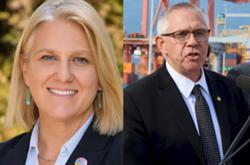
Shane Simpson

NDP environment critic Shane Simpson.

I'm warning you, folks, stay away from the carbon tax debate.

It will drive you crazy.

You will hear people make arguments about the carbon tax and you will expect them to make sense and then you will realize that they don't make sense and you will start screaming like a debutante in rehab. You will try to make numbers add up and you will realize that they don't add up and you will punch the buttons on your calculator until you end up gibbering like a Sterno-swilling bonobo.

People are saying things about the carbon tax that aren't true. They are saying things that are kinda sorta maybe almost half-true. They are saying things that are going to rattle around inside your brain until you feel like you've snorted up a swarm of hornets.

I write a lot about the carbon tax. This means reading a lot of numbers about greenhouse gas emissions. Sometimes these numbers seem at first like they don't add up but then they do, kind of.

Sometimes these numbers really don't add up, though. And because I am a guy who likes logic and order, this bugs me. Like having a picture on your wall that just ... won't ... hang ... straight.

The figure 2.8 per cent is a number that bugs me.

The New Democratic Party likes the figure 2.8 per cent. They use it a lot when they talk about the carbon tax.

"Even the Campbell government admits that the fuel tax will barely make a dent on our overall emissions, reducing them by only 2.8 per cent by 2020," the NDP says in its climate change framework, released in June.

Opposition leader Carole James keeps repeating that annoyingly precise figure of 2.8 per cent when she kooks out on the carbon tax.

There are only two things wrong with 2.8 per cent:

1) The government has never used it.

2) It's based on weird NDP math.

Turns out the number they should be using is closer to four per cent.

Why it matters

So, you say, who cares? What's a few percentage points in the grand scheme of things?

You're probably right. Trying to fact-check a B.C. political debate is kind of like being the referee in a fencing match between two guys using chainsaws. You tend to get the feeling that you shouldn't worry too much about the fine points.

But let's just assume for a minute that facts and numbers count for something when we're discussing public policy. Even little numbers. Ones like 2.8 per cent.

And let's assume that it's important to know what the government did say about the impact of the carbon tax, back in last February's budget.

According to the budget:

"A preliminary estimate by M. K. Jaccard and Associates suggests that in the absence of other GHG reduction policies, the carbon tax could reduce BC's GHG emissions in 2020 by up to 3 million tonnes of CO2-equivalent annually."

You'll note some heavy duty qualifiers there. The tax "could" reduce emissions by "up to" three million tonnes. Presumably, it could reduce emissions by a lot less. I've been trying to get someone in the government to explain this sentence to me for more than a month. So far no luck.

So maybe it won't really be three million tonnes. But Opposition environment critic Shane Simpson told me that three million tonnes is what the NDP chose to work with when they calculated their 2.8 per cent figure.

How the NDP did its math

I've outlined the details in all their brain-cramping glory in a sidebar that runs at the end of this story. But here's the short version:

That 2.8 per cent is based on an NDP estimate that puts "business as usual" emissions in 2020 at about 105 million tonnes, Simpson said. That's the total amount of greenhouse gases that we'd be emitting in 2020 if we don't change our ways.

The NDP calculated that figure based on an apparent belief that the government's climate change targets call for a 33 per cent emissions reduction from those 2020 business-as-usual levels.

In fact, the targets call for a 33 per cent reduction from 2007 levels. This makes a significant difference when you do the math.

Calculating the impact of the carbon tax using various 2020 estimates produced by environmental groups and the B.C. and federal governments suggests that the carbon tax could bring an emissions reduction of up to approximately four per cent, rather than 2.8.

The 2.8 Per Cent Solution, Isn't

The NDP's 2.8 per cent is a curiously precise number for something that's based on an extrapolation of a conditional forecast given as a range of numbers describing something that could happen in 12 years.

It's good to keep in mind that all these numbers are estimates, based on a lot of assumptions that will change with the price of oil, the growth of the population and the health of the economy.

Depending on which set of assumptions you choose, the carbon tax could cut up to 3.5 per cent of total 2020 business-as-usual emissions. Or it could cut up to 3.75 per cent. Or it could cut up to 3.8 per cent.

Better to round it off and remember that "up to" means "could be less."

Anything else starts to look a bit like what they call false precision.

-- Tom Barrett

NDP off by 25 per cent

Now, this might sound like a lot of quibbling over a few percentage points. But, aside from the questions this raises about the NDP's understanding of climate change targets, it's worth noting that 3.5 -- the carbon tax reductions as a percentage of the highest business-as-usual number given by the province -- is 25 per cent greater than 2.8.

And, to put those three million tonnes in perspective, they are about eight per cent of the government's reduction goal for 2020, as calculated by the NDP.

Compare them to the 1.6 million tonnes in annual reductions the government expects to get from doubling transit ridership by 2020, a goal that Simpson said the NDP supports.

The projected annual emissions savings from the carbon tax, which Simpson described as "minuscule," are almost double the projected cuts from massively expanded transit, which he said is an important part of fighting climate change.

What are they trying to poll?

And it's not as if this example of fuzzy math is the only confusing aspect of the NDP's attack on the carbon tax.

An NDP-sponsored poll released last week found considerable opposition to the carbon tax.

Respondents were asked if they agreed with the following statement: "With the government's $100 climate change dividend, most British Columbians come out ahead on the tax."

Most people disagreed.

Then they were asked what they thought about this one: "It is unfair that major industrial polluters don't have to pay the carbon tax, while ordinary consumers do."

Most people agreed that this was unfair.

Their responses are understandable. Both questions echo NDP rhetoric used in their "axe the tax" campaign against the carbon tax. And both, to put it charitably, could lead to confusion about the facts.

The first question might easily be taken to mean that the $100 dividend is the only money British Columbians are going to get to offset the carbon tax. There's no mention of the offsetting tax cuts.

And someone listening to the second question might be forgiven for thinking it means that industry doesn't pay the carbon tax. In fact, virtually everyone in the province who burns fossil fuels will pay the tax -- businesses and consumers alike. According to the government, two-thirds of all carbon tax revenues will come from business -- a figure that no one has challenged to my knowledge.

'Just plain wrong'

Economist Marc Lee, of the Canadian Centre for Policy Alternatives, has written about the NDP's tendency to muddy the debate.

"I have been frustrated that the NDP continues to play the carbon tax as not applying to industry," he writes.

"This is just plain wrong."

About 70 per cent of B.C.'s emissions come from burning fossil fuels. Some of the rest comes from agriculture and from landfills.

Then there are the gases described by a coalition of environmental groups as "emissions released intentionally or unintentionally during the production, processing, and transmission of fossil fuels in the oil and gas sector, such as leaks from natural-gas pipelines. Another example is the production of lime in making cement, which has carbon dioxide as a byproduct."

The groups figure these gases total about 16 per cent of all emissions. They aren't captured by the carbon tax; the government intends to regulate them under a cap and trade system that involves three other provinces and seven U.S. states. There's also a possibility these emissions will be included under the carbon tax once the government gets a better handle on how to measure them.

These industrial emissions are a significant part of the problem, to be sure. But that's not the same as saying that "major industrial polluters don't have to pay the carbon tax, while ordinary consumers do."

Crazy, isn't it?

SIDEBAR:

STILL WITH ME? TIME FOR SOME CARBON NUMBERS HOMEWORK

To understand the NDP's math, you have to know a bit about how greenhouse gas emissions targets are calculated. This is where the story starts to read like homework.

By provincial law, B.C. must cut its emissions by 33 per cent below last year's levels by 2020.

Unfortunately, we don't know yet what last year's levels were. We can guess though: probably they'll fall somewhere around 65 million tonnes.

If that turns out to be the right number, then the government will have to get emissions down to about 44 million tonnes -- 65 million minus 33 per cent.

But to do that, the government will have to do more than just cut 21 million tonnes of greenhouse gases. Without policies designed to cut emissions, economic expansion and population growth would cause a steady increase in emissions between now and 2020.

The number that forecasts what will happen if we don't change our ways is called a "business as usual" figure. The total amount of emissions that have to be cut equals the business-as-usual figure minus the 44 million tonne target.

There have been a number of different estimates of that 2020 business-as-usual figure. Numbers from the government and other sources range from 78 million tonnes to 85 million tonnes.

It's this 2020 business-as-usual figure that the NDP uses as a benchmark when it says the three million tonne reduction from the carbon tax will cut emissions by only 2.8 per cent in 2020.

The problem is, three million isn't 2.8 per cent of any of the business-as-usual numbers we just mentioned.

If you assume 2020 emissions will be in the range of 78-85 million tonnes, then the carbon tax represents a cut of about four per cent.

For three million tonnes to represent 2.8 per cent of total emissions in 2020, the 2020 figure would have to be 107 million tonnes.

That's 25 per cent above the highest number ever given by the government.

When he was asked about this, Simpson said he would check with NDP staff.

Here's the answer he came back with:

The NDP worked out the 2.8 per cent figure based on some numbers in a speech given last September by Premier Gordon Campbell, Simpson said. Campbell was talking about the government's progress toward its 33 per cent reduction goal.

The NDP calculated from Campbell's figures that the government believed it needs to cut "about 36, 37 million tonnes" in 2020, Simpson said. (It actually works out to 40 million tonnes, but as we shall see that doesn't really matter.)

"So then we said, 'OK, if it takes 36, 37 million tonnes to get all the way there and that's going to be a third of overall emissions, then what number are we dealing with?'" Simpson said. "We figured something about 105 million tonnes."

Three times 36 is 108 -- close enough to 105.

A three-million-tonne reduction, then, works out to roughly 2.8 per cent of the 2020 business-as-usual emissions as calculated by the NDP.

Which would make sense if the government's targets called for a one-third reduction from 2020 emissions levels.

But they don't.

They're based on 2007 emissions, as we've already noted.

Doing the math the NDP way produced a very big number for 2020 which, conveniently, made the three-million-tonne reduction projected for the carbon tax seem less significant in comparison.

And it's not as if the 2020 business-as-usual number was a secret.

Last October, The Vancouver Sun reported that the government was giving presentations that used the figure of 80-85 million tonnes for business-as-usual emissions in 2020. At around the same time, other sources, including the federal government and the Pembina Institute, were using similar figures.

Simpson acknowledged that there have been a number of estimates of 2020 emissions in the 78-85 million tonne range.

"As we put our final [election platform] piece together, we will adjust to that number," he said.  [Tyee]

84  Comments:

  • Grumpy

    07-08-2008

    Scams, damned scams and lies

    The Carbon Tax is a cruel hoax a "tax the rube scheme", by one of the most evil governments this province has ever had. The carbon tax is a gas tax, pure and simple, but Campbell has sold it to the media and others as the great against global warming. It isn't, it is a tax and a tax is a tax.

    The academics love it because they can get millions in taxpayer's dollars in the form of grants to do study after mind numbing study of the carbon tax. This is 'welfare for the elites'.

    A gas tax hurts the poor, the elderly and all those on fixed incomes. Oh yes, I know Campbell is offering an annual bribe to pretend to off set the carbon tax, but only the rich will pretend it works.

    You want to really reduce pollution, then take Campbell's $3 billion to refurbish the Expo Line and build 10 km. more SkyTrain in Surrey and
    1) Reinstate the interurban from Vancouver to Chilliwack.
    2) Rebuild the Fraser River Rail Bridge and Putallo Bridge with a new combined structure.
    3) Build LRT from BCIT to UBC and Stanley Park
    4) Build real LRT on the Evergreen Line from BCIT to SFU; Coquitlam and Port Moody;and New Westminster.

    There a large LRT network that would provide the many destinations to attract the motorist from the car.

    It will not be done because Bombardier Inc. controls the transit planning in the provincial government. how else could one explain Vancouver's unique SkyTrain light-metro planning.

  • RickW

    07-08-2008

    Semantics

    It's like trying to decide what clothes to wear while the house is burning to the ground.

    The fact is (if nothing else) that the emissions we put into the air, soil, and water, are ruinous to our health and for that reason alone should be eliminated.

    But regardless of that, the proof is in the pudding, and while the Liberals have CLAIMED to be doing something, their actions speak much louder than words.

    Grumpy says it best.

    Quote:
    You want to really reduce pollution, then take Campbell's $3 billion to refurbish the Expo Line and build 10 km. more SkyTrain in Surrey and
    1) Reinstate the interurban from Vancouver to Chilliwack.
    2) Rebuild the Fraser River Rail Bridge and Putallo Bridge with a new combined structure.
    3) Build LRT from BCIT to UBC and Stanley Park
    4) Build real LRT on the Evergreen Line from BCIT to SFU; Coquitlam and Port Moody;and New Westminster.

    And there are other ideas "out there" that cost but a fraction of the gold-plated "solutions" the Libs have either funded or proposed:

    http://www.canada.com/victoriatimescolonist/news/letters/story.html?id=b78d70f1-f3a0-4135-9d8c-2d45639eed3a

    Quote:
    How about a rail bridge to Vancouver Island?
    How about driving your car or truck onto an oversized flat-deck rail car?
    Have the rail car travel the speed of a bullet train and powered by electricity from wind-powered generators. This can work and save billions in materials for the bridge and billions on fossil fuels

    Now whether or not the NDP would offer up something more practical than the Libs is problematical. But we know for sure that the Libs' "solutions" aren't.........

  • JIm

    07-08-2008

    The article state that the

    The article state that the emission reductions from the tax will be "double the projected cuts from massively expanded transit".

    "But regardless of that, the proof is in the pudding, and while the Liberals have CLAIMED to be doing something, their actions speak much louder than words."

    Huh? Isn't the huge uproar because the Liberals are actually doing something instead of just talking about it.

  • Frank

    07-08-2008

    Tom Barrett

    It sounds like you believe the increase in the gas tax will reduce emissions by 4%?

    May I ask how much you expect emissions to have gone down this past year as gas prices rose to $1.50? Because wouldn't the numbers be around the 40% to 50% zone if 2.4 cents leads to a 4% reduction?

    So, since the past year is now history when do we find out that emissions in the province fell by 40%(+)?

    In my opinion the NDP can use any number they want because Campbell's numbers are all meaningless crap.

  • Van Isle

    07-08-2008

    Here we go again. How come

    Here we go again. How come all the political parties have to put "spin" on any topic; why can't the just lay out the facts and quit the Bullshit? Then they wonder why everybody gets pissed-off and considers politians lower than a snakes belly. This is addressed to politians. You know the demographics for the voters is getting older and a huge lot of that are baby-boomers. Baby-boomers era mean-average age is now about 50. A phenomena happens when a person approaches the age of 50; it's called "Loss of tolerance for Bullshit". Of course this doesn't happen overnight it just one of those things that builds up and builds up until the individual says "enough already" and of course, they react. Some men go and chase younger women, some shoot themselves, some just don't care anymore and just go to work to rip-off the company. Many of them retire and say "isn't life grand and I'm not gonna take it anymore" and they just turn off when they hear bullshit. Hope you got the message.

  • G West

    07-08-2008

    Utter nonsense - and math has very little to do with it.

    The worst thing about the Campbell Tax is that it purports to be revenue neutral.

    Even if the accounting exercise of collecting the tax and offsetting its revenue (with pander payments and more tax reductions for Campbell’s already under-taxed friends) in the province’s financial accounts each fiscal year (read the Bill, it’s all in there), the suggestion that it does not create another costly bureaucratic nightmare for both the finance ministry and every vendor of hydro-carbons in the province is risible. They’ve already wasted some 30 – 40 million dollars distributing the first hundred bucks of Campbell cash on the first of July. The suggestion that this is revenue neutral is a joke. The only people for whom it’s revenue neutral are the folks in the airline and cruise ship industry – who don’t have to pay the Campbell tax at all.

    Funny how none of the green folks ever mention ‘that’ fact?

    This is nothing more than a money laundering scheme that will do absolutely nothing to reduce C02 emissions. That’s exactly what it was designed to do – to give the impression of ‘caring’ – but like everything else Gordon Campbell has ever done in his public life, all the man cares about is himself.

    Even his former finance minister was taken in by this bill – she thinks the legislation created by others for her to sign is ground breaking. What are the words she used: “…once in a while we have a chance to make a difference…”
    Well, Carole, you need to read that legislation again – because you DID have a chance – but you listened to the Premier and his little group of advisers led by Mark Jaccard and Andrew Weaver– when you should have used your common sense.

    As Frank pointed out above, and as others, including myself, have pointed out dozens of times since this whole debate started, if a 40 - 50 % in the price of crude oil has had some small impact in the production of greenhouse gasses from automobiles - and that effect will be vanishingly small as crude prices begin to come down - then the idea that a money laundering of 7c/litre over the next three years will have any significant effect is laughable: Especially when the actual effect of the tax is negated by further tax reductions to the very people whose irresponsible driving habits and consumptive lifestyles are already at the heart of the problem.

  • Budd Campbell

    07-08-2008

    ONLY FUNNY MATH HERE IS BARRETT'S

    " ... But, aside from the questions this raises about the NDP's understanding of climate change targets, it's worth noting that 3.5 -- the carbon tax reductions as a percentage of the highest business-as-usual number given by the province -- is 25 per cent greater than 2.8."

    Whenever a trained, professional writer starts preparing paragraphs like this, you know that you're about to be used. Barrett's entire column is pure manipulation, and it's hardly original.

    It's in the same category as other pieces by Jaccard and Lee, and for that matter Suzuki. It's part of a Liberal strategy to completely co-opt the environmental vote, and it looks like it's working among the career environmentalists and many academic economists. Clearly these people don't like the federal Conservatives, so they're going Liberal federally, and to complete the mission they're giving the provincial Liberals their full backing too, because they figure the Campbell Govt will be re-elected anyway, so why not get onside. It could come in handy at university budget time!

    Barrett makes a fuss over NDP claims that business is getting exemptions. They are. Cruise lines and airlines don't pay the full tax, only on that part of the fuel they're burning in BC. BC drivers who gas up and then travel out of province pay on the entire tank full, thank you.

    But the biggest exemption is the mineral fuels industry. They only pay a carbon tax on the fuel they burn in their equipment, not on all the new oil, gas and coal they produce, which is going to get burned somewhere. The theory here, as economists like Jaccard and Lee can explain, is to tax consumption of the product. That's fair enough, especially if you like consumpstion taxes.

    But that begs a basic question. Who really encourages more GHG production, the industries that put millions of tons of fossil fuels onto the market, or the average consumer who burns a one-ten-trillionth share of it?

    The BC Govt's TV ads on the carbon tax also push hard the message that it's average consumers who are at the bottom of climate change problems, not business. That's an ideological predisposition that Jaccard and Lee, and Barrett too, are promoting every bit as much as the BC Govt's advertising campaign.

  • G West

    07-08-2008

    Furthermore

    Any revenue from the tax would have to go directly towards addressing C02 levels through transit, converting existing gas engines to diesel, increasing rail transport and providing alternatives for people who are already forced into ridiculous commutes to jobs they need from houses they can only afford because they AREN'T in the cities where they work. This is the world Gordon Campbell and generations of his ilk have created - to now suggest these people are going to do anything about it is the height of foolishness - even the $2000 pander payment to get older cars off the roads is nothing more than a reach-around to his friends in the New Car Dealers Association - it has nothing to do with reducing anything.

    Check out the details of what will happen to any of those old cars...no matter what shape they're in.

    Furthermore, the nonsensical suggestion that 'green' groups of various shades have made that the re-investment of Campbell cash is going to do anything but make a lot of self-absorbed enviros 'feel' good about themselves is even more absurd.

    Axe the tax or turn it into something real.

    Otherwise, forget it and quit pretending.

  • Grumpy

    07-08-2008

    Lies, damned lies and statistics

    Let's face it, any number or calculation used by the Liberals or the NDP are questionable, unless they are minutely vetted by the Auditor General.

    Example 1) Take SkyTrain, Grumpy's favourite hobby-horse, if we used BC Transit's and Translink's claimed ridership numbers and annual increases in ridership from 1986 on, the wee metro sould be carrying over 1,000,000 passengers a day!

    Example 2) The government and TransLink claims that SkyTrain operates at a profit, but they do not apportion fares between sea-bus, the buses and SkyTrain, and the metro is subsidized by the province, over $200 million annually.

    Example 3) The government and TransLink claim that RAV cost about $1.9 billion, yet figures taken from their documents show the cost of RAV is nearly $2.5 billion.

    Example 4) Ridership numbers on SkyTrain, that Kevin Falcon happily used to sell RAV and now using to funnel $3 billion again into the Expo Line, didn't pass Falcon's smell test when TransLink used the same numbers, claiming that fare evasion wasn't a big issue!

    On and on it goes.

    The 'Carbon Tax' is nothing more than a scheme to dupe the questionably intelligent that the Campbell Liberals are doing something for the environment, instead of creating a new gas tax.

    My god! They sent a $100 bribe to every voter in BC!

    You want to lower emissions in BC, then we must find new power sources (wind, solar, tidal, hydro) and create a transit system that will attract the motorist from the car!

    In BC, the government pulls what ever numbers it wants to sell their agenda, and I'm so surprised that so many in the media have been conned by Campbell's new gas tax!

  • NicS

    07-08-2008

    Talk Is Cheaper Than Action

    The Liberals and Gordon Campbell have parlayed their Carbon Tax into the biggest public relations scam in the North American world of Green Washing. The NDP have to counter with something and because this issue involves alot of fuzzy logic, they now have the same opportunity to oppose Gordo's fuzzy Liberal logic with NDP logic.

    On balance, the Liberal's record on the environment is definitely in the minus category. The NDP's record is still in the plus category. Yet BC's environmental groups, the CCPA, The Tyee feel required to hold the NDP's feet to the environmental fires of "accuracy in Carbon Tax numbers".

    Gordon Campbell has pulled the wool over your principled eyes and no you can't see the Liberals true environmental record for their Carbon Tax spin.

    All of you who support the Liberals Carbon Tax are simply supporting "The Liberal Ways" of obfuscating issues so one doesn't know whats up and whats down. If your expecting a truly coherent opposition to another of Gordon Campbells well spun yarns, then your understanding of politics in this province is sadly lacking.

    Make no mistake. While you dither on the numbers that even the experts don't agree on, the Liberals are running up the middle with the ball with no opposition in site.

    Ask yourself. "Am I prepared to have The Liberals run this province into the ground for another 4 years?"

  • G West

    07-08-2008

    keep fiddling

    http://www.sei.se/index.php

    Al Gore is about as relevant as Gordon Campbell.

    Anyone who cares should look at California's success in achieving energy efficiency - a program that started long before the current governator turned into a California version of the Green Hulk.

    I don't often post links from the Wall Street Journal...but then there's a first time for everything,

    http://blogs.wsj.com/environmentalcapital/2008/08/06/get-smart-energy-efficiency-and-the-battle-for-more-power/

    Time to step off the growth at any cost merry-go-round.

  • Luke Skywalker

    07-08-2008

    The Great Canadian Carbon Debate

    Quote:

    ...weird NDP math...fuzzy math...

    NDP's tendency to muddy the debate...

    Crazy, isn't it?

    Yep, most BC'ers couldn't agree more.

    Everyone here seems to focus upon the Liberal climate change plan.

    I will again re-iterate, since the NDP is purporting to become government, they have come out with their own "Climate Action Framework".

    And page 5 therein unequivocally states:

    Quote:
    All pricing models include a cost to consumers

    http://bcndp.ca/upload/20080613125311_080613climatechangeFramework.pdf.pdf

    So when are we gonna get the info on the "cost to consumers" of the NDP's version of the carbon tax????

    Or is the NDP too chicken to tell BC'ers????

  • politico

    07-08-2008

    Numbers eh?

    This stuff about the numbers is pure rubbish.

    The facts aside from the numbers are clear.

    The BC Liberal Carbon tax is a punitive and regressive tax that bears little consequence when considering the overall affect of GHG emissions.

    It is steeped in favour of corporations.

    It is another Campbell wealth transfer policy.

    It offloads guilt and cost onto individuals whom are the least able to afford it and the least guilty.

    It was a poll driven policy cooked up to salvage the hypocritical BC Libs.

    It is supported by certain sects of the environmental movement largely due to the fact they believe they will gain leverage over the considerable pool of funds created by the tax.

    It is business as usual for the largest perpetrators of environmental destruction.

  • politico

    07-08-2008

    Spark 1234 - Regardless of the NWO stuff

    The real big thing I left out is the simple fact that none of these ridiculous policies actually encourage alternatives for us to choose from when working to avoid the punitive nature of these polices.

    It is clear to me that few alternatives exist for most and all the alternatives suggested by the policy makers come with extensive costs, which are unrealistic to many.

    Additionally it seems odd to me that no one is debating the fact that we already pay A HUGE CARBON TAX or at least what should be considered the equivalent thereof.

    We subsidy the largest GHG emitting industries with tax breaks and outright cash infusions while building the infrastructure they need to exploit the resources we give them for pennies on the dollar!! All the while trade agreements tie us up in knots, make us pay exhorbinatley for the petroleum products produced with OUR resources and we have no guarantee of our supply into the future.

    It is to weep.

  • JL

    07-08-2008

    Gas tax? Good!

    Why is a "gas tax" (as the NDP call it) seen as a bad thing? It is not a tax on the poor. I can't afford a car, which is why I live close to where I work and walk everywhere. Now drivers have to pay more and I get a tax break. This seems fair to me! Let's make driving MORE unaffordable!

    So good on ya Gordo (I just died a little inside typing that). Hopefully the NDP will stop supporting drivers (a.k.a. pandering) and start supporting the environment (a.k.a. showing leadership). While I'm dreaming, I'd also like to be an astronaut.

  • politico

    07-08-2008

    JL GAS TAX GOOD FOR ENVIRONMENT

    Here is some more good news for ya!

    Consider increasing carbon tax, B.C. urged
    http://www.canada.com/victoriatimescolonist/news/story.html?id=c175b233-68ff-45bf-b42c-21b0dab48b55

    Carbon tax likely to keep going up
    http://www.canada.com/victoriatimescolonist/news/story.html?id=126ef6a3-98ec-4fd9-a56a-32adffc9fd48

  • frank2

    07-08-2008

    Carbon Tax is GOOD

    As a lifelong NDP supporter (and sometime candidate for the CCF) I am distressed at the NDP's populist know-nothing approach on this issue. I am reminded of Campbell's campaigns against photo radar and treaties with First Nations.

    It is absolutely obvious that charging higher prices for something (while leaving other prices the same or lower) will lead to less of that something being consumed. And the effect will be greater, the more time there is is adjust. Moreover, if we are to make inroads on the GHG front, there will need to be (major) adjustments by all elements of society -- individuals, businesses, energy companies, governments etc. Changing relative prices has a critical role to play in this.

    It is tragic in my view that the NDP did not
    -- applaud the tax in principle
    -- propose even higher rates
    -- insist on charging for emissions not counted in the market (emissions during production of energy and other industries) more quickly, rather than hiding behind cap and trade ideas which may or may not arrive, and may or may not set low enough targets. Sure, there would be some glitches to work out -- but this would happen more quickly in the course of implementation.
    -- suggest targetting the carbon tax proceeds on (a) filling the growing service gaps in our society, including ensuring an adequate standard of living for the lower income groups, and (b) investments in alternative energy and helping people to adjust to the new realities (including public transit).
    -- excoriating the Liberal rebates for everyone as bribing us with our own money. (remember shovelling money off the back of a truck?)

    Cavilling over 2.8% or 3.5% of a figure whose own size is but imperfectly known lets Simpson and James off far too easily.

    This misjudgement will probably be damaging electorally, causing many Greens who might have been tempted to follow the NDP to remain Green or even support our "green" premier.

  • politico

    07-08-2008

    Ah C'mon Frank

    How many ways do you wanna have it?

    The NDP is the opposition and, by golly, they are finally opposing.

    The point is, you are correct that the "Axe the Tax" campaign has been poorly executed and you are not incorrect in suggesting that they could have forwarded a more in-depth policy framework but suggesting this will hurt the NDP is a calculated smear that only supports the enemies of the environment.

    Quit making us dizzy with corporate spin and start ensuring the NDP corrects its campaign as the Liberals are attempting.

    Maybe in the end we will actually get effective policies that help both people and the environment.

  • G West

    07-08-2008

    frank2

    How can you support, in principle or otherwise, a tax that does nothing, flies in the face of the economic principle of inelastic demand and, worst of all, lies about the notion that a 7c/litre rise in the price of gas will do anything at all in the face of a 40c/litre rise in price that illustrates amply how little demand responds to increases in price for certain kinds of economic goods? People just don’t have a lot of choice about buying and using gas – and hitting them over the head repeatedly with a wet noodle revenue neutral phony gas tax won’t help them.

    I suppose you believe as well that successive increases in the excise tax on cigarettes is responsible for the success of a 30 year stop smoking program.

    I have news for you - 'The smokers died.'

    Exactly what's going to happen to the environment if we rely upon phony greenwash measures like the Campbell tax. Just because David Suzuki and his friends can’t turn down ‘any’ publicity doesn’t mean the rest of us need to give up our powers of analysis and stop paying any attention to the truth.

  • Luke Skywalker

    07-08-2008

    Scenario....

    This is gonna get funny!

    The NDP is currently on an "Axe the Tax" campaign because the carbon tax hurts consumers.

    Yet.......

    The NDP's own Climate Action Plan expressly states:

    Quote:
    All pricing models include a cost to consumers

    Hypocracy, anyone?????

    Now, all parties are gonna have to come clean with the electorate before May, 2009...

    And I just can't wait to see the hole that Carole James has dug herself into when she's gonna have to explain that one!!!!

    It will likely be BC's finest political theater in the months proceeding May, 2009...

    And the likely impact of the public perception of the NDP's hypocritical stance on carbon taxes, its own carbon taxes and its own cost to consumers???

    Hmmmmmm... another 5% drop in the polls perhaps??? ;)

    Look forward to it.

  • Frank

    07-08-2008

    Luke

    Speaking of hypocrisy, I don't recall the Libs in the last election campaign saying their plan for the environment was shutting down the forest industry.

    By the way, how come there's no salmon fishing going on this year on the Fraser?

    Anyone know the estimated lifespan of Burns Bog with the Libs in power?

    True story, when you pay the extra 2.4 cents a litre it produces the exact same amount of emissions. Funny eh since the enviros seem to believe the opposite is true. Too bad for the Libs that the environment, doesn't care what the price of gas is.

  • frank2

    07-08-2008

    economists, elasticities and CCF candidates

    Mark and Marc are not the only two economists in BC!

    Demand (even for gas) is NOT completely inelastic with respect to price, and elasticities are higher in the long run. For short run effects, just look at motorised tourist traffic this year, or the crash in demand for trucks and SUVs. The carbon tax itself won't do much at present or by 2012 -- but it marks a base on which to build the higher rates which will be necessary (if we indeed wish to address the GHG issue). The real devil is the no net increase promise, which guarantees that any increases will progressively favour the better off.

    By the way, there are several surviving CCF candidates: Dave and Alex are the ones who were elected.

  • G West

    07-08-2008

    No it doesn't

    If it weren't revenue neutral and it actually tackled the whole problem - rather than exempting certain major producers like cruise ships and airlines you might have a point.

    It doesn't and you don't.

    Unless the proceeds of the tax are used to address the real problem then the pointlessness of the effort is profound and dishonest.

    Like everything else Campbell has done and will do as long as he has power - which is, after all, the only thing the man cares about and understands. The only thing that is important to him.

    Carole James is no genius, she has a lot to learn - but she has a moral core and a sense of the importance of equality of opportunity. She will learn on the job - Campbell started out thinking he knew everything and he's proved - by every action he's taken in public life - that he knows nothing except greed, selfishness and unenlightened self-interest.

    Simply because a few publicity hounds from the environmental 'industry' like to see themselves on television and in the papers tells us more about their motivation than it does about anything else. No thinking citizen of this province can fail to see why this policy is a disaster – and a wastefully expensive one that will do nothing positive whatever about addressing global warming.

    This is a hollow policy from a hollow man.

    If crude prices drop back to below $80/bbl - which they may well do - then the Campbell tax will continue to be exactly what it is now - an irrelevant joke.

    If people had an alternative to burning hydro carbons then demand for gasoline wouldn't be inelastic - that's the whole problem and that's why Campbell's tax and the people who support it are whistling on their way to the graveyard.

  • DPL

    07-08-2008

    I'll believe the carbon

    I'll believe the carbon argument when the guys in those Tutors quit doing airshows in BC spweing out exhaust gases in large amounts, or when the helicopters quit going back and forth between Victoria and vancouver, or for that matter the Twin Otters doing the same. We sort of own a ferry system and it gets me to the big smoke when I want to go over periodically. I'm not imprtant enough to require a very short trip back and forth. I'm getting a bit tired of Suzuki and the commercials about how the little kids knw but their parents are just a bit stupid.

  • mcdull

    07-08-2008

    Lets see on our oil

    Lets see on our oil consumption to heat this old house it will cost $64.35 more at last years consumption of oil. It will cost about $30.00 more for propane to cook with and hot water.Then their is the extra in fuel of which we have to use as we do not have transit. We only heat house when somebody is at home and then only to 70 we don't use the stove as often but the microwave or electric frying pans.Yes revenue neutral my bare behind. Rural and small towns just don't have the choice. This is a bogus feel good tax for the city slickers and greens it is avery regresssive tax.

  • ME2

    07-08-2008

    Negawatts vs Megawatts?

    GWest posted above a Wall Street Journal link which introduced the new term (for me, anyway) of Negawatts which assumes that pursuing "energy efficiency" techniques such as installing "smart electricity meters" (which reward/punish users re using power during peak hours), co-generation by users (such as rooftop solar hot water heaters, wind energy, etc which we've discussed on previous threads), and various other means, adds up to the same thing as shutting down existing plants and/or not building new ones.

    Perhaps if Campbell & Co showed greater initiative by actively promoting these alternatives, he might be more believable.

    And since it has been pointed out that recovering investment over very long terms, such as with megadams, is not practical for private investors, perhaps he might take a page out of WAC Bennet's book, and put Public money into tidal power such as in VATs and the like, which are capital intensive.

  • realisticman

    09-08-2008

    More Math

    NPD MLAs Corky Evans, Michael Sather, David Chudnovsky, David Cubberley and Gregor Robertson are all stepping aside and not running in the next election.

    As I understand it the party has a rule that new nominees must be women when MLA men resign. Not knowing them intimately, I presume these five people are men and, even thought the next election is months away, I'm somewhat surprised not to have read any commentary on this here at The Tyee.

  • G West

    09-08-2008

    At a time when

    At a time when British Columbia still has the lowest minimum wage in the country, it is a mystery to me why the philosophy of you get what you pay for hasn't been shuffled off into the trash heap of history. Never have people meant to do the public’s business in this province come up shorter and more irresponsibly than this government has.

    The arrogance and self-regard of the Campbell autocracy have no parallel.

    This is the WORST GOVERNMENT this province has ever had. The fact that a potential NDP government might have a few more women or minorities in its ranks, not, nominally, a bad thing in itself, pales into insignificance relative to the record of the monomaniac who runs the place right now.

    A rather modest woman of high moral and ethical standards would be, as a new premier, an exemplary outcome of the next election. Whatever shortcomings Carole James might have tend to disappear when she is put on the balance with the incumbent.

  • alive

    09-08-2008

    Quote:A rather modest woman

    Quote:
    A rather modest woman of high moral and ethical standards would be, as a new premier, an exemplary outcome of the next election. Whatever shortcomings Carole James might have tend to disappear when she is put on the balance with the incumbent.

    Well put G West!
    James is above reproach, but this is not a schoolboard election.
    I do feel that a discussion is warranted on why candidates choose to not run next time?
    Palmer indicated that James is the main cause for the disenchantement.
    If so, then perhaps it would be better if James was the one to not run next election?
    As I see it it is not significant how many women are nominated, but how many candidates (of any gender) are elected!
    May the best man or woman win those nominations.

  • RickW

    09-08-2008

    alive

    Quote:
    Palmer indicated that James is the main cause for the disenchantement.

    If those who choose not to run, are doing so through a certain disenchantment with the current leader, then they must be disenchanted because, as Rafe Mair noted, Carole is not spewing forth fire and brimstone. Rafe is "of the old school" of bombast and rhetoric. Perhaps it is time for a new type of leadership, and pehaps Carole typifies that. Have to give her a chance. I mean, how badly can she screw up, compared to what we have to deal with now?

  • DPL

    10-08-2008

    When asked about the big

    When asked about the big rises yesterday while doing his thing in China, Gordo said that the Corporation needs to pay big salaries. Last time I looked BC was still a provicne not a corporation. The guy is a goof but a dangerous one as well. Provincial money is his, the resourses are his to sell. Time for a change at the levers of power. He pays those folks big bucks and if you don't remember, they report to him directly not to the ministers. The MLA ministers grovel as he wanders by, they want the cash and perks as well and to hell with the rest of the citizens. Can you visualize Murry Cole actually doing much of anything constructive, beyond getting elected? Coleman actually working as a company supervisor? Best of all Good Old Stan Hagen who must have trouble getting his clothes on in the morning all by himself?400 million ver budget Stan, what to do?

  • realisticman

    11-08-2008

    Meanwhile, back east

    Quote:
    Aug. 10 2008 5:17 PM ET

    The Canadian Press

    MONTREAL -- The NDP's solution for Montreal's aging public transit system is this: take money from polluters and invest it in solutions.

    Jack Layton announced the NDP's plans for Montreal's public transit system on a campaign stop on in the city Sunday. By-elections are taking place in Montreal's Westmount-Ville-Marie riding.

    The leader of the NDP promised $591 million in investments over four years for Montreal's public transit.

    The money would come from the pockets of polluters by taking one cent from the taxes on each litre of gas sold and also using the eventual carbon trading market.

    He said his plans would increase access to public transit without increasing cost.

    Numbers released by the NDP say their investments would translate to 1,400 new buses or 267 new metro wagons for Montreal.

  • The discussion for this story is closed. No more comments can be added.