Opinion

No Place for the Word 'Squaw'

To change BC's racist place names, start here.

By Kevin James Ward, 31 Mar 2008, TheTyee.ca

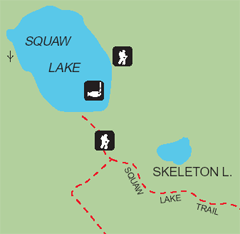
Squaw Lake

As still shown on BC Parks web site.

Change "Strait of Georgia" to "Salish Sea"? That’s a fine idea. But if this province is serious about changing place names born of its colonial past, then the first place to start is a spot in northern B.C. that signs tell us is "Squaw Lake."

It's long past time to end the continued use of the word "squaw" on government property.

For those who don't know, "squaw" is a bastardized pronunciation and spelling of the beautiful Algonquin word iskwew (pronounced es-kway-ew), which simply means woman. But somewhere along the way, as multilingual Turtle Island was forced to become mainly English-speaking, "squaw" became the ugly, common term used to refer to an Aboriginal woman, regardless of her indigenous heritage.

My own theory is that this word was adopted by the broader white society because it needed a word, many words, in fact, but one especially to sum up its contempt for Aboriginal women, and thus all Aboriginal peoples. And this word fit the bill, particularly since it made such a brutish sound when spoken.

While growing up in a farming community in the northeastern part of this province, I heard this word used pejoratively by Indian and Métis people alike, believe it or not. Years later I would learn that this type of behaviour was a form of internalized oppression, which is a product of colonization.

I also heard the word spoken by white people, which for me was always that much harsher to hear, especially when a white guy said it. As a boy I heard my own mother being cut down by this word thrown at her by two drunken white men.

Trigger of shame

Crooked River Provincial Park is adjacent to Highway 97, about an hour's drive north of Prince George, and mere minutes from the hamlet community of Bear Lake. The park has a couple of lakes within its boundary. One of them, also called Bear Lake, is a good swimming lake, which makes it quite popular.

I first visited the park nine years ago with my then five-year-old daughter.

This is when I saw the park's signage with that word on it, which named the other lake in the park. This brought a flood of bad memories. I felt a sense of shame followed by an almost overwhelming compulsion to destroy those signs, right there, right then, and along with them that unholy word. But rather than lashing out like that or planning to deface the signs later, I instead convinced myself to take up the matter with the local parks office.

Soon after, I wrote a letter to a local parks official explaining that the word was offensive to Aboriginal people, especially women, and that it would be a good deed if he could take steps to change the lake's name in consultation with the local First Nation, along with the signs. I asked him not to view the issue as a matter of political correctness, but rather as a gesture of profound respect in light of one taking notice of another's offense.

I got no reply.

False promises

Frustrated, I took my concern to a prominent local First Nations leader. Together, we looked at other uses of the word as a geographical place name across the province. There were nearly 20. He brought this information forward to government with a request to remove the word from official use. Soon after, and coincidently enough, he was appointed a provincial cabinet minister.

In late 2000, the government announced it was removing the word from its official geographical place names registry. Good, I thought, believing then that the lake's name and those offensive signs would be gone in short order.

It should be acknowledged that the government's decision at the time was similar with an earlier one, whereby it relisted a species of trout then called Squawfish to Northern Pikeminnow. Moreover, these decisions were consistent with other North American jurisdictions, which were removing the word as a place name or a taxonomy term due to similar objections from Aboriginal peoples.

While in Prince George last year, I went to the park to see what the lake's new name might be. But instead of seeing a new name and signs, I was shocked to see that nothing had changed at all. Visitors were still exposed to "Squaw Lake." All of the original signs were there, except for one roadside marker that had been removed.

Strange logic, no consultation

Since then, I've been to the B.C. Parks website and found that the lake's name officially has been changed in 2006. But get this, to "Square Lake." The site doesn't indicate why this odd name was chosen. As it was, when government made its initial decision to remove the word from its place names registry, it said local Aboriginal groups would be consulted to find suitable replacement names, which I took to mean traditional names would be considered. But I doubt "square" is a translation of any local indigenous word.

In any event, the old signs and that word remain in use at the park. And on a map elsewhere on the B.C. Parks website the lake is still called Squaw Lake. Have a look for yourself.

My guess is that the new name – "Square" instead of "Squaw" -- was chosen because its spelling resembles the former, and then by some terrible leap of logic -- perhaps by that same local official who ignored me -- it was decided to keep the old signage, thereby saving the government the cost of replacing or modifying them.

Or maybe the signs remain because a local official wants to stick it to Aboriginal people for having rocked the boat in the first place.

Or just maybe there's a work order languishing on the desk of some mandarin who feels nothing has to be done about it because that person continues to harbour the old racist attitude of "it's only Indians." Who knows?

Signs of racism

It would have been a positive move for the local MLA to join with nearby native and non-native community people in a modest ceremony at the park, with a few humble words spoken on why changing the lake's name was important, along with unveiling new signage. But I suppose that would have been too much to hope for.

I say that because 10 years ago residents of Bear Lake adamantly protested against the prospect of a local First Nation selecting new reserve land alongside their community, as part of a treaty settlement with the province. In short, the residents said they didn't want Indians moving in next door. Rejected, the First Nation took up land elsewhere. That's the type of attitude that persists in parts of this province.

I cannot help but wonder how many park visitors over the years have seen those signs with that offensive reference on it. And I wonder how many, as a result of seeing that word in use, think it's acceptable to use it when referring to an Aboriginal woman. I mean, after all, there it is on full public display, adorned and sanctioned by the official symbols of the Province of British Columbia, no less.

Meanwhile, I recall that time when my mother was attacked with that dark, hurtful word. I remember how much it hurt me when it happened. At the time she refused to show her pain. She wanted to be strong. And she was. Eventually, though, I would learn how much this had wounded her.

Related Tyee stories:

 [Tyee]

48  Comments:

Login or register to post comments

  • Gary

    5 years ago

    Renaming lakes

    I have a novel idea in this case. Why not change the spelling of this lake to "ES-KWAY-EW" and try to teach the white man the proper spelling and pronunciation of these words? Would that be so bad?
    As for the renaming of georgia strait and other places I really don't care as long as it reflects well on all British Columbians.

  • Skookum1

    5 years ago

    Salish Sea is a stupid idea

    Squaw Lake, OK, yeah, especially in a high-profile location, should have been changed. In the absence of a term that was come up with by the Tsimshian, who no doubt at one time had a lake for this pond (which may have been forgotten), "Square Lake" might have been just the easiest tweak on the map. A Tsimshian name would be nice - there's no Algonkian heritage in the area; giving it an Algonkian name would be like giving something in Spain a Hungarian name, that's how linguistically-correct "Esk-kway-ew" would be.

    But as for Salish Sea, both Gary and James Ward are all wrong:

    Quote:
    As for the renaming of georgia strait and other places I really don't care as long as it reflects well on all British Columbians.

    Salish Sea as a name is a Seattle-invented/promoted term, and is meant to supplant not just the Strait of Georgia but also Puget Sound and the Strait of Juan de Fuca, plus all the waters of the Gulf that aren't part of any of them. Haro Strait, Malaspina Strait, Trincomali Channel, et al. So if BC changes only Georgia Strait's name, the confusion over what's meant when the Yanks use it is, well, pathetic. And will not reflect properly on BC, especially when other First Nations denounce the adoption of the name as spurious and only an Olympics p.r. hoo-hah".

    The joke is the Chemainus Indian Band is not even on the Strait of Georgia, but on Stuart Channel. The Penelakuts, who live on the other side of Stuart Channel, and do live on the Georgia Strait itself, are not supporting the name change, or not that I've heard anyway. Nor the Skwxwu7mesh or Shishalh. And I doubt very much the Kwsakwaka'wakw of Campbell River and Cape Mudge like the the name even one little bit. Nor the Ditidaht and other Nuu-chah-nulth who live alongside the US-defined "Salish Sea" (which, as noted, is supposed to include the Strait of Juan de Fuca). And "Salish" in its original meaning is the Flathead people of Montana.....

    One word that's still around the map that's in the same league as "squaw" - "siwash".....but Siwash Rock is still there, there's a Siwash Creek or two kicking around, one in the Fraser Canyon in particular. But the Nlaka'pamux haven't lobbied to change it; other Siwash placenames have been changed; I don't think Siwash Rock has, although it does have a Skwxwu7mesh name - Slhxi'7elsh - rough transliterations used historically have been Skalsh or Slah-kay-ulsh.

    But Salish Sea is dreck, and a political bandwagon of the first order, as well as a huge mistake, given the American meaning (and origin) of the same phrase. Feel-good name changes are just smoke-and-mirrors, they have nothing to do with genuinely acknowledging and helping aboriginal people. Only when a name is clearly offensive, which Squaw Lake is and Georgia Strait isn't, should a name be changed.

  • alive

    5 years ago

    how do you spell that?

    Do we need to change names on places, bridges and mountains, just because some ancestor may or may not have been there?

    Do we need to change the name of an airport to "honour" a past prime minister?

    What is the point? All it does is create confusion, like when turist tries to find the Deas Island tunnel, and the map has not been revised to its new name?

    Assuming we use more native names, we will wind up needing help to spell Tsawwassanwwww or however the correct spelling is.

    Maybe some people should leave well enough alone and concentrate on more sensible pursuits?

  • jsinger

    5 years ago

    I'm sorry

    I grew up in the Fraser Valley, where I frequently heard the word squaw. The word came particularly to my consciousness during teenage years, when young men (particularly but not exclusively) would use the word in much the same way (only worse) that they would use the word slut for occasional white women and girls. As a woman, who over a lifetime has been affected by and come to recognize the oppression of women in general, I can only imagine how difficult it has been and still must be to be a first nations woman. I apologize to all first nations people for my complicity (through ignorance and lack of thought) in their oppression. My heart now aches for the treatment they sustained and still sustain. Such beautiful people did not and do not deserve pain and humiliation. I wish I could go backwards in time carrying my present knowledge and wisdom. I would then be able to make friends with and give love to the sweet young first nations kids I remember from elementary and junior high school. (Most of them dropped out by early junior high, and who can blame them, with the racism they faced). Every cruel and hateful act of humans seems to resonate throughout time. Why don't we learn?

  • jsinger

    5 years ago

    Put yourself in the place of others

    While I was writing my last comment the comment from 'alive' appeared, illustrating exactly the stupidity I was referring to. What a disrespectful response to James Ward's stated pain. I assume that 'alive' is a man, and I ask him to try to imagine how he would feel if he was a young man and his mother was automatically referred to as a slut(with her nationality the only basis for the perjorative word). (I forgot to mention in my post above that, sadly and to my shame, there were many people in my community who used no other word than squaw for first nations women. It rolled off their tongues very easily, and, though there was a shameful connotation to the word, making me never use it myself, it was not questioned when used.) How would alive feel if, having heard his mother referred to so cruelly, he had to drive past landmarks that reinforced the insult, thereby socially condoning it. Have a heart, and use your head, 'alive.'

  • alive

    5 years ago

    about pain

    Quote:
    What a disrespectful response to James Ward's stated pain

    OK, so Mr Ward feels pain for the way some people make the word squaw sound bad.
    I can understand that it hurts, just at it hurt when I was called a "DP" (for no good reason).
    We have gone to great lengths to find replacement for words like "nigger", and some of those replacement words are now also considered racist, so where do we stop?

    We stop by ignoring the idiots who need to belittle others!

    When we make a big deal out of their ignorance, then we give them credibility!

    In any event the obvious point of my post was to voice my opinion that name changes for the sake of a name change is stupid! Maybe we could agree on that point?

  • Bobb999

    5 years ago

    Land re-naming was land-taking

    I'd be quite happy to see happen to BC place names what's happened to the Queen Charlotte Islands, where
    the original Haida names for the islands have become commonly used alternatives, such as "Haida Gwaii" and "Gwaii Hanas".

    If a BC area, island, lake, river,landmark,
    or any other geographical reference or feature, already had a native name before European contact, the original name need not have been changed to begin with.

    There was nothing innocuous about European settlers renaming of BC geography. By applying an English word or name, it was
    in effect laying claim to geography in the name of European settlers or their colonial gov't or culture, while giving the finger
    to indigenous groups whose territories they were meddling with.

    It was land taking as much as land naming. Renaming was part and parcel of a colonialism which ignored and violated already pre-established territories, boundaries, and land use rights of aboriginal groups.

    BC places have some Spanish names too, of course. My nomination for most irksome is beautiful Cortez Island, commemorating
    "(Hernando)Cortez the Killer" (Neil Young's song title)who invaded Mexico, conquered and brutalized the Aztecs, plundered their gold, and may have had Aztec Emperor Montezuma murdered.

    If Cortez Island once had a native name, I say we vote Cortez off the island, and revert to the original name, and stop commemorating the murderous Spanish imperialist Hernando!

  • jsinger

    5 years ago

    alive - If your point was

    alive - If your point was that "name changes for the sake of a name change is stupid" why did you post it under a story where the name change suggested is absolutely fair, reasonable, and intelligent (especially from the point of view of emotional intelligence - which, the more I think of it is what leaders should be tested for before they are allowed to be leaders)?

    My main point is that we all have the potential to hurt and to be hurt by racism and sexism. We also all have the potential to open our eyes to that fact and try to be the best we can be, to both ourselves and to other humans. That starts by listening and acknowledging when someone tells us that something is hurtful to them. It amazes me that James Ward's first letter to a park official was not deemed worthy of any response at all.

    Square Lake. What a ridiculous, half assed solution.

  • Skookum1

    5 years ago

    Cortes

    Cortes-with-an-s is indeed an awkward name and an awkward legacy. If that is who Quadra named it for; I've never read his logs and I think the Akriggs in BC Placenames may be mistaken; it's a fairly common surname in Spanish and could be for one of his crew. Right next door to Cortes and Quadra Islands, by the way is La Raza Island - "the Race", as in the Mexican race (I think; maybe they mean the Spanish one); there's a Plaza de la Raza or another "de la Raza" monument in Mexico City; it would have already been there in Quadra's day (although its Metro station wouldn't....).

    But there's no name in Halkomelem, in any of its three dialects, for the Georgia Strait, nor is there a name in Kwak'wala or Straits Salish or Skwxwu7mesh or Shishalh. "Salish Sea" is an English expression, based in an ethnographer's imposition of the name of the first people encountered from that language group (overland), the Flathead of Montana. It's just as historically-incorrect as anything else; it's just plain wrong. If there was a Halkomelem or Skwxwu7mesh name, I'm all for it (so long as the Kwakwaka'wakw agree, and the Americans can handle Canadians only meaning "what used to be the Gulf of Georgia" and not Puget Sound when we might use "Salish Sea".

    It's ill-thought-out, poorly-researched, and flies in the face of ethnographic reality and the actual legacy of the area. Strait of Georgia and/or Gulf of Georgia is not racist in any way, unlike Cortes (if Cortes is named for you-know-who). Why not give Vancouver the aboriginal name of the Burrard Peninsula - Ulkxen? And let's get rid of that horrible queenie name "Victoria" and go back to Camosun (not its aboriginal name but at least an aboriginal word). In Coquitlam's case let's just translate it to English - "land that stinks like fish". Richmond already has a a Chinese manque (the characters for "rich"+"man"); let's abandon the obviously Anglo-Saxon name and get rid of it entirely. New Westminster - obviously imperialist in origin - let's go with Koonspa, its old Jargon name (based on Queensborough).

  • Skookum1

    5 years ago

    Cortes et al. cont.

    "Saltchuck" is both an aboriginal word as well as one that was shared with non-aboriginals; and it's what we've always called "it"; and as a term it can include the Juan de Fuca and Puget Sound areas, and won't offend non-Salishan peoples like the Kwakwaka'wakw and Nuu-chah-nulth and Makah, or non-aboriginal people either.

    The weird part of all this is that the legacy of King George, spoiled or not, was what protected BC's First Nations people from the rapine and genocide in the former Oregon Country south of the line. It was his Royal Proclamation that set the stage for the current position of legal advantage (in theory if not in practice) of the land claims controversy. Because of the relative equanimity of Douglas' regime, old-time chiefs like Nicola and Spintlum spoke kindly of British rule, and it was they and others like them who coined the term "King George Illahee" for the British sector of the former Oregon Country post-1846.

    I guess 19th Century First Nations people's use of that term, though, is just "a form of internalized oppression, which is a product of colonization." I'm sure if you had a chance to ask Spintlum or Nicola they'd think you were nuts.

    I'm glad that there's somebody smarter and more moral than me out there to set me straight when I start thinking like a logical person.......

    The white man makes such awful, stupid mistakes. Let's get rid of the lazy man's spellings and replace Squamish with Skwxwu7mesh, Kamloops with T'kumlups (and train people to say the vowels differently) and Penticton and Okanagan and Kelowna with their respectively difficult original-language spellings.

    We should also pass legislation requiring people of European ancestry to aboriginalize their names, as they may be offensive to First Nations people and also new Canadians from non-European countries (they can keep their names, though, because that's multiculturalism, enit?). And the teaching of English in our schools should stop immediately; if everyone was forced to start speaking Halkomelem tomorrow it would bring it back from the dead pronto.

    Better yet, let's just wipe out all of human history and give the planet back to the elephants and the whales and monkeys and gazelles and moose and mice. Let's just pack it all up - this means First Nations people too, unless they can prove they were created separately (which some claim) - and move back to where we came from, the Great Rift Valley in Africa. Uganda could use the tax base....

  • Skookum1

    5 years ago

    except me...

    I'm from Saturn, like any sensible person.

    Why do people think rewriting history and renaming geography is going to change anything for the better? I think it's because they've seen companies and govt ministries do it with rebranding. The tourism ministry does it all the time (which is how the Selkirks and Purcells/Bugaboos are now the "Kootenay Rockies" and Chilliwack is "Rainbow Country").

    Smoke and mirrors, a flim-flam game. Sounds like a media firestorm meant to distract from more serious issues. Like, oh, Railgate....

  • Phormium

    5 years ago

    If only

    If fewer people despised aborginals and women, the various synonym and names such as squaw and broad and bitch and injun wouldn't be so offensive. They would be terms of endearment.

  • alive

    5 years ago

    Lake what?

    jsinger

    Quote:
    why did you post it under a story where the name change suggested is absolutely fair, reasonable

    We all post our opinions, when and where an opportunity presents itself!
    If we had to wait for Tyee to happen to open a debate on a particular subject with a particular slant, then there would be few comments here.

    Personally I see no harm in keeping whatever name that lake has, we all have burdens to bear and cannot expect society to reorganize if we feel upset.

  • writetothepoint1960

    5 years ago

    No Place For The Word '-----'

    It's a "Square" peg in a round hole. I agree with the writer. James Ward, an expatriate Cree from the Treaty 8 area of northern B.C., lives in Coast Salish traditional territory. Race relations would become more like people who have treated each other badly when we identify the mistakes like the name of that lake and the use of that word by a large group of people who showed others how much they hated them. We can be specific. Change the name and use the proper language to correct some of the offensiveness. Make a public apology to the women and people that this offensive behaviour created. It will not correct the problem, but it is a start in the right direction.

  • ashley.zarbatany

    5 years ago

    Racism

    I grew up in the Northeast area of this province as well, and I have to concur that there is a lot of racism up there. I lived in Fort St John and it was like something out of a "Cowboys vs Indians" movie. It was so evil. I am part aboriginal myself, but since I am a Heinz 57 of different races from Lebanese to Scottish, I never really fit in with either sides and got the brunt of both as well. Not to say that everyone is racist up there, there are a few people who aren't. But the majority are. I can remember living in Dawson Creek and going to this Ron Pettigrew Christian school and the group of us were coming back from a fun snowboarding day and we stopped at the movie rental store and all of a sudden they started spewing hateful things out of their mouths talking about a couple native siblings who were also there renting a movie. These white kids I was with didn't have the nerve to say it to them because that would show their true colors to the world, however, they had no troubles spewing hatred towards them inside the car where they couldn't hear. They even had the nerve to say they didn't like them attending their baptist church. I am sure that Jesus would just love to hear that, because loving your neighbor for some reason doesn't apply to your neighbors who are aboriginal. Well I told them to stop being racist and the girl I was living with at the time had the nerve to say to me "Why do you care, your not native. You hardly have any native blood in you." I was so shocked by their ignorance and rudeness that I think I just told them it was wrong to be racist but if I could go back to that moment I would say this, "Maybe I have only an eighth of native ancestry within me, but my mother is native, so your dissing my mother, my grandmother is native and so your insulting my grandmother, my grandfather is metis and so your spewing hatred towards him too. Maybe I personally don't care if you insult me, but you have just insulted half of my family and half of my friends. You have just insulted some of my best friends who are full or part native. You have just insulted people who your ancestors committed genocide against, and you don't even know them personally. You don't know the crap they have had to go through having their land stolen, their women raped, their populations dwindled from gifts containing small pox diseases, from being put into residential schools and being sexually, mentally, and physically assaulted (as some of my ancestors who are still alive today were). You have no idea who these people are that you are insulting, and in doing so, you are insulting the human race with your bigotry and it makes me ashamed to be part of the same species as you, and as a Christian, you make me ashamed to belong to the same religion as you."

  • ashley.zarbatany

    5 years ago

    more

    A few months later I had an eight or ten year old girl throw a snowball in my face because she asked me if I was an "Indian" and I said "Yes I am part native."

    Now that sickens me. When children are twisted with hatred as well.
    Dawson Creek was really bad, and so were all those farming communities up there. Squaw was a common term among white men.
    But hey, a lot of native girls tried to beat me up too, so there is racism on all sides. I think that the atmosphere up there is oppressed and that is why there is so much violence and depravity. A lot of the teachers are really bad: my English teacher in grades 8 and 9 never did anything except sit there. I literally never learned a thing in those two classes. Junior high was like a New York Ghetto. The education system needs to be upgraded up there before we can have hope for eliminating racism up there. Good luck though. The politicians, lawyers, and (especially) the judges are all white and a tad bit cold hearted. This is what you get when you raise an economy out of destroying mother nature.

  • Bobb999

    5 years ago

    Corte(s)/(z):

    "He came dancing across the water, with his galleons and his guns...", sings Neil.

    I stand corrected. I forgot Cortes Island is spelled with "s", not "z",
    but apparently Hernando's surname can be spelled either way.

    My book "British Columbia Coast Names 1592-1906, Their Origin and History" (John T. Walbran)states:

    "[Cortes Island was] "named in 1792 by the Spanish naval officers, Galiano and Valdes.
    Presumably after Hernando Cortes, the conquerer of Mexico, as the next island to the southwestward is named "Hernando", and the island to the westward, "Marina" (or Mary)...Marina whom Cortes in the spring of 1519...obtained with numerous other [Aztec] captives.Cortes made her his mistress [sounds like probable rape and sexual enslavement to me!]..."

    So, circumstantial evidence that Cortes Island commemorates Hernado Corte(s)/(z)
    seems persuasive enough!

    Well, I'm glad at least some aboriginal BC place names survived the onslaught of colonists and explorers with their mania/fetish for land-naming/land -taking!

    In many cases, the sounds alone of native names are sweeter to my ears than the bogus European replacements.
    "Haida Gwaii" ("Islands of the People")is musical and rhyming vs. the interminable "Queen Charlotte Islands".

    "Comosun" has a pleasant, soft ring to it vs. "(Queen)Victorhoea" - I mean "-ia", which conjures up the idea of stink much more so, to me, than does "Coquitlam", despite Coquitlam's stinky definition!

    And who wants to travel the BC coast to be reminded of long dead, now irrelevant European queens, with reeking histories, anyway?!

  • snert

    5 years ago

    'Sticks and stones

    may break my bones but names will never hurt me'. A basic truth you try to teach all children.

    The problem here is that we tend to take somebody else's words and use our very own sticks and stones to beat ourselves.

    No need to eliminate the word "squaw" from the limited use it has now. That is running away from the issue of bullying and will not make it go away.

    Much simpler to just quit hitting yourself with your own stick. Oh BTW why are you carrying it in the first place?

  • Ed D

    5 years ago

    Offensive signage

    The solution is simple, take a wrench with you next time you go to the lake, remove the sign and throw it in a deep spot in the lake.

    We need to stop being such good Canadian sheeple and just do the right thing. Sometimes we are just too respectful of authority for our own good.

  • snert

    5 years ago

    Not an editorial comment.

    Just stumbled on this from here.

    "Siwash — (SAI-wash) properly a First Nations man, but sometimes used for women as well. Nowadays considered extremely derogatory but still in use, typically with the connotation of "drunken no-good Indian". Historically it did not necessarily have this connotation and was the generic term for Natives to the point where some writers thought there was a "Siwash tribe" in the region. The origin of the word is from the French sauvage. When pronounced Sa-WASH, with the rhythm of the original French, it is used by modern speakers of the Chinook Jargon in Grand Ronde, Oregon with the context of meaning a Native American, or as an adjective connoting connection to same (the SAI-wash prononciation is considered offensive in Grand Ronde).

  • kjc

    5 years ago

    Fantasy Island

    "The weird part of all this is that the legacy of King George, spoiled or not, was what protected BC's First Nations people from the rapine and genocide in the former Oregon Country south of the line. It was his Royal Proclamation that set the stage for the current position of legal advantage (in theory if not in practice) of the land claims controversy. Because of the relative equanimity of Douglas' regime, old-time chiefs like Nicola and Spintlum spoke kindly of British rule, and it was they and others like them who coined the term "King George Illahee" for the British sector of the former Oregon Country post-1846."

    Good comment Skookum1. The even weirder part of all this is that the legacy of King George was what protected BC's First Nations people from the rapine and genocide of each other. According to Howard O'Hagan's 1978 Talonbook, Wilderness Men, Adam Horne of the Hudson's Bay Company was witness to a Haida raid on the Cowachin at Qualicum in 1856. He and his party camped in a cove and didn't build a fire out of fear of the natives . . .

    "Near dawn Horne was awakened by the Iroquois canoe man who was with him. Crouched in the timber, they watched a shawdowy fleet of northern canoes, which they were later able to identify as those of the Haidas, entering the creek north of them leading to the village of the Qualicums. Soon columns of smoke were rising above the village. It was not until noon that the Haida war canoes emerged from the creek. The jubilant warriors were whooping. Several of them stood upright, and from their hands, held by the hair, dangled human heads. A gale was blowing from the south. The Haidas hoisted reed-mat sails, and the canoes - their bottoms oiled to speed them through the water - fled north before the wind.

    Later that day, Horne and his company visited the Qualicum village. They saw the blackened timber of burned houses and more than a score of mutilated bodies. Only one old woman, grievously wounded by a spear, survived. Before she died she told them, through Horne's interpreter, that most of her people had been killed in their sleep, women and children and men. The Haidas had taken away with them as slaves two young women, four little girls and two older boys.

    The caste system prevailed on this part of the Pacific coast and slaves were a form of wealth. They were used as servants and, in ritual of crude and sadistic form of 'conspicuous consumption,' were sometimes thrown alive into the hole dug for the raising of the totem pole or for the decorated corner post of a chief's house. The pole or post was then pushed down upon the screaming victim."

  • kjc

    5 years ago

    Fantasy Island cont.

    Let's also not forget that the Royal Proclamation which is now being used such good effect by corporations cutting deals with local tribal councils was originally designed to protect the fur-trading profits of the world's oldest corporation, the Hudson's Bay Company by limited the westward expansion of settlement beyond America's thirteen original colonies. Some historians say this issue, not that of taxation actually spawned the American Revolution.

  • Skookum1

    5 years ago

    snert re "siwash"

    I wrote that, snert. I'm the primary author/kibbitzer on a host of BC/Pacific Northwest articles. I don't "own" the article, anybody can add to it or change it. But other than some grammatical and formatting edits, nobody else has very much; check the history, my username is the same in Wikipedia as it is here....

  • Skookum1

    5 years ago

    Horne and the Qualicum massacre

    Not the Cowichans - there is no "cowichan people" by the way, the Cowichan Tribes is a colonialist-legacygovernment combining several hitherto separate peoples - it's just the Qualicums. Or was the Qualicums, if there's even any left today (?). That Haida raid was only one of many; and it wasn't just the Haida; more regularly it was the Euclataws, the Cape Mudge Band (p.c. spellings are Lekwiltok and Laich-kwil-tach, you'll also see Yuculta; all spellings of the same aboriginal word.

    The Tongass, a Tlingit group, did a big nasty on Puget Sound in the 1840s or '50s, bypassing Victoria. Chinlac, the Blackwater Creek massacre near D'Arcy, the decimation of the Lakes Lillooet, the Secwepemc annihilation of the Stuwix, the ongoing wars between the Sinixt and Ktunaxa....and that's not even dealing with feuds and rivalries within peoples; the Pacheedaht still won't associate themselves with the Nuu-chah-nulth as a political body because of who else is in the tribal council. And to this day Secepwemc baseball and basketball teams don't play in places like Seton and D'Arcy... The Nlaka'pamux have three tribal councils, none of which includes the Lytton Band, the largest.

    I've listed all this before, and caught heat for supposedly being anti-native. But I am getting tired of the white man being painted in the black hat all the time. Nothing was simple here, but one fact is really clear:

    British tenure, shakey, illegal and finally proteced from American seizure by imperial law and clout, brought peace to this region and kept out the American Indian-killing machinery.

    Most BCers aren't aware exactly how many wars there were in "our former territories" after London signed them away to Washington. The Bannock War, the Rogue River Wars, the Puget Sound War and Battle of Seattle, the Yakima War, the Cayuse War, the Nez perce War, the Palus-Coeur d'Alene War, and more. Chief Sealth's once-mighty Duwamish were destroyed, his speech of surrender/humiliation before his new masters horribly twisted into a celebration of American eco-values in the years since.

    I've had discussions with my native friends about this, including Wikipedia editors; this stuff cannot be ignored and passed over. And our history should not be painted in comic-book colours and simplicities in order to make someone feel good about themselves. Truth is truth; embracing anything else, or pretending that only one side of the truth is relevant, and railing against the other, is only proof of the damage done.

    Why is it, nearly always, that those who are so intent on rewriting history know so little of it?

  • Skookum1

    5 years ago

    Renamings.....

    I got off on a sarcastic bent earlier about Squamish/Skwxwu7mesh and Kamloops/T'kumlups (who, me, sarcastic??). But on a more practical and maybe interesting bent, here's a few colonial-era names and their alternatives:

    Lillooet - this was white settler's choice of name for Cayoosh Flat, or Cayoosh; but other while that word means an Indian Pony, it's not aboriginal (well, actually, it's a local form of cayuse which is a Sahaptian adaption of the Spanish caballo)...it's still not a bona fide indigeneous name. There's several in the locality, the most easily pronounceable is Sat', which is pronounced Sha(tl), sort of; technically means a certain spot a few miles outside of town, though. In town is T'it'kt, which really is more like Tl'itl'kt. If you think that's nasty, try the proper name for Fountain - Cacli'p, which really looks a bit more wholesome (to me) as Xaxli'p (if you don't get it, don't ask).

    Easier, Lytton's old name, still often in use - p.c. spelled Camchin, more commonly over the years Kumsheen. A fine, fine strong name. But I think Lytton could have some fun to the tie-in to Bulworth-Lytton with a "dark and stormy night" festival of some kind...oh, Lytton was one of the guys in London, who never made it here, who worked hard to keep the Americans out and the natives alive.....

    Boston Bar - old name, Quayome; how to spell that in Nlaka'pamux'tsn I don't know. Nice name, though.....

    Yale - Yakweawioose I think. Cute. Would look great on road signs. Oh, opposite Spuzzum, just south of the Alexandra Lodge, is Kequaloose.....which is even less of a somewhere than Spuzzum...

    In general, though, I'm in favour of native placenames on our maps, i.e. things that aren't there now, like the names for mountains and spots and bodies of water...such few as have survived, that is. The natives names for Mount Garibaldi, the Lions, Cheam, etc, these should be on maps in a bilingual way, even as a subtext; ditto with some towns, like Lytton. That is a more realistic and relevant affirmation in geography of historical reversal/redress. Synthesizing a new name to replace a perfectly good one just isn't the same kind of thing.....

  • Skookum1

    5 years ago

    emendation

    Quote:
    British tenure, shakey, illegal and finally proteced from American seizure by imperial law and clout

    What I meant by "illegal" was primarily the HBC's non-ownership, it was only a trading license, not ownership of territory; once the colonies were founded steps were taken towards legality in the form of the Douglas Treaties on Vancouver Island, and not on the Mainland other than by default in the Treaty 8 area, which had been Rupert's Land and was not part of the stonewalling by colonial governments after Douglas an their successor provincial governments; other than those formal dealings as mandated by the Royal Proclamation incidentally, the illegality continues.

    Also the bit about Secwepemc teams not being welcome in Seton or D'Arcy...or Mt. Currie...that applies also and especially to the Nicolas, apparently, because of Nicola's War....

    I do like the idea of using the name of the beach-strand at Jericho, though: Eeyulshun - "soft sand feels good between the toes", it's supposed to mean. Don't know how to spell it modern-wise though; that's early 20th C. from Maj. Matthews' Early Vancouver. Jericho of course is a derivation from Jerry's Cove, after Jeremiah Rogers, who clearcut Kitsilano and Dunbar.....

  • Skookum1

    5 years ago

    Cortes Island again....

    An interesting discussion on the talkpage of the Wikipedia article has begun and has raised some interesting issues:

    http://en.wikipedia.org/wiki/Talk:Cortes_Island_%28British_Columbia%29

    Apparently the Spanish logs are silent on the naming, I haven't read them (many are still unexamined in the Escorial library though; spanish naval/imperial records were only opened to the world fairly recently, as also with Russia's, another imperial power whose history is part of ours). It seems odd that a cartographer working on a survey ship would not take notes as to why something weas named this or that, though....

  • kjc

    5 years ago

    Wow I am really impressed

    Wow I am really impressed with your knowledge of BC's history but, just quickly, there is something I heard about the name Cayoosh Flat - Cayoosh actually stems from a native word that means "broken face" and refers to the rock faces above it not to cayuse ponies as is commonly believed.

    To add to your list there is also the case of the Clayoquot massacre of the original inhabitants of Tofino harbour and their subsequent takeover of that area.

  • Skookum1

    5 years ago

    wow

    very rare that I hear something about the Lillooet Country I haven't heard before. Even aboriginal people in Lillooet, who know the old name, think it has to do with ponies; either one fell in Cayoosh Creek, or when the c reek's high the foam/waves look like rearing horses. This applies also to the aboriginal informants of local historians Irene Edwards and Lorraine Harris....

    I'll check into what you've come up with and see if I can verify it; someone at the Upper St'at'imc Language and Culture Society must have some tidbit. The Cayoose Creek Band (Sek'wel'was) make a point of non-English-style spelling on their highway-side sign - Kiy-oose I think it is, but I've always just thought that an anti-whiteman affectation. And the chiefs of that band, who I worked with long ago, were among those who told me the pony story.

    Interesting; if true, very descriptive. But I've never seen it on maps showing the array of local aboriginal placenames, such as in Hayden's book.

    Didn't know also about the Tla-o-qui-aht taking over Tofino, that's a new one to me also but I don't know coastal native history well. There's other examples like that too - but you'll still hear the "from time immemorial" line. The Kyuquots, I think, are recent arrivals in their area, or is it the Quatsinos? and the Lekwiltok also only arrived in Campbell River in the last couple of centuries, absorbing/subjugating the Island Comox.

    All this is one reason nobody should take it for granted that an archaeological site in a given territory necessarily has to do with the people living there now, or that the language/territory maps we've all seen have been that way for centuries. It also gets confusing when the various northern-coast clans have at various times lived in different lingusitic territories, e.g. a lot of the Gitxsan lineage comes from the Charlottes, but aren't Haida; or maybe they were when they were out on the islands, I remember Barbeau's accounts quoting the myths/stories as "but that was Tsimshian country so they spoke Tsimshian from then on". etc. As in Europe, linguistic and ethnic lines don't necessarilyi match (e.g. the genepool of the Norse-speaking Icelandic population is known to be 50% Celtic).

  • Skookum1

    5 years ago

    ps

    if you can think where you heard/read that, I'd like to know for citation purposes, if it's correct. It may be a manque - someone "pasting" by inventing a new origin-story based on some set of St'at'imcets phonemes as a way to account for the name. I've always wondered on the etymology/consonant mutation from cayuse to cayoosh. When cayoosh is used to mean Indian pony, it tends to be pronounced with the accent on the first syllable; when about the Cayoosh, meaning either Greater Lillooet or the basin/range nearby, the accent is generally on the second, and this is reflected in an old gold rush-era spelling, Kayousch.

    What's in a name? So much apparently. It's not just aboriginal history/culture that's getting lost, y'see.....

  • bob the cat

    5 years ago

    Say The Names

    SAY THE NAMES

    - say the names say the names
    and listen to yourself
    an echo in the mountains
    Tulameen Tulameen
    say them like your soul
    was listening and overhearing
    and you dreamed you dreamed
    you were a river
    and you were a river
    Tulameen Tulameen
    -not the borrowed imitations
    of foreign names
    not Brighton Windsor Trenton
    but names that ride the wind
    Spillimacheen and Nahanni
    Kleena Kleene and Horsefly
    Illecillewaet and Whatchamacallit
    Lilloet and Kluane
    Head-Smashed-In Buffalo Jump
    and the whole sky falling
    when the buffalo went down
    Similkameen and Nahanni
    say them say them remember
    if ever you wander elsewhere
    " the North as a deed and forever"
    Kleena Kleene Nahanni
    Osoyoos and Similkameen
    say the names
    as if they were your soul
    lost among the mountains
    a soul you mislaid
    and found again rejoicing
    Tulameen Tulameen
    till the heart stops beating

    say the names

    Al Purdy 1918-2000

    Canadian Poet

  • bob the cat

    5 years ago

    Sne`waylh

    Sne`waylh is a program 1:00 pm on Co-op radio

    http://www.coopradio.org/

    A very cheerful and enthusiastic and patient young fella
    a natural teacher is teaching some of a local Salish language...tho he`s not always there.
    I found slowly pronouncing the words or names ..even the ones with all the "x`s" to be strangely relaxing..even the songs/chants...which I used to find boring..I find now very uplifting

    I had a good friend who was Cree..I worked with him pulling on a greenchain...we had a Blackfoot foreman..they didn`t speak..went way back.
    The sorter on the chain was also Cree..he didn`t like the ..was it Dog Rib? Said they ate dogs.
    Travelled by car top boat to Zeballos to pick up some booze for the weekend with an Alert Bay Kwakiutl buddy...Nu-Chal-Nulth territory...he got his lights punched out but I was never touched.

  • bob the cat

    5 years ago

    Princess

    A Haida princess sent her grandmother to me in my sleeping
    Her dark face appeared

    too suddenly for dreaming
    I awoke before shouting..too afraid to speak

    when I saw the Princess again she just smiled

    She didn`t say anything...

    She didn`t have to

  • Skookum1

    5 years ago

    probably Halkomelem

    Either upriver or downriver dialect; could be Skwxwu7mesh though, I'll ask my wikibuddy. Halkomelem has more speakers than snichim though (snichim is the name of the Skwxwu7mesh language). Back in my CHINOOK-L days one of the participatns at our first round-up at St. Mary's in Mission was a linguistics student who had taken up Halqemeylem, the upriver dialect; her other specialty was Klingon, which she said had some interesting similarities, not just in phonology like ejectives and certain gutturals but also in syntax; this could be because one of the people who concocted Klingon was from Puget Sound and had some exposure to Lushootseed....the big difference is that Klingon has to be shouted or barked, whereas Halqemeylem and other Salishan languages are very softly-spoken. Yes, if it's Halkomelem, in any dialect, it's very beautiful to hear; a little less "crackly" than the dialects of St'at'imcets I've been around....

  • Skookum1

    5 years ago

    Cortes Island again...

    Our little wiki discussion is turning up some interesting clues; among the Spanish crews was an Ignacio Cortes, and a Juan Hernandez which could account for nearby Hernando Island somehow; other similar changes elswhere in BC incluce Lac des francais as modern-day Francois Lake. We haven't found proof it's not named for Cortes, but clues abound; even if his name is sometimes given as Hernando, typically it's Hernan...and as noted before its proximity to La Raza raises, and the absence of other conquistador names....there's room for doubting the knee-jerk "oh it's awful it sounds like a bad guy's name". Eventual notes or logs may turn up proving that Galiano or Valdez wrote "in honour of the great conqueror etc" but just because Cortes only has one meaning or context in English doesn't mean it doesn't have another in or two in Spanish....

  • Skookum1

    5 years ago

    thx bob the cat

    I was thinking of that Purdy poem lately for some reason, maybe because I'd had occasion to write mentioning the Spillimacheen; there's been journalistic writers who effuse names like that, too, St. Pierre maybe, or was it Trevor Lautens? Lillard/Glavin's A Voice GTreat Within Us" extols some Chinook placenames a bit; Terry likes Bictoli for Victoria and Koonspa for New West, which I guess I mentioned above. Even English-word names like Big Bar, Bridge River, Gold Bridge, Big Creek, Dickson Range fascinate people from outside BC in ways that surprise me sometimes; I hadn't considered how evocative they were, being next to names like Yalakom and Shulaps and Camelsfoot and Bendor....

  • ME2

    5 years ago

    Recovered memory.

    Thank you for your knowledge, Skookum1, I have until now thought it was impossible to staunch the flow of blood from the bleeding hearts once it started.

    However, tomorrow they will have forgotten, and all that will be remembered is that some guy wrote in regarding his version of "Untruthful history as written by the victors".

    Regarding place names, over forty years ago I had the opportunity to talk to an old Haida woman in her nineties. I had been told that she had been born on a very small island distant from the main villages. But no signs of habitaion could be seen, and I was curious.

    "Yes, Cup Island is what it is called now, but in my time we called it Cub Island, and my mother told me that in her time it was called Bear Island". "It was just a Summer camp" she said, "and that's why my mother was there".

    "But why the different names for the island?" I asked. She told me that the Haida did not give permanent names to a place, but that the names changed according to how the people of each time knew them from an event or other distinguishing thing about them.

    And that dovetails with your translations of what the different place names meant, Skookum1. Perhaps "The place of stinking fish", when previously inhabited by a better-liked tribe had been called "The place of sweet-smelling fish".

    So who gets to recall which name?

  • Skookum1

    5 years ago

    Actually...

    .....you have to remember that in native cuilture, the smell of fish was not a bad thing; "land of stinking fish" is a reference, I'd say, to spawning/death-rot, like we used to see copiously on the rockbars and mudbanks of the lower Stave (and boy did it stink!). In native culture "land of stinking fish" might well be "honeydale" or "sweetfields". In the days before dyking, consider the Coquitlam/Port Coquitlam berry marsh and all the fish that must have spawned in there.

    God, the reek.....but oolichan grease stinks too, and it's highly prized. Like limburger or good stilton...

    The funny part about being acccused of "history written by a victor" is 1) I'm anything but a victor, as some who know about me personally would understand.... and 2) nearly all of what I've menteiond comes from aboriginal accounts. Yes, told to "the victors" like Adam Horne and other period non-native witnesses (I doubt Lunden-Brown or J. Teit would have considered themselves "victors" though...), but told by "the losers".

    It's today's people who don't want to know about their own past, and who don't want other people to know or to talk about it - those are the losers. I can't help that, because "I didn't do it". And _I_ didn't win anything; if at all, I'm left holding the bag. A bag full of uncomfortable and highly politically-inconvenient truths

    'Xcuse me, gotta go shopping for black hats. Something to go with my barbed tail and cloven hooves....

  • snert

    5 years ago

    Skookum1

    You're gonna have to get out more often. There are not too many creeks along the north side of the Fraser that don't stink in the fall and winter. Mostly Pinks and Dogs (an indigenous description, I believe)but all major creeks and a lot of ditches are full of them.

    FWIW I have seen, recently, sockeye so thick you could walk on them in the mouth of Emery Creek. Mind you that was in a high water year but sometimes that's how legends get born.

    The Stave is particularly prolific and probably has the third largest winter congregation of eagles after Squamish and Harrison Bay.

  • Skookum1

    5 years ago

    Stave fish

    Quote:
    The Stave is particularly prolific and probably has the third largest winter congregation of eagles after Squamish and Harrison Bay.

    My address was 10483 Wilson Rd for years, right on the cliffbank above the corpse-iest of the bars; we knew them all, wandered around the dead fish in our boots, smelled dit every morning waiting for the bus, watched zillions of birds setling, or rising and circling to fly back out to the coast, seen seals come up during spawning to scavenge meat, and yeah, eagles. Once there was a Great White came down in a cold winter, perched about 200 yards from our house on the first sandbar.

    You don't have to tell me about the Stave. But I can tell you it ain't what it was back in the '60s and early '70s; not anywhere near. We're not talking about a few fish in ditches, we're talking about the whole Fraser lowland covered in it on a scale modern people can't comprehend; by my time it was a shadow of what it had been, but I got a sense of it from the Stave and from Wahleach Creek, where as local hydro boss it was Dad's job to check on the salmon and their beds; he admired them, was fascinated by them, loved slogging around in the rain in gumboots looking at them struggle and die. I understand more why now, it's what was going on with him.....

    In some places on the Stave mud/rock/sandbars and grass-marshes and sunken forests/scrub, the rotten flesh and bones was deep by feet, not inches; the clamour of seagulls was loud enough to be heard inside the house...if the fog was thick you'd smell the fish as you stepped out the door...oh about the seals, once some dolphins came up too, can't remember if it was the seals or the fish they were after....

    ...we had a dugout, too, real old; some new kid to "camp" (from Coquitlam, actually) let it go one day, among other stupid parnks he did; looked like a log, other than it was river-worthy like nothing else we had; rotten at the tips, but stable (if you knew what you were doing) with five-six people and stuff...the lower Stave as you probably know becomes a big lake during the Fraser freshet as the Stave waters back up; great for boating around what are usually islands; although keep an ear out for the powerhouse warning signals ;-)

  • Bobb999

    5 years ago

    Purdy's poem

    bob the cat:
    I never encountered Al Purdy's fine poem before. Thanks for posting it.
    It illustrates so well the thought I had too.

    skookum - your Wiki discussion on the origin of Cortes Island's name, last I looked, is lacking the pertinent cirumstantial
    evidence I cited about a cluster of 3 islands
    with names all pointing to inescapably to Hernando!

  • bob the cat

    5 years ago

    Bobb of the nines

    glad it`s not bobb of the sixes...cloven hooves and such.
    Also glad you liked the Purdy..it`s from
    Beyond Remembering the Collected Poems of Al Purdy

    Harbour Publishing
    P.O. Box 219
    Madeira Park, BC
    Canada V0N 2H0

    I was going to add another short one but he didn`t write many short ones.

  • bob the cat

    5 years ago

    Skookums Stave

    Sheesh ..some really nice textures there Skookum..Ken Keseyian in capturing the sounds, smells and sights of what reads like a wonderful place to grow up.

  • bob the cat

    5 years ago

    Just in

    Forest District changes name

    The Queen Charlotte Islands Forest District is no more.
    At the Forest Service open house in Queen Charlotte last Wednesday, ministry officials unveiled a sign with its new name, Haida Gwaii Forest District.
    District Manager Len Munt said the name change is appropriate, as the forest service is 100 years old this year, and Haida Gwaii is thousands of years old.

    So..who was Queen Charlotte? Prince Rupert?

  • snert

    5 years ago

    Dolphins, that's interesting.

    I've seen California Sea Lions up that far but didn't think dolphins liked fresh water.

    The Harbour Seals are ubiquitous. They travel as far as Yale and well up Harrison Lake.

  • watcher_t

    5 years ago

    Name Changes

    Just leave things as they are and the heartland will still remain the Interior. This Premier and his cabinet must have nothing better to do than try and rename areas of British Columbia.

  • spanky

    5 years ago

    who CARES!

    lets call it "drunk buck" lake then. problem solved!

  • ME2

    5 years ago

    Re Place Name changes

    I recall researching some time ago and finding out that before a place name could be changed, the Registrar of Companies or somesuch had to conduct a referendum for the people living in the area to see if they were in favour of the new name.

    But as we know, the same touchie-feelies who scream to high heaven about the Righties breaking the merest letter of the law, will remain perfectly silent when a law is being brazenly broken and/or seriously mangled if and when it suits them.

    Effing hypocrits and moral cowards.

    • The discussion for this story is closed. No more comments can be added.