


 SHARE:
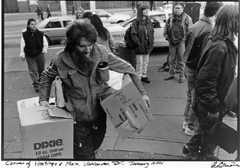
At the Art Gallery in Vancouver is the official countdown clock for the 2010 Olympics: there are now well less than one thousand days left until the opening ceremonies. That may seem like plenty of time, but for folks concerned about the crisis in affordable housing, there is a lot of work to be done to get the place in shape.
While there is lots of housing being built right now, the problem with the current boom is that almost none of it will be affordable. The mass marketing campaigns plastered on billboards and in full-page newspaper ads have one thing in common: an obsession with luxury, exclusivity and privilege. This inner-city housing aims to safely tuck away affluent people from the homeless on the street, not to reduce the latter's numbers.
This should be no surprise: this is the market in action. Developers build to make money on their investments. And poor people are not profitable.
Answer is in the report
With this context in mind, a group of unlikely collaborators called the Inner-City Inclusive Housing Table produced a report in March with 24 recommendations to end homelessness by 2010. The report's centerpiece is a call for 3,200 units of social housing between now and the Games, a target that is not that radical. Back in the days when the federal and provincial governments were still in the business of creating social housing (before 1993), we built 2,000 units per year in B.C.
On the other hand, the table was under the wing of VANOC and its participants included such figures as developer Robert Fung, Al Kemp of the B.C. Apartment Owners and Managers Association, and Peter Simpson of the Greater Vancouver Home Builders Association, in addition to representatives of three levels of government, and a number of community service providers. So consider it a broad-based recognition of the need for action. Since the report came out, over 100 organizations have endorsed its recommendations.
To directly address the immediate crisis, the 3,200 units would largely be "supportive housing" units for people with mental health and/or addiction problems. This model, where access to health care and other supports is provided on site, has proven to be successful here and elsewhere.
Money is available
The good news is that resources are available to make this happen. The provincial government and most developers use a back of the envelope estimate of $200 per square foot for developing multi-unit housing. So a 500 square foot condo unit would cost about $100,000 to build. If we add in another $50,000 per unit for land, and $50,000 for permits, fees and a safety margin for cost over-runs, call it $200,000 per unit.
The cost of the VANOC 3,200 units is thus $640 million. This is a lot of money to you and me, but we have to remember that B.C. is a big province with a total GDP in 2007 of about $188 billion. In the past three years, the provincial government has had a surplus of revenues over expenditures of $10 billion, with another $3 billion surplus expected this year. The cost of meeting the VANOC units thus amounts to less than one-sixth of last year's $4 billion budget surplus.*
In addition to the up-front capital cost, there would also be an ongoing cost of running the housing. But we should not necessarily think of this a cost increase. A study done in 2001 (more on this here) for the provincial government found that while it costs money to house the homeless, doing so is actually cheaper than the indirect costs of neglect -- paid for through expensive visits to emergency rooms, the criminal justice system and other social services.
'Big Bang' needed
The bottom line: we can afford to do this -- and more. The cost of land accounts for one quarter of the cost per unit in my estimate but the City of Vancouver has already set aside land that could lead to 2,000 units of social housing.
Ultimately, we need a long-term, "big bang" approach to affordable housing that guarantees a percentage of affordable units as new housing development happens. If we do not ensure it by design, it will simply not be there. In the meantime, we need action.*
The Housing Table report provides a good starting point for addressing the worst problems of addiction and mental health problems related to homelessness, and all levels of government should make it a top priority.
*Correction: Paragraphs marked with an asterisk were changed for clarity at 2:15 p.m. on Monday, July 30.
Related Tyee stories:
- 2010: More Homeless than Athletes?
What it will take to provide needed shelter before the Olympics. - Vancouver's SROs: 'Zero Vacancy'
Vanishing old hotels were last refuge for most at risk. - Shovelling with Mayor Sam
Stalled homeless units finally jarred loose. Pols scramble for credit.
![[Tyee]](/design-article.thetyee.ca/ui/img/yellowblob.png)



Tyee Commenting Guidelines
Comments that violate guidelines risk being deleted, and violations may result in a temporary or permanent user ban. Maintain the spirit of good conversation to stay in the discussion.
*Please note The Tyee is not a forum for spreading misinformation about COVID-19, denying its existence or minimizing its risk to public health.
Do:
Do not: