Whistler's Creation Myth

'V0N 1B0' author Ian Verchere on its wild adolescence, the trouble with snowboarders, and dynamiting Lower Franz's.

By Charles Campbell, 23 Nov 2006, TheTyee.ca

Whistler cover 2010.png

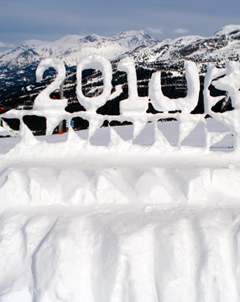
Whistler's icing: the 2010 Olympics.
Ian Verchere photo.

I didn't know until this month that Ian Verchere had written a book about me. Which is only fair, because as it happens I once took his photograph and sold it to the Georgia Straight, and he only discovered this after the fact.

Although we never met back then, Ian Verchere's life has a few parallels with mine. We both grew up near the foot of Grouse Mountain, and skied there whenever we could. We were both about eight when we discovered Whistler, with our fathers. Was it 1967, the year after it opened? We took the old aluminum gondola to midstation, then braced against the weather as we boarded the red chair for the tortuously slow trip into the alpine. Was it the same day? As each of us reached Pony Trail flats, the clouds parted. "I saw the peak of Whistler for the first time, the wind-whipped snow tearing off the top like a comet tail," Verchere writes in V0N 1B0: General Delivery, Whistler, B.C.

From that day forward, we were part of a creation myth. As Verchere observes, Whistler didn't have the remnants of a mining town to give it character or charm. It was all up to us, once we'd ditched our parents: vast quantities of Labatt's 50 at Dusty's after a long day of skiing, springtime clothing-is-not-an-option swimming at Lost Lake, punk shows at the Boot Pub.

Being born circa 1960 in Vancouver and environs (Verchere came into the world at Vancouver General, I popped out in Bralorne, a mining town north of Pemberton) was like waking up on a clear and cold Monday at the foot of a ski hill draped in 20 inches of fresh powder. Anything was possible and everything happened. In the introduction to Verchere's V0N 1B0, Doug Coupland -- who persuaded Douglas & McIntyre's Scott McIntyre to let his Emily Carr art-school chum write the book -- calls our collective good fortune "one of the greatest genetic lottery wins of all time."

Verchere did particularly well at the youthful idyll thing. I imagined I might become a ski bum at Whistler, when it was a local secret that ordinary people could afford. Ian Verchere actually did that -- he lied his way into a ski instructor's job, and raced on 210 cm K2s provided by his sponsor.

When the Village was garbage

Now, in the restaurant of the Granville Island Hotel, our kids safely occupied elsewhere, we're looking back, and talking about V0N 1B0 (von eye-bow to those who know). It is the only book I know of that tells me about the Whistler I remember -- where what's now the Whistler Village was just an ATCO trailer liquor store and a garbage dump. Where 14 or 22 or 31 addled youths would rent a chalet and rotate the sleeping arrangements, so no one person was permanently assigned to the flea-infested lumpy couch.

Verchere was one of those insiders. I was the guy, at another chalet, who couldn't negotiate space in the hallway for my sleeping bag, and so I slept in the car. Occasionally I did steal a spot in a squatter's treehouse or primitive A-Frame. Mostly, I was in the dorm at the UBC student ski club.

But we both had a screamingly good time.

It's all gone now. The municipality got rid of the squats, and billionaires bought up all the lakefront. A couple of years back, I'd phone the Boot pub every now and again, to find out if a demolition date had been set. Its passing deserved to be marked with a story, I figured. The end came last spring, and I missed it.

Ian didn't. That's how he ends V0N 1B0. He recalls the time his punk band, Curious George, set fire to a snowboard onstage, and the bartenders didn't flinch. "No tourist or second homeowner in Whistler is going to miss the Boot," Verchere writes. "But its closure says something to a big chunk of Whistler locals: it's a signal that what they want doesn't matter."

Weasels, snakes, and a toenail necklace

Well, there's still Hoz's Pub, near Whistler's original Creekside base. And there's the book. I know that in B.C., where real estate redevelopment takes place so fast we can't even remember if there was an old store on the corner, Whistler's creation myth has been properly recorded, by someone who understands implicitly that "visiting Whistler in the fall is a lot like going to a nightclub during the day."

By someone who knows that the trail of cars running down the Sea-to-Sky Highway on Sunday night is "the snake." By someone who remembers that Crazy Canuck Ken Read skied the World Cup Downhill without a helmet, after officials cancelled the race because the course was too fast. By someone who honours the ingenuity of the "Weasel Workers," who first made the course fast by hardening the snow with nitrogen fertilizer from a Pemberton farm.

The book is full of photos taken or chosen by someone who knows: not of gorgeous Kodachrome vistas but of slush and Vuarnets and a front-end bumper sticker that reads "Think Fast Hippie." There's a picture of a sign at the dump that reads "Garbage Estates: Choice Lots Still Available" where the Delta Mountain Hotel now stands, and another of a necklace adorned with toenails lost to old-school ski boots.

There are also the small stories that illuminate Whistler's changing character. The theory that the slogan for a new lift -- "the Wizard of aaaaahhs" -- was likely adapted from the name of an old a porn film. The curiosity that runs called Climax, Cougar Milk, and Spanky's Chute somehow survived the marketing-boardroom purge of all the impoliteness. The fact that Microsoft code words for a dozen new programs were drawn from various Whistler locations.

It's a given that money has obliterated a lot of Whistler's history. Verchere is nostalgic for that history, but he's not tying himself up in a knot over what's past. Whistler's changed, he's changed, and he wrote a book to help ensure that we at least don't forget what happened. And soon, when I can find it, he'll have a copy of that photo taken way back when -- of him on a mountain bike rocketing down a Cypress Bowl service road in a race known as the BLT, as in boulders, logs and trees.

Verchere has missed a few bike trips of late. He can blame his somewhat more adult life. He was the creative producer of such video games such as Electronic Arts' SSX Tricky, and is now creative head of Shift Control Media, which was formed in July. Of course, creating simulated adventure realities instead of living in the real ones is not without irony. "We're working on building an entire virtual world for a very large brand that is one of the presenting partners of the Olympics," Verchere says, declining to name the client. "Our focus is on branded entertainment. Instead of EA making a game, why not, say, Mountain Dew? It's all about being authentic, though. That's the key.

"It's not an oxymoron," he insists. "It's a very much in-demand attribute."

Verchere offered these reflections on the Whistler that used to be, and why it matters to honour its history, even when it's only a marketing technique...

On not being a "retro grouch":

"Whistler is not a bad place if you're 20 years old and going for the first time. I didn't want to take away from the experience of those who are there for the first time. It hasn't changed for the better, but you can't have a place that's an hour and a half from a major centre and not have it develop. With that terrain, it's an amazing ski area. You've got to let it grow. If it was the Stein Valley, that would be different.

"I hope the tone of the book wasn't retro grouchy. It's a moment in time. It's like saying 'If only the Clash hadn't broken up.' They did. It's like art, it's like music -- it's a moment in time that can never be captured again, nor should it be."

But sometimes being a retro grouch:

"Whistler isn't competing with Aspen or Silver Star. Don't say Silver Star. I don't want anybody to know about Silver Star. Uhhh...Big White, Mt. Washington. Whistler is competing with Las Vegas, and Varadero in Cuba, and Disneyland, for that sort of packaged week-long experience.

"And the gloves are off now because [Vancouver-based] Intrawest has just been bought by a venture capital firm from New York. Maximize revenue, minimize expenses. Even with Intrawest, as big a corporation as they were, there was a local connection."

On the book's idiosyncratic photos -- a crew creating artificial rocks "inspired by mother nature," a sticker-plastered old fridge (now in the Whistler Museum) from Peak Mansion on Alta Lake:

"If I were writing a book about Disneyland, I would want to get a shot of the guy wearing the mascot suit, with Mickey's head off, having a smoke. It's not the picture that Disneyland wants you to see. But that's what it's like to be there, to work there."

On what he hopes will persist at Whistler, against the odds:

"My friend Charlie Doyle, who ran the Whistler Answer for all those years, they had the wherewithal to put a group together to buy Tapley's Farm, it was a freakin' 80-acre swamp. It wasn't an easy task. But you go down to where they live now, down Lorimer Road, and you come across Easy Street. They took that whole notion of 'Bartertown.' where locals get together to rent a chalet. A bunch of locals who were committed to living there said 'This is our home.' And they managed to put together enough money to buy this farm and cut it up and give themselves a place to live.

"It's the most normal-looking street in Whistler. There's hockey nets in the streets. The houses are side by side. There's kids, and 'Drive Slow.' This is what Whistler needs. If it gets too expensive for the people who make the place run to live there, it becomes a completely artificial place, where you have to bus in workers, because they can't afford it. When you're at Disneyland, you don't want to see the people who make the rides run. You're separating the work that it takes to make it run from the experience of being there. I think Whistler needs more Easy Streets. Places where people can make a life there, and not treat it as a destination.

"The employees fly in from Australia and the U.K. Yes they're doing employee housing, they're doing a few things. But it needs waiters and baristas and caddies and bike mechanics. Those are not necessarily high-paying jobs. They're important jobs. I've done them. And I respect the people that do them. If you place their existence outside, what are you left with?"

It's not just Whistler:

"You read the Bowen Island newspaper, and they talk about being 'Whistlerized.' I spend half my time on Salt Spring Island, and it's the same thing. 'Whistlerized. Whistlerized. Whistlerized.' The prevalence of expensive, often-empty second homes drive up the cost of living for the people that have been there a long time. People end up moving farther afield. You see it on the east side of Vancouver -- the gentrification. I just think we're a little too accepting of it. I'd like to see people dig in a bit and fight it.

"I'm concerned. What do people do in Vancouver? Do we manufacture? Is it a financial place? We've done alright in the video game industry. High tech. We've created a lot of jobs. I could argue that I've created a lot more jobs than McMillan Bloedel did. I can say that with a straight face. But what else is there?"

And it's not just Canada:

"Even though the book is a personalized view, what's important to me is that someone who lives in Tofino, or Santa Cruz, or Jackson Hole or Nelson or Fernie, would see something of themselves. That's why I put [the cartoon] 'Localman' in there. Localman's not just Whistler. I wanted something that would resonate with everybody."

On the arrogance of entitlement bought with money:

"I was brought up to give right of way to the skier below you. You got up, you had a good breakfast, you waxed your skis, you did your stuff. There was an ethic then. You would go out on the T-Bar traverse and you would go to your spot, and the next person would go 10 feet past that. Now people just try and get to that one thing they can hit before it's all skied out.

"Now you see some dude in the parking lot and there's like Wu-Tang Clan flapping out of a [Cadillac] Escalade, and his butt cheeks are hanging out, and he's having a smoke, and you know damn well he's going to go to this one thing and tear it up. That, of course, is retro grouchy, and I fully acknowledge that. But there are places where that doesn't happen. And the onus is on me to find them and go there."

On whether snowboarders wreck terrain for skiers:

"I've never snowboarded. Boy this is going to get me into trouble. We used to say this about people with short skis. They'd get onto a run that was above their ability level, and those of us that liked the big round moguls, made by 210s, come up there, and these people would traverse across and cut the back of the moguls off."

And there was this one particular snowboarder:

"I had a snowboarder spit on me once. I was setting up a racecourse. And he just hocked a loogey on me. And you could tell, it was just 'fascist skier.' I'm wearing a Ramones t-shirt here. I was livid. It really bothered me. I put in more rootsy punk-rock days, hiking and skiing and living, than this kid had spent on the earth. It's my lift tickets, its my season's pass money, it's skiers who paid for the road up here, for the lifts to go in, all of this stuff, and you're now here for the first time. This really sucks. I know skaters and surfers who would never ever do that."

On what skiers owe to snowboarders:

"I ski on 188s, and people think I'm a dinosaur. But they're shaped skis. The new skis are good. Skiing does owe a debt to snowboarding, which owes a debt to skateboarding. Skiing is the new snowboarding. You've got twin tips, and wider skis, and way more selection. But there is a cynical marketing side about creating niche equipment for every condition."

On respect for eccentrics:

"There was a guy, we used to call him Fluidman. He skied under the green chair, and he skied his own way. He would just go down with his skis together, wiggling his bum, and then he would just kick it out, do a little flip and do 30 turns in the space of a foot. He made his own boots out of fibreglass. And he would tape them to his feet every day, and go all day, and cut his feet out at the end of the day. He was an old guy, easy to mock. But he got up every day and taped boots onto his feet, he went up on the mountain and went skiing. That's hardcore. I don't care if he's 70. He had the right stuff that guy. What I ultimately miss about Whistler is that it just isn't a place for people like that anymore."

On Whistler versus Blackcomb, and why perfect isn't perfect:

"I just have a spot in my heart for Whistler. If you have a day to spend, where are you going to spend it? It just has to be. Blackcomb has beautiful fall-line and grooming, but...Blackcomb used to be called the long-run mountain. We called it the one-run mountain. You'd be skiing down and going 'Is this Gearjammer or Coaster?' It was all this constant fall-line. Chunky's Choice is two-thirds skating and one-third mogul field. It just has something about it. Blackcomb is a good hill. It's good skiing. It's just different."

On whether Whistler is selling its real brand:

"No. Not even close. They've gone through more branding exercises than your average Internet startup. [Verchere holds up the picture of the old 'absolutely beautiful' Garibaldi Lift Company logo, the stylized 'G' that encloses a snow-capped green mountain, and reads from the book.] 'Whistler once had a logo as potentially enduring as that of the Yankees or the Habs.' It's like Orca Bay: [the Canucks logo] says more about the holding company than about hockey."

On the importance of telling our own stories:

"That TV show Whistler -- I'm sure it will be a great success, but it's not authentic.

"It's the same as some East Coast filmmaker telling the story of Michael Turner's Hard Core Logo. He played in the Hard Rock Miners, he wrote the book. It was a great book. And then to see this is weird Telefilm version of what punk rock was like here on the West Coast...When I saw the movie, I thought, 'That is bullshit.' I hated it. It was some guy from Toronto cherry picking what should have been our tale.

"I've known a lot of people in the scene. Punk rockers are not stupid people. I remain friends with Jello Biafra. The Mr. T Experience -- they were literally rocket scientists. Look at [D.O.A.'s] Joe [Keithley].

"That was the motivation for doing this book. I knew somebody was going to write this, somewhere, somehow. I think Scott McIntyre and Doug Coupland did exactly the right thing. They said 'We should do this.' And Doug took it to the next step and said 'I know just the person to do it.' We did a handshake over breakfast at the Tomahawk. That was it. I took that very seriously. Doug and I had collaborated before, so he knew I was not going to screw it up."

On whether an old guy can still be young, or whether everything changes, as Verchere says in the book, when you pass on skiing to go to Ikea with your girlfriend:

"I'm still punk rock, but I'm not. When you do a stage dive at the Cobalt and your wallet falls out and you've got like, a Holt Renfrew card…"

On what the 2010 Olympics will do for Whistler:

"Lower Franz's is still one of the best runs on the planet, not just at Whistler. I could ski all day -- Fisheye, Upper Franz's, Lower Franz's. I just like letting her go, on a corduroy day when it's minus 10 and clear. I love that. Lower Franz's, they're actually going to mess with it. One of my buddies from Whistler said, 'You won't believe this, but they're going to take dynamite to Lower Franz's.' It's going to be the women's downhill at the Olympics, and because the Olympics has their FIS rules and Olympic rules, where there has to be no part of the course where you can come to a complete stop, they're actually going to mess with mother nature."

Related Tyee stories:

 [Tyee]

74  Comments:

Login or register to post comments

  • Jeffrey J.

    5 years ago

    Comments on "Whistler's Creation Myth"

    Great reveiw. Whistler has become a timely symbol for British Columbia in the 21st century. It's a place that makes you think about the "have's"...and the "have nots". About BC's wealthy and privileged, and the rest of BC. It's an enterprise being built in difficult times. And we will be hearing more and more about this disneyworld for the next four years.

  • dude

    5 years ago

    Dougie the official sponsor of the have's. There is more writing in this article than in the thin book.

  • Colin

    5 years ago

    Yep remember the old boot, the old keg, parties at Zeppo’s, the Actco trailers that held the post office and the liquor store. Always amused that the town is built on a garbage dump, remember going their to dump the garbage totally hung over, throwing the garbage out and hearing a “huff” behind me, turned around and there must have been a dozen bears all looking at me!!

    I also remember lace up ski boots! Haven’t skied Whistler in years, it’s clear that I am not wealthy enough to ski there and not trendy enough either, but I do have fond memories of the roundhouse, where people would put their feet to the fire and share wine and food. After skiing in Germany, where the small lodges are family owned with good bread, excellent goulash, washed down with fine beer or wine, it’s hard to enjoy spending a fortune to eat bad food.

  • G West

    5 years ago

    You mean some ski boots DON'T have laces?

  • Colin

    5 years ago

    I wish this place had an edit function to fix silly spelling & grammer mistakes.

    G west, I bet you also have safety straps to your skis and leather webbing on your poles!

    The good old days, minamal line-ups, cheap tickets, bring your own booze!

  • G West

    5 years ago

    How'd you know? In a wine skin! Yeh, sad ain't it?
    definitely hav to watch yer grammer.

    You've been busy Colin - haven't see you around for a while.

  • doggone

    5 years ago

    Timely symbol is correct.
    Went through the village about five years ago with my mother and got to ranting : "More Dang Beemers per teenage driver than any where."; "Looka that forest of prime cedar in them monster sundecks!". Finally she got upset and asked me to shut up even though I was just getting revved up.
    Maybe I can rant a bit here:

    The place makes me very uncomfortable. I know a quite a few workers who have made good livings for these years from the construction boom and a few who invested early and did well in property there but I do not run in the circles of those who now crowd the cute "walker Friendly" avenues.
    Though I also have installed more than one man's share of No.1 lumber in some fancy houses (and restaurants) they were not all jammed so close together that one has to go two houses away to view his handywork.

    What on Earth has a town like whistler got to do with reality? Without people so well healed that they can afford all their services piped in and waste swept up there is no town. A slight downturn in the world economics (or a winter olympics with no snow) and we will have an instant ghost town made in (even the authors above) lifetimes.

  • Colin

    5 years ago

    G west
    Life is crazy right now, the north is jumping busy, helping family and playing with my daughter, who hates me being on the computer!!!

    mmmmm wine skins, now that brings back memories of Whistler and Meager Creek hot springs with nubile young females, the rest gets a bit blurry.....

  • Colin

    5 years ago

    doggone
    Well maybe then parks Canada can take it over and run it like Barkerville, with street actors pretend to be rich kids high crack and rich tourists. ;-)

  • doggone

    5 years ago

    Now we are getting somewhere - Planing for the future. In my conspiracy threories the Olympic Committee is probably already hiring Mimes and most of the crack heads are drug enforcement plants (with JTF2 training).

    So I'm thinking of going back a few years and writing a nostalgic (thin) book about coming of age in the "Muscle Car" episode (1968 Okanagan). You know: two paved lanes, 60mph speed limits,few other vehicles. My hopped up Dodge sedan could take a mustang from standing start and cruise with the speedometer pinned at 120mph - went through a few "Glasspacks" that way.
    Do I want to go back there?
    No, and there were few photos.

  • G West

    5 years ago

    doggone
    You weren't the guy in that Kelowna parking lot parked beside my old faded TR-3 whose door I banged by accident that summer were you?

    Sorry!!

  • doggone

    5 years ago

    G West
    Not as far as I recall - spent most of my "street Racing" (we used to actually pay attention to traffic lights and traffic in those days: the race was from light to light and no one was ever killed or injured) career in the Vernon area. I retired when a couple of the Vernon drivers showed up with "El Camenoes" with the Chev 396. 'Course Chrysler brought down the "Super Bee" and "Hemi Cuda" about the same time. I got to drive a "383 Cuda" just once - I tore the shifter out of it's mount and the owner would not let me fix it or drive it again. I have not seen any of them since (whatever happened to the 396 Caminoe? I'm guessing that that much speed on an unbalanced car would tend to wreck frequently).

    But I do find it odd that with all the subsequent advances in road holding technology (and a reduction in power to weight ratio) we see an uptick in injuries due to "street racing". OK - I was lucky not to hurt somebody. (I drive like a farmer now) but there is something different - maybe it's between buying or building your fast car, maybe it's getting a fast car without having paid your dues hauling bails with a tractor and sloop. Maybe the modern "muscle" is just too finiky for an inexperienced driver to handle.

    Way off the topic now:
    Let's get back to sittin around the fire in our favourite "Ski Lodge".

    This phenomenon has no staying power: (the comercialization of the "sittin' 'round the fire)
    Couple of warm winters (or too stormy and cold) and Alpine real Estate is dust in the wind.
    As Murdock would say:
    "Mark my words"

  • G West

    5 years ago

    Yeh! the old TR couldn't catch a cold on the straight-of-way but I could pass a lot of heavy iron in the corners. It was a bitch in the winters with those canvass side-curtains though - and I hated those carbs.

    Been a while since I put my feet up in anyone's ski lodge - alas the knees just aren't up to it anymore.

    The guy whose door I scratched got really pissed btw. Kelowna Regatta time - you know the drill I'm sure - too many folks in one hotel suite dropping the key off the balcony to too many friends.

    Never again - mark my words

  • Skookum1

    5 years ago

    First off - you're a Bralorner, Charles? Wow. It's interesting who turns up in the media from the Bridge River; Mal Parry for example is from Minto, plus another journalist I can't think of right now. We lived at "Bridge River", which as you probably know doesn't go by that name anymore and isn't even on the Bridge River (it's "South Shalalth" today) but I have some memories of our trips up to Bralorne, which was the biggest town in the regional district in those days, while not even having a mayor! I'd be interesting in hearing your reminiscences (ask D. Beers for my email) and also your thoughts on the various ski development proposals for Bralorne and thereabouts that have been shot down for lack of pavement (pavement that was opposed by Whistler, which had no intentions of allowing a place with better snow, more vertical and actual history plus[/I} room for an airport to go ahead).

    There's tons of bits in your comments and in your quotes from Ian V. (I knew his brother Marco fairly well...) to respond to; I'll start here:

    Quote:
    It's a given that money has obliterated a lot of Whistler's history.

    And systematically, too. You mentioned the destruction of the squats - I lived in Brio Cabin for a while (I don't mean Brio House, though I've crashed and partied there too) and some friends of mine, who used to live with me in the Midnight Express (where Nester's Market is now) lived in a cabin in the woods between White Gold and Mons that was an old native cabin, with carved inside posts; genuine heritage, and much older than Rainbow Lodge which [I]has been preserved because of the idolatry surrounding Myrtle Philip's legacy. I also lived in Jordan Lodge, b.1904 or was it 1902, which has recently been destroyed to make way for a new schwanky hotel, likewise "the Trap" next door. Sigh. Yet Whistler in its "design parameters" touts itself as a celebration of alpine architecture; alpine meaning French condo developments in Haute-Savoie, and with no connection to the old trapping and mining legacy of the regional district Whistler is now the biggest economic engine in, but gives a cold shoulder to at every turn.

    But the money vs history thing has another aspect: Whistler's Museum virtually invents history for the town, a rebranding effort, and ignores the history of the rest of the region. Now I hear they want a SECOND Museum, apparently for more invented history; or post-1967 history anyway (a shrine to Crazy Canuck underwear maybe?). But there's no money for Lillooet's Museum, or Pemberton's Museum, or any help for Bralorne. Bralorne! - which had the first downhill ski club in the province, no less, as I think you know.

    Whistler tries to pretend the rest of the RD doesn't exist; part of this is because of its own branding itself as "the most beautiful valley in BC", which is of course a crock of shit when you compare it to anywhere in the Bridge River or Seton valleys or the Lillooet-Big Bar section of the Fraser Canyon; or nearly anywhere else in BC that doesn't get the tourism megabucks to promote itself that Whistler does....

    Admittedly, people in the Lillooet-Bridge River don't want Whistler-style development, but they do want tourism; you'd think Whistler would be interested in helping that area develop even a small tourism trade. But as one councillor or WRA hack put it during the post-M Creek highway debates "we don't want people driving past here and spending money somewhere else". Then there was Diane Eby, who lobbied for a high school for Whistler because she and other parents didn't like the "cultural differences" with Pemberton High; a sop to nouveau-riche racism towards First Nations kids; so Whistler got its high school, which as I understand it now has to be closed for lack of support from the taxpayer base in Whistler, most of whom are absentee and don't send their kids to school there....

    More in next post.

  • Skookum1

    5 years ago

    Now about Easy Street/Tapley's Farm: only a few of my friends from the '80s are still up there, most who got in somewhere on a deal/option as no one could afford the already jacked land prices. Whistler councillors were up front about "controlling the land supply to keep prices high" (need I mention that it was Drew Meredith, head of Whistler Realty, who was mayor during that period; that may have been his quote, I can't remember; it was Drew who justified the exorbitant grocery prices and extortive rents with a "if you want to live in a world-class resort you have to pay the price"...but apparently you shouldn't expect world-class wages to help pay for those world-class prices/rents.

    Back then the McGuire's area and the Callaghan Valley hadn't been annexed by the RMOW yet, and as there were fears that area could be subdivided, undercutting Whistler's inflated realty market, the area DID get absorbed; after Powder Mountain got shot down, which would have used a basetown at Callaghan Lake, as Whistler, which relies on its above-alpine terrain for business, decried Powder Mountain for "having too much terrain above treeline". What it boiled down to was that Nan Hardwick, the promoter of that pipedream, hadn't made the right political contributions, and Whistler money HAD (same deal with the various Bralorne proposals, and I'd venture with Nancy Green-Raine's Cayoosh project as well, though First Nations politics are the windowdressing on that venture's collapse).

    But isn't it just this last year when someone has gotten about subdividing a new development outside the RMOW boundaries somewhere around Soo River? I'd thought of that, too, back in the '80s, but I was just a flakey hippie living in the squats and the infamous Express, and had the temerity to try and start my own business without sanction from "the club" that runs the place.

    As for the Soo area development, it appears someone's doing it, or is trying to do it, as a way to provide reasonably-priced tourism and workers accommodation. Which Whistler is fighting to stop, needless to say...even though they're at build-out and there can be no new development in the RMOW. I'd wager on development pressure on Pemberton mounting in the next while, maybe even a new RMOW or its equivalent started there, annexing land around the Village of Pemberton to initiate new property speculation/construction, even though the slopes are 20 miles away - unless someone manages to start a new lift company somewhere in the mountains above Pemberton - Ipsoot maybe? Owl Cree/Ronayne? I know Port Douglas wants to, but.....

    Prediction: in 50 years, because of global warming, Whistler will be a ghost town, with the million-dollar mansions withering away, or bravely kept by aging inheritors of their parents' folly in buying a fancy house in a very rainy, swampy, rocky valley, and only a fraction of the plethora of overpriced eateries and bars now choking the place. The fun will have moved on to Smithers or Atlin or some new, nameless place in the Mount Ulysses area of the northern Rockies (north of Lake Williston)...and golfers will have finally figured out that somewhere it doesn't rain 200 days a year is a better place to hang out.....

  • Skookum1

    5 years ago

    One last shot at Whistler's synthetic self-image: the mid-80s brochures which showed views of the valley with the clearcuts greened-in by hand-retouching (this was before digital retouching made such falsity even easier); which is why I'd always hear from American visitors "what are those big ugly things on the mountainsides? They weren't in the brochures...."

  • doggone

    5 years ago

    Sat on the "Black Tusk" in the early '70s and looked down to the north west - there was a communications tower on the next ridge, slightly lower than where I was sitting with my feet hanging over the N.E. drop off (1200'?)

    Can not tell how dissapointed I was. The mechanism had climbed with it's tremendous burden almost to the height I had achieved with only a small day pack. Now you can see that tower (and probably communicate through it to anywhere in the world)
    From whistler

  • sthrendyle

    5 years ago

    mad props (as the kids say) to Charles and to Ian Verchere (don't know him, but used to run in a triathlon club with his bro Marco) for a fabulous story. jeez. the Coast Range storms have been doing their magic, pounding The Peak and Blackcomb relentlessly, the bros are saying that conditions are 'all time...'
    whistler is such an easy place to take shots at, innit? too rich, too beautiful, too arrogant, too - excessive for a lot of people. yet it's a helluva community - one need only look at the vibrancy of Pique Newsmagazine by Bob Barnett. people really give a good goddam about the place. and y'know, when i've travelled to other ski resorts, all people want to know is 'is whistler as good as everybody says it is?' and it really is - the combination of the snow, the lifts, the tree skiing, just the whole Coast Range wilderness vibe - looking out across rainbow and seeing peaks up the headwaters of the elaho and ashlu and knowing that, aside from john clarke, damned few people have EVER been there.
    y'know, developers and planners have f$&#ced up resort towns A LOT WORSE than whistler. and i dunno, that crack about the folks who wanted the High School - that's just plain ignorant. everybody wants their kids to be able to ride their bike or walk to school. whistler locals have fought like hell to get a lot of very nice community services; no 'mother corp' paid for that! most whistlerites - like vancouverites - have had to sacrifice like hell to live there; working two or three jobs, in debt to the eyeballs to afford a place.
    but i looked at that webcam this morning and went, DAMN, i wish i was up there!

  • Skookum1

    5 years ago

    Quote:
    A LOT WORSE than whistler. and i dunno, that crack about the folks who wanted the High School - that's just plain ignorant. everybody wants their kids to be able to ride their bike or walk to school.

    That's just "bourgeois", and certainly wasn't in the rhetoric circulated by Diane Eby et al. during the complaints about having to have Whistler kids subjected to "cultural differences" by going to school with farm kids and First Nations kids in Pemberton. All for less than two dozen high school age kids at the time. The motive was RACISM pure and simple; or at least the elitism in Whistler's better-than-the-rest attitudes towards itself. Riding your bike from Emerald to wherever the high school is in January (before there was a Valley Trail, too)? I don't think so. Maybe now, and it's a good wheedle; but those weren't the arguments trotted out back in the '80s.

    A half-hour school bus ride on a major highway? That's privilege in that school district, relative to what Pemberton Valley, Gates Valley and Bridge River Valley kids have to go through; Seton kids have to ride a train daily to Lillooet along a very dangerous stretch of lakeside freight line; kids from the Bridge River towns/settlements stay in dorms in Lillooet for the week, PLUS a two-hour drive on a VERY dangerous ride home on weekends. I went to school in Mission, and had a 45-minute bus ride to high school on what amounted to back roads by modern standards, and kids from farther afield in Mission's school district had up to an hour and a half ride (from Deroche and Lake Errock, or McConnell Creek/Hatzic Prairie); and it was a half-hour just to get to elementary school. Insulating kids from "cultural conflict" is hardly in the spirit of the multicultural vanities of 1980s British Columbia, also; our high school became integrated with First Nations kids from St. Mary's residence after the school programs there were phase out; we also had a huge influx of Sikhs. And we know what we would have been called if our parents had protested "cultural conflict" and wanted a separate school.

    And I'll take issue with Charles' or Ian's comment (whomever's) that Whistler wasn't trying to compete with Aspen. Aspen was exactly what Whistler was presenting itself to be compared to; which is why the desire to get a music festival of one kind or another going; but without a resident musical/artistic population which is the interesting feature of Aspen. Whistler was constantly comparing itself to Aspen in the '80s, and the trumped-up jazz and Mozart festivals were part of that rivalry/culture-envy; not that anyone in Whistler understood Mozart as anything but wallpaper for fine dining (which is NOT the case at Aspen).

    Yeah, it's easy to pick holes in Whistler; because it deserves it. Sure, the Pique is an interesting rag; but totally focussed on Whistler itself, and like the Question and Whistler's overall marketing/branding game, totally separate from the rest of the RD; except those aspects of Pemberton and Squamish which are spin-offs from Whistler's reality.

  • Skookum1

    5 years ago

    And about that comment about the introduction of music festivals, Mozart, Jazz or otherwise: I sat in on the Arts Council meetings about all that, and also was consulted (unpaid) by WRA types as to what kinds of festival would be a good thing. Not because they were interested in culture for culture's sake; but only as a way to pitch hotel rooms in the "shoulder season" (the rainy periods in fall and spring when the slopes were closed), and in the then-very-dead summer season.

    Ideas I and other people came up with for novel ways to encourage cultural activity were met with "skiers aren't interested in that", as if it was skiers - a particular kind of skier - should determine the course of the development of a cultural presence in Whistler. More pointedly, of a cultural community such as Aspen and Telluride and Sun Valley are noted for. The prejudices against anyone who wasn't of the polyester-cardigan crowd who were redefining the town in their own image didn't have room for anything amenable to a cultural atmosphere; whether it was guitar-playing hippies like myself or my roomies or Charlie Doyle and his pals (Rocco Bonito, where the hell are ya?), as we were all considered the kind of people that you shouldn't even give jobs to, much less rent rooms or houses to. There was interest in me and others as a writer and musician - "local colour" - by other low-class locals, that is; to the establishment I was anathema and an embarrassment to the slick new self-image the town was pumping for itself.

    Jazz, like Mozart, was brought in to sell product, not for its own sake. This is the difference with Aspen or any number of other examples of mountain resorts with strong cultural communities underpinning them. And in Aspen the establishment money were patrons of organizations like the Aspen Institute and Aspen Festival, and as I found out when I visited Colorado the moneyed crowd there vied for having flakey artists as tenants and employees. At Whistler, there were artists who could get gallery space; so long as their paintings were of skiers, or of Bavarian flower-paintings or Binty Massey's painted-fish thing, or other "art"; but anyone smacking of anything else was treated as if they had a disease.

    So big deal, Whistler has a Mozart festival now. But WHY? How many other Mozart festivals are there? Does Whistler's get critical acclaim the way Aspen's Music Festival does? And it has a film festival now - also not because it really cares about film, but because it wants to be seen as cultural; NOT BECAUSE IT IS OR KNOWS HOW TO BE.

  • Skookum1

    5 years ago

    In the same light there is now the Weetama First Nations cultural centre. I know the Lil'wat and Squamish peoples well enough to know that they're not allowing themselves to be put on display as "cigar store Indians" to dress up the culture-less condo-and-bar wasteland of the resort, although that's certainly the resort's motivation. i.e. to rebrand the place as the cultural mecca it's most definitely NOT. Whistler had a marginal native heritage - Green Lake was the pre-Deluge abode of the Lil'wat people, and also their refuge from the occupation of the Lillooet River valley by the Shuswap in the early 1800s, and there were still natives living in the area in the mid-20th Century; that cabin near White Gold I mentioned was a native cabin, evinced by its interior carvings no less; but the town saw fit to destroy it because it might detract from the value of the real estate pitch the town was and is obsessed with.

    The brutal contrast between Canada's wealthiest community (or second-richest, since West Van seems to have that distinction now) and Canada's poorest community (Mt. Currie), only 20 miles away, always struck me as painful and the epitome of Whistler's economic isolation from the rest of the regional district; the next-to-no economic spinoffs from the Whistler megaproject into the rest of the very historic region it got plunked down in the middle of and then and now has the major political clout in. The In-SHUCK-ch communities downstream from Mt. Currie and immediately on the backside of the Garibaldi Ranges from Whistler's ski mountains do not even, to this day, have hydroelectric power or many basic infrastructure services. Lillooet, beyond the next range over from there, is one of the most impoverished and economically hard-done-by municipalities in the province, and have received no benefit from Whistler's existence; ripe with sunshine and history and scenery and badly in need of a tourism profile, they could not even get Whistler's support to keep the passenger rail service on the BCR (now CNR) line going; the only interest Whistler has shown in Lillooet was as a "back door" route when Cheakamus-Howe Sound is closed by weather or other disasters. There are a few Whistler businesses which shuttle people over to the Fraser to go fishing; but none drop money into Lillooet's businesses except maybe for the occasional burger or cappuccino (yes, you can get cappuccinos in Lillooet, although its low-end economy and shrinking population have thankfully nixed it having a Starbuck's, at least for now).

    Pemberton's spin-offs have largely consisted of escalating real estate values, plus a number of nice new restaurants and a slight increase in its retail sector related to "Sea to Sky" marketed resorts and property developments; which locals cannot afford, although of course get hired to help build. Mount Currie, Pemberton's sister community, still has a homelessness problem and a host of social ills related to poverty and disenfranchisement. Theoretically the money native dancers and artisans earn via Weetama comes back to Mt. Currie; Nancy Greene's Olympic Lodge operation was notable for her consistent hiring of Lil'wat chamber staff, and also for Nancy's patronage of First Nations youth ski programmes.

    But pro-active efforts to employ First Nations people, and train them in business, would be a lot more meaningful to the survival of their culture and social development of their communities than hiring them to dance for gee-whiz tourists from the US and Europe and Japan. I'm sure this has begun, but as a result of interest and action from First Nations people, not any incentive or ambition by the Whistler money crowd to help Mt. Currie or Skookumchuck or Port Douglas.

  • Skookum1

    5 years ago

    This is hardly on the same topic as Charles' ode to the lost age of local-dom in Whistler and the writings of Ian V. But it's a reminder that it's not just Whistler's original identity that's been trashed by the elite-class economic order that's taken over "the valley". If anything, the divide between rich and poor that's becoming clearer and clearer in Greater Vancouver is even more sharply drawn in the contrast between the Whistler Valley and the Pemberton Valley. In that context, Weetama really is only window dressing, despite the best efforts of Lil'wat and Squamish participants to make sure it's not.

  • maestro

    5 years ago

    Whistler...

    Time to make it pay its own freight...BC's biggest fiscal black hole.

    Even the most right -wing neo con must realize this place is the grounded mother ship for some alien species whose coded words are " I'm going to Whistler and staying at my friends condo ".

    Sea -to -Sky Highway should have a toll of about $1000 each way and twice that on the weekends ....Also, a "learn how to drive" or license confiscation for the assholes who risk others lives with their Mario Andretti routines...and then people blame the road, not the driver..and then another $500 million pissed away to straighten out the curves on Non -Prairie roads. Duh ?

    The Olympics?? I hope we have a rogue heat wave to leave the hills barren and the snow -making machines either burn out or some "Die Yupppie Scum" militant faction from Squamish co-opts them.

    All Whistler ever was was an Aspen wannabbee trying to pay homage to some " Heidi " movies, and used as a notch in the belt for B.C. trying to be an "on - probation member " of the World Class rating club.

    The BC taxpayer $$$$ /money wasted per Whistler resident on this useless pretentious berg is totally disproportional.

  • Fiat lux

    5 years ago

    The last time I saw Whistler, it was a gravel pit and nobody around for miles.

    It looked OK.

    Ed Deak,

  • Cynic

    5 years ago

    I too was a guitar-playing hippie living in a squat I built on the west side rd near Alpine Meadows. Charlie and Rocco are old friends. I'm sure Charlie'd know where Rocco is.

    I left Whistler in 1989 after 12 years because I didn't like organising my life around the tourists. Too damn busy. Now it's the disparity that I find so revolting. Conditions in Mt. Currie or the downtown east side are disgraceful, but Whistler gets $100 million to build a... luge run. Our masters always tell us that there isn't enough money to go around when it is so obvious that there is. Poverty is intentional, and the elite mean to keep things as they are.

  • Skookum1

    5 years ago

    One of the ironies of Whistler is that it is a centrally-controlled economy founded by socialists; most people forget it was the NDP who passed the RMOW legislation and created the WRA, which is basically a wing of local government with seats on its board dedicated to business types; a useful mechanism which, once discovered by the moneyed classes, has been used to make the place richer and richer and has had nothing at all to do with the socialist ideal. The RMOW's powers and priorities were used, among other things, to burn out the locals population who lived in the Squats (other than those like Drew Meredith who wound up getting into the realty or development game) and to generally jack the cost of living beyond control. And to basically zone ordinary people out of existence; ditto with business licensing powers and the WRA's particular structure which favours the big hotels and the mountains over anyone else.

    Now with Whistler the megaproject-tourism model - because BC provincial governments of any kind can only think in terms of megaprojects and have no abilities or sympathy with something like small tourism as you'd find in California, Colorado, Utah, Idaho, Washington etc - we'll see more of the same if Jumbo goes ahead, and the government is looking around for other places to give big chunks of land to people with big chunks of money. Small business people need not apply. And young people who are the backbone of labour in the resort (at minimum wage) should be grateful for the chance to pay $800/mo to live in a condo with 12-16 other people and only two bathrooms (as was the experience of an English friend of mine last winter).

  • Skookum1

    5 years ago

    That squat near alpine - was that the one up the left side of Rainbow Creek? I think I stayed there one or two nights once. And yeah, good idea, I should call Charlie to locate Bonito...shoulda thought of that...

  • sthrendyle

    5 years ago

    well, skookum, i certainly agree that whistler never did become 'a ski hill for the poor kids of east vancouver', as former labour organizer and Alta Lake Triathlon Club founder Les McDonald put it - and he was there at the very beginning, with Nancy and Al and the rest of 'em. believe it or not, like skiers, there are GOLFERS out there who love the game despite its highjacking by elitists and land developers. (read any of dan jenkins's novels if you don't believe me). the whole labour issue is the one of our times, IMHO. it's like "Global Warming" to businesses, esp those that rely on cheap labour.
    here in the okanagan, (talk about an interesting form of 'racism') we are told that employers can't find 'the right people' for the jobs they want to fill. 'the right people' is an euphemism for people who are willing to work part time, for minimum wage, and no benefits, in one of the most expensive places to live in Canada. apparently (likely other tyee posters have been onto this one) there is some kind of immigration bill greasing the commons skids te ease immigration rules so that the 'right people' can be admitted into the country.
    actually, whistler could have done far worse than to pattern itself after aspen. now THAT is place that has had a vibrant arts community for decades, and had a great mining history as well. note that HST did NOT move away, even after the 'greedheads' came in. hmm, charlie doyle as the hunter s thompson of whistler? nah. mmmmaybe Bosco (the "Whistler Answer" editor). whatever became of THAT guy?
    an ex-girlfriend of mine applied for a job at Mount Currie (what, elementary, i dunno) back in the early 90s. pemberton was a scary place back then, and you're absolutely right about the mount currie scene. years ago, i talked to a manager at blackcomb who said that they attempted to recruit in pemberton and mount currie, but that there were (surprise) huge cultural issues around it.

  • Skookum1

    5 years ago

    Yeah, totally; I'm tempted to quote various bits of your post for specific responses...the "cultural issues" weren't just racism, although that's certainly a part of it (on both sides, also, esp. given the Lil'wat radical element's attitudes towards sama7 - "shama" - non-natives in St'at'imcets; the '7' is a glottal stop, and the word is apparently pretty vulgar and derisive but it's the only one they have for us...); but even non-native Pemberton and Gates locals were a different sort than the urban-transplant element in Whistler (even more pronounced in the '90s than when I arrived in '81); the culture shock of coming from the Lillooet Country (of which Pemberton was still a part back then, as the "Sea to Sky Corridor" hadn't been invented/rebranded quite yet) into Whistler was amazing; everything from the funny clothes (vuarnets, floppies and bermudas) to the seemingly snotty attitudes; even the hippies were of a different stripe than Lillooet or Bralorne hippies...

    And yeah, you're right on the mark about the "right people" re employment,and also the government's agenda of importing people from countries where $5/day or even $5/wk is the norm; otherwise known as multiculturalism meets the level playing field, plus the new-immigrant attitude that "Canadians don't work hard enough" and "Canadians are too lazy to deserve what they have". The real truth about expanded immigration and now migrant labour (see the thread on the RAV tunnel and Costa Rican workers) is that the Canadian population is being browbeaten down to Third World working conditions; this is the real meaning of the "level playing field" rhetoric first circulated in the forest industry back in the early '80s, when BC wages were claimed by forest companies to be driving forestry to strip-log Brazil and Indonesia where hard labour earns in the $5/day or week range. And in the Okanagan there's also that French-Canadian thing that the local money crowd doesn't like for, um, skinny-dipping and partying and generally having a goodtime.

    Speaking of which it's worth mentioning that it was at Whistler I finally acquired half-fluency in French (on boit, on fume, on fete - on y va!!), and it's interesting that French is still something of a second language in Whistler (now alongside Japanese, apparently), though not the way it was back in the '80s (even more in the '70s from what I've heard).

    But about the jobs thing; I'm 51 now and need some part-time work; I get told straight-out that they're only interesting in hiring young people they can pay minimum to who will stick around for a few years, or it's clear that the employer is more interested in hiring either someone of their own ethnicity or another immigrant as Canadians are viewed as too lazy and also too ambitious for higher earnings; the "Chinese/Punjabi an asset" components to job listings are tantamount to racial hiring policies, also. Overall we're being turned into a slave society and are having doors shut in our faces by the very people we opened those doors TO; with the collusion of the upper class for whom immigration is the only means to keep the economy (and the pension funds) going.

  • Skookum1

    5 years ago

    Yet there's the contrast to Aspen and its sister Colorado resorts, and all those small towns in California and even in Whitey-ho (Idaho for those whove never heard that before)....Aspen!! One of the richest towns in the US, with an airport parking lot stocked with so many private jets you'd think it was a car dealership, and swank mansions galore. But artists are welcome and welcomed, efforts are made to allow them to showcase their work as well as find work and accommodation; the whole of Pitkin County is like that. I was invited into estates and mansions in town as well as up in the rural-residential areas of Snowmass even though I was a shaggy, smelly, hungry hippie with a dirty sheepskin coat and a bag full of pennywhistles and poetry books (sound familiar, folks? ;-)) and trusted with house keys no less, all based on hearsay from a friend of a friend of someone I'd met in a coffee shop or bar. The woman who I knew there, who'd met me in Whistler, wasn't in town, as she'd been hijacked off to a party in Maui and wouldn't be back for a few days (all those private jets tend to come and go, y'see....). America may have its issues, but stinginess and suspicion of strangers aren't - or weren't - in the list.

    The chance for an Aspen in the area was Brarlorne, which has been asking for pavement since the 1950s when it was still a town (as Charles knows) and even more in the '70s when it wanted to keep on being a town. Plans to migrate the Kits and Gastown hippie communities up there were nixed because of Marmot Enterprise's ambitions of making it a retirement town which failed because the hospital closed and hippies were "undesirables". SFU Geography also wanted to locate its field school up there but couldn't get the pavement built that was needed; as mentioned already about the many shot-down ski proposals. But Bralorne had history as well as lots of heritage buildings, room for growth, sunny weather (well, more than Whistler anyway) and tons of vertical and powder, and scenery to rival the best of Colorado (which Whistler claims to have but just doesn't).

    But it's a good thing now that it didn't go that way; because the money that would have poured into Bralorne wouldn't have been Colorado-style money; it would have been Whistler-style money and the place would have become as crass as Whistler is now. Someone above said "still, Whistler's an amazing community"....yeah, well so were Bralorne and Gold Bridge and Bridge River and Lillooet before their economies were cut off at the knees and, for lack of transportation infrastructure and the kind of special legislative/promotional attention monopolized by Whistler, they were shoved into the province's economic closet after a century of contributing hundreds of millions to the provincial coffers in gold, hydro and trees...

    The St'at'imc, at least the politicized St'at'imc and the elders if not most of the youth, are no doubt happy about all this, just as there's a smug satisfaction about stopping "that racist bitch Nancy Greene" (I'm quoting a certain band chief here; Nancy is anything but racist and her hiring policies at her former hotel were a demonstration of that).

  • Skookum1

    5 years ago

    Quote:
    The St'at'imc

    Sorry; that's meant in reference to the Lil'wat at Mount Currie as well as the Lillooet St'at'imc; one being the Lower Lillooet or Lower St'at'imc; the other being the Upper Lillooet or Upper St'at'imc. Thought I better qualify that because I'd been referring to the Lil'wat previously and those unfamiliar with the context might not get the reference. The In-SHUCK-ch are St'at'imc/Lillooet by culture as well, although their communities are somewhat exempt from that comment as their bands are pro-small tourism and Port Douglas in particular wants to get itself going as a port/marina in combination with a small local ski hill and its collection of small hot springs (it's navigable from the lower Fraser and Georgia Strait/Puget Sound....). Speaking of somewhere else that can't get pavement - even though Port Douglas to Lillooet was the route of the first road built in the founding days of the colony; supposedly a highway is going to be punched through from Chehalis in the near future, but the last I heard of that was on a bivouac.com bulletin board a few years ago and I've seen nothing on its since.

  • sthrendyle

    5 years ago

    i've got a theory, skookum. YOU're the disaffected logger that cut down the golden spruce in john vaillant's book of the same name (who disappeared after intentionally wrecking his sea kayak - you know the story). you have just the right anarcho tone (and you're abt the right age) in your postings. hmmm, the internet is indeed an interesting place...
    you are absolutely right abt that aspen scene. there are 50,60 year old ski instructors who earn a good five to six figures in tips and have a 'free place in maui, for as long as you like' though i did notice that don johnson had to put his place for sale. if you want to read a good book on aspen, i'd highly recommend 'whiteout - lost in aspen' by ted conover, who also wrote the stunning 'newjack' abt the new york state prison system. there's this odd sense of noblesse oblige with a lot of the rich in the US. seriously, do you think that if bill gates were a canadian that there would be a 'gates foundation'? not on your life. he/she would automatically assume that 'government would take care of it'.
    yeah, i've always dug those '7' glottal stops and the ' apostrophe symbols.

  • Skookum1

    5 years ago

    Quote:
    YOU're the disaffected logger that cut down the golden spruce in john vaillant's book of the same name

    Nope, never been a logger. Rednecks think I'm a hippie, the hippies think I'm a redneck or a yuppie, lefties think I'm fascist, and righties think I'm a commie....I'm just me.

  • Skookum1

    5 years ago

    Now Marco Verchere, HE had been a logger, and proud of it. Logged Lyell Island in the Charlottes when Svend was up there earning his "White Swan" name. Marco was a stud: I knew him when he ran rickshaw during Expo (I was a pedicabber; we worked hard, but rickshaw guys were animals....). One day I was out at Jericho or maybe Locarno and came across the boy coming out of the water. Knowing he was a triathlete I asked him if he'd just swum out to the freighters and back. Nope, he replied; he'd swum over to Point Atkinson, then to Stanley Park, and was just finishing off at Locarno/Jericho which is where he started. Yikes. And he didn't even have bear grease on (i.e. for insulation, like people swimming the Juan de Fuca or English Channel use....).

  • sthrendyle

    5 years ago

    marco went kalabarian, or sth like that. changed his name to 'harrison martel' (some odd numerology thing). but he was a 'hit with the ladies...'
    i agree wrt your 'non labels' - how can one like utah phillips, james mc murtry, richard ford, hunter s thompson, and pj o'rourke all at once? it all comes down to neil young's comment about taking the middle of the road, or the ditch. things are definitely more interesting in the ditch.
    actually, (to keep things on thread) the former editor of the Whistler Question did a very nice black and white photo book back in the 80s about whistler's past (and present - at that point). brian something or another; he moved to australia, apparently. talented dude.

  • Skookum1

    5 years ago

    Kabalarian Philosphy, yeah. It was something else before it was Harrison Martel. And yeah, a hit with the ladies....

  • grub

    5 years ago

    Skookum1: nice article!

  • G West

    5 years ago

    grub
    haven't seen you posting for some time - good to see you back.

  • Skookum1

    5 years ago

    Quote:
    Sea -to -Sky Highway should have a toll of about $1000 each way and twice that on the weekends ....Also, a "learn how to drive" or license confiscation for the assholes who risk others lives with their Mario Andretti routines...and then people blame the road, not the driver..and then another $500 million pissed away to straighten out the curves on Non -Prairie roads. Duh ?

    The budget on the Olympic-agenda upgrades to the "Highway of Death", aka the "Killer Highway" (better styled "the Highway of Idiots") are only the most recent spending, don't forget that. It's all been shuffled underneath the Olympic-era upgrades...which by the way were sold to us as part of Olympic spending, and now we're told that the highway upgrades aren't part of the Olympic costs so can't be counted in that event's overall budget. Such manipulation in the carnival circuit is known as the shell game; now you see it, now you don't.

    Even before the M Creek disaster in 1982 there had been tens (hundreds?) of millions spent on upgrading 99 from its old clinging-for-dear-life route, and hundreds of millions were spent upgrading it during the '80s in the wake of M Creek, and throughout the '90s. THEN[/I} the Olympic upgrades were announced, because for all the zillions already spent the road still wasn't good enough for the IOC; and there's no way the government was going to live up to the original speculations that some kind of high-speed rail would be extended to Whistler from Vancouver [I]and Seattle. Three was no discussion of the increased load on the Burrard Inlet bridges inherent in expansion of Whistler and its highway, and of the routing of 99 south from Lillooet. The Indian Arm route from Port Moody may be environmentally unfriendly, and maybe just as perilous as Howe Sound (though not having to compete with mountainside with either a railway or fancy houses), but it would have shaved at least a half hour, more like an hour, off Seattle-Whistler traffic, which you think some bright bulb in the government would have cottoned onto; it also would have connected Squamish's industrial infrastructure into that of PoCoMo and Surrey and beyond. WITHOUT any clogging up of core-Vancouver traffic or the bridges.

    The reality of the highway is the suburbanization of the Corridor - real estate development, in other words. For now it's just more Howe Sound: Brittania Beach, Furry Creek et al; it'll be the whole Brohm Ridge-Cheakamus Canyon area one day. A Port Moody route would have achieved much the same, albeit without helping the investors who've already sunk money into Furry Creek, Brunswick Beach, Brittania et al. Pavement for rich folks, as also the case with 99 in its current routing. You maybe have noticed how the highway upgrades end at the far end of Green Lake, huh? No upgrades for even Pemberton, never mind Lillooet or Brarlorne, or any motion in the ocean re the "Sasquatch Highway" from Pemberton to Chehalis.

    But back to the budget again: the Olympic-related spending on Hwy 99 is only the latest big-bucks investment on improving access to Whistler; in other words, in helping the Whistler market be even more attractive to people in the market for a 1.5 million+ "chalet".

    And now, yeah, a luge run, a bobsled run, a ski jump, and other stuff that only a few elite athletes are ever going to use. Y'never know, we might see some tremendous Lil'wat or Squamish ski-jump or skeleton talent emerge from "the Olympic legacy". But the Olympic legacy would have been a lot more meaningful if it had been Pemberton-Mt Currie that got a new rink, not Whistler.

  • Skookum1

    5 years ago

    The extended context of the info above is that the endless repairs and upgrades to Hwy 99 long before the Olympic bid was made were already done with the Olympics in mind; as was the establishment of the Garibaldi Lift Company in the first place (exactly so many minutes from Granville & Georgia, is the way it was explained to me by a certain senior old-timer at Whistler Mtn). And now we're not even supposed to reckon the current highway improvements as part of the Olympic budget; and they're pretending all the previous spending also had nothing to do with it, which is the exact opposite of the case.

    The further point about all this is that the old highway forced you to drive slow, didn't allow for goofballs either speed-balling or cruising in the fast/slow lane with their cells on (not having phone cells lining the highway would probably have been a good idea, by the way, as it would have prevented people holding conference calls when they should be paying attention to the highway/traffic).

    The Europeans had it right in the first place with access to ski resorts; all those in the Haute-Savoie, Grisons/Graubunden, the Berner Oberland, the Tyrol are accessible by rail. First class, second class and third class; not just first class...you'll note that there's no autobahn into St. Moritz, for example.

  • G West

    5 years ago

    I never could understand the reason rail wasn't the way to go either, Skookum1 - and Pemberton (or possibly Squamish) makes a lot more sense for the ancilliary sites too. Surely some of these folks have been to Europe.

    But masters of the universe look after their friends first - that's always the way.

    I have this strange feeling that if we continue to get the kinds of rainfall events on a regular basis during the next several years there may well be a major slide into or nearby the Whistler town site itself before the Olympic circus comes to town for 2 weeks in 2019.

    Wouldn't that be something?

  • Skookum1

    5 years ago

    Oh, they're being real quiet about The Barrier for sure. There've been some mumblings about "stabilizing" this particular of many geohazards along the route, but the cost of actually doing that in real-geoteknik (to coin a term, y'know like real-politik) would be in the same range as the entire highway upgrade. If it could be done at all. I think the best they can do is cordon off that area to prevent terrorists blasting it open; but if there was a quake combined with high water levels in Garibaldi Lake....

    Then there's Porteau Bluffs, which they've done a lot of work on. And there's unforeseen issues that, well, they just won't know about until they happan. As it is Fitzsimmons Creek nearly wiped out the village more than once in the last few decades; and Callaghan Creek could conceivably do what Rutherford Creek did a few years ago (turned into something six times the size of Niagara at Nairn Falls....).

    I think Vancouver's ego got in the way of proper Olympic planning; the triptych of Corridor towns should have been the Olympic site; this would have meant mondo hotel construction of course, and more, but it's those towns who needed the Olympic Legacy, so-called, more than a place like Richmond: the skating oval is going to be a geotechnical disaster eventually, mark my words; the irony being that they moved it to Ditchland because Burnaby Mtn was supposedly too slope-unstable. Well, that's better than liquefiable in my estimation....

    Rail was nixed because of the car-dealer mentality that the Grits inherited from their Socred backroom; rail isn't fashionable with the Beemer crowd, and Whistler has been built - like the Fraser Valley suburbs - around automotive life. If they'd originally conceived it as a rail-based town in the first place, a valley-loop monorail or other local rail system would have had to exist in order to make high-volume travel via the BCR viable; god knows such high-volume might have been able to keep the Budd Car running for ordinary folks. But Whistler's not for ordinary folks, and snagging the Expo Monorail for use at Whistler was just beyond the vision-horizon of Whistler types. Too trashy, too cheap, and rich people wouldn't want to take it (supposedly).

    Whistler's automotive design has other issues; concentrating all the bars a few miles from residential districts was a dumb idea, especially because most locals wouldn't be living in the village (where nearly all the bars are). So what you have is what amounts to an easy set-up for the RCMP to meet their breathalyzer quotas; even easier when the Village had only one entrance, and most people lived at Southside/Tamarisk or in Alpine.

    If they'd given things half a thought they would have used the rail line that's core through the heart of the valley, and which is what created Rainbow Lodge and the other Alta Lake resorts in the first place, plus my dear old Jordan Lodge (sniff). At Tokum Corners a spur line via what's now the highway route could have run up the east side of the valley, connecting again at Mons; and Emerald would have had its twin on the east shore of Green Lake.

    But nothing in Whistler makes sense. But it sure as hell does make a lot of money.

  • maestro

    5 years ago

    This discusion also leads into perhaps the tunnelling option.

    Seems that every so often some group comes forward and claim tunnels are a cost effective option to other possible routes or upgrades to the current ones.

    Talk of other routes is simply talk...what purpose is served in creating another route? So more people can go to something they can't afford anyway and only benefits a few ?

    One benefit of the Sea -to - Sky highway is it can be used to counter any Toll proposal on other highways. It is highly doubtful and for many obvious reasons very unlikely that the Sea -to -Sky highway will ever be tolled, hence fairness and equality arguments kick
    in if any other routes have Tolls considered.

    Also, I recall a person who once worked on the construction of the sea -to -sky highway . He claimed there was quite a liberal use of explosives to blast rock back then. His premise was that their gung -ho attitude in those days may have weakened much of the surrounding geological structure ie the abutting cliffs/rocks have,potentially, many cracks and fissures that may not be there otherwise if they had been more conservative( ie more modern day practice ) in the use of explosives when blasting their way in constructing the Sea to Sky route.

    Such practices may come back to haunt the highway in the future.

    Oh well, already can't wait till 2011, when the whole damn nauseating 2010 Olympic thing is over and Global warming has palm trees growing on the ski slopes in the middle of ski season. Watch out for the falling coconuts !!!

  • Alcibiades

    5 years ago

    Quote:
    fairness and equality arguments

    Since when have those principles had anything whatever to do with BCLiberal thought and practices.

    Surely you jest.

  • maestro

    5 years ago

    Alci:

    You, of all people, have a lot to answer for , you whorin' Hessian. You have had over 2000 years to fix the world's problems and all you do is rant and bitch.

    PS Perhaps ask Santa for an less edited Oxford Dictionary and review the word " context".

  • Alcibiades

    5 years ago

    In the context of what Skookum1's been posting relative to the asphalt ribbons to Whistler, the idea of fairness and equality doesn't have any currency at all. As far as tolls are concerned, they'd be a great idea always and everywhere if the system of public transportation had been designed and constructed with a little fairness and equality in mind. You can check out what Ken Livingston has achieved in London if you need confirmation.

    I always thought your idea of context has more to do with your choice of breakfast cereal. And, on Alcibiades’ background, you need to check into that a bit more closely too. Still, for a guy who conducts with only one wing, you occasionally post something intriguing - I'd like to hear about the court case you mentioned on the 'chiefs' thread.

    If it's really in the appropriate 'context'.

  • nquastel

    5 years ago

    I remember as a kid skiing at Whistler--$5 dollar lift tickets, and having to climb for the good snow, etc. But I stopped, and not just because of the costs but because its a really stupid way of interacting with the natural environment.

    "they're actually going to mess with mother nature." Oh, I don't think clearcuts, hydro dams, blasted roads etc. are anything new...

    Why not problematize skiing point blank? Whats the energy demand of that ski resort, what does that represent in GHG emmissions, (assuming that if hydro is used, it could still replace other uses of coal, natural gas elsewhere in the system), and then all the endless cars travelling back and forth? How about the total desimation of the Whistler valley, the helicopter and snowmobile noise for 100s of kms all around, and the millions and millions of plastic ski boots?

    And I totally shudder to think what all that money spent on condos, lift tickets and fancy skiwear could mean re-directed towards (i)basic housing, (ii)arts, (iii)public transportation, (iv)social services, (v)education all of which could Vancouver and other BC communities sorely need. As for ski bums living cheap? Thats a lot of time wasted...

    Nostalgia is always kind of cute, but the problems with Whistler were there from the beginning, they weren't just imported by the capitalists in the 1980s.

  • maestro

    5 years ago

    The point I submitted was the TOLL issue...given all the talk which begins with Tolls for optional routes, given that the premise is as long as there is FIRST and FOREMOST a free or "Toll free" route to the same destination.

    However, if this now moves to Tolls regardless of two routes or simply one route to a given destination ,which is being "trial balloon" continually floated.., my "leftie" wing point is we keep Whistler and Sea to Sky highway in our back pocket...TOLL it first...which I doubt will happen...hence it hopefully becomes a moot point.

  • Alcibiades

    5 years ago

    You were pointing out that tolls on some roads and not on others was unfair and unequal. But, earlier, you suggested a $1000 toll for motorists going to Whistler.

    What do you really think when you're not playing silly buggers?

  • Skookum1

    5 years ago

    Quote:
    In the context of what Skookum1's been posting relative to the asphalt ribbons to Whistler, the idea of fairness and equality doesn't have any currency at all. As far as tolls are concerned, they'd be a great idea always and everywhere if the system of public transportation had been designed and constructed with a little fairness and equality in mind.

    MY discussion of alternate routes didn't so much have to do with Whistler as with planning contexts which didn't focus on Whistler ONLY:

    The Port Moody-Indian Arm route would be beneficial to Squamish would benefit that town, and also take pressure off the perilous Howe Sound route and the Burrard Inlet bridges, as well as make things easier on Corridor-bound traffic from I-5 and the Fraser Valley. And the Corridor is also not just "the Whistler Highway" but since the opening of the Duffey Lake, it is the shortest route to the North (from points west from Langley-Maple Ridge).

    The Sasquatch Highway proposal would benefit the people in the Pemberton Valley and bring the impoverished settlements of the old Douglas Road (Skookumchuck, Semahquam, and Port Douglas) into the 20th Century. Er, the 21st Century now. Its revival as a major route between the Lower Fraser and the Interior was first fielded "in modern times" by Pemberton Mayor Shirley Henry during the post-M Creek debates. It could have been opened, two-lane anyway, for a fraction of the cost of the current upgrade underway on the Horseshoe Bay-Whistler "money-pit". Sure, it would probably require a tunnel in the area between Port Douglas and the head of the Chehalis watershed, or some spectacular mountainside engineering anyway, but other than that its geotechnical hazards are at a minimum in comparison to Howe Sound or the Cheakamus Canyon. It has a comparable disaster-in-waiting like the Barrier, a big chunk of Mount Breakenridge on the northeast shore of Harrison Lake, but depending on the routing the highway could well be above the splash zone if that collapses. The result of that, anyway, would be a "megatsunami" some thousands of feet high which would wipe out Harrison Hot Springs, Chilliwack, and a big chunk of Whatcom County, so the highway is the least of the things imperilled. A slightly more expensive and difficult Sasquatch Highway could be routed through the upper Stave River to Douglas, but it would require some big-time engineering as there are some cliff-walls around Winslow Creek that are boggling to contemplate; the alternative would be, again, a tunnel, albeit a much bigger one than the Chehalis routing, which would bypass the "big wall" at the northeast end of Stave Lake which is that route's major obstacle.

    More visoinary (and less tight-wad) countries like the US or Switzerland would have punched through this route decades ago, in my opinion: the reason is the economic benefits far outweigh the short-term costs, especially if Shirley Henry's vision of having such a highway proceed to Williams Lake via the Hurley and Gold Bridge. Travel time to Pemberton from Mission would be conceivably less than Horseshoe Bay to Whistler is now; travel time to Williams Lake would be halved.

    Environmentalists would scream and shriek; but where were they when the Duffey and the Hurley were being strip-logged. They whined and bitched about ski development in the Cayoosh hurting wolf and grizzly populations there; but they were silent during the logging of that region during preceding decades to the Raines' proposal. Ditto with this highway routing - or, as suggested in passing by Mayor Henry, potentially a routing for a highspeed rail line to the North. The Hurley isn't officially known as Railroad Pass for nothing (a grade traversing the defile of Donnelly/Wolverine Creeks into the upper Hurley would have to begin at Mount Currie, but the grades between there and Williams Lake would be more than manageable).

  • Skookum1

    5 years ago

    Somewhere along the way the idea of the Cascadia MagLev running to Whistler, or beyond, got shelved from lack of interest by successive BC governments. But ultimately our highway system is a lame-duck white elephant once the gasoline runs out. All routes mentioned should be considered for rail routings. The MagLev, or "just" a TGV, routing via Vancouver has also been hamstrung by White Rock's resistance to having high-speed trains run through it, even if they were to use the centre median of 499 ("too much noise", as if the freeway weren't noisy already). A Mission/Chehalis to Pemberton routing would be on the one hand shorter, and on the other wouldn't have to deal with the white-shoed types in White Rock and South Surrey and Richmond.

    Myself, I'd like to build a fleet of airships to traverse BC's valleys, no pavement or tracks required ;-) Quiet, relatively non-polluting, and albeit much slower than a Jaguar X-12, but what a way to see the country. Probably also very viable for freight, too.....

    Tolls? User-pays is an old and tired ethic, with little relevance other than vaguely "Protestant" ideological biases. And if you look into early BC history, there was a BIG controversy about tolls on both publicly and privately-built roads and their legality or rather illegality in British Common Law. Tolls were established - the Douglas Road, the "old" Cariboo Road from Lillooet to Alexandria, the Cariboo Road from Yale via Ashcroft to Quesnel and Barkerville, and several others, were toll-licensed, but not happily so. One reason they were resisted is because it was seen as unfair that they limited the mobility of poorer citizens; much the same as that old bit from Locke that "the Law in its wisdom makes it just as illegal for a rich man to sleep beneath a bridge, as for a poor one."

  • Alcibiades

    5 years ago

    My remarks above were merely to point out that maestro was, as always, conducting himself ‘listingly’ (as in off balance) in the mirror - nothing more.

    Without some reasonable alternative, tolls are a non-starter; but, if some foresight (and not just short-term profits) had been taken to account, the way to Whistler and environs could have been a different story - and likely at less cost.

    And, I still think you should be charging for this effort - I hope you're keeping a copy of it all in a word file - may come in handy - as I mentioned the other day. At least in London, where Ken Livingston's automated road tolls are concerned - there are viable public transit options so the masters of the universe in their Beemers and Jags are doing most of the paying - it was only in a similar context - and as an expedient to pay for public transit and discourage or make unnecessary the construction of more bridges and expressways & etc. that I'd seen tolls as appropriate.

    The point is, we're talking about 'myths' here anyway.

  • maestro

    5 years ago

    Alci seems to be into social engineering mode with himself as the only client. Mind you, being 2000 years old , never admitting they have a lot to answer for, and still pissing into the wind while on a cuneiform -laden soapbox must keep him going.

    (Oh well, to each their own).

    Coquihalla Highway is the only tolled highway in BC...and it still took almost 20 years before it was paid off.....out of the fiscal red and into the fiscal black. This highway can perhaps be deemed as serving a far broader based- clientele.

    In contrast, the Sea-to Sky highway , as part of the Whistler issue, had had millions $$$ invested into it in the past, .....millions again currently being invested into it in the present ,.... and likely millions/billions more in the foreseeable future.

    It serves a limited clientele, simply a destination,... and the majority in BC likley wouldn't miss it if slid into the ocean and Whistler started growing bananas. Personally, I have been to Whistler 3 times, and (2) of those were via taking the scenic backroads through Lilloett starting North of Cache Creek.

    The 2010 Olympics (and its ethereal ex- Olympic status in 4 years) will likely see a disproportional amount of funds allocated to this Sea to Sky highway in the future...perhaps one day someone can tabulate the Public Tax $ per Sea to Sky patron ratio. Perhaps that was the strategy all along...that the Olympics was simply a means to almost guarantee and perpetuate this disproportional "new" Whistler status -quo . It's tough to stop once they start. Regardless, it'll be interesting in the bigger scheme of things when the further cash grabs continue, of which tolls are continually "trial ballooned."

  • sthrendyle

    5 years ago

    wow, and i thought the maggots on the tgr forums (tetongravity.com) had time on their hands... alas, nquastel would do well to check that forum out. the posters there are totally die hard skiers who have no use for - as ed abbey would say 'industrial tourism...'

  • Alcibiades

    5 years ago

    maestro
    The reference to you was incidental, en passant, if you prefer.

    I was suggesting that Skookum1's narrative of Whistler and its environs was a superior effort and deserving of some monetary recompense above and beyond the normal 'right on dude' type of response from the casual reader that such writing usually engenders here.

    Any scheme that envisions charging the masters of the universe a rent commensurate with the damage they inflict on the world around them is fine with me. If it manages to create an atmosphere slightly more friendly to ordinary folks who need to get to work and would love to have a good reliable and affordable transit system so much the better.

    We’ve managed in BC to avoid dealing effectively and equitably with either end of this transportation continuum. And that’s too bad. Whistler is just one more example, like the Arbutus corridor, where a railway was the RIGHT thing to do...and where it hasn't been done for a number of reasons related to who is 'best friends' of the current government.

    From all appearances, the shell game for fat cats currently in progress on Cambie Street has, odds-on, the potential to make BC taxpayers forget their disquiet about a couple of tinny fast cats.

    I wouldn't expect someone who conducts the kinds of refrains you do to appreciate Red Ken's efforts.

    Carry on regardless.

  • maestro

    5 years ago

    Waste is waste, regardless of who is in.

    You seem to forget the Translink was more a multi -Local Gov't initiative,was it not and many Leftie politicians supported it to. They often tend to fold like cheap tents anyway.

    Did not Glenocchio, (in between home reno estimates), not expand the Millenium line to nowhere ?

    Regardless, no one can hold a waste candle to the NDP.

    Whistler Myths...yeah, I agree, that is the original topic, but we have all heard the various versions before . My fave is the old "leftie" ski-bum hippies who felt, upon epiphany, that they should take to building $10 million homes from dot.com etc. millionaires and offer to take the $10 Million in filthy lucre in return and relieve these rich slummers of this bourgeiose burden . Not a bad gig.

  • Alcibiades

    5 years ago

    You need to read more carefully, this comment is generic, not parochial:
    where it hasn't been done for a number of reasons related to who is 'best friends' of the current government.

  • Alcibiades

    5 years ago

    Had I meant to say that the current government was 'worse' than any other within living memory - which I happen to believe is true - I would have used a possessive adjective rather than the definite article.

  • Skookum1

    5 years ago

    Quote:
    Coquihalla Highway is the only tolled highway in BC

    Well, actually, unless the legislation and the fed-prov agreements concerning them have been changed, the Nanaimo-Horseshoe Bay and Swartz Bay-Tsawwasseen ferry routings are part of the federal and provincial highway systems.

    The Whistler Highway, so-called, wouldn't have been a waste if it had been extended past Whistler to an actual destination, as opposed to just a destination resort. That was part of my point in describing the Pemberton-Gold Bridge-Williams Lake link. Other routes to Lillooet were also in the offing, but with more severe geotechnical issues (and First Nations issues) and once you've built it to Lillooet, you've still got Lillooet to Clinton/Cache Creek to deal with.

    And there are some things that really can't be fixed; the Big Slide at about 15 Mile south from Lillooet on Highway 12 continues to be a barrier to freight and tourism services. Don't stop to enjoy the view, let's put it that way. Cayoosh Canyon, the eastern section of the Duffey Lake as the creek of the same name descends to Seton Beach, can also never be anything more than a two-lane highway because of terrain, so 99 as it is could never be a truly major arterial to the North; similar issues exist on the Anderson-Seton and lower Bridge River routings between Pemberton and Lillooet.

    For the amount of money spent on pandering to Whistler's real estate market (which is what all this is about, ultimately, and you have to think which friends of the gov it is who bought up already-expensive property up there in advance of the Olympic highway spending, a la Russ Bennett buying up the Nicola Valley before the announcement of the Coquihalla) - for all of that, especially given the billion-dollar scale of the improvements, you'd expect such construction to benefit more than one community (don't anybody pretend it was built for the benefit of Squamish, other than the investors who bought in there in advance of the highway announcements - again, likely friends of the government.

    Now I'm curious as to sweetheart deals concerning the use of BCR/CNR rightaway and such that the Olympic routings involved.....hmmmmmmmmmmmmm.

  • Skookum1

    5 years ago

    Quote:
    99 as it is could never be a truly major arterial to the North; similar issues exist on the Anderson-Seton and lower Bridge River routings between Pemberton and Lillooet.

    Further to that, that the communities of the upper half of the same regional district Whistler is located in remains mostly served by gravel arterials is shameful. At least some highway spending, even a fraction of what's been spent on Horseshoe Bay to Whistler, should have been allocated to pave the Hurley and the Bridge River Road, and maybe open the Anderson High Line as a "real road". Well, there's a context in which the High Line is a "real road" before which most others just can't compare, but I'm meaning something your insurance company won't refuse to cover you on if you drive over it...

    The government's such a bunch of f&&king cheapskates up there they want to decommission the Mission Mountain Road - which was built by public subscription and corporate donation, incidentally, as the governments of the day earlier in the 20th Century turned a blind eye to roads in the Lillooet riding (as it still was then, before the minting of Yale-Lillooet in the early '60s). Closing that road would isolate Seton Portage and Shalalth once and for all, as even the High Line would become a dead-end. Yet for 50 years it was one of the busiest roads in the province and critical to the provincial economy (all the ores of the Bridge River gold country came out of there, and all the men and equipment went in; during Hydro construction traffic was 24 hours a day, bumper-to-bumper with heavy trucks); it should be a heritage road, and could be a tourist draw on the order of the Going-to-the-Sun Road in Montana, but our visionary lowlander regime wants to decommission it to save bucks. Bucks that apparently are needed to keep condo values in Whistler totally inflated, and inflatable....

  • Skookum1

    5 years ago

    Quote:
    the governments of the day earlier in the 20th Century turned a blind eye to roads in the Lillooet riding

    (another tangent:) this was because, it's said, of the financial and practical fiasco of the Lillooet Cattle Trail, which was the largest infrastructure project undertaken by the province in the 19th Century: $6 million in 1879 dollars is something like #420 million in 2006 dollars, and for that they got a four-foot wide cattle trail that cattle couldn't use (poor things had to be led down steps cut into the mountainside at the head of the Seymour River - the ones that got that far anyway). Other than the Squamish-Seymour River and Seton-Anderson stretches (where catwalks were built high above the cliff-torn lakeshore of Seton Lake), much of the route survives today in altered form; as its prior existence saved Foley, Welch and Stewart a lot of trouble and money when it came time to build the PGE tracks down the same road bed.

    The only larger expenditure in the 19th Century was during the colonial period, namely the Cariboo Road. And IT, despite the legends and mythos attached to it, was what bankrupted the Colony and forced "us" to cut a deal with them gold-darned Easterners; only to be torn up to make way for the railway ensuant upon that deal in the 1880s...

    Anyway, the Cattle Trail project nearly bankrupted the province and is credited with "turning off" successive provincial regimes from ever wanting to do anything for the area again. Lillooeters in a certain era also blamed the extraordinaly mouthy Ma Murray for alienating the government from ever wanting to help that benighted town, also; singlehandedly she blocked a copper smelter, a federal prison and a few other "development" projects from blighting that town, and some of the local money crowd never forgave her....

  • Skookum1

    5 years ago

    may have that conversion figure wrong; gold rush-era dollars are converted to modern dollars at a 40:1 ratio - although I got that from a 1940s masters thesis, come to think of it. It may well be a 70:1 ratio now, I wouldn't know as my renegade views on BC history tend to preclude me from being wanted in, or wanting to be in, formal academic history...I tend to use the 40:1 figure but this is a reminder to myself to see what it's been adjusted to lately; for all I know it's 100:1. So bear this in mind whenever you're reading early provincial or colonial budgets or spending programs, or the costs of certain projects or scandals. $10,000 then may well be the equivalent of a million now....certainly you could buy a house for much less than that, incidentally.

  • maestro

    5 years ago

    Skookum 1:

    You may have posted this earlier , but isn't 100 Mile House's " ZERO mile " or actual starting point in Lilloett... or somewhere in the area?

    That would give even more insight into the often overlooked history in the area. Fraser Canyon near Alexandra area(between Spuzzum and Hells' Gate) has a sign someone posted alluding to an old overgrown gold rush trail from the 1800's aiming towards the river.

  • Skookum1

    5 years ago

    Not in this thread/forum, but certainly in other Tyee forums I've described the "old" Cariboo wagon road; the official one, the Cariboo Road (capitalized in its official name, is the one with the sign by Spuzzum, and is the more famous of the two. Lillooet's always referred to ''its'' as the Cariboo Wagon Road, but that wasn't its official name.

    Ostensibly the mile-house towns (100 Mile, 150 Mile, 70 Mile and others, as well as localities near Lillooet like Nine Mile, Twelve Mile, Fourteen Mile which you have to be a local to know where they are; and can't function as a local if you don't...) are measured from the bend in Lillooet's Main Street where the Mile '0' cairn is, and the first mile of that street was known as the Golden Mile, but the original route was from somewhere on the east side of the Fraser, presumably near Miller's Ferry (near where the old suspension bridge is), in the days before there was a bridge. The Royal Engineers didn't survey that road, not at first, as it was a privately-built toll road, contracted to/by Gustavus Blin-Wright (a Swedish-English entrpreneur prominent in a lot of BC undertakings, including the steamboat fleets on some of the lakes, though can't recall if those were Okanagan, Arrow or Kootenay or Shuswap or what). The RE may have surveyed from where the cairn is (the cairn only dates to 1958, as it was a colonial-centennial project) as they certainly did survey the town of Lillooet and Main Street, and the mile-house measurements may indeed have been from the Golden Mile; either via Miller's Ferry or the old tollbridge at the Bridge River (which was also privately owned).

    Archive records on the Lillooet area turn up a lot of legislation and ministerial whatevers to do with things like ferry and bridge and road tolls, by the way; even later in the century (19th that is); the local lore supposes that the suspension bridge was of Royal Engineer design, but their trademarks were truss-spans and one of those was the original; I've forgotten the date of its construction but it wasn't right away; more like the 1870s or 80s, just before they split the colony (other than those who stayed on as settlers); the current one is 1912 or so only.

    Cooking dinner, so may be back later.

  • Skookum1

    5 years ago

    Tolls were hotly controversial in colonial and early provincial politics. It's been a while since the papers which recounted some of the issues here, mostly as asides in the dicsussion of the tolls and policies re the various roads I've mentioned, plus a few others (the Cache Creek-Savona's Ferry Road, and I think also the Dewdney Trail and maybe the Grand Trunk Road too; the Grand Trunk being known today as the Old Yale Road, what chunks of it remain that is), but roughly I think it had to do with tolls having been struck down as contrary to rights under Common Law in the home country, whereas in the colony there were seen as necessary, though unpopular and theoretically illegal according to the policies back home, because otherwise they would not have gotten built.

    Still, the tolls on the Cariboo Road weren't sufficient to help that road pay for itself, which is why that project in particular helped bankrupt the colony.

    I don't know about Blin-Wright's Lillooet-Alexandria Road, which preceded the Cariboo Road by several years, and its upper stretch from Clinton northwards was absorbed by the Cariboo Road when it was finally completed that far c.1866. The standard of work on Blin-Wright's road probably wasn't up to RE snuff, but it's still an amazing feat; parts of Hwyc99 still use the original shorings in the Fountain area (at the aforemented "Twelve Mile"), and the roadbed over Pavilion Mountain from Pavilion to Kelly Lake and Clinton is still pretty much the same.

    The Douglas Road, aka the Lakes Route, aka the Lillooet Trail (not to be confused with the Lillooet Cattle Trail), also had tolls as well as ferry/steamboat fees, but I can't remember the details. The original work was a fiasco, as the 2x250 men crews that built it were mostly concerned with getting to the Upper Fraser goldfields (Lillooet area, then named Cayoosh), and when the RE re-surveyed it a year or two after its original construction it was with no small amount of shock and professional-engineering disdain; bad grades, ruts, unusable sections of corduroy which had been absorbed back into swamp or just had fallen apart under the weight of freight, and so on. A LOT of money was spent on rebuilding it, more than once, and it also is one of the infrastructure projects which made the "gold colony" (the mainland) a financial albatross and led to union with Vancouver Island, and ultimately to Canada. The RE put it into pretty good shape when they were done, although by then the route was out-of-the-way and mostly used as a pleasurable side-trip; its road grade is followed closely by the current Mt Currie-D'Arcy Road, its Seton Portage section still exists as Portage Road, and some bits of it can be found between Seton Lake and downtown Lillooet; its lower section, below Lillooet Lake from/to Port Douglas, stood the test of time and weather until the mid-20th Century, when Forest Service photographers were sent through, apparently in preparation to convert the route to logging traffic; logging road construction has since wiped out all trace of it, including its infamous first hill up out of the port; the port's few heritage structures, and a heritage marker put up in 1958, were wiped out by logging companies in the 1970s (apparently out of spite, i.e. hostility towards tourism, which also was part of the repeated vandalism of the Meager Creek Hotsprings recreation facilities and pools and forestry's ongoing campaign to turn ALL roads in the region, including the Gold Bridge-Lillooet and Mt Currie-D'Arcy ones, into radio-controlled routes, ie. travel at your own risk in face of highballing logging trucks...

  • Skookum1

    5 years ago

    The scandal associated with the Douglas Road's original construction, the two groups of 250 men each "from all nations" who put up $25 bucks each ($1000 now at the 40:1 conversion rate) for the privilege of helping to build it, I can't fully account here; it's not just that they just didn't do a good job (uh, gee, as they were paying to DO it, rather than being paid FOR doing it, might explain that partly) but also because of the $12,500 raised by that "subscription" there's some question as to what it was spent on, and who bamboozled it away. The first major act of the colonial administration, and it was riven by scandal. Kinda set the tone for all that was to come; there were also scandals associated with the RE Cariboo Road, but I can't remember the details at the moment.

  • Skookum1

    5 years ago

    Somewhere I've got a map of the route which I'll post a link to when I find it in my webspace; in the meantime you may find this interesting, though it's incomplete and more about addressing various issues to do with Lillooet's end of the gold rush and associated items, rather than a proper narrative:

    http://www.cayoosh.net/goldrush58.html

    For Wikipedia I also made a map of colonial-era routes:
    http://en.wikipedia.org/wiki/Image:708px-South_BC-NW_USA-relief_CaribooRoad.png
    which complements the following article, part of which I helped write/rewrite:
    http://en.wikipedia.org/wiki/Cariboo_Road
    The blue bits on the map are water routs; the main red line is the official Cariboo Road; the dotted lines are the ONLY other roads on the mainland in the gold rush period, other than those emerging around Fort Langley and New Westminster (from where a road to Burrard Inlet, at New Brighton near today's PNE, wasn't punched until the later 1860s).

  • Skookum1

    5 years ago

    And here's a couple of things you'll never find in a used bookstore, or being bothered with in contemporary academic curricula (no "ethnic, gender and class analysis" is why):

    The Development of Communications in Colonial British Columbia, Helen
    Ferguson, M.A. Thesis (History), University of British Columbia, 1939
    LoC: FC 3822 F47

    *Gold and the Early Settlement of British Columbia, 1858-1885, *Angus
    MacLeod Gunn, *M.A.* Thesis (Geography), University of British Columbia, 1961.
    LoC: FC 3822.4 G95 1965

    Both are in SFU's library, and obviously should be in UBC's; maybe UVic's and the VPL. Dan Marshall's recent thesis from UBC. Claiming the Land, is only on 'fiche at UBC, maybe in the Provincial Archives.

    And it took someone at the University of London to write up something on the short-lived glory of the mainland's first town:
    Port Douglas: A Case Study of Decline. Whitehead, Mary E., Thesis
    (M.A.), Birbeck College, University of London, Presented by the
    author, Hove, England, 1985
    BC Archives MS-2233

    I'd like to read it but have never ordered a copy....

    Pemberton: The History of a Settlement is a fascinating read, with lots of detail on the early Douglas Road as well as the Cattle Trail and the roads and settlements in the Pemberton and Birken valleys; only in used bookstores and uni/city libraries. Contains the revealing information that during the rebuilding of the Cattle Trail by first fulltime settler John Currie, whose wife was the Lil'wat chief's daughter, the wages paid to First Nations working on the project were, as per usual in the regionk, higher than those paid to whites; because they were more reliable and worked harder....

  • Skookum1

    5 years ago

    re Marshall's thesis, as I didn't comment on why it's in this list: it covers in some detail the Fraser Canyon War and McGowan's War, and also the tri-cultural nature of the gold rush - British, "Californian" and First Nation; "Californian" because it wasn't just Americans who formed the non-British, non-First Nations component, which was heavy with the same "men of all nations" (and nearly all men, to be sure) who built (or mis-built) the Douglas Road, and they'd all "done time" in the California goldfields, including any Canadians or Maritimers present (notably Amor de Cosmos).

  • Skookum1

    5 years ago

    The gold and communications theses contain lots of interesting facts and figures; the communications one in particular gives you a good perspective on just how far away this place was from everywhere else ("communications" meaning roads and boat-routes as well as the eventual laying of telegraph wires); Douglas' communications with Britain went, for instance, via American telegraph wires and so had to be encoded.....

  • Skookum1

    5 years ago

    Quote:
    the communications one in particular gives you a good perspective on just how far away this place was from everywhere else

    And how far away the coast and island were from the Interior, particularly the Cariboo and Omineca and East Kootenay. As I saw in an article somewhere, maybe Stephen Hume's excellent series in the Sun currently, distance was not measured in miles but in time....

  • freebear

    5 years ago

    Its all about money pursuing more of it!

    As a poster above stated:

    "For the amount of money spent on pandering to Whistler's real estate market (which is what all this is about, ultimately, and you have to think which friends of the gov it is who bought up already-expensive property up there in advance of the Olympic highway spending, a la Russ Bennett buying up the Nicola Valley before the announcement of the Coquihalla) - for all of that, especially given the billion-dollar scale of the improvements, you'd expect such construction to benefit more than one community (don't anybody pretend it was built for the benefit of Squamish, other than the investors who bought in there in advance of the highway announcements - again, likely friends of the government."

    That is why they say that it is easy to make millions after your first million!

    Who wouldn't want to take advantage of infrastructure paid for by the public that enhances your return potential or actual investment return!

  • Skookum1

    5 years ago

    Why they call it free enterprise is beyond me. Free? It's always been very expensive.....

    And that was me in the paragraph you quoted ;-)

  • kjc

    5 years ago

    Quote:
    From that day forward, we were part of a creation myth. As Verchere observes, Whistler didn't have the remnants of a mining town to give it character or charm. It was all up to us . . .

    It's endless chest beating shit like this that makes me loose patience with anything Whistler these days.

    I grew up in Alta Lake BC (Whistler before V0N 1B0) in the 1960s so yes, Whistler was built on remnants of a town, albeit a forgotten one it seems.

    The real creation of Whistler started long before 1967, the very first helicopter to survey London Mountain for its potential as a ski resort landed in our front yard in 1961.

    Charles & Ian, let me know if youare ever interested in Whistler's real creation myth.

    • No best comments selected by an editor for this story yet. To see all comments, click the All Comments tab, above.
    • The discussion for this story is closed. No more comments can be added.