

Opinion

Who Mowed Down the Premier?

Cosmetic pesticide issue pits Cancer Society versus BC government in no-win situation for Christy Clark.

By Bill Tieleman, 22 May 2012, TheTyee.ca

Garden pesticide use

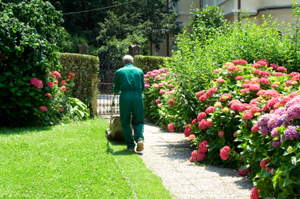
Clark's garden party: Premier MLA study group, a top advisor, and Fraser Institute all oppose ban on lawn care pesticides.

Related

"The Canadian Cancer Society is very disappointed... I think it does have the potential to put the health of British Columbians at risk." -- Nancy Falconer, Canadian Cancer Society

Big business and lobbyists have publicly defeated the plans of not one but two successive BC Liberal premiers, the Canadian Cancer Society and the Lung Association to ban cosmetic pesticides.

Last week a special legislative committee led by renegade BC Liberal MLA Bill Bennett and dominated by her MLAs handed Premier Christy Clark and Environment Minister Terry Lake a stunning rebuke -- rejecting Clark and Lake's stated goal of banning pesticides and herbicides believed to cause cancer.

Bennett's majority ruling also rejected the pro-ban submissions of roughly 80 per cent of the over 8,600 individuals and organizations that participated -- a record number for a B.C. committee.

Now Clark faces a lose-lose proposition.

She can either kowtow to the cosmetic pesticide industry in a humiliating surrender that will cost votes among urban environmentalists and conservationists -- or override her own MLAs' lengthy study and embarrass them in public 11 months before an election while also aggravating some rural voters.

New Democrat MLAs on the committee support the ban, ironically having accepted Clark's invitation to work together, while her own MLAs went rogue.

Promises made

Clark just can't win on this one but she should have at least known better when she proposed the ban during her BC Liberal leadership campaign.

That's because former Premier Gordon Campbell -- you know, the guy whose name she never says in public (kind of like Lord Valdemort's in the Harry Potter books) promised similar action in the 2009 B.C. Throne Speech.

"British Columbians will be consulted on new statutory protections to further safeguard our environment from cosmetic chemical pesticides," it said.

But that 2009 promise was broken after well-organized cosmetic and agricultural pesticide users mounted a powerful petition campaign to enlist the opposition of golf club members, sports field users, nearby homeowners and others to kill the ban dead.

And Clark's own promise was even more threatening to the industry.

"To put families first, we must ensure that our families are raised in safe environments," Clark said during her leadership run.

"That is why I want to see a ban on cosmetic pesticides on lawns, parks and playgrounds. These dangerous pesticides are proven to increase the likelihood of childhood cancer and other illnesses, and have no place near our homes. I don't want to see my son playing on a lawn with toxic pesticides. I don't want to see anyone's child playing on a lawn with toxic pesticides."

Pesticide makers' backlash

As premier, Clark set up a special legislative committee to investigate a ban, chaired by MLA Margaret MacDiarmid, a family physician and former president of the B.C. Medical Association.

But when MacDiarmid was promoted to cabinet, the chair went to Bennett -- an outspoken right-wing rural MLA who has previously been suspended from the BC Liberal caucus for public criticism of Campbell before the premier was forced to resign.

And the ban proposal also brought a well-funded effort from the multinational makers of agricultural, lawn and garden chemicals like Round-Up and Killex under the umbrella group CropLife Canada, which also includes agricultural producers.

Killex is produced by Scotts Canada and Round-Up is manufactured by Monsanto, both CropLife members, for example.

Other CropLife members include Dupont, Federated Co-operatives Ltd., which donated $2,650 to the BC Liberal Party since 2010 Dow AgroSciences, a subsidiary of Dow Chemical, whose Canadian arm donated $2,500 in 2005 and Univar Canada, which donated $925 in 2009.

CropLife wasted no time trying to kill the second attempt at a cosmetic pesticide ban, hiring prominent senior lobbyist Bruce Young of the Earnscliffe Strategy Group to represent their interests starting in March 2010 and ending March 31, 2012.

Young's "targets" according to the B.C. Lobbyists Registry, included Clark and just about every other BC Liberal MLA, as well as New Democrats and independents.

(Young also lobbies on behalf of the B.C. Salmon Farmers Association, among other groups and businesses.)

Earnscliffe's Michael Drummond also worked for CropLife until April 30, 2012 and four in-house CropLife executives also registered to contact MLAs.

Premier Clark's divided house

The anti-cosmetic pesticide ban forces also have a very powerful ally in Gwyn Morgan -- a key transition team advisor to Clark during her leadership campaign and the former CEO of Encana, the giant natural gas firm.

Morgan has publicly attacked municipal bans on carcinogenic insecticides and weed killers, saying the Canadian Cancer Society was supporting "junk science," as were any "scientifically illiterate municipal councilors" who agreed with it.

Claimed Morgan: "The medical evidence is scant."

After all, what do the Canadian Cancer Society, the Canadian Association of Physicians for the Environment, the Lung Association, the Canadian Breast Cancer Foundation and the Public Health Association of B.C. know about medicine anyway and how dare they call for a ban?

Morgan no doubt disagrees with the more than 70 per cent of British Columbians who favoured legislation restricting pesticide use in a 2010 Canadian Cancer Society commissioned poll and has made clear his views on the over 35 B.C. municipalities that already restrict cosmetic use of pesticides.

The Canadian Cancer Society isn’t impressed with the Bennett committee's decision.

"If these recommendations become law, they will not protect all British Columbian children from being exposed to unnecessary chemicals and possible carcinogens," said Barbara Kaminsky, CEO for the B.C. and Yukon branch of the Society.

"We waited years for the B.C. government to follow the lead of other provinces and B.C. municipalities, and this is the result? The report was slow in coming and is weak in content. It is disappointing overall," Kaminsky said.  

Fraser Institute's green (lawn) argument

Legislative committee vice-chair, NDP MLA Rob Fleming, agrees.

"New Democrats are profoundly disappointed in the outcome of this process," said Fleming. "The associated health risks of cosmetic pesticides warrants government action to reduce everyday exposure to toxins that are potentially harmful and easily misused."

But joining Bennett and Morgan in opposing the Cancer Society's call for a ban on pesticides -- the right-wing Fraser Institute think-tank.

"Prohibiting the cosmetic use of synthetic pesticides ignores the benefits enjoyed by Canadians in maintaining aesthetically pleasing green landscapes," states an article in its Fraser Forum magazine. "Either a blanket ban or an environmental tax will encourage individuals to substitute natural alternatives that can be potentially more harmful."

Yes, what could be more harmful than pesticides except "natural alternatives"?

Morgan, not surprisingly, is a big fan of the Fraser Institute, sitting on its board of directors and donating $1 million to it together with his wife Pat Trottier. And he is a public defender of genetically modified foods too.

Morgan also sits on the board of the Manning Centre for Democracy, the group formed by former Reform Party leader Preston Manning. The Manning Centre hosted longtime federal Liberal Clark earlier this year for a breakfast speech at a gathering titled "a conservative family reunion" in an effort to bolster her Tory credentials.

But Clark's right-wing pals like Bennett, Morgan and the Fraser Institute may seem more like pests to her now as she faces a no-win decision on cosmetic pesticides that can only alienate one group of voters or another when she needs far more support, not less.  [Tyee]

19  Comments:

Login or register to post comments

  • Vox.Pop

    1 year ago

    Morgan's puppet

    Seems Chrissie is discovering what it's like to cross the puppet master (Morgan).

  • danneau

    1 year ago

    Politics

    Clark is already under the bus. Whether she uses this situation to do the right thing for once will be interesting to watch. There is the question of how much influence is exercised behind the scenes by those who managed to bend the committee to their will, which, of course, may well have a serious effect of what the Premier will be doing once her mandate runs out. There is also the possibility that the current opposition will implode and that there will be some further extension of the government by right-wing cabal, in which case the taste of a little crow (promoting the democratic process through committee) will be a small price to pay for the rewards that await her in the next phase of her existence. How sad that a group of people can wreak havoc on the health of the population and not only face no penalty, but also get to run the business of a government that is only about business.

  • toquer

    1 year ago

    Roundup's not so bad....

    Disingenuous, to say the least, to specifically cite Roundup in the same paragraph as concerns levied by the Cancer Society, as it is a relatively benign herbicide. Some studies exist that indicate potential concern, but far more studies (and national policies) show that it is amongst the safest herbicides available, and of the studies that highlight concerns, other studies challenge their conclusions.

    So why make it one of only two products mentioned in this article? Perhaps Tieleman, in his rush to take shots at his favourite targets, finds research a tedious and expedient obstacle.

  • puppyg

    1 year ago

    Tough call, Christy. Support

    Tough call, Christy. Support spraying park lawns with carcinogenic poison or bend to the dark corporate overlords. Good luck.

    Tougher still would be to challenge the spraying of our food with poison. No politician is going to touch that.

    'Do the right thing' isn't even in the picture. Why is that?

  • cottamkj

    1 year ago

    Who mowed down the Premier?

    In the distant and colourful land of B.C. there lived a Premier Christy Clark, an MLA Bill Bennett and the wicked Canadian Cancer Society. Christy Clark wanted to ban the nasty cosmetic pesticides, but an MLA Bill Bennett developed a very close relationship with the pesticide industry--in fact, he came to believe everything they told him, despite his loss of several relatives to cancer. So, sadly enough, the residents of B.C. are not going to get their pesticide ban any time soon--at least as long as Bill Bennett is an MLA. Bill Bennett doesn't believe in junk science, the nasty science of the Canadian Cancer Society. He seems to prefer the science of CropLife Canada representing the pesticide makers and he fully trusts Health Canada. After all, CropLife Canada and Health Canada are in the same camp, they both maintain that pesticides are completely safe when used as directed. It is very, very sad to see a politician develop a cosy relationship with any industry, particularly the pesticide industry. However, time will tell whether residents of B.C. will stay satisfied with the status quo, i.e. B.C. according to Bill Bennett.

    r

  • gadrogeek

    1 year ago

    Mary McNeil

    I wonder if the Honourable Mary McNeil has talked to her "friends" at the BC Cancer Foundation. She was the president and CEO there for eight years.
    I would love to be a fly on the wall for those conversations!
    And Roundup is NOT safe, not by a long shot. Anyone still holding that belief is sadly out of touch with current knowledge, and probably thinks GMOs are good too. Here is one of many "reviews" of this wonderful product.

    http://www.gcbl.org/forum/there-safe-alternative-roundup

    Greg Shea (Lake Cowichan)

  • alive

    1 year ago

    Wanna weed my garden?

    Has it occurred to anyone that they do not have to buy products they do not like?

    Maybe this is more about wanting to control others?

    Many of us have a bit of a garden, whether we like it or not, and perhaps some of us do not enjoy crawling around on hands and knees to weed?

    My point would be that as long as one handles poisons responsibly, the damage is minimal.

    Nobody seem to complain about airplanes dumping tons of fuel over cities whenever they feel a need!

  • hg

    1 year ago

    Garden

    Wwmg, why don't you just pour a cement pad and paint it green, probably cheaper in the long run

  • bcguy

    1 year ago

    Does the BC Liberals actually

    Does the BC Liberals actually have any policies or does each one of them go their seperate ways?

  • metacomet

    1 year ago

    Caterpillars and butterflies don't sit on the boards

    Caterpillars and butterflies don't sit on the boards of the big agrochemical companies but thank goodness they are allowed to alight and crawl around city council meetings, where they've been heard loud and clear: "please don't kill us!"

    Children fancifully dressed as insects of various kinds have been so effective at representing the anti-pesticide movement in municipal councils across BC, new federal environmental assessment guidelines have attempted to have such representations banned for being to....well, too childish. But that's exactly the point city councillors have heard and taken to account when drafting municipal bylaws. Not often are children so politically effective; not often people listen to what children have to say, except, when it comes to pesticides, the salient point couldn't be made better by any other than those who have are going to be exposed the longest to what we do today.

    There are other good reasons why pesticide restriction has been articulated more in the municipal jurisdiction: backyard application of pesticides within municipalities is much heavier and much more chemically diverse than pesticide use in farm fields. Towns and cities are where children will be most exposed to pesticides, not on farms or on the products they supply. Another important distinction is that farmers generally economize the amount of pesticide they use (and a viable market for expressly organic food crops already exists and is growing) whereas domestic applicators tend to arbitrariness (partly at the behest of direction labels that double as marketing tools) and overuse, that is, they usually use too much of the wrong stuff. Double that just to be on the safe side (which the label often recommends.)

    It should be noted that municipal pesticide restrictions, whether influenced by kids dressed as butterflies at town meetings, or by pesticide industry lawyers and lobbyists, are seldom total. Most often the bylaw commits to banning the use of specific pesticides on public land only, leaving private lots up to the owner's discretion.

    It never hurt that that discretion is sometimes swayed by those cute kids protesting at city council. Only the curmudgeons say they were put up to it.

  • RickW

    1 year ago

    metacomet

    Quote:
    backyard application of pesticides within municipalities is much heavier and much more chemically diverse than pesticide use in farm fields. Towns and cities are where children will be most exposed to pesticides, not on farms or on the products they supply

    Too late, methinks:
    http://www2.macleans.ca/2012/05/08/on-why-we-have-breasts-what-we-dont-know-about-implants-and-the-future-of-breastfeeding/
    After reading a report about the presence of environmental toxins in breast milk in 2004, American journalist Florence Williams, who’d just had a child at the time, decided to have her own milk tested. She mailed samples to a lab. The results were astounding and unsettling: her toxin levels were exceptionally high

  • cottamkj

    1 year ago

    About controlling others

    The reader who suggests that a pesticide ban amounts to controlling others, and they are unwilling to be controlled, forgets that if there is no ban than those who apply pesticides are already controlling their neighbours. After all, their poisons penetrate into other people's yards, their bodies and their drinking water.

  • irth1st

    1 year ago

    toquer

    Toquer - There is NOTHING benign about Round Up! The active ingredient is Glyphosate which is even proven by the BC Ministry of Environment to be harmful to amphibians. The surfactants that assist in adherence to broadleaf species allows the chemicals to penetrate the cells of living organisms and has been PROVEN to cause genetic alterations. This crap accumulates in the environment and has long lasting residual effects. If you see a BC cutblock that has been sprayed with Round Up signage will be posted recommending to NOT EAT any berries found near the treatment area. If you want to douse yourself in toxic chemicals go ahead but I do NOT WANT my child being soused in toxic chemicals in school and public playgrounds!

  • dave49

    1 year ago

    How gross!

    And we have to remind ourselves, this ugly influence-peddling goes on all the time.

    An example that comes to mind is these very questionable fire retardants. Because the California standard calls for resistance to open flame, it recently came out that almost all upholstered furniture is treated to meet the California standard.

    I don't know how many other cities have banned cosmetic pesticides, but Vancouver has, so if you want them, you have to shop elsewhere. The natural alternatives sold in Vancouver are mostly vinegar. Look on the Internet and you can find a recipe (vinegar, a bit of salt and a few drops of liquid soap). For Dandelions, this solution works best when applied in the sun.

  • A Voice

    1 year ago

    Start with facts

    First statement I want to make is asking for clarification.

    Pesticides or herbicides...(2) very different products, and until every story I've read on this subject...the one above as well, states that there is a difference, to me...well, you know what they are speaking out of.
    To call for a pesticide ban, and then to go off on Round up is like condeming cars, then using a boat or a train as an example.

    I dont care one way or another about the ban...but please do some research on the subject.

  • Cantankerous

    1 year ago

    Municipal bans

    Perhaps the banning of pesticides by many municipalities and the interplay with the proposed provincial ban merits some mention in this article? Sure many parts of the province are not within a municipality but large segments of the population already cannot use pesticides based on where they live and many retailers no longer sell them as a result.

  • nutsnbolts

    52 weeks ago

    UNELECTED

    preemie with severe case of sociopathy. Sick, sick, sick she is.

  • woodworker

    52 weeks ago

    Uninforcable

    Sure ban the stuff and then go to the next community or the US and buy all you need. Also if you can't get round up a little gasoline on the weeds works well and keeps stuff from growing back.
    Roundup is used regularly and then soil tests done two weeks later and the crop planted and sold as organic.

  • Howard William

    51 weeks ago

    Research links pesticides to bee colony collapsse

    "Colony collapse disorder threatens food crops valued at $15 billion a year. New research says farm chemicals (such as Roundup) put our food system at risk." -- Tyee

    http://readersupportednews.org/opinion2/271-38/11620-a-last-chemical-gasp-for-bees