
Opinion

Overstated Claims for Positive 2010 'Games Effect'

Latest tally of Olympics benefits requires skeptical eye for small print and spun numbers.

By Bob Mackin, 28 Oct 2011, TheTyee.ca

GIMP-Goalie-300.jpg

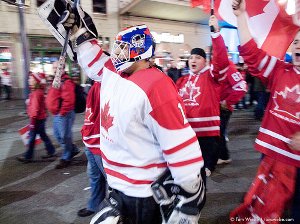
Fans celebrating during 2010 Olympics in Vancouver. Photo compliments of by Tom Wiebe via The Tyee photo pool.

Related

Like the 2011 Stanley Cup final, the PricewaterhouseCoopers Games Effect series of reports went the distance and left a confusing, frustrating legacy.

The seventh and last edition of the British Columbia and federal government-sponsored reports was published Oct. 27. It was not an exhaustive audit, but instead the underlying intention was to convince taxpayers that their investment in the 2010 Winter Olympics was worth it.

Initial estimates of a $10 billion bonanza trumpeted by Premier Gordon Campbell and Finance and Olympics Minister Colin Hansen never materialized.

PWC estimates a $2.3 billion gross domestic product impact for the 2003 to 2010 period. Impressive? Until you consider the real GDP in the Games year alone was $154 billion.

Tourism got a $228 million shot in the arm over the seven-year period, of which $139 million was for food, beverage and lodging, $33 million transportation and $18 million shopping.

What about the 'aversion effect'?

The report measures incremental impacts generated by federal government spending and investment from other out-of-province sources and offers a surprising revelation about the host province.

"In fact, much of the spending by B.C. residents during the Games was not truly incremental. A large portion would have otherwise been spent on other forms of entertainment or activities somewhere else in the province (e.g., ski resorts, museums, festivals, theatres)."

The $3.48 billion in incremental spending from 2003-2010 was led by construction ($1.26 billion), operations ($1.54 billion) and tourism ($230 million).

"The majority of the third-party spending (on construction) is due to the City of Vancouver assuming responsibility for funding and completing the Vancouver Olympic Village."

The report's timing is noteworthy. It was released just three days before Guadalajara's 2011 Pan American Games in Mexico conclude and the Pan Am flag is handed to Toronto. The federal government wants to get Ontario excited about the 2015 "Golden Horseshoe" Games. Which probably explains why the B.C. Finance Ministry wouldn't act on its own and disclose the cost of the PWC reports.

A key omission from the Oct. 27 report is the so-called aversion effect. Mega-events, according to the College of the Holy Cross in Worcester, Mass., cause host city residents to alter their consumption patterns and Games-time visitors tend to displace both locals and regular visitors.

As such, a May 2010 report by Holy Cross found the 2002 Salt Lake Winter Games "had a modest short-run impact on employment and no significant impact on total employment in the long run." That followed a November 2008 report that found hotels and restaurants in Utah gained $70.6 million, but general merchandise sales fell $167.4 million.

Five-ring chaos

PWC included a disclaimer that it "relied upon the completeness, accuracy and fair presentation of all the information, data, advice, opinion or representations" from public sources and the B.C. and Federal Olympic Secretariats." Which may explain some key errors of omission and commission.

Games Effect, page 24: "The Olympic and Paralympic medals were created using e-waste, including metal salvaged from televisions, circuit boards and monitors."

Reality: To read the report, you'd think VANOC and its sponsor Teck spun gold (silver and bronze, too) out of garbage. Medals actually contained just trace amounts of old computer parts and TVs: 1.52 per cent of each half-kilogram gold medal, bronze had 1.11 per cent of e-waste and silver medals had a .122 per cent sliver. Hidden in the Teck 2009 sustainability report is this gem of sustainable travel: "To maximize recycling efficiency, we sent some of our e-waste to Umicore facilities in Belgium in order for them to process our e-waste and provide us with metals that were then used in the Olympic medals."

Games Effect, page 125: "During the Games, VANOC and BC Hydro used a real-time online dashboard to track electrical energy consumption and carbon reductions achieved at Olympic sites. The Venue Energy Tracker was created by Vancouver-based Pulse Energy."

Reality: The dashboard didn't include the biggest, most-seen venue of them all. B.C. Place Stadium, site of the opening, closing and nightly medals ceremonies, ran for two months on Aggreko diesel generators that raised the ire of neighbours angry with the all-night noise and exhaust. VANOC eventually fashioned wooden mufflers. There was even a diesel spill one night in January 2010.

Games Effect, page 60: "The 2010 Winter Games enjoyed the most extensive coverage ever produced for the Winter Games reaching a record potential audience of 3.5 billion people worldwide. The Games were covered by 235 broadcasters and television stations in 220 territories."

Reality: The IOC's own July 2010-published Marketing Report said the potential audience reach was 3.8 billion but the actual estimated audience was 1.8 billion. That's almost half the inflated 3.5 billion estimate of viewers announced midway through the Games by marketing director Timo Lumme.

Games Effect, page 5: "Canadian athletes responded to the medal challenge by winning 14 gold, seven silver and five bronze medals during the Olympic Games for a total of 26. With that success, Canada earned the distinction of winning more gold medals than any other country at a Winter Olympics."

Reality: The $110 million Own the Podium high-performance program pumped $97.55 million into Canadian sport from 2006 to 2010 with the goal of making Canada the overall medal champion with 35. Instead, the United States (37) and Germany (30) took home more medals. The lofty goal for the home team was largely forgotten after Canada won hockey gold in the final event of the Games.

Games Effect, page 37: "On the municipal level, the estimated economic impacts of the Metro Vancouver Commerce 2010 Business program's $168.8 million investment deals are estimated to be $306.2 million in total output and $156.2 million in GDP."

Reality: MVC's $168.8 million figure, coincidentally contained in an MVC-sponsored report by PWC, was widely discredited when released last February. The estimate relied heavily on a controversial, unverified claim that the taxpayer-funded Olympic hospitality program helped attract special effects-heavy Hollywood North-lensed blockbusters Thor, Tron: Legacy and Mission: Impossible 4. Only $22.4 million of the alleged windfall was actually for recurring expenses, like office rents and salaries. MVC has refused to publish the list of the 97 executives it plied with free Olympic tickets, dinners and drinks.  [Tyee]

17  Comments:

Login or register to post comments

  • anne cameron

    16 weeks ago

    we'll never know

    We'll never know the cost of this orgy. The figures have been tweaked and tweaked again and again until there's no way any sensible person would begin to believe them. And the b.s. still flows. And the sites which were forever changed and damaged will remain like bleeding wounds for years to come.

    We'll be paying for this for decades. And the fools and shills who pulled it off are actually presented on TV as being experts...

    oh well. At least the damned thing is over and done with..except for the paying of the bills, of course, that won't go away any time soon.

  • infolark

    16 weeks ago

    different strokes

    well here we are again . if someone in the private sector running a publicly funded corporation tried to get away with reporting spending in this manner the SCC-- RCMP and politicians would have a ball with then --Jail would be too good BUT let it be our tax dollars controlled by all levels of Government and it does not matter even our watchdog is hepless to do anything or even get proper information --- SOMETHING KINDA STINKS OF DIFFERENT STROKES FOR DIFFERENT FOLKS HERE

  • pwlg

    16 weeks ago

    tweeking numbers

    Thanks Bob for continuing to cover the story.

    The first Premier Campbell's Economic Impact Study indicated an impact of $20 billion. To get this figure they had to run the hamster wheel on the economic impact software application for 10 years beyond the games year (2020).

    The corporate media at the time swallowed it hook line and sinker.

    Two more studies were produced and each showed significant downward results that differed greatly from the rosy picture Campbell and Co. wanted us to believe. But as we see now, none of the studies were even close.

    Some were aware of the farce and many were not.

    Having read the Federal Government's Hosting Policy in early 2003 I found a revealing statement about the need for government to conduct a full cost-benefit analysis. It cautioned, with an exclamation mark and bold type:

    "Economic Impacts are not benefits!"

    When a study is produced to sell rather than assess and none of the media raises a doubt we have a problem. There was overwhelming evidence from academic studies showing most impacts from major sporting events comes from price increases in the host city during the years leading up to the days of the sporting event.

    I would like to see what the PST take was from just the month of February from 2004-2010. If the Salt Lake City games are any indication, sales tax rose only 0.6% from the norm.

    Olympic bumpf is the worst of corporate capitalism and the most seductive.

    It's unfortunate that the Auditor General's Office didn't have the time and resources to chase down all the accounts intertwined and creamed off the top of all ministry budgets to determine the full costs of the Games.

    We already know of the benefits and they were short lasting indeed!

  • Fish-counter

    16 weeks ago

    To know the real cost, ask Nodar Kumaritashvili

    He is the Georgian luger who wrapped himself around a support beam on a practice run. The men's course was too fast, but Vanoc never fessed up. I wonder if John Furlong lost any sleep over it.

    See, when organisations go into denial about accidents like this, they are lying to themselves and trying to lie to the rest of us too.

    "At Friday night's Winter Olympics Opening Ceremony, a moment of silence was observed to honor Kumaritashvili and his fellow Georgian Olympians wore black armbands in his memory.

    Kumaritashvili told his father that he was terrified of the track on which he later died.

    According to the Vancouver Sun, Kumaritashvili was traveling at speeds greater than 90 miles per hour at the time of the crash. The luge track had been called the fastest ever, and the AP notes that concerns were raised even before the fatal crash:

    "Training days in Whistler have been crash-filled. A Romanian woman was briefly knocked unconscious and at least four Americans - Chris Mazdzer on Wednesday, Megan Sweeney on Thursday and both Tony Benshoof and Bengt Walden on Friday in the same training session where Zoeggeler wrecked - have had serious trouble just getting down the track.

    "I think they are pushing it a little too much," Australia's Hannah Campbell-Pegg said Thursday night after she nearly lost control in training. "To what extent are we just little lemmings that they just throw down a track and we're crash-test dummies? I mean, this is our lives."

    Lying about the money is the least of it.

  • Grania

    16 weeks ago

    Owelimpics

    This will stand as the biggest lie and rip off of the Campbell / Liberal legacy...the most arrogant bloodletting of the residents of this province. Disgusting.

  • pwlg

    16 weeks ago

    we were wrong

    The NO GAMES 2010 group were wrong. We estimated the economic "impacts" on BC's GDP to be 1/6th of 1% over the 8 year period leading up to the games.

    According to what Mackin has written it is actually 1/5th of 1%.

    NO GAMES is sorry for misleading the public. NOT!

    The feds knew that any "impacts" would come from expenditure or spending switching from one sector of the economy to another and from one area of the country to another.

    Impacts are not benefits. The New South Wales (NSW) audit office was able to wrestle the 2000 Sidney Australia Summer Olympic Games documents from the various government departments to determine total spending by government offices supporting the Games. These were indirect costs and the office found $245 million that were unreported as Olympic related expenses.

    The NSW audit office stated that the money would have been better spent on schools and hospitals where benefits are long lasting and where all citizens benefit.

    So go figure. Everything is juiced up when it comes to the Olympics including the so-called television audience. The claim more people watch the games then there are households with television in the world.

    The sporting events are the veneer of the Olympics, the actual benefits occur to the inner core, the family, that travels every two years to another city hoodwinked by "impacts" rather than benefits.

  • pwlg

    16 weeks ago

    just how short lasting are the Olympics?

    Name three Canadian gold medal winners from the 2010 Winter Games?

    Where was the 2006 Winter Games held?

  • pwlg

    16 weeks ago

    TV Audience numbers based on assumptions not reality

    The European Tour Operators Association (ETOA) "Olympic Report" exposes the myth by the IOC regarding who is watching the Games on TV.

    The section of the ETOA report titled, "A Little Misunderstanding: Who is Watching?, states that the numbers used by the IOC just don't figure. The IOC assumes that every human being on the planet that has access to electricity watched a part of the Games.

    The IOC 'believes' that 60% of the entire population of the planet watched the Athens Summer Games on TV every day. It assumes that even all of the global children from newborns up to 5 years of age watched the Games every day.

    The ETOA report goes on to state: "...this assumption that the IOC builds up its widely publicised audience figures running into billions. For the “2 billion” and “3.9 billion” are estimates of the total possible audience. It is a measure of all of whom it is possible to say live near enough to a television set that they could watch the Olympic Games. If you live in an area where there are televisions that can receive Olympic coverage, then you are part of the number. It is like judging an individual book’s popularity by counting how many people live near book-shops or who have access to public libraries."

    You can read the entire report at:

    members.etoa.org/Pdf/ETOA%20Report%20Olympic.pdf

  • pwlg

    16 weeks ago

    Summary of European Tour Operators Association Olympic Report

    The 2012 Olympic Games will be one of the most significant events in London’s history. It is already transforming the North-East part of the city, and will undoubtedly be a catalyst for regenerating the capital’s self-esteem.

    It is vital for everybody concerned that the Olympics are successful. But the tourism industry is often singled out as the principal beneficiary. This study explores the extent to which this is valid.

    It looks at sporting events and tourism, the television audience and the impact of hosting the Olympic Games on a city’s tourism infrastructure. It ends with studies of Barcelona and Sydney: cities that have had ostensibly “good” games for tourism.

    The primary purpose of this study is to generate debate. It shows that there is no strong link between hosting sporting events and increased tourism. The audiences regularly cited for such events as the Olympics are exaggerated. Attendees at the Games displace normal visitors and scare tourists away for some time. Both Sydney and Barcelona had “excellent” Olympic Games, but their tourism industries have not significantly benefited.

    Thus there appears to be little evidence of any benefit to tourism of hosting an Olympic Games, and considerable evidence of damage. It is vital that the problems experienced by the host cities of past Games be acknowledged and addressed in order to avoid them re- occurring.

  • pwlg

    16 weeks ago

    "oh well, at least the damned thing is over and done with..."

    The Olympics is only an example of how the public is swindled by corporations and corporate controlled governments. The 2010 Games may be over but the 2011, 2012, 2013...games are still going on.

    The Olympics were a good example for us to wake up. The biggest swindle in BC took place under our noses, with a beer in hand and licence plates extolling us to be the best in the world we gobbled it up as if we were starving.

    The next great game taking place and another public swindle is what's happened to BC Hydro.

    BC Hydro deals with private power producers may just bankrupt our great provincial public asset. Time to Occupy Hydro.

  • pianosaurus rex

    16 weeks ago

    no may bankrupt about it

    There is no “may bankrupt” about it. This is from the auditor general. The incompetence and deceitfulness leaves one speechless; this is a government that could not make a profit running a candy store on Hallowe’en;

    http://www.bcauditor.com/pubs/2011/report8/bc-hydro-audit-rate-regulated-accounting

    More here;

    http://www.canada.com/news/Hydro%20bookkeeping%20creates%20billion%20risk%20ratepayers%20auditor%20general%20warns/5619234/story.html?mid=51435

    And more again from Eric Anderson here;

    http://thecanadian.org/k2/item/1128-bc-hydro-accounting-auditor-general-john-doyle-erik-andersen

    happy reading...

  • freewilly

    16 weeks ago

    big party

    Go big or go home. You would have thought BC might have learned a lesson or 2 or 3 about wreckless spending.

    Why is it government always comes up with the cash when they want to throw a party?

    During the 80s we had the restraint program
    big government cutbacks, then suddenly we had the cash to throw the expo 86 gig.
    A huge waste of time and money that disappeared down the rabbit hole. Certainly benifitted some and impoverished many.

    Can't forget skytrain and that crazy chocatahalla highway ...... which lead up to expo, all way over budget

    After expo 86, false creek land sat vacant and festered. Pavillions rotted and were halled away for nothin. But it didnt take too long, until they gave away all that prime realestate to Lee Kai Shing and hosted the Indy. Really classy.
    Hard times followed, land speculation boomed, poor folks were displaced, welfare cuts etc... NDP government finally, bingo gate, Ujal Dosangh screwed the party, back to extreme cutbacks, harsh gov, then a 2nd kinder gentler campbell government, sell off more of this and that, ipps so on and so on

    Bc has just been boom and bust and back again.
    I found myself in the middle income bracket for the first time in my life during the late 90's and first dot com boom. Then 911 back to bust. And after that its a blurr

    Then the Olympics were coming.....
    I shake my head

    It wasnt all bad, the lowermainland and BC had much needed infrastructure upgrades. ROads and bridges were built, skytrain extended etc... but the rush to finish all these projects created extra costs as it did in 86.
    I can't help being amazed at some of the engineering feats accomplished in the Lowermainland in the last 15 to 20 years.

    I particularily enjoyed the 50 meter swimming pool in Walnut Grove (Langley). The most beautiful pool ever, built a few years before the Olympic bid was sealed. DOnt know why I mention it. go swimming there...

    The inner island highway, another engineering marvel, not the most exciting drive, not enough roadside toilets, too many lights and over passes coming out of nanaimo, but it was a road in the right direction. Money went back into the province and local economy. The firm designing the project won awards and high praise, not friends of the NDP.
    To sum up things, no formula can calculate wether the Olympics were a good thing or not. Its as complicated as climate change, too many variables.

    Big parties bring benifits, depends on whos invited

  • dave49

    16 weeks ago

    pwlg - What about hidden Govnerment contributions?

    As part of some networking, a buddy in Ottawa connected me with a federal civil service colleague who had moved out here to work on some esoteric 'green' project. Turns out he was working on the Olympics, but is wasn't going on the books as that. How much more hidden support was given to the Games by Ottawa and other levels of government?

    I recall about three months after the Games finished, the City of Vancouver came out with an report that claimed they had spent over $400 million on their support of the Games, from winning the bid to the end of the Games. That is almost half a year's budget for Vancouver. I have never heard any explanation of how the City paid for all this. It's not like that line from Neville Shute's "On the Beach", "you can pay by orange peel for all I care". We're talking almost half a billion dollars and where did the City get the money to pay that bill?

  • skyhunk

    16 weeks ago

    All hail John Furlong

    Isn't it interesting to look back on the Winter Olympics through the lens of the mass media - television and newspaper reporting. According to the media John Furlong is surely deserving of sainthood, or failing that an appointment to the Senate!

    WhoTF paid these reporters off? His legacy is the best Winter Olympics ever, dontcha know? I just threw up a little in my mouth.

  • zalm

    16 weeks ago

    Always a pleasure

    Nice article, Mackin; and good comments, pwlg.

  • Fish-counter

    16 weeks ago

    The real crime is that the deception continues

    Vancouver has BC Place and the new convention centre. Nanaimo has a conference centre and a hole in the ground where the conference hotel was supposed to go. Everyone (well, Vancouver, Victoria, Nanaimo and Campbell River) is chasing the cruise ship economic mirage.

    We need real hard ideas on which to build the future of this province, not the peripapatic butterflies of tourism and the obsolescent convention industry. Rich gems though these were, their day is gone and we shall never see their like again.

    The Tyee wqould do a great serive to the province if they hosted a forum for the Really Great Ideas for the Economic Future of British Clolumbia. Dwelling on the past is futile; we need to face the future with he deftness of a black-tailed deer evading a cougar.

  • BDD63

    16 weeks ago

    The Winter Olympics Has Put Vancouver On The World Class List

    along with Salt Lake City, Lake Placid, Lillehammer, Turin, Calgary, Munich. All the best places to drive through on your way to someplace else.

    • The discussion for this story is closed. No more comments can be added.