Meet the doctor who's on a mission to bring back all that magical flavour.
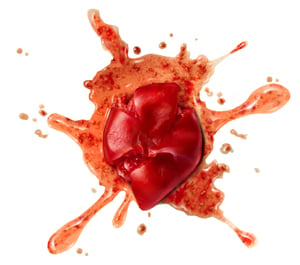
Crushed! We asked the doctor if B.C.'s hothouse tomatoes meet his approval. Squashed tomato image by Shutterstock.

-
Charging the true cost of "food miles" could change the way people eat. Fourth in a series
-
Digging for love, money, fame and sex appeal.
-
Eating a truly local diet for a year poses some tricky questions.
- Read more: Food, Science + Tech

[Editor's note: Regular Tyee contributor Jude Isabella is filing reports to The Tyee from the American Association for the Advancement of Science annual general meeting in Boston this year.]
Harry Klee grows tomatoes. Thousands and thousands of them. A professor in the horticultural science department at the University of Florida, he's grown hundreds of varieties, trying to produce a tomato that combines the taste of heirloom tomatoes and the robustness of the modern tomato. It's just going to take a while.
"If I could do genetic engineering and it was cheap, we could have a better tasting tomato today," says Klee, sitting in a plastic stackable chair at the Hynes Convention Center in Boston, enthusiastic despite the early hour. "But it costs something like $15 million to get a registration for a GMO. So we're taking a traditional approach. We know genetics are out there for improvement because the really old tomatoes taste good."
It's a matter of reaching back about a century to find those genes.
Research by Klee and his colleagues published last year detailed what makes a great tasting tomato. They identified 30 or so chemicals critical to flavour, a diverse group of chemicals at the mercy of a host of environmental factors -- it's just too complicated for breeders to reproduce a consistently good tasting tomato year after year. In fact, it's tough for the home gardener to save seeds and produce an heirloom that tastes the same year to year.
So Klee turned to molecular assisted breeding and with the tomato genome published by the Tomato Genome Consortium last year as well, the road to improved tomatoes is shorter than it was a few years ago. Just as researchers track mutations in the human genome for disease, Klee tracks the tomato genome for flavour, isolating DNA, running samples through high-tech gear that amplifies DNA fragments, allowing researchers to read the genetic code of any given tomato. It's easy and relatively cheap these days, but still time consuming.
'Flavour relates to health'
Klee plays with about a dozen or so genes from tastier varieties, like German Queen, to bring the yum-factor back to one of the most popular vegetables in the world. (Yes, the tomato is a fruit, but it's called a vegetable because the U.S. Supreme Court said so in 1893.) The leading producers globally include the U.S. and China, a country that now outstrips the U.S. in production although it jumped on the bandwagon relatively late, going industrial tomato-crazy just about a dozen years ago. For those two countries, fresh and processed tomatoes add up to $2 billion in annual farm cash. Canada is the leading producer of greenhouse tomatoes in North America, with Ontario growing the most, followed by B.C. with a total farm gate value of $385 million a few years ago. This is big business.
It's not that Klee is interested so much in farm profits as in human health.
"Flavour," he says, "relates to health." For North Americans, fresh or processed tomatoes are probably the primary delivery system for dietary Vitamin A. To get people to eat more vegetables, they all need to taste better, and Klee ultimately see this kind of research crossing over to other fruits and vegetables that seem to have lost their lustre after years of intense breeding for traits like shipability, disease resistance, and higher yields. Like Italian food chains, tomatoes have fallen victim to their own popularity -- they're bland.
"Here's the dirty underbelly of the industry," Klee says, sitting back in his chair and folding his arms. "The growers right now are not paid to produce a tomato that tastes good. They're paid for the number of pounds of round red objects they put in a box. It's not totally true of people at farmer's markets; you can buy some decent tomatoes there."
As far as B.C.'s greenhouse tomato industry, Klee dismisses the tomatoes as having zero genetic potential. Campari tomatoes are about the only varieties found in a grocery store that the tomato wizard gives a seal of approval. "They're a hell of a lot better than the ones in the big bins that cost a $1.50 a pound."
Klee calls it a disconnect between developers and consumers: tomatoes are bred for growers, not eaters. He aims to change that, although breeding a plant with high yields of good-tasting tomato is more difficult than improving the fruit for home gardeners. Oh yes, homegrown tomato snobs, those who refuse to buy tomatoes out of season, there is something in this for you. (Klee, by the way, thinks the seasonal eating thing is not something most people will do voluntarily.)
Tomato terroir
"For tomatoes, I like to draw the analogy of wine," Klee says, adding that B.C. has great wine, something he knows first hand from being on an advisory panel for the University of British Columbia's Wine Research Centre. "You can grow chardonnay grapes anywhere, from British Columbia to Chile, and you can produce wine: some are good some are terrible. Same grapes but it's the 'terroir.' Where you grow it, the soil, environment, microclimate -- all of it influences the quality, even the best vineyards are not going to the same great wine each year."
Like wine, tomatoes need some stress, not too much water, not too much fertilizer, and they like heat. And while the Pacific Northwest of North America is traditionally a bad place to grow tomatoes, a seed that combines the traits from tasty heirlooms with firm, pretty flesh of modern tomatoes would mean a fruit -- sorry, vegetable -- that doesn't split and fall off the vine when gardeners turns their backs for one second to pick some basil. And, for home canners, it means fewer blemishes to cut away and more tomato making it into the jar.
Seeds for the home gardeners might make it to the market in about a year and a half or so. Klee and his colleagues will be harvesting seeds in June. They're currently in talks with seed companies for production. If that doesn't work out, they'll sell the hybrid (currently nameless) through the University of Florida, like Rutgers University does with the Ramapo tomato.
Gardener tips
In the meantime, Klee, who has a summer home on Vashon Island, and lived in Seattle for years when he worked at the University of Washington, has two words for gardeners: Maglia Rosa. A tomato breeder in Berkley, California developed the Maglia Rosa looking for a tasty tomato that would grow in a cool-ish climate.
"They taste really good," Klee says, checking his watch; his presentation is in half an hour. "All the students who help us harvest go right for them and eat them. They're a nice variety, bred specifically for flavour."
Tomato lovers, Harry Klee has got your back.
Stay tuned to The Tyee for more science summit reporting by Jude Isabella. ![[Tyee]](http://thetyee.cachefly.net/ui/img/ico_fishie.png)
Jude Isabella is a freelance writer and author. She has written for numerous publications, including The Walrus, New Scientist, Canadian Geographic, Archaeology Magazine, BC Magazine, and The Tyee. She also spent more than a decade as the managing editor of YES Mag, the Science Magazine for Adventurous Minds. Find her previous Tyee articles here.
28
Login or register to post comments
Fiat lux
13 weeks ago
There's a very good way to
There's a very good way to grow tasty tomatoes, and all kinds of other vegetables, and the professor may have heard of it, as it has been around for thousands of years.
It is called "organic growing"
When we moved here to our land in 1979, after 24 years on supermarket junk in Vancouver, we rediscovered the lost tastes of the vegetables of our childhood with organic growing.
When we have to buy supermarket greens in the winters, they often end up as food for the chickens. Much of it foul tasking garbage, tasteing of the artificial fertilizers they're pumped up with in the factory farms, but city people don't know any different, so the crooks can get away with it.
Our garden was wiped out last summer by a sudden infestation of a breed of mice called voles. Never heard of them before, but all of a sudden the garden was tilled up by hundreds of them, no greens left. They even went underground after some of the potatoes, picking certain varieties for taste.
Not a single green pea grew, or was left, so we had to buy some. We couldn't eat any of it but the chickens loved them.
The same with meats. We never buy any meats in the supermarkets and wouldn't touch their antibiotics, growth hormones and with other poisons pumped up pork with a flagpole.
Ran out of our organic beef some years ago and couldn't butcher for a few weeks, so we bought some from 2 supermarkets and a butcher shop. Couldn't eat any of that stinking feedlot meat, dripping with tallow, but, again the chickens loved it.
When we see some organic meats in the supermarkets, their prices are many times of the prices of the feedlot garbage. Which is another fraud, as they should be far cheaper than the pumped up junk, but the parasite corporations see big profits in fooling people and the governments let them get away with the fraud.
We can't grow any tree fruits in our climate and can taste the fertilizers and sprays on every apple and other fruits we're forced to buy.
The world's food supply, especially the GM racket, is now controlled by a handful of mafia like criminal corporations, feeding the world with poisons and the hospital cancer wards with bald headed little kids.
I noticed that neither the professor, or the article says a single word on the effects of chemical farming, with the evidence of the destruction to our health and environment all around us. Which must be the result of generations of brainwash, called "science".
And yet the governments, with their hands held out for donations for their parties and with their miseducated monetary priesthood of so called "economists", are just standing buy and not only tolerating but encouraging this crime wave, as it jacks up their phony GDP figures and fools their people into submission.
Ed Deak.
bcwoodcarver
13 weeks ago
fruit trees
Ed, you can grow fruit trees anywhere in B.C. ie apples , pears , plums, apricots, grapes,some peaches.
Fiat lux
13 weeks ago
We have one single crab apple
We have one single crab apple tree,virtually nothing on it for years. Nobody can grow any fruit trees around here in our micro climate.
We have a month shorter growing period at our place, than our neighbours we can see and hear. But they can't grow any fruits either.
Don't think we haven't tried everything since we bought this place in 1975.
At the same time, we love it here and wouldn't move anywhere else.
Ed Deak.
Hakuin
13 weeks ago
How big
Is your greenhouse. Ed?
Fiat lux
13 weeks ago
About 8'x 8' . Solar . What
About 8'x 8' . Solar . What we've noticed in the past years that we don't get anywhere near the crops and quality we used to get, say 25 years ago. Others say the same.
I design and build things, buildings, machinery , furniture, but am not much of a gardener. My wife is the top expert in growing things and animals. I learned my lesson in 62 years of marriage next month to just shut up and do the garden work she tells me to do.
Ed Deak.
Hakuin
13 weeks ago
8x8 seems awful small for your situation.
As to the tastes of things now and then, yeah, I have to agree. One important point though, are most of the people you talk to (neighbours) middle aged and up? I realized myself not too long ago my own senses have been blunted by time sneaking up. Well, that and my depraved lifestyle probably.
Fiat lux
13 weeks ago
We have young people around
We have young people around here. Our partners have 3 kids. Our kids didn't want the lands so we gave away, yes "gave", close to half million bucks worth of land to people who appreciate it. What they'll do is hard to say, but when the expected economic collapse comes they'd better use their senses and keep away from the starvation of forced urbanization.
We went through it and learned our lessons in our young days and never forgot them.
We made a lot of growing experiments some years ago and know what can be done under our harsh climatic and poor soil conditions. Our piece of land could easily feed 100 people with certain products, eggs and meats.
Many "experts" are dead against cattle, but there are millions of acres no good for any other food production and feeding cattle with grains is not only unnecessary, but outright stupid, a relatively recent silly habit strictly for profit purposes.
I've been working with cattle since 1948 and know a few things about them.
Ed Deak.
Hakuin
13 weeks ago
Heh! Well of course you have young people
around too, but that doesn't help the subjectivity of taste question since they weren't around to taste original fruit and veggies back then. Tough to really compare since we have no way to really record a flavour.
Have to agree about cattle being appropriate case by case. It's easy to be anti-ranching if one holds up the agri-business example only.
Lawrence
13 weeks ago
Hawks cure voles
I can remember pulling some plastic off a field we were plowing and all these voles got to run about 20 feet before they were picked off by not all that many hawks.
One of the ways of attracting hawks and owls to your yard. is get a bird feeder, just make sure your bird food is mostly sunflower seeds and no millet.
Bailey
13 weeks ago
Self sufficient designs
You know, the more reading I do about issues like this, the more I wonder why we don't design more small scale residential sized devices that will provide a family with the things we really need. Like tomatoes.
The main cost for producing food is energy. Heat and light. If you don't count labour and shipping, it's about the only cost, once the equipment is built.
We already heat our houses, why shouldn't we use that same heat to produce food? A nice soil and management regime like the one Mel Bartholomew designed in his "Square Foot Gardening" book, combined with some supplementary wide spectrum fluorescent lights to lengthen the winter days a bit, and you ought to be able to grow food for continual harvest for your family, all organic and shiny.
I mean, you're probably already growing house plants. Wouldn't it be nice if you could eat them?
Lawrence
13 weeks ago
Ed,what you did
Is make life perfect for voles, they can reproduce at a breathtaking rate, just figuire out what you did to help these guys make baby voles and don't do that anymore.
I'm pretty sure my friend got so many voles because she laid down a bunch of black plastic mulch to keep the weeds down.
Fiat lux
13 weeks ago
We haven't done a thing
We haven't done a thing different from what we have done for over 30 years. Never even heard of voles before, but all of a sudden they took over, before we realized what was happening.
We could always control field mice with instant potato powder. When we took over this place there were thousands of them, also rats.
They eat the powder, drink and blow up. Doesn`t poison anything, or any other animals. Never had any numbers after that and what we had we could get rid of. But voles don`t go for it. We tried it
Now that we know about them we`ll go after them when the snow goes and there are only a few. Hopefully. I now also have a motion detector electronic predator bird noise maker.
Ed Deak.
Hakuin
13 weeks ago
don't think it was anything you did , Ed
sometimes rodent populations just ...explode.
https://www.youtube.com/watch?v=RTIlOlVT3LI
puppyg
13 weeks ago
spples? try 'Honeycrisp'
Honeycrisp is our most successful apple. It was developed in Minnesota for very cold areas. It is disease-resistant, sweet, crisp, wonderfully flavourful and a great winter keeper. Your crabapple can probably serve as pollinator. Hope you try it.
Hakuin
13 weeks ago
heh!
figures, just tried a pie with Honeycrisps and it turned out loathsome. Should have just eaten them.
Hakuin
13 weeks ago
say Ed
lemme know what you think of this:
http://vimeo.com/59404290#
Fiat lux
13 weeks ago
Vandana Shiva is a brilliant
Vandana Shiva is a brilliant person, who talks of the realities of life, not of the praise of distortions caused by imaginary monetary figures used by the capitalist/communist collectivizers to enslave the world.
Those of us who have experienced starvation and years hunger can understand what she's talking about.
If humanity wants to survive it must get rid of these mega corporations controlling food supplies, especially with the crime wave of GM seeds and foods, and return to individual farming by free people, not by wage slaves for profits for a few.
Individual, free, private enterprise farmers, on their own lands, are the only solution for saving the land and make the best, long term use of it, instead of the crime of chemical monocropping controlled by a mafia sector of agribiz corporations, similar to the Soviet kolkhozes, fraudulently called "competitive free enterprise", destroying the world.
Ed Deak.
RickW
13 weeks ago
Ed
Harry Klee is trying to grow a tomato that tastes good and can STILL be shipped an average of 2500 kilometres. He either isn't in favour of "grow local" or the thought simply doesn't enter into his configurations.
pwlg
13 weeks ago
what makes a good tasting veg
Am I hungry!
puppyg, I tasted my first Honeycrisp last year and agree, yum. Found them at one of the Farmer's Market in Vancouver while visiting. Hakuin, usually sweet apples aren't best for pies and should be reserved, as you say, for eating.
I lived in the Bella Coola Valley for awhile and they had a variety of the most delicious Gravenstines I have yet to see or taste anywhere else.
My wife and I were in southern France a few years ago visiting family and our new grandson, this was in late March/early April and were surprised at the volume, taste and availability of "fresh", and I mean fresh fruit and vegetables. We had a difficult time coming back and going to the grocery store, mainly organic, and noticed a great difference between North American "fresh" and France "fresh".
The almost daily farmer's markets in southern France was a treat for us and one thing we noticed about the countryside farms, they were small in nature, greenhouses were temporary and never resembled the factory ones they have built in Delta covering some of the richest soils in the best climate in BC!
Picking fruits and vegetables before ripe reduces the taste and quality even if they are organic. Shipping time of sometimes days also decreases quality, and of course, like the article states, when the design of growing fruits and vegetables is about everything else but taste we all lose.
Thanks for providing a few examples of tomatoes to grow Jude. Can't wait to get my hands dirty this Spring and plant some of them and hopefully in late summer get to taste some of these gems.
Happy gardening!
Fiat lux
13 weeks ago
Rick... Klee is in favour of
Rick... Klee is in favour of GM, which means that I'm not in favour anything he says, or does.
Neither is the ecology !
Ed Deak.
RickW
13 weeks ago
Ed
You wanna read about "genetically modified" you should read Margaret Atwood's "Oryx & Crake".............
Otto Rant
13 weeks ago
Foods are deliberately made bland to increase consumption
I wouldn't be too sure that bland taste is just a side effect of concentrating on other facts like appearance, durability, growability, etc. It may be deliberate.
Look at light beer and mild cigarettes. Same price as the full strength product, but people consume more to get the same result, benefitting the sellers. There's probably similar consideration behind a number of products, at first glance, probably other alcoholic beverages and fast food. In Europe, most food tastes better, and people are slimmer. In most other countries, even a small amount of Coca-cola is satisfying. Not here.
Try putting a couple of good tasting cherry tomatoes in a salad. They'll add just as much flavour as a couple of most full sized commercial tomatoes.
This brings into question the idea of whether improving taste will lead to more consumption of vegetables. People might not feel the need to eat as much of flavourful varieties to get the same pleasure. Also, I'm not sure that Brussels sprouts taste much worse than 40 years ago, although the vitamin content has almost disappeared over that time.
Better to directly breed vegetables for nutrition content.
Fiat lux
13 weeks ago
The main reasons for the loss
The main reasons for the loss of taste are the artificial fertilizers and other chemicals the lands and products are saturated with.
There's nothing wrong with the taste of organically grown vegetables and animals, etc.
People who taste meats in our house can't get over how great they are, but they can't get any from the supermarkets all screwed up in the feedlots.
Ed Deak.
NolaM
13 weeks ago
Try this.
http://backtoedenfilm.com/
Click on the watch film tab on the right.
http://www.royalsociety.org.nz/2008/12/02/rural-glass/
A bag of Peat or wood pellets also work as mulch.
I put in raised beds with Black/brown painted boards and that raised the temperature also.
An inch of mulch on top and you use 1/4 the water with no weeds. Wonderful.
We have had all kinds of Owls, Kestrels and Hawks move into the Okanagan because the mice/vole population north of us peaked and crashed.
Seed savers has events and there is a huge swell of exchanging heritage Tomato seeds.
I had 12 different types myself last year and 2 Tomatillos.
There is a wonderful story of old school tomato breeding in Radiator Charlies.
http://www.tomatogeek.com/2010/08/04/mortgage-lifter-tomato-story/
igbymac
13 weeks ago
Effectively missing what is important
"If I could do genetic engineering and it was cheap, we could have a better tasting tomato today," says Klee, sitting in a plastic stackable chair at the Hynes Convention Center in Boston, enthusiastic despite the early hour. "But it costs something like $15 million to get a registration for a GMO. So we're taking a traditional approach. We know genetics are out there for improvement because the really old tomatoes taste good."
The food industry doesn't seem to give a damn about what is important regarding food -- the nutritional value.
It strives for food that looks great, grows extremely fast and gives the best return on investment. Meanwhile everyone suffers -- literally.
Over 70 chronic degenerative diseases, from arthritis to diabetes to cancers to emphysema to heart disease to obesity to dementia and beyond are strongly linked to nutritional deficiencies. We ignorantly and stupidly (once taught the pharmaceutical rhetoric) attribute these things to old age. Although a factor in our eventual and inevitable decay, old age need not be one riddled with poor health in the majority of circumstances.
A tip: Go to you farmers market and buy the organic, odd shaped produce. It's less likely to be from poor stock or grown with all the pesticides, etc.
Hakuin
13 weeks ago
we don't HAVE to leave it to the big boys
http://diybio.org/
Jude Isabella
13 weeks ago
tomatoes
Interesting comments! The main point, however, is the idea of making plants, in this case tomatoes, taste good again through breeding, so that people eat more of the, plant more of them, and we re-create a generation of kids who knows what a good tomato tastes like. Our taste baseline has shifted. Tomatoes are not that hard to grow. Imagine if tasty tomatoes, with a firm texture, were available, not only commercially but also to home gardeners. Maybe it would inspire people to plant a few. Maybe for home gardeners a high yield and firm texture means they could can more of their own. With only a suburban plant and a small greenhouse it's tough to grow enough heirlooms to can, or heirlooms unblemished enough to make putting them in a jar worthwhile. And it's tough to find enough heirlooms (affordable heirlooms) from a local farmer. Humans have been manipulating the gene pool of plants and animals for millennia, the only difference now is that we can do it at a molecular level.
Jude Isabella
13 weeks ago
tomatoes
Sorry, clumsy fingers....typing that comment into a smartphone while waiting for a plane!