

 SHARE:
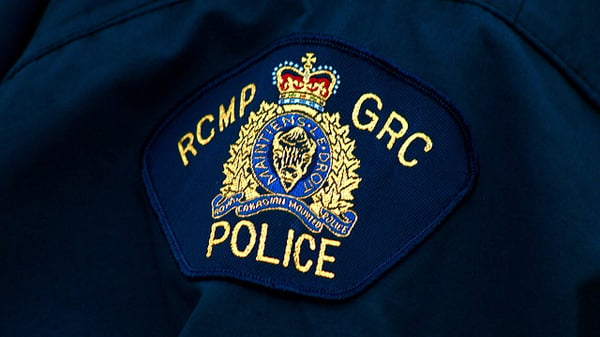
[Editor's note: The Supreme Court yesterday put a big crimp in "Mr. Big" -- a controversial sting technique used hundreds of times by police in the past two decades to obtain confessions from suspects. The court ruled that such confessions won’t be admissible unless police conduct and other factors meet new, much tighter standards. How does the "Mr. Big" sting work? That's the subject of this Tyee story originally published on Nov. 9, 2012.]
Jason Dix had only been waiting a few minutes when the drug deal went bad. He was sitting in a getaway outside a motor home in Yaak, British Columbia, serving as lookout while an associate took in a suitcase full of drugs, which he was supposed to exchange for cash. Suddenly, everything went to hell. As court records later showed, Dix's associate
left the motor home carrying a sawed-off shotgun. He turned toward the motor home, shot into it, approached it, and shot into it again. He then ran to the vehicle in which the Plaintiff was waiting and threw the sawed-off shotgun into the bush near the vehicle. He informed the Plaintiff that he had shot the individual in the motor home after that person had fired upon the operative and after that person attempted to cheat the operative of the money that the operative was to receive. Dix v. Attorney General (Canada) (2002), para. 127)
Here's what Dix didn't know: his buddy was an undercover Mountie. So was everyone in the shed. What happened in there wasn't a botched drug-deal -- it was a make-up job, with Mountie techies painting the fake criminal with fake blood. The whole thing was a massive set-up, a high-production value costume drama put on by the Royal Canadian Mounted Police for one reason: to get Dix to confess to murder.
The sting is called a Mr. Big. For the last 30 years -- and mostly in British Columbia -- the Mounties have used it to wring confessions out of prime suspects in cold murder cases. It's still used today: in early October, indications that a high profile murder case in B.C. involved a Mr. Big operation were reported.
Every case is different, but the rough plan is the same: the Mounties create a fictional organized crime network, composed of fake criminal operatives. These operatives reel the suspect and gain his trust, and then, at a critical moment, try to get him to confess. In Hollywood North, the best actors may be the RCMP.
Secret of the sting
The Mr. Big is technically a secret. For 30 years, the police have adamantly refused to talk about the Mr. Big at all -- they say it will endanger future investigations. When I called the RCMP headquarters, their media handler told me "We have no one who can speak to you on that matter. We just don't discuss operational technique."
But because every successful Mr. Big sting is eventually used in a trial, there is a large body of public evidence detailing how the process works. For anyone who's willing to go through them, there are over 100 trial transcripts in which the process is laid out.
In July I met with Kouri Keenan, a PhD student at Simon Fraser who has become a national expert in the Mr. Big. For his book, Mr. Big: Exposing Undercover Investigations in Canada, he and coauthor Dr. Joan Brockman went through 81 cases looking for patterns; in the book, they lay out a comprehensive outline of how the Mr. Big works.
Keenan tells me the Mr. Big is basically set up like a full-dress, live theatre for the suspect's benefit. It's sort of like The Truman Show, only the people building the world around you are all cops and the only goal is to secure your confession.
Mr. Big came about as a way to get around certain laws governing coercive confessions, Keenan says. When it submits a confession, the Crown is required to show that a confession made to a "person in authority" -- in this case, a cop -- was done voluntarily. This means, under the law, that there can't have been any threats or promises made to the suspect. If a cop says "Confess and I'm pretty sure I can get the judge to let you off," or "Confess or you get to spend some quality time with me and this rubber hose" -- no dice. The confession isn't admissible.
But there's a catch. The Canadian Supreme Court has ruled that those protections only apply if the suspect thinks he's confessing to a "person in authority." Your protections against coercive interrogation don't apply as long as you don't know you're talking to a cop. A confession made to a friend -- or a cop pretending to be your friend -- is still good. So the RCMP developed the Mr. Big to get those confessions. Over time, these have become staggeringly complicated operations involving as many as 50 officers, lasting as long as three years. Costs can run over a million dollars.
'It's like improv'
Every Mr. Big case is different, and Keenan cautioned me approximately a dozen times on how little we know, or can know, about the specific ways the RCMP does things. But definite patterns emerge. A Mr. Big sting usually starts with research. RCMP officers follow and observe the suspect. They talk to psychologists to put together a profile, which they'll then use to figure out an approach.
Gradually, the RCMP officer running the investigation starts to put together a personalized script. This proceeds roughly through three phases: first, make contact; then, establish trust. Finally, once the suspect has been pulled far enough into the fake criminal organization, the interrogations begin.
"Have you seen Curb Your Enthusiasm?" Keenan said. "It's a lot like that. It's absolutely scripted -- but it's like improv. They have an idea about what they're supposed to do, but they don't have specific lines. The RCMP will start a scenario with a specific goal, and they'll work toward that. But they don't know what's going to happen, and depending on how the suspect responds they may have to change the next script."
Sketch comedy is actually a pretty good analogy for how this works. The police involved have a rough idea for how they want each meeting with the suspect to go. But once the curtain goes up, anything goes -- they never really know how the suspect is going to respond to anything they do.
The first step is to make contact. This can take a variety of forms, from the simple to the elaborate. In the case of Wade Skiffington, a Newfoundland man the RCMP suspected of killing his girlfriend years before, the contact happened at the community college where he was studying programming. From prison, Skiffington wrote a detailed account called "The Sting" of his experience of the Mr. Big. In Skiffington's telling, an attractive young lady stopped him outside the school asking him to take a survey:
She said for two minutes of our time, we would both receive a free pack of Chiclets and a chance to win a trip to Ottawa to watch a NHL hockey game. She told us she was from a company from the USA called I.D.Q.Distributors. They specialize in supplying bulk merchandise to all the Wal-Mart's and Kmart's etc. in the states and looking to break into Canada's market. She was part of a number of representatives that were doing surveys in various provinces across Canada. The questions consisted of "How many drivers in your family?" "How many VCRs do you own?" "Do you usually cook or eat out?" "How many in your family are under 21?" etc.
My friend proceeded to do the survey first. He got his Chiclets, and picked one of a handful of scratch tickets the girl held in her hand. He scratched the ticket and never won anything. I did the survey next, scratched the ticket, which I picked out of about seven she fanned out in her hand. Winner! "What did I win?" I asked unbelievingly. She started jumping up and down screaming. "Oh my God you won!"
The woman, Skiffington said, had been there for days. She suggested they all go out drinking to celebrate:
That afternoon we went to some pubs where she got me and my friend pretty tipsy. It was all on her. She was really interested in me and my life and it was quite obvious she was flirting with me... On the way [to her hotel], she commented, "if only we had a joint to top the night off!" My friend in the back seat obliged her, lit one up -- the three of us smoked it. On the way to the hotel she had her hand on my leg on three or four occasions while talking to me. We got to the hotel and it was like she turned off a switch or something. She got serious (non smiling) thanked us for everything and said she'd see me in Ottawa.
The woman, of course, was RCMP, and the Stanley Cup trip was a setup. On the plane to Ottawa Skiffington met "Brian," an older businessman type who expressed a lot of interest in him. Brian was also RCMP, although Skiffington didn't know this. Brian, Skiffington wrote, took him out drinking at a bunch of Ottawa strip clubs. He paid for everything. Eventually he hinted that he could use a good guy in Newfoundland. Would Skiffington like to deliver a package?
It isn't always this elaborate. Sometimes an officer will pretend to break down or run out of gas next to the suspect's car or house. When the suspect helps him or her out, the officer insists on taking the suspect out for dinner or drinks. Thus contact is made. Almost immediately, then, the RCMP officer-actors start trying to reel the suspect in.
"Alcohol and strippers are very commonplace in these scenarios," Keenan said. "It's not just about criminal activity, it's about gaining trust. Having fun. Grooming the target -- treating an individual to the lifestyle of criminal organizations. They say, these are the things we do, this is the lifestyle you can have."
Upping the ante
People don't always bite. Sometimes there will only be a couple of "scenes" before the RCMP has to pull the plug. Sometimes an investigation goes on for three years. But once contact has been made, gradually the RCMP tries to roll the suspect into the larger "criminal organization." This is usually done by a mix of errands -- delivering packages, staking out buildings, or other low level work -- that the suspect can get money for. The more jobs they do, the more money. There's generally a lot of drinking and camaraderie. Gradually the suspect is introduced to new people -- often more unsavory-like, dangerous. Gradually the jobs get bigger, more illegal seeming -- the goal being to throw the suspect off balance, make him feel dependent on them.
"The general idea," Keenan said, "is start small, work your way up. There's a pattern of increasing responsibility for target, which means more money and bigger jobs. Sometimes, though, the police have to go off script. In one case the suspect was taken to a police impound lot and told to steal some evidence out of the trunk of a car. They get there, they break in, and the suspect balked. He says, I don't want to do this shit.
"Well, so the idea was to give this person increased responsibility, but he's drawn a line in the sand. So they now have to change their plans. Their next scenario may have been supposed to up the ante, do something bigger. Now maybe they have to draw back."
The illegal activity, of course, isn't the point. The point is to gradually build the relationship, to get the suspect more and more dependent on the "organized crime network."
"You don't want to come on too strong," Keenan said. "You eventually want the suspect to know this is a very powerful, well-connected organization. And the point is, they can get information. They know everything. They'll carry out scenarios to show how they can get information."
This means -- the RCMP officers in these cases gradually reveal -- that lying to them is pointless. As the suspect is drawn in deeper, his new friends constantly harp on the values of loyalty, honesty, trustworthiness. The carrot here is: more loyalty, more money, more access, approval from the suspect's new friends. But there's a stick too.
"There are often scenarios to show the consequences of disobedience," Keenan said. "They don't all work in the same way. Some don't involve any violence at all -- pattern that seems to develop with guys that are harder to crack. That's when they might employ violence."
This can take the form of fake beatings or mock executions of "rats." Wade Skiffington, the guy from Newfoundland, wrote that he was taken out to a rural area where he watched one of his (undercover Mountie) criminal confederates savagely beat a man and his pregnant wife who, Skiffington was told, owed the boss hundreds of thousands of dollars. (Skiffington: "I was literally shitting myself.")
These violent moments help to put pressure on the defendant: it allows the undercover Mounties to start saying things like, "Well, now you have dirt on us, so we need some dirt on you." They'll ask for details about the cold homicide case the suspect is being investigated for. In Jason Dix's case, after the fake shooting outside the motor home in Yaak:
For the next two days the Plaintiff remained with these individuals. He was subjected to extreme pressure by them, as they initially said that they did not believe what the Plaintiff told them about the Whack at Yaak, but then later accepted this story. They advised him that as now the Plaintiff had something on the gang which could be used by the Plaintiff and held over the gang, the gang would need something on the Plaintiff. Specifically, the Plaintiff was repeatedly asked about his involvement in the James Deiter and Tim Orydzuk homicides. He repeatedly denied any involvement. It is clear that during these discussions the Plaintiff was left with the impression that if he went to the authorities and told them about the murder he had witnessed, he would be killed by the gang... Dix v. Attorney General (Canada) (2002), para. 130)
Meeting Mr. Big
The climax of the whole operation -- what gives it its name -- is a sit-down meeting with "Mr. Big," the head of the organization. According to Keenan, there's no correlation between rank in the fake organization and real world Mountie rank -- Mr. Big is just another actor who may be a corporal or lieutenant. They generally meet in a hotel or condo, someplace where it's easy to record conversations.
"It's basically a job interview," Keenan said. "Mr. Big says, 'Hey, you want a fucking job or not? My guys have found some evidence on you, that the cops think you killed a guy. I don't care, but by you being vulnerable they put pressure on me.'"
What happens next varies from person to person. Sometimes Mr. Big demands a confession as a test of loyalty. Sometimes he promises that he has cops on his payroll who can destroy the evidence if the suspect confesses. Other times he promises a fall guy, a terminally ill organization member willing to go to jail for the murder -- but the target has to tell him exactly how it happened or the police won't buy it.
"Getting a confession is great, but having hard evidence is better," Keenan said. "There have been instances where the target has taken police to location of bodies, location of weapon. Or other types of evidence. One tool they say is, we have a guy who's an expert in evidence disposal... we'll make your problem disappear."
Wade Skiffington's experience was typical. He sat down with Mr. Big, who demanded a confession for Skiffington's role in his girlfriend Wanda's unsolved murder five years before. Skiffington denied he'd had anything to do with it. Mr. Big wouldn't take that.
"Stop, stop right there! Don't you fucking lie to me!" he continued and tells me he doesn't give a fuck that I shot her, women are whores only good for one thing. He asks me again what I did with the gun? I tell him I don't know anything about it. I didn't do it... He tells me he read the police reports and everything points to me. I'm freaking out, he thinks I'm lying. "I'm telling you I fucking hate liars. Don't you lie to me," he shouts. So I say again, I didn't do it. He once again tells me not to lie, no more chances. "What did you do with the gun?" I hesitate, I don't want him to think I'm a liar but I say I didn't do it. "That's once!" he says. My mind is racing, I'm thinking about Johnny [the guy who was beaten in front of his wife], how he's working for Al for 15 years. They said he was a liar and they were going to kill him. I didn't want to die so I said, "I hired someone," without even thinking. "I told you no to fucking lie!!!" Fearing for my life if I didn't tell him what he wanted to hear, I lied one more and threw out my line, "Yes I did it!" At that point I would have told him I killed Kennedy (JFK). I could feel the tension lifting, the more bullshit I told him the safer I would be. So he'd ask me a question and I'd give him a line. At point he asks me what I'm hesitating for in answering one of his questions. Little does he realize I'm making the answers up on the spot based on interrogations I was put through in '94 by the police. After he did say he read the police report...
The day after his confession, Skiffington's organized crime buddies came to pick him up. They showed up in a white limo. One of them got out.
I extended my hand to him, he grabbed it and shook it, but when I drew my hand back he wouldn't let go. Before I could think I felt handcuffs go on my wrist and go surrounded by all these guys. "You're under arrest for the murder of Wanda Martin." I never dreamed they were cops. I couldn't believe it. I was in shock. As quick as a wink I was in an SUV and being whisked off to jail. I said one thing and one thing only, "Boys you should all be in Hollywood, cause I never saw it coming."
![[Tyee]](/design-article.thetyee.ca/ui/img/yellowblob.png)
Read more: Rights + Justice










Tyee Commenting Guidelines
Comments that violate guidelines risk being deleted, and violations may result in a temporary or permanent user ban. Maintain the spirit of good conversation to stay in the discussion.
*Please note The Tyee is not a forum for spreading misinformation about COVID-19, denying its existence or minimizing its risk to public health.
Do:
Do not: