


 SHARE:
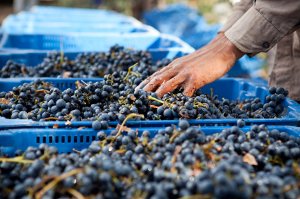
[Editor's note: With its high concentration on the kind of farming that requires hands-on care -- fruit and fresh veggies instead of fields of grain -- British Columbia agriculture relies on temporary workers. Migrant 'guest workers,' who often come from poorer countries, do the hardest jobs. What are their lives like here? Supported by a reader-funded Tyee Fellowship, reporter Justin Langille went out in the fields this past summer to find out. (With files from Cindy Hugo.)]
Night settles over the Okanagan as I knock on the door of an apartment at Lual Orchards, in Oliver, B.C. I've arrived unannounced and there's a brief commotion beyond the door before it opens. Inside I find two of the flat's tenants washing dishes after dinner, while two more relax on couches, engrossed in Terminator 2's spectacular cinematic cyborg battles.
By arrangement, I'm with Sandra Martinez, a regional representative of the United Food and Commercial Workers Union's Agricultural Workers Alliance (UFCW) -- a farm labour organizer. Martinez knows these workers, and her introduction gets me an invitation to sit at their table and a glass of sweet pink hibiscus flower juice.
They've travelled early in the season from homes in the western coastal state of Michoacán in Mexico to prune and prepare peach, nectarine and cherry trees for the year. They're the first jobs of a season-long contract that will help some of them pay for the land they're buying back home, or the education they want their children to receive. A couple of them have worked as labourers in the U.S. and Ontario. But they're happiest here in B.C., they say.
Their boss pays above-average wages, provides a fully furnished apartment with cable and gives them the day off when poor weather moves in, all things that matter to them. Some men who stayed late in the season last year were invited to join the farm owner's family for Thanksgiving dinner. When Geraldo lost his sister back in Michoacán, he was allowed time off for a visit home.
Certainly they have other wishes. Some would like their B.C. health care extended to family at home in Mexico, or the option to become permanent residents of Canada someday. But on the whole, they're content. "We have always been treated like we should be treated," Luiz tells me.
They might consider joining Martinez's union if their relations with their boss were worse, but their employer gives them everything already, they reason. He lends them the truck to go to church. They have good communication. With such a good employer, they tell me they are neither for nor against the union, but for themselves. "It's not conveniente," they tell me.
"They know of course, if they do something against the employer, they'll be sent back home. That's one of the main reasons organizing isn't very successful right now," I'm told later by Martinez, who says that conditions vary for temporary agricultural workers in B.C. In her travels, she's heard of workers who have become injured on the job and avoided seeking medical attention so their jobs won't be jeopardized.
Claims of union-busting
There's no law preventing agricultural workers, migrant or domestic, from unionizing in B.C. But only about 20 migrant workers at Floralia Growers, and 40 others at Sidhu and Sons Nurseries, retain collective agreements today, Martinez's union says.
In 2008, the UFCW was certified to represent 35 migrant farm workers at Greenway Farms in Surrey, in what would have been the first collective agreement for migrant farm workers in B.C. However only 12 of the 35 Mexican workers who had voted for certification were accepted back for work the following year -- intentionally, the union alleges -- and the certification was later withdrawn by the Labour Relations Board (LRB) of B.C., after a challenge from Greenway.
Similarly, the UFCW claims that on Sept. 5, 2008, one day after Floralia Growers found out that 29 of its migrant workers were planning to join the union, 14 were sent back to Mexico. Nonetheless, the union eventually managed to secure certification later that year.
On April 26 last year, the LRB upheld the UFCW's certification of workers at Sidhu and Sons Nursery in Mission, after the company challenged the certification.
This past spring, the UFCW claimed that the Mexican Consulate in Vancouver has tried to sabotage its certifications by blacklisting unionized workers from returning to Canada.
The consulate denies the allegations. But the union points to documents it has obtained, including what appear to be official reports of the Mexican Labour Ministry which controls which of its citizens can be in the agricultural guest workers program.
The documents are titled "File Revision -- Inadmissible Entry to Canada." One Jan. 13, 2011 entry says:
"A call is received from the Vancouver Consulate Office where we are told that this worker would not go to Canada because he is immersed in things of the union, pay attention he does not go out."
"Brave workers have come forward despite threats and problems," the UFCW's Ivan Limpright explained in May. "They know that joining a union is a democratic process."
"Mexico is not against unions," says Estela Garcia León, vice consul at the Mexican Consulate in Vancouver. "(In Mexico) we do have the liberty to be part of a union. I've been part of a union as a school teacher. We are not against the union at all."
However, Garcia says, the UFCW must be forthcoming about what's included in a collective agreement, if they ask workers to join. "They really need to be truthful to the worker about the extent of what they are offering."
Garcia offers no evidence that the UFCW or any other Canadian union have not been truthful with workers.
With these contests over fieldworkers in mind, this spring I boarded a Greyhound bus bound for Penticton to meet some actual Okanagan orchard and vineyard workers, and hear what they had to say. In particular, I wanted to know if they agreed with the UFCW and some academic researchers, that only collective bargaining can ensure the rights of migrant workers in B.C. are protected.
Tending the vines
My first introduction was at a Sunday lunch on the basketball court of the Penticton Alliance Church gym. Local vineyard workers dined on El Salvadorian food as an old speaker system pumped mariachi music into the afternoon. Over a dozen Mexican men employed by Blue Mountain Vineyard and Cellars (one of the Globe and Mail's top 10 vineyards to visit in the South Okanagan) talked about their working lives.
Their boss trusts them; he doesn't berate them or scrutinize their work. He's a good person who gives opportunity, Oscar, a mustachioed Blue Mountain worker with a worn backpack told us.
"In Quebec, the water was super dirty and they used to put us to work, pushing us to do it faster and faster," Oscar told us. "They put in a Mexican foreman and they treated us bad. In this province, (it's) very different. Here we feel that the employer treats us like humans. As soon as it starts to rain he send us back inside. In case we get sick, he immediately takes us to the hospital."
Because of the respect and quality working conditions they have, they don't feel a need to seek protection from a union.
However, stories of what happens to those who do affiliate with unions also deter them. They've worked in Quebec and Metro Vancouver before, and have learned what happens when farm workers fraternize with the union.
"Our patron (boss), he gives us everything, right?" Mario, one of Oscar's co-workers observed. "If we start joining the union (and) they start with the patron, for him it is very easy. If we start giving trouble, he would think that it's better not to call that worker again."
In other words, an employer won't sign a favourable review of a worker that gets involved with the union. They replace them with those who are less politically minded, I'm told.
"When I was close to Vancouver there were unions, and the ones that were part of it there were fighting with the patron," recalls Mario. "They asked the employer to pay them more. The union went there and told them to pay them more and they did not want to do that."
"The ones who had problems were sent back to Mexico." For most workers, we hear, avoiding that threat is a concern that trumps all else.
That concern is rooted in black and white reality, according to Mark Thompson, professor emeritus at UBC's Sauder School of Business. He has described the guest worker program this way: "The system allows the employer to select employees for recall and to explicitly de-select workers not wanted for re-employment, and there is no mechanism in the system that would allow the employee to resolve the issue. The contracts are totally one-sided."
A different kind of union
At Covert Farms, a vineyard owned by Canadian wine giant Andrew Peller and operated by a vineyard management company, "workers are treated well," Martinez says as we pull up.
In contrast to stories I've heard about tiny, rat-infested houses with broken ovens and dirty water, this country home seems more like a palace. Inside we greet 18 workers ranging from middle age to their early twenties, finishing dinner in a big dining room or enjoying some TV on plush brown couches.
"He gives us everything," one resident said of their boss. "We are doing more than good."
Comfortable living conditions and good relations with their boss aren't the only things that prevent this crew from considering union representation though.
In their experience, they tell me, Mexican unions take dues and give little in return. Moreover, during their recruitment Mexican State Employment Service employees told them to avoid Canadian unions.
"They explain to you there, since they start doing our papers, they say that they send you here under an agreement, that the unions are a complete different thing and that people don't see that well," contributes Alex, one of the most vocal in the group, from across the room.
Before leaving, I ask the group about family, their life back home and what they want from their work here. According to this group, all that matters is that they're allowed back to work every year.
"People take care so they can come back," says an older, sun-darkened gentleman. "We always want to come back."
This last comment represents a universal desire among workers we talked to. Even those we spoke with who had grievances with their employer would rather put their head down and work so they might be able to get their job back next year. Overwhelmingly, workers we spoke with throughout the season gave us the impression that at the end of the day, they don't want to ally with the labour movement.
They only want to work here.
Hard times in the orchard
Jobs like tree pruning and fruit picking can't be mechanized. They require manual labour, Joe Sardinha, apple farmer and president of the BC Fruit Growers' Association (BCFGA) tells me over coffee at a crowded Tim Horton's in Penticton.
In addition to labour shortages, three years of low returns plague his fruit growers. They are losing to U.S. growers with lower costs of production and more subsidies, evidence that NAFTA policies are still wreaking havoc, says Sardinha. He envies the supply management regulations enjoyed by the poultry and dairy industries.
Labour remains a necessary but high overhead cost for farmers, he tells me, so those with large acreage hire through SAWP. They get a steady, reliable workforce willing to deliver crops quickly and unbruised. He knows some employers violate program rules, but Sardinha says yearly pre-inspections of on-farm housing conditions and occasional visits from the Mexican consulate are checks that are already in place. Thanks to new program policy, negligent employers are placed on a public blacklisting website, and disqualified from the program. That is "enough of a lesson right there for everyone else to behave themselves," says Sardinha.
Collective bargaining for migrant orchard workers is something he'd just as soon not talk about. "That's just what you want to do to farmers... unionize," he mocks.
Union demands could increase labour costs for Okanagan farmers beyond recent hikes in the provincial minimum wage at a time when profit margins are low already. Certifying a farm would also weigh overworked employers down with more administration and red tape, he argues.
"We already have so many disadvantages versus the United States, we don't need another one," Sardinha says.
Valued workers
After four years, the workers returning again this season to the pear and apple orchard run by Patti and Sam Dimarias are an invaluable asset, Patti tells me. They're trained, ambitious and help their orchard run efficiently enough to turn a profit in time when margins for fruit growers have gotten slimmer.
"There's deadlines for certain varieties to get to the packing house," said Dimarias. "If you're late it goes into a different category, so... there are fees involved with the airfares... but the longer you can keep them here, the cheaper it gets for you."
Their situation works because it's reciprocal. Their employees work hard, but the Dimarias provide comfortable cabins inspected every year by government contractors, phones lines and a vehicle for them to drive. They've even sponsored one of their longtime workers, Pedro, to gain permanent residency through the provincial nominee program, which has allowed his family to immigrate from Mexico.
Why anyone would treat employees they bring at some cost from abroad inhumanely is beyond her. As for the union... "There's no need for it," said Dimarias. And besides, "We're kind of anti-union, we feel like we treat them well."
Trying the basics: talk
Back over the Coquihalla, in a small living room on the edge of Ladner that doubles as a bedroom at night, Ernesto and his roommates share a story.
When they had a workplace issue to address at their farm this spring, rather than seek the help of the consulate or a union rep, they opted for the novel approach of talking to their employer themselves.
Amongst their crew of 30 they decided that paycheques were a little low and they could use a little more work. After all, they don't come to Canada to waste time. One day, as a group, they approached their foreman with a request to work Saturdays. Working an extra day would help them pay for groceries and phone cards, or it could be a little more money to wire home.
A little stunned by their audacity, a foreman reported the request to their boss, the owner of the farm. After some contemplation he agreed to the extra day and an additional half hour every day. "With what we did, we see that it works, that he was accessible," said Ernesto. "We saw that if we need more work, maybe he can react in a good way".
Being veterans of the program, and having worked for the same employer for three years, they were mostly confident of their strategy. However, this is Javier's first year in the program, and he feared for his job. "He is still afraid we are going to burn the farm!" teases Carmine from his bed across the living room to the delight of the group.
Was that an act of independent organizing? "Are you a self-made bargaining unit?" I ask, half-joking.
They thought about calling the consulate to advocate for them, but "we did not think about calling the union," said Ernesto.
But not all workers we spoke to felt as Ernesto did. For some the union held greater appeal.
More on B.C.'s migrant workers and union efforts to organize them in our next report, tomorrow.
[Tags: Labour + Industry, Food.] ![[Tyee]](/design-article.thetyee.ca/ui/img/yellowblob.png)
Read more: Food, Labour + Industry










Tyee Commenting Guidelines
Comments that violate guidelines risk being deleted, and violations may result in a temporary or permanent user ban. Maintain the spirit of good conversation to stay in the discussion.
*Please note The Tyee is not a forum for spreading misinformation about COVID-19, denying its existence or minimizing its risk to public health.
Do:
Do not: