
News

BC Liberals Scramble to Save the Farm

NDP says budget bump too small after damning report on Agricultural Land Reserve languished for year.

By Andrew MacLeod, 21 Nov 2011, TheTyee.ca

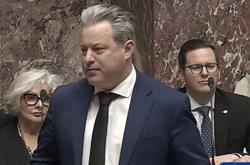
DonMcRae-300.jpg

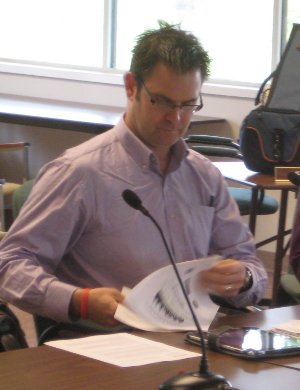
B.C. Agriculture Minister Don McRae: 'Nothing in government moves as quickly as I'd like it to.'

In the wake of a damning report, the British Columbia government is making changes the agriculture minister says will better protect farmland. The New Democratic Party's critic says the changes are minor and much more needs to be done.

At the end of July 2010, then agriculture minister Steve Thomson asked the chair of the Agricultural Land Commission (ALC) to look at the organization and report on whether it was meeting its mandate to protect farmland and to recommend ways to improve its decision making processes.

The ALC oversees the 4.7 million hectares of Agricultural Land Reserve (ALR) in the province, where farming is given priority.

The chair, Richard Bullock, spent three months on the assignment. He travelled the province and met with more than 300 people. He compiled what he heard into a 117-page report and submitted it to the minister.

The minister's office held the report, dated Nov. 26, 2010, for nearly a year until it was released last week. The current agriculture minister, Don McRae, told The Tyee in June that the report had been on his desk since he took over the portfolio in March.

"Nothing in government moves as quickly as I'd like it to," McRae said after releasing the report. "Having a report out there with no actions attached was not something I wanted to have." Withholding it "was a decision made by me and government," he said.

ALC not meeting mandate

A read of the report reveals why McRae and the government may have been hesitant to share it with the public.

"Stakeholders were almost unanimous in expressing their concern regarding the inadequacy of the ALC's funding and lack of resources to carry out its existing work, never mind explore new opportunities," Bullock wrote.

"Over the last two fiscal years, the ALC has been forced to focus on processing applications with minimum or no attention being given to its other statutory obligations," he wrote.

"This has lead to stakeholders' dissatisfaction, particularly at the local government level, because the ALC is not available to discuss local and regional matters or to deal with emerging or ongoing issues such as the impact of oil and gas activities on agriculture in northeast B.C."

He identified problems with the governance structure and found new commissioners are given "very limited or no training and education" when they are appointed. They start performing their duties without training, creating a potential legal liability for the ALC, he said.

"Following my review, I can confirm that the ALC is extremely challenged to meet its mandate," Bullock wrote. "The foundation has suffered erosion to the land base and loss of support from bona fide farmers and ranchers."

The situation was, however, reparable, he said. With "adequate funding and resources," the ALC would be able to meet its challenges, he said.

Changes made

McRae released the report at the same time as announcing a budget increase for the ALC. The annual budget of $1.92 million got a boost of $600,000 this year, plus another $1 million for the 2012-2013 fiscal year.

The government also introduced legislation that McRae said will help the commission do its job.

If an application to remove land from the ALR is denied, the applicant won't be able to ask again for five years. The ALC will be allowed to find ways to generate more revenue to fund its operations. Other government agencies will share resources with the ALC.

The chair of the ALC will have more oversight over regional panels and the agency will add a CEO. The mandate will include working more proactively with local governments instead of just reacting to applications.

"It's reiterating the government's support for the Agricultural Land Reserve," said McRae, noting these are the first substantive changes to be made in a decade to strengthen the ALC and protect the ALR.

"It's a substantial change," said Bullock. But there will still be challenges for the organization, he said. "Nothing can be done overnight."

Falls short: critic

The government will, however, make its changes with some speed. The legislation was introduced Nov. 14 and is expected to be passed by the scheduled end of the legislative session this week, among several other bills.

"There's a lot going on in the legislation from what I've seen so far and there are a lot of implications," said the NDP agriculture critic Lana Popham. "That's not something you want to ram through in the last couple days of a legislative session. It's not fair to agriculture."

People should also be given time to consider Bullock's report, she said, adding it's "insulting" that it was not released months ago. "It's just massive and I'm still sifting through it, though I was aware of most of the recommendations. This is a huge report," she said.

The changes do not appear to address the question of fill dumping, where material from construction sites is piled onto farm land, which has become a huge issue, she said. "That's a big problem. I've said in the house, it's out of control."

Nor did the government follow Bullock's recommendation to stop using three-person regional panels to assess whether land should be taken out of the ALR. There is only one point raised in favour of regional panels in the report, while there are several pages of reasons why they don't work, said Popham.

"It looks like they don't want to strengthen the ALC, because a stronger option would have been to go to a seven-person panel," she said. "(Minister McRae) needs to explain it. It's a serious flaw."

Also, she said, the $1.6 million of extra funding falls short of what's needed. "This doesn't even come close. I don't think it even replaces what's been cut from the ALC in recent years."

The ALC would need $2 million just to clear the backlog of things it's supposed to attend to, plus an annual budget of $3 million, she said.

Mixed message from committee

McRae didn't dispute the figures from Popham, but did say Bullock has told him he believes the ALC can get its work done with the amount of money the government is providing. "That $1.6 million is going to help their capacity in making decisions in a timely manner," he said.

The government kept the regional panels because they make decisions locally, he said. "B.C. is a massive province both geographically and agriculturally," he said. The Peace River, Okanagan and Comox Valley, for example, are all very different from each other, he said.

The ALC chair has been given more oversight of the panels and the ability to have more input into decisions, he said.

As for fill dumping, he said the government is expanding the ability of bylaw officers to enforce the applicable laws. "Between other government officials and municipalities, we have the ability I think for the ALC to really go forward and do better work with compliance and enforcement."

A clue to the real level of support for the ALC and the ALR within the Liberal ranks may be in another document released last week, Popham said. The budget consultation report made by the select standing committee on finance and government services had a couple recommendations contrary to the ALR's goals, she said.

A section on investing in northern development included this nugget: "Remove an appropriate amount of land from the Agricultural Land Reserve so that Fort Nelson can expand its residential land base to accommodate the growth pressure demands of developing the Horn River, Liard and Cordova shale gas basins."

The government holds a majority on the committee, which travelled the province to gather suggestions from the public on what should be in the budget.

"They are recommendations from the government side," said Popham. "Which is a priority? Is agriculture now at the bottom again? If we have a provincial commission that's supposed to be protecting agricultural land, and it's failing, how can the finance committee recommend more land be removed? It doesn't make sense."

It does show that a sizable part of the Liberal caucus sees the ALR as an inconvenience and that McRae needs to be a much stronger advocate for agriculture, she said.

[Tags: Environment, Urban Planning + Architecture, Politics.]  [Tyee]

12  Comments:

Login or register to post comments

  • shepsil

    26 weeks ago

    Man who wrote report more than biased?

    The Bullock family owned a very large apple & cherry orchard in Kelowna in 1980. One has to ask, has it since been sold and built on despite the ALR?

    Reports don't a mean a thing if the chickens have already been let out of the coop.

  • Fiat lux

    26 weeks ago

    Our 120 acres weren't in the

    Our 120 acres weren't in the ALR when we bought them in 1975, as "land not suitable for agriculture" but we requested their inclusion and proved it that it can grow a great variety of foods, and animals in a very harsh climate, with strict organic methods.

    The governments have done their best in the early years to remove our farm standing, we were dragged in front of tax commissions every year, but we beat them every time.

    Their latest gimmick is to try to remove farmland with demanded monetary figures on sales.

    The interesting, and corrupt part, is that when we were in the custom furniture business in Vancouver, we used to have tax audits every 18 months and the inspectors never failed to remind us that when we make anything for ourselves, we have to pay the taxes.

    Not in farming. Anything people grow for the use of their families is not counted as farm production. Which is a contradiction, but shows their corrupt efforts to ruin farming and make the land "efficient" by building on it.

    The so called "conservatives", led by the Fraser Inst. have been doing their best to turn farmland into "developments" for "economic reasons". As the FI put it many years ago;" BC needs no farm production, because we can import all our foods from California and Mexico much cheaper, therefore the ALR is economically inefficient". There were all kinds of articles in the Sun and other papers by "professors of economics", especially from the SFU at the time.

    The main "economic advisers" of the present governments, both federally and provincially are the CD Howe and Fraser Institutions, paid to sell the country to "investors".

    For the sake of "economic efficiency" of course.

    Ed Deak.

  • Van Isle

    26 weeks ago

    In this age where everybody

    In this age where everybody is concerned about "Security" no one mentions the basics; like food security or energy security. We should be asking the question to our economic and political elite what would our strategy be with climate change if California and Mexico are no longer our bread baskets?

  • reallife

    26 weeks ago

    What a surprise!

    "Stakeholders were almost unanimous in expressing their concern regarding the inadequacy of the ALC's funding and lack of resources to carry out its existing work, never mind explore new opportunities," Bullock wrote.

    What a surprise! How unlikely is it that the head of a government body would write a report that shows his agency is underfunded? Or that it needs a CEO with all the attending perquisites?

  • reallife

    26 weeks ago

    @Fiat lux

    You should give tax lessons to the media mogul who tried to reduce the taxes on his Oak Bay estate by declaring it a farm. His basis for doing so was the sale of excess flowers from his garden to a relative. Unlike you, he was unable to beat the taxman because Oak Bay made the mill rate on farm land equal to residential property. Oak Bay was able to do this as there are no legitimate farms in the district. However, other regions with a mix of farms and big residential properties, in particular the Fraser Valley, have a real problem dealing with tax dodgers.

  • Fiat lux

    26 weeks ago

    real... I know the media

    real... I know the media mogul you mention, used to be columnist for him when he first started and was still small. He still owns the Williams Lake paper and now also a long chain of others.

    We learned our lesson during war and post war starvation years in Europe and got out of the city to become self sufficient to the largest degree, as soon as we could.

    Humanity is growing by the billions, while the criminal idiot politicians and economists are ruining millions of acres of farmland , all over the world, every year for "economic reasons".

    Ed Deak.

  • island gal

    26 weeks ago

    Our food is NOT secure

    Our small farm (started 29 years ago) has battles to fight each year - grey squirrels, deer, walnut husk fly, newly-reported pests such as the drosophila fly. Then there is the BC Assessment Authority questioning why one whole acre is not being farmed because it is just too wet most of the year...

    If it were not for Lana Popham NDP Ag Critic and Richard Bullock of the ALC, we would be conpletely in the cold. We need Extension Services agrologists, who served us well until they were taken away from us in the mid-90s. We need a deer cull, Canada geese eggs addled, we need reasonable prices for water. . . .then we can begin to talk abaout food security.

  • Fiat lux

    26 weeks ago

    One year we had about 50 head

    One year we had about 50 head of cattle grazing on our land, but none for the winter.

    The assessment guy came out when everything was covered under 6" snow in Dec. and the next thing we knew was a reassessment as "improved land" because there was "no agricultural activity".

    Of course, we appealed and they were thrown out.

    Such idiocies went on and are still going on for years, with the government doing their utmost to kill farming.

    Farming is supposed to be the production of agricultural products. This includes food production for the owners, because it makes no difference who uses it, except in the warped minds of politicians. So, why isn't it included, when it is in all other taxation system ?

    I've tried to explain this to Bennett when his was minister, but he didn`t get it.

    Ed Deak.

  • Van Isle

    26 weeks ago

    Vancouver Island is an

    Vancouver Island is an example of agriculture policies gone stupid. Vancouver Island has 4 prime agriculture areas; the Saanich Peninsula, the Cowichan, Comox and Alberni Valleys. Vancouver Island only consumes roughly 6% of the food it grows, the rest comes from somewhere else. What a shame. What stupidity. My mother would have said "it's a crime".

  • metacomet

    26 weeks ago

    Byzantine Business

    So much of BC Liberal policy is minutely integrated with byzantine ulterior motive that tries to conceal, as much as possible, favouritism towards select private interests that support the party. In the ALR's case that would be the real estate industry, for which the Reserve is an obstacle to real estate development, some of it industrial, some recreational, but by and large residential. Since the unpleasantness of BC Rail's sudden, whole-hog sell off, the government instead adopted an incremental approach to hobbling public authorities and services, like it has with BC Hydro and BC Ferries. Chronic underfunding of the ALR is part of the same strategy and has been going on ever since the BC Liberals first gained power ten years ago. This belated and reluctant admission vis a vis the release of Bullock's report can be likened to a parent getting busted for exposing an infant to weather and wild beasts. The sincerity of such a confession is questionable when made only as the culprit approaches the political executioner. The amount of weregelt offered by Minister McRae doesn't nearly make full restitution for a decade of neglect.

    One of the integrated BC Liberal policies was ostensibly about food safety which when implemented effectively shut down small abattoirs and farm-gate sales on Vancouver Island, the ulterior goal being to undermine "economic feasibility" of small farms and to substitute this criterion for that of soil productivity, which had hitherto been the basis for including land in the ALR, regardless of lot size or current economic conditions. The idea was to reserve farmland, potentially or actively productive, for when it will be needed. Farm owners are compensated for loss of non-farm opportunity by a variety of land and income tax breaks. Instead, BC Liberals would have "economically unfeasible" small farms eligible for exclusion from the ALR and ripe for real estate development. Taking away farmers' ability to make a living from the land leaves them little choice.

    Over the last ten years of BC Liberal government, provincial public investment in agriculture has been the lowest in Canada. Minister McRae's contrition about the half-frozen baby with it's extremities nibbled off, and his cheapskate dime-bag thrown onto the chopping block, is too little, too late.

  • shepsil

    26 weeks ago

    Land speculators are Pied Piper who stole our children's future

    Until we change the way society and gov't as whole treats land, we are doomed to higher & higher real estate prices and less and less land to grow food on.

    With this massive demand for lower mainland real estate, it is speculators and land developers who will continue to benefit from this unhealthy situation.

    Land speculators are profiting from our children's futures every day and we are just as responsible as they are when we do nothing.

  • igbymac

    26 weeks ago

    Well this is interesting

    "Nothing in government moves as quickly as I'd like it to," McRae said after releasing the report.

    He must mean regarding the issues he wants fixed ;)

    Government goes to war too fast.
    Government stomps out dissenting voices too fast.
    Government gives itself raises too fast.
    Government spends money with its corporate colluders too fast.
    Government uses its monopoly on force too fast.
    ETC.

    There are all sorts of things I wish government moved much slower on.

    • The discussion for this story is closed. No more comments can be added.