
News

Cities to Province: Pedal Harder on Bike Projects

Cycling is hot politics at local levels; in the legislature, not so much.

By Andrew MacLeod, 21 Oct 2010, TheTyee.ca

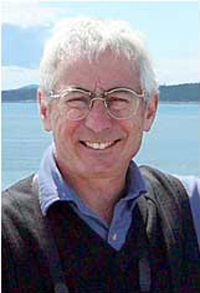
Victoria councillor Luton

Related

Victoria city councillor John Luton made the trip to Whistler for the Union of British Columbia Municipalities conference the same way he makes most of his trips: by bicycle. It went well, he said, aside from some unplanned "sprint training" avoiding a bear on the Sea-to-Sky Highway.

Luton is one of several councillors across the province committed to cycling, not just for himself but for his community. But while bicycle politics have become central to discussions and plans in cities as diverse as Victoria, Vancouver and Prince George, advocates say the provincial government is yet to apply much muscle to the pedals.

Asked how much support local government's get from the province for projects to improve cycling infrastructure, Luton said, "Not a lot."

In Vancouver, where the council's bike decisions have been contentious, and where Mayor Gregor Robertson has said he himself logs 80 kilometres a week biking around town, cycling advocate councillor Geoff Meggs said the province needs to be engaged for help. "They're not saying 'no.' It's just they haven't been asked yet."

Prince George Mayor Dan Rogers campaigned hard on cycling issues when he won the top spot at city hall in 2008. He said that while the province could do more, he was excited by Premier Gordon Campbell's mention of cycling in his speech at the UBCM.

"We're going to provide for additional programs and additional funding for things like cycle paths and bicycle paths,” Campbell said in that speech. "As long as you're a community that looks at integrative zoning and trying to connect people with the places they need, and reduce their dependence on automobiles... Many of us can do that if we work together to do it."

"He didn't put a dollar figure to it," Rogers said. "One would hope that would be in next year's budget... I'm optimistic, but of course the proof is in the pudding when the detail is in."

Funding scramble

It's hard to know exactly how much money the province is contributing to projects that support cycling, said Victoria's Luton.

There's a cycling infrastructure program that's budgetted at $2 million a year, but only spent $1.7 million last year. Some Local Motion money is used for cycling too, he said. "It's not necessarily bicycle projects. It can be."

The Gateway project includes some money to do things like include shoulders that can be used for cycling. "That's stuff that should be routine anyways," he said. "I see that as fluff around infrastructure for cars and trucks."

A few years ago Bike B.C. had $31 million a year to spend, he added. "The economic downturn happened and that program just disappeared."

Nor has Vancouver had much help, said Meggs. The gas tax, distributed via Translink, helps with projects on major roads, he said. The city's also tried to get money from ICBC, but so far without success, he said.

"The city's own investments are really just ours," he said, meaning they come from the city's usual sources of revenue: business and property taxes.

Rogers said Prince George has cobbled together funding through various sources. "We're like most, trying to find as many funding sources as we can," he said. "We've been fairly successful."

Sources have included Local Motion and ICBC provincially and gas tax and community adjustment funds from the federal government. The city also uses development cost charges to fund projects, he said.

DAVID BYRNE AND VANCOUVER MAYOR ROBERTSON TALK BICYCLES

With Momentum editor Amy Walker and urbanist Erick Villagomez. Those are some talking heads! The Tyee co-sponsored event is Sunday, Oct. 24. Find out more here.

Need outstrips budget

A spokesperson for the transportation and infrastructure ministry provided the global figure of $128 million that's been spent since 2001 for cycling infrastructure.

That includes $50 million spent through the Gateway project. There's also Building Canada funding of $14 million this year, which is matched by the federal government and goes to things like widening highways and improving shoulders for cyclists.

It also includes Bike B.C., the only provincial fund dedicated to cycling, which has a $3 million budget this year.

While projects to encourage cycling are relatively cheap compared to other infrastructure, $3 million won't go far.

In Prince George, Mayor Rogers said he figures another $7.5 million is needed by 2015 to complete the city's "non-motorized transportation infrastructure” system. Prince George already has 100 kilometres of dedicated cycling trails, but is finding the demand for more is high, especially with the growing University of Northern B.C.

"We're only about half way to where we think we need to be," he said.

Victoria has a cycling master plan that dates back to 1995. Luton said that at current funding levels it will take another 20 years to complete.

Provincial standards needed

One project to create a 17-kilometre commuter trail on the E & N railway right-of-way will cost $25 million by the time it's done.

The region had $11.3 million from gas tax money for it, which funding advocates (including Luton, who then was not yet a councillor) a few years ago had to fight with B.C. Transit for a share of. "We had to push back at that and say there's more than one shade of green."

Other projects have received federal funding and gas tax money. "Bike infrastructure is relatively cheap but it's a big chunk for small municipalities and even Victoria," said Luton. He uses the word "scrambling" to describe the search for assistance. "You do what you can when you find partnership dollars."

The province has so far not been a full partner on these projects, he said. "The lip service is there, but it seems to be an easy one to cut when times are tough." Luton also mentioned he is trying to organize a bicycle caucus as part of the UBCM to advocate on these issues.

The province is "very committed to looking at alternative ways for people to move around their communities," Minister Bond told The Tyee. Every time a road or a bridge is worked on in the province it now includes improving it for cycling, she said.

There is also $500,000 for cycling infrastructure in the budget, she said, adding there were many applications to receive part of that money.

"We've been wildly oversubscribed," she said. "We're going to be hard pressed to meet the demands across the province."

If you ask mayors and councils, she argued, they also want more money for all kinds of things, including more buses and rapid transit. "People want more of everything," she said. "We're involved in the largest expansion in history and we still have more to do."

She said the province will continue to invest in cycling and she liked how Campbell's UBCM speech tied cycling infrastructure to healthy communities, which may create more funding options. "I know Kevin Falcon as the current health minister and past transportation minister is very interested.”

Funding cycling can reduce health care costs, said Luton. It also gets people out of cars, eases congestion and frees parking spaces, he said. "It's not just a benefit for cyclists, but for everybody in the community."

There's also a role for the province to play in developing education programs and setting standards, Meggs said. "Most of the really frustrating questions that bother motorists about cycling infrastructure are questions that need to be addressed at the provincial level."

The city put a motion forward to the UBCM which was passed at the Whistler convention. It called on the province to create a B.C. Cycling Development Program that would include cyclist and driver education programs, a guide for local governments wanting to encourage cycling, and enough funding to double the number of cyclists using the roads by 2020.

"I think Victoria has some catching up to do," said Meggs. "At this point Victoria hasn't got there."  [Tyee]

25  Comments:

Login or register to post comments

  • mmphosis

    1 year ago

    My next car is going to be a

    My next car is going to be a bicycle.

  • alive

    1 year ago

    overkill!

    Yeah, suddenly cycling is "in" and as a result the parasites are about to make a fortune.
    There was a time when you made a bicycle lane by painting a line on the pavement and said: "bikes here, cars here".
    Now it is a million dollar project and the fat cats make a fortune.

  • Chris Keam

    1 year ago

    no-spin zone

    "There was a time when you made a bicycle lane by painting a line on the pavement and said: "bikes here, cars here".

    Unfortunately, for novice cyclists who represent the untapped potential for cycling as transportation, having cars speeding by a foot away is frightening and doesn't encourage bicycle use. Places that have lots of cyclists recognize this and provide enhanced facilities such as separated lanes so that you don't have to be a fearless young man or woman to use your bicycle for things such as going to the supermarket, work, or school. Times change. As a society we need to change with them. Once upon a time there weren't a lot of things.

    "Now it is a million dollar project and the fat cats make a fortune."

    Who are these fat cats? Can you provide a single example of a cycling infrastructure project that fits your description? As the article makes quite clear, cycling projects are woefully underfunded. Further, the projects are usually undertaken at the municipal level, with the work done by regular people who have jobs with the city or various non-profit groups.

    Maybe this could be the cycling story-related comment thread that doesn't devolve into unfair and inaccurate untruths from the get-go?

  • freebear

    1 year ago

    Yet we bailed out the auto industry!

    The only time we will use less vehicles is when we can not afford the fuel they need to run!

    And we then re-design our lives at a human scale rather than a machine scale!

    (Imagine if everyone's unit had its own elevator in a condo or apartment building-how stupid and expensive would that be?)

    Until then its just pandering for votes, civic awards, and conferences!

  • Road Lice

    1 year ago

    Provincial Government vs Cyclists

    For starters the provincial government could stop sabotaging cyclists in cities and in-between cities. Link - Rumble Strips of British Columbia:

    http://www.crazyguyonabike.com/doc/7714

  • freebear

    1 year ago

    Bicycles do not consume fossil fuels which Government wants

    to wring every last royalty dollar from because after that they have no idea how to fund government!

  • alive

    1 year ago

    really?

    Fat cats?
    Hell if I know who skims the cream off the budget, where bikelanes are concerned!
    All I know is that it is stupid to pay millions to seperate bikes from cars!
    Perhaps it is the planners and committees that spend the dough, perhaps the construction industry that manages to take forever to break up perfectly good roads?
    If the only reason is to give confidence to inexperienced bikers, then it would be better to start bike training schools and not allow just anyone to wobble down a busy street?
    Perhaps it is time to have licenses proving competence as well as insurance?
    What about pedestrians getting scared when bikes zoom past on the combined seawalk lanes? --- should we spend millions to have concrete barriers there as well?

  • freebear

    1 year ago

    Coddling scared cyclists!

    I agree; spend money on bicyle training programs rather than physically separated bike lanes.

    And driver training as well-let them understand the cyclists perspective.

    Surprised there hasn't been a cyclist vs. car video game yet; from the call in shows and comments I think it would sell-get busy video game sector!

  • Chris Keam

    1 year ago

    coddling scared cyclists

    Separate lanes are a benefit to all cyclists when it comes to safety. But, especially so for inexperienced ones. As for education, I don't know of anyone who thinks more education is a bad idea, but I would note that when the problem is inherent to the road design, then measures are taken to mitigate those issues. If a licence and a modicum of training was all that's needed to make roads safe, why do we put up barriers to prevent supposedly competent drivers from driving off the road or into each other? Clearly, even the best cyclist can't do much to prevent being run over from behind. But a separate lane with barriers between motor vehicle lanes and cycling lanes can address that issue. That's why they are becoming a common part of the urban environment worldwide.

  • Road Lice

    1 year ago

    Alive and Freebear (and

    Alive and Freebear (and especially you Alive) - the topic here is urban transportation planning and infrastructure. If you are going to continue to post comments about every Tyee article ever published then it would be cool if you tried to become a little better informed about the topics you are commenting on. Like most people I read the Tyee comments expecting that the quality of the comments will be somewhat less ill-informed and inflammatory than a radio call-in show.

    The plain fact of the matter is that most people want to be able to ride their bikes in Vancouver and they want to be physically protected from Vancouver motorists. To get people out of their cars and onto bicycles they have to be offered the same degree of safety that is offered to motorists and that means physical protection from cars. There is no net cost to such new cycling infrastructure as it saves taxpayer money in various ways (not the least of which are health care costs, congestion costs and the misallocation of capital used to purchase cars not manufactured in British Columbia).

  • RickW

    1 year ago

    If there was a "Gateway Project" for bicycles.....

    ....the provincial government would on it in a flash!

  • Downtowner

    1 year ago

    CARSHOLES!

    It's appalling how much of the downtown area is given over to space for people to drive cars, park cars and otherwise run over and harass people in their cars. Stay in the suburbs and leave the downtown to the people who live there. You don't see me coming out so Scurvey or the North Bore to meddle in your affairs.

    What is it with these morons? Their commute is slowed by hundreds and hundreds of cars, on street parking lanes with two cars parked in a block, numerous people parallel parking -- but OH MY if they get slowed down by three seconds by a cyclist... well that merits running them over.

    Signed: PROUD MEMBER OF THE LIBERAL ELITE

  • zalm

    1 year ago

    I'm surprised too

    At all the noise from drivers about cycling. I'm still trying to find the last cycling-caused accident that killed a pedestrian. BC averages 10 cycling deaths a year, 9 involving cars. Total medical costs of bicycle injuries in BC exceeds $85 million a year. Then add $31 million over 3 years throughout BC in bicycle trails and paths. Total spending on bicycles per year including injuries - $95 million.

    Total fees paid for the 4% of BC residents who are regular, not occasional cyclists - $95 million in medical insurance premiums; estimated property taxes paid by these cyclists to support the road network provincially and in municipalities of $460 million; and $90 million to pay joint costs of road injuries that don't involve cyclists.

    Total surplus spent by cyclists subsidizing car use? $550 million.

    Now for cars. With 400 auto deaths and thousands more injuries in BC last year cost the BC medical system $2.6 billion. The Ministry of Highways spends just over $1 billion on maintenance, and this year allocated nearly $5 billion on capital projects to expand or rebuild highways and bridges. Municipal taxes paid by drivers for spending on municipal roads at 9% of municipal budget extrapolated to $640 million spent municipally on roads in BC.

    Contributions? $850 million in gas taxes, $50 million (next year) in vehicle transfer levies, $900 million in MSP premiums for the statistical 60% of premium payers who drive, and $70 million in licence fees. Then, Translink gas taxes and levies bring in another $400 million, 60% of which is spent on roads. Then the municipal contribution of $640 million to balance the budget and....

    Total deficit? $6.5 billion. Based on the other 96% as motorists, their pro-rata share of the deficit is $2700, 100% caused by other careless drivers.

    That's right. Cyclists are massively subsidizing drivers.

    I think the conversation needs to be a bit more about who should be permitted the privilege of driving, not who should be restricted from cycling.

    ...speaking as one who cycles to work because I can, and drives other places...because I can.

  • zalm

    1 year ago

    and helmets?

    Don't go there.

    The BCMA reported in 2009 that 75% of BC cyclists wear helmets after nearly 15 years of education and enforcement (kind of matches what I see on Vancouver 10th Ave bike route which runs past my house)

    The BCMA also reports that, that compares favourably with the 92% of BC motorists who wear seat belts after more than 30 years or education and enforcement.

  • snert

    1 year ago

    Road Lice

    Quote:
    The plain fact of the matter is that most people want to be able to ride their bikes in Vancouver and they want to be physically protected from Vancouver motorists.

    So just how many of the roughly 600,000 people in Vancouver qualifies as "most"?

    If bicyclists must obey the same rules of the road as motorists they should be licensed and required to carry insurance.

  • Road Lice

    1 year ago

    Gallery of Trolls

    Snert, I am pretty sure I already made a public request that anyone who has posted more than 500 poorly thought-out and misinformed comments on every Tyee article under the sun should try doing a bit of simple research before posting again. If you had done any research at all you would have discovered that your comment that cyclists should "be licensed and required to carry insurance" is universally regarded as a troll when it appears in a discussion about transportation planning.

    Please, dear handful of overly-prolific Tyee comment section regulars, try to find a new hobby or at least do something to try to distinguish yourselves from commonplace trolls when filling up space in the comment section of every Tyee article.

  • freebear

    1 year ago

    Who are you to designate trolls head lice?

    May of the most cyclists also have driver licences and some even have cars!

    I have ridden my bike in Montreal, Edmonton, Calgary; I call it my urban canoe!

    I do not appreciate what the automobile has done to the design of cities.

    At the same time; I think there are safe ways to ride in a city.

    The only way to get people out of cars is to take car space away (not necessarily with ugly concrete terrorism barriers!); increase congestion; so that they will see walking, cycling, taxi, and transit as faster and more convenient that the private auto!

  • alive

    1 year ago

    one-issue poster

    Thank you to road lice for posting, obviously you only have thoughts on one issue, but that does not make you an authority!
    It is good to see you participate, but disheartening to see that you feel a need to diss others for their contributions.

    I can only speak from my experience cycling here and in Europe all my life, and that experience tells me that we are going overboard here "protecting" bikers.

    The simple fact is that a wobbly biker can get into trouble amongst other bikes, never mind cars. So it is reasonable to require some profeciency.

    The idea that thousands of people would bike if only it was safer is a bit far-fetched; anyone who bikes regularly blend in to traffic quite nicely as is, even if obviously more space would be great (just like drivers would love more space).

  • the real ODB

    1 year ago

    the bottom line

    The bottom line is that we have to stop burning fossil fuels. A big and easy step towards that is to cut WAY back on car travel. Especially of the SOV type which is predominate in this part of the world. The money being spent on this ridiculous Gateway project could have financed thousands of kilometers of LRT, separate grade bike lanes, etc.. I rode my bike to work for 6.5 years but started taking transit after being hit by a car... FOR THE 3RD TIME!!! And if you had any doubts about Bond being a moron, she liked Campbell's speech and Falcon showed interest. "Nuff said.
    Zalm: great comment. Thanks.

  • snert

    1 year ago

    Road Lice

    I'm sorry to see that you feel it's necessary to adopt the tactics of one who feels they are a loser....er I mean losing an argument.

    Answer the question.

  • make_up_another...

    1 year ago

    I'd like to make a simple

    I'd like to make a simple point, which is: Bikes are seen as the 'green' solution to transportation, and while they are certainly less expensive and 'carbon' intensive in comparison to cars, they are both borne of the same mindset, 'my personal transportation device'. The scale is different but the same issues are still there, traffic and parking.

    A sea of cars in big box store parking lots or flowing down multilane streets is awful, but how much better is a sea of bikes, and the parking issues associated?

    Contrast that with the scenes of the oldest cities in Europe where the major mode of transportation, the greenest ever invented, is - wait for it - walking. They also happen to be the some of the most beautiful cities on the planet.

    The same problems apply to anything that fits the 'my personal transportation device' whether it be horse and cart, bike, rickshaw, floating anti-grav bubble, etc., etc.

  • Chris Keam

    1 year ago

    Europe and cycling

    "I can only speak from my experience cycling here and in Europe all my life, and that experience tells me that we are going overboard here "protecting" bikers.

    The simple fact is that a wobbly biker can get into trouble amongst other bikes, never mind cars. So it is reasonable to require some profeciency."

    To generalize somewhat... Europe has much stricter laws regarding a driver's liability when a cyclist is injured, far more separated lanes, more road safety education, and, particularly in countries where cycling has achieved a high percentage of mode share, more people with considerably more experience cycling, sharing the road with cyclists as drivers, and an overall culture where cycling is viewed as a mainstream, normal way to get around. In fact, the reality is that European countries do far more both consciously and as a result of urban design factors and cultural milieu to protect cyclists than even most cycling-positive jurisdictions in North America.

    A 'wobbly' biker would likely suffer some scraps and bruises in an accident involving other cyclists, but serious injuries are rare. Forced to share the road with cars however, and the possible outcomes are much more dire. In short, if the European experience is to be put forth as a successful example of cycling as transportation then the only reasonable conclusion would be that we need to be far more aggressive in penalizing careless drivers, providing road safety education, and building dedicated cycling facilities. It is absolutely not a good example for suggesting cyclists will simply blend into traffic without increased resources put towards education and safety programs.

  • zalm

    1 year ago

    I like Münster for cycling

    A city of 300,000 inhabitants, 100,000 of who cycle to work or school every day.

    http://www.muenster.de/en/cycling_capital.php

    Man, based on what some of you whiners say, I really don't know how they do it there. Quality of life must be the shits in Münster, eh?

    Oh well, back to the video game before I drive out for another latte and pin another skull to my bumper....

  • JSoet

    1 year ago

    How about showers?

    One thing which I rarely see talked about that I think could help encourage more people to switch to biking is having a shower at work... We live in a wet, hilly part of the world and often people would like the opportunity to clean off a bit when they get there... Maybe having tax breaks and stuff for companies that build showers in their offices could help, it doesn't need to be anything huge, just a little stall... And it doesn't necessarily 'cost' any money upfront for the municipalities...

  • wisemonkey

    1 year ago

    Great Way to Raise Money for Bicyclists

    I understand surveys show 6,000 cyclists are using the Burrard Bridge a day now that biking is becoming more and more popular.

    License the bikes and provide insurance for them riders at $30-$40 per month. I am sure it will be wildly popular with the cyclists as right now they dont have any coverage in the event of accidents with cars, pedestrians or other cyclists.

    Based in the figures this would provide $2 million to $3 million per year just in downtown Vancouver. Province wide in a program run by ICBC it should provide millions more.

    • The discussion for this story is closed. No more comments can be added.