
News

Oil Sands Opponents Will Lose, Economist Suggests

Heated U.S. debate to be swayed by security, says BMO's Sweet.

By Geoff Dembicki, 22 Jul 2010, TheTyee.ca

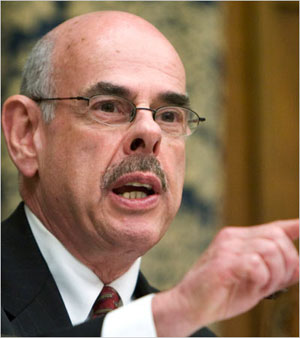
Henry Waxman

Democrat Henry Waxman opposes tar-sands oil.

Related

Attempts by some American policymakers to limit fuel from Alberta's high-carbon oil sands will ultimately fail, a leading Canadian economist predicted. And two pro-oil lobby groups fighting U.S. climate legislation appear to agree.

"Being able to receive crucial oil to fuel your economy from a stable, friendly country like Canada has an awful lot of merit to it," BMO senior economist Earl Sweet told The Tyee. "I suspect that will overcome," he claims, "current environmental misconceptions that are being propagated in some quarters of the United States."

Recent weeks have seen high-profile arguments for and against a proposed crude oil pipeline from Alberta's oil sands to Texan refineries. (Learn more about the controversy in this Tyee report).

Congressman vs. Alberta premier

Influential Democrat Congressman Henry Waxman wrote to Secretary of State Hillary Clinton in early July, urging her not to approve the project.

TransCanada's Keystone XL pipeline would lock the U.S. into a carbon-heavy economy, he argued. Producing fuel from the oil sands releases three times as many greenhouse gases as conventional oil, according to some estimates.

Alberta Premier Ed Stelmach wrote to Clinton shortly after Waxman. He reminded her Canada's oil reserves are stable, secure and plentiful -- and that the energy needed to produce one barrel of oil sands crude gets smaller all the time. A $55,800 Washington Post ad the week before -- paid for by Alberta taxpayers -- made similar points.

This confrontation is only the latest in a charged debate over U.S. energy policy. President Barack Obama is pushing Congress to adopt climate legislation that will reduce greenhouse gas emissions across the American economy. A Tyee report last month explained how that drive is being fought by an informal coalition of Canadian politicians and major oil companies, worried about any potential restrictions on Alberta oil.

They needn't fret, suggested BMO economist Sweet. The U.S. imports more crude from Canada than any other country. Oil sands producers are investing big money to clean up their operations, he said. And Sweet argues that shipping fuel from the Middle East has a significant environmental impact.

"I think when people become better informed about that and the debate is based more on facts rather than sentiment, common sense will prevail," Sweet said.

Lobby groups may be winning

Two lobby groups fighting to keep Alberta oil flowing south sounded equally confident in Tyee phone interviews. The American Trucking Associations is a nation-wide advocacy group currently suing to repeal California's low-carbon fuel standard.

That policy sets limits -- a 10 per cent reduction by 2020 -- on the carbon intensity of transportation fuels. It gives gasoline providers a strong reason not to use crude from places like the oil sands. Producing fuel there generally releases more greenhouses gases than sources such as the Middle East. Policymakers hope to more than triple the state's renewable fuels market by 2020.

Groups such as the ATA argue the policy unfairly discriminates against Alberta energy. The lawsuit is still in early stages, ATA vice president Richard Moskowitz said. He wasted no words when asked if his group would win: "Yes."

Moskowitz defended the Keystone XL pipeline at a recent State Department hearing. If the U.S. rejects Alberta's oil, he argued, Canada will merely ship it elsewhere -- most likely to China.

"I'd rather see that oil used in North America than being transported halfway across the world," he told The Tyee. "It's better for the environment and better for North American energy security."

The pro-oil sands lobby has won some big recent victories. Last spring, Wisconsin policymakers abandoned plans to implement their own low-carbon fuel standard. Intense lobbying on behalf of the Alberta government may have played a role.

Influential oil group backs pipeline

Last year, a group representing some of the largest oil companies in the world got low-carbon fuel standard provisions "deleted" from U.S. climate legislation. Members of the Center for North American Energy Security -- which include Exxon Mobil and ConocoPhilips -- have vigorously opposed any potential restrictions on Alberta oil. "So far with the Congress I think we've been successful," centre executive director Tom Corcoran said in a June interview.

The centre helped initiate the lawsuit against California's fuel standard. Corcoran has also testified in favour of Keystone XL at public hearings. There's "no way of knowing" if the project will get approved, he told The Tyee recently.

Several green groups and state senators worry the pipeline could leak into the Ogallala aquifer, a crucial source of drinking water for two million Americans. But the government's own environmental assessment concluded it's safe.

"Unless politics interferes with that, we would expect that the permit [of approval] would be issued," Corcoran told the Tyee.

Some other battles still remain. Alberta's environment minister, Rob Renner, cautioned 11 northeastern states against adopting a low-carbon fuel standard in June. His speech was part of a Boston forum organized by the Consumer Energy Alliance, an advocacy group supported by oil firms such as BP and Chevron.

Obama pushing 'aggressive' green strategy

This week, Alberta premier Stelmach vowed to fight back after a U.S. ad campaign comparing the oil sands to BP's disastrous Gulf spill sent his "blood pressure" skyrocketing.

Nobody thinks it'll be easy to cut America's extreme dependence on fossil fuels, said Elizabeth Shope, a spokesperson for the New York-based Natural Resources Defense Council. But there's strong pressure from President Obama to start the transition.

"While we realize that we're not going to go cold turkey and stop using oil tomorrow, this administration has put in place aggressive attempts to curb oil consumption," Shope said.

The White House confirmed clean car standards this spring that could reduce oil demand by 1.2 million barrels a day. That's roughly the full output of Alberta's oil sands. The Calgary-based Pembina Institute estimates Obama is outspending Canada 18 to one per capita on renewable energy.

"The reality is we don't need tar-sands oil and we don't need another tar-sands pipeline like the Keystone XL," she said.  [Tyee]

72  Comments:

Login or register to post comments

  • G West

    2 years ago

    That's Tar Sands Geoff

    The'debate' about the environmental impact of TAR SANDS Oil is about the misconception that people like BMO economists really understand the fundamental change that's taken place in the United States.
    Earl Sweet should remember that he's nothing more than a paid shill...and realize how little relevance his paid for words have in either Canada or the USA

  • RickW

    2 years ago

    Earl Sweet

    "Please, please, please don't shake up my world! I is way too comfortable."

  • Dungeness_Crab

    2 years ago

    "Democrat Congressman Henry Waxman"

    Forgive the nitpick Mr. Dembecki, but this is an example of how the right has framed the descriptive in the States, substituting "Democrat" for the supposedly more respectful "Democratic."

    Sadly, another example of the degenerating discourse south of the 49th and its unfortunate leakage north. I think it behooves us to make those small distinctions, along with the larger ones. Otherwise an excellent article.

    Having said that, Stelmach and Sweet can kiss mine.

  • Dungeness_Crab

    2 years ago

    oops sp

    Mr. DEMBICKI, not Dembecki. *redface*

  • samuidave (not verified)

    2 years ago

    Of course the environmental crowd will lose

    America is not going to be willing to change its direction until nearly the last drop of oil is removed from the planet.

    It has no quams about bombing sovereign nations into oblivion until a stable regime is in place, i.e., one willing and able to carry out America's dirctives.

    Environmental destruction does not even show up on its longterm radar. It is a menacing sound, a chatter, to the power structure.

    Surely the Alberta Tar Sands, which are easy pickins, will be drained in due time.

  • Peter Dimitrov

    2 years ago

    A slippery slope for BC and Canada?

    Tar sands development/production is growing in both Alberta and Saskatchewan. No doubt the NEB will approve the Enbridge pipeline to Kitimat, across several inland First Nation's northern territories. No doubt those FN's will demand IBA's from the company to obtain compensation for pipeline passing through their lands, jobs, business opportunities, and a percent of revenues. The FN's on the coast however, have already formed an alliance to stop tanker traffic down the coast from Kitimat - promising judicial and other forms of activism to stop the tankers. A huge battle is looming, and BMO's Sweet is placing bets on the business lobby and its influence in Ottawa and Washington to win out. The decision to allow a substantial increase of oil tanker traffic down the west coast, is but a heartbeat away from allowing deep sea oil exploration off the west coast - replying on the new technology and lessons learned from the BP Gulf disaster. Where do the BC and federal Liberals stand on this issue, where does Carole James/ BC NDP and Jack Layton stand on the issue of tar sands development, the Enbridge pipeline, and tankers down the coast? Who benefits, who loses in this so called 'economic development' venture? What are the other options here?

  • seth

    2 years ago

    Keep Canada Green - Nuke the tar sands

    Tar sands oil would be the most environmentally friendly crude in the world.if Alberta nuked the tar sands replacing gas generated steam with nuclear steam, saving big bucks and eliminating production GHG's at the same time.

    We'd need 8 big mass produced Candu ACR-1000 reactors or 300 hot tub sized Hyperion units ($400 kw of steam). The total cost of the zero GHG, clean and green Hyperion units is $9 billion. Natural gas at $4 a thousand cu ft is $3 billion a year. Payback - three years.

    Any excess clean and green nuclear power would be delivered to the dunces at BCHydro at a third the price it's paying for dirty carbon intense run of the river power, generating huge profits for Alberta.

    Alberta could like Utah, start a motor vehicle CNG program to use the surplus gas for autofuel at 30 cents a liter equivalent.

    T Boone Pickens is already pushing the US to switch a large part of its vehicle fleet to Natural Gas produced CNG, DME and methanol. With Obamas new drive to get American nuclear power restarted with loan guaramtees, current gas power generation would be replaced by nukes freeing the gas for transpo.

    The dilema for Big Oil is they are terrified that they will be replaced with nuclear power. They've already purchased Harpo, and the Ontario's Dolt who are under orders to destroy AECL and make sure that doesn't happen.

    They own pretty well all US politicans so its likely they can carry on business as usual without the nukes.

  • Urbanismo

    2 years ago

    Oil from the tar sands moving thru the harbour

    It;s only a matter of time

    http://members.shaw.ca/urbanismo/thu.future/vancouver.failed.html

    (BP?) We never learn . . .

  • clear.the.air

    2 years ago

    @ samuidave: they will leave oil in the ground

    samuidave wrote: "America is not going to be willing to change its direction until nearly the last drop of oil is removed from the planet."

    Actually, they and we will leave a lot of in the ground. The fast approaching peak oil era (http://www.guardian.co.uk/business/2010/jul/11/peak-oil-energy-disruption) will result in price volatility (due to increased frequency of recessions), a highly undesirable situation for energy producers because it makes investing difficult, reducing production over the long term. But depleting supplies, growing demand from emerging economies and the lack of effective liquid fuel substitutes for activities like freight agricultural equipment and personal mobility will keep pressure on prices. Ignoring ecological degradation for a minute, this sounds like a good thing for tar sands production but EROEI (energy returned on energy invested) will be the limiting factor. "For example, when oil was originally discovered, it took on average one barrel of oil to find, extract, and process about 100 barrels of oil. That ratio has declined steadily over the last century to about three barrels gained for one barrel used up in the U.S. (and about ten for one in Saudi Arabia)" http://en.wikipedia.org/wiki/EROEI). When oil prices reach a certain threshold the cost of producing each additional barrel goes up to the point that it is no longer affordable to extract and process sandy tar anymore, leaving lots of the stuff underground. However, before we get there we are going through this period where we seem destined to destroy more and more of the ecosystems we all depend on in search of another quick fix.
    My personal opinion about this is that we should be approaching the oil that remains as the amazing resource that it is and manage it so we can make as smooth as possible transition away from fossil fuels while leaving a little bit for future generations. But, that of course would require conservation, a concept that sadly still seems like a bad word among most of our elected officials and business leaders.

  • RickW

    2 years ago

    Peter Dimitrov

    Quote:
    No doubt the NEB will approve the Enbridge pipeline to Kitimat, across several inland First Nation's northern territories.

    Inevitably spawning an era of "Encana Bomber" clones.........

  • realisticman

    2 years ago

    Ain't no stopping it now

    Peter asks where the Liberal party is on the oil sands.

    20th July 2010 - BARRIE, Ontario (miningweekly.com)
    "He [Ignatieff] said that the Liberal Party wanted a “world-class” oil industry that met environmental standards, significantly reduced carbon dioxide emissions, and did not pollute water resources. ...Chinese companies, in particular, have invested more than C$5-billion in buying stakes in oil sands producers this year.

    Ignatieff said Canada needed this type of investment: “Canada cannot develop its natural resources without foreign investment."

    Ten years ago China consumed one half of the energy of the United States. This week the IEA announced that now China has passed the US in energy consumption.

    Oil from Alberta will continue to flow into the world marketplace and if the US doesn't want it others will.

  • RickW

    2 years ago

    seth

    What about the water consumption and the permanent destrcution of the ecosystem over the tarsands?

  • Fiat lux

    2 years ago

    What can one expect from a

    What can one expect from a so called "economist"?

    Like all priesthoods, these priests of the Money God have lost touch with realities many years ago.

    The problem is, that they can do incredible damage to humanity and the environment, before they're sent packing, something long overdue.

    Ed Deak.

  • realisticman

    2 years ago

    Canadian Opinion on Oil Sands Development

    http://www.capp.ca/oilsands/Pages/CampaignResearch.aspx#G784snCZvwSg

    76% of those polled in Vancouver recommend developing the oil sands with an effort to limit the environmental impact. Nationally that figure is 74%.

    Were Ignatieff to oppose oil sands development he would not only loose all possible support in Alberta but he would be out of sync with three quarters of the general population. If the Liberals want to increase their chance of forming government again soon, then oil sands development is one issue that they will only wholehartedly support.

  • Fiat lux

    2 years ago

    Canada never needed any

    Canada never needed any foreign investment, because when you have resources, you have capital.

    What these "foreign investors" bring is nothing more than imaginary computer figures "created" by some bank.

    As far the Chinese are concerned, they're bringing back the monies we're paying them to buy up and colonize our country.

    Why should they attack us withe weapons, when we're paying them to buy up the country from under our feet ?

    No wonder low brows like Harper and Ignatieff are jumping for joy over the most childish, and biggest, fraud in human history

    Ed Deak.

  • seth

    2 years ago

    Tar Sands environmental pollution

    One step at a time Rick.

    With mass produced zero GHG nukes powering transportation with electric vehicles and dirt cheap synfuels the cost of oil would soon be so low that the tar sands become uneconomical and collapse.

    Big Oil knows this and it pumping more money into its antinuclear campaign than in does into its warming denier operation.

    Stevey "Brimstone" Harpo, Ontario's Dolt and the Gordo are three examples of bought and paid for Big Oil employees who are on task making sure Canada's nuclear industry dies and gas sales soar.

    New Brunswick fooled them though. Told by Brimstone - no more Candu's -they went to France and bought an Areva reactor.

  • stefan

    2 years ago

    seth

    seth, I couldn't agree with you more, and you'll be proven right...but not until well past 2020 or even much further

    the nuclear option and the transition of NatGas into a transport fuel (despite Three-Mile-Island political angst and the environmental/down-hole logistical challenges for shale gas) are forgone conclusions based on simple necessity

    that said, the lead time for both is too long in face of the exponential energy demand

    you sound like you're long nuclear...and you're right, but maybe far too eary...in the meantime, sorry to the resident readers here, the immediate answer will be not only tar sands, but also Heavy Oil and (gasp!) coal in a big way

  • freebear

    2 years ago

    Remember when Obama said:

    We will not apologize for our (re: American) way of life!

  • Jeffrey J.

    2 years ago

    Culture of Death

    Our oil culture has become a culture of death. This has occurred before, and it is occurring now.

    In addition to Andrew Nikiforuk's incredible insight about oil creating a slave state, I also recommend Chris Hedges (former NY Times journalist) recent essays.

    "It is not accidental that the economic crisis will converge with the environmental crisis. In his book The Great Transformation (1944), Karl Polanyi laid out the devastating consequences – the depressions, wars and totalitarianism – that grow out of a so-called self-regulated free market. He grasped that “fascism, like socialism, was rooted in a market society that refused to function.” He warned that a financial system always devolves, without heavy government control, into a Mafia capitalism – and a Mafia political system – which is a good description of our financial and political structure. A self-regulating market, Polanyi wrote, turns human beings and the natural environment into commodities, a situation that ensures the destruction of both society and the natural environment. The free market’s assumption that nature and human beings are objects whose worth is determined by the market allows each to be exploited for profit until exhaustion or collapse. A society that no longer recognizes that nature and human life have a sacred dimension, an intrinsic value beyond monetary value, commits collective suicide. Such societies cannibalize themselves until they die. This is what we are undergoing."

    https://www.adbusters.org/magazine/88/chris-hedges.html

  • samuidave (not verified)

    2 years ago

    clear.the.air, thanks for that analysis

    ...though I did not mean it quite so literally. I should have more correctly said 'they plan on wringing every drop they (feasibly) can from the ground'.

    Our way of life is so dependant on oil for so any of our consumer goods that changing direction is not going to happen just because it makes sense. Big Oil has a captured market. They do not plan on letting us off their 'tanker' and we do not appear to have the courage to collectively go 'man overboard'.

    Meanwhile, people can't seem to help themselves and we keep pumping out the kids. In my lifetime the global population has more than doubled. I am just not sure whether we are the mold overtaking the petri dish, or if we are a cancer infecting the planet which will provide us with is own form of radiation treatment?

    There may be big change coming, but it is not a change we will be in charge of steering, that is almost certain. Humanity is going to learn rather abruptly that there is no conquering the planet and she doesn't negotiate.

    On a nicer note, there is an excellent French TV series called "Earth From Above" which is worth checking out. It analyses various issues concerning our impact on the planet and does so with vivid photography and tangible examples from around the globe through various cultures.

    http://pictureearth.org/yann/tv.html

  • Jerry Munro

    2 years ago

    The Tectonics of It...

    "A huge battle is looming, and BMO's Sweet is placing bets on the business lobby and its influence in Ottawa and Washington to win out. The decision to allow a substantial increase of oil tanker traffic down the west coast, is but a heartbeat away from allowing deep sea oil exploration off the west coast - replying on the new technology and lessons learned from the BP Gulf disaster. " wrote Peter Dimitrov.

    I don't think there is any question but that the "business lobby" will win. It is the ruling class interest.

    And it will win, first because The Empire wants and needs the oil still, for all the talk of Green Energy and cutting the Empire's addiction to oil etc. There is still no real or viable substitute. Afghanistan and the US desire to draw the oil of the northern "stan countries down through it to the Arabian Sea and Amerika bound tanker bottoms is one thing, and far from a foregone conclusion.

    But secondly, in the case of this country, with its history of ongoing colonial servitude to Empires, first Britain, and in my lifetime the US Empire, and an ongoing still, over-emphasis on a resource extraction based "quasi-colonial economy", the ruling class and its tame political system here will concede. They even have their legs spread, ready to receive already.

    But finally, most assuring what Peter talks about, short of some FN resistance confined to "share", them not really having any other choice AND under their own economic pressures as a still repressed people, neither is there a will to resist and seek a more national development serving option amongst the rest of the country. Where a quasi-colonial mentality still reigns, and there is a kind of creeping, if not rooted fatalistic acceptance of this as an inevitable state of affairs.

    The Empire wants our oil, barring and maybe even including a major economic collapse there, along with our water and the bulk of the rest of our resources, and we will give it to them and be willing enough enablers in exchange for the jobs. There is no national will yet in place amongst the populace to do otherwise.

    The bootlick history here runs too deep, and for too long to be easily overcome short of a major socio-economic tectonic shift.

  • morechatter

    2 years ago

    China is an big time investor also

    In the tar sands operations and lets weather this out as the only thing Canada has got going on is foreign investment in Canada's natural resources. I read China had a nasty spill this week and Canada is next no doubt as it will be a hot bed of controversay. Who benefits as foreign investors busily destroy the planet so foreignors can get at Canada's very tough to get at oil? Canadians are reaping the benefits that is a certain as do you work in the oil industry?

  • morechatter

    2 years ago

    Selling Canada Short

    Foreigners are going after Canada's very precious resources as it isn't like the oil is gushing out of the soil as the chemicals used are deadly. France is also got its tar Sands operations going on as Canada
    as Banks open their doors to new investors touting hundreds of millions and more. So why the HST as come now Canadians didn't have to empty their pockets to have foreignors come and help destroy the environment and the lands.

  • Jerry Munro

    2 years ago

    more chatter

    You are correct of course, re China. It is the latest rising Empire we have been preparing to serve, with a large influx of Chinese immigrants and business interests. We have learned that Empires rise and Empires fall, and care not much whom we serve, so long as they are compatible with capitalism. Which Capitalist China is, of course. Indeed, its Empire Star is rising, as Amerika's already wanes.

  • A Voice

    2 years ago

    Keep our raw resources in

    Keep our raw resources in Canada, if you want gasoline, we will make it for you, if you want lumber we will mill it for you. We need to stop selling our selves out to foreign corporations. The world needs our resources. They will come knocking, we will have the jobs and money, we dont need foreign investors. Stop selling us out.

  • seth

    2 years ago

    nuclear delay

    Currently there are 57 nuclear reactors being built around the world, another 140 had been ordered and a further 150 had been proposed for 2020, so lots happening but not enough. With mass production nukes are so cheap that the payback over fossils is less than 3 years.

    However, if a global warming event occurs like the a significant glacier slide causing flooding in the US or Europe, a super hot summer killing lots of folks, or a reversal of the Gulf stream may cause our mindless corrupt politicians get off their lazy corrupt asses and embrace the nuclear solution . Could even be $200 oil that is the catalyst.

    With a World War II scale effort dirt cheap mass produced nukes could have us off fossils in less than ten years. The labor component and material needs for a nuclear conversion is far less than was required for the much more complex WW2 Sherman tank production in an economy far smaller than todays. Nukes are really not much more complex than a coal plant with extra safety features but a much smaller fuel structure.

    The much less complex DenaturedMoltenSaltReator really just two railway car sized tubes one inside the other under no pressure, running under for 30 years on a single load of nuclear waste, could be in mass production 5 years from now.- a company called Teledyne Brown is taking a shot it. A protoype ran for 5 years in the sixties before Big Oil/Coal and associated corrupt politicians had her shut down.

    Hopefully the latter will be the trigger.

  • carfreecity

    2 years ago

    same old same old

    ofcourse . it's set up that way.
    how many people parked their cars in the last 3 months?
    The big dudes also have the military and police to support and protect them.

  • freebear

    2 years ago

    The road to no where!

    and 'step' on it!

  • right_is_right

    2 years ago

    Go Tar Sands!!!

    Ramp up the project, full speed ahead. O&G is not going away anytime soon so the emphasis should be on efficient use not abandonment. Our entire culture is dependent on this relatively cheap and easily accessible energy source. Also, those spouting peak oil panic need to do more research, peak oil theory is a scam.

    I also cannot believe that some on this post are actually in favor of nuclear energy over O&G. At the rate of deployment another major nuclear plant mishap is closer to happening everyday. And if you think the gulf oil spill is serious (and it is) wait until a large portion of a province is deemed uninhabitable for 100's of years.

  • KWD

    2 years ago

    nuclear may be too late

    There’s no doubt nuclear could provide a good portion of our present and future energy demands. And there’s also no doubt it will (as technological change seems to indicate) provide cleaner energy than oil.

    But the assumption that alternate energy, including nuclear, will solve problems associated with ever-increasing resource demands (environmental destruction), by an ever expanding population (habitat loss) and its attendant requirement for resources other than energy, is based on the underlying assumption that we will be able to carry on with business as usual.

    The unfortunate part about that assumption (BAU) is that it defies the laws of physics and nature. Neither oil nor nuclear is a subsititute for potable water, fertile soil, an atmosphere and ocean that is clean and tolerable (ie with a chemical and temperature range necessary to sustain life) or the species diversity required to keep ecological webs (aerial, terrestrial and aquatic) functioning.

    Nuclear has significant up front costs that seem to be preventing many nations from kicking the oil habit. As the population falls (which will most certainly happen as the laws of nature kick in) those costs will not fall, they will skyrocket.

    If what scientists tell us is true, that our use of fossil fuels is changing the earth’s climate and that change will have negative impacts on our survival; and if the oil/coal industry continues to deny what many scientists are claiming, it is likely that we may create as situation that prevents nuclear from helping us find a solution to our future survival needs.

  • KWD

    2 years ago

    'peak oil' a scam?

    Peak oil has less to do with abundance than it does with economic returns. The cheap,easy pickings have been plucked, that's why we are in the Gulf and the tar pits.

    As the cost to produce a barrel climbs the EROEI drops. The economic and energy costs of producing oil are rising. Claiming peak oil is acam won't change that fact.

  • clear.the.air

    2 years ago

    @ right is right

    If "peak oil theory is a scam" please explain why the US Joint Force Command (http://goo.gl/cT7p), the insurance firm Lloyd's of London and the British Royal Institute of International Affairs (http://goo.gl/kEYA), the International Energy Agency (http://goo.gl/jj4L), a group of UK industrialists (e.g. Virgin, Arup) (http://goo.gl/Fnwy) and the US DOE (http://goo.gl/glUn) have all written urgent reports on the topic. Oh yeah, oil companies too (e.g. Shell, BP, Chevron, Kuwait Oil Company) (http://goo.gl/w83U, http://goo.gl/1VYi). KWD is correct. We are in mud and thousands of feet below the ocean floor because the easily accessible oil has been extracted. I look forward to your response.

  • Luck

    2 years ago

    alberta oilsnds

    It costs too too much to extract.

    China has more $$ in alberta than USA and canada put together.

    Gov. needs to get head out of sand and look at alternative clean technology.

    I gave the gov. an idea and will get a reply once they all return from family vacation by september 2010.

    Really no hurry to find a smart alternative.

  • RickW

    2 years ago

    A Voice

    Quote:
    Keep our raw resources in Canada, if you want gasoline, we will make it for you, if you want lumber we will mill it for you. We need to stop selling our selves out to foreign corporations. The world needs our resources. They will come knocking, we will have the jobs and money, we dont need foreign investors. Stop selling us out

    Because that's the "long way to go" to make a buck -- and Canadian "businessmen" have a penchant for taking the shortcut to grandma's house. In other words, they want (as a rule) to sell the stuff that doesn't cost them a whole helluva lot to develop, yet yields big bucks. Canadian "businessmen" are a lazy lot - which explains the laziness of their sycophants (aka polticians).

  • seth

    2 years ago

    Big Oil BS

    " At the rate of deployment another major nuclear plant mishap is closer to happening everyday. And if you think the gulf oil spill is serious (and it is) wait until a large portion of a province is deemed uninhabitable for 100's of years. "

    Where do you get this horseshit. Straight out of the denier shop down at Big Oil?

    The worst type of accident in a post fifties tech nuclear plant is a three mile island type which didn't even damage the reactor casing. Even that accident would be impossible in a modern reactor.

    Now lets look at million + deaths from terrist attacks on dams, LNG and chemical facilities. Not a word from you Big Oil shills about those.

    Nuclear power is dirt cheap KWD far cheaper than any alternative now that the renaissance is under way and mass production is beginning. Just using current stockpiles of nuclear waste as fuel will power the world for centuries at less than 1.5 cents a kwh.

  • Frank

    2 years ago

    A Voice

    You're absolutely right.

  • Alexandria

    2 years ago

    Oil Sands - the polling question

    RE: "76% of those polled in Vancouver recommend developing the oil sands with an effort to limit the environmental impact. Nationally that figure is 74%." The following personal experience illustrates how the numbers get manipulated.

    I agreed to participate in a lengthy telephone interview by "Research House". One of the questions asked went approximately "Do you support development of the tar (they probably said "oil") sands or offshore drilling for oil". The respondent is to choose one or the other.

    I told the interviewer that the question is rigged. If I choose tar sands over offshore drilling, my response will be used to establish (76%) support for tar sands development.

  • someabguy

    2 years ago

    Sorry just some facts

    http://en.wikipedia.org/wiki/Renewable_energy
    5% alternative energy today

    Ethanol is awesome
    http://en.wikipedia.org/wiki/Ethanol

    but Bush is evil.. how is this so?
    http://www.nytimes.com/2001/07/23/business/support-grows-for-corn-based-fuel-despite-critics.html?ref=ethanol

    Wheels to wells
    http://www.canadasoilsands.ca/en/what-were-doing/greenhouse-gas.aspx

    thats 15% total worst case, stop driving your car and you can save 75% of emissions.

    Mining, hmmm...
    http://www.world-nuclear.org/info/inf25.html
    would that impact be the same as oil sands mining.. but hey you save some impacts on GHGs, right?

    All funding for GHGs is from big oil
    http://en.wikipedia.org/wiki/The_Great_Global_Warming_Swindle
    most is from government, who knew

    but the UN says its true????
    http://en.wikipedia.org/wiki/Global_warming_controversy

    sorry wiki says its true... and they might be the most biased organization on earth????

    look up the medieval warm period and think for your self...
    http://en.wikipedia.org/wiki/Medieval_warm_period

    Read some history and you will find, well, prior to 1970 no one was fighting about this.. wine from England and no ice on rivers, after the 80s/early 90s it was incontinent and was erased. Nice how a .25 increase over this months average change on average temperature doesn't show on a hockey stick...

    Also wiki is biased by people who want to change the world through carbon management and yet they still can't change all of the posts on it..

    ahh the green agenda
    http://www.green-agenda.com/index.html

    must be a farm subsidy???

    They are called oil sands because tar is a refinery product that you drive on, call asphalt
    http://en.wikipedia.org/wiki/Oil_sands

    Tar+asphalt
    http://en.wikipedia.org/wiki/Tar

  • realisticman

    2 years ago

    Who Invests?

    Who are these big businesses that people say invest in oil and gas, etc.?

    Some of the biggest are unions. Specifically union pension plans. The Ontario Teachers' Pension Plan manages $94 Billion in assets. Here are some investment highlights:

    http://www.otpp.com/wps/wcm/connect/otpp_en/Home/Investments/Major+Investments/Corporate+Shares+%28by+Value%29/
    They've got $3 Billion in Brazil Oil and Gas, with 7,000 sq km in offshore exploration, right off the top.

    How about la Caisse de depot et placements du Québec? They manage over $131 Billion in primarily public workers pension funds in assets. What are they into? Well, it's easier to ask what they are NOT into. Everything from Coca Cola to Eldorado Gold, Chevron to Disney.

    Here's an obligatory US Securities Commission list:

    http://www.sec.gov/Archives/edgar/data/898286/000114036110021025/form13fhr.txt

    These are probably the biggest traders of shares in the Toronto Stock Exchange. These are the traders that own so much stock they can often nominate members to the boards of directors, they can certainly vote.

    The fact is almost everyone in Canada has an indirect holding and interest in thousands of corporations and just about all the big ones. It's not big money versus the little guy. It's all our money and lots of people are paid to get the best return for their and our money and future.

    Here's an interesting point of view:

    http://jontaplin.com/2010/07/22/socialism-american-style/

  • willy

    2 years ago

    I always chuckle how

    I always chuckle how everyone beats up the US of A but enjoy the western lifestyle. As for drilling offshore, what about all the other countries doing it? China India Russia are set to drill in the gulf.

  • KWD

    2 years ago

    Seth

    I realize it may be quibbling but until modular replaces large scale nuclear plants the unanticipated costs plaguing the production of large plants continues to be a problem. So, yes, modular will make it “dirt cheap”, but as you say the mass production phase is just beginning.

    It remains to be seen how receptive some nations will be to the idea of modular nuclear. There is an enormous lobby funded by fossil fuel folks that has worked tirelessly to discredit all nuclear other than military, and they have been successful. As strange as it appears, the oil and gas folks have co-opted support from many environmentalists and greenies.

    However, those that blame the environmental movement for delaying nuclear are equally misguided. They have also succumbed to the propaganda put out by the fossil fuel lobby.

    Despite the appeal of modular’s low cost of generation, nuclear still has a problem with waste. There are all kinds of stories about fuel reuse and breeders but those systems have their own unique sets of problems. Because the cost of fuel is so low and it is so abundant there is no pressure to develop commercial systems that use recycled fuel. And there quite likely won’t be for a long time. So the net result is that the nuclear industry is passing that used-nuclear-fuel legacy on to future generations. If the modular revolution was forced to produce plants that use recycled fuel there would be much less opposition.

    But regardless of the mix of renewable, fossil fuel and nuclear energy, we are avoiding the reality of all of the problems associate with increasing population density and increasing affluence. Nuclear doesn’t address this issue. It simply allows us to carry on as we have always done.

    It seems rather strange that an industry that uses the laws of physics to capture heat from fission can’t grasp (or refuses to acknowledge) how those same laws ultimately determine the limits to growth.

    Our main concern isn’t energy, it’s learning to live in a way that allows the earth to renew itself. The evidence to date tells us we are failing to do this

  • realisticman

    2 years ago

    KWD

    Where is this population density that you speak of?

    Certainly not in Canada. Canada ranks 228th in world, just below the bottom of the list of density by area with 3.424 persons per sq km.

    Even India with over a billion inhabitants ranks at 32nd on the list, below the Netherlands and Israel. China comes in at 78th position, even though that country has the most people.

    Is it volume of people on the planet that you speak of, or density by land area? If this is ever to be tackled then is it the density that needs to be addressed or something else?

  • realisticman

    2 years ago

    Denity?

    Were Canada to have the density of the Netherlands (28th highest world density), which has been doing just fine with high density for a long time, then Canada would have 4 billion inhabitants. That's more than a hundred times what we presently have.

  • G West

    2 years ago

    Investments certainly are

    Measures of many people's culpability.

    Always have been. Canadians DO have a stake in the destruction that is happening to the environment in this country....But a more interesting parallel with the Netherlands would be what happens when a country puts too many of its eggs in one basket.

    There are many signs of late that this economy is beginning to show that it is suffering from the Dutch Disease or the Dutch Paradox, if one prefers.

    One might care to have a look at:

    The Paradox of Plenty: Oil Booms and Petro-States (Studies in International Political Economy)

    It's strangely reminiscent of the recent hooligan-like behavior on the soccer pitch of the Dutch team at the World Cup. A sad spectacle from the nation which once brought the world the phenomenon of 'total football' and, this year, could muster little more than a sheaf of yellow cards.

    By the way, I can't help but mention the recent spate of news stories from the once proud Emerald Tiger - a nation which, only a few short months ago - right here at Tyee - was being laid like trumps into any argument about the 'value' of globalisation.

    How the mighty have fallen.

    Wonderful how things change!

  • KWD

    2 years ago

    density and affluence

    Population density by itself isn’t the major concern. However, if we combine density with technology and allow capitalism’s profit-driven mentality to guide resource extraction and utilization we get a different picture.

    Globalization (military and economic colonization) has permitted the U$ and Canada to become major factors in resource depletion … apparently only 400 + million folks, out a 6.7 billion total, are using a large percentage of the worlds resources.

    So, it would be easy to point fingers but the fact is other countries, some with much larger populations, and even those controlled by communist versions of capitalism, are demanding the same life styles.

    Unless something interferes with those plans … the unlikely event that we collectively decide to use less … most resources will soon reach a point of no return. Many of our primary resources … fish, forests, potable water and oil … are already in big trouble and they may be past the tipping point. If that’s the case it really doesn’t matter what steps we decide to take, other limiting factors will make decisions for us.

    We’ve long past the point where we can focus on single issues, like density.

    The thinking that allows us to believe growth is good and that technology will solve all of our problems must change.

  • realisticman

    2 years ago

    They are entitiled

    ...to an improved life style. The end is not nigh for the resources you mention, except oil - maybe. Europe was once covered with forest. It's almost all gone now. The world didn't end. Fish and forests can be farmed just as humans developed farming for cereals, vegetables and fruits. Most shellfish consumed in the world is already farmed. Technology is bringing water to places that either didn't or don't have it. Japan and France don't have oil so they went nuclear long ago. If the oil becomes too expensive then other will go nuclear too; they're not going to switch out the lights!

    Technological development is never going to stop until an asteroid blasts the planet into smithereens. Growth is neither good nor bad - it is inevitable. In fact, as societies achieve the life style the developed world enjoys there is a reduction in birth rates. More advanced technological societies are to be desired if one considers population levels too high.

  • KWD

    2 years ago

    technology ... our saviour?

    “More advanced technological societies are to be desired if one considers population levels too high.”

    Given that the “More advanced technological societies “, also the ones with relatively smaller poplations, are the ones with the highest rates of per capita consumption; and, given that the rate of consumption increases with the rate of technological change, as is evident in the U$ and Canada, I’m not sure if I see how that reduces pressure on resources. Doesn’t that actually accelerate the rate of extraction and utilization?

  • realisticman

    2 years ago

    Another Fracking Battle! Schiste!

    G West will be interested in this. Another battle and another possible euphemism war our self-appointed Language Commissioner can quibble over. Another malapropism he will perceive, cringe and rile over.

    Natural Gas or Shale Gas? This time it's wonderfully Canadian because it's in Québec and therefore, for us in the Rest of Canada, it's bilingual. There, maybe sometimes.

    Three options to go to the breech on:
    Natural Gas.
    Gaz de Shale.
    Gaz de Schiste.

    http://www.thestar.com/news/quebec/article/839794--quebec-between-a-rock-and-a-hard-place-on-gas-from-shale

    http://mobilisationgazdeschiste.blogspot.com/

    As usual billions of dollars are at stake, thousands of jobs and energy self-sufficiency too. Suzuki and Greenpeace are already on to it. It's a natural for them; excuse the pun.

    Back out West methinks that we should abandon the term, 'Oil Sands' as well as the reactionary and incorrect 'Tar Sands'. From here on we must start using the term 'Natural Bitumen'.

    'Natural Bitumen' certainly is rife with factual truth. In northern Alberta the stuff in the ground is there due to natural reasons and it is chemically 'Bitumen'. Due to the topography and the landscape we have to say 'fields'. I suppose one could say 'range' but 'fields' has an immediately recognizable ring to it.

    I'm sure we are all agreed then, from now on it shall be the Northern Alberta 'Natural Bitumen Fields'.

  • realisticman

    2 years ago

    The Withdrawl Method

    Yes, extraction and utilization will increase and technology will change and continue to mitigate the processes. Concurrently population growth will decline as it has in the developed world. Technology will further change what is extracted and what processing is required. Remember whale oil? At one time this was the primary source of energy for illumination. The discovery of petroleum stopped that harvesting. Change will continue to happen but we are not going back to the donkey.

  • morechatter

    2 years ago

    Oil Spills Add Up

    There has been an increase of oil spills sighted thanks to technology in Vancouver and why this is exactly isn't a certain but is being looked into I believe. Spills add up in "Ivory Coast Toxic Waste Case" Industry was found responsible for 17 deaths along with health issues to other residents as where dumping oil where company shouldn't have been.

  • morechatter

    2 years ago

    G West

    I apologize, you are right of course it is TAR SANDS not oil sands as oil is the desired result as it is always good to call things by their proper name, TAR SANDS as it does have an ugly ring to it you sure got that right.

  • RickW

    2 years ago

    realisticman

    Quote:
    At one time this was the primary source of energy for illumination. The discovery of petroleum stopped that harvesting

    Yet, "strangely enough" whales are still on the endangered lists, one hundred years later.......

  • RickW

    2 years ago

    R/M old man....

    Quote:
    They are entitiled
    ...to an improved life style

    Are you not a proponent of the free market system - the one where no one is "entitled" to anything?

    Quote:
    Europe was once covered with forest. It's almost all gone now. The world didn't end. Fish and forests can be farmed just as humans developed farming for cereals, vegetables and fruits. Most shellfish consumed in the world is already farmed. Technology is bringing water to places that either didn't or don't have it

    Give it time. There is a negative feedback loop in effect, which (if you care to examine the facts) can easily be seen in the increased requirements for fertilizers, pesticides, herbicides, irrigation waters from diminishing sources, and expanding desertification.

  • realisticman

    2 years ago

    Rickie, my son

    Are you still using whale oil at home? Is it all your fault? You are using that euphemism co-opted by the social engineering industry for the benefit of the jealous and lazy. (Take a casual look at Western Europe today and see how that one's playing out). Are you here to tell us that the hard working people in the developing world are NOT entitled to the life style we enjoy? Are you or your representative heading off to China or India or elsewhere to tell them to stop making cars and TVs? Is someone heading over there to tell them to stop fertilizing and irrigating crops, after this practice has taken India from a nation of hungry to now a net exporter of wheat?

    Maybe I missed out on today's sermon at The Church of Doom because prophesies that invoke The End is Nigh come from wacko religious sects. The idea that we in the developed West are going to tell the developing and third world what they must and must not do is where you'll find doom. That preaching is doomed to fail and smacks of the worst of colonialism.

  • RickW

    2 years ago

    R/M old man....

    Quote:
    after this practice has taken India from a nation of hungry to now a net exporter of wheat

    http://www.stockwatch.in/wheat-production-fall-india-year-25524
    http://researchsea.com/html/article.php/aid/737/cid/6
    http://www.atimes.com/atimes/China/JL09Ad01.html
    http://news.mongabay.com/2010/0210-hance_desertification.html
    Can't get much clearer than that.

  • realisticman

    2 years ago

    Depends where one looks

    "In the 20th century, global wheat output expanded by about 5-fold, but until about 1955 most of this reflected increases in wheat crop area, with lesser (about 20%) increases in crop yields per unit area. After 1955 however, there was a dramatic ten-fold increase in the rate of wheat yield improvement per year, and this became the major factor allowing global wheat production to increase. Thus technological innovation and scientific crop management with synthetic nitrogen fertilizer, irrigation and wheat breeding were the main drivers of wheat output growth in the second half of the century. ..."

    Wiki

    "With a production reaching ten times in past five years, India is today the second largest wheat producer in the whole world. Various studies and researches show that wheat and wheat flour play an increasingly important role in the management of India’s food economy.

    ...Depending on the population and income growth, poverty alleviation and the rate of urbanization, a demand-supply gap may open at a rate of about 1 to 2 per cent per year which is equivalent to 0.7 to 1.4 million tonnes of wheat, growing larger over the years. Promoting rapid economic development and income growth in India which embraces the poor and particularly the rural poor, may lead to considerable growth in demand for wheat and thus an expansion in trade opportunities."

  • realisticman

    2 years ago

    Gordon Brown ex British PM in Africa, yesterday

    " ..."Future growth in the world economy, and future jobs in the developing world, will depend on harnessing both the productive potential and the pent-up consumer demand of this continent," he said.

    Turning his attention to the developmental aid given to Africa, he said this needed to increasingly focus on private sector wealth creation, and not just providing services for the poor.

    "The job of aid is to kick-start business-led growth and not to replace it," he said.

    "And so I believe we need to focus not just on poverty, but on wealth."

    http://www.bbc.co.uk/news/uk-10750077

    Growth is inevitable.

  • G West

    2 years ago

    So is Death

    Inevitable...that is.

    As for the advisability of accepting Gordon Brown as any kind of a spokesperson...well, I think the less said about HIM the better.

  • G West

    2 years ago

    Perhaps, one might be permitted to mention

    That 'Great' Britain is now on tap to replace Greece and wear the blue ribband for putting up the biggest budget deficit in the EU...Gordon Brown and Tony Blair ought, both of them, to refrain from making ANY public pronouncements for at least a decade.

  • realisticman

    2 years ago

    Those entitlements, eh.

    I can see that you agree with most in Britain that are so happy that a Conservative's are back at last.

  • realisticman

    2 years ago

    A Conservative PM

    and the Conservatives in control.

  • RickW

    2 years ago

    R/M old man....

    Quote:
    A Conservative PM
    and the Conservatives in control

    Pity them.

    Growth is inevitable you say. Well, the growth of the deserts certainly is.

    Stay tuned for the implosion as India collapses...
    http://livingheritage.org/green-revolution.htm

  • RickW

    2 years ago

    Speaking of Oil:

    I Hear That BP's CEO Is "Negotiating" His Severance Package.

    For a job well done no doubt.

  • G West

    2 years ago

    Some Limeys

    Also remember Maggie Thatcher with affection.

    There is no accounting for taste - or the lack of it.

  • realisticman

    2 years ago

    Rickie, my son

    You're probably way too young to remember the famines, so we'll forgive you.

    "With the experience of agricultural development begun in Mexico by Norman Borlaug in 1943 judged as a success, the Rockefeller Foundation sought to spread it to other nations. The Office of Special Studies in Mexico became an informal international research institution in 1959, and in 1963 it formally became CIMMYT, The International Maize and Wheat Improvement Center.

    In 1961 India was on the brink of mass famine.[2] Borlaug was invited to India by the adviser to the Indian minister of agriculture M. S. Swaminathan. Despite bureaucratic hurdles imposed by India's grain monopolies, the Ford Foundation and Indian government collaborated to import wheat seed from CIMMYT. Punjab was selected by the Indian government to be the first site to try the new crops because of its reliable water supply and a history of agricultural success. India began its own Green Revolution program of plant breeding, irrigation development, and financing of agrochemicals.[3]

    India soon adopted IR8 - a semi-dwarf rice variety developed by the International Rice Research Institute (IRRI) that could produce more grains of rice per plant when grown with certain fertilizers and irrigation. In 1968, Indian agronomist S.K. De Datta published his findings that IR8 rice yielded about 5 tons per hectare with no fertilizer, and almost 10 tons per hectare under optimal conditions. This was 10 times the yield of traditional rice.[4] IR8 was a success throughout Asia, and dubbed the "Miracle Rice". IR8 was also developed into Semi-dwarf IR36.

    In the 1960s, rice yields in India were about two tons per hectare; by the mid-1990s, they had risen to six tons per hectare. In the 1970s, rice cost about $550 a ton; in 2001, it cost under $200 a ton.[5] India became one of the world's most successful rice producers, and is now a major rice exporter, shipping nearly 4.5 million tons in 2006.

    Of environmental lobbyists he said:

    "some of the environmental lobbyists of the Western nations are the salt of the earth, but many of them are elitists. They've never experienced the physical sensation of hunger. They do their lobbying from comfortable office suites in Washington or Brussels...If they lived just one month amid the misery of the developing world, as I have for fifty years, they'd be crying out for tractors and fertilizer and irrigation canals and be outraged that fashionable elitists back home were trying to deny them these things"

    Wiki - Green Revolution

  • RickW

    2 years ago

    R/M old man....

    Quote:
    that could produce more grains of rice per plant when grown with certain fertilizers and irrigation

    This irrigation thing kinda proves my point, n'est pas?
    http://academic.evergreen.edu/g/grossmaz/WORMKA/

    Quote:
    In some areas of India, the water tables have dropped as much as 70 centimeters (approximately 25 inches). Up to 25% of India’s agriculture may be threatened by the depletion of groundwater resources. In areas of northern China, the water table has been dropping as fast as 1.5 meters a year for the last ten years
  • KWD

    2 years ago

    the greenback revolution

    So, India, one of the most poverty stricken places on the planet, has become a major rice exporter. Doesn’t that strike a high note on the incongruity scale?

    http://www.travelfront.com/life-in-dharavi-slums-mumbai/

    http://en.wikipedia.org/wiki/Poverty_in_India

    Unfortunately, when it comes to keeping profits flowing, denial runs rampant through the developed world: from pedestrian to politician.

    http://english.aljazeera.net/focus/2010/2010/07/201072302826665260.html

    The elitist technology-solves-all mindset will do what ever is necessary to avoid confronting reality … rather bizzare, but in a growth-driven capitalist world not a surprise.

  • realisticman

    2 years ago

    Things are looking very good.

    Thanks to KWD's important link:

    "After the liberalization process and moving away from the socialist model, India is adding 60 to 70 million people to its middle class every year. Analysts such as the founder of "Forecasting International", Marvin J. Cetron writes that an estimated 390 million Indians now belong to the middle class; one-third of them have emerged from poverty in the last ten years. At the current rate of growth, a majority of Indians will be middle-class by 2025. Literacy rates have risen from 52 percent to 65 percent during the initial decade of liberalization (1991-2001)."

  • realisticman

    2 years ago

    Rickie the Younger

    Your historical report from 2003 is interesting as an historical document - I suppose. As of now the rains are back:

    "Cumulative Seasonal Rainfall (1st June to 21st July, 2010).
    Rainfall was excess/normal in 26 and deficient/scanty in 10 out of 36 Meteorological sub-divisions. "

    http://www.imd.gov.in/section/nhac/dynamic/week.htm

    We are, of course, discussing an entire continent so naturally there will be floods in some areas and less rain or drought in others. Overall it averages out to a majority of stations reporting more rain this season.

  • RickW

    2 years ago

    Rain....

    ...is not enough to refill the aquifers..........
    http://www.indiahousing.com/land-terminology/land-degradation.html

  • morechatter

    2 years ago

    What If?

    you know the economists are wrong as prime minister can't have banked all of Canada's eggs into one basket. Surely there is more to Canada than the production of tar sands which does more harm than good, so where is the good in that as it not Canadians enjoying the benefits from destroying the planet, well except for a whole lot of rain.

  • zalm

    2 years ago

    Hoo-boy....

    R'man sez:

    "Back out West methinks that we should abandon the term, 'Oil Sands' as well as the reactionary and incorrect 'Tar Sands'. From here on we must start using the term 'Natural Bitumen'."

    All that contorting yourself in logical knots must have really worn you out. What say you go relax, and throw another slab of back muscle of immature castrated calf on the propane-moderated indirect-charring device and crack open another fermented barley refreshment with a distinct flavouring of hops?

    You must be a real slice to live next door to....

    • The discussion for this story is closed. No more comments can be added.