
An interview with the expert tar sands journalist who will be writing here about 'Energy and Equity.'
Nikiforuk: 'Startling ideas and stories.'

-
Andrew Nikiforuk says we have only ourselves to blame for bird flu, mad cow disease and a host of other diseases.
-
Andrew Nikiforuk tells how the oil sands made Canada a suburb of Fort McMurray.
-
Why did a parliamentary committee suddenly destroy drafts of a final report on tar sands pollution? Here's what they knew.
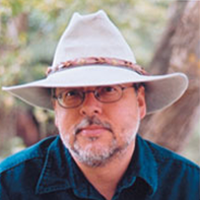
Andrew Nikiforuk is Canada's leading muckraker about Canada's most controversial muck: the tar sands of Alberta. He earned that notoriety with his award-winning book Tar Sands: Dirty Oil and the Future of a Continent.
And, starting today, he is writer in residence at The Tyee. In the months to come, Andrew will be writing a regular column under the heading of Energy and Equity. The first example, our cover story today, tells you what a parliamentary standing committee didn't allow you to learn when, last week, it abruptly stopped looking into tar sands contamination of water, killed the final report and shredded all drafts.
Andrew painstakingly pored over what the committee had heard and been shown, and today he constructs a damning picture of grievous pollution made possible by lax regulation and a government that would rather kill reports than learn from their contents.
On the phone from Calgary, where Nikiforuk lives with his wife and three sons, he described why, even though he has written an entire book on the tar sands, he savours the opportunity to stay on the file and share his findings with readers of The Tyee. He acknowledged the excellent work that Tyee reporters Geoff Dembicki and Mitchell Anderson have been doing on the issue in recent months, offering that "unfortunately the tar sands project is so extraordinarily large and beyond a scale that most can imagine, you could have 100 reporters covering it and not tell the story."
Nikiforuk said his intent is to widen his scope to examine all angles of Canada's morphing into a petro state, a political and cultural sleepwalk that he believes will profoundly change our character as a people. So far, it is proceeding with very little serious public debate.
"I want to start more conversations about energy in general, as well as fossil fuels and how they've changed our thinking and our culture. I want to look at the whole concept of energy slaves. Slavery ended just as the age of petroleum began. One barrel of oil does the same amount of work as one human slave working for eight years for a family. When people become dependent on slaves or for that matter energy slaves in the form of petroleum, all social relations change. During the nineteenth century slave societies were known for their moral carelessness, brutality and indolence. In a strange sort of way, cheap oil has given us the same sort of frailties and vulnerabilities once associated with slave owners. Nineteenth-century slave holders didn't have much insight about the moral consequences of their dependency on slave labour. Nor do we."
Saying he has been "deeply influenced" by the thinking of energy economists Vaclav Smil and Charles Hall, as well as Catholic theologian Ivan Illich, Nikiforuk said he wants to push deeper beyond the day's fleeting headlines chronicling disasters and commodity price swings.
"I want to put a whole lot of startling ideas and stories in front of ordinary people and do it in a way that doesn't give a fig about ideology. Energy doesn't give a damn for ideology but oil does fund extremist thinking on both the left and the right."
As he begins his stint as The Tyee's first writer in residence, here is what else Andrew Nikiforuk had to say...
On how the tar sands are corroding Canada's character:
"This project has begun to unravel threads in our national life. It has begun to really change our political character and economy. Now we have a petro-dollar and that has consequences for our manufacturing sector. As oil exporters we now have no credible program on climate change -- which is the same as the Saudi position. Our government's view is that we are hydrocarbon producers so we are not going to do anything to ruffle the golden goose. The project has begun to insidiously erode our traditions and institutions.
"Every part of the country knows a different part of the great tar picture. In Saskatchewan there is concern about the mining of uranium to power the tars sands development. Atlantic Canada understands the social issues associated with sending sons, daughters, fathers and siblings to live and work in Ft. McMurray. And the tar sands will eventually hollow the entire economy and tie our future as a people to the volatility of oil. We have put our eggs in one black basket. Canada's political elites, who have no imagination, have declared mining projects the size of Seattle are now our future."
On lack of resolve among political leaders in the face of petro-riches:
"Are any of our political elites offering a different vision taking us away from a petro-state future? Not yet. I think there's a possibility that [Green party leader] Elizabeth May may take a different direction. Layton has expressed some interest in thinking differently. But I haven't seen any real awareness among elites about the extraordinary political and economic risks associated with becoming a major oil exporter to a declining empire.
"Politicians who refuse to put the money aside for future generations ultimately come to represent the resource instead of the citizens. That's the whole foul nature of the resource curse. And it undoes every petro-state, rich or poor, Christian or Muslim, that refuses to discuss the curse. We now have leaders on a weekly basis defending bitumen and calling what is truly dirty and extreme, something it is not: clean and safe.
"Another risk associated with rapid development of bitumen is that this resource and greed will poison our relationship with the United States, the same way oil poisoned the U.S. relationship with Saudi Arabia. Black gold does not build strong friendships: it corrupts them.
"Oil changes everything and the thinking of elites goes all wonky. All they see is easy revenue, and there is not a lot of accountability."
On why we should be taking notes on Norway:
"Is there a right way to do this? I don't know. There's certainly a much better way. We have really failed to follow the Norwegian example. It's not perfect but at least it is fiscally conservative and protects future generations and keeps oil from totally contaminating government behavior. The Norwegians had a national debate about their oil and all political parties agreed to take the money off the table. Ninety per cent of oil-related revenues goes into a pension fund. The government must run on other taxes -- it largely runs on a carbon tax.
In contrast, here in Canada, where we have none of Norway's wisdom, our politicians have become spin doctors and salesmen for bitumen. And that's outrageous. In so doing we diminish our selves as a country."
On how addiction keeps us from seeing clearly the consequences of our decisions:
"I feel that we have failed to appreciate the portability, versatility and historic rarity of fossil fuels. We're like the typical junkie. We get this high from petroleum and this remarkable 100-year high has obliterated any sense of consequence or conscience or the need to prepare for the end of cheap oil. And we are there.
"We are behaving now like gods high on hydrocarbons. We need to behave again like human beings."
On what he hopes readers will take away from his Energy and Equity columns:
"I leave that up to readers. I hope to tell some good stories, profile some interesting people, perhaps cause you to laugh or cry, offer some better insight into human condition and our relationship to energy, and what we sacrifice sometimes when we make energy the centre of our lives.
"The rest of the world used to think of Canada as a fairly green place. They have learned that's not true. The world used to assume we were fairly responsible on environmental matters. That's not true. As an extremely wealthy country, people assumed we would behave responsibly with our oil. But the world is learning that's not true either.
"Maybe this project is revealing the real Canada, the dirty character that digs up rocks and stockpiles mining waste. Maybe the tar sands are giving Canadians a chance to wrestle with our mysterious resource-based identity. Who are we? What are we about? What problems do we hope to solve with this resource? Meanwhile the rest of the world is looking at the tailing ponds and the acid rain and carbon-making nation within a nation and concluding that there is such a thing as an ugly Canadian. And they find it a discomforting vision." ![[Tyee]](http://thetyee.cachefly.net/ui/img/ico_fishie.png)
David Beers is editor of The Tyee.
17
Login or register to post comments
reallife
2 years ago
Another "unbalanced" writer?
EDITED -- FALSE ACCUSATION AND PESONAL INSULT -- TYEE MODERATOR
Jeffrey J.
2 years ago
Incredible Scoop: Tyee & Nikiforuk
BC's best independent news media does it again. With a long history of breaking news and stories written by courageous journalists like David Beers, Shanon Rupp, Sean Holman, Rafe Mair and Bill Tieleman, Mr. Nikiforuk doesn't disappoint.
This is one of the single largest topics facing Canada (and the world). It is more urgent then most want to believe. And to have a thoughtful, intelligent, couragous author like Andrew Nikiforuk exploring this with Canadians is a gift.
Years ago, these stories would be featured in our daily newspapers, but those days are gone. Thank you Tyee and David Beers for this brilliant decision.
G West
2 years ago
Welcome Andrew
And thanks to David Beers for raising the bar of Tyee Journalism once again.
Glen Murtz
2 years ago
hey reallife...
Unless you can provide some proof for your quasi-slanderous, anonymously posted comment, EDITED -- PLEASE REVIEW THE TYEE'S COMMENTING GUIDELINES http://thetyee.ca/Comments/FAQ/#7
In more pleasant news, Nikoforuk's Tar Sands book is a great read.
bob the cat
2 years ago
balance
the ole "balance" shtick..who was it I heard recently talking about how the right ..if 99% of scientists were to say something like "Global Warming is Real" The right screams Balance! Balance! So the Rush Limbaugh/ Rex Murphys/nutbars get equal time.
F**k balance...I want the truth.
Chris Keam
2 years ago
Energy and Equity
In a perfect world reading Energy and Equity and passing a test on its contents would be a condition of running for office.
"The model American male devotes more than 1,600 hours a year to his car. He sits in it while it goes and while it stands idling. He parks it and searches for it. He earns the money to put down on it and to meet the monthly installments. He works to pay for gasoline, tolls, insurance, taxes, and tickets. He spends four of his sixteen waking hours on the road or gathering his resources for it. And this figure does not take into account the time consumed by other activities dictated by transport: time spent in hospitals, traffic courts, and garages; time spent watching automobile commercials or attending consumer education meetings to improve the quality of the next buy. The model American puts in 1,600 hours to get 7,500 miles: less than five miles per hour."
Online text available here:
http://clevercycles.com/energy_and_equity/
dorothy
2 years ago
Question
"In a perfect world reading Energy and Equity and passing a test on its contents would be a condition of running for office."
Wouldn't that be tantamount to "imposing on all a progressively more complex artificial environment into which the unschooled and unprogrammed do not fit." ?
freebear
2 years ago
'Balance' is killing the planet!
But people want their autos and 3 car (hole) garages!
ArthurCaldicott
2 years ago
Welcome Andrew and congrats to the Tyee
Best energy thinker in the country.
Chris Keam
2 years ago
Zing!
Good one Dorothy! I LOLed. Since I'm not a slavish adherent to any school of thought, personally I'm comfortable with proof of competency and knowledge being a pre-requisite for certain jobs. I like my pilots to have some proof of ability to fly a plane, and I think our leaders should be able to show some understanding of points of view beyond that of their own particular school of thought. I think Illich's work is valuable for its insightful analysis (and critique) of things we've come to accept as self-evident.
KWD
2 years ago
speaking of male devotion
Isn’t it somewhat ironic that in 1951 an Albertan native, Marshall McLuhan, clearly understood the power of media (advertising) and how the oil industry, through the automobile,would come to symbolized that power?
Rational tho’t took a back seat as N. Americans (particularly young males) fell in love with their cars. They devoted more attention … caressing, cleaning and displaying … and money on their car than on their wives or girl friends. For a great many males the car became their Mechanical Bride.
dorothy
2 years ago
And back to you, Chris..
Here it is: I work in one of these piddling 'professional' fields, where people are scared out of their wits of hiring somebody who might be incompetent, or not possessed of much integrity, as this could incur liability. So, before hiring people, even if the candidates are already certified to the hilt, they have them write tests and jump through hoops in the form of three levels of interviews, each scarier than the previous one. My take on all of this is: Why not try to exercise good old-fashioned judgment? I believe you can either trust people, or you can't, to make it their business to get to master all the details of their chosen jobs. It's about attitude, just like everything else.
I'm glad I gave you a good laugh. Leaders, we should make a point of following them over time, and see how they relate to a number of issues, and then we can likely decide whether we can count on them to do the sound thing vis a vis a new situation, yes? So maybe, before we can have competent leaders, we need to turn ourselves into competent constituents?
mcgregory
2 years ago
Money and Oil
As long as Albertans have oil, the can buy all the environment they want.
Chris Keam
2 years ago
@Dorothy
In reading your second comment I feel you are conflating ability, integrity, and understanding. Whether or not a politician understands an issue is no guarantee (s)he will act with integrity on it, or even exercise good judgment. My original comment was made simply because I believe 'Energy and Equity' does such a good job of taking a look at transportation from a new and illuminating angle that it would serve us well to have our leaders absorb its message and have that as a resource when making decisions. I'll bet there's only a tiny minority of politicians in Canada who've ever heard of Illich let alone read him. That's a pity IMO.
dorothy
2 years ago
And you are right
about Ivan Illich.Not just politicians. I read his 'deschooling society' many years ago and have occasionally brought it up in discussions with colleagues etc., always to be met with: He's some sort of communist, isn't he?'
But about 'conflating': I do not think I am confused about things here. It is my point of view that people are all of a piece and their mindset, the one they really carry inside, will run as a red thread through everything they do. But I am a pragmatist and judge things by their outcome. I do not think that if one fails to act with integrity and to exercise good judgment, that I would accept that the issue was ever understood in the first place. Understanding has more to it than a simple grasp of the mathematical aspects of the matter. It means having a comprehensive take on it, and indeed being able to set it into perspective. Yes, I see understanding and adequate handling of a task as a continuum with no breaks or breakpoints in the curve - the dance of life if you will. I don't think you can pick it apart.
I have, for instance, seen colleagues work away at a task in ways that seemed somewhat breakneck to me, and where more conventional supervisors would have interfered and 'corrected', but I waited and saw, because I had in my mind the whole picture of the person, everything they had said and done up till that point, their choices in life, their way of dealing with other issues in the past, etc. At the end of the process, I would look at a beautifully done job and realize, with some degree of humility, that we are not all the same, that we must take the time to learn enough about each other so that we can trust across superficial differences and exercise judgments without the proverbial answer-book or indeed any guarantees.
It has been said that the first few seconds in how you meet another person fixes that person's impression of you. This is likely correct. Or it used to be, when we still were personally autonomous and had less fear. Now, we start as we have been conditioned to do, to distrust our own instincts, to look for something we can document, so cover our ass should liability ever come into the picture. And then we are miles into the land of that creeping insecurity that has become part of us in the human zoo. I think we must try to seek back to a more integrated understanding of people around us, see them not as a set of components, but a package deal that either 'has it' or not. What they have or not? you want me to define that? I cannot, for the answer would unavoidably be modeled on my own take of life, and who's to say that I 'have it'??
pwlg
2 years ago
looking forward to Andrew's insight
congratulations to both the Tyee and Andrew. Andrew published a great article on BC's gas give aways with his expose on the Ladyfern site in NE BC. I sincerely hope he pays some of his keen attention on BC's almost unregulated gas and oil resource sector. It sure needs the muck stirred.
Best wishes Andrew.
pwlg
2 years ago
who owns who
Suncor now owns Petro Canada assets including their gas stations throughout Canada and in the US, Suncor owns Sunoco. Give a thought to this the next time you fuel up.
Also, 'cash strapped' Suncor just received two grants from Climate Change and Emissions Management Corporation (CCEMC) funded by the Alberta Government, of $3.3 million to test and develop 'new' technologies to reduce its excessive GHG emissions.
Part of this money is going to rebuild one of their old steam boilers used to 'upgrade' the thick sandy tar.
Could someone tell me why the citizens of Alberta are financing or gifting money to the top tar sand producer?
If Suncor had enough money, $17 billion, to aquire Petro Canada then why are taxpayers continuing to subsidize them through the astro turf organizations CCEMC?