News

Big Jump in Oil Tankers in Vancouver's Port

Flow of tar sands crude to Burrard Inlet rising, and will more than double: Kinder Morgan.

By Mitchell Anderson, 3 Jun 2010, TheTyee.ca

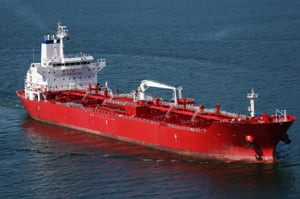
Red oil tanker

Nearing Burrard Inlet: Tanker traffic could more than double.

Related

The proposed Enbridge Gateway pipeline to Kitimat is stirring strong public opposition to the super tankers it would attract along British Columbia's northern coast.

But a bigger risk may lie in the steeply rising number of oil tankers already plying B.C.'s coast -- up nearly 50 per cent in just two years -- to handle the growing flow of tar sands petroleum from Alberta.

Their port of call is the busiest in Canada: Vancouver harbour, terminus for an existing pipeline to Alberta that will more than double the amount of crude it carries if its owner makes good on its plans.

If that happens, says a veteran B.C. oil spill prevention expert, the further rise in tanker traffic will compound the risk of an environmental catastrophe in the treacherous waters of the southern Gulf Islands, potentially impacting the Fraser Estuary and San Juan Islands as well.

65 tankers a year in Burrard Inlet

Last year, about 3.9 million tonnes of Alberta crude oil was exported through the Westridge terminal in Burrard Inlet, filling 65 Aframax oil tankers -- up from 45 in 2008.

The pipeline owned by Kinder Morgan extends from Haines Alberta to Westridge located in north Burnaby. The capacity was recently expanded to 300,000 barrels per day -- almost 60 per cent of the proposed volume of the Enbridge Gateway pipeline in Northern B.C.

Kinder Morgan confirmed to The Tyee plans to further expand the pipeline capacity to 700,000 barrels per day subject to markets conditions and regulatory approval.

According to Kinder Morgan:

"New pipeline capacity will be required to transport growing volumes of product from Alberta's oil sands. Recent studies have concluded that emerging West Coast and Asia Pacific markets provide an opportunity for Canada to become a significant contributor in these markets."

Upping the odds of disaster

Marine spill expert Stafford Reid believes that this increased oil tanker traffic could in fact be more dangerous than the proposed new tanker traffic from the controversial Gateway pipeline to the North Coast.

Marine experts believe oil spill risks increase with the number of shipments, rather than the size of tankers. The Burnaby terminal and Burrard Inlet cannot handle larger vessels, which results in more tanker traffic.

"One transit of a 350,000 deadweight ton (DWT) tanker going out of Kitimat could be of less risk than three or four 100,000 DWT tankers currently going out of Burnaby," said Reid, who sits on the federally mandated Pacific Regional Advisory Council on Oil Spill Response and has two decades of experience in marine vessel risk assessment and spill response preparedness, including 17 years as an emergency planning specialist for the B.C. government.

While Enbridge has been in the media spotlight over the proposed Kitimat project, few have taken notice of the quiet expansion of the Kinder Morgan TMX pipeline, and resulting increased oil tanker traffic through the southern Gulf Islands that may reach 150 vessels per year.

Because Kinder Morgan already owns the pipeline right of way to the coast, the latest anchor loop expansion -- even through Jasper National Park -- was completed with a grandfathered approval with the Canadian government.

'Boiling Reef' and other hazards

At present there has been no comparative risk studies on southern and northern tanker routes. Both are fraught with potential hazards. "The proposed northern tanker routes and the current southern tanker routes share both complex and difficult navigational challenges and valued environmental and commercial coastal resources," says Reid.

Southern tankers exiting Vancouver must thread the narrow channels through the Southern Gulf Islands including Haro Strait, the aptly named "Boiling Reef," and Race Rocks with tidal currents up to seven knots.

Washington State authorities consider these hazardous waters and even marine pilots refer to this as their "pucker zone." A spill here could potentially deposit crude throughout the Southern Gulf Islands, the San Juan Islands and the globally important Fraser River Estuary. Much of this area of the Salish Sea is a low-energy environment. A slick here would not be readily flushed, out and any shoreline crude would require manual clean-up.

The northern tanker route through narrow Douglas Channel leading from Kitimat is no less dangerous. Last fall a 28,000 ton bulk carrier went aground there and the bow was seriously damaged. No bunker fuel oil was spilled but and the vessel had to return to Kitimat for repairs. What would have happened if it was an oil tanker?

Reid points out that even ships carrying non-hazardous cargo can create an oil spill. "You got to remember that these vessels hold between 1,000 to 10,000 tons of bunker fuel to run their engines and ship-systems."

Tug boat guidelines questioned

The dangers of a serious oil tanker accident in either route are exacerbated by Canada's antiquated and unenforceable guidelines for tug escort.

For instance, oil tankers greater than 40,000 DWT leaving Vancouver are required to have two escorting tugs accompany them through the Strait of Georgia, Haro Strait, and the Strait of Juan de Fuca.

American law also requires that two escort tugs accompany all oil tankers out of port in case the vessel loses power or runs into trouble. However, U.S. laws specify vessel type, training and mandatory drills. The U.S. has also invested millions in escort tug studies and simulations.

Reid believes our regulatory safeguards for tugboats are woefully inadequate. "In Canada, you cannot find a copy of the tanker escort guidelines, let alone any performance monitoring information." Transport Canada confirmed that these guidelines were not developed by the Canadian government, but the BC Coast Pilots Association.

This lack of government oversight also extends to Transport Canada's response after an accident occurs such as the one last year out of Kitimat.

According to Reid, "In the United States they would up one side and down the other of the guy. They will hold that vessel, search his records, go through the protocols. Not in Canada, they would haul them off, say yeah it still floats, and send him home. It's a totally different world."

'Everybody is low-staffed'

While Reid is critical of how well prepared we are to deal with a spill, he makes pains to point out there are many committed and qualified people in our public service but they are often not allowed to do their jobs.

"The biggest the problem you have in government right now is that everybody is low staffed, whether you are Environment Canada, Transport Canada or the Ministry of Environment. There is a lot of new people coming in, they are dealing with budget cuts and they are being reorganized to death. Paralysis by analysis."

In the meantime, warns Reid, tanker traffic on the B.C. coast is quietly being scaled up with virtually no public engagement process and outdated regulation.

"People say they don't want oil tankers moving product off the west coast and I tell them it's happening now, guys, the horse is out of the barn."  [Tyee]

31  Comments:

Login or register to post comments

  • mariner

    1 year ago

    MAJOR OIL POLLUTION RESPONSE AND CONTROL ON CANAIDIAN COAST

    " HOW STUPID MUST STUPID BE" before both federal and the provincial governments acknowledge that Canada dooes not have the capabilities to deal with a major oil spill in a responsible and safe manner.

    Canada has 243,042 km of coast line to protect - what is that, protection ??? Canada does not have the knowledge, means, manpower or equipment to deal with a major oil spill inside it's territorial boundaries.

    Here we are raising concerns on one port that is supposed to be organized and efficient. The article as written, paints a totally different picture. It does not matter whether it is in Vancouver harbour or the the inland passage, a MAJOR OIL SPILL WOULD HAVE DISASTEROUS EFFECTS and any cleanup or mop up operation would do nothing about the permanent environmental damage done and would be temporary at best.

    All this tanker traffic is essentially, to satisfy the the needs of the US and potentially, China. hey, what about the needs of Canada and it's people eh !

    Both the federal and provincial governments are a bloody disgrace in this respecct. They have sold out to the big oil companies with no real concern on safety or environmental issues. I would question the legality of what is happening and why it is being allowed. A couple of major court claims would sure make a differece to the arrogant attitude of those in power.

    Thank you.

  • Barryeng

    1 year ago

    It gets very scary when we

    It gets very scary when we realize that we are comparing our disaster response capability to that of the US, and are coming out poorly. Especially in light of their ability to control the Gulf Oil Spill. If the American efforts, with zero results are far better than any possible Canadian capabilities then we are in deep trouble.

    The Vancouver ports are bad enough, but an oil port in Kitimat is going to be a complete and total environmantal disaster if it is allowed to go ahead.

  • freebear

    1 year ago

    Disaster? What disaster?

    Sometime in the future - oh that disaster!

    Billions still being shovelled at the still profitable oil as the addicts are'nt given the choice of alternatives!

    Oh and a billion dollars for a 3 day meeting in Ontario!

    The corporate/political vision is more of the same sheeple!

  • Conductor274

    1 year ago

    People are stupid

    Harper and Campbell are the Canadian version of Bush and Cheany. They are willing to risk the destruction of the west coast of BC so big oil companies can make more profits. They have absolutely no regard for the environment. This is criminal activity and the evidence is staring us right in the face from the Gulf of Mexico. BP said they had plans and the methods to prevent or clean up any oil spills but as the disaster shows us, they lied. Now it's too late. BP's best guess is that the oil will gush into the gulf until August until they can drill another well and even then it might not stop the leak. It's looking like the not only the Gulf of Mexico will be affected but the oil will drift around the south end of Florida and go as far up the east coast to Newfoundland. Now the right wing Conservatives in Canada are telling us they can control oil spills in our waters.

    People are too stupid to survive as a species and we're determined to take down the environment with us as we go down.

  • KWD

    1 year ago

    the addicts aren't given the choice of alternatives

    Yes, to some extent that may be true. But when you have a closer look you may discover that the oil addicts are no different than most other drug addicts. Because they have a choice, they don't want the alternatives, even though they may be healthier for everyone ... the rush and instant gratification isn't quite as satisfying and it costs a whole lot more, much like medicinal marijuana.

    But the cheap high isn't going to be around forever and withdrawal is going to happen, and when it does we will see more really bizzare human behaviour ... and not just from our leaders.

  • Mikemah

    1 year ago

    oil

    Cmon give these guys a break ! They can't afford safety measures ! What with the mansion payments and the helicopter payments and the beach house they're barely getting by.

  • morechatter

    1 year ago

    Greedy Politicians

    Rule the day and its simple as soon as it cost a fortune to run for office you had coporations pick up the tab and promote their favorites. Not much for picking or corporations sure know how to pick them is more like it. And if your local media is promoting a party you just gotta know you have been sold out.
    Oil and Politicians don't mix any better than Oil and Water so why are politicians mixing them all up. Well that question has cost the voter dearly and we haven't even gotta on the wildlife. Is this what we get when finally get some representation from the west as Harper are prime minister from Alberta is knee deep in oil and now so our Canadians and our wildlife and so on. Who said the seas would turn black apparently the visionary was right on.

  • morechatter

    1 year ago

    Harpers Got It Going On

    From the Alantic to the Pacific as if there is Oil to be found Harper is certain to be digging for it. No worries be happy Big Oil and Big Old Harper have it all under wraps as Campbell is on board and Alberta well that is a no brainer, right Mr. Harper no matter what the cost?

  • samuidave (not verified)

    1 year ago

    Gordon Campbell's Motto

    "if you're going to be dumb you may as well go all the way and be retarded." William Blum

  • Van Isle

    1 year ago

    The picture at the head of

    The picture at the head of this article is a little baby tanker. I have seen the 2 largest tankers in the world and they measure more than 500,000 tonnes each. They are so big that they can't go into the North Sea, they have to off-load onto smaller tankers (250,000 tonnes) in the English Channel to have the oil delivered to Euro-Port (near Rotterdam). My guess that the size of tankers that would be coming out of Kitimat would be around the 250,000 tonne mark.

  • NorseHammer

    1 year ago

    Keep your Oil Traffic Down South

    We have very few people up here to take up the call as Volunteers on the Beaches when you screw up and start spewing oil into the sea, so please please, keep your tanker traffic near you largest population centers, after all you can't expect government or industry to do much with disasters like oil spills can you?

  • G West

    1 year ago

    NorseHammer

    I agree with you. If oil tankers (and LNG ships) are coming in and out of BC waters - and if pipelines are bringing in synthetic crude from Ft Mac - they should come together somewhere off Pt Grey so Gordo can see his handiwork from his condo tower in Kerrisdale.

    Fair’s fair after all.

    These suckers want the business - let them step up and take it....and, suffer the consequences when it all goes pear-shaped.

  • RickW

    1 year ago

    One Step Closer to The Rapture....

    ....as Harper confirms his contempt for the West Coast:
    http://www.timescolonist.com/technology/door+open+rigs+tankers/3106157/story.html

  • RickW

    1 year ago

    And Because PeeWee is a schemer......

    ...if he is willing to trade off votes from BC because of his "blessing" on oil shipments (and the spill that MUST happen at some point), what voter base is he attempting to woo with his announcement?

  • PeteL

    1 year ago

    Neither Fish nor Fowl

    Look, nobody wants contaminated meat, nor to die in a seaplane crash or to see a picture of another oily bird.

    But at the end of the day men and women in BC need good jobs that pay decent wages. Wages that can sustain a family.

    Ships and oil and meat and airplanes can all co-exist in this world if governments and industry and workers enforce regulations and adopt safe working practices.

    The problem in the world today is government has fallen into the pocket of industry.

    Transport Canada refers to industry as clients and they refer to us in labour as - labour. You see, that's a problem!

    Transport Canada would be well served to listen to professional mariners and take what we say seriously instead of lecturing us about agenda's etc.

    The chickens came home to roost in the meat packing industry, those same chickens are shitting all over the place in civil aviation and as President Obama is learning the oil industry have taken American regulators for a greasy ride.

    Lets get our facts straight and not just go off on tangents. This kind of behavior solves nothing and all we get is bad law, bad regulations and woeful enforcement regimes.

    It is time that our government truly engage the major stakeholders in the marine community and the real community that is civil society and start mapping out a real future. A future that serves the interests of our country, our citizens and the world.

    Lets get off the soapboxes and get real.

  • Dukeboy

    1 year ago

    Oil Tankers

    An expert from the US oil industry said on CNN today that oil tankers are much more of a hazard and more likely to cause a major spill and pollution than off-shore drilling!

  • NorseHammer

    1 year ago

    How Bad is Refined Product When Spilled compared to Crude

    During WWII hundreds of fuel tankers were sunk, how much damage did that spilled refined product do to the environment when compared to crude? anyone know the truth, perhaps Kinder Morgan, Enbridge et al should be piping refined petroleum instead of crude. I don't really know the difference, just a suspicion of mine that the refined product when dumped by the pipeful or tanker load is not going to take as many years to leave the environment.

  • doggone

    1 year ago

    I've been wondering about that, NorseHammer.

    My father in law (ex RCAF WW11 Lanc pilot and later oil Exec) mentioned this some years back. He also said that numbers of historic "domes" which held large amounts of crude had obviously lost that oil into the oceans over geologic time.
    I guess the problem is:
    My condo on the waterfront has lost value because of the threat of an oil slick.
    I simply do not have the time to wait 40 years (or 100,000) for it's "value" to bounce back

  • jharrison

    1 year ago

    Opposed to Tankers?!?! PUBLIC MEETING

    Public Meeting

    Sponsored by No Tanks! ( www.notanks.org )

    7:00 PM
    Tues. June 8, 2010

    Wise Hall (1882 Adanac st. Vancouver)

    Support our fishing community.

    Help us avoid a Gulf of Mexico spill like this in Vancouver:

    No Tanks! is a coalition of fishermen, business people, environmentalists, and citizens of Vancouver who are working to keep our waters free from an oil spill.

    www.notanks.org

  • blackie

    1 year ago

    old news

    This story has been covered extensively in both the Sun and the Globe -- those hated mainstream media types. Last piece was in the Sun about 6 months ago documenting all of Kinder Morgan's plans for further expansion, the record number of crude shipments, etc. etc.

    In other words, there ain't no news here. When Kinder Morgan announces its next phase, along with some signed contracts with China -- that will be news. And watch for them to decide a tanker terminal around Roberts Bank makes more sense than expanding Westridge (bigger ships, no Vancouver harbour transit).

    But why does no one take the enviros to task for ignoring this? They are so obsessed with a Kitimat project that is at least six years away from ANY oil shipments that they ignore an issue that already exists right under their noses. Granted, a 50-year no-spill track record is hard to beat, but when did that ever stop them before?

  • NorseHammer

    1 year ago

    Blackie forgets the many spills into Burard inlet

    Someone somehow post the links to the spills Please! The most dramatic Pipeline ones I can think of were the "Barnett Highway" spill, and the "Taylor" Spill, the wells around Taylor still can't be used for drinking water many years later.Then there the spill from the refineries into the inlet, when I lived in across the inlet at Dollarton during the 60' and 70's there were numerous times that oily sheen appeared on the water.

  • Fiat lux

    1 year ago

    Oil spills and other

    Oil spills and other environmental disasters are the inevitable, transferred costs of a criminal economic theory of monetary "efficiency" and "wealth creation", ignoring Newton's law of reactions, with the cleanups accounted as "growth of the GDP".

    The bigger the either natural, or manmade disasters, the higher the GDP.

    As long as this criminal system is permitted to continue, things will get only worse all over the world.

    Ed Deak.

  • RickW

    1 year ago

  • RickW

    1 year ago

    NorseHammer

    Quote:
    During WWII hundreds of fuel tankers were sunk, how much damage did that spilled refined product do to the environment when compared to crude?

    I heard just recently that many WWII era ships that were sunk are only now beginning to release their heretofore loads of fuel.

  • morechatter

    1 year ago

    There is no room for human error

    And that is why it is like a time bomb ready to blacken our waters and destroy all that is living.
    I was reading some survey where it said those educated on the university level understood the importance and the low risks involved of the venture of drilling for off shore oil.
    I thought boy are they full of themselves as in truth where all this so called intelligence amounted to greed. Because I can gaurantee they have stocks and investments in oil. Oils well that ends in a well.
    And as far as leaks in the inlet when has there been one is more the question?

  • morechatter

    1 year ago

    See, no room for human error

    As my question is when hasn't there been a leak in the Burrad Inlet as my understanding and the stories that have been leaking is its the norm and has been going on for some time as Industry watchs over itself.

  • RickW

    1 year ago

    Excerpts

    http://www.environmental-research.com/publications/pdf/spill_statistics/paper4.pdf
    The frequency distribution of spill size classes shows that spills under 100 gallons represent 92% of the total spill number, but only about 1% of the total spill volume from vessels.

    The total volume from spills of less than 100,000 gallons has not changed appreciably since 1985, with spills of at least 100,000 gallons contributing the most to annual fluctuations of total vessel spillage

    Spills impacting U.S. marine and navigable waterways and originating from fixed facilities (not pipelines) have decreased dramatically since peaking in 1991, following a pattern similar to vessel spills.

    Since 1985, U.S. pipelines have spilled more oil than tankers and barges combined. Since 1991, pipelines have annually spilled 37 times as much as tankers. The change in the proportion U.S. pipeline spillage is largely due to the fact that since 1990, pipelines transport more oil across more miles than water carriers

    http://www.greenspun.com/bboard/q-and-a-fetch-msg.tcl?msg_id=003bAj
    The pipe ruptured early yesterday morning, about 100 kilometres north of Chetwynd, a logging and mining town about 80 kilometres west of the Alberta boundary.

    The 800-kilometre underground pipeline is owned by Calgary-based Pembina Pipelines Corp., the largest shipper of crude oil in Western Canada.

    A spokesman for Pembina said the spill was a bad one. "In the pipeline business, you can't move oil without having spills," said Jim Watkinson, Pembina's vice-president and general counsel. "But this is as serious as I've seen it."

  • alive

    1 year ago

    Sorcheres apprentice

    Sorcheres apprentice unfolded.
    Yes we can start things, but are unable to stop them once they get going!
    Should that not in itself be a good reason to not start?
    We now live in a world where everything is based on greed, unfortunately the hucksters have no consciense.

  • MkumbaJoe

    1 year ago

    Oil : Alberta; Malcolm Lowry

    Unlike Norway which re-invests profits to develop alternative forms of energy, Alberta sits on its seemingly endless supply with no vision at all. Indeed in 2005 when I checked the Alberta environment ministry website, there were no projections with respect to dealing with environmental concerns arising out of oil exploration. I hope that's changed.

    Poor Malc Lowry, the author of UNDER THE VOLCANO who so much loved the views along the Burrard Inlet from his waterfront shack, is probably turning in his grave, wondering if the Inlet will suffer the same fate as The Gulf of Mexico.

  • blackie

    1 year ago

    reality check

    There's an appalling lack of knowledge about what that hated pipeline system actually does (and has been doing now for about 50 years), and what would happen in the Lower Mainland if it were suddenly shut down (as so many of you seem to be arguing).

    1. It transports crude oil to the one remaining refinery in the Lower Mainland (there used to be four). Shut down the line, and that refinery either closes and lays everyone off, or starts importing oil in tankers (which is how it happened before they built the pipeline.)

    2. It transports in batches gasoline, diesel, jet fuel etc -- all refined products -- sold in the Lower Mainland. Shut the system down, and you can put all the cars and the buses up on blocks and get your bicycles out (don't forget the snow tires). The alternative is to ship much much more of that stuff in tankers on the highways -- all the way from Edmonton. Think that's safer?

    3. Yes, it ships some crude offshore in tankers, and more of it every year. No tanker spills yet. If Dogwood and First Nations opposed to the Kitimat line succeed (I think they will) then you can expect even more crude (triple, in fact) to come down the line to Vancouver. Why? Hands up all those who think it's a good idea to sell oil only to the US.

    I know, you don't want Canada to sell ANY oil to ANYONE. Well, good luck with all those great social programs you like.

  • G West

    1 year ago

    Reality check

    If the coastal market could do without the other refineries - it can do without the Chevron one. Chevron, in fact, is a very small player in the Canadian market - its single refinery has been in Burnaby since 1935. And we can get along just fine without the Kinder Morgan pipeline that serves it too.

    It would not be missed any more than IOCO was after it disappeared about 16 years ago - remember, it started operations in, as I recall, 1915...

    Social programs have suffered very badly in this country for the last 25 years and even more in British Columbia in the last ten (despite all the giveaways to the industry and the influx of payments for drilling rights - is it just a coincidence that period also corresponds to the rapid increase of petroleum exports to the USA - I think not!

    If we must sell oil - let it be to the US - and keep the damn stuff off the coast.

    • The discussion for this story is closed. No more comments can be added.