Enbridge Pushes Oil Tanker Safety Strategy
Kitimat critics unconvinced by double hulls, super-tugs and fast response spill promises.
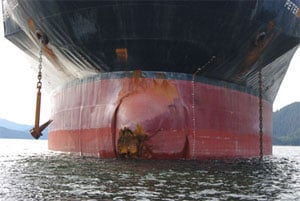
Damage to the Petersfield tanker after striking rocky outcrop near Kitimat in 2009.
On Sept. 25, 2009, two hours out of Kitimat in the Douglas Channel, the freighter Petersfield suffered complete gyroscopic failure, lost steering, took a turn to starboard and struck a rocky outcrop across from Grant Point. The 26 crew members suffered no injuries and the 187-metre freighter was able to extricate itself from the rocks and return to Kitimat. Despite extensive damage to the bulbous bow, no cargo was lost.
The group Douglas Channel Watch says this Petersfield incident is a striking example of the real dangers of allowing oil-tanker traffic in and out of the port of Kitimat. "We should all be deeply concerned about Enbridge's Northern Gateway opening up the North Coast to oil-tanker traffic," says Douglas Channel Watch member Dave Shannon.
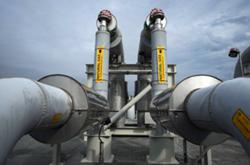
The proposed Enbridge Northern Gateway would transport oil from the Alberta tar sands to Kitimat via a 1,170-kilometre pipeline. At the proposed new, state-of-the-art Kitimat port facility, the oil would be transferred to double-hulled super-tankers and shipped out of the Douglas Channel. The proposal calls for a second pipeline to be built along the same route to transport condensate (a.k.a. diluent) from Kitimat to Alberta for use in the tar sands.
Opponents of the twinned pipeline and the resulting increase in west-coast tanker traffic say the risk of a spill along British Columbia's pristine coast is too great.
Representatives of the Enbridge Gateway Pipeline project have heard these concerns and continue to stand firm. Despite the waves of opposition, Steven Greenaway, Enbridge vice-president of public and government affairs, has stated, "If we did not believe that the movement of petroleum goods could be done safely, either in a pipeline or by vessel, we would not have proposed the project." Enbridge has a detailed and professionally developed Marine Safety Plan which states that through a combination of double-hulled tankers and high marine standards (including escort tugs and third-party tanker inspections), risks will be mitigated. The marine plan also calls for a massive investment to improve the first-response capability along our coast.
Double hulls an 'experiment waiting to explode'
After the Exxon Valdez disaster in March 1989 (and the lesser known, larger spills off of the United Kingdom of the Braer, 1993, and the Sea Empress, 1996), there was an outcry for double hulls on ships to decrease the risk of cargo being released into the environment. Most felt the double-sided and double-bottomed carriers would mean no more spills.
But some assert it is too soon to tell how safe double-hulled tankers really are. Metallurgical engineer Dave Shannon has spent many hours researching the science behind the construction and chemistry of tankers. Shannon points out that the built-in features of a double hull cause them to corrode up to three times faster than the old single hulls they replace. The corrosion chemistry with double hulls is unique, complicated and, he fears, "...with sub-standard maintenance, a chemistry experiment just waiting to explode."
Groups such as Douglas Channel Watch fear that opening up the north coast to 'Very Large Crude Carriers' (VLCCs) up to 350 metres long and 60 metres wide, even if they are modern and double-hulled, creates a very high likelihood of a tragic oil spill occurring. Those who are concerned are not placated by Enbridge's reassurances.
Can super-tugs save the day?
Enbridge's Steven Greenaway is very aware of the recent Petersfield incident, but points out that the Petersfield was not using an escort tug. Enbridge's marine plan intends that all vessels be tethered to powerful state-of-the-art super-tugs ("tractor tugs") that would, in the event of a malfunction or emergency, be able to maintain control and safety of the tanker. In addition, all crude carriers docking and departing would be helped by harbour tugs. The VLCCs would be tethered all the way to open water at the end of Douglas Channel.
Activists say that the use of tugboats will not eliminate the risks inherent in moving oil along the coastline. Gerald Amos, of Kitimat's Haisla First Nation, says, "Enbridge touts that the tankers would be tethered to tugs out to open water. Anyone with experience on this coast knows that the Douglas Channel is the safest part of the tanker route. Regardless of this fact, we have had two major shipping incidents in recent years."
Amos also points out what most Douglas Channel mariners know all too well: the channel's steep-sided shoreline causes a funnelling of wind (increasing wind speed), extreme seas and unpredictable weather changes. Amos believes the Douglas Channel and the open water beyond comprise one of the most dangerous coastlines in the world. "With the 100-knot winds and 100-foot waves, compounded with myriad reefs and rock-piles, [this] is the area where a spill would be most likely, and most devastating."
There are those still concerned that loss of steering, combined with extreme weather and rough seas, would render escort tugs useless. Enbridge disagrees, pointing out that the super-tugs are not the typical log-booming type, with some capable of steering and braking up to 320,000 pounds.
$100 million for better first response
It may surprise some readers that there are already petrochemicals being shipped along our coast and up the Douglas Channel to Kitimat. Rio Tinto Alcan imports solid coal-tar pitch for its Kitimat aluminum smelter. Methanex, also in Kitimat, acts as a receiver for large ships containing condensate, which is shipped to Alberta by rail.
Enbridge believes that should its project go ahead it would be increasing the safety of our coastline by investing more than $100 million on improving the first-response capability.
The proposed Northern Gateway terminal would include a 24-hours-a-day, seven-days-a-week control centre, state-of-the-art radar station, much-needed first-response equipment and personnel, storage tanks and a pump station. Should a spill occur, Enbridge would be prepared with a local response agency based in Kitimat and along the Douglas Channel to respond immediately.
Greenaway knows that residents are concerned that they would end up paying for any spill that might occur. He addresses this by saying that there are several layers of funding that would be available. "These include the ship-owner's insurance, the Canada Ship Source Fund, the International Oil Pollution Fund and the Supplemental International Oil Pollution Fund, which Canada is expected to sign on to in the near future. Combined, these funds are valued at more than $1.4 billion."
Money not the answer: citizens
Gerald Amos and other concerned citizens say that it's common knowledge there are no effective means to clean up large coastal oil spills. "In the face of this reality," says Amos, "Enbridge continues to state that because of their project, hundreds of millions will be spent to increase oil-spill response capacity, and as a result of this they say the coast would be safer if this project goes ahead. This is akin to saying that there are lots of cancer clinics to care for people who smoke, so more people should just go ahead and smoke."
Kitimat is an industrial town, its economy centred on Rio Tinto Alcan. The jobs generated by access to ocean fishing and recreation provide diversity and are critical to the economic health of the community. Kitimat resident Margaret Ouwenhand worries her community has a lot to lose. "If there is a catastrophic spill, the commercial and recreational fisheries will be lost."
Flip the coin, take your chances
In 2009, the Dogwood Initiative launched the 'no-tanker loonie project,' distributing decals for the one-dollar coin that cover the loon with a black oil slick. "The no-tanker loonie campaign is a way in which we can effectively engage the public in keeping oil-tanker traffic off our Northwest coast," says Dogwood Initiative's corporate campaigner Eric Swanson. The Dogwood Initiative "...wants desperately to avoid the one freak accident that would severely negatively impact our lives and livelihoods," and is distributing the thought-provoking dollar coin decals. Groups like Douglas Channel Watch and the Dogwood Initiative believe the only way to avoid an oil spill on our pristine coast is to not allow tankers.
A web-based counter-campaign, "the other side of the coin," was launched by Enbridge "so both sides of the coin can get examined." Enbridge is presenting the message that it has done the research and feels confident that tankers can navigate the Douglas Channel safely. Enbridge believes its high standards and tanker regulations, coupled with much-needed improvements in first-response capabilities, make its project a safe bet.
Both sides remain firm: tankers, no tankers -- a flip of the coin with high stakes riding on the outcome. ![]()


28
Login or register to post comments
Dungeness_Crab
1 year ago
Newsflash: 6,000 hull tanker breached!
Oh if only we'd made tankers with six thousand and ONE hulls, this tragedy would have been averted!
Van Isle
1 year ago
To fix the problem is quit
To fix the problem is quit simple. Whomever (politician or business person) allows any tanker traffic on our coast and there is an oil spill, they will be responsible for the clean up. Plus they too will be expected to be "on the tools" at the spill sight until the job is finished.
Takuan
1 year ago
the tankers are going to
the tankers are going to sail, that is a fact. There is too much ranged against concern for irreplaceable beaches and habitat. Too much money, too much power, too much greed and too many guns.
Best to prepare remedial efforts so they can respond quickly, that is regrettably the best that can be done.
sidebar: of course there is going to be a normal reaction by decent people that wish to see the world preserved for their children, Some of these will inevitably pick up the gun instead of the mop. That is human nature and nothing can be done about that. We have already seen a little of that here and there (the Encana bombings come to mind). What I predict though, is that like any asymmetrical warfare, it will be tuned for maximum results for minimum output. Any logical observer can only conclude that precise strikes against perceived-to-be reponsible individuals is the next level of escalation. I suspect that we will see evidence of this acknowledged by a conspicious absence of those likely targets from any public gathering.
Barryeng
1 year ago
Enbridge's Responsibility
For all of Enbridge's crowing about how responsible they are going to be, their responsibility ends once the oil is loaded onto the ship. From there on, the responsibility is passed to the ship captain, the ship owner, the pilots, the tug owners the tug captains all the way down to number 3 messboy in the bowels of the tanker. At any point, any one of them can say "It was not my fault".
!.4 Billion dollars in a "cleanup fund" sounds like a lot of money, but we must remember that cleanup of the Exxon Valdez spill cost more than 2 billion dollars on the initial cleanup stage. Twenty years later there is still oil sludge in Prince Williams Sound, and Exxon is still refusing to pay all the costs associated with this spill.
Enbridge's responsibility stops at the loading dock, but they would still have to get the oil to that point, through several high mountain passes that are prone to avalanches and landslides. It could take a couple of hours for pipeline monitors to notice enough of a drop in line preassure to recognize a land-based spill, and given the territory, a lot longer to get to the area to repair it. Cleanup would be impossble.
The end product of this project would be less than 30 permanent Canadian jobs. That is not enough to warrant taking any chance on our environment to enhance someone else's corporate profits.Nothing that I have read or seen has convinced me that Enbridge or their ilk would be any better corporate citizens than Exxon.
freebear
1 year ago
Do you belive?
"If we did not believe that the movement of petroleum goods could be done safely, either in a pipeline or by vessel, we would not have proposed the project."
Halelejuh they believe!
Seekers o0f the temple of Mammom!
There's riches to be won, as we are an 'energy superpower', right Prime Minister Harper!
bullbucker
1 year ago
tanker safety
We must not forget that everybody preformed as they where trained and that the safety equipment preformed as was expected. The master and pilot made a concsious decision to run the bow into the shore rather than to turn away from the shore and risk exposing the vessel to sideswiping the shore and opening up the fuel tanks. This is what happened with the Queen of the North. All deepsea vessels are designed to take a tremendous of damage to the bow and still return to port with leaking cargo and remaining afloat. With two escort tugs this accident would not have happened. For more than the past thirty years there have been tankers passing through Rosario Strait and Boundry Pass without incident and I don't see why we should not expect the same result in Douglas Channel
Takuan
1 year ago
even long after electric cars
become the rule rather than exception, it will be a status symbol among the rich to drive gas buggies. Knowing they have turned the Pacific Northwest into a tar barrel will just add to the glow. One has to be very important indeed to rate ahead of the environmental health of a whole region. (cue Mr. Burns and See My Vest!")
bullbucker
1 year ago
that should read without
that should read without leaking cargo.
Takuan
1 year ago
Ludwig is the canary in our
Ludwig is the canary in our civil rights coal mine on these matters:
http://www.globaltvbc.com/Oilpatch+activist+Ludwig+banned+from+installations/2668427/story.html
poetician
1 year ago
Asking the right question
When it comes to oil spills, it's not a question of if, but when.
cboo44
1 year ago
Then stop using petroleum
Anyone who is totally against the shipment/transport/pipelining of petroleum should cease the use of any petroleum products immediately, Otherwise they are damn hypocrites. From Weebo Ludwig to Suzuki, and all the "concerned" Douglas Channel Watchers, they all use their gas/diesel-powered vehicles. Talk is cheap.
Takuan
1 year ago
bet you none of them drive
bet you none of them drive Hummers
Illahie
1 year ago
Tankers should not operate on autopilot in narrow channels
Tankers and other vessels including cruise ships should not be running on autopilot in narrow channels. A gyro or other failure can result in dramatic course changes in confined waters, with possible catastrophic results. These vessels need to be manually conned.
Super tug escorts are cheap insurance against a propulsion or steering malfunction.
driftwolf
1 year ago
possible solution
Make the directors and senior management of this and other companies who want to ship dangerous cargo through Kitimat PERSONALLY responsible for ALL costs of any cleanup necessary. Not just the surface cleanup, as done with the Exxon Valdez, whose company left thousands of litres of oil behind on the beaches, but all the costs for a 100% cleanup.
Not just the corporation, which can then declare bankruptcy after paying out millions to these decision makers, but the decision makers themselves.
Then see how keen they are to promote the safety of their ideas.
Takuan
1 year ago
what would they find in your house?
http://www.theprovince.com/news/Weapons+chemistry+textbooks+seized+from+Wiebo+Ludwig+farm/2699187/story.html
demotto
1 year ago
Corporations
Corporations have been assigned the same same rights and duties of a person however the agents of the Corporations are not held liable for the actions of the Corporations. We as living beings also have a Corporation in the form of the NAME(our person) however we as agents for our corporate NAME(person) are led to believe we are responsible for the actions(like traffic tickets and other taxes disguised as fines)of our corporate NAME(person). Why the discrepancy ?
The only way to make the agents of the corporations responsible is to go after them as men and women privately as private men and women not through the corporation. We need to file Notices upon all men and women acting as MP's and Corporate Agents that they will be held privately responsible for all damage they cause us and the environment through their public actions and that we will seize their assets to help pay for the harm they have caused.
Or we can act as irresponsibly as they do and not be held liable for the actions of the corporate NAME(person)we have just as the agents of all other corporations do. I myself prefer to cause no harm and be responsible if by accident I do cause harm but not be responsible if no harm is done(as in all taxes disguised as fines). Which do you choose ?
Karen D.
1 year ago
Stopping the Northern
Stopping the Northern Gateway project will not deprive the world of much needed (?) oil. It will slow down shipments out of the tarsands and hopefully restrain some of tarsands investors from extracting the black gold as fast as our government allows them to. Don't forget that they already have a large web of pipelines out of Alberta.
There is no way the world can go cold turkey from oil. Now is the time, though, to seriously start looking for alternatives so we can wean the population from this very destructive dependence.
The oil industry doesn't 'need' this pipeline and they don't 'need' the profits. They are pushing for these pipelines strictly because of greed.
frank2
1 year ago
On sanctions for spills. How
On sanctions for spills. How about the North Korean solution (they have just executed the official in charge of their recent currency reform). It could be applied to the CEOs of every company with investments -- or contracts with -- the pipeline co.
Stephanie T
1 year ago
Really, how does it make any
Really, how does it make any sense to build a pipeline clear across the province for the purpose of shipping this shit to Asia when the entire eastern half of the country imports oil from the Middle East? If we are going to let them continue to mine the crap, can't we at least require them to refine it in Canada?
For a better world
1 year ago
Stephanie T couldn't have said it better
"....the entire eastern half of the country imports oil from the Middle East? If we are going to let them continue to mine the crap, can't we at least require them to refine it in Canada?"
The negative environmental impacts of extracting oil from the tar pits, including the contamination of both the land and the watersheds, is astronomical. The use of natural gas in the extraction process is depleting that supply and forcing up the costs for domestic users.
Mega business ethics remain an oxymoron. Instead of first processing Canadian resources in Canada for Canadians our politicians give them away to others for less than their value.
Export of whole logs, particlaily to the US, are another one of those give-aways.
Takuan
1 year ago
http://www.theprovince.com/he
http://www.theprovince.com/health/Oilpatch+activist+offers+explanations+chemicals+terrorism+books+seized+RCMP/2707294/story.html
Takuan
1 year ago
http://www.mlpc.ca/Articles/2
http://www.mlpc.ca/Articles/2009/090222-EnCanaBombings.html
ME2
1 year ago
Just wondering
Hey Takuan....Are you trying to put Google out of business?
Sailfish Brian
1 year ago
Tankers
The comment in the article regarding 100kt winds and 100' waves is just plain stupid.Tankers using teathered tractor tugs is perfectly safe.
Takuan
1 year ago
yep, is it
yep, is it working?
"perfectly safe". umm wasn't the Exxon Valdez perfectly safe?
Takuan
1 year ago
"With the exception of the
"With the exception of the pipeline, the tanker is the most cost-effective way to move oil today.[36] Worldwide, tankers carry some 2 billion barrels (3.2×10¹¹ l) annually, and the cost of transportation by tanker amounts to only US$0.02 per gallon at the pump." Says cheapest, doesn't say safest.
Hey tell ya what! I'm willing to pay US$0.04 MORE at the pump. so how about finding a way twice as safe as running it through our pristine waters?
Glenbuchat
1 year ago
Enbridge Safety
Steven Greenaway, Enbridge vice-president of public and government affairs, has stated, "If we did not believe that the movement of petroleum goods could be done safely, either in a pipeline or by vessel, we would not have proposed the project." That is the biggest crock of equine fecal matter I've ever hears!! Bottom line is all that matters to any oil company. They will find the cheapest way to do things and worry about the consequences later. This whole project needs to be stopped before a disaster strikes!
Takuan
1 year ago
it really works out to "safe
it really works out to "safe for who?"