News

A Tyee Series

Rise of the Citizen Scientists

They're tackling gene research, charting the cosmos, crunching complex equations and more.

By Carrie Simmons, Maria Ionova and Jess Brady, 2 Mar 2010, TheTyee.ca

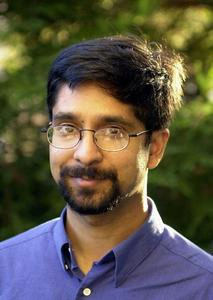
vijay-pande.jpg

Stanford Professor Vijay Pande: empowered DIY protein researchers.

Related

[Editor's note: The Tyee is proud to co-publish with Rabble.ca a multi-part investigation of Maker Culture -- the do-it-yourself movement fast evolving in North America and beyond. This is episode seven of 11, and would normally have run last Friday, but Olympics madness intruded. Look for number eight to run this Friday.]

When his wife was diagnosed with a hereditary disease, Peter Johnson wanted to help. Using a program called Folding @ Home, he found a way to make a difference -- by doing genetic research on his home computer. Due to the sensitive nature of his wife's illness, Peter requested that his last name is changed for the purpose of this story to protect his family's privacy.

"I remember just going into a fix-it mode like most people do," he said. "You try to look for things you can do to contribute or to help in some way. I couldn't throw money at the problem, so I thought I'd look at this, see what it does."

What Folding @ Home does is simulate protein folding. Problematic folding is known to play a role in diseases like Alzheimer's, Parkinson's, and Cystic Fibrosis. With this software, which can be installed on a personal computer or Playstation 3 console, users are helping the scientific community understand the things that can go wrong in the body. For people like Johnson, it's meant that making a difference as a citizen scientist is as easy as running the software overnight. Johnson doesn't have a laboratory, or a degree -- but nonetheless, he is a scientist. He's part of a growing movement of citizens taking an active interest in science, and often making it themselves. Given the right tools, one science maker starts making a difference, and soon, he may be joined by others: his fellow citizen scientists.  

"I'm trying to encourage other people to get involved. Just sending the word quietly can do a lot of good," he explains.

Citizen scientists like Peter do, in fact, do a lot of good. Vijay Pande is a professor at Stanford University and the creator of Folding @ Home. According to Pande, average people are more than willing to use their computer power to assemble proteins -- with or without a background in science. 

According to Pande, four million computers working together to create the world's largest supercomputer are pulling in mass amounts of data for the scientific community. But it's not just the scientists who are benefiting from this project -- the people who are getting involved are also getting a lot out of their contributions.

"So the [citizen] scientists who helped us really had a huge contribution in terms of the donations they made in computer time," Pande said. "Along the way, I think we've been able to reach them and teach them a bit about protein folding."

Many scientists agree that citizen involvement is important for both the scientific community and the public. Dr. Micheal Shermer is a proponent of open source science -- the basis on which software like Folding @ Home works.  For scientists, Shermer says opening up has many advantages.

"The more access more scientists can have to analyzing data, the closer to truth we're likely to get," he said. Conducting science in an open, transparent way can help the public learn to place more trust in science.

"Basic research in physics, chemistry and biology -- I think it's better the better to have it open for anyone to examine," said Shermer. "It takes the secrecy away from it."

Studying the stars

Another example of citizen science is Galaxy Zoo. It's citizen-friendly astronomy research, where the only equipment required is an Internet connection and a mouse. Hanny Van Arkel never studied astronomy in school. But in 2007, the 25-year old teacher from the Netherlands spotted an astronomical object that had never been seen before.

"In the first week I was classifying, I saw something I didn't recognize. I was curious about what it was, and I sent an email to the astronomers asking what it was. They said, 'We don't know either.'"

LINKS THAT HELPED MAKE THIS STORY

Folding @ Home: A downloadable program that lets users fold proteins on their computers -- and helps researchers learn more about what goes wrong in the body in diseases like Alzheimers.

Galaxy Zoo: A website for do-it-yourself astronomy -- no expensive equipment required! After some short training and a quiz, you can pick out galaxies from photos that nobody else has ever seen.

Galaxy Zoo2: The new version of the classic website, where citizen scientists can jump right into classifying galaxies without having to take an exam.

World Community Grid: Another program that lets you use spare computer power to help researchers learn about human illnesses.

Math Overflow: A question and answer forum built by mathematicians for mathematicians.

Science Commons: A website outlining a new approach to science that includes open data and more collaboration.

Doug Engelbart Institute: Institute founded by Doug Engelbart -- creator of the computer mouse, all about research and development that advance humankind through technology.

Skeptic Magazine: Edited by Dr. Micheal Shermer, a magazine all about the search for truth and meaning in our world.

The Open Source Science Project: A collaborative site outlining projects that use collaborative methods in scientific discovery.

Open Science: Blog about the directions and future of open source science.

Rupert Sheldrake website: Homepage of biologist and psychic reseacher Dr. Rupert Sheldrake.

Michael Shermer website: Homepage of author, professor and professional skeptic Dr. Michael Shermer

"As We May Think": An article that provided the inspiration for much of Doug Engelbart's research.

History of Science: A history of science -- housed in a museum.

"The First Mouse": 1968 demo of Engelbart's computer mouse.

Computer History Museum: History of the development of computers and the Internet -- some of the tools that make open source science possible.

Roglok: Producers of art, design, and music -- including the Maker Culture Science podcast's theme.

The Open Data  Consortium Project: Devoted to geospatial data and how it can be used in the formation of public policy.

The Boston Open Source Science Lab: Do-it-yourself biotechnology -- based in Boston.

The Stanford Research Institute International (SRI): Home of the Doug Engelbart Institute and workplace of Don Nielson.

Now, the object known as Hanny's Voorwerp is the subject of much research. Since her discovery, Van Arkel has gotten more involved with science. Now she teaches others about the wonders of space.

"There are new things I can do because of [my discovery]," she said. "I go to schools and show pictures of it and I tell people about the science we are doing. It's very exciting." Van Arkel credits her inexperience for helping her find something others might have missed. "I wasn't the first person who saw the picture, but I was the first person to ask the question, 'What is this?' And there are other pictures out there -- you could still discover something."

Since the Galaxy Zoo website launched in 2007, discoveries have been made by people looking at images freshly captured by satellites. Volunteers judge these images based on the shape the galaxies form. In the first year alone, 50 million classifications were made by a group of users 150,000 strong. Alice Sheppard from the U.K., now a Galaxy Zoo forum moderator, has been involved since the very beginning.

"Most days I am glued to the screen for a couple of hours. I am quite an addict." Sheppard said contributing to Galaxy Zoo changed her life. "It's something, I don't know, deep down in my mind, as if I've been longing for it and I've suddenly been granted a wish I didn't even know I had," said Sheppard.

"I always thought there was something missing and what was missing was the talking about it, the actual scientific method, the right way to ask questions, the joy of it and how important it is to get things right. We are the first people treading this boundary. We are not just memorizing somebody else's work -- we are doing it."

Pauline Barmby, an associate professor at the University of Western Ontario in physics and astronomy, said Galaxy Zoo works by capitalizing on the skills of people like Sheppard.

"It's easy to program a computer to find the galaxies in an image, but it's very hard to program a computer to tell you what kind of galaxy, what shape it is and whether there are any other interesting features. So I think it's a fantastic idea to train a bunch of volunteers to do this."

She said astronomy has traditionally been more receptive to everyday people getting involved. Galaxy Zoo is furthering this.

"Astronomy, compared to a lot of other fields, has had a fairly long tradition of being open source. Galaxy Zoo pushes the envelope a little bit because it's not just making data available and letting them look at the pictures, but actually asking them to contribute."

Equations and extra-sensory perception

Examples of citizen science abound -- Galaxy Zoo, Galaxy Zoo2, Folding @ Home and World Community Grid, to name a just a few. On the other side of the equation is science itself. One example of science itself changing from the inside out is mathoverflow.net -- a website where research mathematicians can ask each other math questions. David Brown, mathoverflow creator, said the site is an open approach to information.

"The problem we were trying to solve with this website was: how can we access mathematical knowledge in an efficient way?"

As a PhD student in California, Brown tried using email lists and math forums. But he was disappointed, finding more arguments than answers. Mathoverflow was his solution to this problem, and the site was brought online earlier this year.

"It's not a discussion forum. People are supposed to post complete, self-contained answers. Then the best answers get voted to the top and the worst ones are voted to the bottom. And it turns out this solves a lot of the problems that other sites had."

Anton Geraschenko, another moderator and math graduate student, explained that another reason the site works so well is that it is perfectly suited to asking and answering math questions.

"A very successful strategy for doing mathematics is to take any problem you have and break it down into a series of smaller steps that you can complete," he said. "It's very common for researchers to chat with other people about those questions at the department tea, for instance."

But Brown and Geraschenko know that not everyone is as interested in sharing as they are. Brown said there are still many researchers who prefer private research over public collaboration.

"We're definitely not going to have the entire math community using this, because there are a lot of mathematicians that don't like having such public information. They never volunteer any information unless they are absolutely sure it's correct. On the other hand, there are a lot of mathematicians who operate best by going to tea and asking others about the questions that they have. The people who gravitate towards doing that type of research gravitate towards mathoverflow."

What works in mathematics also works in parapsychology research. Dr. Rupert Sheldrake is based in London, U.K., and he conducts most of his experiments online. For his work in studying psychic phenomena, he uses the Internet to find participants -- who contribute to his research from their desktops.

"I realized to get the maximum participation in telepathy tests -- the Internet provided a remarkable opportunity."

Sheldrake believes in the idea of sharing between scientists and citizens. In fact, he's not concerned about other people copying his research because it's online.

"I suppose other researchers could copy my experiments and do rival versions of what I'm doing," he said. "Actually, in my case, I rather wish they would."

Of course, not all science can be done on the web. To tackle that problem, another one of Sheldrake's ideas involves a major change in the way funding is distributed in areas of scientific research. He thinks citizen science should go beyond getting individuals to subscribe to new hobbies -- he believes scientific research ought to be directed, at least in part, by the public.

"You can't really do any chemistry with the public. Or quantum physics. There's only certain areas of science where you can engage people. I think areas like bird spotting, natural history -- these are certain areas where public participation really can play a major part. One per cent of science funding should go to fund research that ordinary people find interesting."

The history of helping out

Groundbreaking science pioneers did just that -- conduct experiments that people found interesting. Nikola Tesla and Douglas Engelbart weren't secretive white-coats experimenting for corporate interests. They were ordinary men -- made extraordinary by their passion for science and their determination to bring science to the public. 

Another man who's spent his life advancing that cause is Don Nielson. Nielson, a historian at the Stanford Research Institute in California, was on the inside track of some of the big events in computer history -- including the Internet. He's worked alongside Douglas Engelbart, the man who invented the computer mouse, since the late '50s. He says Engelbart, now 84, ran a lab that encouraged collaboration between scientists when they developed the mouse.

"It was a free flow of people in and out, all with whatever they had to contribute," Nielson said.

However, when it comes to the public collaborating on science projects, Nielson isn't ready to put his trust in the results.  

"Sometimes the product that might come out of [open source science] may well be better than a few people collaborating on it, but it also may be worse," Nielson said. "I think those kinds of open collaborative efforts are still to prove themselves as a universal or uniform way to approach problems."  [Tyee]

10  Comments:

Login or register to post comments

  • Takuan

    1 year ago

    better stand on guard

    to make sure kids here get to grow up to be citizen scientists still. There's been an awful chill put on enquiring minds by all the phony terror hoopla over the past decade, especially in the USA. That and over protective parents.

  • Booker

    1 year ago

    Not always

    At the halfway point in the article I was thinking that in some instances this works well and in others, such as in Rupert Sheldrake's work, it doesn't. And then he appeared in the article. He's ubiquitous.

    In studying whether psychic phenomena exist it is of the utmost importance to control for confirmation bias and the brain's innate tendency to see patterns, whether they exist or not. It's not at all easy to control for those things and the average citizen can't do it. The same applies for the study of medicines and their efficacy. You need solid blinding and placebo control, and to do that properly requires considerable effort and expertise.

    However, in many areas, citizen scientists can be a very important factor in advancing knowledge of the natural world.

    The Tyee has covered Mr. Sheldrake's work before:

    http://thetyee.ca/Views/2006/07/20/Sheldrake/

  • dloewen

    1 year ago

    getting more coverage...

    The idea of open-source software, collaborative science, and so on appears to be gathering more steam - at least in gaining more press and coverage.

    The popular book "Wikinomics:How Mass Collaboration Changes Everything" discusses a variety of industrial and scientific examples of mass collaboration. For example, how Boeing has completely shifted how they build jets. The actual planes can be built in a matter of days; however, the mass of components and pieces are assembled elsewhere and then shipped to Boeing's facilities.

    To accomplish this a lot of companies are having to open up their practices and data. Yet, maybe some of the recent issues with companies like Toyota might point to some of the dangers of this practice.

    Yet at the same time check out the organization InnoCentive (www.innocentive.com)- a very interesting organization set up by Proctor & Gamble and others to solve thorny problems.

    I'm not so sure I agree with an earlier comment that "citizen science" doesn't equate to "considerable effort and expertise" and that study of medicine must be done by elite, 'scientific' practice. Not in all cases anyways.

    A large percentage of medicine comes from traditional knowledge of indigenous groups. The bulk of knowledge of the natural world comes from indigenous people. The word "indigenous" and its etymology illuminating why.

    On my website (www.salmonguy.org) I've been asking why fisheries science couldn't be opened up to be more collaborative - especially in the case of salmon? I'm in complete agreement with the comment that citizen science is important in looking at the natural world. eBird (www.ebird.org) is a really good example.

  • OilbertaRedTory

    1 year ago

    Harper Hates Science

    Apparently he intends for only hobbyists to play at science:
    http://www.nature.com/nature/journal/v451/n7181/full/451866a.html

    Global Heating isn't the only denial game in Conbot town:
    http://www.theglobeandmail.com/news/national/article320476.ece

  • Jay Currie

    1 year ago

    Great Article but misses the Big Story

    Interesting as folding is the fact of the matter is that citizen science has basically destroy the AGW consensus and it has all been done by individuals.

    Canadian Steve McIntyre over at Climate Audit has seen his basic claim that the science of global warming be transparent and auditable become a mainstream requirement. Andrew Watts over at Watts Up with That become the go to site for the Guardian when they really want to know what is happening with climate.

    Citizen science has essentially destroyed the underlying arguments for government action based on the increasingly doubtful AGW theory. Citizens have taken on and beaten the highly politicized elite science of the IPCC.

    A grand cause for celebration because a few bloggers have managed to demolish the AGW "consensus" so heavily funded by big government, big oil and big insurance.

  • OilbertaRedTory

    1 year ago

    Bigger Story!

    Villagers raid the lab - looking for emails:
    http://www.youtube.com/watch?v=dSfUeg_7w-o&NR=1

    Lubricating the doubters:
    http://tinyurl.com/Citizen-Snake-Oil

    For the citizen phenologists: http://www.windows.ucar.edu/citizen_science/budburst/

    Destroying the Deniers - one blooming season after another.

  • Pieter16

    1 year ago

    Trust in science? That thought should scarcely exist.

    The basic concept of the open source science idea is far from new but seems to be still percolating to the surface of the common citizens mind. However useful it may be Engineering controls must be maintained in order to provide objective data to the REAL scientists who use the data. I say real scientists as it requires a doctorate degree in order to call yourself a scientist. This level of degree in science states that one is trained well and knowledgeable enough to expand their own philosophies and interpret others in a trustworthy manner.

    To even give the notion that science cannot be trusted in this article not only degrades the lives and sacrifices of numerous humans throughout the last 2000 repressive years but continues that repressive thought.

  • Pieter16

    1 year ago

    Trust in science? That thought should scarcely exist.

    Science is perhaps one of the only things in the world which can almost be fully trusted as it is peer reviewed by some of the most significant and influential minds of the current.

    There are inherent flaws in the way in which information from science gets to the common person, but the overall scientific method is of the most objective and accurate this world knows. Statistics utilizing scientific data or raw data can be skewed and therefore used in dubious ways but should never be mistaken for scientific evidence.

    If there is still reserved feelings towards science then I request all who feel that way to actually understand the philosophies and doctrines of it. Education is the key to unlocking our potential. Ignorance is throwing it away.

  • dloewen

    1 year ago

    such fervor... such abiding

    such fervor... such abiding trust. Reminiscent of the all knowing Christian zealot: 'it is this way, or no way'.

    All hail the Phd.. the REAL scientists - and down on the lowly ignorant uneducated commoner...

    like uneducated Thomas Edison, or that "amateur" naturalist Darwin, or ignorant Mendel who discovered genetics, or Joseph Priestley the discoverer of oxygen,photosynthesis, and created the carbonation process for drinks.

    bums - all of them.

    maybe just keep that hallowed science with the real scientists and don't let it get corrupted by the commoner...

    come on. Yes, earning a PhD takes sacrifice and sometimes might even make someone an expert; however it does not reserve the right to the term "scientist".

    Everyone has a bias - no way to escape it. Look at the classic study of light by physicist Niels Bohr. Light is both waves and particles - however the individual analyzing will only see one or the other depending on what they're looking for - but never both.

    This means one scientist could go through life declaring that light is waves. Another could go through life declaring that light is particles. Neither is wrong; however, neither is fully correct. They're both influenced by their bias (or by who funded their study...)

    have a post on it, on my website:
    http://wp.me/pMOgu-5e

  • dloewen

    1 year ago

    what is evidence?

    Might be a bit dramatic to suggest that questioning science "degrades the lives of numerous humans"... In fact, questioning the science of the day is what leads us to further scientific enlightenment - isn't it?

    Questioning evidence is a classic phenomenon - philosophical, scientific, logical, and societal.

    How much did cigarette manufacturers spend on PhDs to try and prove with their evidence that smoking was not harmful - or maybe just inconclusive?

    How much did asbestos manufacturers spend to try and prove it was not harmful? or PCB manufacturers? or the carcinogenic gas additives - review challenges to the North American Free Trade Agreement under Chapter 11 for some fun information on this one.

    (Ethyl Corp vs. federal government of Canada re: MMT)

    Evidence, and specifically scientific evidence (peer-reviewed or not) is a circular discussion - or a strange-loop as some might suggest.

    Defining evidence is a never-ending paradox.

    To define A as a fact; you need evidence B. But what makes us so sure that B is evidence of A? To show that, we need meta-evidence: C. To be sure meta-evidence C is fact; we need meta-evidence D and so on, and so on, and so on....

    Like the classic Epimenides paradox or liar paradox. Epimenides was a Cretan who made the statement: "All Cretans are liars".

    It's an impossible statement. The moment you begin to think the statement true, it backfires and makes you think its false; but then backfire again and back to thinking its true. And so on, and so on...

    Or:
    "The following sentence is false.
    The preceding sentence is true."

    Endless loop.

    The only way to get rid of the paradox is to get rid of self reference. Not possible at this juncture. It's like the paintings of MC Escher - endless loops.

    Douglas Hofstadter wrote a nutty book about these phenomenon in the late 70s: "Godel, Escher and Bach: An Eternal Golden Braid."

    Godel was a mathematician who utilized the Epimenides paradox to analyze mathematics. The mathematician reasoning exploring mathematician reasoning is a similar paradox as police forces investigating police forces. Or, governments investigating their own governments.

    Or, scientists peer-reviewing scientists...

    It's similar to the statement whereby scientists suggest we only know about 10% of how our brain works. Well... how do we know that? If we don't know 100%; how do we know we have about 10%?

    The moment we think we have 100% then I'll call B.S. Science is a tool, it's not a religion, or a be-all end-all.

    Thankfully we have many learn-ed PhD's and medical doctors and scientists -- however, thankfully we also have skeptics, inquiring citizens, traditional knowledge holders (aboriginal or non-aboriginal) and so on.

    Thankfully, we have grandparents who in many cases didn't finish elementary school but have a depth of knowledge that makes a 30 year old PhD look like they're just learning their ABC's.

    • The discussion for this story is closed. No more comments can be added.