
News

Milltown Tax Mutiny

As pulp mills withhold taxes from tiny communities, BC's municipal officials brace for legal ruling.

By Monte Paulsen, 30 Sep 2009, TheTyee.ca

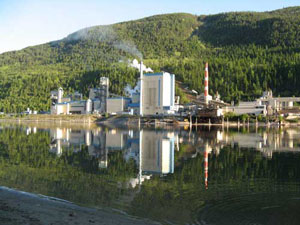
Celgar Mill, Castlegar

The Celgar pulp mill in Castlegar.

Related

"Our story begins on July 2nd, 2009, at 2:30 p.m.," Mayor Lawrence Chernoff began, "about two hours before the close of tax collection for the year."

The Castlegar mayor continued, "The local manager of our Celgar Pulp Mill came in and asked to see if he could see me. I wasn't there, so he left a letter."

The letter stated that the city's largest taxpayer was refusing to pay its $2.8 million annual property tax bill. And what's more, Celgar was to sue the small West Kootenay city in B.C. Supreme Court over what the mill described as an "unreasonable tax rate" or "illegal" tax bylaw.

"There were no discussions. No warning. No sign. Until I got the letter," said Mayor Chernoff, noting that the letter left him with a shortfall equal to 40 per cent of the city budget.

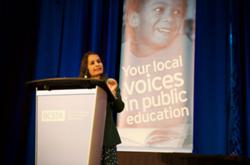
"What do you do in situations like this?" he asked an audience of local government representatives at this week's convention of the Union of British Columbia Municipalities. "It isn't covered in those orientations we get as new officials."

Chernoff soon learned that Castlegar (pop. 7,200) was not the only small B.C. municipality to be sued by its major industry this summer. Campbell River, Kitimat, North Cowichan, Port Alberni and Powell River each received similar letters.

The lawsuits were nearly identical. All but one were brought by a local pulp mill. And in all but one instance, those mills continue to withhold 2009 property taxes from the communities where most of their employees reside.

Rulings in the first of these cases are expected this fall. But the midsummer mutinies launched by Catalyst Paper, West Fraser Timber and TimberWest have stirred anxiety among municipal officials across British Columbia, and that queasiness is roiling beneath the nerdy surface of this week's UBCM convention like the waves beneath the Canada Place pier.

"It seems very likely that whatever the court decides, this issue will wind up in the [provincial] government's lap," observed UBCM veteran Gerry Armstrong.

Highest industrial property tax rates in North America

Representatives of the plaintiff pulp mills were conspicuously absent from a Tuesday afternoon panel on industrial taxation at which their lawsuits were debated. But Jock Finlayson, a vice president of the Business Council of British Columbia, argued the case for industrial property tax reduction.

"There is a real problem," Finlayson told the UBCM. "Not in every community, and not for every [large industrial] taxpayer, not by any stretch of the imagination. But certainly in perhaps 20 per cent of the communities in B.C., our members operating there do feel that they are bearing an unfair share of the property tax burden."

Finlayson said 35 B.C. municipalities had been found not only to have the highest industrial property tax rates in Canada, but in all of North America. He said some industrial producers were paying more than half the tab for the entire community.

"Relative to the local services that industry consumes, a lot of industrial taxpayers in B.C. are carrying a substantially higher share of the total tax burden in their communities," he said.

"Almost without exception," he continued, these large industrial producers of commodities such as pulp are selling into international markets. "They can't pass costs forward… These companies don't have the market power to pass those on to their customers."

Finlayson also urged the province to step in to the industrial property tax debate.

"We believe, and we have recommended this to the province, that there is a need for the government to intervene," he said. "We've been arguing this, however, for 10 years. We've been unsuccessful to date."

Finlayson suggested all levels of government consider these recent conflicts within the framework of a larger tax equity problem.

"I think in Canada we have a somewhat antiquated structure for dealing with local government finance," he said.

"The bottom line is that local governments collect only about nine per cent of all the revenues collected by all levels of government in this country… even though local governments arguably are delivering a lot of the most important services that we interface with as citizens."

'Story of simmering discontent'

"Property tax in the industrial class has a long and checkered history in British Columbia," consultant Gerry Armstrong told the UBCM audience. "This is a story of simmering discontent within a business community that occasionally finds a receptive ear in government."

Armstrong, who served in a number of provincial ministries before retiring, explained how the social contracts under which these large industrial producers operate have changed.

"The companies may have accepted the need for higher taxes in their start-up years, recognizing a corporate responsibility and self-interest in funding community infrastructure, which would allow them to attract and retain employees," he said.

"This priority has eroded," he continued. "Furthermore, in many cases, the present owners are not the same owners who joined the implicit social contract with their host communities during start-up."

Armstrong highlighted similarities among the six cases, which appear to be part of an industry-coordinated campaign.

"The companies central argument is rooted in the perception of unfairness between the tax they pay that the taxes paid by other taxpayers in their communities," he said.

"Each petition asks the court to agree that the bylaw setting the tax rate is illegal, and the bylaw is unreasonable." Armstrong added, "The affidavits also appear to be designed to advance the public relations justification for the challenge, along with the essential legal arguments."

Final frontier of BC's tax campaign?

Five of the cases were heard earlier this month, and Armstrong said a decision or decisions could come any day.

"In a certain sense, the outcome is less important than the fact that these cases have been launched," he added.

"A victory for the companies would establish a precedent that is open to other class four [large industrial] taxpayers, and likely other non-residential classes, based upon similar arguments. Virtually every community would be at some degree of risk," Armstrong said.

"The communities that directly lose the case," he added, "would quickly appear on the [provincial] government's doorstep, seeking assistance in the form of funding or legal redress."

A victory for the municipalities would almost certainly trigger an appeal, he continued.

"They could continue to withhold payment of taxes in an act of brinksmanship, and would certainly appear on government's doorstep arguing… they have now exhausted all avenues provided for them within the present rules, and demand changes to those rules," he said.

Armstrong further suggested that the current government might prove receptive to that argument.

"From the business-minded perspective, government could with some justice believe that property tax issues may well be the final frontier in their continuing campaign to make British Columbia a tax-competitive jurisdiction," he said.

'Now we need some of that money back'

Though hit hard by the downturn in commodity prices, the pulp mills that brought these cases are far from antiquated producers stumbling toward closure. Mercer International describes its Castlegar mill as "one of the largest and most modern kraft pulp mills in North America."

Mayor Chernoff concluded his brief remarks to the UBCM on a philosophic note.

"It is the nature of these situations to be angry and to look for ways to vent. I think I may have done all of those things. But then we realized the mill is still a major source of employment, so despite everything, we have tried to keep channels open with them," he said.

"We're a lucky city," he added, "There's still a mill left for us to talk to."

Chernoff said industry, municipalities and the province need to work together to identify solutions.

"It would be easy to point to the rate of taxation the municipalities charge as the problem. Or to blame industry," he said.

"It is harder to ask and answer this question: What does the new model look like?" he said. "We have to be asking this, and so does the province."

Chernoff joined Finlayson and Armstrong in putting Premier Gordon Campbell on notice.

"The other question to ask is this: How are we going to get through the transition from the old way of doing things to the new way?" he asked.

"I didn't create our city's reliance on the mill. I'm happy to diversify. But we need help to get there. The existing taxation model allowed our community to grow. It benefitted industry. It also allowed the province to gain a significant revenue stream from our region," he continued.

"Now," the Castlegar mayor concluded, "we need some of that money back."  [Tyee]

37  Comments:

  • freebear

    30-09-2009

    Great contributors to the economy!

    I wish I could just say no to the tax man!

  • Skywalker

    30-09-2009

    More questions.

    How much of this is due to the free flow of logs across the border? How many of these companies have mills pulp and saw in the U.S. and are happy that Victoria lets them log our forests and send the logs elsewhere? In that economic short-sightedness all this should have been predictable. I certainly agree that with the corporate blinders on the folks in Victoria who are suppose to be looking after BC's long-term interest we might as well brace ourselves because we are becoming hewers of wood and drawers of water once again. Is this the screwing from all the proponents of free trade? Maybe we should than Brian Mulroney?

  • ME2

    30-09-2009

    When is enough enough?

    The Woodbridge Reed Report, commissioned and then buried by the Socreds in 1985, called the Kraft Mills a "sunset industry". The main reason for this was that because printing mills had been developed to handle low-strenght paper, there was no longer a high demand for our our long-fibred, high-strength paper. Paper was being made in 3rd world countries out of sugar-cane waste and various grasses.

    Besides that drawback, Kraft mills recover only 2/3 of the fibre fed into them, as opposed to 99% of the fibre captured by the newer non-chemical techniques.

    The result has been the need for massive subsidization of the pulp mills, most particularly
    on the Coast, to which I'll restrict further comment, since I'm unfamiliar with the Interior situation.

    For some 30 years, except for a brief period in the late 80s-early-90s, it has cost loggers more to log pulp logs than they could sell them for. Right now, they are being left in the bush. Furthermore, as Pearse reported in Nov 2001, now unavailable in uncensored form, the pulp mills were further subsidised by the large Coastal sawmills rendering fully half their log volume - the very best in the world - into pulp chips.

    Add to that the very low stumpages and the lax enforcement of regulations given to the TFLs, it is easy to see why the Yanks complain of subidisation.

    It would be far cheaper for the Gov't to pick up the tax tab for the municipaliies, and then look for more sustainable ways to utilise our forests. I say "Let the theivin bastards go broke"

  • mikev

    30-09-2009

    wonderful precedent!

    I believe that the petroleum industry is not paying a fair share of income tax because of needless incentives for oil & gas exploration. Therefore I will not be paying my unfair share of provincial income tax this year. I also believe that the forestry industry is not contributing a fair share to the provincial treasury through ridiculously low stumpage rates. Therefore I also will not be paying my unfairly rising MSP premiums. Furthermore, I belive the arms industry is being unfairly subsidized by our illegal occupation of Afghanistan. Therefore I will also not be paying any of my inflated federal income tax bill. Done and done. Now the pulp mills can pay fatter dividends to their shareholders, and I can go for a beer or see a movie once in a while. Who could have guessed it could be so simple? Thank you, heavy industry, for opening my eyes to the ways I am being exploited - and most importantly what I can easily do about it.

    ps Let's get together and compare notes after the dust all settles, I'm sure it will be interesting to compare the ways various governments equally treat the both of us. You're "OK, but we're still friends right?" response from the municipalities gives me high hopes for my situation!

  • For a better world

    30-09-2009

    Has the property tax burden shifted?

    Armstrong states "... in many cases, the present owners are not the same owners who joined the implicit social contract with their host communities during start-up.".

    The original owners enjoyed very generous forest benefits from previous provincial governments. What has changed? Could the latest owners have paid too much for an operating mill? Surely the current mill owners knew the impact of property taxes before acquiring the facilities.

    About one half the property tax bill is the responsibility of the provincial government through school taxes, etc. If this is not equitable, then the province should be addressing this concern.

    Have local governments moved a larger share of property taxes to pulp mills in their jurrisdictions? If so, maybe the operators have a legitimate beef.

    Are the mills viable under current conditions, or do they just want to shift their share of property taxes to the local residents? Action of this sort is akin to moving the HST from business to Joe Citizen.

  • sdgreen

    30-09-2009

    Taxation is becoming problematic

    Taxation at all levels of government is now becoming problematic to all. At the same time, costs of programs government provides is escalating at enormous rates. BC Education is underfunded, BC Health cannot keep up with cost increases, basic services like energy, provision of water,police services increase in cost annually.

    At the same time, wage levels, certainly for the middle class are not increasing to satisfy the taxes demanded by governments.

    British Columbia use to have a huge fishing industry; it is now dead. The forest industry is not enjoyed a happy time during the last decade or so; and appears to be in decline. Even our food industry is suffering as a result of cheap imports.

    At one time, large Forest industries used to take huge pride in supporting local communities in a number of grants. They even under wrote some municipal projects like roads etc. No more. One reason is that we allowed these companies to be sold to international interests who have no particular attachment to the community.

    Service industries are now the prime industry, yet do not provide the tax input like the large industries use to.

    Municipalities used to recieve significant funding from the BC Government; now they do not. Many programs that the BC Government use to have responsibilty have been downloaded to Regional Districts and Local government.

    Governments these days seem to live on credit, and yet treat the public as their private piggy bank. "Spend then tax" is the current way governments operate. This is to be part of the problem.

    Clearly, for a period of time, governments need to moderate their expenditures. We need to look at dramatic changes to reduce costs for health, education etc. Not withstanding current laws, we should just tell the medical suppliers that their prices must be reduced else we will make our own.

    It is my view that the entire system of commerce is out of balance and we are just bouncing from solution to solution all of which just do not work.

    Home budgets are under attack in a significant way where families can no longer plan their futures for any length of time. Those on fixed incomes are in dire straits with incomes falling. Nobody is in a win win situation other than the very rich, and even they are abandoning North America!

    Taxation to support essential government programs is necessary and all entities need to contribute in a fair and equitable way. Right now such is no longer balanced.

  • lynn

    30-09-2009

    ...remember Gary Collins?

    ....remember Gary Collins?.... former BC Liberal finance minster....who left government "suddenly".... shortly after that infamous whole legislature raid thing...who then "suddenly" became president and chief CEO of Harmony Airways...and since April 27, 2005 has been a director of Catalyst Paper.

    Also a really good investigative story would be how municipal councils of some BC towns especially towns near valuable resources.... also towns perched on the coast....meaning towns sitting on "valuable waterfront real estate".... how their municipal councils have "somehow" been purged of those who are not pro-development.....how some people have even been railroaded out of town....how citizens who have spoken out or written letters of protest against anti-democratic procedure in relation to development have been victims of the same heavy-handedness...

    This is worth reading in that regard:

    http://www.canada.com/vancouversun/news/editorial/story.html?id=b9d0062d-0e36-4324-b0cb-b90de2477129

  • clubofrome

    30-09-2009

    Bad math

    It's true the entire system of commerce is out of balance. In fact it's tipped over and whatever has spilled out is carried away by those that create the environment for the whole train to derail. It's a rigged game.

    Global economics, capitalism and the democracy once a promise is all but gone. All that's left is the greed and instinct for self preservation. Neither are mutually supportive, so we'll all have to pay the price when the bill comes due. Make it cheaper, and make it so it's in the landfill in 3 months. That's a great legacy for what we call modern civilization. Money for nothing. it's created out of thin air, and distributed to those who use it for creating even more temporary wealth for the fortunate few that play the game.

    When everyone finally stops to take a look around it'll be too late. The pollution alone has consequences we' haven't even imagined yet. The only fish left are those in pens fed with chemicals, Mmmm. There will be no recvery of fish stocks, not in our life time.

    All of this compliments of cheap and easy energy. Without oil you don't have exponential population growth from 1 billion in 1836 to 6.8 billion today. You don't have modern agriculture, nor the transportation to distribute it. Another great legacy. Here is one of the most unique and versatile chemical compounds in our known universe. Look what we did with it, look what we have done. We burned it. Simple math says exponential growth in all our endeavours will end and end soon. Will we have any energy left for transition to a sustainable world? Does it look like we're even taking this crises serious?

    Buy local, buy quality buy only what you need. Grow your own, and make peace with your neighbours. Try sharing things. Volunteer. Try making your community better. Turn off the TV. Go Sailing. It's the same speach every year, and most of you already know the chorus. See you next year!

  • clubofrome

    30-09-2009

    Fish on!

    There is always someone out there who will want to know, why no more fish? We ate them. If we had fished with principles like selective logging, we would have left mature breeding stocks in the wild. The eastern fisheries are the closest example. When you remove the largest fish you put pressure on the species to adapt and breed younger which makes smaller fish. Then you catch them and eat them. Then the cod you once knew is basically extinct, commercially dead. That's evolution for you in a few hundred years. That's all it takes. Evolution doesn't play politics or favorites it reacts to the assault, continues to pass on it's genetic code at all costs. Stop fishing now and it's possible in 60 - 80 years some species may show signs of recovery. Thats stop fishing now.

    Of course this excludes the rainbow trout from stocked lakes that fit so perfectly in my smoker...

  • Barryeng

    30-09-2009

    Missed the mark

    All of these comments almost blame to consumer for the fact that the pulp mills are trying to renege on their tax bills. That is very definitely not true. If it were one pulp mill crying "poor me", I might be able to sympathize a little, but when six mills across the province ae all demanding that their taxes be cut, and are all using the same argument, it smells of collusion.

    I worked in a West Fraser sawmill for 40 years, and watched while it was slowly run into the ground. Meanwhile, this company was buying up mills in the Eastern United States at an alarming rate. Now the sawmill I worked at in Canada is sitting idle, and so am I. If markets and conditions are so much better in the US than here, let them ask for tax breaks there and see where it gets them.

    I have no sympathy for their complaints here.

  • For a better world

    30-09-2009

    Back to property taxes

    There are two steps in the process of levying municipal property taxes, which give property owners or their representatives an opportunity to appeal the pending tax levies.

    The first opportunity is when the owners receive their property assessments from the BC Assesment Authority. If they consider the valuation unrealistic, they can appeal their assessments. Did any of these organizations appeal their assessments?

    The second opportunity to appeal is when the local government hold their public meetings to set their annual tax rates. Did any company representatives attend these public meetings when the tax rates were being set?

    There is also a difference between the tax rates and tax levies. The tax rate is applied to the taxable assessed value to obtain the tax levy that the property ownere are required to pay. The Province of BC sets the school tax rates.

    To maintain the same share of property taxes between the different classes of property, the tax rates will fluctuate depending on whether the assessed values have gone up or down. With rising assessed values, the tax rate will decrease to maintain the same tax burden. The converse is true when values go down. If the values decline, then the tax rate will increase to offset the reduced values.

  • Peter Dimitrov

    30-09-2009

    Another BC Is Possible

    Kudos to the author and the Tyee on this story. I remember that a good part of my campaign for leadership of the BC NDP a few years ago revolved around the theme of economic democracy - where more enterprises were owned in a co-operative institutional framework, rather then a corporate framework, and where owner/shareholders on the Board of Directors for an enterprise were workers and local communities (and the Province), rather than private shareholders (or the holders of publicly trading shares.) In retrospect that was too social democratic for the BC NDP at that time. But now, the co-operative or public ownership/control meme seems to be catching on again. We recently saw workers buy controlling shares in a Victoria TV station, and before that, we saw the Harmac pulpmill bought by workers and their union. Then if one visits the co-op bc website one finds a variety of co-operatives there, and given the governmental cutbacks I predict rather then relying on government ..we, residents of bc as co-operative owners of a SME may well have to do the job ourselves in many sectors, including the health sector.

    I fundamentally disagree with "Jock" that local taxes levied against large industrial corporations are unfair, rather they got and currently receive large subsidies (i.e. heritage rate electrical power) and as I see it, non-payment of taxes ought to be grounds for the Province in support of municipalities to litigate/negotiate an 'accord', perhaps even equity - if the workers/ municipalities accept that risk, in lieu of taxes. of. However given the Province's action in support of Alcan against Kitimat, that is a dubious unfoldment. As for the NDP, would someone in the know more than I, please elucidate me and other readers on their social democratic economic strategy for this province.

  • WilliamD

    30-09-2009

    Log Exports

    Skywalker, where did you get that idea about log exports? It seems to be a common fallacy. The fact is that it is extremely difficult to get log export permits. It is illegal to send logs from public land out of province without a permit. A few parts of the province have exemptions -- the NW (Terrace, Hazelton) is an example.

    I have tried to export logs on a couple of occasions and been unsuccessful. You basically must prove that nobody will buy them in Canada.

    Logs from private land are another matter. But, keep in mind that 95% of BC is public land.

  • crankypants

    30-09-2009

    Corporate power play

    If these companies cannot pay their taxes then they should file for bankruptcy. They knew the obligations they had when they acquired these facilities. To unilateraly withold their taxes in protest is a joke. If the courts rule anything but against them, then no one should have to pay proprty taxes and by extension any taxes. This is nothing more than the tail trying to wag the dog. Unfortunately the only ones that will come out smelling like a rose in this whole situation will be the lawyers!

  • Barryeng

    01-10-2009

    Log exports

    WilliamD there is something wrong with this picture. It cannot be all that difficult prove that no one wants your logs in B.C. There are no sawmills left in the Northwest, yet loaded log trucks go by all the time, heading for ports in Prince Rupert or Kitimat. If those logs are not being exported, Why are they hitting the water instead on one of the many idle, or dismantled sawmills in the region.

    No one, not even the NDP politicians, will ever convince me that jobs are being preserved by letting a single round log leave the Province!

  • freebear

    01-10-2009

    Pay for the stench of paper and money!

    Industry pays for being allowed to emit emmissions and take up land and sea, and view.

    If the job market goes sour can I tell the govt that due to labour market conditions I think my property tax is too high and I will not pay!

    Oh, I have no kids, why pay school tax!

    We all pay because we are all in it together sheeple!

    And someone has to pay for Gordo's 'Golden Decade'!!!

  • PepperGirl

    01-10-2009

    Tax Withholding

    When individual property owners fail to pay their taxes, after a period of time their property is sold for back taxes by the municipality. Why are corporations not held to the same standard?

    And please, cry me a river about unfair taxes - our government is currently in the process of transferring about $7 Billion in tax burden to the taxpayers of BC, to the benefit of corporations, via the HST.

    And lets not forget Carole Taylor, who nixed the corporate capital tax for major banks and then, oh, what a coincidence, got a post as CEO at one of said banks. Collusion is alive and well, and it's not just in the pulp mill industry folks.

    We need to stop our governments from kowtowing to multinational corporations that have only their own bottom lines in mind. Are we deluded enough to believe that some Norwegian fish farming enterprise really cares if they kill our BC environment? Or that logging co's care about sustainability when they are allowed to clear cut and ship raw logs? Our politicians seem to be, but then, they've been for sale to the highest bidder for a number of years now, by the looks of their rush to privatization, damn the costs to the people...

    It appears our liberal government has forgotten that they are merely the guardians of public resources, not the owners. They lied to us to cheat their way into power, taken a "mandate" from the paltry percentage of people who foolishly voted for them, and then sold us and our resources down the run-of-river project, telling us it's for our own good.

    Tax revolt, hell, what this province really needs is a French-style revolution and a nice sharp guillotine...

  • dave49

    01-10-2009

    The timing

    Given the timing and widespread use of this tactic. a plan was clearly hatched at the industry association level. Is COFI involved?

    Recall that the whole 'share the resource (forests)' movement was launched years ago built on a USA-based consultant's (rather correct) assessment of forestry opponents strategies. The BC industry adopted this tactic and many 'share' groups were founded in communities with backdoor funding from the forestry industry.

  • SharingIsGood

    01-10-2009

    raw log exports for WiliamD

    From the National Post, August 6, 2007:
    Anger rises over raw-log exports

    "...since 2000, the volume of unprocessed timber --protesters call it "raw logs" -- exported from B.C. has grown from 2.7 million cubic metres to nearly five million.

    million.

    'The increase alone amounts to just shy of 58,000 highway truckloads of raw logs,' said Ben Parfitt, a resource analyst with the Canadian Centre for Policy Alternatives, who calculated that the log exports have cost B.C. 5,800 jobs.

    'We're talking about tremendous amounts of lost employment potential,' Mr. Parfitt said."
    http://www.canada.com/nationalpost/story.html?id=e4d64590-a566-44f5-83e7-089431f31030

    I don't know what the figures were for 2008, perhaps the report that compiles the 2008 numbers has yet to be released. Perhaps the the Liberals let those bookkeepers and report-writers go as being expendable.

    SIG

  • For a better world

    01-10-2009

    Pepper Girl Re: Withholding Taxes

    As long as property owners pay their delinquent taxes (ie taxes that are three years in arrears), their properties cannot be sold for the outstanding taxes. Basically property owners can be two years in arrears in perpetuity and their property cannot be sold.

    Under the old "Municipal Act", local governments could sue property owners for non-payment after the due date (around July 1st). I do not know whether those provivions remain under Campbell's "Local Community Charter", but I suspect that opportunity remains available should any community choose.

  • Skywalker

    01-10-2009

    How about this?

    We start a class action to get our property taxes reduced as well. Find a lawyer and get enough people to contribute and pay the retainer. Go to court if for no other reason than to show these parasites how silly they are because any argument they make could also be made by every property owner

  • Marysue52

    01-10-2009

    TILMA

    Hey, those that voted for Campbell, didn't pay attention to TILMA (which set the ground rules for no corporate taxes), voted for Multoney-Martin-Harper and "free" trade (race to bottom wages and environmental standards), or those who didn't vote at all are responsible for this miess. We need to take back our country from the predator class ASAP. If we delay, it will be even harder.

  • OilbertaRedTory

    01-10-2009

    Show us the Money !

    The tax-cutters strategy for the last 20 years has been merely to assert that their competitiveness is harmed by the tax rate.

    Prove it.

    Open your books.

    http://dontapscott.com/site/?page_id=82
    A new social contract with Corporate governance is coming.

  • Barryeng

    02-10-2009

    Great new term!

    Marysue you have come up with a great new term . . . "Predator Class". I love it, and I'm going to use it, along with "Scampbell", and "Lieberals". I may not give you proper credit, but I will use your term.

  • Curt

    02-10-2009

    What a crock, these

    What a crock, these companies. We all have to pay taxes! Our services to aren't what they used to be and our taxes continue to go up. Do you think I would get away with refusing to pay my property taxes? I doubt it. All the breaks these companies get (corporate welfare) is unbelievable. And then they sell off the land, our land (timber licenses) the assets and then cry poor. Don't go crying poverty to us tax paying citizens. Do your duty and pay your taxes just like everyone else!!

  • G West

    02-10-2009

  • Skywalker

    02-10-2009

    It wasn't just TILMA

    This has been coming ever since Mulroney forced us into Free Trade. When national borders mean nothing to corporations, they can move capital anywhere that costs are less. We don't even have the smarts to demand control of our own resources or to use access as leverage. We allow a bunch of corporate flaks to set laws for the benefit of corporations and then we pay the price all the while being sold the lie that trickle- down economics works.. It works all right but only for the "Predator Class".

  • Marysue52

    02-10-2009

    Predator Class

    Barryeng, I stole that term from a very enlightened lady scribe. These PCs sometimes pay NO taxes at all, personally. They send their "profis" to tax free havens (Cap'n Paulie Sweatship even created one for his family. The Bronfmans waltzed across the border into the USA owing Canadians about a billion bucks in unpaid taxes. So PCs need to pay their taxes upfront and immeditate--or the community gets the company and all the land and equipment and stock--etc. ALL these pulp mills pollute. Castelgar's mill looks good, but take a look at that pipe flowing straight into the river. Smell it. There's still lots of pollution. Check the cancer rates for young men there. Also, when the mills shut for good these days, they generally engineer a bankruptcy (I've suffered this personally) and they walk away from $billions of debt: unpaid suppliers, millions in wages, holidays, banked time and pensions owed--not to mention weekly indenmity and benefits; and environmental repair. Not only that, but they get government tax breaks and grants every time they do something remotely positive--like upgrades and they can deduct their vehicles and gas(you and I should be so lucky!). No, these corporate predators need cut the bull crap and pay their damn taxes like the rest of us plebs! They need to give back something to the communites they pollute and the workers they kill with cancer. A pox on them all!

  • RickW

    04-10-2009

    The "pro-business" lobby......

    ......asserts that there is no use taxing businesses because it is simply a cost of doing business that gets passed down to consumers, and in the meantime puts business at a "competitive disadvantage". So rather than implelenting any business taxes, just raise taxes to the denizens of any given municipality.

    The first is OK -- as long as the business is locally owned, and the owners spends her/his money in the community. But as soon as TILMA/NAFTA kicks in, or the business is sold to out-of-area buyers, the untaxed profits leave, without benefitting the community/municipality.

    Secondly,"competitive disadvantage" against what or whom? Businesses head to Asia, et al, because the workers wages are in the toilet compared local wages. Taxes only become a detriment to business when comparing regions of similar economic composition. In other words, municipal taxation as a detriment only kicks in when two or more municipalities in the same region are vying for a particular business -- a quite transparent case of getting municipalities to compete against each other rather than cooperate with each other. And as Ed Deak opines, competition of this nature is ruinous, not advantageous.

    It's all a sham. If the companies don't pay their taxes, seize the assets, and let the chips fall where they may.

  • The discussion for this story is closed. No more comments can be added.