



 SHARE:
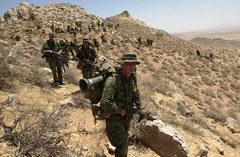
Canada's price for fighting in Afghanistan has not yet been fully paid -- or even known. Liberal and Conservative governments have avoided reporting the cost of the war. But Carleton University researcher David Perry estimates that as of March 2009, Afghanistan has cost us $4.78 billion. By 2012, he says, the war will have cost us $7.55 billion.
Those killed in the war pay the highest price, of course, but the survivors pay too, without glory, for the rest of their lives.
More than 360 Canadians have come home wounded. More than 4,000 Canadian Forces veterans are receiving benefits for post-traumatic stress or "operational stress injuries." Thousands more, veterans and those currently serving, are dealing with PTSD and related problems on their own.
Paying for veterans' care
David Perry estimates long-term care of Afghanistan veterans will require "significant" spending:
"An estimated 20,000 Canadian Forces members served in the Afghan theatre of operations between 2002 and 31 December 2007, and seven additional six-month rotations will be required between February 2008 and July 2011. Recognizing that 3000 personnel are really required to staff each rotation, by July 2011 there will be approximately 41,000 Canadian military veterans of Afghanistan."
Perry also cites an estimate that "27 per cent of Kandahar veterans will experience mental health problems, including post-traumatic stress disorder, significant depressive issues, and hazardous drinking behaviour. With a total of 11 rotations or 33,000 troops required to fulfill our combat role in Kandahar, this suggests almost 9000 forces personnel may experience some form of mental health problems."
Drawing an analogy with U.S. estimates on the cost of veterans' care, Perry concludes that "the lifetime care for 41,000 Canadian Afghanistan veterans could cost around $11.5 billion."
The cost of exotic diseases
Some of that care will be for those who come home bearing unfamiliar illnesses. They have inspired a modest literature in medical journals, and little public attention. But these diseases make life that much harder for the veterans and their families. Some pose potential threats to healthcare workers and the general public.
The Canadian Forces Health Services offers a detailed list of diseases that soldiers may be exposed to in Afghanistan: hepatitis A and E, typhoid, cholera, malaria, dengue, Crimean-Congo hemorrhagic fever, tuberculosis, West Nile virus, typhus and others. Even the dust of Kabul and Kandahar is a hazard, causing respiratory problems and skin lesions that can result in infections.
Leishmaniasis, a parasitic disease spread by sandflies, is a notably nasty illness. The cutaneous form can leave disfiguring ulcers that take months to heal, and the visceral form can be fatal. Although the Canadian Forces actively try to prevent it, at least 14 soldiers have contracted cutaneous leishmaniasis. So have almost 1300 U.S. personnel in Iraq and Afghanistan.
Pneumonia that won't quit
American doctors worry that North American sandflies, which carry another form of the disease, could pick up the Asian strain from returned veterans. It could then spread through the general population.
Another dangerous infection is Acinetobacter baumannii, a "successful pathogen" with a talent for resisting antibiotics. According to one study, four wounded Canadian soldiers seem to have picked up A. baumannii from a mechanical ventilator in the military field hospital at Kandahar, and came home with a stubborn pneumonia.
Canadian doctors are understandably worried that A. baumannii could spread to other hospital patients. In one U.S. study at Walter Reed Army Medical Center, researchers found bacteria spreading within the hospital from patient to patient -- what's called a "nosocomial" infection.
Invisible wounds
PTSD was once "shell shock," and then "battle fatigue" -- a barely recognized condition that many still associate with cowardice or simple lack of character. Similarly, many soldiers suffer the invisible wound of traumatic brain injury (TBI).
Last December, CTV carried a Canadian Press report on a major U.S. study of TBI in Iraq and Afghanistan veterans. Often caused by the detonation of an improvised explosive device, TBI can lead to dementia, seizures, psychoses, aggressive behaviour, depression and memory problems. Unsurprisingly, TBI cases are also more likely to develop PTSD.
The CP report also noted that the Canadian Forces don't keep track of their TBI cases because it isn't "essential in supporting our primary responsibility of patient care."
'Soldier on'
A search of the Veterans Affairs website still finds almost nothing directly related to TBI, though it does include a considerable amount of well-meant but almost unreadable information about PTSD.
That information is there, of course, because it's needed. A sucking chest wound or a blown-off leg is an obvious and serious wound. It gets prompt and intensive care.
A brain injury, or psychological stress, is not just concealed; the victim is expected to "suck it up," to "soldier on." Gen. George S. Patton was rightly condemned, more than 60 years ago, for slapping a PTSD victim. Today's PTSD victims slap themselves, denying their condition because it still carries a stigma.
Medical experts and the Canadian government are fully aware of these health hazards facing the men and women who are fighting in Afghanistan. But for the experts it's still a technical problem, and for the politicians it's a political problem.
As the price of fighting in Afghanistan continues to soar, the veterans and their families will bear the heaviest costs.
Tomorrow: An interview with a Canadian vet who, years after returning from Afghanistan, still struggles with post-traumatic stress disorder.
Related Tyee stories:
- Fresh Start on Afghanistan Debate
Manley report: No one gets off easy, and that's good. - Afghanistan Transforms Canada
To play junior partner to empire, we've militarized our identity. - Dead Soldiers Aren't Funny
New group takes aim at military messaging.
![[Tyee]](/design-article.thetyee.ca/ui/img/yellowblob.png)
Read more: Health










Tyee Commenting Guidelines
Comments that violate guidelines risk being deleted, and violations may result in a temporary or permanent user ban. Maintain the spirit of good conversation to stay in the discussion.
*Please note The Tyee is not a forum for spreading misinformation about COVID-19, denying its existence or minimizing its risk to public health.
Do:
Do not: