News

BC Then, Ottawa Now: Who's Crazier?

Province's wild political history offers context for current crisis.

By Will McMartin, 5 Dec 2008, TheTyee.ca

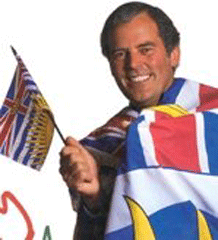
Bill Vanderzalm

Vander Zalm: conflicted.

Searching for historical precedents to guide Canadians through the seemingly incomprehensible events now unfolding in Ottawa, many pundits and politicians have referenced the King-Byng affair of 1925-26, and a few have pointed to the Liberal-NDP accord that toppled the Tories in Ontario in 1985.

But as is so often the case, the best examples are to be found in British Columbia. That's because if ever an unusual or bizarre parliamentary event has occurred anywhere in history, it probably did so in B.C.

Three examples come to mind. First, the Liberal-Conservative coalition that governed B.C. from 1941 to 1952. Second, Social Credit's assumption of power in 1952. And third, Bill Vander Zalm's resignation as premier in 1991.

Almighty PMs?

Before we look at those B.C. precedents, let's quickly review our parliamentary system.

Many observers seem to think that the prime minister is at the apex of political power in Canada (and the premier at the provincial level). Others point to the Queen's representative in Canada, the Governor General (or the Lieutenant Governor in the province). Neither is true.

Under our system of governance, the people -- ordinary Canadians, more than 33 million of us -- are sovereign. (In provincial affairs, 4.3 million regular British Columbians are paramount.) We exercise our power, collectively, at election time.

Between elections, we place power in the hands of those individuals elected to represent us: members of Parliament in the federal House of Commons, and members of the legislative assembly in the provincial legislature.

The chief responsibility exercised by MPs is to oversee those among them who sit in the privy council (which is the federal cabinet). For MLAs, it is to monitor the legislators named to the executive council (or provincial cabinet).

Power to the people?

It is easy to misunderstand this basic structure, and reverse the order of power. After all, prime ministers, premiers and cabinet ministers seem all-powerful; they are well-compensated for their work and enjoy many taxpayer-financed benefits -- plush offices, an army of factotums at their beck and call, expense accounts, cars and much more -- unavailable to those parliamentarians sitting on the backbench or in opposition.

But remember this: regular MPs and MLAs have the power to remove and replace a cabinet any time the House is sitting. True, this power is seldom exercised, but that does not mean it is non-existent. And voters have to power to defeat any MP or MLA at an election.

The order of power in our parliamentary system is thus: first, the people; then, ordinary parliamentarians and legislators; and finally, members of cabinet, including the prime minister and premiers.

The Governor General and various lieutenant governors have very limited, and sometimes ill-defined, responsibilities, but they do not in any way exercise power on their own accord.

1941's Conservative-Liberal coalition

Duff Pattullo's Liberals were seeking their third consecutive majority government when British Columbians went to the polls in 1941. But B.C. voters cut the Grits to just 21 seats -- five short of a majority. The Co-operative Commonwealth Federation captured 14 seats, and the Conservatives, 12. One Independent, Tom Uphill of Fernie, also won re-election.

Pattullo was determined to govern with a minority, but prominent segments of B.C. society (business interests, the news media) loudly clamoured for a Liberal-Conservative Coalition government. That sentiment was in part attributable to the Second World War (Canadian troops were then in Europe and in Asia), as well as the CCF's growing strength.

The premier resisted, but after several cabinet ministers resigned their portfolios and Liberals in convention endorsed a coalition, Pattullo said he would stand aside as party leader. He soon visited the lieutenant governor to resign as premier, and advised him to ask John Hart, the new Liberal leader, to form a government of Grits and Tories.

1951: One confused lieutenant governor

A decade later, the coalition's disintegration led to another general election. The results of the 1952 contest were difficult to ascertain: Social Credit, a party that never before had elected an MLA in B.C., led the way with 19, and close behind (despite taking 28,000 more votes than the Socreds) was the CCF with 18 seats.

The Liberals returned six MLAs and the Conservatives had four. Tom Uphill, the veteran Independent, also won re-election.

Clarence Wallace, B.C.'s lieutenant governor, seemed as confused by the results as most British Columbians. He delayed and dithered for nearly a month before W.A.C. Bennett, the Socred leader, insisted on having a meeting. He went to Wallace with a letter from Uphill, who, despite being affiliated with organized labour, evidently had pledged his support to the Socreds and not the CCF.

With Uphill's support, the Socreds could appoint a Speaker and still enjoy a one-seat plurality in the legislative assembly. Wallace capitulated, swearing Bennett and his chosen Social Credit colleagues into the executive council.

1991: Zalm resigns

Finally, many readers will recall Bill Vander Zalm's turbulent term as Social Credit premier from 1986 to 1991. During that time, unrelated scandals forced several cabinet ministers to resign their posts, and the premier himself seemed under a perpetual cloud of controversy.

In 1991, dogged by rumours that he was in a conflict of interest over business dealings with a mysterious Asian businessman, Tan Yu, Vander Zalm asked Ted Hughes, a respected public servant and conflict of interest commissioner, to conduct an investigation into the matter.

Before the Hughes report was completed, Social Credit cabinet ministers and MLAs began to talk amongst themselves about possible outcomes. What if the premier, presented with an adverse report by Hughes, attempted to clear his name by making a direct appeal to the electorate? Did the Socreds really want to seek re-election -- and face certain annihilation -- in a campaign led by a disgraced premier, and where the major issue was the premier's integrity or lack thereof?

Fearing the worst, the Socreds reportedly opened lines of communication with the lieutenant governor. The proposition purportedly advanced was that in the event the premier sought a dissolution of the legislature, it should either be denied or delayed until the caucus could remove Vander Zalm and elect a new leader.

In the end, after Hughes found that Vander Zalm indeed had a conflict, the premier quickly resigned his post and thereby spared British Columbia from a constitutional crisis.

MPs have a job to do

Before considering how those three events in B.C. may be understood in the context of the present circumstances, let's recall that six weeks ago, in the country's 40th general election, Canadians elected 308 representatives who were charged with conducting our nation's affairs until the next general election.

Those 308 MPs, by winning election to the House of Commons, individually gained the responsibility of deciding the best interests of their constituents and of Canada as a whole.

That power was not given to political parties, nor to any single MP -- such as the prime minister. It was given to each one of the 308 individuals now sitting in parliament as our elected representatives.

Every MP who is neither in the privy council -- because ministers are bound by the principle of cabinet solidarity -- nor the Speaker, is free to vote as they choose, on any issue, at any time.

They even have the freedom to vote against their own party, or to quit their party and join another or sit as an Independent.

British Columbians know this latter point all too well from recent history. David Emerson (Vancouver-Kingsway) and Blair Wilson (West Vancouver-Sunshine Coast), both elected as Liberals to the last parliament, quit that party to join, respectively, the Conservatives and the Greens.

Before that, three B.C. MPs elected with the Canadian Alliance in 2000 ended up with different parties before the subsequent general election. Joe Peschisolido (Richmond) quit to join the Liberals; Keith Martin (Esquimalt) left to become an Independent (and later a Liberal); and Chuck Cadman (Surrey North) also opted to sit as an Independent.

Prorogation is just the start

In the general election on Oct. 15, the Conservatives won 143 of 308 House of Commons seats. That's a dozen shy of a majority, but sufficient to allow the Tories to form a minority government.

The Liberal Party finished second with 76 seats, and so became the official opposition. The Bloc Quebecois captured 50 seats; the New Democratic Party got 37; and two Independents also won election.

The total number of non-government MPs is 164 -- a Liberal, Peter Milliken, was elected Speaker -- which is 21 seats more than the Conservative government.

Earlier this week, the Liberals and New Democrats agreed to work together, first to defeat the Tories, and then to form a coalition government. The combined strength of the Liberals and NDP, however, is just 113 seats -- 30 fewer than the Conservatives, and 42 below the number needed for a parliamentary majority.

The Bloc Quebecois, therefore, were asked to join the Liberals and New Democrats in overthrowing the Conservatives. The BQ agreed, and further promised to lend ongoing support to the new coalition for a period of 18 months (although the Liberals and NDP agreed to govern for two-and-a-half years).

Conservative Prime Minister Stephen Harper, whose government faced certain defeat in Parliament, requested a meeting with the Governor General, Michaëlle Jean. He requested a prorogation of the current sitting of the House of Commons, whereby parliament would immediately adjourn and return on January 26. Mme. Jean agreed.

Yet the current drama is by no means finished. In six weeks, when MPs return to Ottawa, it is to be expected that the Liberal-NDP Coalition, along with the Bloc Quebecois, will make another, and immediate, attempt to defeat the government.

In the event that they are successful, Harper will again visit Mme. Jean. But next time it will be to seek a dissolution of parliament, thereby setting in motion a general election. But the Liberal-NDP Coalition, should it hold together until then, and should the Bloc agree to continue lending its support, will appeal to the Governor General to install the coalition as government.

What happens then?

Dissolution solution?

A salient point is that voters participated in a general election on Oct. 15. If Canadians are asked to go to the polls in late January (for March), just five months would have transpired between the two contests.

That makes the present situation more like B.C. in 1941 than in 1991. In the latter case, the Lieutenant Governor would have found it difficult to refuse Vander Zalm's request for dissolution, because the Socreds were in their fifth year in office and voters were nearly overdue to go to the polls.

In 1941, however, the crisis erupted mere weeks after the general election. It is conceivable that Pattullo could have sought dissolution and another election, but he wisely advised the lieutenant governor to call John Hart, leader of the Liberals, who would head a coalition government with the Conservatives.

To his credit, even though no coalition candidates had been on the general election ballot, the lieutenant governor understood that the new entity should be given an opportunity to test the confidence of the legislature.

In January, should the Conservatives be defeated, the decision facing the Governor General is whether a new Liberal-NDP Coalition with explicit Bloc Quebecois support ought to be given the opportunity to test the confidence of the House, rather than acceding to Harper's request for dissolution.

It would be difficult for Mme. Jean to refuse Prime Minister Harper's request for dissolution, but harder still to ignore the wishes of a majority of parliamentarians.

But what proof will Mme. Jean demand from the Liberal-NDP-BQ that they have the ability to survive a House vote? Recall that W.A.C. Bennett in 1952 held a letter from Tom Uphill, which purported to say that the Independent would support a Social Credit minority.

Surely the Governor General will demand more than a letter, but that points to the nub of the problem. Remember, members of Parliament are free agents who can quit their parties at any time, and vote any way they choose on any issue.

So, while BQ leader Gilles Duceppe may commit his party to a particular course of action for a given period of time, it is impossible for him to bind all of his BQ MPs. The notion that a Liberal-NDP-BQ entity would last for a specific period of time (either 18 months, or two-and-a-half years) is more wishful thinking than a contractual commitment.

Moreover, there is nothing to prevent Harper and his Conservatives from wooing right-of-centre Liberal and BQ MPs to vote with the Tories -- or even to join the Harper government (a la David Emerson) -- prior to, or after, any vote of confidence. Again, with 143 MPs, the Tories are just 12 short of a parliamentary majority.

Strange doings

To conclude, historic events in B.C. provide some context in which to view ongoing events in Ottawa.

But consider that Stéphane Dion, the man the Liberals have put forward as the next prime minister, already has announced his intention to quit as leader next May. And no B.C. government ever has sought power with the assistance of a party dedicated to breaking up Canada.

Nope. Not even British Columbians are that crazy.

Related Tyee stories:

 [Tyee]

19  Comments:

Login or register to post comments

  • murdock

    3 years ago

    VOTE THAT WAY FROM NOW ON!

    Great that each MP is supposed to be an independant voice.

    Note that on the ballots the 'party affiliation' is in (parenthesis), this is part of Naval Law and means that the person is not legally bound to that party.

    If you really think this way...that MP's should not be bound to parties.

    Then the entire 'money to parties for votes' should either be scrapped or changed to 'money to candidates for votes' with NO MINIMUM. Therefor the independant candidates can get the cash lolly also. Personally I think the whole concept was moronic.

    Also if you really agree that the party is not the ruling item then the 'afiliation' in (parenthesis) should be REMOVED from the ballots.

    Back to basics kiddies, before we can start to grow-up we need to return to the core of the system.

    Otherwise all bets are off and the 'party rule' concept will become truly dominant.

  • Luke Skywalker

    3 years ago

    The Fly in the Ointment...

    Quote:
    Moreover, there is nothing to prevent Harper and his Conservatives from wooing right-of-centre Liberal and BQ MPs to vote with the Tories

    Or perhaps even Liberal MP's catching the "flu" on the day of the vote in order not to rankle their fellow Liberal MP's.

    Certainly alot of Liberal MP's are now breaking ranks in terms of supporting the coalition and it won't take too many, relatively speaking, for Harper to win his confidence vote.

    Quote:
    And no B.C. government ever has sought power with the assistance of a party dedicated to breaking up Canada.
    Nope. Not even British Columbians are that crazy.

    And there's the fly in the coalition ointment. Electing MP's and representing Quebec is one thing, but the BQ's goal is certainly to remove Quebec from Canada and the G-G must take all things into consideration.

  • Skywalker

    3 years ago

    I wonder.

    I wonder what would have happened if the Governor General had given the coalition 2 hours of her time as well and whether pulling Harper's arse out of the fire will be good for the country in the long run. All this Conservative manipulation now (ie wooing opposition MP's, ad campaigns, and flooding the talk shows) seems to be creating a very nasty climate. I wonder if she considered the effect of her decision. She may have assumed that all the players would now conduct themselve honourably and with integrity.

    Perhaps the discussion of a coalition should have taken place the day after the election. Imagine that taking place in the future as soon as the certaainty of a minority government is known. The value of electing independents will them be clear. Of course it will be much harder to peg an independent's political position when you make your choice as there won't be a party affiliation to make it easy. Would the public do the amount of investigation required or would the simply vote for a pig in a poke and complain later.

    I suppose the coalition could still dump Harper on January 28th. They could then adopt all the good items in his budget and add a few of their own. After a few months the people would have forgotten about Harper because they would be too busy going about their daily struggles. A more unified Parliament would soon compensate for any negative fallout from the conservative war room.

  • G West

    3 years ago

    Skywalker

    In for a penny, in for a pound - they should still dump the dictator and, if there is anything worthwhile in the budget, adopt it.

    We can call it cooperative governance - after the anarchy brought down upon this country by Stephen Harper and his clones I wouldn't think the media could be very critical of 'anything' the coalition does. Have you ever seen such a group of parrots?

    That's the problem with lies and liars - it tends to become such a habit that no one knows what the truth is any longer.

  • Skywalker

    3 years ago

    Say what?

    "And no B.C. government ever has sought power with the assistance of a party dedicated to breaking up Canada." Oh yes, and a BC party surviving with the assistance of the Bloc, like that's even possible. Harper did it in 2004 and you forgot that diud you? Who writes this stuff for you Luke?

  • Skywalker

    3 years ago

    G. West

    I am almost always dissappointed in the political commentators who all seem to drink drink the same political bath water. None of them seem to be able to come up with an original analysis. It is hard to imagine unless we remember that they all work for one of the corporate media. After a while their comments become a self fulfilling prophesy. Consider the news about the one renegade liberal MP who obviously has a hate on for Dion. I don't much like Dion myself but he is still preferrable to Harper. The media interprets this as a crumbling of the coialition when the same guy says he supports the coalition but just doesn't want Dion to lead it. Following that we have a wave of "experts" from colleges and universities, not giving us facts but their views from the ivory tower of theory. And the masses are suppose to make a decision. Even the reporters adopt the same language the spin meisters in the conservative war room cranked out. I get it all day from people who have heard something and then repeat it without giving it a second of critical thought.

    Maybe all this proves is that Harper got his arse pulled out of the fire and he can thank the countries obsession with political correctness.

  • NicS

    3 years ago

    Separatist Bloc Histeria

    It is interesting hearing all the western indignation about the dastardly Bloc Quebecois "separatists". Just like them, most of you westerners get emotionally perturbed when there is talk of separation. How short your collective memories really are. There was a time when the Bloc Quebecois did not exist, except as Conservative members of Mulroney's Gov't of the time and then came the split and it was emotional for everyone.

    Harper's first campaign in Quebec was a success only because he went there and whispered sweet nothings in their ears in french. Now we have Harper insulting and driving French Quebecois back to their separatist comfort blankets. As evidenced by the increased chances now of the provincial Parti Quebecois. A coalition could do more for Canadian unity than any of us would have previously thought.

    I think its like any relationship, we tell them they're destroying our country and they say, ok then, we'll leave. It is and always has been a highly emotional issue, both here and in Quebec.

    Governor General, Michaëlle Jean is also from Quebec and was almost passed over because of her Quebecois intellectual leanings and she does not necessarily hear Mr. Dion with the same Anglais ear that we do.

    Dion may not be a strong leader, but that is the position in which fate has placed him. Just like the Roman Emperor Claudius before he became Emperor, he was never considered a threat to any of the other potential Emperors. Quite the contrary, he was a studdering, half crippled heir to the throne. Then Emperor Caligula was killed and the German guards instinctively hoisted Claudius on their shoulders as their new Emperor. In the end, by many accounts, Emperor Claudius became one of the best administrators and Emperors Rome ever had.

  • OilbertaRedTory

    3 years ago

    Tory Renegades ?

    If there are any Tories still hiding in Harper's cult - they could as easily move to the coalition as Libs move to Harper. Granted, there would have to be a lot to govern without the Bloc but even a few moving over would be significant.

    I'm just saying ...

  • asp

    3 years ago

    re: the BQ's goal is certainly to remove Quebec from Canada

    And Harper is working to castrate the federal government. Do you have better plan for removing Harper's power?

    Anyway, the only agreement signed with the BQ is that they would not vote non-confidence against the LIB-NDP coalition. Their currently stated goal is to look out for the best interests of Quebec inside of Canada. Maybe they are lying, I can't tell and lie detectors don't work.

  • Dan the socialist

    3 years ago

    I think the coalition will

    I think the coalition will be nothing but a memory in 7 weeks as I really believe the Libs will pull out.

    They know they can not risk a Feb election with Dion leading and Dion reinforced who he is over the last couple of days.

    If they go to the polls with Dion again the Green Party will get more seats than the libs....ha

  • Skywalker

    3 years ago

    The superficial that passes for intelligent commentary.

    Imagine the idiocy of a debate on the backdrop of a short statement being the measure of a person's integrity and honour. So Dion's statement lacked professional movie making skills and looked amateurish. Nothing about what he said that was so off the track. You now have even the CBC focused on the quality of the video clip and nothing about the substance. How low have they crawled. Luckily I only listened to him on the radio while working and missed this re herring. Not a word about Harper having the luxury of standing in front of Rideau Hall to give his message.

    That being said, if the coalition takes it to round two, which I believe they must to curb the monster created, Dion will leave before the end of January.

    Still the idea that the quality of a video has any reflection on a person's integrity is about as superficial and silly as it gets.

  • alive

    3 years ago

    very good point

    very good point Skywalker!
    the media has fostered the idea that politicians should look like a movie star!
    As I see it people should worry about the platform of the party and forget who happens to chosen to speak publicly about it!
    Perhaps we need to have a professional actor read the speeches, after all we do not need that any individual party official get a swelled head.
    Was I referring to Harper?

  • VivianLea Doubt

    3 years ago

    h*******t

    "let's recall that six weeks ago, in the country's 40th general election, Canadians elected 308 representatives who were charged with conducting our nation's affairs until the next general election"

    Yeah. So what should the good MPs who opposed say, for example, the Prime Minister's idea that the right to strike is a luxury, have done, exactly? I made the point previously that that the idea of the coalition seemed to me to be the ethical response - the intelligent response - the innovative response.Jeez, aren't we all tired of politics as usual? And thanks, Skywalker - any more comments about Dion and his inept video are so much h*******t. Personally, I want to hear what inteligent, thoughtful, interesting people have to say... and I want to reflect on these ideas in a measured kind of cogitation that simply does not include "optics".But even more importantly, in a fervently heartfelt way, I want to see politics as usual and business as usual and sleepwalking as usual through life die a quick death.

  • Skywalker

    3 years ago

    alive

    Can you imagine the late Tommy Douglas going on TV expecting to be powdered and trying to present the perfect TV image; and worrying more about the professionalism of the production rather than what he was going to say? If Douglas were around and tried to function in this superficial and vacuous arena, he might never have become the greatest Cnadian.

  • greengreen

    3 years ago

    None of the three opposition

    None of the three opposition parties are going to form government for a long time. What other choice do they but to band together to stop Harper. What a noble cause!

  • ME2

    3 years ago

    another prspective

    After a couple of thousand words explaining why Parliamentary power should reside in the hands of individual MPs and why it does not, McMartin then avoids the real crux of the problem, which is the Cult Of The Leader.

    Harper (as is Bush) is a good example of how this model subverts Democratic Process. By not revealing his true ideological precepts, even muzzling subordinate MPs from commmenting about their previously well-known views, Harper singlehandedly hides from the voting public what policies they are actually voting for.

    The next step is to choose Cabinet Ministers not from the best of the brighest, but instead those from whom he can demand unthinking loyalty.

    To be sure, most leaders seek much the same goals, but that's my point. Allowing the Leadership Cult to flourish sets the stage for the success of someone like Harper, who if he ever achieves a majority gov't, will rule as a Dictator behind a Democratic smokescreen. It's been done before.

    Those who guffaw at comparisons with the early strategies of Hitler forget that in the Thirties, his gov't was democratically elected by a population that was almost entirely Christian, and was a World leader in Academics, Science, and Technology. It was prospering under the Fascist business model bequeathed to them by WW1.

    If anyone had suggested to them what lay just a few years ahead, they would have guffawed too. Too much trust in leaders can get the people into trouble - look how close the US came with Bush and his inevitable war with Iran.

    Harper's proroguing ploy is identical in its cynicism to that of Bush's evoking of the "Executive Privilege" clause in order to override the rulings of the Congress and the Senate. In both these instances it was previously thought that no honourable gov't would use them for purely self-serving reasons. I doubt Harper's "honour" will ever survive the test of political expediency.

    The sad thing is that as more and people lose their hope that Democracy can work, we'll soon lose it altogether.

  • Feverish

    3 years ago

    The power of TV...

    ... is part of it's weakness as a tool. I agree 100% with the last few posts... the image has gained dominance over the message. Political spin has replaced substance (polls are an example) and a sweater becomes part of the campaign! This does not happen to such a degree on radio.

    We are so much in need of major changes to everything to do with our entire political system. Pro Rep would be a great start on the road to something better for the country.

    As was pointed out earlier in this thread, the machinations are antiquated. This in combination with the rise in "reality/ real time" forms of communication have left a gap of monumental proportion. Remember the painfully dishonest "Standing up for Canada" ads.

    People have been left to scratch their heads in wonder at the audacity of the BS that gets repeated in hopes that it will stick. Sadly, it does stick because people are overloaded with "information." We can only process so much. As I listened to the interviews with "real people" last week, mostly on CBC, I was saddened to hear the repetition of lies as a reason to oppose a coalition. Many people were suggesting that what the coalition was proposing was illegal. I guess when the party offers you a ride to the polling station on election day you are obliged to suspend any form of critical thinking when your party is threatened. Anything goes then, even vilification of other Canadians.

    Quebecers are Canadians too, though Harper and others seem to disregard that fact, unless they want their votes. No wonder they feel like leaving at times. I have friends here on Vancouver Island that feel the same way, and who can blame anyone who feels that way occasionally.

    So I look forward to more train stops, radio campaigns and substance when the current round of propaganda settles and we go back to the polls, whenever that may be. In the meantime I will be getting involved with the business of educating people of the possibilities that change can bring to our system and our lives. I am hopeful that this collective movement has been invigorated in the last few weeks and will continue until substantial change is realised.

  • Skywalker

    3 years ago

    Wanna see real superficial commentary.

    Just listen to Ottawa reporter for the CBC Craig Oliver sometime. He's scambling for substantive things to say almost appearing as though he is making up as he goes. He expect people to believe he's on the inside of the liberal caucus.

  • fpass

    3 years ago

    Breaking up Confederation

    You are incorrect in asserting that no BC government has sought to maintain power with the support of a party dedicated to breaking up Confederation. Sporadically throughout the 1870s, just such a party governed the province. Under the leadership of Premier George Anthony Walkem, the provincial legislature resolved in 1878, by a margin of 14 to 9, that British Columbia would petition the Queen for the annulment of the Terms of Union if the Canadian Pacific Railway was not constructed in a timely fashion.

    Moreover, there were avowed secessionists in the caucuses of both the Liberal and Conservative parties in BC well into the 1930s.

    • The discussion for this story is closed. No more comments can be added.