Law Suit a Tar Sands Stopper?
Win for Alberta Cree band could clog up oil ambitions.
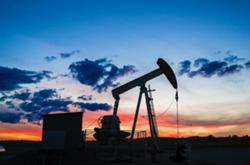
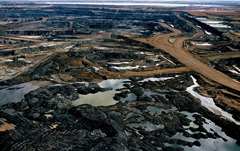
Digging for billions: Alberta's oil sands.
Jack Woodward and the Beaver Lake Cree aim to change Canadian law -- and their success likely would throw a huge wrench into Alberta's tar-sands oil production.
The suit pits the Beaver Lake Cree band against the governments of Canada and Alberta, asking the court to rule invalid the government authorization for thousands of petroleum projects on the band's core territory.
Woodward, a Victoria-based Aboriginal-law expert, filed the suit on behalf of his clients this May, and says its intent is to lay the groundwork for a new legal regime governing resource extraction on land reserved for or claimed by Canada's First Nations.
A victory would allow the Beaver Lake Cree to demand much higher levels of accommodation and consultation from government and industry on oil and gas operations on their territory.
Woodward thinks a win could create a precedent that will allow other bands to enforce similar demands across the multi-billion-dollar oil-sands projects in Alberta's north.
It could also, conceivably, shut down Canada's only tactical bombing range at Cold Lake.
Landmark win in his pocket
Woodward has a track record to be taken seriously. In November of last year, as lawyer for the Tsilhqot'in First Nations, he helped win a landmark B.C. Supreme Court decision that said the provincial government had overstepped its authority in granting land-use rights to firms without Tislhqot'in approval.
Woodward believes the Tsilhqot'in case, also known as the 'Xeni decision,' underscores the point that Aboriginal rights to hunt, trap and fish create an obligation on government to proceed in ways that do not make those rights meaningless by reckless authorization of resource exploitation.
Cynthia Dickens of Justice Canada in Edmonton will act as lead counsel for the federal Crown in defending against the claims of the Beaver Lake Cree. Speaking from her offices in Edmonton, Dickens told The Tyee that neither she nor the representatives of the Alberta government had yet filed statements of defence in the matter.
Mike Hudema, tar-sands campaigner for Greenpeace in Alberta, thinks the case could have immense implications. "If the Beaver Lake Cree win clearly in this case, it could mean an end to development on their territory," Hudema told The Tyee.
"The precedent could slow tar-sands development across Alberta. The consultation process with First Nations before development began has been absolutely terrible. I'd love to see them win, not only for their own interests, but also for the sake of everyone in Canada," Hudema said.
'We will fight as long as it takes'
"All of the animals are starting to deplete," said Beaver Lake Chief Alphonse Lameman, in whose name the action was launched, on the day his people went to court. "Soon there will be nothing. We will fight as long as it takes to get justice. The governments of Canada and Alberta have made a lot of promises to our people, and we intend to see those promises kept."
The ancestors of the Beaver Lake Cree people signed a treaty with the federal government in September of 1876, a deal that guaranteed them reserves and some other benefits, including the right to hunt and fish throughout the tract surrendered, "saving and excepting such tracts as may from time to time be required or taken up for settlement, mining, lumbering or other purposes...."
Since then, the governments of Canada and Alberta have authorized over 16,000 projects, mainly oil and gas exploration and extraction, on the core territories of the Beaver Lake Cree.
The governments have also arranged the leasing of land within the territory to the Cold Lake Air Weapons Range, Canada's only tactical bombing range. The Cree band has gone to court to argue that development has occurred without proper consultation with them, without proper caution about protecting the habitats necessary to make their treaty rights to hunt, fish and trap meaningful, and without proper environmental and species inventories.
Win could spill into oil sands
The core traditional territory of the Beaver Lake Cree lies near Lac LaBiche on the margins of oil sand development, but if the band wins this case at the Supreme Court level, it could create precedents for other First Nations in Canada, including those whose claimed territories are where the tar-sands oil rush is underway in Northern Alberta.
The oil sands, viscous deposits of tar-like bitumen underlying areas of Alberta larger than Florida, are estimated to contain over 175 billion barrels of proven oil reserves, with at least one oil company spokesman estimating the total reserves at up to two trillion barrels, or eight times the size of all Saudi Arabia's oil supplies.
Husky: 'We take it seriously'
One of the installations on Beaver Lake Cree land targeted by the May legal action is Husky Energy's Tucker Oil Sands Project north of Cold Lake. When the company announced the opening of the project, its press release estimated that the Tucker lease contained 1.27 billion barrels of discovered resource, and that the project would recover approximately 352 million barrels of oil over a 35-year project life.
Contacted in his Calgary office last week, Graham White, who speaks for Husky, declined to comment on the court action, but did confirm that Husky's Tucker Oil Sands Project lies within the area disputed by the Cree.
Nadine Barber, who speaks for Devon Canada Corporation, a firm with many projects within the Beaver Lake Cree territory, says that her firm will not intervene in the court action.
"The filing is with the two governments," she told The Tyee. "Devon will take no role during the trial. After the decision is rendered, we'll discuss whether to intervene. We do, however, take Aboriginal matters very seriously. We try to deal with all such matters consistently and respectfully."
Huge stakes on both sides
Exploitation of the tar sands is now seen in industry circles as economically viable in an era of steeply rising oil costs, while environmentalists worry about the pollution created in cooking the oil out of the tar sands, as well as global warming effects as more oil and gas go into the global pipeline.
Politicians foresee a fortune in tax revenues, but most of Canada's leading environmental groups are calling for a moratorium on further development until or unless the tar sands projects can be made genuinely sustainable.
"Anything that slows down tar-sands development would absolutely be a good thing," says David Suzuki Foundation climate-change campaigner Dale Marshall. "Greenhouse gas emissions from the tar sands are three times the volume per barrel extracted at conventional wells. These are huge strip-mining operations with terrible impacts on biodiversity."
Greenpeace campaigner Hudema agrees. He said tar-sands development represents an environmental and human-rights crisis for Canada, threatening to destroy two river systems, dump double the emissions currently generated by Canada's car and light trucks into the air by 2020 and cover more than 50 square kilometres of Alberta with toxic tailing ponds by 2015.
Hudema is also worried about the potential health impacts on those who live downstream from tar-sands development, pointing to increased rates of rare cancers in Fort Chipewyan.
Precedents cited by Cree counsel
"Given that we now have federal and provincial governments across Canada willing to back mining and tar-sands exploitation against Aboriginal rights, we can look for no statutory relief," Beaver Lake Cree counsel Woodward told The Tyee.
"Both levels of government have been passing legislation to make stopping these projects impossible. Only First Nations can stop or force modifications to them now," Woodward said. "We all depend on First Nations to do the heavy lifting on environmental protection."
Woodward said he believes that precedents created by a 2005 Supreme Court of Canada ruling in a case brought by the Mikisew Cree nation will support a win for his Beaver Lake clients. The court ruled, he says, that a First Nation can oppose industrial activity on its land if that activity makes the treaty rights to hunt, fish and trap meaningless by destroying the healthy habitats necessary for the rights to be exercised.
Stuart Rush, Q.C., a distinguished senior member of the Aboriginal law bench and one of the leading counsels in the precedent-setting Delgamuukw case, thinks that the Mikisew case is an appropriate precedent for Woodward to cite.
"Mikisew is a powerful authority," he told The Tyee. "This is a strong precedent. Tsilhqot'in, on the other hand, is obiter dicta, not precedent. That said, this new case represents the cutting edge on Aboriginal law. No court in Canada is going to give a First Nation an absolute veto on resource extraction, but levels of consultation and accommodation could well be strengthened by a win at Beaver Lake."
'Impressive' claim: enviro law expert
David Boyd, an environmental expert based in Victoria with affiliations with the University of British Columbia, Simon Fraser University, and the University of Victoria, says that the statement of claim prepared by Woodward for the Beaver Lake Cree is "impressive."
"The Beaver Lake Cree are the latest David to challenge the tar-sands Goliath, and while the odds are stacked against them, you've got to admire their courage," Boyd said in an e-mail to The Tyee. "Even if they eventually emerge victorious, no single lawsuit is likely to strike a decisive blow against the tar sands. Instead, Aboriginal people, environmentalists, judges and politicians (both in Canada and around the world) will have to join forces to slow down the reckless expansion of Alberta's dirty oil juggernaut."
"Governments and industry ignore our concerns," Beaver Lake Chief Lameman said. "This is our home. This is where we live. We have a responsibility to our children, and to our children's children, to see that the lands where the Cree live, and will always live, remain inhabitable."
The case is now in a case-management process overseen by Justice K.D. Yamauchi, and a first meeting of all counsel and Justice Yamauchi will be held August 18 to determine timelines. Dickens of Justice Canada said she expects that both Canada and Alberta will file their statements of defence sometime in the fall. Dickens declined to comment on what might be at stake for the Crown in the matter.
Related Tyee stories:
- The Tar Sands, Downstream
Cancer, and the BC connection. - New Day for BC Native Claims
'Xeni decision' casts doubt on provincial authority over First Nations land dealings. - The Harm the Tar Sands Will Do
The project's expected costs to our forests, water and air.


21
Login or register to post comments
Fiat lux
3 years ago
There's no question about
There's no question about the projects being incredible environmental and human disasters.
Typical, and one of the millions of examples of wealth not being created, but taken.
But if there's any chance of the oil projects being stopped by any court action, the USA will invade and take over, most likely with the help of our Reform Party governments.
There must be the oil flowing to keep their B52s flying over our heads, here in central BC, every day.
Ed Deak, Big Lake.
Budd Campbell
3 years ago
FUNNY, ISN'T IT?
I can recall reading in the old Finacial Post about the first oil sands project, GCOS, in the 1970s. At that time the project was uneconomic and required various government handouts to keep going. Similary with other oil sands projects into the 1980s and even the 1990s. In those years I don't recall hearing major environmental complaints about these money losers, and I don't recall hearing of any Native law suits either.
But with oil trading anywhere over $20 to $30 per barrell, and with newer technologies, the tar sands are now profitable to the point where investors are paying off their multi-billion dollar capital costs in the first few years.
And now there are lawsuits. Funny, isn't it?
I don't mean to suggest that there aren't serious environemental damages caused by these projects, or that First Nations who still hunt and trap aren't having their own much more marginal livlihoods affected. In fact, I would suggest that this is all pretty obvious.
It's just that the lawsuit approach wasn't tried until there was a huge ton of money on the table. That may just be rational litigation strategy (look for the deep pockets).
But it may also be part of an ongoing strategy by economic and political elites in other provinces to either frustrate the rate of economic growth in Alberta, or to use Alberta as a permanent ballot box wedge issue to further their own interests. Just a thought.
lynn
3 years ago
Common Purpose
Good article and good on The Beaver Lake Cree. This is no small thing they are taking on - the lethal mix of oil.... and "the conceivable shutting down of the bombing range at Cold Lake." I mean, oil and bombs, those have to be the true and deepest loves of any neo-con worth their Dr. Strangelovian salt....they ain't going to be happy about this.
This is a most interesting article to me because it makes very clear that for those of us disgusted and saddened by the subterfuge and the relentless betrayal of our rights due to the actions of both our provincial and federal governments, that our alliances should now be with those First Nations bands like the Beaver Lake Cree.... that we should join our forces in this fight against the privatization of the natural world .....
that is if we want our nations to survive in any "inhabitable" form for our children and grandchildren.
This article is most interesting here:
And that is the great complicated irony here.
The answer of which defines our shared enemy and our common purpose with First Nations....as the crowning forces of corporate colonization steamroll across this much-loved land...and over the rights of its people.
realisticman
3 years ago
Quote:The Athabasca deposit
Wiki
...and around 900 people, along with a lawyer in BC hope to stop development for accommodation and consultation. They'll settle.
RickW
3 years ago
Stupid to the Last Drop
http://www.amazon.ca/Stupid-Last-Drop-Environmental-Armageddon/dp/0676979130
bentrider2010
3 years ago
That little project got out of hand
Budd Campbell wrote:
I can recall reading in the old Finacial Post about the first oil sands project, GCOS, in the 1970s. At that time the project was uneconomic and required various government handouts to keep going. Similary with other oil sands projects into the 1980s and even the 1990s. In those years I don't recall hearing major environmental complaints about these money losers, and I don't recall hearing of any Native law suits either.
Budd, in the days of GCOS (Great Canadian Oil Sands) there was not much objection from aboriginal people because quite a few of them got jobs at GCOS and the project was relatively small. The downstream pollution effects had not yet clearly manifested themselves in communities north of GCOS. I worked for GCOS at the time and the general consensus was that the whole thing was a crazy doomed government-subsidized sandbox/playground for process engineers that involved a lot of drinking at the Peter Pond Hotel and a few overworked hookers from Montreal and that would be that and everyone would have to sober up and go home when it was finished.
No one at that time imagined that the size of the tarsands operations would be expanded to the point they are at today. Tarsands mining today is well on it's way to being the biggest source of global warming on earth. Tarsands mining and extraction already consumes more natural gas than any other energy production method on earth. The tarsands mining devastation in Alberta is absolutely awesome and makes one wonder if humans could possibly be any more stuipid.
RickW
3 years ago
The only limit to stupidity.......
.....is when we extirpate ourselves.
Budd Campbell
3 years ago
OILSANDS, LIQUOR AND HOOKERS, AND LIBERALS TOO
bentrider2010:
"Budd, in the days of GCOS (Great Canadian Oil Sands) there was not much objection from aboriginal people because quite a few of them got jobs at GCOS and the project was relatively small. The downstream pollution effects had not yet clearly manifested themselves in communities north of GCOS. I worked for GCOS at the time and the general consensus was that the whole thing was a crazy doomed government-subsidized sandbox/playground for process engineers that involved a lot of drinking at the Peter Pond Hotel and a few overworked hookers from Montreal and that would be that and everyone would have to sober up and go home when it was finished."
I enjoyed the note of colour you've added to our picture of a resource boom, and in that regard I don't imagine much has changed with larger plants and higher prices.
And I wouldn't dispute the notion that the vastly increased scale has indeed been one of the factors in causing at least one Native group to sue for loss of wildlife habitat. I wonder if the Beaver Lake Cree have been passed over in terms of employment and other economic benefits?
But there are interests elsewhere that have nothing to do with environmental or Aboriginal concerns who also seek to stop, or at least make an issue of these developments. That was my point. To spell it out a bit, since Peter Lougheed (yes, I know he's suggestes a slowdown in tarsands development) became Premier of Alberta in 1970, the Federal Liberal Party has run every one of its successful federal campaigns on a more or less explicit anti-Alberta strategy. These party strategists have an interest in portraying Alberta as the irresponsible, spoiled brat and themselves as the progressive alternative to a bunch of yahoos and rednecks, drunk with money, power, and yes, liquor and hookers too!
"No one at that time imagined that the size of the tarsands operations would be expanded to the point they are at today. Tarsands mining today is well on it's way to being the biggest source of global warming on earth."
On a recent CBC News item I heard an expert from the Pembina Inst saying that for about $10 to $15 per barrell, most of the GHG issues could be abated. What he based that on, I don't know.
Des Emery
3 years ago
Oil Sands
Budd Campbell - As an Albertan you must get over your sense of paranoia. The Rest of Canada is not - repeat NOT - trying to hold you down, or put its hand in your pocket, or keep you in subjugation as mere farmers and ranchers.
The Oil Sands went undeveloped for years because the price of gasoline was insufficient to justify the tremendous cost of exploitation. Now the price of a barrel of oil has been artificially jacked up by the oil companies (check their profit margins over the past few years) and there is a lot of money extracted from the Rest of Canada in gasoline prices to be sent to Alberta.
Should the aboriginal nations not share in those monies? They couldn't get in on the profits in the early stages of development because there was no real money available then. There is now, but you don't see voluntary sharing of the oil profits, do you?
Luke Skywalker
3 years ago
Des Emery...
Budd is from Maple Ridge, Alberta???
Coulda fooled me! :)
bentrider2010
3 years ago
I'm with the Beaver Lake Cree on this one
Budd Campbell Wrote:
On a recent CBC News item I heard an expert from the Pembina Inst saying that for about $10 to $15 per barrell, most of the GHG issues could be abated. What he based that on, I don't know.
Really there's no way to put lipstick on that pig. Tarsand mining is simply the result of terrible energy policy. No matter how you get the oil from that sand it's real bad. It's the worst way to get oil you can think of.
My guess is that most people in the rest of Canada are simply unaware that tarsand mining results in total and permanent destruction of the boreal forest, massive water pollution that will continue for hundreds of years after mining stops, consumption of huge volumes of natural gas large enough to power major cities, toxic and carcinogenic air pollution that travels to other parts of Canada and the world (and we have have not even mentioned greenhouse gases) - all to power sport utility vehicles in the United States.
Anybody can go work in the tarsands and become stinking rich, including the aboriginal people of Alberta (some of whom own private contracting companies providing services and equipment to oil companies in the tarsands). I have a feeling that the Beaver Lake Cree are angry not because of a sense of economic entitlement but because of a sense that their ancestral land is being utterly destroyed for the short term profit of far off oil companies whose executives could care less about anything but their own salaries and bonuses.
Here is the address of Oilsands Watch at the Pembina Institute:
http://www.oilsandswatch.org/
cosh_jraig
3 years ago
Nuclear option
The method for extracting the oil from the sand is to use heat/steam, right? Hey, it's already screwed up, so why not create a controlled underground nuclear reaction to provide the heat to extract the oil? Likely much more efficient than burning oil to extract oil.
What we and our allies need is cheap oil! And we all need it badly. Let's git 'er done!
bentrider2010
3 years ago
Atoms for Escalades
Cosh_jraig wrote:
What we and our allies need is cheap oil!
Cosh, setting off nuclear bombs in the tarsands has already been thought of. However, the irony is too overwhelming, even for Alberta.
If nuclear bombs are to be detonated to get cheap oil it would be more economical to drop those nuclear bombs on the countries that are sitting on top of the oil that us and our allies are entitled to. Coincidentally, those countries are not "our allies". When all life in those countries has been obliterated by nuclear explosions and the landscape is a charred radioactive ruin we can send robots to collect the oil so us and our allies can all drive Cadillac Escalades to pick up a carton of milk at the 7-Eleven whenever we feel like it.
Alternatively, we could use the money we would have spent on the nuclear bombs and oil to develop a sustainable economy in Canada. Let's also note that the tarsands are heavily subsidized by tax concessions and free pollution licenses so we would save money that way too.
cosh_jraig
3 years ago
Your vision of the future
Bentrider, your vision of the future is interesting. May I suggest that we can have our cake and eat it too?
There is no need to bomb those countries, we need only make them uninhabitable in order to be able to send in the robots.
The nuclear processing in Alberta will produce a huge amount of radioactive waste. That waste could be dropped from airplanes on foreign oil fields in order to free them up for extraction. Then - activate oil-bots!
Now that's recycling!
Budd Campbell
3 years ago
bentrider2010: WHICH IS IT? ABORIGINALS IN THE GAME OR NOT?
bentrider2010:
"Anybody can go work in the tarsands and become stinking rich, including the aboriginal people of Alberta (some of whom own private contracting companies providing services and equipment to oil companies in the tarsands). I have a feeling that the Beaver Lake Cree are angry not because of a sense of economic entitlement but because of a sense that their ancestral land is being utterly destroyed for the short term profit of far off oil companies whose executives could care less about anything but their own salaries and bonuses."
Which is it? There are opportunities for Aboriginal businesses to "become stinking rich" in the oilsands game, or they are on the sidelines watching their traditional hunting and fishing grounds being ruined so that bloated CEOs thousands of kilometres away can buy their third yatch?
Even if there are many Indian people making a good wage or owning a profitable business in the oilsands or the conventional oilpatch, there could still be losses to their overall standard of living if wildlife and hunting opportunities were being unduly depleted. And they might think that's avoidable and be prepared to sue over the matter.
The same basic conundrum could be facing non-Aboriginals, working class white people employed if you'll permit a phrase that's come into great disrepute thanks to the careless musings of Senator Hillary Clinton. They might be working in the oil/gas sector but consider hunting, fishing, and camping to be part of their lifestyle, part of their consumption package along with market goods and services. They might feel that depletion of those opportunities reduces their standard of living. But could they sue?
bentrider2010
3 years ago
Aboriginals vs Escalades (and aboriginals with Escalades)
Budd, I think we can separate people in and around the tarsands into two distinct societies:
1. The original owners of the land since time immemorial.
2. European invaders.
Most of the whites and other invaders in northern Alberta have no real stake in the land and it is safe to say that most of them plan on leaving as soon as they have stashed enough loot. Many already have condos and yachts in Vancouver and sprawling estates on Vancouver Island.
The Beaver Lake Cree are in an entirely different relationship to the land than the itinerant workers and non-resident oil executives exploiting that same land. The Beaver Lake Cree also have a different legal relationship to the land than the invaders and the rights inherent in that legal relationship could be clarified in a court of law, which may or may not happen (as it is the custom of the government of Canada to drag out legal proceedings with aboriginal people to time immemorial).
Budd Campbell
3 years ago
bentrider2010: EMOTIVE ARGUMENTS ARE NO ARGUMENT AT ALL
bentrider2010:
"Budd, I think we can separate people in and around the tarsands into two distinct societies:
1. The original owners of the land since time immemorial.
2. European invaders.
Most of the whites and other invaders in northern Alberta have no real stake in the land ... "
There's a great deal of caricature here, romantic imagery and the like. The Native in touch with the land and nature and their ancestors versus the drunken white trash living it up like fools, etc. Both portraits can be attached to a few real people, and both miss the mark with many.
The point is that market and non-market sources of income and living standards are present for both Aboriginals and non-Aboriginals, including those earning their market incomes in the oil/gas sector. Both could be worried that an unchecked oil industry will depreciate that part of their non-market consumption that comes from the outdoors, hunting, fishing, etc. It's clear Aboriginals have some standing to sue in court over this, given their different legal relationship with the land, but what about non-Aboriginals facing the same habitat and recreational losses? Can they sue? Who would they sue and on what basis?
Martin
3 years ago
The real issue
This is probably just an issue over $$$$$$.
Bet the whole thing goes away with a little more cash.
ME2
3 years ago
Whose perspective ?
Well put, Budd.
morechatter
3 years ago
Things that go black in the air?
I am very happy to hear that the tar sands operations are being halted? Its insanity what is going on to our environment in Canada. Alberta rakes in all the doe Rae me but at the expense of all as it is not an island unto itself as we neighboring provinces we will share in the pollution but not the profits.
morechatter
3 years ago
And yet the Oil is for their eyes only
and its not Canadians who are benefiting from the exploration as Alberta tar sands operations trys to maintain its steady supply of energy to the USA so it can run smoothly. And Canada what about her needs? Apparently its not an issue for our politicians or the American ones for a matter of fact and neither is our environment as TILMA confirms governments commitment to big profits for big business at the expense of the general public.