
As Killings by Police Mount, a Call for Independent Probes
Ontario's unit needed in BC say advocates.
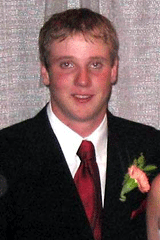
Ian Bush: mystery remains.
Linda Bush said she learned a disturbing lesson in the weeks and months following her son Ian's death at the barrel of an RCMP officer's gun in 2005: justice is not always served when the police investigate their own.
The message was echoed by lawyers, civil rights advocates and even the former chair of the commission that handles public complaints against the RCMP, at a forum on deaths in police custody yesterday.
They argued that B.C.'s current system, which allows internal investigations of death or serious injury at the hands of police, is one that breeds secrecy and corruption.
Until federal and provincial governments create an independent body to review deaths-in-custody, they say, the number of victims like Ian Bush will continue to grow -- as will public mistrust of law enforcement.
Following the 'script'
For Bush and family members of two other men shot and killed by police in the past two years, the mistrust began with the media releases that were issued immediately after their loved ones died.
"These claims are made immediately," said Bush, who remembers Ian being described as a "person known to police" who had "become very violent."
"It seemed pretty clear to us that conclusions had already been drawn."
"The script is written and everyone follows it," said Dolores Young, whose son, Kevin St. Arnaud, was shot by an RCMP officer in Vanderhoof in 2004.
"The script doesn't call for charges being laid, it doesn't call for culpability or accountability."
Ian Bush, Kevin St. Arnaud and Gerald Chenery, who was shot and killed by Vancouver police in 2004 and whose sister, Sylvia Fee, also attended the forum, account for a small percentage of men killed in B.C. by police in the past several years.
Robert Holmes, vice-president of the B.C. Civil Liberties Association, which organized the forum, said there were 11 deaths in police custody or pursuit in 2004. The following year, that number was 13. Last month alone, the association filed four death-in-custody complaints against the RCMP and Vancouver police department.
"We believe that in order to inspire public confidence, there needs to be as much civilian review as possible," he said.
"The system of police accountability needs to be changed."
'Fox in charge of chicken coop'
Currently, when a person dies in police custody or while being pursued by police, a team of investigators -- made up of officers from the same force or a different one -- come in to try and determine what happened. They provide the evidence used in a criminal investigation and coroner's inquest.
The Commission for Public Complaints against the RCMP is mandated to conduct reviews when complainants are not satisfied with RCMP handling of a complaint, but even it has no teeth, says the past chair of the commission, Shirley Heafey.
"I was told, contrary to my understanding and common sense, the fox was to be in charge of the chicken coop, and I would have to rely on the benevolence of the fox."
That's because the commission can't subpoena evidence or question witnesses involved in an RCMP investigation. It only has access to investigation material if the RCMP commissioner willingly hands it over.
It is possible to bring RCMP evidence into the public, said Heafey, if the chair of the complaints commission decides to hold a hearing.
"The hearing is an administrative tribunal, it's quasi-judicial," she said, adding that in the cases of Ian Bush and Kevin St. Arnaud, current chair Paul Kennedy "should be doing this," but isn't.
Police 'immune': Cameron Ward
Even if the RCMP did hand over all their information immediately, there would still be bias, real or perceived, in the way they and other police conduct investigations, said the Bush family lawyer, Howard Rubin.
He noted that after Ian Bush was killed, paramedics were kept waiting for 30 minutes outside the detachment. The officer who pulled the trigger, Const. Paul Koester, didn't produce a final statement until months later and even then the questions were pre-approved by his lawyer. The RCMP refused to allow a re-enactment of the incident, which, according to one blood-splatter expert, was impossible to have happened the way Const. Koester described it.
Despite this, there were no criminal charges laid, no blame assigned. Young's lawyer, Cameron Ward, said police are "immune from prosecution."
David Eby, who represents Fee, said he believes investigators provide officers with the answers they're looking for, instead of the truth.
In Chenery's case, he says the investigation was "half-hearted at best," and described many of the same flaws Rubin found in the Bush case; delayed interviews, missed evidence and a failure to re-create the scene.
"They didn't want to find these officers had done anything wrong," he stated.
Police told to change weapons
At a coroner's inquest, the goal is to find facts, not lay blame, but the civilian jury is allowed to make recommendations. However, police don't have to follow or even respond to those recommendations.
One recommendation that came of Chenery's inquest was the mandatory use of less fatal weapons before discharging a gun -- but nothing has come of it so far.
According to police, an officer is always right to shoot if they feel their life is in danger -- and the claim of self-defense has never been disproved despite any evidence to the contrary.
"It is incomprehensible that here in B.C. we have this wild-west mentality," said Ward. "There is a veneer of objectivity but it's not real."
Call for Special Investigations Unit
To maintain objectivity during an investigation, it's necessary to have an independent team on the scene right away, he says. He and others want a system of oversight in B.C. similar to the one in Ontario.
There, a special investigations unit of the province's Ministry of the Attorney General is on the scene immediately after a person dies or is seriously injured in police custody. It is independent from any one police service, although largely made up of former cops.
"The SIU owns the scene," said Andre Marin, Ontario's ombudsman and former director of the special investigations unit.
He said he believed change will come to this province; it's just a question of when.
"Hopefully sooner rather than later," he said. "Public policy today is that government's rule by crisis, unfortunately."
Which leaves Bush, Young, Fee and the families of other people who have died at the hands of police wondering when enough is enough?
"Until there is due process, police will not change their ways," she said. "Only with accountability will solutions be found and it may well start with training and recruitment."
Young and Fee also said they think there should be systematic changes with regard to how officers are trained to deal with the public.
"The law is supposed to be there to protect us but so many people are dying like this," said Fee. "Your brother, son, cousin, best friend could end up in the wrong place at the wrong time."
Related Tyee stories:
- Dead in Custody
TYEE SPECIAL REPORT: Did Vancouver police fail to save Roman Andreichikov's life? Or did they have a hand in killing him? The mystery may centre on a factor called 'excited delirium'. - Pain and Doubt Persist in Houston
Family suing to learn evidence used to clear officer in son's death. - Bush Inquest Grips Houston
B.C. man was shot dead in RCMP custody.


BaffleGabber
25-09-2007
Even "civilian oversight" is not actually done by civilians...
I applaud their efforts to secure civilian oversight of the RCMP, however, it should be noted that even our existing Office of the Police Complaints Commissioner (OPCC) is not truly "civilian".
The OPCC is mostly staffed by former police officers (RCMP) and they are in charge or investigating all police forces other than RCMP and military police in BC.
The Deputy Police Complaints Commissioner is a former RCMP member and as such it is still the police policing the police. Forces like VPD could not have a better arrangement - they will never be held accountable for any of their actions either as long as they have people from behind the thin blue line in charge of the OPCC.
Since the police already control the OPCC why on earth does anyone think they'd give up control of the over-sight of the RCMP?
cboo44
25-09-2007
Police and ex-police investigating police
Let's see, we want competent, objective, considerably experienced investigators to investigate complaints against police. Where on earth are we going to find people with knowledge of the law, understanding of the system and the flaws in that system that may be a contributing factor, to do this? Hmmmm ?
It is all too easy for those who have a personal agenda, as well as being ignorant of the process and the strict objectivity involved in an investigation, to make unsubstantiated charges against the people doing the job.
Investigators are trained and experienced in objectivity, they do not tolerate attempts at influence, they have the power and authority to prevent influence. They look for the truth. They are tasked with PROVING "the truth". Most times they really do find the truth, whether personally involved people want to believe that or not. Sometimes, as in criminal cases, they cannot prove guilt. It happens. Remember Air India ?
If people involved in police incidents don't want to die, perhaps they shouldn't:
1)Try and injure or kill police officers
2)Take or ingest substances that send them out of control
3)Take or ingest substances that stop their hearts
4)Instigate high-speed pursuits in order to avoid responsibility for their actions
Before climbing on the police bashing band-wagon, people should actually read ALL of the testimony given at the inquest into Ian Bush's death. In particular, the testimony of a good friend and drinking buddy of Mr. Bush. Some insight as to what he was REALLY like when boozing.
James Burns
25-09-2007
Quote:"Investigators are
This is utter baloney, and it flies in the face not only of commonsense but I suspect of statistical evidence gathered about police policing themselves. There is a direct and obvious conflict of interest. As a member of the organization being investigated, there is no way a police investigator can avoid being influenced.
It's also ludicrous to suggest the only people competent at investigating a crime are the police. Investigations, particularly homicides, always involve more that just the police. There is no reason a team without any police, yet who have crime scene investigation experience, perhaps consisting of a criminal lawyer, a forensic pathologist and a coroner, would not be just as effective as a police investigators.
Yes the police have a difficult job. But they should not be accorded any special treatment. Given the power the police have, not to mention the fact that there are well documented cases of individual police abusing that power, there is no way they should have the right to police themselves.
nightbloom
25-09-2007
I definitely support
I definitely support creating the capacity for independent policy probes everywhere....especially in BC.
Does anyone recall why the RCMP investigation into the VPD was called off a few years ago? This came up in conversation at work, and I couldn't recall the details: the RCMP was all set to open up the VPD from stem to stern after a surge in incidents of brutality and abuse of power....and then...nothing. Did the BC Attorney-General call it off--?
nightbloom
25-09-2007
ugh...police probes, not
ugh...police probes, not 'policy' probes...!
cboo44
25-09-2007
And yet, as the Ontario SIU
And yet, as the Ontario SIU is held up as an example, the very same accusations of "police influence", "police control" is being repeated ad nauseum in that province. "Common sense" or just sheep repeating conjecture? An independent civilian investigations unit has not solved anything. Reality is not some conjecture that some family lawyer has pulled out of an orifice at an inquiry. Cheap lawyer tricks don't count as "truth" and unfortunately some people don't want to recognize the truth, because it doesn't fit their agenda. A cop, under investigation, has the very same rights as you or I, in the same position, We don't have to say anything, we don't have to make a statement, period. We have the right to council and we have the right to prepare a defense against the suspicions against us, whether we are formerly charged or not. It is advise that most defense lawyers will give their clients, immediately. Somehow that is an appearance of guilt, according to the inexperienced observer.
And THAT is where an experienced investigator will ferret out the truth.
RickW
25-09-2007
Has anyone noticed.......
......that the number of gun killings (not by police) have gone considerably upwards, ever since the gun registry was brought into force? And it was noted (by a police officer) that accessibility to sophisticated weaponry seems to be getting easier and easier, just the opposite of the purpose of the Registry? Could this have a subtle effect on the police when they are faced by the possibility of being outgunned?
Add this too a certain deficit in training, because governments don't seem to want to allocate adequate resources. I am thinking here (as an example), the deficiencies of the CREST communications system in the CRD on Vancouver Island:
http://www.achannel.ca/victoria/news_45191.aspx
James Burns
25-09-2007
Of course police should have
Of course police should have the same rights as everyone else. That's the point. That's exactly why they shouldn't be investigated by other police. There is, as I've said before, a conflict of interest. When a doctor is accused of a crime, other doctors aren't the primary investigators. They may be consulted, but they don't get to decide if the doctor is charged. Of course malpractice is a different story, and again there is a case to be made that doctors investigating doctors are in a conflict of interest.
G West
25-09-2007
One thing that really troubles me of late
Is the tendency of police forces to move into areas of PR. I find it unsettling that the example of American forces calling press conferences to engage in spin has been picked up here in Canada too. Good law enforcement should need spin or promotion...
In the recent example of the murder/suicide in Oak Bay the local police chief has been spinning like Linda Blair's head in the Exorcist ever since.
Not that the Oak Bay and Saanich forces don't have a lot to explain...
Fogotwillingate
25-09-2007
Civil Remedies to Excessive Force
The Ian Bush family announced a wrongful death lawsuit.
Proving wrongful death would have to be based on the blood evidence. And Koester would be faced with plaintiffs who would use models to demonstrate that his story was fiction. Then there is motive. The notion that Ian Bush, who faced a $100 fine - to which he knew he had no defence - would fly into a homicidal rage is untenable. In contrast, cop-rage is real and endemic. All of us must have seen how cops react when their perceived authority is challenged. I suspect - and it is subject to proof in court - that Bush and Koester had words, and Koester lost it. Any arrested person, would want to get out of police custody ASAP. Cops want submission and abjection before they release someone. Personality entered into Koester's judgement. His tearful call on 9-1-1 reveals so.
Those of us who do NOT deny inherent cop-rage, should recall a key piece of available evidence that the Coroner (100 days of training makes you one) whitewash missed. The security officer at the arena where illegal drinking went on had to take off the next day because she was so upset after a senior cop berated her over the illegal drinking. However, Ms W wasn't guilty of anything; Ian Bush and friends brought in liquor from a neighbouring apartment building, after the landlord complained of noise. Cops created a volatile atmosphere by going into a tangent over mere civil violations.
Other than giving joke names, Bush co-operated with police, supplying his ID (his wallet was found on the floor of the station) and complying with the arrest. General chest-beating by cops might have given the subordinate cops an indulgence to use excessive force.
By the way, it is NOT Obstruction of Justice when someone gives false information to cops. They have to have a clear intent, and present ability to defeat justice. Initial non-compliance does not found clear intent. And, the fact that Ian Bush carried wallet ID, negates present ability.
I hope the Bush family wins. I hope their lawyers don't conduct a long trial like the Kvello-Miazga matter in Saskatchewan. Over 14,000 pages of documents arose out of that event. Cop-rage + inculpatory blood evidence + lack of air of reality in defence = Victory
As Law Reform Commissioners found: arrest must be a last resort. We are at liberty until we do something that warrants constraint. Only in a tyranny can cops get away with excessive force.
Fogotwillingate
25-09-2007
Cops v Their Wage Payers
Someone inquired about statistics on police substantiation of complaints against their own. In 2000, Toronto Police Services contracted an external audit of their public complaint system. Auditors found: of 814 complaints only 12 were substantiated, and 3 of those resulted in actual punishment (usually days without pay; letters of reprimand and caution are not punishment).
Cops sandbag complaints by use of coverup, whitewash, smear and plant (falsified accounts). Cops approach complaints with the posture: non-cops are liars. We hardly pay them for that.
RickW
25-09-2007
Seems we are well and truly.....
......heading the way of the banana republic...........
aftermath
25-09-2007
Police investigations
It is unfortunate that the Police are so afraid of investigations by independent third parties. The fact that they are is all the more reason to ensure the system is in place.
I lived in Toronto when Allan Sparrow and John Sewell were interested in getting independent oversight of complaints and was shocked, on moving to BD, to find out that there was nothing like that here. Ontario's and Toronto's systems may not be flawless, but they tend to keep the police more aware that they are there to serve and protect, not take the law into their own hands.
snert
26-09-2007
Drunken Rage
Fogotwillingate
The notion might become more tenable if you substitute drunken for "homicidal".
I'm afraid Mr Bush was the author of his own demise, maybe not like 'suicide by cop' but by misadventure for sure.
FWIW I don't think either party wished to kill the other.
Bailey
27-09-2007
Dear snert
I'm sorry to disagree. I know you wish only to believe the best you can of people, and that is very understandable.
But Mr. Bush was locked in a room with an armed officer, and he had no reason to be there. He was supposed to be getting a ticket and a ride. While in that room somebody pulled a gun, engaged in physical violence suggestive of fearful resistance or some kind of intimidation, maneuvered until the gun was in a position, aimed. Then pulled the trigger.
This is not an instant in time, this is many seconds, maybe minutes during which it's quite clear somebody wished to kill somebody.
Misadventure? The gun was drawn, that indicates premeditation. I think whoever drew it committed a crime.
Fogotwillingate
27-09-2007
Who was drunk?
Ian Bush wasn't drunk. His group was hanging about an apartment complex, when the landlord told them that he had noise complaints. Those who were drinking took their spirits to the Arena parking lot, where RCMP officers decided to issue tickets. If Bush had been drunk, a second officer would have assisted in taking him to the station. Again, other than the little bit of goofing, Bush complied with the law.
It is against the occupational-culture of cops to back down. Whether it is legal or not; they exact punishment against their targets.
snert
27-09-2007
Dear Bailey
Believe what you will. Neither of us will ever know for sure. Mr Bush started the walk down the path to his demise when he decided to become uncooperative.
The question that will never be answered is just who wished to kill who. Further, the only thing that is clear is that somebody died.
There appears to be a small group of people who are in a state of denial just because they have a hard time dealing with the fact that someone can do something really stupid and wind up getting killed for it.
Why is it so difficult to understand that you just don't get involved in a physical conflict with a person carrying a gun as the gun might just go off.
All that being said the Coroner's report came out with several recommendations to prevent similar incidents. Relieving police of their guns was not one of them.
Fogotwillingate: Sorry, I'll rephrase that. Bush had been drinking. I.E. alcohol was involved. Now, what explanation do you have for Bush's behaviour that precipitated his trip to the cop shop? If it wasn't alcohol just what was it?
Bailey
28-09-2007
There you go again
Once again I'm sorry to disagree. Your good wishes are clear, but your version is not consonant with established fact.
It is only arguable that:
if a; he was in fact uncooperative, and
b; that was a summarily capital crime.
The path he walked was into a copshop. Doesn't seem that uncooperative to me. You don't have to cooperate with a cop in this country unless he's behaving correctly, and even then only in certain well defined circumstances. He went with the man whose gun was soon to take his life, how exactly was he failing to cooperate?
And how would that have been worthy of death? In a copshop with help a single room away?
Second, you say:
Again, not so. That question has been answered, by the survivor of that encounter. A police officer. Very reluctantly, and very late. And apparently, the answer he gave is not even remotely borne out by the physical evidence. Blood spatter photographs and forensic recreations are cited. Certainly the Bush family is not satisfied with his answers.
Why are you?
snert
28-09-2007
Because the is no convincing.....
evidence otherwise, blood spatter aside.
Why are you?
BLONDE PITBULL
29-09-2007
hmmm....
Evidence doesn't lie people do...
Bailey
29-09-2007
These are not rhetorical questions
Dear snert; My questions need to be answered.
There is other direct and indirect evidence to explain as well.
Unexplained marks of violence on Mr. Bush's body. The lack of bruising or marks of violence on the body of the officer to substantiate his already very suspect testimony. Marks that must have been there if his story was true. The clearly intentional attempts to destroy evidence and keep qualified investigators away.
The police have the knowledge of procedures to tell them how to collect evidence, or destroy it, and their actions which led to the loss of evidence need to be thoroughly explained. And answered.
Please. Why do you find the evidence unconvincing? Blood spatter is physical evidence, and it says convincing things. Injuries and the lack of them are physical evidence that speaks loud of events.
Physical evidence not only denies the possibility of some versions of events, it also strongly suggests what actually must have happened. All jurisprudence, even rule of law is based on this important truth.
In recent years our police forces have been showing increased signs of becoming a closed culture, seperate from the society at large. Like an occupying army, they treat the people of this country like lesser beings, over whom they hold great power.
This is not only a Canadian phenomenon, but we have had reason to be proud in the past, to be the ones asked to teach other countries in distress how to do policing right. To train others in the world about duties, rights and proper procedures.
I truly hate to see that excellence ruined like this. It's such a sad thing, and avoidable. We really must do better. And the way to do better is to absolutely demand the truth from our police. If this case is not pursued, we will have lost a piece of our national soul.
I don't care if stupid people get out of control. We're all of us human. It tarnishes nobody but the poor fool himself.
I care very much if anybody thinks that's OK, and that the laws don't apply to them.
snert
29-09-2007
Thank you. Bailey
For the double headed coin.
I don't care if stupid people get out of control. We're all of us human. It tarnishes nobody but the poor fool himself.
Bailey
29-09-2007
So, you insist on this version?
Regardless of the evidence?
You intend to offer no answers to the real and important questions your theory raises?
To hold to a theory refuted by good evidence speaks of prejudice or vested interest. Either or both will prevent you from finding the truth.
snert
30-09-2007
Your words, not mine.
They just seem to work both ways.
FWIW my mind is not made up, just not as convinced as yours appears to be.
Your words again.
You appear to have all the answers at least to your questions but also appear to have closed your mind to other questions that may be asked.
The problem with the blood spatter evidence is that in and of itself it does not explain everything. It doesn't even come close.
I don't know if you have ever undergone an adrenalin pumping traumatic event but when that rush starts to kick in there is no predicting what can happen up to and including not remembering the exact sequence of events. You tell me who it kicked in on first. If you can answer that question then maybe your rose coloured glasses are better than mine.
I think you may be having a problem acknowledging more than one victim in this tragedy. In your mind, it would appear, only the person who appears to suffer the most can be deemed as such. Circumstance created the second victim.
Obviously you have used the evidence presented at the Coroner's Inquest to reach a rock solid conclusion of absolute guilt with no extenuating circumstances even though the inquest is not to be used for that purpose.
I guess we never will know exactly what transpired. There will be no criminal trial where evidence could be challenged more thoroughly and of course the burden of proof is much less in the up coming wrongful death suit.
Once again, your words.
Every day hundreds of people get busted for all sorts of offences. Nothing seem to happen to them. It appears that someone really has to work at getting them self killed for a relatively minor infraction.
In this case maybe Darwin wins again.
Bailey
30-09-2007
Thank you for responding
I hoped you would expand and support your position.
My problem is not with any particular event. I don't know the Bush family, or the officer involved.
My problem is with a growing incidence of irregularities that seem to stem from an attitude being imported from the US, where policing, never terribly principled, has taken a frightening turn in recent years.
We've been better than that, by and large. I have to wonder if we still are. Mr. Bush was in a station, where more than one officer would have been available to sit on him no matter what his behaviour.
There was a piece here some time ago in which a lady, for having the temerity to approach a policeman on perimiter duty at a domestic disturbance, was taken without charge, subjected to a strip search in a way that strongly suggested it was to teach her to fear them. She took it very badly, felt sexually intimidated. No charges were ever contemplated against her, and after her ordeal, she was released. The officer in that case stole film that might have been evidential, and destroyed it.
There have been suggestions that police were given evidence in the missing women case that's in trial now, but refused to pursue it. Time after time we read of beatings and deaths at police hands. And the police close ranks to "investigate" themselves.
They rarely find any fault. It is a very disturbing trend.
These are trained and equipped people, working in teams. They have every right to protect themselves, and you're right, one never knows for sure what happened in any case, except by evidence. But these ought to be very rare occurrences, and more and more they are becoming the commonplace.
People are dead or damaged, who had every right to expect to be protected. It is not a capital crime to tell a policeman to behave himself, or ask him to explain himself. Even if he doesn't like it.