


News

Dr. Sustainability

UBC’s John Robinson on fixing the climate, winning converts, and staying upbeat.

By James Glave, 6 Jun 2006, TheTyee.ca

CIRS John Robinson

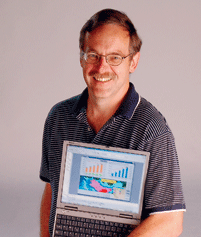
Robinson: ‘Stop guilt-tripping.’ Photo by Kent Kallberg.

Even as Stephen Harper backs away from this country's greenhouse-emissions targets, the backhoes are warming up near an abandoned tractor dealership in Vancouver. There, on the edge of the CN rail yards, far from the corridors of Ottawa, workers are preparing to break ground on what may well end up the most advanced building in the world -- a bleeding-edge lab dedicated to sustainability research and, by extension, the challenge of global warming.

When completed in 2008, The Center for Interactive Research on Sustainability, or CIRS, will be one of the greenest structures on Earth. The structure will draw 80 per cent less energy than a comparable new building. Eventually, it will act as a net energy producer, feeding juice back to the grid. The place will actually improve the local and global environment -- simply because it exists.

If CIRS performs as expected, the concept will be cloned and adapted to a variety of conditions and cultures all over the world. Think of it as the ultimate export-ready "made-in-Canada" solution to the single greatest crisis facing civilization to date.

Recently, The Tyee sat down with John Robinson, a professor at the Institute of Resources, Environment and Sustainability at the University of British Columbia, and a principal investigator with CIRS. Here, some excerpts from the conversation:

On Ottawa's apparent Kyoto reversal:

"Backing away from Kyoto sends exactly the wrong signal about the Canadian position on climate change. Addressing climate change seriously will require an unprecedented societal commitment, which needs to be led by the federal government. There is no sense at all that the Harper government recognizes the seriousness of the issue, or the unprecedented opportunities it presents for contributing to a more sustainable world that is simultaneously more environmentally, socially and economically viable."

On why we need to get regular people talking about global warming:

"Politicians can’t act without constituents, and markets can’t deliver without customers. If we don’t engage citizens at a level that has never been done before, we are not going to lower greenhouse-gas emissions, because the politicians won’t be able to act -- they will be cut off at the knees. Having lunch with the deputy minister and convincing him that we need to act now is great, but without the constituency, you’ve got nothing."

On the best way to coax us out of our cars:

"We should stop guilt-tripping people, stop telling them that they are putting three tons of carbon a month into the air with their cars when they live 40 kilometers from work and there is no transit. That actually makes them more resistant to change. The way you get behaviour change is through integrated programs aimed at behaviour, not just people’s heads. There is a lot of work in health promotion -- in anti-obesity campaigns and breast-cancer screening and anti-smoking campaigns -- that shows the way to much successful behaviour-modification programs. We should learn from those."

On why crisis doesn't always spur action:

"Crisis induces a hunkering-down response -- a bunker mentality. It doesn’t induce creative innovation and huge change. If you look at the social democratic policies like welfare and unemployment insurance -- any of those polices that are trying to even out the highs and the lows -- those policies always get instituted during periods of prosperity. When people feel a little bit of ease, they are willing to invest in things that are long-term. You have to make use of the time when it isn’t a crisis to build capacity."

On how building inspectors might save the world:

"If I convince you to retrofit your house for energy efficiency, you can save maybe 50 per cent, but you have to do this approach person by person by person. Getting the building code changed, on the other hand, changes every single new house. The costs wouldn’t be noticeable. If you are paying five or six hundred thousand for a new house, how much more is it going to add to make it energy-efficient? Potentially nothing, depending on the design, but say it’s a couple of per cent, are you going to see that? The bathroom fixtures cost more than that. If the building code changes on every single house, or if you can’t sell your house without putting a label on the door and showing what the operating costs are, and having some minimal retrofits done, then the whole market changes."

On what keeps urban planners up at night:

"The population of the planet in 2000 was six billion, in 2050 it will be nine billion. There will be three billion more here on Earth, and every person added to the planet by 2050 will be living in cities. Former B.C. premier Mike Harcourt called it the “urban tsunami.” Almost every major city around the world is going to double in size in the next 45 years, and we have got to get some of that new construction done right or we get into way more expensive retrofits after more damage is done."

On the fastest way to seed the suburbs with front-loading washing machines:

"Say it will cost you $5,000 or $20,000 to retrofit your home for greater energy efficiency. Well, guess what? You don’t have that money. But say your power utility comes to your door and says, 'We will retrofit your whole house for maximum energy efficiency, and the costs will come out of the savings on your monthly bill, so your bill never changes.' And ultimately, after, say, five years, the bills go down as you pay off the retrofit. That’s how you bridge that gap."

On why boring public infrastructure trumps sexy hybrids:

"The kinds of behaviour changes we need are not so much individual as collective. It’s the rule changes: the building codes, transportation infrastructure, transit, urban form -- nobody makes those decisions as individuals. That’s why we need to support these collective policies -- they are more important than, say, buying a smaller vehicle. If we just focus on the individual behaviour we miss all the big items."

On the 95-year weather forecast:

"We are not on track even for Kyoto, which is a tiny fraction of what we need to do to stabilize atmospheric concentrations of CO2. We have to start doing all this way faster -- almost unimaginably faster -- if we want to get, say by 2100, to a world with an atmospheric concentration of 450 parts per million or less. All the recent science is much more disturbing than it was two years ago. Everything that has happened in the past 24 months has made things look way worse."

On Canada's forthcoming climate-change strategy:

"There is no sign that the government intends to develop programs that will have any significant impacts on emissions reduction. Failing to recognize the problem in principle would not be so bad if there was serious intent to replace a Kyoto-oriented approach with a non-Kyoto approach that was intended to do more on the ground than what it replaced. Heaven knows we have continuously failed to take any significant action on this issue since it emerged on the international scene in1988, so the bar is not high. But the evidence so far is that the feds are simply slashing all existing programs, with no sign of anything else to replace them."

On why you should have yourself a nice day anyway:

"If you don’t have any optimism, why bother? There is an irony of history that we always seem to figure out a way to do things at the last minute, and we are at that last moment in terms of certain consequences. Mother Gaia doesn’t care -- not at all. The cockroach future is fine for her. So it’s us. Is that the world we want? That is why I am pouring so much effort into CIRS -- that is a real, practical thing. After all these years of giving policy advice to governments, now I feel like I have to actually go out and do something."

James Glave (james@glave.com) is a writer living on Bowen Island, B.C. He blogs about climate change and sustainability issues at The Big Melt.

Related stories in The Tyee: Caroline Dobuzinskis lifted the veil on the CIRS eco-lab, Donald Gutstein exposed the climate change denial lobby, and Matt Price wrote a four-part series challenging Canada’s environmental movement to do some serious rethinking.  [Tyee]

39  Comments:

Login or register to post comments

  • Jack's

    7 years ago

    Comments on "Dr. Sustainability"

    There is one way that everyone will benefit from and possibly even bring the cost of gas down in BC.
    And we can do it starting today.

    Turn your gas or electric water heater off at night when you go to bed - and light it the next morning. And, when you go on vacation turn it off.
    Most water heaters have ample heated water to shower the next morning and if not, it only takes about 15 minutes to bring the heat up to normal after turning it off.

    Sure it's a bother, but only a minor one - and you're guaranteed a saving of at least $400 per year, probably more.

  • jesterjogger

    7 years ago

    The wealthy elite(corporate polluters, their phony think tanks and political toadies), who are well aware of all of this, think they can ride out the coming storm in their gated communities hiding behind ever more brutal layers of armed security.
    That may stop people from getting in but it won't put food on the table or stop the weather, man.

  • Fiat lux

    7 years ago

    Living out in the boondocks we use propane for cooking and for water heating we use a Bosch water heater that goes on when the tap is turned and stays open as long as the water flows then shuts itself off.

    This way we have unlimited amount of hot water on demand and only the pilot light is on when the water is not running, which is probably 99.8% of the time.

    Ed Deak, Big Lake.

  • murdock

    7 years ago

    Best advice of them all on this subject:

    Quote:
    After all these years of giving policy advice to governments, now I feel like I have to actually go out and do something.

    Stop trying to force others to heed your advice and adding more hot air to the discussion, take action and show those whom you would convince how to do it.

  • jesterjogger

    7 years ago

    Get a canvas shopping bag and never use another plastic one.
    Re-use smaller bags from bulk food sections over and over again.
    Turn off thermostats from April til September (or longer!)
    Ride your bike as much as humanly possible.
    NEVER make frivilous car trips.
    Install enegy efficient devices throughout your home.
    Recycle everything that you can.
    There you've just made the one ton challenge!!

  • Gloomy

    7 years ago

    I was about to retrofit my home with new windows etc. when Mr. Harper slashed the incentive program.
    For many of us, that extra help would have made the difference between improving the effeciency of our homes, or just keep using more heating fuel.
    Many of my neighbours resort to burning wood they salvage from the saltchuck, thereby creating more toxic pollution.
    So, while each individual can and should make a difference, i would say that we depend on leadership at the top to put things within the economical reach of many.
    Meanwhile i find it offensive that we all pay extra to have more fuel-effecient vehicles, while billions of liters are used by racing vehicles just to entertain the crowds.
    Fuel effeciency and racing are not compatible!

  • Fiat lux

    7 years ago

    The worst pollution and biggest energy waste is our present, warped, stupid and fraudulent economic system of "the economy of numbers and size", and the resulting forced urbanization, commuting and collectivization. What people don't know and governments would never dare to mention, is that those desired "numbers" demand hugely increased energy inputs.

    When people are replaced by machines, not for economic, but for monetary purposes, the energy inputs and the resulting reactions and pollution go sky high. Look at the vastly increased input demands when workers are replaced by automation to divert their wages into the pockets of the artificial entities of corporate shares.

    Country people use fraction of the energy demands of city dwellers, except when they have to commute to useless jobs that could be done in their communities, but are concentrated in corporate hands not for economic, but collectivization and profit reasons. People in this community have to commute 100 km return trip every day to useless and needless office jobs that could be done in their own homes with our computerized systems.

    As long as we're living under the deadly constraints of this crimninal, feudal economic system, the above energy savings measures are no more than hopeless kiddie games.

    In agriculture, the pollution, energy waste and damage caused to the environment and humanity by Green Revolution corporate farmning are incredible, yet supported and forced on by governments to destroy the family farm, again on corporate profit demands, poisoning people with chemically soaked junk foods.

    Ed Deak, Big Lake.

  • The brain

    7 years ago

    Our current federal government is completely rudderless when it comes to any kind of environmental energy policy. In the past, we had homeowners grants for insulation. Remember that one? Remember how critisized it was when the Libs came out with it? Anyone care to look at the math in terms of how many billions of dollars saved in terms of efficiency and pollution are concerned? Bottom line is it worked and we need another like it this time, with thermal loops.

    Thermal loops should be able to reduce the costs of heating most homes in Canada by as much as 50%. It works by absorpsion of heat below the frost level in the ground and stabilizing air to 45 50 degree F levels. From there, we need to get away from heat to air exchanges in exchange for heat to water to air exchanges instead. They are far more efficient and will always be. The savings from heat to water to air are in the neighborhood of 100 to 150% savings on most current gas bills.

    Its high time that ANY government brought in programs to reduce heating of homes with geothermal loops and conversions to heat to water to air furnaces. Grants and low interest loans are the way to go, instead of watching war mongers like O'Connor blow 8 billion on Bush's major shareholder lead war. If we act now, we can meet Kyoto targets at least on a domestic level while waiting for big business tech spending (enforced by Kyoto, of course) to come up with solutions instead of propaganda. To this end, Kyoto can and should be honored in this country.

    Its too bad we are completely rudderless in terms of leadership in this country.

  • jwstewart

    7 years ago

    Ed;

    You have purportedly "discovered" what is claimed to be a vastly superior economic system to the one you have just chastised.

    With all due respect, would not publishing this possible alternative be preferable to continued scathing condemnation of the present system ?

    Also, protecting the information via copyright, isn't that subscribing to the existing economic dogma of intellectual property ?

    I'm not trying to offend, merely that
    inquiring minds want to know.

  • jwstewart

    7 years ago

    Mr. Brain

    The "economic" (sorry Ed) payback on a geothermal system is about 5 years. There is really no need for government incentives or low-interest loans.

    Anyone who owns a building suitable for such an installation should also qualify for normal financing.

    I was recently quoted industry avaerages of about $2000 per ton for the unit and $1500 per ton for loop installation. It is not out of reach for most homeowners.

  • cocean

    7 years ago

    Individual citizens can do - and are beginning to do - a lot, but industry is by far the biggest polluter. Politicians and governments work to divert people's attention from that fact, by playing hard on our collective guilt and sense of responsibility. Oh, were smog-spewing corporations to be so targetted!!

  • Malahat

    7 years ago

    There is one way that everyone will benefit from and possibly even bring the cost of gas down in BC. [...] Turn your gas or electric water heater off at night when you go to bed - and light it the next morning.

    If we stand to save $400/year, surely that'd be an incentive to the companies who manufacture hot water heaters to build in a timer that does this automatically. I'd buy one!

  • Cycling Commuter

    7 years ago

    Fiat lux wrote:

    vastly increased input demands when workers are replaced by automation

    In many cases, automation REDUCES resource consumption and waste. Here's an example:

    When the Delta Recycling Society (DRS) and CUPE ran the curbside recycling program here in Delta, 11%-15% of recyclable material was dumped into landfill. After the municipality declined to renew the DRS/CUPE contract and awarded a new contract to Metro Materials Recovery, the throw-out rate plunged to only 2%-5%. The new private contractor has the same number of employees, processes 10 times more materials, and does a much better job of it. This is largely due to the private recycling corporation's investment in automated recycling equipment.

    Some people will complain that automation has reduced the number of recycling jobs by 90%. In reality, it means we can have a 1,000% increase in recycling activity with the same number of workers. Let's not forget that we have a very low unemployment rate.

    As a further benefit, when CUPE/DRS was doing our recycling, Delta taxpayers had to subsidize the operation to the tune of $250,000 per year. After the new private contractor took over and applied recycling automation technologies, instead of squeezing a subsidy out of Delta, they actually PAY the municipality almost $400,000 per year for the right to recycle our stuff. Now that's sustainability!

    See: http://www.delta-optimist.com/issues04/014204/news/014204nn1.html and http://www.delta-optimist.com/issues06/021206/news/021206nn4.html
    and http://www.delta-optimist.com/issues04/015204/news/015204nn2.html

  • Fiat lux

    7 years ago

    jwstewart....

    First of all, the copyright was for the purpose of establishing the date and not for any income purposes. Anybody is free to use it.

    We have discussed this matter for years, so I have no intention of repeating the whole thing over and over again, just because some haven't read it .

    There's no new theory, or any invention, only realization of the fact that the only acceptable form of economic efficiency is the supplying of the needs of the largest number of sectors with the least amount of energy/resource inputs.

    There's no such thing as monetary efficiency, especially with freshly made, imaginery money created by a bank to take over the resources, properties and lives of others.

    Also, because monetary values are not realities, but often violence induced temporary perceptions.Which means that the currently used and taught form of economic efficiency is a fraud, because it relies on the increased waste
    of resources and energy, converted into profits.

    The only form of efficiency is physical, or engineering efficiency, defined in dictionaries,e.g. Funk & Wagnall, as "The ratio of work done or energy expended to the energy supplied in the form of food, or fuel".

    Which means that human labour doesn't cost anything to an economy, because it exists and its survival needs are established human rights, protected by thousands of laws. Except against the expropration of properties and exploitation by their so called "betters", who just borrowed some freshly created inaginary money to kick them out of their jobs and homes.

    Figure this one out.

    Since Preston Manning raised his skull and crossbones flag, the so called "conservatives", now repeated by Harper, are pushing for the inclusion of property rights into the Canadian Constitution. The problem is that those rights, the USA is a good example, are always used by aristocracies to expropriate the properties of others. Even its original intent was the legalization of slavery, in other words, the extinguishment of the property rigthts of certain people. This is not any form of "efficiency" yet accounted as such by economists.

    Ed Deak.

  • Fiat lux

    7 years ago

    cycling...

    Of course, you're right, there are thousands of jobs that can be done more efficiently by machines, I buy all the air and electric tools I can afford, and we can't go around sharpening needles by hand.

    The kinds of automation I am talking about is when each worker is replaced by huge extra energy inputs and their wages are taken for profits and for no other reason, only to get rid of them.

    This is not efficiency, but theft, and each case must be examined and determined on its own merits as life and energy savers, but it has to be done by democratic means and not by special interests for their own benefit.

    E.g. To the best of my knowledge, the car and oil industries played great role in the dismantling of puplic transport systems and I can remeber well, when thousands of km of railways were torn up across Canada on the claim that "road transport is now more efficient". We can now see the results of this kind of "efficiency"

    Ed Deak.

  • Colin

    7 years ago

    Brain

    I see applications for Geothermal loops all the time, they are a good idea. I have brochure on my desk for solar power, but might instead do a solar water heating system. I worked on passive solar houses years ago and a lot of the modification required are fairly simple if done at the design stage, retrofitting a house is a bit*h.

    Was just looking at one of the electric bicycles down in our lobby, current weight is a 100 lbs, but they are promising a lithium battery in a few months, hopefully they will have one to rent so I can try it out, the hill by my house is 22° steep, don’t feel like pushing it up that.

    As I mentioned before, most of the roof tops here could easily take a green garden on top, reducing CO2 and runoff without much work. I saw a lot of the “green programs” here at work as fluff, seemed to be used more as a way to be noticed by management than to affect anything connected to the environment. I am not sure what exactly has been cut in the way of “green” programs but they seems to have lots of money to spend judging by the activities taking place in government buildings.

    I am willing to bet that most CPC MP’s would take kindly to incentive programs that rewards houseowners, builders and business owners. I suggest writing to them pushing the idea, since they will be looking for something in regards to the environment.

  • Colin

    7 years ago

    Ed
    My dad was hired by one of those programs funded by GM to tear up the street car tracks, working with a jack hammer all day convinced him to become a doctor.

  • Cycling Commuter

    7 years ago

    jwstewart wrote:

    payback on a geothermal system is about 5 years.

    I assume you're talking residential here. The payback period for offices, schools, etc. is much shorter. Accoding to an analysis at http://kanata-forum.ca/heatpumpmarkets.pdf the payback period for an office is under a year. This website is run by a former nuclear industry researcher who points out that geothermal is far cheaper and more reliable than nuclear. Geothermal payback periods would be even shorter still if dirty energy technologies were required to pay their full real cost instead of being heavily subsidized in various ways.

    All the same, a 5-year payback period for geothermal is a whole lot better than a 40-year payback period for a hydro dam. There would be a 100 year or more payback period for hydro dams if we took into account destruction of salmon, health costs of spraying Agent Orange type herbicides under power transmission lines and so forth. Same deal with coal and nuclear if you take into consideration costs of health damage, environmental damage, risk-management and elevated security needs.

    Imagine the health/environmental/economic damage that could occur if crackpots explode a 3-tonne ammonium nitrate bomb in a truck adjacent to a nuclear power plant. Imagine the massive cost of maintaining an army of heavily-armed security staff around each nuclear power plant. The recently arrested bomb plotters were brought to a police station in Pickering, home of one of Canada's biggest, most unreliable, least cost-effective nuclear power installations.

    There is really no need for government incentives or low-interest loans.

    True enough. We don't need to subsidize clean energy so much as we need to STOP subsidizing dirty energy and STOP taxing clean energy. The federal liberal subsidies for insulation were very inefficient, with 50 percent of funds being wasted on administration. When mortgage rates spiked in the late 1970s to early 1980s, the government offered a bureaucratic partial mortgage rate stabilization scheme. Some family members received about $50 in cheques through this scheme. But when they sold their house, they had to pay a lawyer a couple of hundred bucks to do all the paperwork involved in paying-off a tiny government 2nd mortgage related to this interest rate stabilization scheme. And they probably had to pay thousands of dollars in taxes elsewhere to cover the cost of all the government bureaucrats hired to run the subsidy scheme.

    Instead of convoluted, inefficient bureaucratic subsidies, it would be better to just remove sales taxes and property taxes on all energy conservation technologies and make up for the tax shortfall by reallocating the money currently wasted on subsidizing dirty energy technologies.

    It's insane to charge ongoing municipal taxes on energy-conserving aspects of buildings. The provincial cutoff in the property tax exemption (so-called home owners' "grant") is even more counterproductive. Someone who builds a large new home without energy conservation features might squeak-in under the grant limit and receive the grant. Another person across the street building exactly the same home might decide to add energy conservation features, pushing the property value just over the exemption limit, subjecting them to complete loss of the homeowner grant. This is a really, really stupid and destructive tax policy.

    I'm all in favour of squeezing more money out of the mega-rich, but if rich people want to live in mansions, I would prefer to see them living in geothermal/solar floor-heated mansions with their hot tubs being heated by evacuated tube solar collectors. I'd rather squeeze more money out of them through other means, such as increased taxes on land owned in excess of that required by a family to grow their own food during hard times.

  • gkam

    7 years ago

    We did all this 25 years ago in the States. After doing an MS thesis for a 3000-head dairy on the integration of alternative energy systems (my system, using off-the-shelf components, made cattle feed supplements, 160-proof ethanol, fertilizer for growing feed, while generating electricity for sale - and it all ran on the cow manure which had been polluting the Snake River at the time.

    Unfortunately, Reagan was inflicted on us, and all the federal programs were emasculated or completely discontinued:We were in the business of nukes (both power and weapons-related). The system never got built. Reagan and Congress shifted all subsidies to business, and an increase in milk price supports made it much more profitable to produce all the milk possible. The milk was turned into cheese, stored in refrigerated government warehouses, then dumped into the ocean a few years later.

    In 1980, with Jerry brown as governor of California, I was hired by the power company (PG&E) to help our customers save energy, and used many of the emerging technologies mentioned above (ground water heatpumps and the like). I also encouraged use of other small-scale systems and we actively consulted with inventors and other technology-oriented players.

    The point? We had the know-how, the programs, the personnel, the opportunities in 1980 to do all of this, but were sidetracked by the Dubyaesque stupidity and corporate collusion of the Reagan years. Now we're playing catch-up.

    But a lot of rich people got a lot richer by it all.

  • gkam

    7 years ago

    To Fiat Lux:

    Don't buy air tools if you want efficiency. Compressed air systems provide great power in small tools, but have terrible energy efficiency.

  • murdock

    7 years ago

    The Brain laments:

    Quote:
    Its too bad we are completely rudderless in terms of leadership in this country.

    because the sea-to-sea-to-sea crowd cannot envision the efficiencies to be gained by making the decisions within a smaller catchment area. One where such things as environment matter more. One where the needs of industrial regions do not clash with resource ones and pull them apart (or simply dominate the discussion causing further damage).

    Efficency will win over power.

  • Colin

    7 years ago

    Good post CC
    I am all in favour of reduction of taxes on these types of goods

  • jwstewart

    7 years ago

    Actually, the only subsidy required is the legal kind. Make it illegal to sell new natural gas furnaces, after a certain date.

    Lets say that Jan 1, 2008 all new homes could not use "combustion" heat sources, and also retrofits to existing homes after 2010.

    Do you think this would be received well ?

    Full Disclosure: I own shares in WaterFurnace, WFI on the TSE.

  • Fiat lux

    7 years ago

    gkam...

    In the woodworking trades nothing can beat air nailers and staplers. I can put in 5-6, 3 1/4" spikes with an air nailer in the time it would take to hammer one in by hand, sometimes in awrkward locations and the compressor uses very little air. In carpentry they're now indispensable. The finishing nailers use next to none.

    I have to admit that for high quality custom furniture I would never use air nailers, or socket screws.

    There may be some airtools bad for energy efficiency, but for nailing I can't see it. Can you point out any ? I'm always interested to learn.

    One of the worst inventions, yet in worldwide use now, are the Phillips head screws. They must cost billions every year in waste of screws and screw bits. When I was in business, when we received any packaged hardware with Phillips head screws the screws automatically went into the rubbish bin.

    Ed Deak.

  • Gloomy

    7 years ago

    Phillips head screws.
    try Robertson head screws

  • Fiat lux

    7 years ago

    I'm an old pro, so what do you think we've been using for the past 50 odd years? The best screwheads ever invented. The whole world should be using them and in Canada the Phillips should have been outlawed long ago. I have Robertson screwgun bits going back 30 or more years, still working perfectly, but we sometimes wore out and thrown away two Phillips bits a day.

    Ed Deak.

  • woody

    7 years ago

    Here is a site out lineing the birth of the Robertson screw and also why it was held up in north american market, "hint there is an american connecton"

    http://www.mysteriesofcanada.com/Ontario/robertson_screws.htm

  • gkam

    7 years ago

    You're right about the efficacy of air tools, which is why they are so popular. I was speaking strictly about energy efficiency, which is especially important in large facilities with extensive compressed air systems.

    And the efficiency is not a percentage difference, it is many times more efficient to use electricity directly than to mechanically compress air and send it around the building.

  • john l

    7 years ago

    I'm cynical enough to think that a real problem in society is an increasing inability/unwillingness on the part of large numbers of people to think about any issue above the latest Jerry Springer show. Not long ago, here in Ontario, the government increased electricity rates to the tune of about $6/month and the howling from the "angry callers to talk radio" crowd was just silly. Between lazy and self-indulgent media types hoping to create a "crisis" and far too many folks doing the "I'm a victim" routine any attempt to have a rational discourse about energy conservation/global warming/ small sacrifice for the greater good of society simply gets lost.

  • gkam

    7 years ago

    John is, unfortunately, correct.

  • The brain

    7 years ago

    Quote:
    The "economic" (sorry Ed) payback on a geothermal system is about 5 years. There is really no need for government incentives or low-interest loans. - jwstewart

    The Cons said the same thing when federal grants were introduced to insulate homes. And since those grants were introduced, Canadians saved huge, even though home reno companies charged way to much back in the day to blow in cellulose. Trust me when I say it, this country needs a home energy program to further reduce greenhouse emissions.

    Murdock: keep it on the thread where it belongs. Your post has nothing to do with this story and is completely taken out of context. Try a little control.

    Colin: Your comments have impressed me. Didn't realize you were an environmentalist at heart, or maybe I just forgot (and yah, it saves money too :-)
    But the Conservative agenda isn't about saving energy or reducing energy costs to homeowners and landlords. Its the opposite and the sooner you recognize it, the sooner you'll see why it would be a waste of time, other than to put proposals in word form to current political parties who are more than willing to do something about it. The greens actually have it in their platform. The NDP could be persuaded. The Libs could be convinced if it helped to get them elected. But the Cons? Sorry dude. The only interests they want to further in the environmental debate are oil companies.

    Currently, the Cons are already hedging on one of their election promises and it has to do with bio fuel. They now want to kill it. Are you getting my point? They aren't the solution to the problem, here. Its the other way around. When you take a good long look at what is really going on in Alta Conservative country, you'll get it. Asking U.S. oil backed Conservatives to "conserve" on oil is like asking crooks to go straight, or Athiests to have faith. They are hardly, or will ever be known as an environmental party. Just watch Rona's actions and words, if you get my drift.

  • Gloomy

    7 years ago

    Quote:
    small sacrifice for the greater good of society simply gets lost.

    One simple sacrifice is to turn off your car engine whenever you run into a lengthy stop! Anything over one minute of idling is a waste, but then the sacrifice is that you will loose your heat or A/C (depending on the weather)
    Yes, life is tough!

  • Colin

    7 years ago

    Ed
    I fully agree, ban the Phillips screw!!!!

    I worked with a museum where we received a show from a US museum. The show was a piece of junk as were their shipping crates. When we repackaged the show to send back, we made sure we used Robertson screws!!

    I work on a lot of old British stuff, the quality of their fasteners is actually quite good, but they mainly used the flat bladed screw for everything, arrrrgh!!!

    Brain
    Actually since the majority base of the CPC is rural, you will find that most of them are actually low key environmentalist, they just do it and don’t attend rallies and such. A lot of farmers, ranchers and such are happily using solar, wind, geo-thermal and more are getting in on the new technologies that are coming. I know quite a few people that are using homemade bio-diesel already.

  • Colin

    7 years ago

  • Gloomy

    7 years ago

    Industrial pollution is one of our problems; for a change Gloomy has an upbeat story:
    The aluminum plant at Kitimat used to pollute badly, the trees on the hills downwind all died and the smoke/pollution from the potlines was the cause.
    When it became obvious something had to be done, the maintenance installed a filtering system on all the stacks.
    The unexpected bonus was that they recovered enough bauxite to more than offset the cost of the installation!
    Of course flouride may still be a problem, and to the best of my knowledge they are still trying to get the town to put flouride in the water "for the kids sake".

  • jglave

    7 years ago

    Hi all, just wanted to add one thing I left out of the interview, re: how to motivate people to alter their behavior and make more sustainable choices in their lives and purchases:

    The health-promotion model Robisnon and his team like was developed by a guy named Larry Green who used to be at UBC but who went on to work at the Centers for Disease Control in Atlanta. It's called the "Precede-Proceed" model. It says to get sustained behavior change, you first need the predisposition. People have to be inclined to act. You also need an enabling process -- a route for people to get from A to B. Finally, you also need ways and means to reinforce the positive behavior. Here's Green's site for those who want to dig deeper:

    http://www.lgreen.net/

    Cheers.

  • Jack's

    7 years ago

    Quote:
    One simple sacrifice is to turn off your car engine whenever you run into a lengthy stop!

    But way in the back of your mind you're wondering if your car will start again.

    However, there is one thing that can be done particularly at border crossings. Guards could allow groups of vehicles through rather than one at a time..... which would allow the waiting group(s) to turn off their engines.

  • electric_bicyclist

    7 years ago

    Didn't Albert Einstein say something like 'becoming a vegetarian is the best thing you can do for the planet'? I read a post in the Courier about eating meat is allegedly worse than driving an SUV.

    Like Dr. Sustainability, Solar Power Roadshow educates kids from 6 to 60 in a fun way about (what else?) the same warning that Al Gore say in "An Inconvenient Truth". Here's a link to photos of the Energy Fair at Lougheed Mall, in case you weren't there:

    http://sustainabilitymagic.blogspot.com/

  • jnewcomb

    7 years ago

    Changing the building code may be important, but past efforts at promoting energy conservation through building codes seem to have resulted in mammoth mistakes, including leaky condos. Related federal programs such as installing UFFI insulation and Zonolite that is often laden with asbestos is also generating costly problems. Indeed, the costs are noticeable - if we make mistakes!

    • No best comments selected by an editor for this story yet. To see all comments, click the All Comments tab, above.
    • The discussion for this story is closed. No more comments can be added.