- Ms Kaye is a Tyee Builder. You can be, too.
- Mary Carlisle is a Tyee Builder. You can be, too.
- Prem Gill is a Tyee Builder. You can be, too.
- Nancy Flight is a Tyee Builder. You can be, too.
- Justin Everett is a Tyee Builder. You can be, too.
- John Westover is a Tyee Builder. You can be, too.
- Nora Etches is a Tyee Builder. You can be, too.
- Edward Henderson is a Tyee Builder. You can be, too.
- Bharadwaj Chandramouli is a Tyee Builder. You can be, too.
- Dean Chatterson is a Tyee Builder. You can be, too.
- Marius Scurtescu is a Tyee Builder. You can be, too.
- Robert Parkes is a Tyee Builder. You can be, too.
- James Murton is a Tyee Builder. You can be, too.
- Susan Doyle is a Tyee Builder. You can be, too.
- Vincent Strgar is a Tyee Builder. You can be, too.
- Helen Spiegelman is a Tyee Builder. You can be, too.
- Subir Guin is a Tyee Builder. You can be, too.
- Kimball Finigan is a Tyee Builder. You can be, too.
- Joanne Manley is a Tyee Builder. You can be, too.
- David Leach is a Tyee Builder. You can be, too.
Interior Bus Riders Mad at Greyhound
Dropped run makes it harder to get to Vancouver.
Seniors made vulnerable?
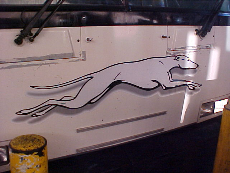
For seniors and many residents in small towns scattered across the southern interior, the Greyhound bus is a lifeline to big city services. That lifeline is fraying because the company plans to cut a key run from Rock Creek to Vancouver, say critics, who slam not only Greyhound but the Passenger Transportation Board, in charge of approving the change.
As a result, vulnerable seniors, some seeking medical attention, will be forced to roll into Vancouver's unfamiliar environs late in the evening, a fact that sparked angry comments from citizens at a recent Passenger Transportation Board meeting.
Greyhound plans to drop one of its two daily routes to Vancouver using Highway 3 going through Rock Creek, Osoyoos, Oliver, Penticton, Keremeos and Princeton. The company says ridership isn't high enough on the route to require two runs a day.
Greyhound Vice President of Business Development Brad Shepard says it is Greyhound's goal to make money. "Our goal is to not run any routes that are below break even," says Shepard. "It's not really acceptable to run a route at a loss."
Arriving late at night
The company wants to axe the early run to Vancouver, departing Rock Creek at eight in the morning, which would leave residents with one run a day.
"The one schedule carries more than the other and that's how the decision was made as to which one would be reduced," says Shepard.
What concerns many riders is that the second run doesn't get into Vancouver until 9:30 at night, or later.
"If you want to make a connection or some kind of an appointment, forget it, you're spending the night down there," says Princeton's Mayor Randy McLean, who is the local Greyhound agent in the town of 4,500. McLean is concerned for many of the seniors using the bus to make medical appointments in Vancouver. "Downtown Vancouver at ten at night is no place for a senior."
Petition ignored
McLean says numbers are down on the route because of poor scheduling. He says riders from the Kootneys are redirected north through Westbridge and Beaverdell, when they could just go straight through on the number 3 through the Southern Interior. He adds there's more than enough passengers moving through Kelowna to make that route viable, so it doesn't need any help from passengers coming from the Kootenays.
"Kelowna, Vancouver, Calgary, obviously you're going to have enough ridership," McLean said. "So why would you be switching passengers from the Kootneys, running them all the way up to Kelowna and down? When they could simply come through a populated area (Southern Interior) and serve those areas as they go through them and go to Vancouver."
Passenger services such as Greyhound are regulated by the Passenger Transportation Board. Spokesperson Michael McGee says Greyhound is obligated to provide service to the public and, in order to drop the route, has to apply to the Passenger Transportation Board.
Those opposed to the change accuse the Passenger Transportation Board of unfairly favouring Greyhound.
Another Greyhound agent, wanting his identity protected, says petitions against the change yielded hundreds of names, but their creators were told they wouldn't be considered in the decision by the P.T.B.
Meeting clampdown
Controversy also erupted in the town of Oliver when P.T.B. Chair Dennis Day demanded Oliver Chronicle reporter Wendy Johnson turn off her tape recorder 45 minutes into the discussion, when tough questions started flying about negative aspects of the changes.
Under Passenger Transportation Board rules, it can decide what devices may be brought into a hearing. However, according to Johnson, the Passenger Transportation Board's own advertisements had billed the event as a meeting, not a hearing.
"It was a public meeting," said Johnson. "It said so right in their own literature," Johnson was told by board members to turn off her tape recorder or leave. Johnson eventually turned the recorder off.
McLean complained that it was unfair that an attorney representing Greyhound was allowed to cross-examine any person standing up to point out flaws in the new plan. "I said, 'I am answering no questions from Greyhound,'" says McLean.
He says his protest was met with accusations of grandstanding for his mayoral run and because he owns the restaurant attached to the Greyhound station.
Board has yet to rule
McGee won't respond to the allegations of the Passenger Transportation Board shirking its responsibility to residents. "I can't talk about a specific meeting or event," he says. He added the applicant has a right to conduct a presentation, but made no comment on the cross-examination of those opposed.
As for the route change, according to McGee, while the board can set terms and conditions for a licensed operator, in this case he doesn't yet know if the Passenger Transportation Board will force Greyhound to keep the route or drop the other instead.
Shepard says the company can't please everyone. "It's not as convenient, but the demand warrants only one service a day," he says.
Jeremy J. Nuttall is a Penticton radio reporter and freelance writer. ![]()


24
Login or register to post comments
jjr
6 years ago
Comments on "Interior Bus Riders Mad at Greyhound"
Greyhound has applied to reduce service across much of BC, not just this one run in the Southern Interior. Here in the north they want to drop a run from Prince Rupert to Prince George, and from Prince George to Edmonton.
Fiat lux
6 years ago
This is part of the ongoing movement by big business and their bought and paid for economists and governments to depopulate the rural areas and force everybody, not absolutely necessary for the profit demands of big corporations, into the cities.
The long term plan is the destruction of the family farms, all smaller resource based industries, with labour camps filled with imported slave labour doing the extraction. The Fraser Inst. has had plans and publications for many years advocating the sale of all Crown lands, lakes and rivers for this very reason with food production taken over by agribiz multinationals. I saw an economist interviewed on TV good many years ago, who said: "We must subsidize farmers to get them off the land".
Neoclassical market economists have big problem with any level of self sufficiency which can be achieved by rural people, as it doesn't feed the corporate profit demands and the GDP. People in the cities are forced to depend on services provided by big business, who then can control the prices and with them the survival rights of people.
The big push by economists for globalization and specialization is for the purpose of making people and societies incompetent and helpless, depending on whatever is thrown at them by an international, corporate ruling class and this can be best achieved by jamming people into city highrises, as it is now going on in China.
Since the Campbell gang took over, the BC Interior has lost hundreds of thousands of people. The Cariboo School District # 27 estimates the average loss of 250 students every year. Which shows that the plan is working and Greyhound is part of the overlapping big business conspiracy that also controls most of our governments' decisions.
Ed Deak, Big Lake.
darcy.mcgee
6 years ago
It's a conspiracy. That's right. A conspiracy run by a triumvirate.
Is big business responsible for de-population, or responding to it?
It's hard to argue that Greyhound isn't responding to it. Their business is moving people, not employing people in a single area.
I think the biggest challenge facing British Columbia is the lack of population outside the Fraser Valley area. It's my view that there are three provinces here:
Vancouver and, to some extent, the valley.
This is where people work and live.
Whister
Where even the rich can no longer afford to live, only the stupidly rich. Whistler is a domain unto itself.
The Rest of BC
One large, very scenic retirement community. Kelowna had the lowest unemployment in BC for a while, but it was all houses being built for retirees. This is not a basis on which to build a long term functional economy, unless you consider serving chicken at Swiss Chalet to be the ultimate goal of your life. (I recognize that some may feel this way, and am not judging it. I don't think making $7 an hour for the rest of your life is a choice the majority of people would make though.)
skeptikool
6 years ago
I'm reminded of the sad situation with many railroads across this continent that received much public financing and real estate during their construction on the understanding that certain services be provided "in perpetuity".
I wonder what breaks from the public purse Greyhound and other bus lines have received.
If a 40-passenger bus consistently carries less than a dozen passengers, has Greyhound management not heard of minibuses?
Fiat lux
6 years ago
Of course, you're right that Greyhound is responding to the depopulation, but they're big enough to be part of the problem with the overlapping directorships among major corporations.
There's absolutely no reason why the rural areas should be depopulated and paying low wages. On the lumber side, 25-30 years ago the local mills were employing twice the number of workers, paying top wages and under individual ownerships. There were small mills all over the countryside and a large number of logging contractors. These are all gone. The mills have been taken over by a few major players, fully automated "to be more competitive", the small mills and contractors wiped out and wages in the remaining workplaces stagnating.
So, what did we get out of this "competitive market economy"? Prices went up 500 to 1000%.
A 2x 4 stud that used to cost .65 cents from the humanly operated mills now costs $5. from the automated ones. A sheet of $10. plywood now costs $60.
We keep hearing about "rising costs", without any rational explanation why costs are rising when people are eliminated and underpaid? Meanhile the CEOs of the multinational corporate mafia are stealing tens of millions from the public and their employees. In other words, the purpose of economic competition is to raise prices while lowering costs. Is this not a conspiracy?
Now, for instance, under BC Rail, there used to be 3 trains a day taking the produce of the Interior to the coast. CN cut them back to 1, while the roads are choked with big trucks replacing the transport capacity of the lost trains.
But, this all adds to the GDP, corporate profits and forced depopulation so that people can be more controlled, with their living costs increasing by the day.
Ed Deak, Big Lake.
Grumpy
6 years ago
fait Lux, you are dead right about CN Rail. Part of the Campbell & co. sale was to give the trucking industry no competion. Now how can a truck load of goods be cheaper to send by road, than rail from Prince George to Vancouver? How, simple - massive hidden subsidies to the road haulers. Example: road repairs etc. It's the trucks that do the damage, not cars, but the road haulers do not pay their fair share.
Campbell has given away the store and hidtory will show him as the most terrible premier we ever had.
dslim
6 years ago
All I have to say is: Kootenays not "Kootneys"!
BC Mary
6 years ago
Kootenay, please. Not "kootney".
2nd point: transportation companies usually try to set off the excess profit from busy routes against the necessity of carrying other, less profitable routes. It used to be the socially acceptable way of running the country.
jamez
6 years ago
Greyhound, being a monopoly tried to stop the Whistler to Vancouver run by a private company on that standard I recall.
allan
6 years ago
Who is this Passenger Transportation Board chair Dennis Day and where did he develop that sense of arrogance?
Is he related to a politician by any chance?
I would have loved to have been with that Oliver reporter when this appointed bozo decided to play dictator.
Why is it that people who get the pork appointments are never sent to some form of training where it might be impressed upon them they are there to serve the public, not to try sweeping issues under a carpet.
I too wonder why Greyhound centres the entire southern Interior system out of Kelowna when it only adds to the travel required for most who live along Highway 3.
Time for a new transportation board panel and chair and if there is a competitor willing, for the Southern Interior to be opened to a bit of competition.
I'm not so opposed to a monopoly as I am to a monopoly in which the service provider gets to call all the shots and the "regulator" is too shy to deal with the issue in a public forum.
kent
6 years ago
I sometimes think I read the comments posted to be sure I don't miss Ed Deak's postings. He is alway readable, sensible, knowledgeable and interesting. Not only that he never hides behind his non-de-plume as most of us do. Let's start a movement; Ed Deak for Premier!!
Ken McKee Salmon Arm
Fiat lux
6 years ago
Sorry Ken, I would make a lousy premier as I don't like to give orders to anybody. Or take any for that matter. Ideas, suggestions, education yes, but orders are against my genes. If I don't learn something new every day, I consider the day wasted.
Apart from the fact that I'm 78 and just starting a new series of paintings of the female nude figure in dance movements that nobody dared to do before. So who'd be crazy enough to sit in a bloody office, listening to lobbyists, when there's real work to be done? The things I've designed, built, painted, carved and drawn will be the treasured possessions of people for hundreds of years, but who'll remember a politician, except cursing his/her memory ?
Ed.
bigEd
6 years ago
you bet ED deak is interesting
and right on the mark,just keep
the postings coming Ed and your
right about listening to the bull
shit in some office.
Cheers to you.
Ed reeves.
Bob Rogers
6 years ago
Hey ED:
I've sugested to the Tyee that you write a regular column. Perhaps every two weeks?
Your art project sounds cool
Bob Rogers: Saltspring Island
switek
6 years ago
Sometimes I seriously wonder about peoples expectations….Rock Creek has a population of roughly 300 people, and for less than $ 80 bucks you can get a Greyhound ticket that will take you all the way to Vancouver, cheaper if you buy it as a round trip.
The author’s facts are also at great odds with those posted by Greyhound. The author claims the route proposed for axing leaves Rock Creek at 8am, according to Greyhound it actually departs at 6am. The author also claims that that the second remaining run does not arrive in Vancouver until 9:30 pm or later, according to Greyhound it arrives at 8:30 pm. The author also does NOT mention that there is a third red eye run that departs Rock Creek at 8:55 pm and arrives in Vancouver at 5:15 am.
For a town of 300 people, even if there were only two runs a day I think this is still pretty good service, and for the money I think Greyhound does a good job for people who cannot afford to fly. If Greyhound ends up going broke because it has to loose money servicing a town of only 300 people we will all suffer and people will loose jobs.
Jeffrey J.
6 years ago
There is a long history of monopollistic abuse in the bus industry (like nearly all other industries). Thanks to enlightened social programs which arose in the Great Depression, limits on monopoistic abuse were developed, resulting in the creation of regulations which incorporated the "public interest", not just industry profits.
Monopolies bitterly opposed such programs then, and continue to do so today. Nothing new there.
The only change: right wing governments are dismantling programs which curb monopolistic behaviour, caving to the shrill complaints from industry.
There is a good article on this from the US perspective at the following site:
http://www.eh.net/encyclopedia/article/walsh.bus.industry.us
For those who support a return to unfettered free market monopolism, read how folks fared in the early 1930's. Not a world I want to return to.
Martin
6 years ago
Why should a private company, using its own money, be expected to run at a loss?
If we truly believe that basic long distance bus transportation is a public service (which I do), we should be prepared to subsidize money-losing runs to run a basic service.
However I agree with switek, Rock Creek is such a small community that 1 bus a day is enough for this basic service. Many communities that are larger have no long-distance bus service at all -- and no government is rushing to provide it, including the last socialist one we had.
allan
6 years ago
Martin, the issue is not simply about Rock Creek, which happens to be at the interchange of Highway 3 and the raod to Beaverdale and then Kelowna.
There are certainly far more than 300 people who reside along Highway 3 between Castlegar and the southern Okanagan. In fact there are tens of thousands and there might be more if people had reliable service.
However, I am thrilled to read you say "If we truly believe that basic long distance bus transportation is a public service (which I do) we should be prepared to subsidize money-losing runs to run a basic service."
Music to my ears. But why not just go the extra difference and unprivatize the whole damn affair.
Obviously it would be more efficient and would provide the kind of long term secure infrastructure that other social and economic needs can be tied to.
We could turf the pork appointments to the PTB and let a professional civil servant tinker with the fine tuning of needs rather than continuing the sham of quasi-public meetings etc.
jamez
6 years ago
Or at the very least tenure out those routes to private companies and regulate them strictly.
Fiat lux
6 years ago
While we talk about monopolies, we shouldn't forget oligopolies, which are the conspiracy of a few players in the market. Something like the oil companies, supermarkets and the banks.
Some years ago we made a list of weekly price increased in 2 Williams Lake supermarkets, Safeway and Overwaitea. When a certain item was $1.25 at Safeway and $1.45 at Overwatea, we could bet that 2 weeks later Safeway would have it at $1.55 and so on an on, constantly leapfrogging each other.
Many years ago supermarkets used to send out spies to check and undercut the prices of others. The same applied to car manufacturers and so on and on. Now they're sending out spies to make sure they charge more than the others, so "they won't be left behind" and lose their investors.
In other words, the concept of economic competition has been turned into competition on who can charge more and get away with it, because if they don't, the stockmarkets will crash. Just keep watching the Dow-Jones on how it reacts to lower profits, or lower increases in overall quarterly corporate profits.
We could take the CEOs and boards of directors of all multinationals and charge them with conspiracy to defraud, misleading the public, theft from their employees and the public etc. etc. and in many cases, as with the oil and mining companies, also with mass murder and make the charges stick.
The problem is no government would dare to do it in fear of public outcry against punishing "the movers and shakers of the economy".
Brainwash is still the biggest power on Earth.
Ed Deak.
Jeremy J. Nuttall
6 years ago
Hello, I would like to clear up some questions about the article's credibility raised by switek.
A mistake was made in that the bus does not in fact leave Rock Creek at eight in the morning, but at six, as the poster said, sorry for that mix-up.
However, Greyhound's schedule shows it arriving in Vancouver at 8:50pm or at 9:30pm. A Greyhound agent has informed me, those riding the bus have a stop in Chilliwack where they can get on another bus or continue to Vancouver on the one they left the interior on. The 9:30pm time was used in the article as that was information given by a Greyhound agent interviewed for the piece.
As well, there is a red-eye that leaves Rock Creek. However, it does not go through the South Okanagan. That run goes up through Westbridge and Beaverdell, hence not servicing Princeton, Oliver, Osoyoos, Keremeos and all points in between.
Apologies for any misunderstandings.
Jeffrey J.
6 years ago
I agree with Fiat Lux. There are many examples of monopoly abuse by those in power to benefit from such. The Competition Bureau wants to hear about these cases. People have the right to complain and should do so. Please see the link below.
http://www.competitionbureau.gc.ca/internet/index.cfm?itemID=1105&lg=e
We currently have legislation allowing us to limit monopoly power. We need to use it before we lose it.
bentrider2010
6 years ago
It is worthwhile to look at the root causes of why Greyhound is cutting service across North America.
In 1997 Laidlaw Inc. bought Greyhound Canada. In 1988 Laidlaw acquired the US Greyhound. That relationship looked like it had good potential to create an international bus network. Unfortunately the men that set up these acquisition deals were more interested in their personal remuneration than they were in the ongoing existence of the businesses they were acquiring.
Laidlaw, a Hamilton, Ontario based trucking company had already expanded into garbage-packing, school bussing and waste management when it went absolutely acquisition crazy between 1995 and 1998. Not only did Laidlaw buy Greyhound, they also bought Safety-Kleen and a giant US ambulance company (American Medical Response) amongst a bunch of other businesses.
By June 2001 the whole Laidlaw mess was in protection under Chapter 11 of the U.S. Bankruptcy Code. The mess was not caused by Greyhound. Greyhound (especially Greyhound Canada) had a long proud (and profitable) history as a bus company until it became involved in Laidlaw – at which point it became simply a cash-cow to feed Laidlaw’s other misadventures.
Money was sucked from Greyhound to the point that passengers turned away to other forms of transportation. Greyhound did not have money to update its bus fleet, bus drivers became disgruntled and bus stations deteriorated. To make matters worse, some bad decisions were made to purchase brand-new bargain-priced highway coaches that are now becoming a financial burden to Greyhound.
On June 23, 2003 Laidlaw emerged from Chapter 11 but Laidlaw creditors limited the amount that Greyhound could spend over the next years to only $15 million and Laidlaw is prevented from securing Greyhounds’ debt (which means Greyhound is not only stuck in neutral but must go backwards and shrink). Remember that this situation is not the fault of the bus operation.
Greyhound is not purchasing the rolling stock (buses) it so sorely needs and Greyhound is burdened with high maintenance costs from its ageing fleet.
Greyhound is well into its plan to reduce 75% of its stops in The US and Canada. The US has already seen drastic cuts in bus service and 1500 Greyhound employees have been laid off.
Someone in this discussion mentioned that Greyhound had opposed an application (by someone who is not even a bus company, by the way) to run buses on Greyhounds’ scheduled route to Whistler. The application was eventually granted (by the Provincial government) to SnowBus.
It should be of interest to anyone interested in sustainable transportation (and the continued viability of bus companies) that deregulation in the bus business has been harmful to Greyhound and other bus companies. Deregulation has also been disastrous in terms of public safety
Established bus companies in Vancouver have been damaged by under-capitalised, cut-rate, fly-by-night “bus companies†(with rented equipment and no assets) that have been granted licences to operate. There has been a concomitant increase in bus crashes and the provincial government has only rescinded licences when there has been a significant loss of life (eg Surrey Bus).
Greyhounds’ intercity passenger business has been significantly damaged by cut-rate “bus companies†operating from sidewalk locations in east coast US cities. These so-called “Chinatown†buses have also been racking up safety violations and crashes.
Our own Kevin Benson (former ICBC CEO, former Jimmy Pattison President and former Canadian Airlines CEO) is CEO of Laidlaw. According to Forbes magazine, Kevin received $5,558,783 (US) in cash compensation last year (as well as about $500,000 in options). Laidlaw is now headquartered in Naperville, Illinois.
bentrider2010
6 years ago
Oops!
In 1997 Laidlaw Inc. bought Greyhound Canada. In 1988 Laidlaw acquired the US Greyhound.
That should read: In 1998 Laidlaw acquired US Greyhound.