- Ms Kaye is a Tyee Builder. You can be, too.
- Mary Carlisle is a Tyee Builder. You can be, too.
- Prem Gill is a Tyee Builder. You can be, too.
- Nancy Flight is a Tyee Builder. You can be, too.
- Justin Everett is a Tyee Builder. You can be, too.
- John Westover is a Tyee Builder. You can be, too.
- Nora Etches is a Tyee Builder. You can be, too.
- Edward Henderson is a Tyee Builder. You can be, too.
- Bharadwaj Chandramouli is a Tyee Builder. You can be, too.
- Dean Chatterson is a Tyee Builder. You can be, too.
- Marius Scurtescu is a Tyee Builder. You can be, too.
- Robert Parkes is a Tyee Builder. You can be, too.
- James Murton is a Tyee Builder. You can be, too.
- Susan Doyle is a Tyee Builder. You can be, too.
- Vincent Strgar is a Tyee Builder. You can be, too.
- Helen Spiegelman is a Tyee Builder. You can be, too.
- Subir Guin is a Tyee Builder. You can be, too.
- Kimball Finigan is a Tyee Builder. You can be, too.
- Joanne Manley is a Tyee Builder. You can be, too.
- David Leach is a Tyee Builder. You can be, too.
Lighting up BC's Dark Interior
For First Nations off the grid, and thousands around the world, 'solid state' tech proves a bright solution.
Most people flip a light switch without a second thought, but for a First Nations community in the Chilcotin region of British Columbia such thoughts don't come so easily.
The Xeni Gwet'in First Nation community is off the province's electricity grid, forcing them to use expensive generators, propane systems, or even batteries to generate electricity. As a result, many of them don't light their homes in the evening.
Carolanne Inglis took a dark view of that situation. So she headed out to the Chilcotin region as a soldier of the Calgary-based Light Up The World Foundation. LUTW's mission: to make sure every household in the world has affordable lighting.
That's no easy task, since about two billion people worldwide do not have access to electricity. For them, nightfall equals darkness. And many of them live not in the developing world, but right here in BC.
Wherever there is no electricity, people get their light from candles, biomass, propane and kerosene -- all of which can be expensive and dangerous. That's why Light Up the World and many others are turning to solid-state lighting.
What's a WLED lamp?
"It amazed me to hear that a number of First Nations communities in Canada are off the electrical grids and in some cases use flashlights for light in the evening," says Inglis.
Inglis, a recent graduate of the University of Calgary, spent the last year of her degree working on a pilot project in Xeni Gwet'in First Nation community to see if lighting technology developed by LUTW could help solve the community's lighting woes.
Along with Nicholas Heap, from the Pembina Institute, a not-for-profit organization dealing with sustainable energy sources, and a grant from the federal government's Natural Resources Office of Energy Efficiency, Inglis installed 25 white light-emitting diode (WLED) lamps in various homes in the Chilcotin region.
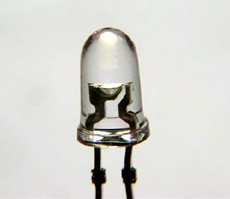
WLED lamps are inexpensive and use a fraction of the energy normally required for conventional lighting, in this case allowing the lamps to be directly connected to the battery powered phone system present in each of the homes.
"The lamps draw virtually no energy from the phone system," says Inglis, "but in turn allow people to stop using flashlights or expensive propane systems to light their homes." This saves each household approximately $220 a year, estimates Inglis, while also providing a quality source of light on demand.
"People in the Xeni Gwet'in community really took to them," says Inglis.
'Fundamental shift'
The Xeni Gwet'in community is just one example is how solid-state lighting, of which WLED lamps are an example, is making an impact in the fight for light. In fact, not since fluorescent tubes became widely available in the 1950s have lighting engineers seemed so happy.
TIR, a Burnaby-based company that is a world leader in solid-state lighting, states on their website that it "is a fundamental shift in the technology of lighting, an industry that has seen very little change since it began in the 19th century." A change TIR equates to the electric light bulb replacing the oil lamp.
Solid-state lighting generally refers to the technology built around bringing WLED light sources into use. WLED technology is based on a diode that conducts electricity in one direction through various materials, like phosphorus, germanium, or arsenic, which light up as electrical current passes through them. Such diodes are inexpensive to make, exceptionally bright, and shine continuously for 30 or 40 years.
"When a WLED lamp is turned on in the darken lab it's an exciting moment," says Rodolfo Peón, who helps design lamps at LUTW as director of research and development. In fact, some of the original lamps were so bright Peón and his colleagues had to engineer a dimmer switch for them.
WLED lighting not only has a long life, but may help us curb our electricity use. Twenty-two percent of electricity use now goes to lighting, and in a recent issue of Science, Fred Schubert and Jong Kyu Kim, two experts on LEDs, suggests this number could be cut in half by moving to solid-state lighting.
With emissions of greenhouse gases due to energy consumption a continuous concern, solid-state lighting may therefore be an environmentally-friendly choice (barring we don't use 11 percent more WLED lamps) in urban centers that tend to be lit all night long.
Small solutions
However, the WLED lamps developed by LUTW are not intended for Vancouverites. Instead, they are destined for communities in third world countries.
Credit Dave Irvine-Halliday, a professor of electrical engineering at the University of Calgary, for a vision that came to him in 1997.
Irvine-Halliday was in Nepal at the University of Tribhuvan in Kathmandu when he was struck by the poor living conditions of villagers in the area. Without electricity, most villagers in Nepal rely on kerosene-burning lamps, which provide little light, produce toxic smoke, and are expensive to use for already poor families. Irvine-Halliday set out to change this.
"Dave was a backpack philanthropist is those days," says Ken Robertson, executive director and co-founder of LUTW. Irvine-Halliday would hike through the mountains of Nepal with his wife, as the went installing WLED lamps in villages.
"Then in 2001, [Dave and I] created the foundation as a not-for-profit organization to try and expand the work we were able to do," says Robertson. They were spurred on by the World Health Organization's estimate that two million children died from acute respiratory disease in 2000, with many of these deaths related to air pollution from kerosene-burning lamps.
The developing world spends on estimated $96 billion U.S. per year on kerosene, which in Nepal, equates to one-third of their gross domestic product. "Kerosene is a real scourge," says Robertson, "and we think we have a small solution to a large problem through the substitution of WLED lighting systems for kerosene- and wood-burning lamps."
With numerous volunteers, LUTW is now running lighting projects in places like Ghana, Pakistan, Nepal, Sri Lanka, and Costa Rica.
Rethinking light
Robertson believes the time of solid-state lighting has arrived, pointing to the success of companies like TIR.
These various lighting technologies, not only those made by the LUTW, but also those made by other companies and researchers around the world, are making everyone re-think how to light your home, says Robertson.
In fact, this arrival has attracted Canadian Hydro, the World Wild Life Fund Philippines, Lumileds Lighting, and various other organizations and companies, to partnerships with LUTW.
In addition, "Carolanne Inglis's work in B.C. was a North American first and opened many eyes," says Robertson, who adds that the foundation has been now been contacted by a Navajo reserve in the United States whose 17,000 residents are in a similar situation.
Overall, Inglis hopes that the recognition that even some Canadians are living without access to electricity will help increase these partnerships and allow solid-state lighting to make a difference. "There is a lot of potential in these lights and people should see what they have to offer," says Inglis.
Dave Secko is on staff of The Tyee with a focus on science. ![]()


12
Login or register to post comments
Bailey
6 years ago
Comments on "Lighting up BC's Dark Interior "
11% is a huge deal.
George Bush announced yesterday that he's decided to allow a bunch of new nuclear power plants because they're "environmentally friendly"
Why doesn't somebody just start making a few billion of these gizmos? I saw a flashlight in the local specialty store that ran five LEDs on two AA batteries for a solid week, as opposed to 3-4 hours for a regular bulb. This is a difference worth pursuing.
Birch
6 years ago
Excellent! Perhaps BC Hydro could encourage a timely switch to these lighting systems over the next couple of years for all kinds of consumer lighting applications. If they'll take old refrigerators, perhaps they could take old light bulbs and provide LED's at a discount or at cost, selling the excess power to the US, in turn allowing them to postpone the nuclear option.
mikev
6 years ago
I've seen LED flashlights. I'd like to get one some day. If I saw a wind up one I would jump on it right now.
I've seen LED christmas lights. I would have got some last year, but I'm guessing they will be much less expensive this year. I think BC Hydro did have a promotion on for them.
LUTW - great work you're doing, but where can *I* get some of those lights?
TIR - I could get lights from you, but I don't have a corporate identity that I need all lit up :-(
Unless there's something available that will fit in my light bulb sockets, I don't see how this affects me. I've switched entirely to compact flourescents in my home already, but I gather these are even better. Anyone know of something actually available to me now? My current lights should last a few more years, but as they start going it would be nice to replace them with something even more efficient (and cheaper?).
rosetti
6 years ago
Great Story. I saw a tv show on the work of Irvine-Halliday and how a simple hand power generator and a battery along with a series of LED's in a circle on a board which the villagers were taught to make and repair made such a radical change to their homes. ie. Kids are learning how to read now in the evening. It was awesome to watch.
Apparently some LowerMain company is looking at making bus stops more practical and safe using LED technology.
BFN - rosetti
jtothemfk
6 years ago
This is great! Great work LUTW!! and thanks for bringing the story Dave Secko and Tyee! But look out!! What's that conspiracy about the light bulb that can last forever but the corps won't touch it? The G-E guys'll be snooping around soon if they aren't already. Keep your lab doors locked tight!!
Bailey
6 years ago
In a previous life I had an electric fence to keep out bears. It cost like $120 and an old car battery. There was a solar cell you nailed to a fencepost and that charged the battery. The fence would run for months. If it ran out ever, which hardly ever happened, I would switch it with the one in my car and charge it that way.
Solar cells are cheaper and more efficient now than they were then. Between that and the long life of LEDs, you should be able to install a lighting system that would run forever for free, or say for the cost of a used car battery every few years.
Be a great project for an industrial design student to invent. I'd give it high marks.
I heard a guy interviewed on the radio once who invented a radio that winds up for use in rural Africa. Suddenly all these isolated villages were placed in touch with the news of the world. This could be even better than that. A cheap system to give virtually free light to those living off the grid.
Any designers reading out there? Whaddya think?
allan
6 years ago
A freind has one of those radios and they are amazingly simple and effectice, Bailey.
With oil in the $60 range suddenly all kinds of opportunties open up for such alternative energy ideas as wind up lights, wind up . . .?
Once the new technology, arising from that climbing financial burden, has been refined, costs per unit should drop, again moving us away from the grid.
skeptikool
6 years ago
From the article:
"However, the WLED lamps developed by LUTW are not intended for Vancouverites. Instead, they are destined for communities in third world countries."
It begs the question: Why the heck is the technology not made generally available to the, among the world's worst energy gluttons?
mhoule
6 years ago
We purchased a wind-up radio and a wind-up flashlight some years ago. The flashlight can be charged with an adaptor, then when you run out of the charge and need the light, just wind it up. It's great - and we never have to buy batteries for it!! I believe we bought both at a Radio Shack.
Camgra
6 years ago
Back in the'70's LED technology for the emerging digital watch sector was seen as a nuisance because it had to be switched on. LCD technology in this sector became the norm.
Yesterday's problem is today's opportunity.
Creative broader thinking, trumps the narrower, profit-driven, corporate creativity in every respect, with benefits going not only to entrepreneurs, but also to those with a need.
anthem
6 years ago
I was quite excited about LED technology until I priced out equipment to convert my house. Compact florescent lamps, widely available, use the same amount of energy as LED arrays - in relation to lumens of output - and are only a fraction of the price. Literally to get an LED array that will provide the same amount of light as a $3.00 compact florescent 14 Watt bulb (and the led array actually uses slightly more power than the compact florescent) would cost me $175!!!!! Sort of disappointing. I guess the big benefits of LED is that you can use lower amounts of light - more direct light, less lighting up of entire rooms - and they do last longer than compact florescent, and are a bit quicker to turn on....
Colin
6 years ago
I remember seeing a show where the non-profit group went to villages in Ecuador providing them with solar powered LED lights, made a big impact because of their short days and no lights. Great ideas are often small!
Another great invention done here in BC are these:
http://www.carmanah.com/content/products/default.aspx
Nuclear power is “clean†but it is the disposal of the waste that is the major problem, as is ensuring the proper cooling and prevention of contamination.
Hopefully this will resolve those problems:
http://news.bbc.co.uk/2/hi/science/nature/4629239.stm
If fusion reactors became viable and relatively small/safe and reliable then it would be as significant as the invention of the wheel.
I still want them to continue with other forms of renewable energy, solar has certainly moved ahead, but without a technology breakthough will not be able to replace most large plants.
Geo-thermal loops are great ideas as are solar water heating. I would like to put solar water heating in my house, but can’t afford the costs at present. The government should offer rebates or tax incentives for making your house more efficient. Worked on some passive solar houses back in the 80’s, interesting how a few design changes can make all the difference.
If I get a chance to build my own house I will incorporate passive solar and solar water heat into the design, it just makes sense. But most people aren’t really aware of the low tech solutions and possibilities. People living in Rural areas are really benefiting from all the technologies out there and seem to be the best educated on them. Plus the fact that BC Hydro is charging an upfront $5700 “maintenance fee†for a rural hydro line on top of construction costs.