


 SHARE:
Predictions about the upcoming year in technology law and policy in Canada are particularly challenging given the prospect of a possible election. While there is no shortage of potential new laws -- bills on privacy, copyright and lawful access are all before the House of Commons -- an election call before the fall would likely mean that those bills would die on the order paper.
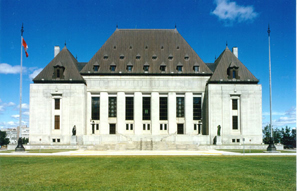
With political uncertainty clouding even the best crystal ball, the Supreme Court of Canada is set to emerge this year as the place where much of the action will take place. Canada's highest court has lined up a tech-heavy docket that will have a major impact Canadian law.
First up is a series of decisions arising from hearings held last fall. These include Masterpiece Inc. v. Alavida Lifestyles Inc., a trademark law case that raises questions about the standard for likelihood of confusion between two competing trademarks. There are also several cases involving access to government information under the Access to Information Act. With the mounting interest in open government and access to public documents, the cases will help identify how far the current legislation extends.
The most anticipated Internet law decision is Crookes v. Newton, a case that will determine the potential liability for hyperlinking. Given the widespread use of links in emails, webpages, Facebook updates and Twitter postings, the prospect of being held legally responsible for the content on the page being linked to could have a chilling effect on Internet speech.
Conrad Black's lawsuit
The court has already agreed to address at least two additional cases this year with major implications for the Internet. In March, it will be asked to consider the limits of Internet jurisdiction in an appeal of Black v. Breeden, Conrad Black's lawsuit over postings such as press releases and reports on the Hollinger International, Inc. website that he claims were defamatory.
When Black sued the company's directors, advisers and one company employee for defamation in Ontario, the defendants in the case brought a motion to dismiss on jurisdictional grounds, arguing that the province was not the appropriate venue for the case since both Hollinger and Black are located in the U.S. In a unanimous decision issued last summer, the Ontario Court of Appeal sided with Black, noting that the press releases posted on the Internet specifically provided contact information for Canadian media and that the company "clearly anticipated that the statements would be read by a Canadian audience and invited Canadian media to respond."
Later this year, the court will hear at least one case that examines the scope of the Copyright Act's fair dealing provision. At issue is whether "research" within fair dealing can be extended to song previews that are made available on sites like iTunes where a consumer can freely listen to roughly 30 seconds of a song.
The Copyright Board of Canada ruled in 2007 that a broad and liberal interpretation of fair dealing meant that it could be included, since the preview was effectively consumer research on whether to purchase the song. The Federal Court of Appeal affirmed the Copyright Board's interpretation last May, opening the door to many other consumer research possibilities under the current fair dealing provision.
With a second fair dealing case involving copying in schools also a distinct possibility for a high court hearing, the Supreme Court is set to play a lead role in technology law in 2011 regardless of what transpires on the political front. ![[Tyee]](/design-article.thetyee.ca/ui/img/yellowblob.png)
Read more: Rights + Justice












Tyee Commenting Guidelines
Comments that violate guidelines risk being deleted, and violations may result in a temporary or permanent user ban. Maintain the spirit of good conversation to stay in the discussion.
*Please note The Tyee is not a forum for spreading misinformation about COVID-19, denying its existence or minimizing its risk to public health.
Do:
Do not: